

Einzelhandel App Vorlagen

Kundenauftrag App
Diese Kundenauftrag App bietet einen praktischen Ort, wo Ihre Kunden Aufträge aufgeben und stornieren können. Von dieser vorgefertigten App aus können Kunden Konto- und Lieferinformationen ausfüllen, Artikel und Anzahl ausfüllen und per Karte oder PayPal für ihre Bestellung bezahlen. Es gibt auch ein separates Formular, um Feedback zu hinterlassen und Sie können Rezensionen auf Ihrem Begrüßungsbildschirm anzeigen. Kunden können auf Ihre App zugreifen und sie auf ihrem Smartphone, Tablet oder Desktop Computer für zukünftige Nutzung herunterladen. Wollen Sie das Aussehen Ihrer Kundenauftrag App ändern? Unser Drag & Drop Interface macht die Anpassung zum Kinderspiel! Mit ein paar Klicks können Sie Formulare hinzufügen, Schriftarten und Farben wählen, Ihr eigenes Logo hochladen, das Logo der App und den Begrüßungsbildschirm aktualisieren und mehr — ganz ohne Programmierkenntnisse. Sobald Sie mit dem Design Ihrer App zufrieden sind, teilen Sie ganz einfach einen Link mit Ihren Kunden und sie können Bestellungen von jedem Gerät aus machen. Vereinfachen Sie Ihren Bestellprozess mit dieser kostenlosen Kundenauftrag App!
Zur Kategorie:Retail Apps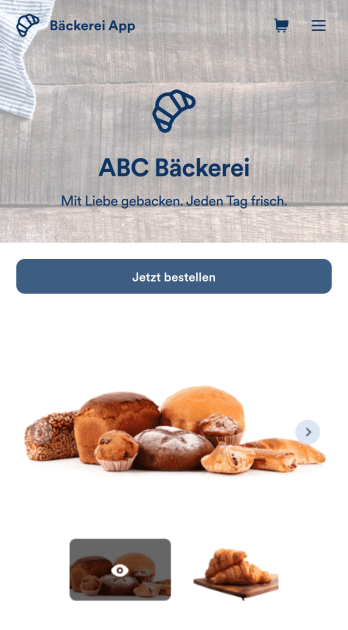
Bäckerei App
Ganz gleich, ob Ihre Bäckerei auf Kuchen, Torten oder Gebäck spezialisiert ist, erstellen Sie mit unserer kostenlosen Bäckerei-App eine individuelle Online-App für Ihr Unternehmen. Mit dieser gebrauchsfertigen Vorlage können Sie alle Ihre Bestellformulare, Umfragen zum Kundenfeedback und Bewertungen an einem Ort bereitstellen. Sie müssen lediglich die App-Vorlage an Ihre Bäckerei anpassen und den Link auf Ihrer Website oder in den sozialen Medien veröffentlichen. Ihre Kunden können Ihre Bäckerei-App dann auf jedem Smartphone, Tablet oder Desktop öffnen und herunterladen. Möchten Sie unsere Bäckerei-App so gestalten, dass sie zum Branding Ihrer Bäckerei passt? Mit unserer Drag & Drop-Oberfläche können Sie mit nur wenigen Klicks Formulare, Umfragen, Bilder, Texte, Logos, Links und vieles mehr hinzufügen. Sie können sogar die Einstellungen, das Symbol, den Namen und den Begrüßungsbildschirm Ihrer App anpassen. Bringen Sie Ihre Bäckerei online und erleichtern Sie Ihren Kunden die Bestellung mit einer professionellen und vollständig angepassten Bäckerei-App!
Zur Kategorie:Retail Apps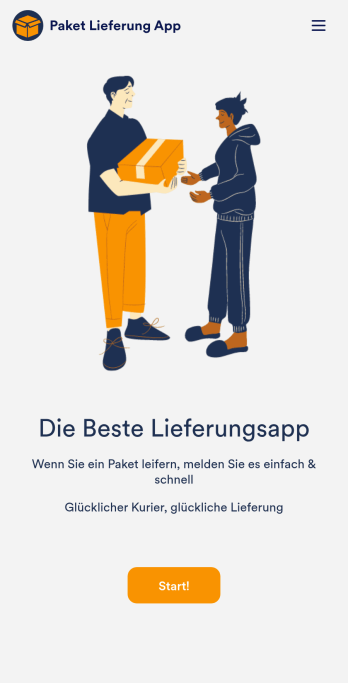
Paket Lieferung App
Eine Paket Lieferung App wird von Lieferunternehmen genutzt, um den Lieferstatus von Paketen festzuhalten. Mit dieser Paket Lieferung App können Lieferanten den Namen des Empfängers, die Referenznummer, den Lieferstatus und Details zu den Artikeln ausfüllen und zusätzliche Notizen anhängen. Lieferanten können die Lieferungen unten mit einem digitalen Signaturfeld unterschreiben. Lieferberichte werden sicher in Ihrem Konto gespeichert und können von jedem Gerät aus angesehen werden. Es gibt auch ein separates Formular für neue Lieferantenbewerbungen, die Sie mit der Lieferantenbewerbung Tabelle ansehen und verwalten können. Es ist einfach diese Paket Lieferung App mit unserem Drag & Drop Interface anzupassen. Mit nur wenigen Klicks können Sie Formulare hinzufügen oder ändern, Schriftarten und Farben wählen, das Logo Ihrer Lieferfirma hochladen, den Namen der App, Text und Begrüßungsbildschirm aktualisieren und mehr — ganz ohne Programmierkenntnisse. Ihre App kann intern mit einem Link geteilt und dann von Ihren Lieferanten auf jedem Smartphone, Tablet oder Desktop heruntergeladen werden. Verlieren Sie nie wieder den Überblick über ein Paket mit dieser Paket Lieferung App!
Zur Kategorie:Retail Apps
MöbelverkaufsAp
Erstellen Sie mit dieser kostenlosen Möbel-App von Jotform einen zentralen Anlaufpunkt für Ihr Möbelhaus. Sie möchten wissen, wie Sie Möbel online verkaufen? Ihre Kunden können diese App auf jedes beliebige Gerät herunterladen und Möbel bestellen, Angebote für maßgefertigte Möbel anfordern oder sich über Hausrenovierungen informieren. Sie können außerdem Kundenfeedback sammeln, Ihre Kontaktdaten angeben und Ihre Social-Media-Konten verlinken. Passen Sie diese Möbel-App mit dem Drag-and-Drop-App-Builder von Jotform vollständig an Ihr Branding an. Bearbeiten Sie Formularfelder und Checklisten, erstellen Sie neue Seiten, fügen Sie Schaltflächen und Links hinzu, wählen Sie Schriftarten und Farben und laden Sie Ihr Logo hoch – alles ohne Programmierkenntnisse. Sie möchten Zahlungen direkt über Ihre App akzeptieren? Fügen Sie einfach eine unserer über 100 Zahlungsintegrationen hinzu und nehmen Sie sofort Zahlungen entgegen. Machen Sie die Möbelbestellung mit dieser einfach zu teilenden Möbel-App zum Kinderspiel.
Zur Kategorie:E-Commerce Apps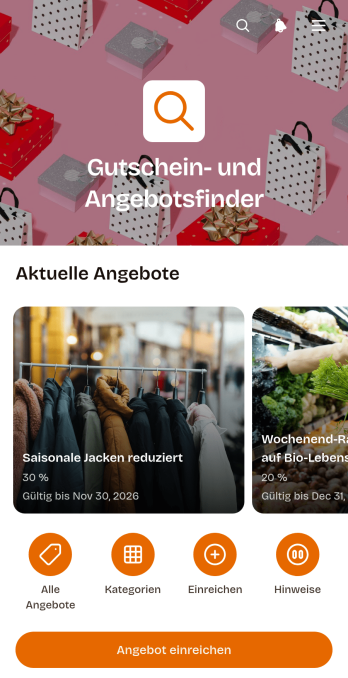
Gutschein- und Angebotsfinder-App
Die Gutschein- und Angebotsfinder-App bündelt aktuelle Preisnachlässe, Aktionscodes und Sonderangebote in einer übersichtlichen, mobilfreundlichen Anwendung. Sie eignet sich für Einzelhändler, Werbeteams, Einkaufsvereinigungen und Betreiber von Vorteilsprogrammen, die ihrer Zielgruppe eine zentrale Anlaufstelle für Sparmöglichkeiten anbieten möchten. Nutzer können Angebote durchsuchen und wichtige Angaben zu Anbieter, Kategorie und Aktionscode aufrufen. Über ein verknüpftes Formular lassen sich zudem neue Angebote einreichen. So bleiben Aktionen leichter auffindbar, während die manuelle Weitergabe über einzelne Nachrichten oder unübersichtliche Listen reduziert wird.Mit Jotform lässt sich diese App-Vorlage ohne Programmierung an das eigene Angebot und Erscheinungsbild anpassen. Über eine drag-and-drop-Oberfläche können Seiten, Karten, Buttons, Bilder und Navigationsbereiche neu angeordnet oder ergänzt werden. Verknüpfte Formulare unterstützen die Datenerfassung, während Tabellen eingereichte Angebote zentral organisieren können. Die fertige Anwendung lässt sich per direktem Link veröffentlichen und auf Mobilgeräten öffnen. Dadurch entsteht eine leicht zugängliche Selbstbedienungslösung, die Unternehmen bei der Pflege von Rabattaktionen unterstützt und Interessenten schneller zu passenden Angeboten führt.
Zur Kategorie:E-Commerce Apps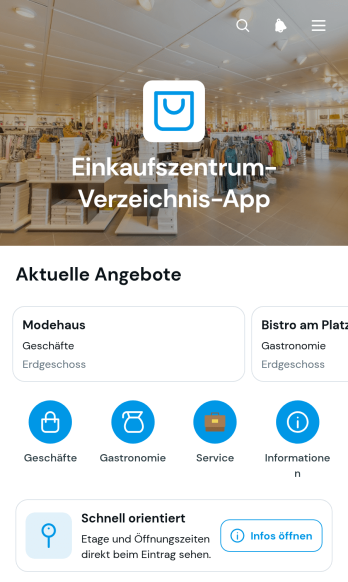
Einkaufszentrum-Verzeichnis-App
Die Einkaufszentrum-Verzeichnis-App ist eine digitale Orientierungshilfe für Einkaufszentren, Centerverwaltungen und Besucher. Geschäfte und andere Anlaufstellen lassen sich übersichtlich nach Themen durchsuchen und über einzelne Einträge aufrufen. Angaben zu Bereich, Etage und Öffnungszeiten helfen Gästen dabei, schneller das passende Ziel zu finden und ihren Besuch besser zu planen. Die App-Vorlage eignet sich für kleine und große Einkaufszentren, die aktuelle Informationen zentral bereitstellen, wiederkehrende Auskünfte reduzieren und eine einfache Selbstbedienung ermöglichen möchten. Auch neue Geschäfte oder geänderte Öffnungszeiten können übersichtlich eingepflegt werden.Mit Jotform lässt sich diese App-Vorlage ohne Programmierung an das Erscheinungsbild und die Informationsstruktur eines Einkaufszentrums anpassen. Der App Generator bietet eine Oberfläche mit Ziehen und Ablegen, über die Seiten, Karten, Buttons, Bilder und Navigationsbereiche bearbeitet werden können. Verknüpfte Formulare und Tabellen unterstützen die Datenerfassung sowie die laufende Pflege der Verzeichniseinträge. Nach der Veröffentlichung kann die mobilfreundliche App über einen direkten Link, eine personalisierte Webadresse oder eingebettet auf einer Webseite geteilt werden. So entsteht mit Jotform eine leicht zugängliche Informationsquelle für Besucher und Verwaltungsteams.
Zur Kategorie:Retail Apps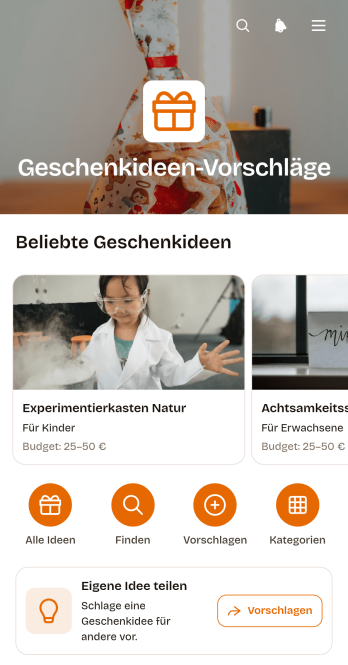
App für Geschenkideenvorschläge
Die App für Geschenkideenvorschläge ist eine anpassbare Vorlage zum Sammeln, Ordnen und Präsentieren passender Geschenkideen für unterschiedliche Personen und Anlässe. Nutzer können Vorschläge durchstöbern, Angaben zu Kategorie, Budget und Anlass auf einen Blick erfassen und über ein verbundenes Formular eigene Ideen einreichen. Die Vorlage eignet sich für Privatpersonen, Einzelhandelsteams, Vereine, Gemeinschaften und Redaktionsteams, die Inspiration übersichtlich zugänglich machen möchten. Sie erleichtert die Auswahl, reduziert langes Suchen und schafft einen zentralen Ort für wiederkehrende Anlässe wie Geburtstage, Feiern oder saisonale Aktionen.Mit Jotform lässt sich die App für Geschenkideenvorschläge ohne Programmierung an den gewünschten Einsatz anpassen. Im App-Generator können Seiten, Karten, Bilder, Buttons und Navigationselemente per Ziehen und Ablegen bearbeitet und mit Formularen, Tabellen oder automatisierten Workflows verbunden werden. Dadurch lassen sich neue Vorschläge zentral erfassen, Inhalte laufend aktualisieren und Informationen mobilfreundlich bereitstellen. Eine der anpassbaren App-Vorlagen kann als Ausgangspunkt dienen und über einen direkten Link veröffentlicht werden. So entsteht schnell eine ansprechende Erfahrung für Selbstbedienung, Datenerfassung und gemeinsames Ideensammeln.
Zur Kategorie:Entertainment Apps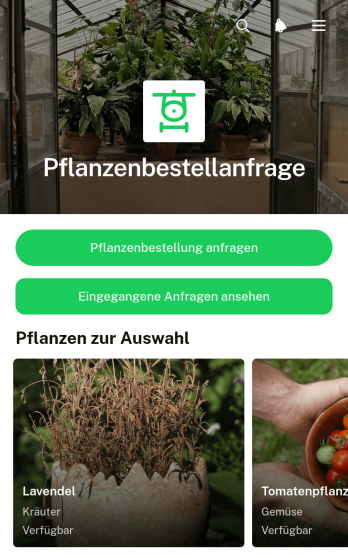
App für Pflanzenbestellanfragen
Die App für Pflanzenbestellanfragen ist eine digitale Anlaufstelle für Gärtnereien, Baumschulen, Pflanzenhandlungen und betriebliche Grünpflege. Interessierte können verfügbare Pflanzen durchsuchen, Angaben zu Kategorien und Verfügbarkeit prüfen und anschließend eine Anfrage mit Kontaktdaten, Wunschtermin und ergänzenden Hinweisen übermitteln. Mitarbeitende erhalten zugleich eine übersichtliche Ansicht der eingegangenen Anfragen und können die jeweiligen Details zentral aufrufen. So bleiben Kundenwünsche nachvollziehbar, telefonische Abstimmungen werden reduziert und die Bearbeitung lässt sich besser zwischen Verkauf, Lager und Beschaffung koordinieren.Mit Jotform lässt sich diese App-Vorlage über einen codefreien app generator an eigene Sortimente, Abläufe und Gestaltungsrichtlinien anpassen. Formulare, Tabellen, Genehmigungsschritte und automatische Benachrichtigungen können mit der App verbunden werden, damit Datenerfassung und Bearbeitung an einem Ort stattfinden. Die mobilfreundliche Oberfläche unterstützt die Selbstbedienung auf unterschiedlichen Geräten. Inhalte, Seiten und Buttons lassen sich ohne Programmierung verändern, während ein direkter Freigabelink den Zugang für Kundschaft oder Mitarbeitende erleichtert. So bieten Jotform App-Vorlagen einen schnellen Ausgangspunkt für einen geordneten Anfrageprozess.
Zur Kategorie:Bestell App erstellen für Bestellungen & Versand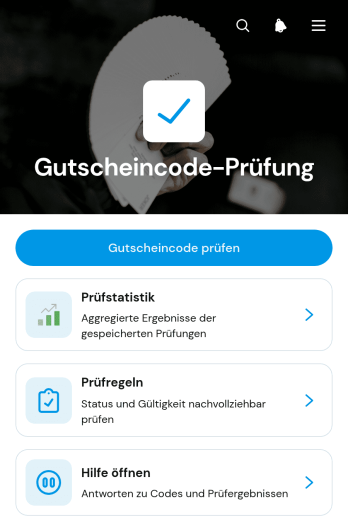
Gutscheincode-Prüf-App
Die Gutscheincode-Prüf-App ist eine zentrale Anwendung für Unternehmen, die Gutscheincodes schnell und einheitlich kontrollieren möchten. Mitarbeitende können die Gültigkeit eines Codes prüfen, festgelegte Prüfregeln einsehen und Prüfstatistiken verfolgen. Die Vorlage eignet sich für den Internethandel, Einzelhandelsgeschäfte, Gastronomiebetriebe, Veranstalter und Kundendienstteams, die Rabatte oder Aktionsgutscheine bearbeiten. Sie verringert manuelle Nachfragen, erleichtert die Einarbeitung und schafft einen gemeinsamen Ablauf für die Prüfung. So erhalten zuständige Teams an der Kasse, im Büro oder unterwegs direkten Zugriff auf die benötigten Informationen.Mit Jotform Apps lässt sich diese App-Vorlage ohne Programmierkenntnisse an betriebliche Abläufe anpassen. Der app generator bietet eine drag-and-drop Oberfläche, mit der Seiten, Buttons, Karten und Navigationselemente bearbeitet werden können. Verknüpfte Formulare und Tabellen unterstützen die Datenerfassung, während Benachrichtigungen und Freigabeschritte wiederkehrende Aufgaben im Workflow automatisieren können. Nach der Anpassung kann die App über einen direkten Verweis geteilt und auf Mobilgeräten genutzt werden. Unternehmen erhalten damit eine markengerecht gestaltete Selbstbedienungsumgebung für interne Teams und berechtigte Partner.
Zur Kategorie:E-Commerce Apps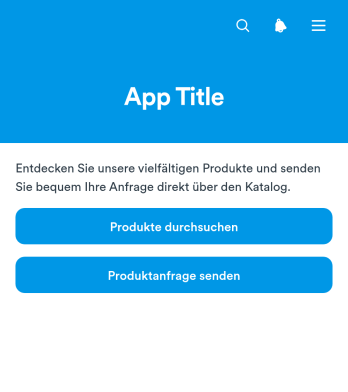
Produktkatalog-App
Die Produktkatalog-App ist eine digitale App-Vorlage für Unternehmen, die ihr Sortiment übersichtlich präsentieren und Interessierten einen direkten Weg zur Kontaktaufnahme bieten möchten. Kundinnen und Kunden können Produkte zentral durchsuchen und über ein verbundenes Formular eine Produktanfrage senden. Damit eignet sich die Vorlage besonders für Einzelhändler, Hersteller, Großhändler, Vertriebsabteilungen und kleinere Betriebe, die Artikel online zeigen, aber Bestellungen oder Beratungswünsche zunächst persönlich bearbeiten. Sie schafft einen leicht zugänglichen Produktüberblick, unterstützt die Selbstbedienung und reduziert wiederkehrende Fragen zu verfügbaren Angeboten.Mit Jotform Apps lässt sich die Produktkatalog-App ohne Programmierung an das eigene Sortiment und Erscheinungsbild anpassen. Der visuelle Generator erleichtert das Bearbeiten von Seiten, Schaltflächen, Bildern und Navigationselementen per Ziehen und Ablegen. Formulare können für die Erfassung von Anfragen eingebunden und mit Tabellen, Benachrichtigungen oder Genehmigungsabläufen verbunden werden. Anschließend kann die App über einen direkten Verweis geteilt oder in eine Internetseite eingebettet werden. So entstehen aus anpassbaren App-Vorlagen mobilfreundliche Erlebnisse, die Produktpräsentation, Datenerfassung und interne Bearbeitung an einem Ort zusammenführen.
Zur Kategorie:Produktverkauf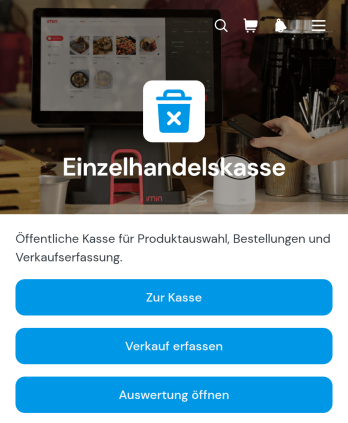
Kassen-App für den Einzelhandel
Die Kassen-App für den Einzelhandel unterstützt Ladengeschäfte, Verkaufsstände und kleinere Handelsbetriebe bei der digitalen Erfassung ihrer täglichen Verkäufe. Mitarbeitende können Produkte auswählen, einen Verkauf mit Menge, Betrag, Zahlungsart und Verkaufstag festhalten sowie bisherige Kassenvorgänge einsehen. Eine übersichtliche Auswertung erleichtert es Inhabern, Filialleitungen und Verkaufspersonal, Umsätze nachzuvollziehen und wiederkehrende manuelle Aufzeichnungen zu reduzieren. Damit eignet sich die App-Vorlage besonders für Betriebe, die Verkaufsdaten zentral organisieren und Abläufe an der Kasse vereinfachen möchten.Mit Jotform lässt sich die Kassen-App ohne Programmierkenntnisse an das eigene Sortiment und den betrieblichen Ablauf anpassen. Der App Generator bietet eine Drag-and-drop-Oberfläche, über die sich Seiten, Schaltflächen, Formulare und Auswertungen bearbeiten lassen. Verknüpfte Formulare unterstützen die Datenerfassung, während gespeicherte Angaben geordnet für die weitere Bearbeitung bereitstehen. Die fertige App kann über eine eigene Internetadresse geteilt und auf Mobilgeräten genutzt werden. So entsteht aus einer anpassbaren App-Vorlage eine praktische Arbeitsumgebung für Verkaufserfassung, Zahlungsdokumentation und betriebliche Übersicht.
Zur Kategorie:Retail Apps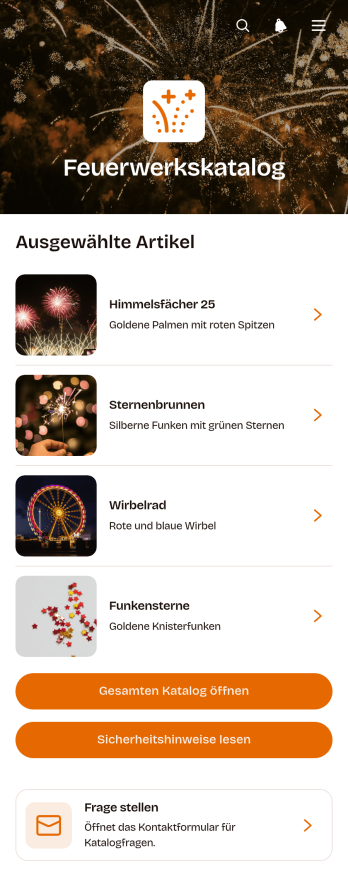
Feuerwerkskatalog-App
Die Feuerwerkskatalog-App ist eine digitale Katalogvorlage für Fachhändler, Verkaufsstellen, Veranstaltungsdienstleister und andere Anbieter, die Feuerwerksartikel übersichtlich präsentieren möchten. Interessierte können Produkte durchsuchen und vergleichen, Angaben zu Effekten, Kategorien und Sicherheitsabständen einsehen sowie Fragen über ein verbundenes Formular übermitteln. Dadurch bleiben Produktinformationen und Sicherheitshinweise an einem zentralen Ort auffindbar. Die Vorlage eignet sich für saisonale Sortimente, Verkaufsberatungen, Vorführungen und digitale Produktübersichten. Sie erleichtert die Orientierung, unterstützt die Auswahl passender Artikel und entlastet Beschäftigte bei wiederkehrenden Anfragen.Mit Jotform lässt sich diese App-Vorlage ohne Programmierung an das eigene Sortiment und die gewünschte Gestaltung anpassen. Im App-Generator können Seiten, Karten, Schaltflächen, Bilder und Navigationselemente durch Ziehen und Ablegen bearbeitet werden. Formulare für Sicherheitsfragen oder Produktanfragen lassen sich direkt mit der App verbinden, sodass die Datenerfassung in den jeweiligen Ablauf eingebunden bleibt. Die fertige Feuerwerkskatalog-App kann über eine eigene Webadresse geteilt oder in eine Internetseite eingebettet werden. Dank der mobilfreundlichen Darstellung erhalten Kundinnen und Kunden auch unterwegs einen bequemen Selbstbedienungszugang zum Katalog.
Zur Kategorie:Produktverkauf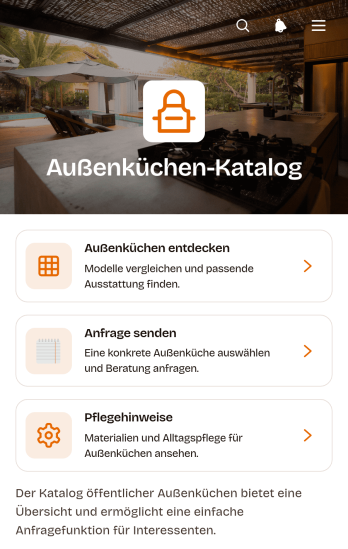
Außenküchen-Katalog-App
Die Außenküchen-Katalog-App ist eine digitale Produktübersicht für Hersteller, Händler, Gartenbaubetriebe und Fachberatungen, die Außenküchen anschaulich präsentieren und Interessierte gezielt zur Kontaktaufnahme führen möchten. Besucher können verfügbare Außenküchen entdecken, eine Beratungsanfrage über das verknüpfte Formular senden und Hinweise zur Pflege von Edelstahl, beschichteten Flächen sowie zur Winterlagerung aufrufen. Dadurch bleiben Produktinformationen und wichtige Empfehlungen an einem zentralen Ort zugänglich. Die Vorlage eignet sich für Ausstellungen, Verkaufsgespräche, digitale Produktpräsentationen und die Kundenberatung vor oder nach einem Kauf.Mit Jotform lässt sich diese Außenküchen-Katalog-App ohne Programmierung an das eigene Angebot anpassen. Der App Generator unterstützt eine schnelle Gestaltung über eine drag-and-drop Oberfläche, sodass Seiten, Karten, Buttons, Bilder und Formulare flexibel angeordnet werden können. Unternehmen können die Vorlage mit eigenen Inhalten versehen, Anfragen zentral erfassen und passende Abläufe für Benachrichtigungen oder die weitere Bearbeitung einrichten. Die fertige App lässt sich über einen direkten Link teilen und ist auf mobilen Geräten bequem nutzbar. So bieten Jotform App-Vorlagen eine praktische Grundlage für digitale Kataloge, Datenerfassung und kundenorientierte Selbstbedienung.
Zur Kategorie:Produktverkauf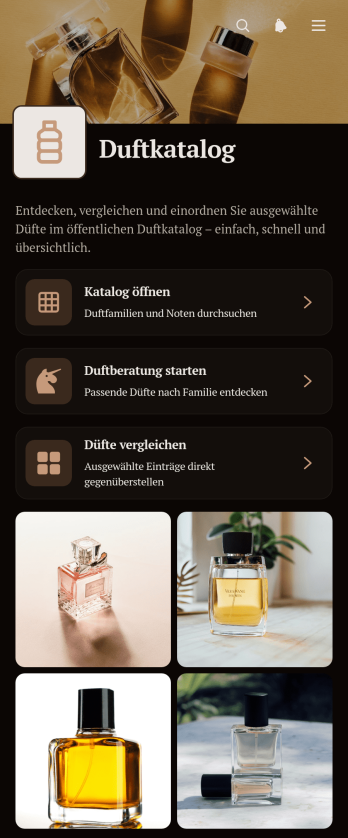
Duftkatalog-App
Die Duftkatalog-App präsentiert ein Duftsortiment übersichtlich und unterstützt Interessierte bei der Auswahl eines passenden Duftprofils. Parfümerien, Kosmetikgeschäfte, Duftmanufakturen, Vertriebsberatungen und Einzelhandelsbetriebe können damit Produkte digital zugänglich machen. Nutzer können den Katalog durchsuchen, einzelne Düfte anhand ihrer Eigenschaften und Duftnoten betrachten, Varianten vergleichen und eine Duftberatung beginnen. So lassen sich umfangreiche Sortimente verständlich ordnen, Beratungsgespräche vorbereiten und Kaufentscheidungen im Geschäft, bei Veranstaltungen oder aus der Ferne erleichtern. Die Vorlage eignet sich besonders für Teams, die Produktinformationen zentral bereitstellen und Kunden eine eigenständige Orientierung ermöglichen möchten.Mit Jotform lässt sich diese App-Vorlage ohne Programmierkenntnisse an das eigene Sortiment und Erscheinungsbild anpassen. Über die intuitive Oberfläche können Seiten, Karten, Bilder, Schaltflächen und Verknüpfungen angeordnet sowie Formulare für Beratungsanfragen oder Datenerfassung eingebunden werden. Aktualisierte Inhalte stehen an einem zentralen Ort bereit, wodurch Verkaufsteams und Kunden stets auf dieselben Informationen zugreifen können. Die fertige App lässt sich über einen direkten Link oder einen QR-Code teilen und auf Mobilgeräten öffnen. Damit wird aus einem statischen Produktkatalog eine interaktive, markengerecht gestaltete Anlaufstelle für Produkterkundung, Beratung und Kundenservice.
Zur Kategorie:Retail Apps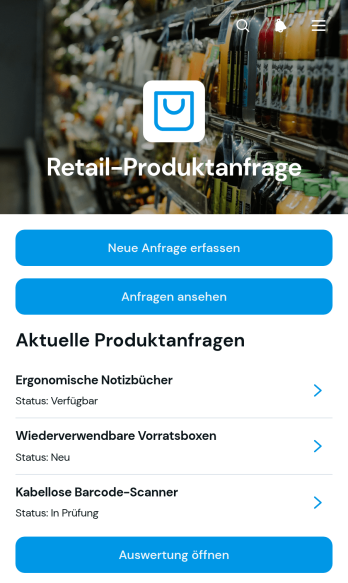
Einzelhandels-Produktanfrage-App
Die Einzelhandels-Produktanfrage-App ist eine App-Vorlage für Filialteams, Einkaufsabteilungen und Bestandsverantwortliche, die Produktwünsche zentral erfassen und nachvollziehbar bearbeiten möchten. Mitarbeitende können neue Anfragen einreichen, bestehende Produktanfragen in einer übersichtlichen Liste aufrufen und wichtige Angaben zu Bedarf und Priorität prüfen. Eine integrierte Auswertung unterstützt Verantwortliche dabei, wiederkehrende Wünsche, dringende Bedarfe und mögliche Sortimentslücken frühzeitig zu erkennen. So eignet sich die Vorlage für einzelne Geschäfte, Filialnetze, Lagerteams und Einzelhandelsbetriebe, die verstreute Nachrichten oder unvollständige Notizen durch einen einheitlichen Anfrageweg ersetzen wollen.Mit Jotform lässt sich diese App ohne Programmierung an interne Abläufe, Zuständigkeiten und das eigene Erscheinungsbild anpassen. Der App-Generator bietet eine intuitive Bedienoberfläche, über die Seiten, Karten, Buttons und Navigationselemente flexibel angeordnet werden können. Verknüpfte Formulare und Tabellen erleichtern die Datenerfassung und bündeln Produktanfragen an einem zentralen Ort. Die Einzelhandels-Produktanfrage-App kann über einen direkten Verweis geteilt und auf Mobilgeräten genutzt werden, sodass Filialmitarbeitende auch direkt auf der Verkaufsfläche Anfragen erfassen können. Damit schafft Jotform eine praktische Grundlage für Selbstbedienung, bessere Zusammenarbeit und fundierte Einkaufsentscheidungen.
Zur Kategorie:Retail AppsÜber Einzelhandel App Vorlagen
Einzelhandels-Apps sind spezialisierte Mobil- und Web-Apps, die darauf ausgelegt sind, verschiedene Workflows im Einzelhandel zu optimieren und zu verbessern. Diese Apps erleichtern Prozesse wie die Bestandsverwaltung, die Abwicklung von Transaktionen und die effektive Kundenansprache. Einzelhändler aller Branchen, von Modeboutiquen bis hin zu Lebensmittelketten, nutzen diese Apps, um reale Workflows in digitale Umgebungen zu integrieren und so sicherzustellen, dass Aufgaben wie die Personalplanung, die Verkaufsverfolgung und die Kundeninteraktion nahtlos und effizient ablaufen.
Mit Jotform Apps lassen sich ohne Programmierkenntnisse leistungsstarke Apps bauen, die speziell auf den Einzelhandel zugeschnitten sind. Dank der Progressive-Web-App-Technologie (PWA) können Nutzer die Apps direkt über den Browser installieren, ohne dass ein App-Store nötig ist. Diese Flexibilität sorgt dafür, dass die Apps auf iOS-, Android-, Tablet- und Desktop-Geräten ohne Probleme laufen. Mit Jotform Tabellen als zentraler Datenverwaltung lassen sich Abläufe synchronisieren, Informationen aktuell halten und Workflows anpassen – ohne Programmierung.
Warum Einzelhandels-Apps verwenden?
- Einzelhandels-Apps bieten eine dynamische Plattform für die Bestandsverwaltung und gewährleisten, dass die Lagerbestände kontinuierlich überwacht und in Echtzeit angepasst werden. Diese Funktion ist entscheidend, um das Risiko von Überbeständen oder Lieferengpässen bei beliebten Artikeln zu verringern und so den Umsatz und die Kundenzufriedenheit zu optimieren.
- Diese Apps stärken die Kundenbindung, indem sie personalisierte Einkaufserlebnisse bieten – zum Beispiel individuelle Rabatte und Treueprogramme. Solche Funktionen können die Kundenbindung spürbar erhöhen und Folgekäufe fördern.
- Einzelhandels-Apps beschleunigen den Bezahlvorgang, verringern die Wartezeit und erhöhen so die Anzahl der abgewickelten Transaktionen. Dadurch verbessert sich die Kundenerfahrung, besonders in Stoßzeiten.
- Durch die Integration von Zahlungsportalen wie Stripe und PayPal bieten Einzelhandels-Apps sichere und flexible Zahlungsmöglichkeiten. Diese Integration unterstützt verschiedene Zahlungsmethoden und erfüllt unterschiedliche Kundenwünsche, was die Wahrscheinlichkeit erhöht, dass ein Kauf abgeschlossen wird.
- Apps im Einzelhandel können Routineaufgaben wie Personalplanung und Umsatzberichterstattung automatisieren. Dadurch sinkt der Verwaltungsaufwand, und das Fehlerrisiko wird kleiner, sodass sich die Mitarbeiter auf strategischere Aufgaben und den Kundenservice konzentrieren können.
Häufige Probleme, die durch Einzelhandels-Apps gelöst werden
- Einzelhändlerinnen und Einzelhändler kämpfen oft damit, ihren Bestand an mehreren Standorten im Blick zu behalten – schnell entstehen Unterschiede und Reibungsverluste. Mobile Apps für den Handel bündeln diese Informationen in einem zentralen System und zeigen den aktuellen Bestand, sodass sich Abweichungen minimieren und Überschüsse vermeiden lassen.
- Kunden effektiv anzusprechen, kann schwierig sein, vor allem in einem vollen Markt. Einzelhandels-Apps erhöhen die Kundenbindung, indem sie Push-Benachrichtigungen senden, die über Neuheiten, Sonderangebote und personalisierte Angebote informieren und so die Marke im Gedächtnis der Kunden halten.
- Lange Warteschlangen an den Kassen können Kunden abschrecken und den Umsatz beeinträchtigen, besonders in Spitzenzeiten. Einzelhandels-Apps können diesen Prozess beschleunigen, indem sie mobile Bezahloptionen anbieten, die Wartezeiten verkürzen und die Kundenzufriedenheit erhöhen.
- Ohne passende Systeme wird das Datenmanagement schnell kompliziert. Einzelhandels-Apps bündeln die Datenerfassung und -analyse in Jotform Tabellen. So lassen sich Erkenntnisse leichter abrufen und fundierte Entscheidungen treffen.
Passende Anwendungsfälle für Features
- Die Drag-and-drop-Oberfläche vereinfacht die Bestandsverwaltung, sodass Unternehmen ihre Lagerartikel schnell ändern und sortieren können. So behalten sie ihren Bestand leichter im Blick und vermeiden typische Lagerprobleme.
- Push-Benachrichtigungen können die Kundenbindung stärken, weil sie Unternehmen erlauben, Kunden schnell über Werbeaktionen und neue Produkte zu informieren. So lassen sich Interaktion und Umsatz erhöhen.
- Durch Zahlungsintegrationen mit Diensten wie Stripe und PayPal können Händler verschiedene Zahlungsmethoden sicher akzeptieren. Diese Flexibilität verbessert die Customer Experience und fördert häufigere Käufe.
- Mit den Funktionen des Shopgenerators können Händler schnell ansprechende und funktionale Online-Shops erstellen. So lassen sich eine solide Online-Präsenz aufbauen, Kunden gewinnen und der Online-Umsatz steigern.
- Durch Freigabemethoden wie Direktlink, E-Mail, QR-Code und Social Media können Einzelhändler ihre App ohne großen Aufwand einer breiten Zielgruppe zugänglich machen. Diese einfache Zugänglichkeit fördert die Nutzung der App und stärkt die Bindung der Kunden.
- Veröffentlichungsoptionen wie „Öffentlich“, „Privat“ oder „Nur für das Unternehmen“ geben Einzelhändlern die Möglichkeit, den Zugriff auf ihre App zu steuern und so Sicherheit und Datenschutz zu gewährleisten. Diese Kontrolle ist für den Schutz sensibler Geschäftsdaten entscheidend.
- Workflow-Automatisierung in Einzelhandels-Apps übernimmt wiederkehrende Aufgaben und gibt Unternehmen mehr Spielraum für ihre Arbeit. Wenn Prozesse automatisch ablaufen, können die Mitarbeiterinnen und Mitarbeiter sich auf Aufgaben konzentrieren, die das Geschäft voranbringen und Kundinnen sowie Kunden zufriedenstellen.
So erstellen Sie eine Einzelhandels-App
- Wählen Sie eine für Ihre Kategorie geeignete Vorlage aus der Vorlagenliste aus oder beginnen Sie neu.
- Passen Sie die Einstellungen über die Drag-and-Drop-Oberfläche an.
- Teilen per Link, QR-Code oder Einbettung.
Wichtige Anwendungsfälle für Einzelhandels-Apps
- Für Führungskräfte: Führungskräfte im Einzelhandel brauchen oft aktuelle Einblicke in die Verkaufszahlen und den Lagerbestand. Mit passenden Apps können sie auf Dashboards zugreifen, die relevante Kennzahlen in Echtzeit zeigen und so fundierte Entscheidungen ermöglichen. So lassen sich schnell auf Marktveränderungen reagieren und der Shop auf maximale Rentabilität ausrichten.
- Für Teams: Apps, die Kommunikation und Aufgabenmanagement bündeln, helfen Einzelhandels-Teams, auf dem gleichen Stand zu bleiben. Zentral gespeicherte Daten und automatisierte Abläufe erleichtern die Abstimmung, sodass Aufgaben zügig erledigt werden und der Service nicht leidet. Weniger Papierkram bedeutet mehr Zeit für die Kunden.
- Für Kunden: Mit Einzelhandels-Apps können Kunden einfacher einkaufen und bekommen Angebote, die zu ihnen passen. Funktionen wie personalisierte Angebote und unkomplizierte Bezahlvorgänge verbessern das gesamte Einkaufserlebnis und fördern die Kundenbindung sowie Wiederholungskäufe. Indem sie Kunden einen bequemen Zugang zu Produkten und Sonderangeboten bieten, tragen Einzelhandels-Apps dazu bei, eine positive Beziehung zwischen der Marke und ihrer Kundschaft aufzubauen.
Einzelhandels-Apps zusammengefasst
Einzelhandels-Apps sind heute fast unverzichtbar, weil sie Bestandsverwaltung, Kundenbindung und Verkaufsprozesse in einer Plattform bündeln. Mit Jotform Apps bekommen Händler eine No-Code-Lösung, die auf PWA-Technologie setzt und damit auf allen Geräten läuft. Durch zentrale Datenhaltung und automatisierte Abläufe lösen solche Apps typische Branchenprobleme, treiben das Wachstum voran und verbessern die Kundenzufriedenheit.
Häufig gestellte Fragen
1) Ist die Erstellung und Nutzung von Einzelhandels-Apps auf Jotform kostenlos?
Mit dem Starter-Tarif von Jotform können Nutzer kostenlos Apps für den Einzelhandel erstellen und nutzen. Der Tarif umfasst den Zugriff auf grundlegende Funktionen und eignet sich daher für kleine Unternehmen oder Nutzer ohne Vorkenntnisse. Bei wachsenden Anforderungen stehen Premium-Tarife mit erweiterten Funktionen zur Verfügung.
2) Sind die über die App erfassten Daten und Zahlungen sicher?
Ja, Jotform stellt sicher, dass alle über seine Apps erfassten Daten und Zahlungen geschützt sind. Das Unternehmen folgt den Branchenstandards und der DSGVO und nutzt dafür starke Verschlüsselungstechniken, um sensible Informationen zu sichern. So können Nutzerinnen und Nutzer darauf vertrauen, dass sie bei der Verarbeitung von Kundendaten und Transaktionen auf der sicheren Seite sind.
3) Brauche ich Programmierkenntnisse, um mit Jotform eine App für den Einzelhandel zu bauen?
Für die Erstellung einer Einzelhandels-App mit Jotform sind keine Programmierkenntnisse nötig. Die intuitive Drag-and-drop-Oberfläche der Plattform ermöglicht es Nutzern, Apps ohne großen Aufwand zu erstellen und anzupassen. So können auch Personen ohne technisches Fachwissen funktionale und ansprechende Apps zusammenstellen, die ihren geschäftlichen Anforderungen entsprechen.
4) Can I collect payments for services directly through the app?
Ja, Jotform kann Zahlungen direkt über die App abwickeln, dank Integrationen mit Zahlungsdiensten wie Stripe und PayPal. So können Unternehmen ihren Kunden sichere und zuverlässige Zahlungsmethoden anbieten. Diese Funktion sorgt für reibungslose Transaktionen und verbessert das Nutzererlebnis.
5) Kann Jotform auch offline Daten in Einzelhandels-Apps erfassen?
Jotform ermöglicht die Offline-Datenerfassung für Einzelhandels-Apps über Mobile Formulare. Die Funktion hilft Teams, die in Bereichen mit schlechter Internetverbindung arbeiten. Daten lassen sich auch ohne Verbindung erfassen; sobald das Netz zurückkehrt, synchronisiert Jotform die Einträge.
6) Are Jotform Apps compatible with both iOS and Android devices?
Ja, Jotform Apps laufen auf iOS- und Android-Geräten. Sie lassen sich als Progressive Web Apps direkt über den Browser installieren, ohne dass ein Download aus einem App-Shop nötig ist. So können Nutzer auf beiden Plattformen ohne Hürden auf die Apps zugreifen.
7) Wie stärken Einzelhandels-Apps die Kundenbindung?
Einzelhandels-Apps stärken die Kundenbindung, indem sie personalisierte Einkaufserlebnisse und Prämienprogramme bieten. Funktionen wie Push-Benachrichtigungen zu Sonderangeboten und Treuepunkte für wiederholte Käufe regen Kunden dazu an, häufiger mit der Marke zu interagieren. Durch den Mehrwert und den Komfort, den sie bieten, tragen Einzelhandels-Apps dazu bei, langfristige Kundenbeziehungen aufzubauen.
8) Können Einzelhandels-Apps bei der Verwaltung mehrerer Shops helfen?
Ja, Einzelhandels-Apps können die Verwaltung mehrerer Shops erleichtern, weil sie Daten bündeln und Abläufe automatisieren. Funktionen wie eine zentrale Bestandsverwaltung und eine Überwachung der Verkäufe in Echtzeit helfen, die Konsistenz über alle Standorte zu sichern. So lässt sich der Betrieb effizienter steuern.