

Fogli per la Pianificazione di Eventi

Scheda di Pianificazione Matrimonio
Una Scheda di Pianificazione Matrimonio viene utilizzata per tenere traccia delle spese e pianificare il matrimonio. Che tu sia un wedding planner professionista o la futura sposa, questo nostro modello gratuito può aiutarti a organizzare il matrimonio in pochissimo tempo. Compilalo semplicemente con le informazioni importanti sul matrimonio per aggiornare automaticamente il tuo foglio di calcolo e organizzarti immediatamente. Crea liste di controllo dettagliate, valuta potenziali luoghi per matrimoni, gestisci il tuo budget, registra i dettagli di contatto dei fornitori e pianifica la mappa dei posti a sedere in modo da assicurarti che tutto sia pronto per il grande giorno. Aggiungere nuove schede o colonne alla tua Scheda di Pianificazione Matrimonio è semplice, in pochi clic puoi riorganizzare le informazioni nel modo più adatto alle tue esigenze. Il grande giorno di ogni coppia felice merita di essere pianificato ed eseguito alla perfezione, quindi rendi più semplice tenere a mente tutti i dettagli con la nostra Scheda di Pianificazione Matrimonio online gratuita.
Vai alla Categoria:Pianificazione di Eventi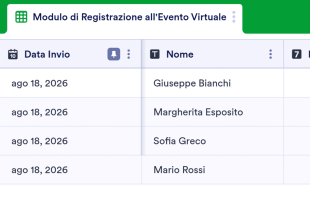
Foglio per le iscrizioni all’evento
Aumenta la tua efficienza e organizza al meglio l’intero processo di iscrizione al tuo evento online con questo modello gratuito di modulo di iscrizione! Condividi il modulo di registrazione online incluso e chiedi ai partecipanti di compilarlo da qualsiasi dispositivo: la tua tabella si aggiornerà automaticamente con le informazioni raccolte. Potrai così gestire facilmente i dati di contatto dei partecipanti, monitorare lo stato delle iscrizioni e persino tenere sotto controllo il tuo budget in una pratica tabella online professionale. Personalizza il foglio di calcolo in base alle esigenze della tua organizzazione o del tuo evento, senza scrivere una sola riga di codice. Aggiungi colonne, suddividi le informazioni in schede separate e passa dalla visualizzazione a foglio di calcolo a quella a schede o report. Puoi anche scaricare il tuo foglio di iscrizione all’evento in formato PDF, CSV o Excel e sincronizzarlo con altri account, come Google Drive, Dropbox e molti altri. Porta l’organizzazione del tuo evento a un livello superiore con il foglio di iscrizione online gratuito di Jotform!
Vai alla Categoria:Pianificazione di EventiInformazioni su Fogli per la Pianificazione di Eventi
Che tu sia responsabile di matrimoni, eventi aziendali o feste a casa, i nostri Modelli di Pianificazione di Eventi online gratuiti ti aiuteranno a rimanere organizzato su tutto. Per iniziare, seleziona uno dei Modelli di Tabella di Pianificazione Eventi di seguito e pubblica il modulo allegato per avere automaticamente le risposte sul tuo tavolo. Puoi raccogliere facilmente registrazioni di ospiti, candidature di volontari, feedback, donazioni e altro ancora online. Puoi anche importare file esterni direttamente nella Tabella di Pianificazione degli Eventi o aggiungere manualmente le informazioni per i dettagli del budget, gli elenchi degli invitati e altro ancora.
Senza alcuna programmazione, puoi personalizzare qualsiasi Modello di Tabella per la Pianificazione di Eventi per soddisfare le tue esigenze. Sentiti libero di aggiungere più schede per ulteriori dettagli sull'evento o di sincronizzare più di un modulo alla tua tabella. Visualizza i tuoi dati come un foglio di lavoro collaborativo, un calendario per tenere traccia della tua pianificazione o singole schede per ogni ospite. Puoi anche condividere il tuo Modello di Tabella per la Pianificazione di Eventi con altro personale dell'evento inviando inviti e-mail con un collegamento diretto. Mantieni tutti i dettagli importanti degli eventi organizzati con i nostri Modelli di Tabelle per la Pianificazione degli Eventi gratuiti!
Why Use Event Planning Sheets?
- By using Event Planning Sheets with Jotform Tables, form owners can eliminate the tedious manual transfer of submissions into spreadsheets, saving time and reducing errors. This streamlined process ensures that all event-related responses are stored in one centralized location for easy access.
- Managing submissions through these tables allows for quicker retrieval of records, as users can employ powerful search and filtering capabilities to locate specific entries based on event criteria or respondent details.
- Event Planning Sheets enable form owners to review complete submission details effortlessly, including any attached files or documents, ensuring that all necessary information is at their fingertips for informed decision-making.
- With the ability to coordinate follow-up actions directly from the connected table, users can efficiently manage communication with respondents, ensuring that no important task is overlooked in the event planning process.
- These templates enhance tracking changes and updates to submissions, providing a clear audit trail through features like revision history, which is particularly useful for collaborative planning efforts.
- By using Jotform Tables for submission management, users can generate reports on collected data, gaining insights into event trends and performance metrics, enabling more strategic planning and execution of future events.
Common Problems Solved by Event Planning Sheets
- Event planners often face the challenge of manually copying form submissions into spreadsheets, a process fraught with potential errors and inefficiencies. Jotform Tables automatically populates data from Jotform Forms, streamlining this process and reducing the risk of inaccuracies.
- Scattered responses can lead to difficulty in locating important records when needed. The centralized nature of these tables ensures that all responses are easily searchable and accessible, minimizing time spent sifting through disparate sources.
- Inconsistent review processes can result in overlooked details, but with Jotform Tables, users can ensure thorough and consistent review of all submissions by using detailed views and organized column structures.
- Managing uploads, such as event images or contracts, can be cumbersome when scattered across various platforms. Uploads View within Jotform Tables consolidates these files, making them easy to review and manage within the context of each submission.
- Unclear ownership of tasks or submissions can lead to delays and miscommunication. By assigning entries to specific team members within the table, users can ensure that responsibilities are clearly defined and tracked, facilitating smoother planning and execution.
Matching Form Submission Use Cases to Jotform Tables Features
- When event participants submit registration forms through a connected Jotform Form, the submissions automatically populate into the table, allowing form owners to quickly access and manage participant data in one place.
- Reviewing and organizing submissions is simplified with Table View and Detail View, where users can apply filters and group data by criteria such as event type or attendance status, ensuring efficient data handling and analysis.
- Team management is enhanced through access settings and assignees, allowing event planning teams to collaborate effectively on submissions, ensuring that each team member has the necessary permissions to view and edit relevant entries.
- For reporting purposes, users can utilize Report View to generate visual summaries and insights from the collected data, aiding in strategic decision-making and evaluation of event outcomes.
- With action buttons integrated into the table, users can trigger follow-up actions or communications directly from the submission entries, streamlining workflow and reducing the need for external tools.
How to Use Event Planning Sheets with Jotform Forms
- Start by selecting a relevant Event Planning Sheets template, creating a blank table, or using the table connected to an existing Jotform Form. The Jotform Form will collect category-specific information, and new responses will automatically populate the connected table, ensuring a seamless data flow.
- The form owner configures the table for submission review by naming columns, choosing appropriate column types, and selecting relevant views such as Table View, Detail View, Calendar View, Uploads View, or Report View to effectively manage and visualize the submissions.
- Form owners or team members can manage submissions by utilizing search, filters, grouping, formulas, access settings, and assignees. They can also track changes through revision history, link tables for comprehensive data management, and use action buttons to initiate follow-up tasks or communications.
Top Use Cases for Event Planning Sheets
- For Form Owners: Form owners who utilize connected Jotform Forms for collecting event-specific data can efficiently review incoming responses in Jotform Tables. They have the ability to edit submission data as needed and check details or uploads, such as event contracts or attendee lists. By keeping records organized in the table, form owners ensure that all necessary information is readily available for effective event planning and execution.
- For Teams: Authorized team members benefit from the collaborative features of Jotform Tables, as they can easily find submissions and maintain entries with the help of search and filters. The use of assignees allows team members to coordinate responsibilities, ensuring that each task is assigned to the appropriate individual. Access settings and revision history further support shared work by allowing team members to track changes and maintain version control.
- For Managers: Managers overseeing event planning can monitor collected data for category-specific patterns and trends. They can review progress or ownership of tasks and submissions using relevant views such as Report View for oversight. This enables managers to gain insights into event performance and make informed decisions to enhance future event planning and execution.
Summarizing Event Planning Sheets
Event Planning Sheets offer immense value by simplifying the process of collecting information through Jotform Forms and managing the resulting submissions in Jotform Tables. These table templates streamline the organization and analysis of event-related data, enabling users to efficiently handle registrations, feedback, and logistical requests. With Jotform Tables, form owners and teams can ensure that all necessary information is easily accessible, well-organized, and ready for actionable insights.
Domande Frequenti
1) Is it free to use Event Planning Sheets with Jotform Tables?
Jotform offers a Starter plan, which allows users to begin using Event Planning Sheets with Jotform Tables at no cost. This plan provides access to the fundamental features needed to manage submissions collected through Jotform Forms. Users can explore the capabilities of Jotform Tables and determine if they meet their event planning needs.
2) How do submissions from Jotform Forms appear in Event Planning Sheets?
Submissions from Jotform Forms automatically appear in the connected Event Planning Sheets as entries or rows. This seamless integration ensures that once a respondent submits a form, the data is directly transferred to the linked table without any manual intervention. Future responses continue to auto-populate the table, maintaining a consistent flow of information.
3) Can I edit, search, filter, group, and calculate data in Event Planning Sheets?
Yes, you can edit submissions and use various tools like search, filters, data grouping, formulas, and calculations within Event Planning Sheets. These capabilities allow users to organize and analyze the data effectively, ensuring that all relevant information is thoroughly reviewed and understood. However, it is important to note that these features do not make automated decisions on behalf of users.
Utilizzi dei fogli di budget
Event Planning Sheets support exporting data as CSV or Excel files, which can be useful for adding existing information alongside connected-form submissions. This feature provides flexibility in data management, allowing users to work with the data in different formats as needed for reporting or analysis purposes.
5) Which Jotform Tables views can I use with Event Planning Sheets?
With Event Planning Sheets, you can utilize several views such as Table View, Detail View, Calendar View, Report View, and Uploads View. Each view offers a unique perspective on your data, with Table View providing an overview of entries, Detail View allowing for in-depth examination, Calendar View visualizing dates and deadlines, Report View summarizing data insights, and Uploads View managing attached files.
6) Can teams collaborate on submissions in Event Planning Sheets?
Teams can effectively collaborate on submissions using features like access settings, collaboration, assignees, real-time tracking, and revision history. These capabilities ensure that all team members have the appropriate permissions to view and edit submissions as needed, facilitating coordinated efforts and maintaining an organized workflow.
7) Can I connect Event Planning Sheets to related data or other applications?
Yes, Event Planning Sheets can be connected to related data or other applications through linked tables and integrations. Action buttons can also be used to initiate specific tasks or workflows directly from the table. These features enhance the flexibility and functionality of the tables, allowing users to extend their data management capabilities.
8) Can I create reports, PDFs, and manage files from Event Planning Sheets?
Within Event Planning Sheets, you can create reports using Report View, generate PDFs from submission data, and manage files through Uploads View. If needed, you can also handle signed documents related to event planning. These capabilities enable users to effectively manage documentation and reporting, ensuring a comprehensive approach to event data management.