

Formularios bancarios
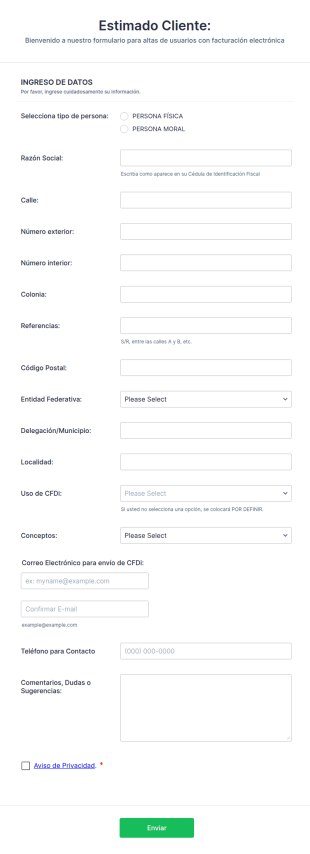
Formulario Para Altas De Usuarios Con Facturación Electrónica
Puede personalizar esta plantilla si necesita registrar a sus usuarios que tendrán facturación electrónica por sus productos o servicios. Puede usar widgets adicionales o integraciones de pago disponibles en el constructor si está disponible para su país.
Ir a la categoría:Formularios bancarios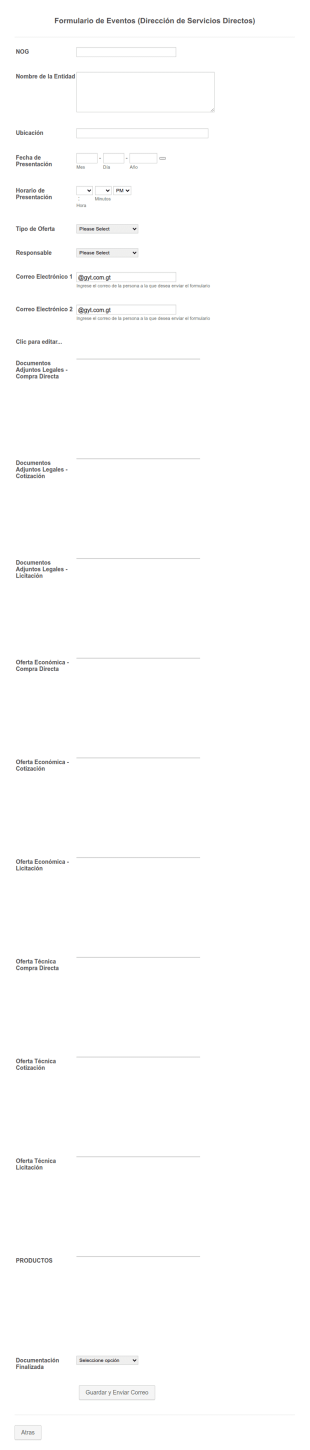
Formulario De Eventos Y Servicios Bancarios Directos
Para usarse en Bancos que gestionen cotizaciones de ofertas económicas o técnicas. El cliente le puede enviar estados financieros, documentos legales, de cotización, cartas notariales, declaraciones de IVA, etc.
Ir a la categoría:Formularios bancarios

Solicitud De Prestamos Semanal
este formulario sera utilizado para los prestamo edufin
Ir a la categoría:Formularios bancarios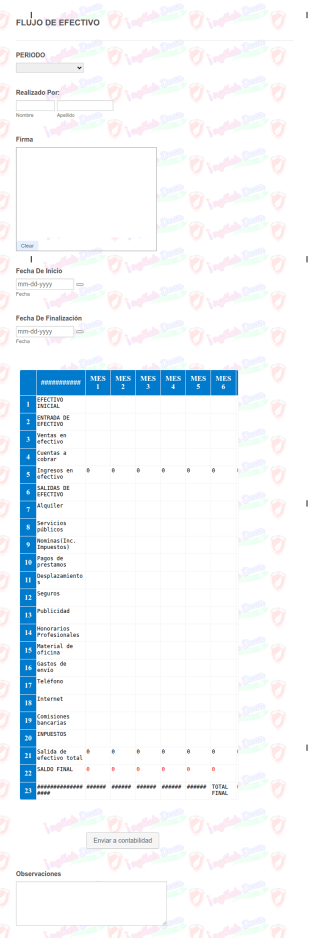
Formulario Control De Flujo De Efectivo
Plantilla administrativa para ingresar salidas de efectivo que personal administrativo, contadores o auxiliares contables pueden encontrar muy útil.
Ir a la categoría:Formularios bancarios

Formulario Celebridad All Levels
Para estudiantes de campus universitarios que quieran registrarse a campamentos, incluye reserva de transporte, método de pagos.
Ir a la categoría:Campamentos de verano

Formulario De Admisión Para Clientes
Un formulario de admisión de clientes de contabilidad es un cuestionario que vuestros clientes lo rellenan cuando quieren adquirir vuestros servicios por primera vez. Les piden que proporcionen la información contable y de su compañía y finalmente les pregunta qué servicios necesitan. Este formulario permite ayudar a agencias a determinar tanto si el cliente es idóneo para los servicios, como para establecer la estrategia de los prospectos, los intereses y puntos clave para ayudarles. Si queréis, podéis descargar, adicionalmente, los formularios de Jotform Móviles, y podréis ver los envíos desde cualquier dispositivo - ¡Incluso de manera offline! Podéis también convertir las respuestas enviadas a PDF, que podréis descargar o imprimir haciendo un clic. Con nuestras más de 100 integraciones, podéis obtener la información que necesitáis, y enviarla a vuestro servicio de almacenamiento favorito. Obtened la información que necesitáis por parte de vuestros clientes para mejorar vuestro negocio con el formulario gratuito de admisión de clientes de contabilidad.
Ir a la categoría:Formularios bancarios
Formulario De Autorización Bancaria
Una Autorización Bancaria es utilizada por compañías y organizaciones sin ánimo de lucro para obtener autorización por parte de sus clientes o donante, permitiendo procesar así las autorizaciones o depositar los pagos con su consentimiento. Con nuestro formulario gratuito de Formulario de Autorización bancaria, ¡podéis crear la autorización perfecta para vuestra compañía! Empezad modificando la plantilla para que así coincida con vuestra marca. Después, compartid el formulario para empezar a recopilar respuestas online. La información es recopilada de manera segura en vuestra cuenta de Jotform, protegida con el cumplimiento de la industria de tarjetas de crédito, GDPR y conexión 256-bit SSL.No importa cuál sea vuestro negocio o causa, asegurad a vuestros clientes o donantes haciéndoles llegar este formulario de autorización bancaria con vuestro branding profesional. Subid vuestro logo, cambiad los colores, añadid nuevos elementos al formulario utilizando nuestra funcionalidad de arrastrar y soltar. - Os llevará un par de minutos conseguir el efecto que queréis. Y si utilizáis otras cuentas para gestionar vuestros datos, como Salesforce, HubSpot, Google Sheets, o Dropbox, podéis sincronizar envíos a otras plataformas automáticamente con nuestras más de 100 integraciones. Agilizad la forma que recibís las autorizaciones bancarias al recopilarlas con el formulario.
Ir a la categoría:Formularios bancarios

Formulario De Cierre De Cuentas
Un formulario de cierre de cuentas es completado cuando se quiere cerrar una cuenta en el banco, unidad crediticia u otro tipo de institución financiera. En lugar de tener que enviar una carta a través de correo para solicitar el cierre de la cuenta en vuestra compañía. ¿Por qué no utilizar nuestro formulario gratuito de cierre de cuentas para así recopilar la información importante del cliente y la cuenta y así tenerlo todo de manera online? Los miembros del banco o compañía, pueden enviar este formulario, incluyendo sus nombres, número de cuenta y tipo, información de contacto y firmas, directamente a través del formulario online. Todos los envíos serán guardados en su cuenta segura de Jotform para que así tengáis un fácil acceso. Utilizad nuestro creador de Formularios de arrastrar y soltar para personalizar vuestro formulario de cierre de cuentas, sin necesidad de utilizar código. Sentiros en total libertad de añadir más elementos al formulario, añadido los términos y condiciones, cambiad el fondo con una fotografía, y subid vuestro logo. Incrementad la eficiencia integrando el formulario a otras aplicaciones - Jotform instantáneamente pasará los envíos a vuestras tablas de Excel, a vuestros tableros de gestión de producto, a las cuentas en la nube, o en vuestros sistemas de CRM. Al hacer que vuestro banco haga los procesos de cierre de cuentas online, os podréis asegurar que los clientes han cerrado de manera segura y correcta su cuenta sin retrasos.
Ir a la categoría:Formularios bancarios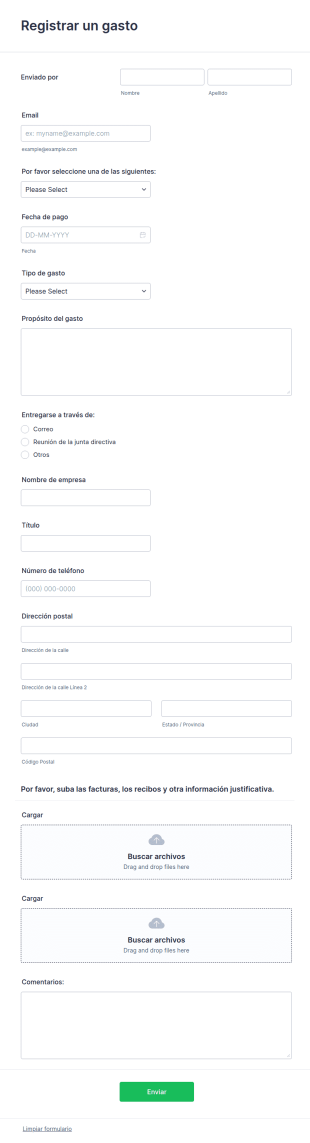
Formulario De Registro De Gastos
Los usuarios le proporcionan información sobre las transacciones a través de este formulario de registro de gastos para ayudarle a gestionar las transacciones fácilmente.
Ir a la categoría:Formularios bancarios
Prohibido Rendirse 4
Formulario individual para personas que pagan con tarjeta o cajas uabc
Ir a la categoría:Formularios bancarios
Prohibido Rendirse 3
Inscribir a participantes que tienen código de referencia
Ir a la categoría:Formularios bancariosAcerca de Formularios bancarios
Banking Forms are specialized digital forms designed to facilitate various financial operations within the banking industry. These forms serve as crucial components for managing transactions, customer onboarding, loan applications, and numerous other financial services. In real-world workflows, Banking Forms streamline processes such as account opening, customer inquiries, and compliance procedures, ensuring that data is captured accurately and securely. By digitizing these workflows, banks can enhance customer experiences and improve operational efficiency significantly.
Jotform se perfila como el mejor creador de formularios en línea para diseñar y gestionar formularios bancarios. Su plataforma brinda una facilidad de personalización sin igual, lo que permite a los profesionales del sector bancario adaptar los formularios a sus necesidades específicas de manera sencilla. La capacidad de Jotform para automatizar la recopilación de datos disminuye los errores de introducción manual y agiliza los tiempos de tramitación. Además, la gestión centralizada de datos a través de Jotform Tablas garantiza que toda la información esté organizada, sea accesible y pueda analizarse para obtener información útil, lo que mejora los procesos de toma de decisiones en el sector bancario.
¿Por qué utilizar formularios bancarios?
- Los formularios bancarios son fundamentales para garantizar la exactitud de los datos financieros, ya que permiten minimizar los errores humanos asociados a la introducción manual de datos. Al automatizar las entradas, los bancos pueden mantener un alto nivel de precisión en sus registros, lo cual es fundamental para las auditorías y el cumplimiento normativo.
- La rapidez es una ventaja significativa del uso de formularios bancarios, puesto que permiten tramitar con rapidez las transacciones financieras y las solicitudes de los clientes. Esta eficacia no solo mejora la satisfacción del cliente, sino que también potencia la productividad general de las operaciones bancarias.
- La rapidez es una ventaja significativa del uso de formularios bancarios, puesto que permiten tramitar con rapidez las transacciones financieras y las solicitudes de los clientes. Esta efectividad no solo mejora la satisfacción del cliente, sino que también potencia la productividad general de las operaciones bancarias.
- Los formularios bancarios favorecen una integración perfecta con otros sistemas bancarios, lo que permite la sincronización de datos en tiempo real y una mayor automatización de los flujos de trabajo. Esta capacidad de integración mejora la fluidez operativa de las entidades bancarias.
- Las plantillas personalizables de formularios bancarios permiten a los bancos adecuarse rápidamente a los cambios en los requisitos normativos y las condiciones del mercado. Esta flexibilidad asegura que los bancos sigan cumpliendo con la normativa y respondan con agilidad a los cambios del sector.
Problemas habituales que resuelven los formularios bancarios
- Una de las principales cuestiones que aborda los formularios bancarios es la reducción del papeleo. Los procesos bancarios tradicionales a menudo implican una gran cantidad de papeleo, lo que puede resultar engorroso y propicio a la pérdida de documentos. Los formularios digitales eliminan este problema al proporcionar una solución de almacenamiento digital fiable.
- La introducción manual de datos es otro de los principales problemas del sector bancario, que a menudo da lugar a errores e ineficiencias. Los formularios bancarios automatizan este proceso, lo que garantiza que los datos se introduzcan de manera precisa y rápida.
- La pérdida de datos es un problema grave, sobre todo en las transacciones financieras, donde cada dato es vital. Los formularios bancarios garantizan que todos los datos se almacenen de manera segura y sean fácilmente accesibles, lo que reduce el riesgo de pérdida de datos.
- La gestión del cumplimiento normativo puede resultar compleja y llevar mucho tiempo. Los formularios bancarios simplifican este proceso al automatizar los controles de cumplimiento y garantizar que toda la información necesaria se recopile y almacene de acuerdo con las normas reglamentarias.
Funciones según el caso de uso
- Para la incorporación de clientes, el creador de formularios de arrastrar y soltar permite a los bancos crear formularios personalizados e intuitivos que optimizan el proceso de incorporación, mejorando así la experiencia del cliente.
- El uso de condiciones lógicas en los formularios bancarios permite que estos se comporten de forma dinámica, adaptando las preguntas en función de las respuestas anteriores. Esta función resulta ideal para los formularios de solicitud de préstamos, en los que se necesitan diferentes rutas en función de las respuestas del cliente.
- With 30+ Payment Gateways like Stripe and PayPal, Banking Forms facilitate seamless online transactions, making it easy for customers to make payments directly through the forms.
- La función de firmas electrónicas (Jotform Firmas) es fundamental para la aprobación de contratos y documentos, ya que permite a los clientes firmar documentos de forma digital, lo que permite acelerar los plazos de tramitación y reducir la necesidad de desplazamientos presenciales.
- El editor de PDF (generación automática de PDF) resulta muy útil para crear copias profesionales y descargables de los formularios enviados, que pueden emplearse para los registros de los clientes o como documentación de cumplimiento normativo.
- La gestión segura de datos a través de Jotform Tablas garantiza que todos los datos recopilados se almacenen de manera segura, lo que proporciona a los profesionales del sector bancario tranquilidad en lo que respecta a la protección y la organización de los datos.
- Los flujos de trabajo de aprobación reducen el proceso de revisión interna al automatizar el envío de formularios a los departamentos correspondientes, lo que asegura que las acciones y decisiones se tomen a tiempo.
Cómo crear un formulario bancario
- Busque una plantilla para bancos en la lista de plantillas o empiece con un formulario en blanco.
- La automatización de los flujos de trabajo permite a las empresas optimizar sus operaciones financieras gracias a la automatización de tareas repetitivas, como la facturación y los recordatorios de pago. Esto se refleja en una mayor efectividad y en una reducción de los costes operativos.
- La función creador de tiendas permite a las empresas integrar una tienda online completa en su aplicación, mejorando la experiencia del cliente desde la selección del producto hasta la finalización del pago de forma fluida.
Principales casos de uso de los formularios bancarios
- Para directivos: Los directivos pueden aprovechar los formularios bancarios para obtener información en tiempo real sobre las operaciones financieras y las interacciones con los clientes. Al utilizar las funciones de generación de informes de Jotform, pueden analizar tendencias y tomar decisiones fundamentadas que mejoren la eficacia operativa. La gestión centralizada de los datos garantiza, asimismo, que todas las decisiones directivas se basen en información precisa y actualizada.
- Para equipos: Los equipos del sector bancario se benefician de formularios que permiten optimizar la comunicación y el intercambio de datos. Gracias a las capacidades de integración de Jotform, los miembros del equipo pueden colaborar sin problemas, lo que asegura que todos los departamentos estén coordinados y trabajen con el mismo objetivo. La automatización de las tareas rutinarias permite a los equipos centrarse en iniciativas más estratégicas, mejorando así la productividad general.
- Para clientes: Los clientes disfrutan de un proceso bancario más ágil gracias al uso de los formularios bancarios digitales. Estos formularios disminuyen la necesidad de acudir en persona a la sucursal, lo que permite a los clientes realizar transacciones, presentar solicitudes y realizar consultas en línea cuando les resulte más conveniente. La facilidad de uso y la accesibilidad de estos formularios mejoran enormemente la satisfacción y la fidelidad de los clientes.
Resumen de formularios bancarios
Los formularios bancarios son indispensables para transformar la manera en que los bancos gestionan los datos, interactúan con los clientes y gestionan sus operaciones. Al digitalizar y automatizar distintos procesos bancarios, estos formularios ayudan a las entidades a mejorar la precisión, la rapidez y la profesionalidad de sus servicios. El creador de formularios en línea de Jotform proporciona las herramientas necesarias para personalizar y gestionar estos formularios de manera efectiva, garantizando que los bancos puedan cumplir tanto sus objetivos operativos como las expectativas de los clientes. A medida que el sector bancario sigue evolucionando, estos formularios desempeñan un papel fundamental para mantener la ventaja competitiva y el cumplimiento normativo.
Preguntas Frecuentes
1. ¿Qué es una plantilla de formulario bancario?
Sí, Jotform cuenta con un plan gratuito que permite a los usuarios crear y utilizar formularios bancarios, aunque con algunas limitaciones en cuanto al número de envíos y a las funciones, lo que lo hace adecuado para operaciones a pequeña escala o pruebas iniciales.
2. ¿Por qué son importantes los formularios de TI para las organizaciones?
Sin duda, Jotform garantiza la seguridad de todos los formularios y datos mediante protocolos avanzados de cifrado y el cumplimiento de la normativa en materia de protección de datos, garantizando la confidencialidad y la integridad de la información sensible.
3. ¿Qué información se requiere normalmente en un formulario bancario?
LNo, el Creador de formularios Jotform de arrastrar y soltar le permite crear formularios bancarios totalmente personalizados sin necesidad de tener conocimientos de programación, lo que lo hace accesible y fácil de usar para usuarios de todos los niveles.
4. ¿Existen diferentes tipos de formularios de TI?
Sí, existen varios tipos, incluyendo formularios de apertura de cuenta, solicitudes de préstamo, formularios de cumplimiento KYC/AML, solicitudes de transferencia bancaria y encuestas de opinión de clientes.
5. ¿Quién debe usar formularios de TI?
Las plantillas de formularios bancarios son utilizadas por el personal bancario, oficiales de préstamos, equipos de cumplimiento, asesores financieros y clientes que buscan acceder o gestionar servicios bancarios.
6. ¿Cómo mejoran los formularios de TI la eficiencia del flujo de trabajo?
Los formularios bancarios se pueden personalizar para recopilar toda la información y documentación necesaria requerida para KYC, AML y otros estándares normativos, ayudando con el cumplimiento y la preparación para auditorías.
7. ¿La información enviada por medio de los formularios bancarios es segura?
Sí. Jotform ofrece más de 100 integraciones con herramientas de terceros, incluida Salesforce, para que pueda sincronizar y transferir datos con sus sistemas de CRM existentes de forma sencilla y mejorar la eficiencia operativa.
8. ¿Los formularios bancarios se pueden integrar con otro software financiero?
Los formularios bancarios reducen la carga administrativa en la recopilación y gestión de datos relacionados con el cumplimiento normativo, y garantizan que toda la información necesaria se registre con precisión y se almacene de manera segura para cumplir con la normativa del sector.