

Formularios para bienes raíces
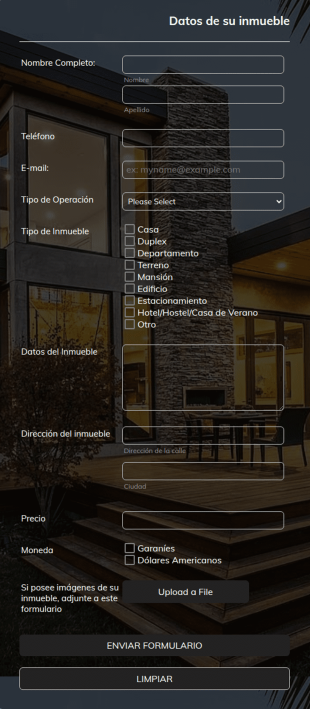
Formulario De Bienes Raíces
¿Es agente de Bienes Raíces y quiere atraer clientes para que usted les venda sus inmuebles? Este formulario le ayudará en sus esfuerzos de ventas. Deje a sus clientes impresionados con este atractivo tema.
Ir a la categoría:Formularios de negocio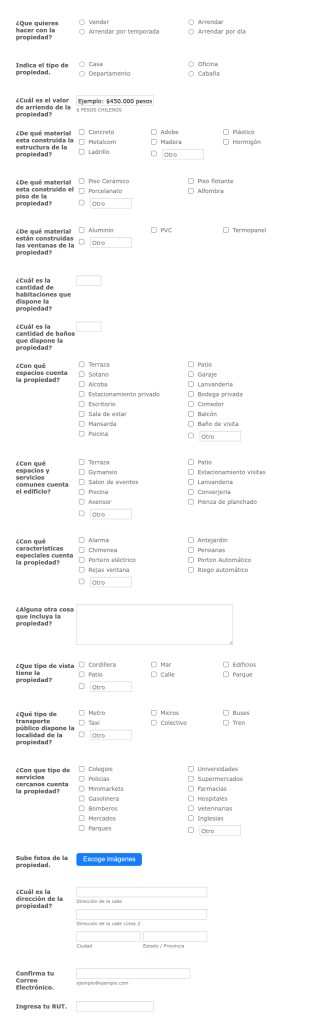
Formulario De Registro De Propiedades
Un cuestionario que sirve de contacto y para registrar propiedades en venta o alquiler, los usuarios podrán seleccionar el tipo de propiedad, estipular el valor de venta o arriendo, materiales de construcción, número de espacios, etc.
Ir a la categoría:Formularios de negocio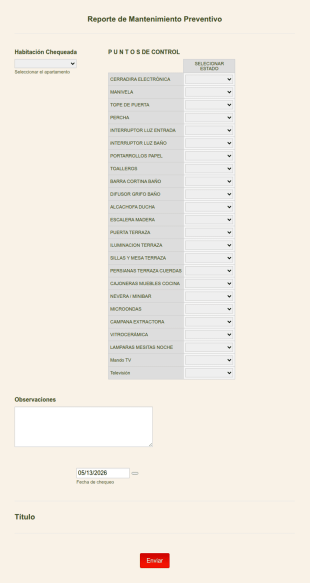
Reporte De Mantenimiento Preventivo De Habitaciones De Hotel
Para Revisión y chequeo preventivo de Habitaciones y Apartamentos turisticos. Útil para personal administrativo de limpieza y mantenimiento de hoteles y hostales
Ir a la categoría:Formularios para bienes raíces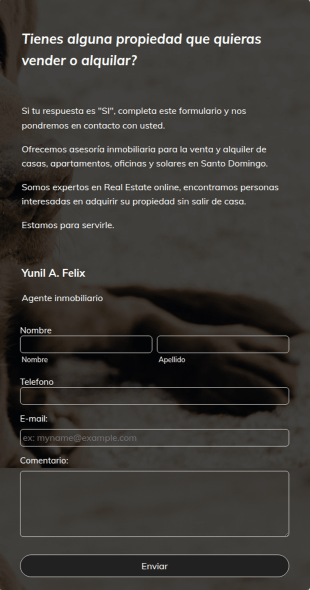
Captación De Propiedades.
Formulario para captar propiedades.
Ir a la categoría:Formularios para bienes raíces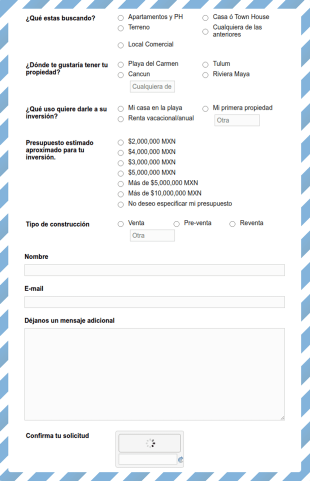
Formulario De Precalificación De Clientes De Bienes Raíces
Un cuestionario destinado a asesores inmobiliarios. Sus clientes pueden contactarlo con la información pertinente a la propiedad o inmueble en la que están interesados.
Ir a la categoría:Formularios de negocio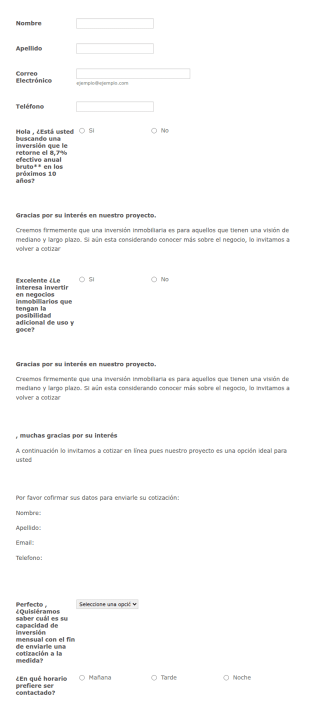
Cotización De Inversión Inmobiliaria
Formulario de contacto para interesados en invertir en bienes raíces.
Ir a la categoría:Formularios para bienes raíces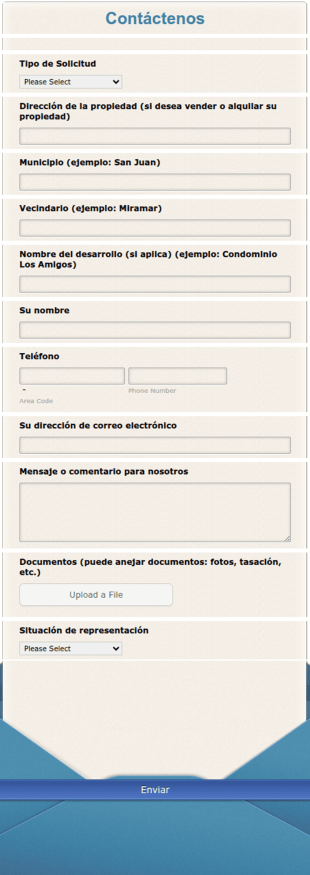
Contact Form Scn
Con este formulario, usted puede presentar una propiedad para que pueada ser representada por un Agente de ventas. Indique si desea alquilar, comprar o vender y envie archivos para Ilustras la propiedad.
Ir a la categoría:Formularios de contacto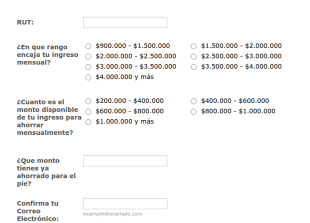
Formulario De Calificación De Clientes Inmobiliarios
Si tiene una agencia inmobiliaria o se dedica a dar asesoría sobre bienes raíces, puede usar este ejemplo para calificar a sus clientes
Ir a la categoría:Formularios para bienes raíces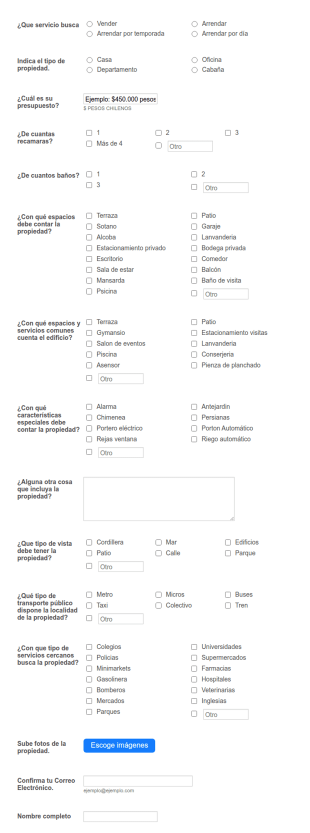
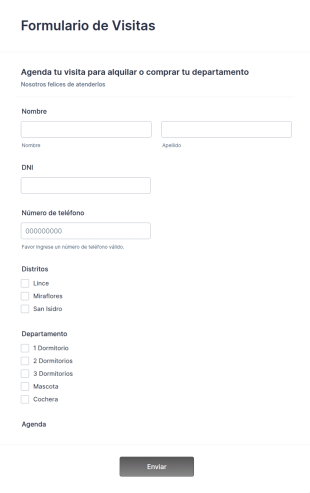
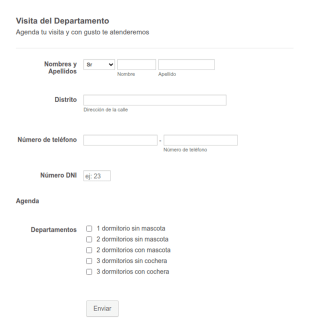
Visitas Departamentos
Para hacer la visita a los departamentos Llena el siguiente formulario
Ir a la categoría:Formularios para bienes raíces
Caslex
Perfecto para depuración de personas que esta solicitando alquilar una propiedad
Ir a la categoría:Formularios para bienes raíces
Evaluación Y Seguimiento De Desarrollo De Fincas
Un formulario muy bien elaborado para reconversión y caracterización de fincas. Recopila datos de propietario, evaluación de ecosistemas, formaciones geo-morfológicas, tipos de suelos entre otros muchos detalles. Ideal para instituciones dedicadas a actividades relacionadas, usada principalmente por topógrafos, ambientalistas, conservacionistas, ecologistas y agrónomos.
Ir a la categoría:Formularios de negocio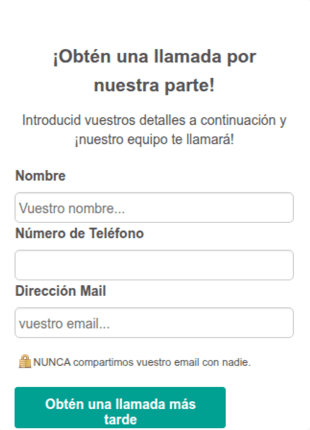
Formulario De Generación De Leads Inmobiliarios
El formulario de generación de leads inmobiliarios es utilizado para capturar los detalles de un comprador o vendedor potencial de bienes inmuebles. Un formulario de generación de leads incluye el contacto y los detalles personales, junto con una solicitud de información actualizada. Un formulario de generación de leads inmobiliarios puede ser utilizado en conjunción con otros formularios para ayudar a organizar y mantener la información que recopiláis. Un formulario de generación de leads de bienes inmuebles es ideal para los agentes inmobiliarios, brókeres y cualquier persona involucrada con los bienes inmuebles para así capturar información de potenciales clientes. Simplemente, personalizad la plantilla añadiendo nuevos campos o eliminando los existentes. Añadid vuestro logo y contenido informativo. Puedes personalizar el diseño sin necesitar sin una única línea de código. Poned este formulario en vuestra página web, compartid vía el código QR o utilizadlo por sí solo.
Ir a la categoría:Formularios para bienes raíces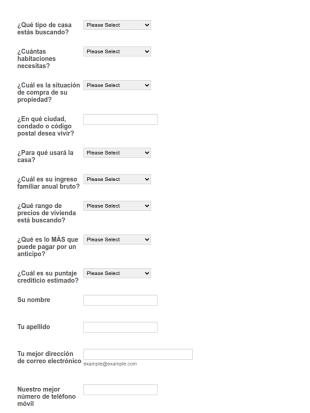
Cuestionario De Inversión Inmobiliaria
Cuestionario que capta todos los datos necesarios para evaluar al cliente y definir si califica para la compra de una o varias propiedades.
Ir a la categoría:Formularios para bienes raíces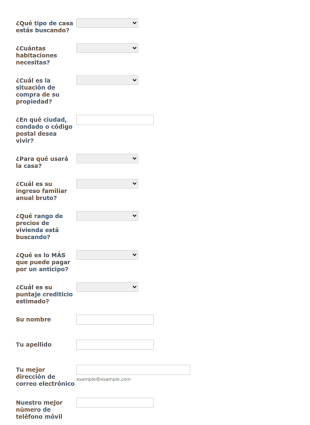
Home Buyer Spanish Template Mortgage Growth System
Home Buyer Spanish Template - Mortgage Growth System
Ir a la categoría:Formularios para bienes raíces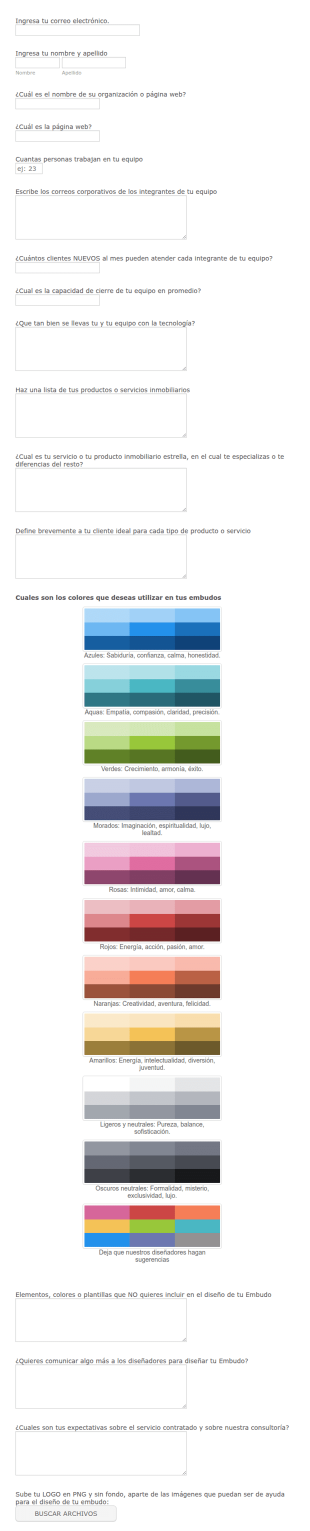
Brief Digital AGENCIA DI
Brief Digital <textarea id="BFI_DATA" style="width: 1px; height: 1px; display: none;" /> TRANSLATE with x <input id="LanguageMenu_svid" style="display: none;" autocomplete="on" name="LanguageMenu_svid" type="text" value="en" /> <input id="LanguageMenu_textid" style="display: none;" autocomplete="on" name="LanguageMenu_textid" type="text" /> English Arabic Hebrew Polish Bulgarian Hindi Portuguese Catalan Hmong Daw Romanian Chinese Simplified Hungarian Russian Chinese Traditional Indonesian Slovak Czech Italian Slovenian Danish Japanese Spanish Dutch Klingon Swedish English Korean Thai Estonian Latvian Turkish Finnish Lithuanian Ukrainian French Malay Urdu German Maltese Vietnamese Greek Norwegian Welsh Haitian Creole Persian TRANSLATE with COPY THE URL BELOW <input id="ShareTextbox" name="ShareTextbox" readonly="readonly" type="text" /> Back <input id="EmailSubject" name="EmailSubject" type="hidden" value="Check out this page in {0} translated from {1}" /> <input id="EmailBody" name="EmailBody" type="hidden" value="Translated: {0}%0d%0aOriginal: {1}%0d%0a%0d%0aAutomatic translation powered by Microsoft Translator%0d%0ahttp://www.bing.com/translator?ref=MSTWidget" /> <input id="ShareHelpText" type="hidden" value="This link allows visitors to launch this page and automatically translate it to {0}." /> EMBED THE SNIPPET BELOW IN YOUR SITE <input id="EmbedSnippetTextBox" name="EmbedSnippetTextBox" readonly="readonly" type="text" value="<div id='MicrosoftTranslatorWidget' class='Dark' style='color:white;background-color:#555555'></div><script type='text/javascript'>setTimeout(function(){var s=document.createElement('script');s.type='text/javascript';s.charset='UTF-8';s.src=((location && location.href && location.href.indexOf('https') == 0)?'https://ssl.microsofttranslator.com':'http://www.microsofttranslator.com')+'/ajax/v3/WidgetV3.ashx?siteData=ueOIGRSKkd965FeEGM5JtQ**&ctf=true&ui=true&settings=manual&from=en';var p=document.getElementsByTagName('head')[0]||document.documentElement;p.insertBefore(s,p.firstChild); },0);</script>" /> Enable collaborative features and customize widget: Bing Webmaster Portal Back
Ir a la categoría:Formularios para bienes raíces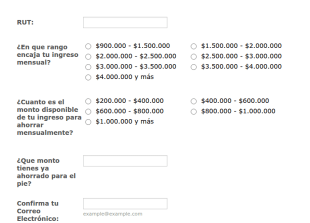
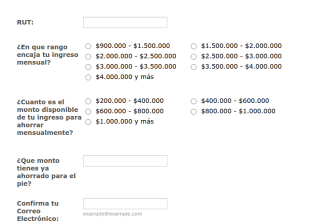
Estado De Situación Chile
Todos los datos necesarios para poder precalificar a un cliente en búsqueda de comprar una propiedad.
Ir a la categoría:Formularios para bienes raíces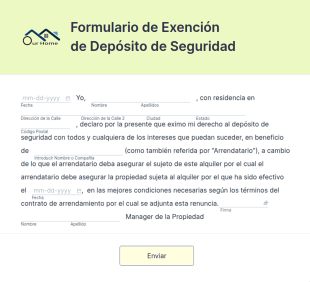
Formulario De Exención De Depósito de Seguridad
Un formulario de exención de deposito de seguridad es un documento formal que es creado para garantizar o eximir la cantidad del depósito de seguridad que se proporciona al propietario como medida de seguridad. Esto es dinero que se proporciona para cubrir posibles daños que puedan suceder en la estancia del alquiler, o incluso para compensar cualquier impago que la seguridad de este depósito pueda cubrir. La exención del depósito de seguridad en este caso, garantiza o asume si un incidente ocurre o no durante el término del contrato con el arrendador. Para proteger el interés de la otra parte, se requieren formalidades que sean enviadas por escrito. La plantilla de exención de depósito de seguridad es un formulario web que una de las partes podrá rellenar en cualquier momento desde cualquier sitio. No necesitáis traer una copia impresa para rellenarlo en físico. Este formulario puede ser descargado en cualquier dispositivo o en el ordenador. Firmarlo no será ningún problema. Hay disponible campos donde firmar se podrá realizar tal y como lo harías en papel. Si disponéis de una propiedad en alquiler para diversas unidades, esto es una herramienta útil si ofrecéis un depósito de exención por circunstancias. Podréis fácilmente investigar y gestionar vuestros seguros de depósito con este formulario y eliminar posibles errores de divulgar exenciones a inquilinos que no son elegibles. Este formulario sencillo puede ser modificado también. Únicamente copiad la plantilla a vuestra cuenta de Jotform y empezad a explorar lo que este formulario puede hacer para vuestro negocio. Este formulario sencillo puede ser modificado. Únicamente copiad la plantilla a vuestra cuenta de Jotform y empezad a explorar lo que este formulario puede hacer para vuestro negocio.
Ir a la categoría:Formularios para bienes raíces
Ae Agency Crédito Bancario
Formulario para clientes de Fovissste para Todos.
Ir a la categoría:Formularios para bienes raíces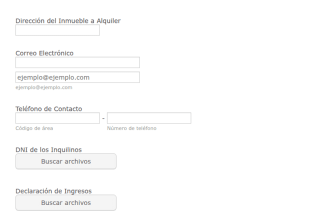
Solicitud Para Alquilar
Solicitud para Alquilar
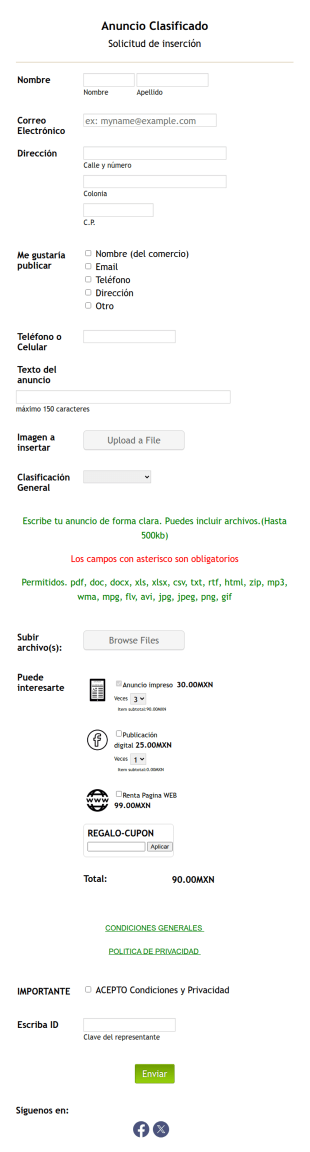
Solicitud De Inserción Anuncio Clasificado
Si usted tiene una agencia o periódico en línea, puede usar este formulario para que sus clientes soliciten
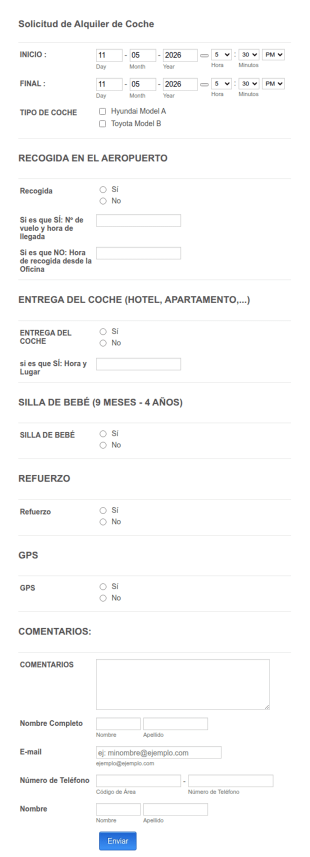
Formulario De Solicitud De Alquiler De Coche
Este formulario de solicitud de alquiler de coche recopila información como la fecha y hora de recogida, el tipo de coche preferido, los detalles de la recogida, el carrito del bebé, refuerzos, características de GPS, mayor comentario e información de contacto, que así permita a los clientes fácilmente alquilar un coche. Es ilegal en muchas áreas no tener un sillín de bebés, con lo que debe ser una buena idea proporcionar esta opción a vuestros clientes en la solicitud de alquiler de coches.Podéis añadir los tipos de coche de alquiler con una pregunta de selección para así permitir a los clientes que seleccionen el tipo de coche que prefieran alquilar. Personalizad la plantilla a través de una variedad de herramientas y widgets, añadid vuestro logo, imágenes, fuentes, integradlas con los sistemas de pago, y recopilad pagos, tanto si está puesto en vuestra página web, como si lo utilizamos como un formulario por sí mismo.
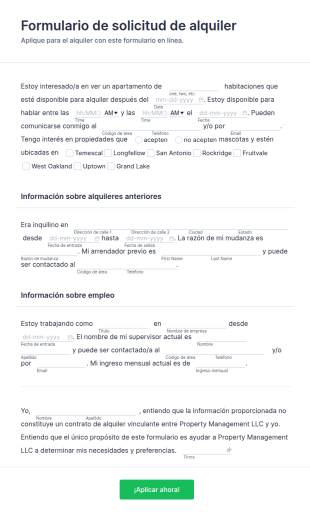
Formulario De Solicitud De Alquiler De Casa
Recopile solicitudes de alquiler de casas en línea con un formulario de solicitud de alquiler gratuito. Fácil de personalizar, insertar y compartir. Sincronice las respuestas con más de 100 aplicaciones.
Acerca de Formularios para bienes raíces
Los formularios para el sector inmobiliario son formularios digitales fundamentales que utilizan los profesionales del sector para optimizar diversas tareas, como la publicación de anuncios inmobiliarios, la gestión de clientes y la tramitación de transacciones. Estos formularios contribuyen a una comunicación y un intercambio de datos eficientes entre agentes inmobiliarios, compradores, vendedores y otras partes interesadas. Entre los casos de uso operativos más habituales se incluyen la recopilación de opiniones de los clientes, la tramitación de solicitudes de alquiler, la gestión de visitas a inmuebles y la gestión de acuerdos contractuales. En los flujos de trabajo reales, estos formularios ayudan a los profesionales del sector inmobiliario a mantener registros organizados, garantizar el cumplimiento de los requisitos normativos y mejorar la eficacia operativa general mediante la automatización de tareas repetitivas y la reducción al mínimo de la necesidad de documentación en papel.
Jotform stands out as the premier online form builder for creating and managing Real Estate Forms, offering users an intuitive platform that is both flexible and powerful. With Jotform, real estate professionals can easily customize forms to suit specific needs, ensuring that data collection processes are tailored to their unique workflows. The platform's ability to automate data collection not only speeds up operations but also reduces the likelihood of errors in manual data entry. Moreover, Jotform Tables provide a centralized data management solution, enabling users to organize, analyze, and access their collected data with ease, thereby supporting informed decision-making and improving overall business performance.
Why Use Real Estate Forms?
- Real Estate Forms offer unparalleled accuracy by eliminating the need for manual data entry, which can often result in errors and inconsistencies. By using digital forms, real estate professionals can ensure that all information is captured correctly and consistently, reducing the risk of miscommunication and errors in important documents.
- Speed is a critical factor in the fast-paced world of real estate, and Real Estate Forms significantly enhance operational efficiency. By automating routine tasks such as client information collection and property listing updates, these forms allow agents to focus more on closing deals and less on paperwork.
- Professional data handling is made easy with Real Estate Forms, as they are designed to manage large volumes of data securely and efficiently. With features like electronic signatures and secure data storage, sensitive client information is protected, fostering trust and confidence among clients.
- Real Estate Forms facilitate seamless communication between real estate agents and clients. Automated notifications and updates ensure that all stakeholders are informed promptly, which helps maintain transparency and improve client satisfaction.
- La posibilidad de integrar los formularios inmobiliarios con otras plataformas, como Google Sheets y Salesforce, permite mejorar la gestión y el análisis de los datos. Esta capacidad de integración asegura que los datos recopilados a través de los formularios puedan transferirse y utilizarse fácilmente en distintos sistemas, lo que proporciona una visión global de las operaciones empresariales.
Common Problems Solved by Real Estate Forms
- One of the major pain points in the real estate industry is the overwhelming amount of paperwork involved in transactions. Real Estate Forms alleviate this issue by digitizing documents, making it easier to handle, store, and retrieve information without the need for physical storage space.
- Manual data entry is not only time-consuming but also prone to errors. Real Estate Forms solve this problem by automating data collection and entry processes, ensuring that information is captured accurately and efficiently, thus reducing the workload on administrative staff.
- Lost or misplaced documents can lead to significant delays and complications in real estate transactions. By using digital forms, professionals can ensure that all documents are stored securely online, easily accessible whenever needed, and backed up to prevent data loss.
- The need for real-time updates and collaboration is crucial in real estate. Real Estate Forms facilitate this by allowing multiple stakeholders to access and update information simultaneously, ensuring everyone is on the same page and reducing the chances of miscommunication.
Funciones según el caso de uso
- For real estate agents who need to manage client feedback efficiently, the Drag-and-Drop Form Builder allows for quick customization of feedback forms. This feature ensures that agents can easily tailor forms to gather specific information, enhancing the quality of client interactions.
- The Conditional Logic feature is ideal for managing property showings, as it allows forms to adapt based on user input, ensuring that clients receive the most relevant information and options based on their preferences and needs.
- Con más de 30 pasarelas de pago disponibles, entre las que se incluyen Stripe y PayPal, los profesionales del sector inmobiliario pueden cobrar sin complicaciones los pagos por servicios como tasaciones inmobiliarias o tasas de solicitud directamente a partir de sus formularios, lo que permite agilizar el proceso de las transacciones financieras.
- Electronic Signatures provided by Jotform Sign are invaluable for processing contracts and agreements in a secure and legally binding manner, reducing the need for in-person meetings and speeding up the transaction process.
- The PDF Editor feature is perfect for generating automated, professional-looking PDF documents from form submissions, such as lease agreements or sales contracts, ensuring that all documents are standardized and easily shareable.
- El generador de reportes permite a los equipos inmobiliarios analizar los datos recopilados a través de formularios y generar reportes detallados. Esta función es esencial para tomar decisiones basadas en datos y mejorar las estrategias empresariales en función de las tendencias y los patrones observados en los datos.
- With Jotform's Offline Data Collection capability, agents can gather information even without an internet connection, ensuring that data collection processes are not disrupted in areas with poor connectivity, thereby maintaining productivity.
How to Create a Real Estate Form
- Start by browsing the Template List for a Real Estates template that suits your needs, or begin from a blank form if you prefer to create a custom design from scratch.
- Customize the design and fields of your form using the Drag-and-Drop Form Builder. This intuitive feature allows you to add, remove, or rearrange form elements effortlessly to match your specific requirements.
- Once your form is ready, publish it and share it with your intended audience via a Direct Link, Email, or by embedding it on your website. This ensures that your form is accessible to all stakeholders involved in the process.
Top Use Cases for Real Estate Forms
- For Managers: Real Estate Forms empower managers to oversee operations by providing a centralized platform for data collection and management. Managers can use these forms to track performance metrics, manage team assignments, and ensure compliance with industry regulations. The data collected can be analyzed to identify areas for improvement and make informed strategic decisions that enhance overall business efficiency.
- Para equipos: Los equipos inmobiliarios sacan partido de los formularios inmobiliarios, puesto que facilitan la colaboración y la comunicación. Estos formularios permiten a los miembros del equipo compartir información sin problemas, coordinar los anuncios de propiedades y gestionar de manera eficaz las interacciones con los clientes. Gracias a funciones como las notificaciones automáticas y las condiciones lógicas, los miembros del equipo pueden mantenerse informados y responder rápidamente a cualquier cambio, lo que les garantiza mantener su agilidad en un mercado competitivo.
- For Customers: Customers experience improved service quality when real estate professionals use Real Estate Forms. These forms enable easy and prompt submission of inquiries, applications, and feedback, enhancing the client experience. By providing a straightforward and efficient method for interactions, customers are more likely to engage positively with the real estate process, resulting in higher satisfaction and loyalty.
Summarizing Real Estate Forms
Real Estate Forms are an invaluable asset for professionals in the real estate industry, offering a comprehensive solution for managing data collection and streamlining operations. By utilizing Jotform's online form builder, real estate agents, managers, and teams can benefit from enhanced accuracy, speed, and security in their workflows. The ability to customize forms, automate data processes, and integrate with other platforms ensures that real estate businesses can operate efficiently and effectively. As a result, Real Estate Forms not only improve the daily operations of real estate professionals but also contribute to superior customer service and business growth.
Preguntas Frecuentes
1. ¿Qué es una plantilla de formulario para bienes raíces?
Sí, Jotform cuenta con un plan gratuito que permite a los usuarios crear y utilizar formularios inmobiliarios. No obstante, también hay planes premium disponibles que ofrecen acceso a funciones avanzadas y mayores límites de envío.
2. ¿Por qué son importantes los formularios de TI para las organizaciones?
Optimizan la recopilación de datos, reducen el papeleo, minimizan los errores y garantizan que toda la información necesaria se recopile de manera eficiente, ayudando a los profesionales a mantenerse organizados y receptivos.
3. ¿Qué información se suele recopilar en un formulario inmobiliario?
No, no necesita tener conocimientos de programación para crear un formulario inmobiliario con Jotform. El creador de formularios de arrastrar y soltar de la plataforma está diseñado para ser sencillo de usar, lo que le permite crear formularios profesionales sin necesidad de conocimientos técnicos.
4. ¿Existen diferentes tipos de formularios de TI?
Sí, Jotform es compatible con más de 30 pasarelas de pago, lo que le permite cobrar directamente a través de sus formularios inmobiliarios. Esta función simplifica las transacciones financieras relacionadas con servicios como las tasas de solicitud o las tasaciones inmobiliarias.
5. ¿Quién debe usar formularios de TI?
Los agentes inmobiliarios, corredores, administradores de propiedades, propietarios, inquilinos, compradores, vendedores y personal de mantenimiento pueden beneficiarse del uso de estas plantillas.
6. ¿Cómo mejoran los formularios de TI la eficiencia del flujo de trabajo?
Los formularios digitales garantizan que toda la información requerida sea recopilada y almacenada de forma segura, facilitando el cumplimiento de los requisitos legales y el mantenimiento de registros precisos.
7. ¿Se pueden personalizar los formularios inmobiliarios para propiedades o transacciones específicas?
Los formularios para el sector inmobiliario favorecen una mejor comunicación con los clientes al proporcionar notificaciones y actualizaciones automáticas, lo que asegura que los clientes reciban información y respuestas oportunas, mejorando así la transparencia y la confianza.
8. ¿Los envíos a formularios inmobiliarios son seguros y privados?
Sí, los formularios inmobiliarios facilitan el cumplimiento normativo y la gestión de registros al digitalizar los documentos y almacenarlos de manera segura en línea. Esto asegura que todos los registros estén bien organizados y sean fácilmente accesibles, lo que ayuda a satisfacer los requisitos normativos de forma eficiente.