Future Formed Episode 5:
Empowering Youth Activism w/ DeNora Getachew & Dave Crusoe
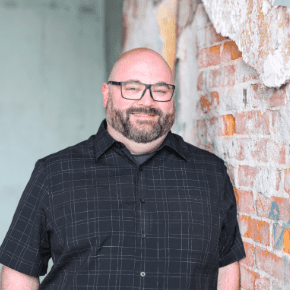
Host
Erik Fisher
Productivity Podcaster



About the Episode
In this episode of Future Formed, leaders DeNora Getachew and Dave Crusoe of DoSomething reveal how their nonprofit is empowering young activists to drive meaningful social change. Learn how they’re leveraging technology to create engaging digital platforms and help young people find their purpose in activism.
Making community change is not easy and it's not quick. For instance, if you want to get involved in recycling in your town, you can't do that in 10 seconds or push a button to create change. We have to think about how to help young people truly take meaningful action, which means time.
This is Futureformed where we explore how nonprofits drive efficiency and innovation to make a greater impact. I'm your host, Eric Fischer, and this show is presented by Jotform Enterprise, the leading web form building platform for nonprofit organizations worldwide. Stick around until the end to find out how your nonprofit can access an exclusive discount.
Today we're joined by two leaders from Do Something, the largest nonprofit dedicated to fueling youth-led social change. Denora Gatacho, CEO, brings years of experience in nonprofit leadership and civic engagement, guiding Do Something's mission to empower young people to drive meaningful change. David Crusoe, VP of product and engineering, drives the organization's technology strategy, ensuring young activists have access to the tools they need to create impact. Dora and David, welcome. It's great to have you on the show.
Thanks for having us. A pleasure.
Let's start with you, Dora. When you began your role as CEO, what opportunities did you see for expanding Do Something's impact, and how has your leadership helped guide the organization's direction?
Well, thanks for having both myself and Dave here. I came on board as CEO almost four years ago with the goal of evolving Do Something, a household name and nonprofit brand, to meet the needs of new generations of young people. When Do Something was founded 30 years ago, Dave and I were the young people then, thinking about ways to get engaged and form our civic identity. Now there are new generations, Gen Z and Gen Alpha, who think about social change, impact, volunteerism, and service in vastly different ways. They're digital natives who come to this work not needing awareness raised but a platform to take action and see systemic and sustained engagement.
We endeavored on a process to understand the needs of today's young people, figure out how to meet them where they are, create community, belonging, and a sense of purpose in the places where they're already convening, like online, in gaming, and social media. We bring them actions and programming that help them learn about issues they care about and equip them with lifelong tools, skills, and resources to take action. That was powerful when Dave came on board, and I'd let him add how we turned this tech-powered platform into something relevant to modern youth.
I would add that I am still a young person at heart. What we heard from our members really guided our work. Young people come to get involved in community to learn more about themselves and want the organization to help them move forward in life. They need help because making change can be scary and hard, so they ask Do Something for support. Finally, no one wants to do something alone; they want support from peers. These pivotal elements have shaped our product and engineering approach to meet the mission and help young people feel comfortable in the change they're making.
Do Something has activated 8 million young people over the years. How have digital tools and technology evolved to better support and engage Gen Z activists?
Some things have shifted, some have not. Young people have generationally moved online and inhabit online spaces from a young age, speaking fluidly the idea of digital. They're savvy in navigating that and can tell when an experience is not genuine or might be taking advantage of them. Truth has to be at the center of any technology, more than modality. Young people communicate fluidly but are wary of oversharing data. Also, they're recognizing the dangers of social media and pulling back, looking for value amid media bombardment. AI is also layering into the scene now.
Jenora, those are a few things on my mind as we meet this moment. What's on yours?
That covers it well. That's the honest answer. We think about the needs of today's youth, how they show up and lead, and what we've built to help them carry on that journey.
How do you make sure the experiences you're tailoring remain accessible and scalable as the organization grows?
Accessibility and relatability are key. We center young people and respond to their needs and what they care about. Our members are 13 to 25 years old, and we get real-time feedback through focus groups, social media, and conversations. We have an oversaturation of opportunities for young people to take action, so we focus on a unique relationship that makes our work relatable and scalable through partnerships with those proximate to young people. Scalability also comes from peer-to-peer engagement, a hallmark of our work, driving scale within programs and building a larger movement focused on issues that matter most to young people.
Those issues fall into three pillars: safety and well-being, including climate anxiety, mental health, and gun violence; equity and justice, where young people are concerned about economic mobility and trust in elected leaders; and climate and sustainability, focusing on protecting the planet from future harms. Scalability comes from direct connections to young people, school partners, and online influence to expand reach.
How does Do Something's approach to fundraising differ from traditional nonprofit models?
As CEO, fundraising is a core responsibility. Our approach has evolved over time. We were early in coupling creative strategy, marketing, and bespoke call-to-action campaigns with corporate philanthropy and marketing partnerships. Now, due to transformative economic moments, investments and philanthropy are more contingent on brands' commitment to their own theory of change rather than broad social good. We've diversified our fundraising strategy to include traditional philanthropy, foundations, individual donors like parents and educators, and government leaders funding education budgets. We aim to inspire those who believe in youth leadership competencies to invest in our work.
Dave, would you like to add?
It's definitely an equation of all of us. This is a time when all are needed to support philanthropy and development at the organizational level. Organizations and foundations are grappling with how AI is emerging in development. Do Something was an early player in using language models and participated in conversations about responsible and good use. AI won't replace the great work individuals do; humans must do the real, caring work. There's nuance in how new technologies are impacting the scene, and a return to quality is required.
What strategies have been most effective in securing meaningful sponsorships?
Driving with impact and demonstrating it is key. We hear directly from young people about their lived experiences and the impact of our programming. Quantitatively, we show that young people increase knowledge, skills, and feel more equipped to take action and lead change over time. We have proof points from a three-year strategy that help us make the case in a different philanthropic environment where funders give more significant gifts to fewer organizations, focusing on their own philanthropic theory of change.
Our intent is impact, driven not just by programming content but by the platform itself, built with lightweight responsive pedagogy where young people set objectives and are supported to meet them. We use data-driven insights and automation tools, including CRM systems, to track donor engagement and member impact, always with privacy and human oversight. Automation helps with data pipelines and reporting, but humans remain essential throughout.
Do Something mobilizes youth-led action across social issues. Given today's digital-first youth, how do you design tech-based experiences that make it easier for them to get involved?
Authenticity is key. While reducing friction to engagement is good, we want young people to be cognizant of their intentions and what they want to achieve. We prompt reflection as part of their involvement process. Making community change is not easy or quick; meaningful action takes time and friction. We aim to encapsulate learning experiences that compel young people to take meaningful action rather than assuming easy and quick is the solution.
Dora, you used to say something about 'slacktivism'?
Yes, we don't want young people to be slacktivists who engage in parallel activism and think liking or sharing online is enough. There's passive and active activism, but to drive real change, young people must engage fully. Democracy is a full contact sport, and while self-care is important, we need young people actively involved. Our platform supports a million active young people, with 10 to 20 thousand really doing something. We want all users to know their civic identity, understand issues, and be equipped to engage fully.
Do Something has a bold multi-year strategic plan to expand its reach and impact. What tech or digital initiatives are you investing in to ensure the organization continues to lead in youth activism?
Let's talk about the journey we want members to have. Young people start with curiosity about community change. We help pique that curiosity and support reflection. The journey progresses to light investment through one action with quick success, then deeper investigation and leadership. Many young people have become leaders, pitching ideas for change and launching initiatives. Ideally, they help others get active, passing on knowledge. Our platform supports this membership life cycle, helping young people express curiosity, understand themselves, and take increasingly challenging actions to become leaders.
We launched a new platform last June that gives us flexibility to arc out this multi-step journey. We're exploring how language models can support young people as navigators of change impact, helping them reflect, align opportunities, and support them through the impact cycle. We want to help young people take that first step even when hesitant, using advanced tooling to increase youth engagement throughput over the next 12 to 24 months, helping them feel loved, supported, respected, and honored so their impact is even more marvelous.
What key metrics do you track to measure the effectiveness of digital campaigns and youth engagement?
We track several metrics and are becoming more diligent about those that drive impact and sustained engagement. In the past, we focused on bespoke campaigns that fired up young people to act once but weren't sticky or sustained. We realized impact couldn't be about vanity metrics like impressions or likes but about increasing knowledge, skill development, and tool sharing among passionate young people. We still track impressions but focus on whether young people increase knowledge, understand issues, feel equipped to act long term, and believe they can be change makers with agency.
Dave, anything to add?
Nothing to add. We use subservient metrics to drive the bigger ones, but those are definitely the key metrics.
We've mentioned AI a few times. How is Do Something exploring AI tools or data analytics to enhance youth participation?
We were very early with AI and language models, pulling together young people to discuss AI's affordances and drawbacks. We built prototype AI tooling to gain experience with prompt engineering and tool strengths and weaknesses. We use AI for some automation within the Do Something experience, providing a safety layer rather than replacing humans. For example, language models help moderate thousands of member-shared intentions, teasing out good from bad, with members flagging anything missed. We use AI for data analysis to identify interesting findings for deeper exploration, not to bake findings. We're also exploring AI for deeper member support, not as chat agents but thoughtful interfaces that provide contextual support and communication reminders to help members complete their goals.
How do you ensure AI and digital tools enhance engagement while maintaining trust and inclusivity?
We do not make critical membership decisions using AI; humans remain responsible for such calls. We are thoughtful about data sharing, minimizing data shared across tools, and using least data capture principles. Transparency about how and where AI is used and its impact on member experience is key to building trust. We aim to be clear about what we do and do not do with AI, ensuring responsible use.
As Do Something evolves, what's on the horizon? What excites you?
We have a roadmap to deepen the membership journey and pioneer interesting technologies responsibly, all in service of impact. We continue evolving to center Gen Z and Gen Alpha digital native voices. As a tech-powered platform, we have a responsibility to educate young people on safely and smartly using technology, including when not to use it. We plan programming to educate youth about smart AI use, screen time breaks, and managing technology saturation. We've launched a campaign called Spot the Scam to help Gen Z and Gen Alpha avoid online fraud, as data shows they're more susceptible than grandparents. We want to help them pause and assess online interactions before clicking links.
We aim to deepen commitment to the journey, emphasizing that civic engagement and volunteerism are about leveling up individual theories of change and personal mission statements for doing good. Our hope is to help young people find their personal why and provide tools to stay engaged and committed, deepening both personal and collective action through our new platform.
Where can people learn more, get involved, or support Do Something's mission?
Visit dosomething.org, the hub for youth-centered activism and service. Find us on all social media at Do Something to learn about programming, get engaged, donate, and help fuel our work.
That brings us to the end of today's episode of Futureformed. Dora and David, thank you for sharing your insights and incredible work empowering young people through technology and activism. As mentioned, nonprofits can apply for a 30% discount with Jotform Enterprise at jotform.com/enterprise/nonprofit. Thanks for tuning in. Don't forget to subscribe, share, and stay connected for more stories of innovation and impact in the nonprofit world. Until next time, I'm Eric Fischer and this has been Futureformed.