Momentum Episode 24:
Automate Your Busywork with Aytekin Tank
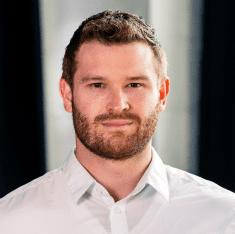
Host: Elliott Sprecher
Apr 25, 2023




About the Episode
In this episode of Momentum, we met with Jotform founder and CEO Aytekin Tank to discuss his upcoming book, Automate Your Busywork. We’ll learn more about his time-saving philosophy, the value of automation, and discuss some book highlights. Tune in!
Do you spend too much of your time on superficial busy work? Odds are if you're like most of us, the answer is yes.
But what if there is a way to eliminate those dull repetitive tasks to focus your time on more meaningful work? The secret lies with automation.
Today we'll be talking with Jotform's founder and CEO Ida Can Tonk about his upcoming book Automate Your Busy Work to learn more about its time-saving philosophy.
Welcome to Momentum, a podcast by Jotform where we talk about technology, productivity tips, insights, and best practices that help us move forward in business and in life. Let's get started.
Maintaining momentum.
All right, welcome everybody to an exciting episode of Momentum. Today we're talking to Jotform's founder and CEO Ida Cantonk for the third time on the show.
Welcome back, Ida.
Again, good to be back in this show. I love this show, it's great to have you.
This conversation is going to be a little bit different than conversations we've had before because this episode is to talk about your upcoming book Automate Your Busy Work which is available May 16.
Do you want to talk a little bit about it and just dive right into what this book is about?
Sure.
So I want to tell you the story of this book from the start.
Right out of college, I started working as a programmer for an internet company and I was doing a lot of things and I enjoyed my work but there was this one particular task that I didn't enjoy much and that was creating online forms.
It was a repetitive tedious task I didn't particularly enjoy, so I tried to find a bit automated but couldn't find a good way.
So I decided, okay, hey, I'm gonna quit my job and I'm gonna start my own business and I'm gonna actually do this like this is going to be my product.
I was in my 20s at that time, I didn't know what I was doing and I dived right in but it turned out that a lot of people needed help with forms so my product started becoming successful and my company started growing.
I hired my first employees so it was going well but around the time I had like five employees and things were going well but I was also kind of too busy.
I was spending all my time with so many different tasks like I was a business owner, doing accounting, ordering snacks for the office, responsible for product development, doing HR, everything and emails.
I was spending my whole day answering emails. I love spending time with customers but it was like from morning to night I was just constantly talking to customers and I had no time to actually think about the big stuff.
I had no time to improve my product, make it much better and think about big plans. I was just constantly busy busy busy.
So yeah, things weren't very good at that time and then I had a friend that emailed me and said, hey did you see that Google has just come out with a forms product? You're now competing with Google.
I was devastated. I was like, hey what am I gonna do? This is terrible, I'm competing with a giant and I'm this small company with five employees.
It took me a couple of days to think about it and I thought, okay, here's a product that automates forms and since I started Jotform I've been helping hundreds of customers automate their businesses.
It wasn't just forms because forms are just the starting point of these business processes and workflows.
It starts with the form, for example, you apply for something, fill in a form or contact someone to look at something.
After that, there are multiple steps. We automatically generate customized emails, the forms are changing on the fly, we generate documents from the data coming from the forms, and we send the form data somewhere else.
I've been helping all these businesses automate their work while I have not been applying the same principle to my own business.
I was doing manual work for everything and I was happy then but I wasn't helping myself.
So I decided, okay, I'm gonna apply my own medicine to myself and start thinking like I am a customer, helping myself.
I started automating everything. I started with emails because emails were terrible. I was spending my whole day inside emails, swimming in a pool of emails with no prioritization, no inbox zero, no automated filters.
It was a sea of emails.
I spent some time and automated my emails, set up filters, created inboxes, started applying inbox zero and did lots of other things and was able to reduce the time I spent with emails to a couple of hours a day at max.
That really helped and then I applied the same ideas to other parts of my business like product development.
I streamlined product development, our bug ticketing system, how we support people, how we order snacks at the office, how we do accounting, all those things I started automating.
I also started teaching all these techniques to my employees and it made a huge difference. My small company started becoming more and more successful because we were able to improve our product and make it much better.
Millions of people started using Jotform and today Jotform is a much more successful business with 500 employees and millions of users, all thanks to these automation ideas.
I want to share these ideas. I've been applying these techniques to our company and product so people can automate their work and save time.
I wanted to write a book because just writing articles was not enough. I needed to write a book about this topic and that's how I decided to write this book.
It took me more than a year, it wasn't easy and it's my first published book. I have some ebooks but this is my first published book and it's really good.
It really turned out to be the book that I wanted to write and I'm really excited about it.
Yeah, it's incredible.
It's only taken you over a year. I guess one of the things you can't automate is actually writing a book, you actually have to do that.
But it's really cool to hear you've lived this. Automate Your Busy Work isn't just knowledge you're preaching, it's knowledge you've lived and transformed your own life and business through these principles.
That obviously makes it a really powerful first-hand account, even the small things like emails and ordering snacks add up the manual tasks and processes.
Being able to find a way to automate those frees up time to focus on more important, meaningful work that can really make a difference.
You mentioned before that you had some articles and other places where you were published. For those who might not know, have you authored anything before? Have you been published in many places or is this really a first venture for you?
Sure.
I've written some ebooks and people can find them at itakingtunk.com, my personal website where I list all these books and people can read them for free.
One of them is a no code book about how people can use no code and I also mention no code in this book as well.
The other book is my bootstrapping story about how I founded Jotform and brought it to today.
I continue to write blog posts on Entrepreneur, Fast Company, Medium, and our own Jotform blog about startups, productivity, and automation.
Great, we'll be sure to link to all these resources in the description for those interested.
This is your first full-length, full dive into a full book release which is really exciting.
You touched on it a little bit in your initial answer but what really inspired you to do this? Why write a book? You probably could have collected all this knowledge in shorter ebooks or articles but why write a comprehensive book?
So I mentioned how I started Jotform 17 years ago and how it was all about automation.
I've been helping customers with automations and applying these principles within our products which have many automation features like document generation and customization.
But I've also seen people struggle. There is this big AI revolution going on with ChatGPT, OpenAI, self-driving cars, and people see automations and AI everywhere but they are so busy they have no time to do their work.
The problem is most people don't know how to use these automation products in their own work.
I wanted to write a book that describes how to do that. I have a framework I call automation flywheels which is a guide describing step by step what you need to do to turn your busy work into automations.
The inspiration came from watching people being so busy and deciding I cannot just do this with an article or series of articles, I have to write a book to provide step-by-step guides with details, examples, and case studies.
Thanks to Wiley and their editors, this book turned out to be great and I'm really excited about it.
I love the quote you said about being in the middle of the ocean of automation yet many are dying from thirst because they haven't been able to apply automation to themselves.
OpenAI, ChatGPT are wonderful but how do we apply that to ourselves to automate the little things in our day-to-day lives that can make a difference and free us up to focus on other things?
Would now be a good time to talk a little bit about that automation flywheel you just mentioned?
Sure.
Over the years I developed this framework called automation flywheel because I needed to teach my employees how to do a better job automating our business.
I didn't want to be the only person doing all the automations, I wanted to share this knowledge with my employees and now I'm sharing it with the world.
Basically, automation flywheel is a process of improvement where you take your busy work, divide and conquer it into workflows, then design and implement automations.
These automations turn into systems that can be refined and iterated. It's a process of continuous improvement, a circle of improvement.
In the book, I describe exactly what to do in each step, for example how to divide and conquer your busy work into workflows and create workflow diagrams.
You don't want to make two big workflows but multiple workflows that become systems. You don't want to do the whole automation at once but go piece by piece.
As you create more automations, you need to monitor, refine, and iterate them. It takes a while but you have to read the book and apply it to your busy work gradually to see results.
Automation flywheel is really going to help a lot of people thanks to this book hopefully.
We won't dive into everything here, that's what the book is for but that's a great overview.
Even reading through it myself, it makes so much sense the way you break it out and present it, how one step follows the next.
It's remarkable I haven't seen something like that. The automation flywheel seems very logical but I haven't seen anything like it anywhere else.
Who better to preach this than someone who has lived it?
Let's step back a little bit since we're talking about book publishing. Are you a big reader yourself? Are there other books you'd recommend that have inspired you along the way?
Yeah, I love to read and I'm actually a slow reader. I take my time and when reading a book, I start thinking about other things and enjoy learning from them.
There's one particular book I really like a lot, it's the companion book to mine called System Thinking by Daniela Meadows.
It describes how systems work, feedback loops, how systems behave differently, and how you can use this knowledge to make a change in the world.
If you read that book, it's a great companion to mine and you'll learn a lot from it as well.
I like the perspective of reading slow because I don't think that's talked about enough. People brag about how fast they get through books but taking time to understand is a valuable perspective.
System thinking is great and we'll link that in the description as a sister book to Automate Your Busy Work.
Why is automation so important if you could summarize that?
When I talk to people, I don't know many who say they have so much time. Everyone I talk to says they're so busy they can't do anything.
I have three kids, eight, six, and a newborn, and even they are so busy with homework, games, and learning tricks on YouTube.
There's a book called Shadow Work that describes how SaaS services have taken over the world and everyone has to do so much research themselves.
In the past, travel agents handled everything but today even taking a vacation requires a lot of research and planning.
Everything is so much work and everyone is really busy. We have to ask ourselves what work we should do and what work we shouldn't be doing.
Doing research is good work because you're learning and thinking about your business. That's work you should be doing.
But work you shouldn't be doing is manual work you keep doing over and over again.
For example, HR in our company used to spend so much time onboarding new employees with many moving pieces and paperwork.
Because there are so many moving pieces, mistakes happen like forgetting to send an NDA, causing legal problems or delays.
Onboarding was not creating a good impression with new employees and was not looking good.
Once we streamlined and automated onboarding, everything became much better, faster, and we stopped making mistakes.
We even started using e-signatures before the pandemic and started automating things.
Instead of spending our time with manual work and bureaucracy, we now spend time talking to new employees.
Our HR team is not under pressure handling many things and can work on more important stuff that matters.
When we automate things, instead of being busy doing the same things repeatedly, we can work on stuff we should be working on.
That's why it's important to automate things.
The example you gave is realistic. You're not saying let's get time back by not doing certain work because that's not realistic.
We have obligations and responsibilities. We divide work into categories we should focus on and repetitive tasks we automate.
That frees us to build meaningful relationships and think about meaningful things.
Many people think they just need to take stuff off their calendar but that's not realistic. We still have to do all these tasks but automate them so we don't focus on them the same way.
Along those lines, who is the audience for this? You used HR as an example but I feel this applies to everyone. Who is the true audience for this book?
Exactly, it's for everyone because everyone is busy and busier than ever as described in Shadow Work.
This book applies to everyone but especially to people under the weight of their busy work who don't even have time to read this book, they need it the most.
The book is a step-by-step guide on taking your busy work and turning it into automation and systems with examples like HR and many tools and techniques.
It's not going to take weeks to apply these things but small pieces of freedom from busy work.
You start small, turn a small part of your busy work into automations and gradually gain more free time.
It's most applicable to people who don't have time to read the book, which is perfect because they need it the most.
What are some highlights or key takeaways for people listening before the release that you can share without spoiling anything?
It's a process of continuous improvement but I also talk about the automation mindset, an automation first mindset.
One step is being impatient. Bill Gates said he would pick a lazy person to do a hard job because they find a way to make it easy.
Impatience is required. You don't want to be patient doing the same things over and over again but motivated to search for solutions for your busy work.
Another concept is system thinking. Understanding systems makes the difference when you want to make a change.
You need to understand workflows, divide and conquer them. System thinking helps you understand the flow of your work or system to make changes.
Priorities are important. You want to prioritize what you care about and what you should spend your time on and avoid spending time on things you shouldn't.
These ideas help you have an automation first mindset to tackle your busy work using the framework described in the book.
Those are great points and takeaways that act as a teaser to the great ideas covered in the book.
Just to wrap up, why write this now? Why is 2023 the year to release this book after 17 years with Jotform?
There are three revolutions going on right now that we are in the middle of.
The first is software is eating the world, coined by Mark Anderson. Everything is turning into software from vacuum cleaners to self-driving cars.
Software provides flexibility and value without much additional price, so software is really taking over the world.
The second revolution is the AI revolution, which is really hot right now with things like GPT-4 and ChatGPT.
I'm not using Google now, I go to ChatGPT to ask questions and get perfect answers without reading Google results.
The third revolution is the no code revolution, which is less visible but related to software.
No code software allows you to program your own products, like Jotform where you create forms with drag and drop, customize emails, generate PDFs, and transfer data to other services.
These three revolutions—software eating the world, AI, and no code—are happening but people are not adopting them.
They are watching these things happen but not using them, like being in the middle of the ocean but dying from thirst.
In this book, I teach how to use no code tools, AI, and cloud-based software to automate your work.
You need to first understand your business and work, define and divide your busy work into workflows, then design information automation using no code products.
I describe how to research these no code products, where to find them, and how to pick the best one.
This is a perfect time because we are drowning in busy work and have the answers but need to learn how to use and apply them.
Absolutely, it's the perfect time given the convergence of software, AI, and no code.
There are so many solutions out there that even knowing where to start can be crippling with decision paralysis.
This book gives you the place to start and the tools to begin harnessing these things productively.
If you had to summarize one final statement, what are you ultimately hoping people get out of Automate Your Busy Work?
I want them to do less, achieve more, and save their being for the good stuff. That's the subtitle of my book.
Save your brain for the big stuff, do less and achieve more.
When is the book coming out and how can people find it?
It's coming out on May 16 and you can pre-order it now from Amazon, Barnes and Noble, and many other places online to get it early and start automating your busy work.
There's no time like the present to start that journey.
We'll have links to the pre-order and other resources in the description.
Thank you for joining us and taking the time. Is there anything else you want to cover or mention that we missed today?
Sure.
I started my business 17 years ago which is a huge number. It feels like yesterday when I was a kid in my 20s and now I'm 45 with three kids.
I hope I have some wisdom and experience to share from making many mistakes and helping thousands of people automate their busy work personally and millions who use our product.
I hope this book is another way to provide help to others and I'm really excited about it.
I want to thank you for this great podcast. I love it and keep watching them. Keep up the great work.
Thank you very much for coming on today. It's been great to hear about Automate Your Busy Work available May 16. You can pre-order it now.
The automation flywheel is real and you've lived this book. Everything you talk about can be applied to many lives and work.
It's powerful and can do a lot of good impact. Everyone listening should pre-order or check it out whenever and wherever they can.
Thank you, Ida, and we'll see you next time.
See you next time.