Momentum Episode 25:
The Future of Automation With Founders of Jotform, Zapier, and Doist
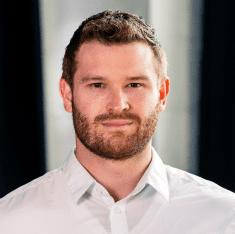
Host: Elliott Sprecher
May 16, 2023




About the Episode
Automation is the future — and it’s already here. Join us in this special edition podcast with the founders of Jotform, Doist, and Zapier to learn valuable insights about automation’s impact on the workplace and how it will change productivity forever.
Hi everyone, thank you so much for joining us for a special edition podcast. My name is Jackie Ochoa and I'll be your host today. I am Jotform's PR manager and former journalist joining you from San Francisco, California. Today we are here in celebration of Jotform founder and CEO Idakin Tonk's newest book release, Automate Your Busy Work. We've gathered together a fantastic panel of experts for you today to weigh in and talk about the future of automation. We will dive into best practices for getting rid of busy work and of course talk about Idakin's new book. But to kick things off, I want to introduce our panel of experts today.
Today on the podcast we have Jotform's own founder and CEO and author of Automate Your Busy Work, Idakin Tonk. We'll dig into this more during our conversation, but Idakin's new book is really his recipe for success, how he used automation to differentiate Jotform in the market against Google Forms and how he used automation for core business functions within Jotform and within his own personal workflow as well.
Also joining us on the panel today is Amir Salehfendich, the founder and CEO of Doist. Of course, Doist is all about enabling the workforce of the future. They themselves are a remote-first company with employees in more than 35 countries. And of course, you know, Doist as the creators of Todoist, a productivity app that helps people keep their work and life organized, as well as Twist, a workplace communication tool that's focused on async collaboration.
And then rounding out our panel today is Wade Foster, the co-founder and CEO of Zapier, a leading automation tool that over 2.2 million businesses use, including companies like Meta, Asana, and Dropbox. Zapier is all about automation and productivity, so we're gonna have fun on this podcast today.
To our panel of founders, welcome on the podcast. How is everyone doing? How's the week going so far?
Doing good, excited to be here. Thanks for having me. It's a really exciting week for me because today my book just came out and I've been working on this book for more than a year, so I'm really thrilled about this. I'm also really excited about this conversation with Wade and Amir, so it's great.
And I'm also really excited, and you know, there's also a lot of change happening in the world, especially like in terms of AI, which is both stressful and exciting at the same time.
Yeah, definitely, and we will certainly be getting into that conversation today, talking about AI and automation, a lot of changes as you mentioned, Amir, but I think we'll get through it all today.
Again, we are so excited to have you guys on the podcast today, especially in celebration of Idakin's new book. But before we do jump into the book, I'd love to start it off with a very general kind of broad question. I'd love to hear from each of you how you think about automation and productivity both at work and in your personal lives as well. Again, it's kind of a broad question, make it what you want, take it as you'd like.
Amir, let's start with you. How do you think about automation and productivity?
I mean, that's a great question, and honestly, I think we are still doing so much busy work each day, especially on the organizational level. Our societies, companies, and individuals could be much more productive if we remove some of the grunt work that people do. We're trying to focus on how to create tools and processes that are much more productive and efficient than what we currently use. Right now, everybody is just doing grunt work, which is very inefficient. Productivity growth in knowledge societies is actually very low even as we have added a lot more technology. You would expect that as technology advances, productivity would grow, but that is not really what we have seen. There are many aspects to it, but definitely automation and removal of busy work is the way to go. That is how I see this.
Yeah, I think a lot of us would agree with you on that one. Eliminating busy work, I think that's Idakin's catchphrase. Wade, how do you think about automation and productivity?
For me, automation and productivity really start with the important questions, which is truly understanding what's important in your life. Too often, we get stuck in this hamster wheel where we're doing a bunch of grunt work and tasks, trying to check as many things off, but we don't have a strong grip on what's important to us. This starts with understanding what matters most—family, work, health, friends, hobbies. Having those answers helps you take better advantage of automation and productivity. Once you have those things clearly defined, you can start to say these buckets of things I'm simply not going to do. It's easier to have a rule where you say no to those things, keeping a whole chunk of to-dos off your list. Then you can set up systems and tools to automate grunt work within the important things, making it easier to accomplish goals. It really allows you to set up a system that works and helps you achieve what matters most.
Definitely. All right, to round us out on those questions, Idakin, how do you think about automation and productivity?
I think it's a really exciting time for automation and productivity because of three revolutions happening. The first is software eating the world, a concept coined by Marc Andreessen about a decade ago. Everything is turning into software—from cars to vacuum cleaners. In the past, you would go to a travel agent, but today you do everything yourself, which gives you freedom and flexibility but also requires time. Software is much more flexible than hardware and gives you many more options.
The second revolution is the no-code revolution. Products like Jotform and Todoist are no-code products that let you build your own solutions. On sites like G2.com, you can find thousands of cloud products that allow you to build flexible, customizable solutions. This democratizes software because businesses can do things themselves without hiring programmers or companies.
The third and even bigger revolution is AI. AI multiplies the first two revolutions because solutions become more capable, flexible, and smart. We are just seeing what's available now, like when the internet first came out. AI will be included in all products, making them more powerful. These three revolutions will democratize software for everyone, letting people build their own solutions. This is a great time to be alive.
Certainly, the excitement around AI is definitely amongst this crowd here, which we will be diving deeper into later in this conversation. As I mentioned, we are here in celebration of Idakin's new book release, Automate Your Busy Work. As we open up this conversation and focus more on automation and productivity, why don't you tell us a little bit about your book and why you decided to write it?
I'm a product guy. I love building and growing products. I've been doing Jotform for 17 years and never got tired of it. I started Jotform because in my previous job at a media company in New York, I was building forms and wanted a product to automate it, but couldn't find one, so I built one myself. After launching Jotform, it was going well, but I was too busy doing everything. We had four or five employees, and I spent all day on emails, replying to customers, and handling accounting, HR, legal, and office supplies. I was a product guy who loved working on the product but was stuck with busy work.
At that moment, Google Forms came out, and I realized if I continued like this, Google would beat us. I needed to change something. I looked at what we were doing for customers—we were automating many things like emails, document generation, business processes, report creation, and integrations. But in my own business, I wasn't doing that. I decided to change that by automating my emails, especially processing incoming emails, HR, accounting, legal, and many other tasks I spent time on. This helped me be successful. Today, Jotform has 500 employees and 20 million users, and I owe that to automation. I wanted to share what I learned with the world, so I developed a framework called the automation flywheel and provided many examples in the book. Writing the book was the best way to share this.
There are so many automation tools out there, and your book really helps people distill what automation tools they need in their daily workflow and make sense of it all. Wade, I know we jumped right into talking about automation, but I want to take a step back and open up the floor to you. Can you share more about Zapier, who uses it, and what problem you guys are trying to solve?
Zapier is a leader in easy automation. Our mission is to make automation work for everybody. It started as just integrating apps, connecting this to that, and has grown into a full workflow system connecting over 5,000 apps. For example, if you submit a Jotform, it can route that to your CRM, email marketing tool, or set up a to-do in Todoist. It helps you take control of all automation work across your tools. One favorite example is Halo Cars, a company bringing targeted marketing to LED smart screens on cabs. Founded by three college students, they built their entire operations on Airtable and Zapier, enabling their small team to scale a complex referral system in days. Ten months after founding, they sold the business to Lyft. This shows what small teams can accomplish when they lean into automation and tools. Zapier is about helping small teams achieve big things.
That's great. It's clear we brought together the right experts on automation. Amir, I'd love to ask the same question: for those who don't know, what is Doist and what problems are you trying to solve?
Our mission is to build the future of work. We challenge the status quo of working. We started fully remote in 2010 and embraced async work with very few meetings since 2014. We're trying to see what lies ahead and build a much better way to work and live. Currently, knowledge work is broken; people aren't doing great work or living great lives, and many ignore this fact. Productivity levels and hours worked aren't positive. We're inventing a better way, and automation is core to this—building smarter software that removes grunt work and automates processes. For example, many use Zapier to add tasks from different platforms and manage them inside Todoist, but this could be much more powerful as we progress.
The future of work conversation is super important, and I'm glad you're touching on it. Speaking of work and workflows, Amir, how do you deploy automation at work?
Personally, I try to have as many busy-free days as possible. I want to do deep work and not spend my day answering emails. I automate stuff and also remove tasks that don't need automation by just removing them from my life. I optimize my daily life to be streamlined and focus on the most critical parts and the parts I like to do and am good at. It can be challenging at times, though.
Yeah, many of us can relate to wanting to get rid of full tasks from our to-do list for sure. Wade, I'd love to ask you the same question: how do you deploy automation at work?
As CEO, a lot comes across my desk daily. One important tool I've set up is a universal inbox where emails, Slack messages, and notifications from many apps are routed to a central spot. I have zaps that land everything inside Todoist, which I share with my EA. We've started using AI to summarize tasks, make them more readable, triage them to the right person, auto-categorize, and prioritize. This helps me triage important things because often stuff comes to me but I'm not the right person to solve it. A big part of my job is making sure it gets to the right person. This system helps me have big chunks of time to focus on the most important things.
That's the name of the game here: cutting out busy work and using automation to focus on bigger stuff, deep thinking, creative thinking, and things that really move the dial for your business and life. Idakin, how do you deploy automation at work?
The biggest automation for me was simple: how I sorted emails. I receive hundreds of emails daily, and as the company grew, the number increased. I needed to keep it sane and not miss important stuff. The main problem was prioritization. Ideally, AI would show me the top priority email first instead of mixing spam and important emails. I couldn't find a product that did this, but Gmail can. I implemented a solution with labels and filters: three levels—level one for top priority emails like direct emails from the VP of HR or important publishers, level two for people I communicate with directly, and level three for all other emails like reports and newsletters. I use filters to implement this system. Even on vacation, I can check level one for 10 minutes to process important emails. I never go to my main inbox; I go to level one, then level two, then level three, and only occasionally check the remaining emails. This simple automation uses Gmail labels and filters. People think automation is hard, but many no-code SaaS cloud products offer flexible options to build your own solutions and save time and energy. This is how automation helps me.
Many of us struggle with the email inbox, so that's very relatable. Switching gears, we've talked a bit about AI, but let's dive headfirst into it now. AI is in the headlines and always changing. Amir, can you kick it off and talk about why you see AI changing everything and what you expect in the next five to ten years?
That's a good question. AI is interesting because both software and hardware fronts are growing exponentially. The size of models and GPU performance follow exponential curves ongoing for many years. With exponential growth and fast advancements, you can be excited and worried. Personally, I'm not scared because I understand how models work—they're basically linear algebra. Our brains started simple and grew to sentient beings, so I don't know what the future holds, but AI is advancing fast. GPT-4 is very impressive. Recently, I tried the new GPT code interpreter feature where you upload a file, like a CSV, and GPT can transform and analyze it, doing regression analysis in seconds. It would take me hours to do this manually. This is incredible and just the start. I'm excited and a bit scared. It's an exciting time, and I hope we use AI for good to improve humanity, solve problems, work less, and improve exponentially.
Using tech for good is a thread through Silicon Valley and beyond. Wade, you and your team are excited about AI. You just launched Zapier's ChatGPT plug-in, which has generated excitement. How does AI at Zapier look moving forward?
We're super excited about AI. The ChatGPT plug-in helps people send off actions inside ChatGPT. Customers are already using AI in Zapier in many ways. AI is great at automating unstructured data, which is harder than structured data. Large language models summarize, generate, and manipulate unstructured data into preferred formats. Interjecting unstructured data with structured data in automation is powerful. We see people playing with this. We have a natural language API powering our ChatGPT plug-in and chatbots inside our interfaces product. These are places where we're starting to use AI in the core product, and customers are adopting it to improve their work. Looking to the future, we believe computers should do more work for humans. There's huge demand for software, with more software unwritten than written and more automation possible. Traditionally, you buy off-the-shelf software, which is expensive to build. But with natural language and speaking automation into existence, we expect an explosion of new, personalized software that works for individuals' lives and workflows, not just cookie-cutter solutions. This idea excites me.
That's super exciting. I love how you talk about personalization and utilizing it for software. Idakin, your book focuses on automation, but how do you see AI fitting into how you talk about automation?
AI is also automation but smarter, more capable, and flexible. AI is automation with powers, making it much more powerful and flexible. This allows people to build their own solutions. Current tools are rule-based, but as AI advances and more products include AI, they will be more flexible and customizable. This will democratize software for people. I agree with Wade. In my book, I talk about automation principles and the automation flywheel framework with many examples and case studies to help people apply the knowledge. In 10 years, examples may be less useful because AI will change everything, but principles like automation-first mindset and the flywheel framework will be more powerful. The number of tools today will explode in 10 years as it becomes easier to build products. More people will use AI to build products. This is just the beginning, like the internet's early days. AI will give us many options, making it hard to predict the future. It's a bit scary but exciting. I hope we use AI for good to improve humanity. We have many problems to solve, and maybe we will work less and produce more on an exponential scale. That's my positive scenario for AI.
Certainly, many of us are nervous but also very excited about what AI and automation will bring us in the future. On that note, to our founders, anything else you'd like to add to make sure our viewers hear it?
I hope people take this to heart and start automating all the stuff that needs to be automated. The two questions I ask in the book are important: first, what should I spend my time on? Second, what shouldn't I spend my time on? The second is more important because if you find how you're wasting time on tasks that drain your energy, you can delegate them to automation or machines. That's what I describe in the book with the automation flywheel framework, showing how to turn tasks into automations. Even if you don't apply the book's principles, asking yourself these questions helps prioritize your time better. I hope this is useful for everyone.
That's all from me. Amir, I saw your little one behind you, and I think that perfectly nails what we're talking about: where we spend our time and who we spend it with. Perfect way to go off on that note.
With that, we at Jotform want to extend a very big thank you to our founders for joining us today: Idakin, Amir, and Wade. Thank you so much for joining us. It was great to hear more about your journeys and how you're thinking about automation and especially AI. We also want to thank everyone who helped with the production of this podcast—you are amazing. And thank you to our listeners. We hope this was a valuable conversation about automation, productivity, and AI, and that you walk away with a few tips to cut out repetitive tasks, do less, achieve more, and save your brain for the big stuff. Thank you so much for joining us. Bye, everyone.