

Formulaires pour services informatiques

Demande Intervention Informatique
Permet de demander une intervention informatique à domicile par les services sociaux de Bouguenais. Ce formulaire permet aussi d'affecter la demande à un intervenant de l'association. Un compte rendu d'activité est également transmis en retour aux services sociaux en fin d'intervention.
Accéder à la catégorie :Formulaires pour services informatiques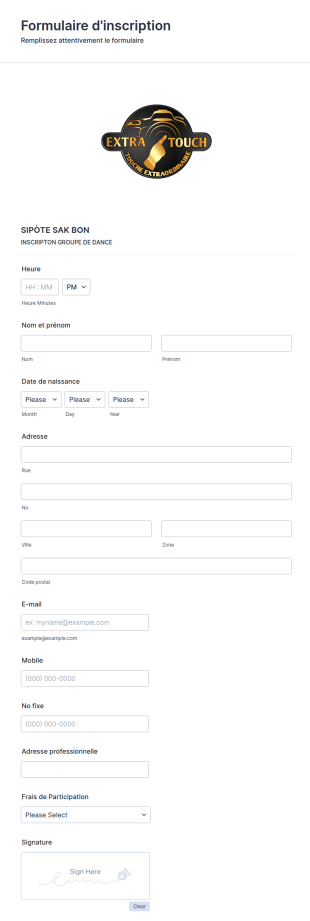
Formulaire D'inscription Dance Extra Touch
Une formulaire simple pour inscrire dans un concour Dance.
Accéder à la catégorie :Formulaires enseignement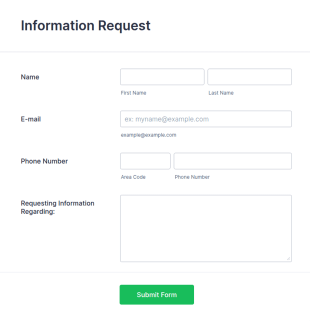
Modèle D'approbation De Demande D'information
Que vous travailliez dans le service informatique d'une entreprise spécifique ou que vous travailliez pour un service informatique indépendant, traitez en toute transparence les demandes d'informations sur n'importe quel appareil avec le modèle de processus d'approbation de demande d'informations gratuit de Jotform. Lorsque quelqu'un remplit votre formulaire de demande d'informations, votre informaticien en sera averti instantanément et approuvera ou refusera la demande. S'il l'approuve, il sera transmis à votre responsable informatique pour un dernier contrôle. Une fois approuvée ou rejetée, la personne qui a soumis la demande recevra un e-mail de réponse automatique l'informant de votre décision. Personnalisez les e-mails avec notre générateur de glisser-déposer ou mettez à jour d'autres parties de ce modèle de processus d'approbation de demande d'informations en configurant des notifications, en ajoutant plus d'approbateurs et en personnalisant les branches conditionnelles. Il est possible de répondre aux tâches sur n'importe quel appareil directement à partir de la boîte de réception de chaque approbateur - et en tant que propriétaire du formulaire, vous pouvez également gérer le flux d'approbation dans Jotform Tables ! Améliorez la façon dont vous acceptez les demandes des clients informatiques avec un modèle de processus d'approbation de demande d'information en ligne gratuit.
Accéder à la catégorie :Formulaires pour services informatiques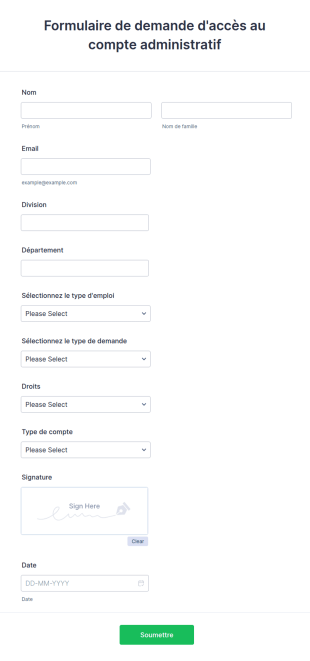
Formulaire De Demande D'accès Au Compte Administratif
Un formulaire de demande d'accès au compte administratif est utilisé par les employés potentiels pour demander l'accès à la section administrative d'un réseau ou à l'ensemble du réseau. Supervisez la sécurité de l'entreprise en gérant les demandes d'accès de sécurité avec un formulaire de demande d'accès au compte administratif gratuit ! Personnalisez simplement le formulaire en fonction de vos besoins et intégrez-le à votre site Web pour vous assurer que les employés, les sous-traitants et les fournisseurs tiers ne peuvent accéder qu'à des zones spécifiques de votre réseau. Donnez également au formulaire l'aspect que vous souhaitez, en sélectionnant un thème de formulaire et en personnalisant les champs comme bon vous semble. Et si vous souhaitez collecter les informations des soumissions de formulaires sur vos autres comptes, utilisez nos plus de 100 intégrations pour y arriver ! Vous pouvez intégrer automatiquement les soumissions de formulaires avec des plates-formes telles que Google Drive et Dropbox, vous pouvez facilement envoyer des informations à tout ce qui compte. Voyez comment les employés ou les fournisseurs accèdent à votre réseau et ne leur accordez que les autorisations dont ils ont besoin. Ils apprécieront la commodité et vous apprécierez la sécurité.
Accéder à la catégorie :Formulaires pour services informatiques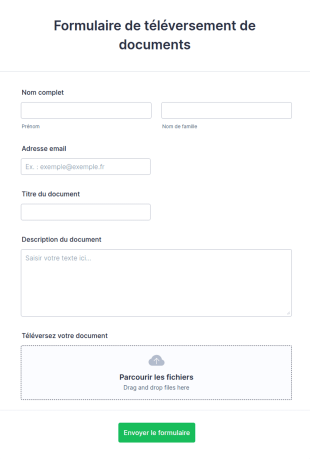
Formulaire De Téléversement De Documents
Collectez facilement des documents en ligne grâce à ce modèle de formulaire de téléversement personnalisable. Centralisez les fichiers reçus et simplifiez leur gestion depuis une interface intuitive.
Accéder à la catégorie :Formulaires bancaires
Fiche D'intervention Technicien
Simplifiez et standardisez le suivi des interventions terrain en centralisant les informations, les preuves d’intervention et les signatures dans une fiche d'intervention technicien numérique.
Accéder à la catégorie :Formulaires commerciaux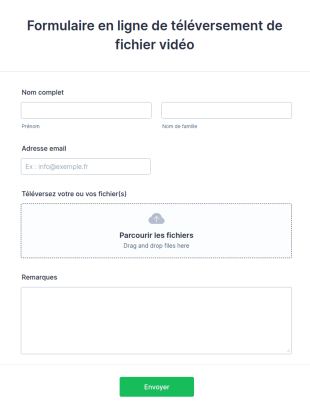
Formulaire En Ligne De Téléversement De Fichier Vidéo
Collectez facilement des vidéos grâce à ce modèle de formulaire de téléversement personnalisable. Permettez aux utilisateurs d'envoyer leurs fichiers vidéo en ligne et centralisez les soumissions.
Accéder à la catégorie :Formulaires publicitaires
Modèle De Demande D’accès Informatique
Simplifiez la gestion des accès avec ce modèle de demande d’accès informatique gratuit et personnalisable pour vos équipes.
Accéder à la catégorie :Formulaires commerciaux
Compte Rendu D’intervention
Avec ce modèle de compte-rendu d’intervention, récapitulez facilement les travaux réalisées par un technicien sur site. Ce type de rapport d’intervention permet aussi de faciliter la facturation et d’assurer la traçabilité des interventions en cas de litige.
Accéder à la catégorie :Formulaires commerciaux
Fiche D'intervention Dépannage
Fini les litiges clients : cette fiche d'intervention dépannage permet de consigner chaque intervention, de détailler les travaux réalisés et de prouver la conformité des réparations.
Accéder à la catégorie :Formulaires commerciaux
Bon D’intervention Numérique
Créez un bon d’intervention numérique avec Jotform pour enregistrer les travaux réalisés, les horaires et la signature du client pour un suivi efficace.
Accéder à la catégorie :Formulaires commerciaux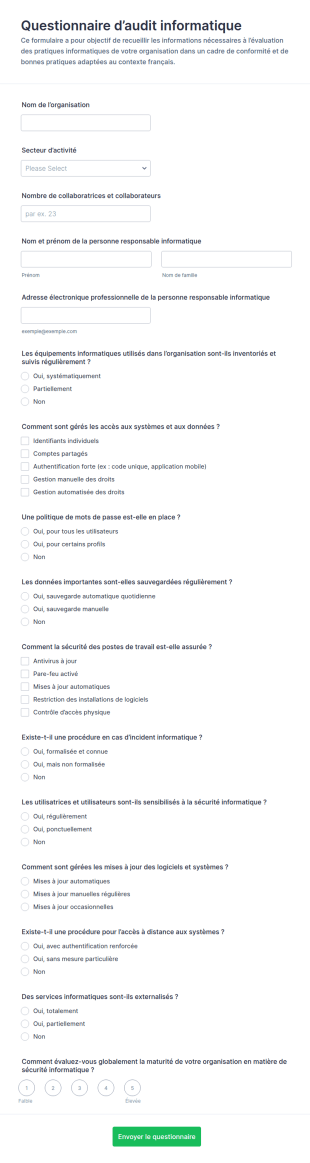
Questionnaire D’audit Informatique
Évaluez les pratiques et la maturité de sécurité informatique d’une organisation grâce au Formulaire de questionnaire d’audit informatique, utile aux responsables informatiques, cabinets de conseil et équipes de contrôle interne.
Accéder à la catégorie :AuditÀ propos des Formulaires pour services informatiques
Les formulaires informatiques sont des formulaires numériques spécialement conçus pour simplifier et optimiser les différents processus du secteur informatique. Ils répondent à de nombreux cas d'utilisation, tels que la gestion des demandes d'assistance informatique, le suivi des équipements ou la réalisation d'audits des systèmes. Dans les flux de travail du quotidien, les formulaires informatiques permettent aux équipes IT de collecter et de traiter efficacement les données essentielles, de veiller au respect des politiques de l'organisation et de conserver un suivi précis de toutes les activités liées à l'informatique. Les équipes informatiques gagnent ainsi en efficacité opérationnelle et peuvent se consacrer davantage à des missions à plus forte valeur ajoutée.
Jotform s'impose comme l'outil de création de formulaires idéal pour créer des formulaires informatiques. Grâce à son interface intuitive, vous personnalisez facilement chaque formulaire selon vos besoins et automatisez la collecte des données afin de réduire les tâches manuelles. Autre atout majeur : la gestion centralisée des informations dans les Tableaux Jotform. Vos équipes informatiques organisent et consultent facilement leurs données, qui restent toujours à jour et accessibles. En associant personnalisation, automatisation et gestion centralisée des données, Jotform vous aide à optimiser vos processus de travail.
Pourquoi utiliser les formulaires informatiques ?
- IT Forms offer unparalleled accuracy in data collection, reducing the risk of errors that often occur with manual data entry. By leveraging digital forms, IT departments can ensure that the information captured is complete and precise, leading to more reliable data-driven decisions.
- Speed is a critical factor in the IT industry, and IT Forms significantly enhance the speed at which data is collected and processed. With features like conditional logic, forms can dynamically adapt to user input, streamlining the completion process and reducing the time required to gather information.
- Professional data handling is paramount in IT operations, and IT Forms provide a secure and structured method for managing sensitive information. By utilizing secure data management practices, such as those offered through Jotform Tables, IT teams can safeguard data integrity and confidentiality.
- The ability to integrate with over 100 third-party applications ensures that IT Forms can seamlessly fit into existing workflows. Whether it's updating a database in Salesforce or sending a notification via Slack, these integrations enhance operational connectivity and efficiency.
- La personnalisation est essentielle pour répondre aux besoins spécifiques des opérations informatiques. Grâce au générateur de formulaires par glisser-déposer de Jotform, vous pouvez adapter vos formulaires informatiques à vos processus internes afin que chacun réponde précisément à son objectif, sans inclure de champs ni d'éléments superflus.
Problèmes courants résolus par les formulaires informatiques
- Manual paperwork can be cumbersome and prone to errors, but IT Forms eliminate the need for physical documents by providing a digital alternative. This transition not only reduces paper waste but also ensures that data is captured accurately and stored efficiently.
- Data entry errors are a prevalent issue in IT operations, often leading to incorrect information and operational inefficiencies. IT Forms address this by utilizing electronic data capture, which minimizes human error and ensures higher data accuracy.
- Lost or misplaced data poses significant challenges, particularly when dealing with critical IT information. By centralizing data storage within Jotform Tables, IT Forms ensure that all collected data is easily retrievable and protected against loss.
- The time-consuming nature of traditional data collection methods can hinder IT productivity. IT Forms streamline this process by automating data entry and processing, allowing IT teams to focus on more strategic tasks rather than administrative duties.
Des fonctionnalités adaptées à de nombreux cas d’utilisation
- For IT service request management, the Conditional Logic feature can be employed to create dynamic forms that adjust based on user input, ensuring that only relevant questions are presented, thus speeding up the process and improving user experience.
- The need for secure transactions in IT procurement can be addressed by integrating one of the 30+ Payment Gateways such as Stripe or PayPal, allowing for direct and secure payments through the forms.
- When conducting IT equipment audits, Jotform's Report Builder can be utilized to generate comprehensive reports from the collected data, providing insights and helping to maintain accurate inventory records.
- Electronic Signatures, facilitated by Jotform Sign, are essential for authorizing IT-related documents, ensuring that all necessary approvals are captured digitally and stored securely.
- Offline Data Collection, available through Jotform Mobile Forms, is crucial for IT teams working in environments with limited internet connectivity, enabling them to gather data in the field and sync it once online.
- L'Éditeur de PDF Jotform permet d'automatiser la génération de documents PDF mis en forme à partir des soumissions de formulaires, transformant les données collectées en rapports ou en dossiers professionnels, faciles à partager et à archiver.
- Integration with Google Sheets helps maintain real-time updates of form submissions, ensuring that IT teams have access to the latest data without manual input, thereby enhancing data accuracy and accessibility.
Comment créer un formulaire informatique
- Begin by browsing the Template List for an ITs template or start from a blank form to tailor it to your specific needs.
- Personnalisez la mise en page et les champs de votre formulaire à l'aide du générateur de formulaires par glisser-déposer intuitif et adaptez-le parfaitement à vos besoins opérationnels.
- Publish and share your form via Direct Link, Email, or Website Embed to reach your intended audience and begin collecting data immediately.
Cas d'utilisation des formulaires informatiques
- For Managers: IT Forms are invaluable for managers seeking to streamline operations and enhance oversight within their departments. By providing a centralized platform for data collection and analysis, managers can easily monitor IT processes, track performance metrics, and ensure compliance with organizational policies. This enables them to make informed decisions and implement strategic improvements that drive efficiency and productivity.
- For Teams: For IT teams, these forms simplify everyday tasks by automating routine data entry and processing. Whether it’s submitting service requests, reporting issues, or conducting equipment audits, IT Forms reduce the administrative burden on team members, allowing them to focus on more technical and strategic initiatives. This not only improves workflow efficiency but also boosts team morale by eliminating repetitive tasks.
- For Customers: Customers benefit from IT Forms through improved service delivery and communication. By using digital forms for service requests, feedback, or troubleshooting, customers experience a streamlined process that is both user-friendly and efficient. This enhances customer satisfaction and helps build trust in the IT department’s ability to respond swiftly and effectively to their needs.
Les formulaires informatiques, en bref
In summary, IT Forms, created with Jotform, offer a comprehensive solution for optimizing data collection and management within the IT sector. By facilitating accurate, efficient, and secure data handling, these forms empower IT departments to enhance their operational workflows and deliver superior service. With features like customization, automation, and integration, IT Forms provide the flexibility needed to address diverse use cases, making them an essential component of modern IT strategies.
FAQ
1) Est-il gratuit de créer des formulaires informatiques sur Jotform ?
Oui, Jotform propose un forfait gratuit qui vous permet de créer et d'utiliser des formulaires informatiques. Des formules payantes sont également disponibles et offrent des fonctionnalités supplémentaires ainsi que des limites de soumission plus élevées.
2) Les formulaires et les données de soumissions sont-ils sécurisés ?
Absolument. Jotform accorde une priorité à la sécurité des données en mettant en œuvre un chiffrement conforme aux normes du secteur ainsi que des mesures répondant aux exigences de conformité, afin de garantir la protection de toutes les soumissions de formulaires et des données collectées.
3) Ai-je besoin de connaissances en programmation pour créer un formulaire informatique ?
No coding knowledge is required to build an IT Form with Jotform. The platform's Drag-and-Drop Form Builder makes it easy for anyone to create and customize forms without technical expertise.
4) Puis-je percevoir des paiements directement via mes formulaires ?
Oui, vous pouvez collecter des paiements directement via vos formulaires informatiques grâce à l'intégration de Jotform à plus de 30 passerelles de paiement, notamment Stripe, PayPal et Square.
5) Ces formulaires peuvent-ils être utilisés sur des appareils mobiles ?
En effet, vous pouvez utiliser les formulaires informatiques sur des appareils mobiles. Grâce à Jotform Mobile, les utilisateurs peuvent remplir et soumettre des formulaires même hors ligne, les données étant synchronisées automatiquement dès qu'une connexion Internet est disponible.
6) Puis-je convertir les soumissions de formulaires en documents PDF professionnels ?
Oui, l'Éditeur de PDF Jotform vous permet de générer automatiquement des documents PDF professionnels à partir des soumissions de formulaires. Vous pouvez ensuite les partager ou les archiver selon vos besoins.
7) Puis-je intégrer les formulaires informatiques à l'infrastructure informatique existante ?
Certainly, IT Forms can be integrated with existing IT infrastructure through Jotform's 100+ third-party integrations, including platforms like Google Sheets, Salesforce, and Slack.
8) Comment les formulaires informatiques améliorent-ils l'efficacité de la gestion des services informatiques ?
Les formulaires informatiques améliorent l'efficacité des services informatiques en automatisant la collecte et le traitement des données, en réduisant le volume de données à gérer manuellement et en assurant une circulation précise et opportune de l'information au sein de l'organisation.