
Artificial intelligence (AI) is commonly used for healthcare administration, but it’s now becoming an increasingly integral part of patient engagement. In fact, the global AI patient engagement market was valued at $6.12 billion in 2023. It is expected to continue growing through 2032.
The reason: Patients demand a better healthcare experience and medical professionals want to deliver enhanced patient outcomes.
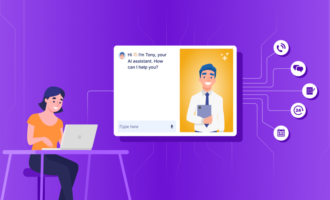
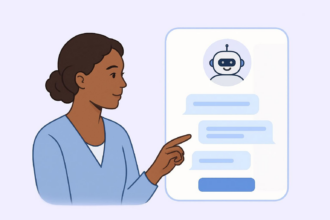
AI is transforming patient engagement with highly personalized communication and care at scale. Patient engagement with AI tools can vary from educating patients about upcoming procedures to booking follow-up appointments to delivering proactive health management. AI patient engagement tools such as chatbots, virtual assistants, and AI agents enable healthcare professionals to improve communication and access to care from end to end.
In this article, we explore the benefits of AI-powered engagement tools and offer guidance on how to successfully implement AI healthcare solutions. Plus, we introduce you to a leading AI tool that enhances patient engagement: Jotform AI Agents.
Why AI matters in patient engagement
AI technology allows healthcare providers to deliver exceptional care and service to patients at scale. Patients today want convenience, transparency, and personalization, which is what they expect from other industries as well. AI is gaining traction in healthcare because of its ability to analyze vast amounts of data and offer personalized communication to patients. AI tools also improve access to information and medical support, and they automate routine tasks for healthcare professionals, such as scheduling appointments and billing, giving them more time to focus on patients.
5 key benefits of AI-powered patient engagement
AI-driven engagement benefits both patients and healthcare providers.
Through AI chatbots, automated scheduling tools, virtual health assistants, automated email and SMS communication tools, and other AI healthcare solutions, you can communicate with, educate, and care for your patients at scale, all without sacrificing personalization.
“AI has been a bit of a secret weapon in my practice for the past couple of years. I use it in a few ways — some obvious, some not so much,” says Dr. Hector Perez, lead bariatric surgeon at Renew Bariatrics. “For one, AI helps me automate and personalize follow-ups. So, instead of generic appointment reminders, patients get tailored messages based on where they are in their bariatric journey — whether they’re pre-op, a week out from surgery, or two years post-op.”
Personalization is a core benefit of AI-powered patient engagement. Here are five other key benefits of using AI in patient engagement:
Improved patient experience
“I can only be in one place at a time — but with AI, my patients can get guidance, support, and motivation around the clock,” says Dr. Perez.
AI tools enable patients to contact healthcare professionals at any time on any day and receive instant responses to their questions and concerns. This level of 24-7 support is an integral part of delivering an enhanced patient experience.
Increased productivity
AI tools minimize the administrative workload for you and your teams, leading to more efficient processes and cost savings. Routine tasks such as booking appointments and sending pre- or post-appointment information can be fully automated with AI tools.
Better patient outcomes
Healthcare providers use AI tools for data-driven patient care, deriving insights from patient data.
“AI can analyze engagement patterns: who’s falling off their diet plan, who’s missing vitamins, who hasn’t logged in to the app in weeks,” says Dr. Perez. “That helps me intervene early before small problems snowball into complications. It also allows me to create a more consistent experience for every patient. No one gets lost in the shuffle, and that’s especially important in bariatric care, where long-term support is everything.”
This kind of personalized data-driven care leads to better patient outcomes.
Increased patient satisfaction
An AI patient engagement platform can improve patient satisfaction by delivering vital information to your patients during important times in their health journey.
“Patients are overwhelmed, especially right after surgery, and AI chatbots break down the information into bite-sized, digestible pieces, available 24-7,” says Dr. Perez. “And for someone who’s anxious at 2 a.m. about protein intake, that’s huge. It doesn’t replace me, but it fills the gaps between visits in a way I couldn’t manage manually.”
Streamlined healthcare processes
With AI patient engagement tools, you can send proactive patient communication, such as how to prepare for an upcoming appointment. Healthcare professionals can also increase appointment adherence with timely appointment reminders. These small but important tasks streamline the healthcare process for everyone.
Step-by-step guide: Implementing AI in patient engagement
Implementing a new technology solution isn’t something that happens overnight. It’s important to carefully consider your needs and follow best practices for smooth implementation. Consider these steps as you go on your journey to including AI in patient engagement.
1. Determine your patient engagement goal(s): Identify areas for AI integration
“First — start with the problem, not the tech,” says Dr. Perez. “What specific patient engagement gap are you trying to solve? Don’t get distracted by the shiny new AI tool until you’re clear on the pain points.”
What issues are you experiencing with your patients that a tool can resolve?
For example, if many of your patients don’t speak English as a first language, you might benefit from a translation patient engagement tool. If your clinic doesn’t have the administrative resources to keep up with appointment booking and follow-up information, you may need a virtual assistant with scheduling and email automation capabilities. If patients don’t currently have an easy way to access their health and appointment information, perhaps what you need is an AI patient portal.
2. Involve the right stakeholders: Speak to clinicians, administrators, IT personnel, and more
“Involve clinicians from the start,” says Dr. Perez. “We’re the ones who know what patients really need and when.” You may also need to consult with healthcare administrators, IT personnel, and other team members.
Having the right stakeholders involved from the start ensures you don’t end up missing important features or creating a bloated platform that doesn’t serve your needs.
3. Select the right AI tool: Consider features, industry regulations, and more
Determine the features the AI patient engagement platform requires in order to solve the pain points you have identified. Regardless of what kind of tool you need, ensure it is easy to use for both patients and staff. The tool should also be customizable so that it can meet your needs exactly.
You’ll also need to consider how the new solution will integrate with your current software. “Make sure whatever solution you choose integrates cleanly into existing workflows. If it adds friction, no one — staff or patients — will use it,” says Dr. Perez.
In healthcare, regulatory compliance is a critical factor that impacts what technology you can use. Ensure the tool meets all industry compliance and security requirements, such as HIPAA.
4. Implement AI gradually: Take a phased approach
Implementing a new healthcare automation tool is a big undertaking. Roll out the AI in small stages so you have opportunities to support users and resolve technology issues early before they become bigger problems.
For example, consider administrative automation first, followed by more complex tasks. If you have multiple departments in your organization, start the implementation in a small department before going organization-wide.
At each phase, assess issues and conduct quality assurance so that any bugs or tech problems do not impact the rollout.
5. Train staff and educate patients: Ensure everyone understands the new solution
Inform staff about the new AI patient engagement tool and explain how it benefits both them and their patients. Take the time to show staff how to use the technology to its full potential. You may need to provide multiple education sessions to ensure everyone is comfortable using it.
In addition, inform patients about the new AI tool and how it will be used. “Build trust and transparency into the process,” says Dr. Perez. “Patients need to know what data is being collected and how it’s being used.” Answer patient questions about the technology to alleviate any concerns.
6. Monitor, measure, and optimize: Track key performance indicators (KPIs) for success
Determine how you will measure the success of the AI patient engagement tool. Consider the pain points it will resolve and the goal you are trying to reach.
For example, if your clinic is struggling to reduce no-shows, you could track the increase in appointment attendance rates after the AI implementation. Optimize the tool as needed to improve your results.
In addition, consider surveying staff and patients about the new tool to get their feedback. Their comments may highlight issues that were not originally on your radar.
Addressing health disparities and equity
Unfortunately, not everyone receives the healthcare they need when they need it. There are many factors that play into health disparities and equity, such as race, language, education, income, and geographic location. AI tools for patient engagement can help detect and address health disparities through personalized patient analytics.
“If done right, AI can level the playing field,” says Dr. Perez. “Many of my patients face barriers — language, low health literacy, tech access. AI can help bridge those.
“For example, natural language processing tools can simplify medical language in real time, making it easier to understand discharge instructions or pre-op requirements.”
Another example: For patients in rural areas, AI virtual assistants can expand access to care and make it easier for patients to attend appointments.
AI tools can also make care more accessible without increasing the cost for providers or patients. For example, “multilingual chatbots can engage patients in their preferred language without relying on scarce human interpreters,” says Dr. Perez.
However, it’s vital to remember that AI tools are only as good as the data they are trained on. Organizations can use predictive analytics in healthcare to determine where inequities may be taking place. “AI can identify gaps — like which populations are less likely to attend follow-ups or report symptoms — and help us proactively close those gaps,” says Dr. Perez. “But — and this is critical — it only works if we’re feeding it inclusive, representative data. Otherwise, AI risks reinforcing the very disparities we’re trying to fix.”
Jotform AI Agents: Streamlining patient engagement

While there are many AI patient engagement tools available, Jotform AI Agents stands out for its ease of use and high degree of customization.
Jotform AI Agents enhance patient-provider interactions at every step, handling everything from patient data collection to scheduling appointments to automatically engaging with patients 24-7.
Here are some of the reasons healthcare organizations choose Jotform AI Agents for patient engagement:
- Intuitive user interface: Jotform AI Agents is easy to use, so it doesn’t require in-depth training. Whether users are new to AI or have experience with the technology, they will feel comfortable using it right away, which increases adoption rates.
- Easy to customize: Jotform AI Agents comes with 7,000-plus AI agent templates, many of which were specifically developed for patient engagement and customer service. For example, the Request an Appointment AI Agent is a great tool for helping patients automatically book appointments. You can train the AI easily with your documents, websites, and forms. Customize the appearance of the AI agent, include your brand colors, and select the orientation of the text.
- Human escalation option: While Jotform AI Agents can handle many common user questions, they can also escalate the conversation to a human staff member when needed. For example, if the Patient Care Coordinator AI Agent comes across a patient query it can’t resolve, it will connect the patient with a human patient care coordinator.
- More than just conversations: Jotform AI Agents can collect payments, guide patients to complete healthcare forms, schedule appointments, and so much more. The tool supports healthcare providers with a number of administrative tasks that enhance patient engagement and healthcare outcomes.
- Multichannel support: Different patients choose different ways of connecting with their providers. That’s why Jotform AI Agents work on the web, phone, WhatsApp, Messenger, mobile apps, and voice.
Whether you’re trying to enhance the appointment scheduling process, collect more patient details, or automate communication, Jotform AI Agents can enhance your patient relationships.
The future of AI in patient engagement
The use of AI in patient engagement is growing because both patients and providers experience considerable benefits: lower costs, better outcomes, higher satisfaction.
However, these tools are relatively new, leaving lots of room for evolution and enhancement.
What will patient engagement look like in the future? Healthcare organizations will have increasingly more sophisticated predictive analytics tools at their fingertips, making it easier for them to identify potential health risks and offer preventative care, ultimately improving their overall level of service.
Voice-assisted care solutions will also evolve, providing more human-like service to patients needing assistance with administrative issues. In addition, we may see more wearable AI patient engagement tools, including devices that monitor health and give patients real-time feedback to prevent health issues.
It’s time to evaluate how AI in patient engagement can transform your level of care. Improve patient outcomes by offering highly personalized and timely support at scale with the right tools.
This guide is for healthcare decision makers who want to modernize patient communication with AI.













































































Send Comment: