
As of 2025, 88 percent of organizations use AI for at least one business function, and 64 percent of customer experience leaders plan to increase their investments in AI technology in the next year. One of its most common business applications is conversational AI, but what is that exactly, and why is it so relevant to today’s business leaders?
Conversational AI is an AI technology that allows computers to interact with humans through simulated natural conversation. It is often found in tools like chatbots and AI agents. Using features like natural language processing (NLP) and machine learning, conversational AI can understand and respond to human users in a way that mimics a live agent, providing instant, personalized service across a variety of roles.
With this tech, businesses can become more efficient, empower their employees, and improve customer service. That’s why conversational AI trends will continue to shape how businesses approach interactions.
So, what does the future of conversational AI hold? From NLP advancements to emotional intelligence, discover what these trends could mean for your business.
Next-level NLP in 2026
As one of the core technologies driving conversational AI, NLP advancements will likely shape its future. The technology is constantly evolving, and improving the following capabilities can lead to more intuitive AI interactions:
- Emotional comprehension: NLP offers some emotional understanding through sentiment and emotion analysis, but one of the current shortcomings of conversational AI is its inability to understand human emotions as well as a live agent could. As NLP becomes more sophisticated, conversational AI tools may be capable of producing more human-like and emotionally intelligent conversations and detecting subtle emotions based on context. In applications like call centers, this can increase the usefulness of AI tools, helping with scaling and employee productivity while improving customer relations.
- Advanced tone detection: Another hurdle for conversational AI is interpreting tone in voice and text interactions. Currently, NLP can detect whether the sentiment of a message is positive, negative, or neutral. NLP advancements will likely upgrade this capability soon, allowing conversational AI tools to better identify subtle differences in emotions, formality, or intent and craft appropriate responses. In e-commerce, this can be useful for handling scenarios where nuances mean the difference between a frustrated customer and a general inquiry.
- Contextualized responses: Context is key to understanding the history, meaning, gravity, and intention behind a conversation. That’s why NLP is evolving to better retain, manage, and consider the context behind customer interactions. In a customer service environment, this could mean accessing past conversations to provide relevant context for recurring issues. This would speed up resolution times and minimize the need for customers to repeat themselves.
Each of these NLP advancements can help bring conversational AI tools like chatbots and AI agents closer to mimicking human interactions. There is still room for development, but conversational AI is rapidly approaching a more well-rounded and smoother experience.
Hyper-personalization and proactive AI assistants
Compared to traditional chatbots, conversational AI can offer a personalized experience that isn’t restricted to set rule-based workflows. While AI can already personalize interactions, the future of conversational AI trends toward hyper-personalization.
Combining historical data and real-time user behavior lets conversational AI generate hyper-personalized suggestions tailored to each user. As these tools become better at processing real-time data, conversational AI will be able to deliver this hyper-personalization at scale, creating unprecedented customer experiences.
This data processing evolution will also affect conversational AI’s ability to proactively assist customers and employees alike, predicting upcoming needs and intervening early rather than reacting to issues after the fact. For example, proactive AI assistants can help sales teams schedule follow-up appointments with potential customers, generate reminders for sales representatives to reach out, and provide customized content to enhance customer interactions. The more friction you can remove from customer and employee interactions, the more they will feel seen and understood. This will increase loyalty and prevent frustration down the line.
Omnichannel integration and multimodal interactions
Consistency is key when interacting with your customers. Users who reach out on social media shouldn’t receive different quality, tone, or messaging than those who contact your team through your website. That’s why conversational AI’s development will likely include omnichannel AI solutions.
Omnichannel AI solutions allow your team to create a unified experience across voice, chat, email, and more by sharing internal data in a centralized database. Using this single source of truth, conversational AI tools can continue conversations from where they left off, even if users switch channels mid-way, while maintaining a consistent brand voice.
To enable omnichannel availability, many conversational AI tools are beginning to leverage multimodal technology. Multimodal conversational AI technology allows tools like chatbots to understand and respond to users who apply multiple types of inputs and outputs, including
- Speech
- Text
- Images
- Gestures
This technology can enable conversational AI to go beyond written interactions to facilitate voice interactions that are just as effective. Some conversational AI tools can even integrate with virtual or augmented reality solutions to provide a fully immersive experience.
Combining these technologies could allow your team to create seamless experiences across channels, for example by continuing chat interactions via phone or easily handing off customer interactions to live agents when necessary.
Real-time translation and industry-specific solutions
If your business is looking to expand, particularly in e-commerce, it’s important to be able to handle conversations in your customers’ preferred languages. That’s why conversational AI trends emphasize real-time translation capabilities.
Multilingual conversational AI chatbots can automatically detect the language of an inquiry and provide matching responses. This allows your team to serve a wider audience, increases your global reach, and makes your tools more accessible. Even within a single country, you may have users who speak a range of languages. Adding real-time translation means no one is left out.
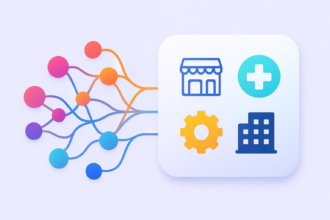
Conversational AI adaptability is also improving by better molding to industry-specific applications. Many industries have unique compliance, security, and ethical needs. To meet these varying standards, conversational AI can align with industry expectations and provide tailored solutions.
Here are a few examples:
- Finance: Conversational AI tools like AI agents are equipped with added security to meet standards for handling sensitive data and payments, such as General Data Protection Regulation (GDPR) and Payment Card Industry (PCI) compliance.
- Healthcare: For medical professionals looking to use conversational AI to improve the patient experience, some solutions offer HIPAA-friendly agents capable of streamlining workflows without sacrificing compliance.
- Education: Some conversational AI solutions offer education-specific templates for AI agents that are effective at ethical communication with students of all ages and equipped with the security necessary to keep their information safe.
With industry-specific solutions, conversational AI is set to streamline the implementation of AI tools across fields and ensure businesses have the tools they need to succeed.
Emotional intelligence
Emotional intelligence and empathy are inherently human traits, but conversational AI will likely see future improvements in its ability to comprehend emotional context and respond accordingly as it continues to evolve.
Most AI solutions can’t fully comprehend the nuances in human language that indicate emotion and tone during interactions, particularly subtle ones like sarcasm and irony. Even those with a higher level of comprehension may still struggle to provide responses to address their users’ needs.
In the future of conversational AI, these vital soft skills will likely improve to provide a more personable experience. This can increase customers’ overall satisfaction with your AI tools while freeing up your team from tasks that may otherwise slow them down.
The key to maximizing AI solutions as their emotional comprehension capabilities improve is to continue balancing their use with human oversight and approval. Suppose, for example, that a team member is helping a customer with an issue and wants to determine the best way to address the problem. They can use NLP to analyze the conversation, identify the customer’s conveyed emotions, and provide helpful suggestions for appropriate next steps. Ultimately, though, your team member has a lifetime of connection and emotional and ethical understanding under their belt, so they have the final say on the best course of action.
Cost reduction, scalability, and future-ready strategies
By embracing these conversational AI trends, your business can tap into benefits that support sustainable growth, scalability, and future-proofing your processes, but only if you implement them correctly.
Automating features of conversational AI tools lets you supplement your workforce with AI agents to reduce labor costs and increase efficiency. AI agents can handle the repetitive tasks bogging down your team, and your employees can increase productivity with higher-value work, without the need for additional hiring.
In the same way, conversational AI can easily flex to handle surging demand. Whether you experience seasonal influxes of requests or you’re scaling your business operations, conversational AI can expand its capabilities to meet your growing needs.
But to reap these benefits, your team must prepare for your AI tool’s implementation and understand how to use and integrate it into existing workflows. Here are some tips to help:
- Invest in a user-friendly AI solution: Solutions that require complex coding and development knowledge can lead to a long implementation process and confusion down the line. Meanwhile, a no-code solution that’s easy to learn could offer a better overall return on your investment.
- Prioritize training for your employees: If your team doesn’t understand how to use these tools effectively, conversational AI won’t provide the value you seek. That’s what makes comprehensive, hands-on training for your team so important. Training should cover how conversational AI works, how your solution will benefit your team, and real-world scenarios that demonstrate how your solution can maximize productivity.
- Reassure your team that they aren’t being replaced: Many employees fear being replaced by AI. Make sure your team understands that tools like AI agents are here to assist and support, not replace. This will help secure team buy-in and overall adoption of conversational AI.
- Choose solutions that integrate with your tech stack: Conversational AI tools that don’t play well with the tools you already use can turn out to be a headache in disguise. Before you choose a solution, make sure it offers integrations with the tools you use most, so you’re not left with more work than when you started.
Staying ahead of conversational AI trends and using these tools successfully comes down to having the right partner. Consider investing in a solution that’s easy to use and constantly evolving, such as Jotform AI Agents.
Keep up with the conversational AI trends with Jotform
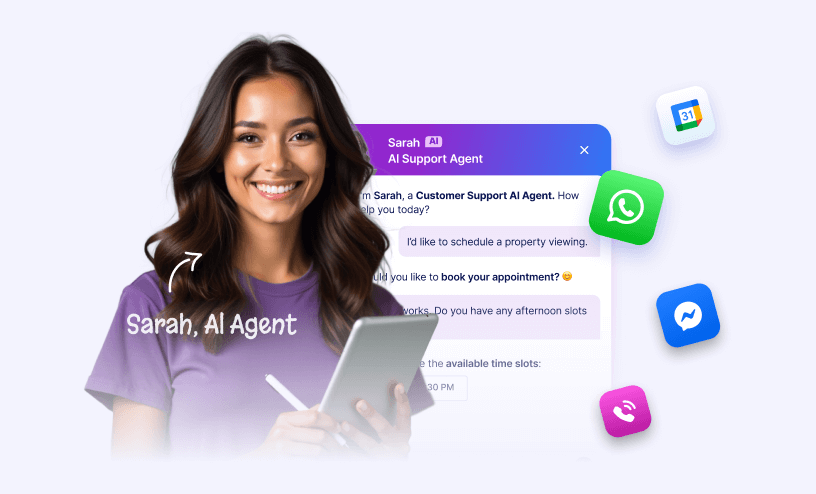
Jotform AI Agents is a conversational AI tool that evolves alongside the industry, so you can be sure you’re always ahead of the competition. These AI assistants adapt to conversational AI trends and apply to a wide range of scenarios, even offering industry-specific solutions.
With Jotform AI Agents, you can transform any form into an interactive conversational AI experience, with no coding required. You can easily train agents using data from internal documents, hands-on testing, or external sources. Using this data, AI agents can answer questions, handle requests, and automate many of the repetitive tasks that keep your team from reaching its full potential.
With these tools, your team can more easily collect information from users to make informed business decisions. Building your own AI tools requires only a few simple steps. Here’s how to get started:
- Start your AI Agent from scratch, copy a template, or convert your form into an agent.
- Train your AI Agent using your preferred data sources.
- Customize your agent in Jotform Agent Builder, adjusting the personality, voice, tone, and avatar to best fit your brand.
Jotform AI Agents can be made from scratch, from a form, or from 7,000-plus free AI Agent templates and launched in a matter of minutes. These AI helpers are equipped with the latest in conversational AI features, so you don’t have to worry about falling behind.
The future of conversational AI is now, with more developments happening every day. Don’t miss out on the benefits of these essential tools; get started in just a few minutes with Jotform AI Agents and find out what conversational AI can do for you.
FAQ
The future of chat AI centers on creating a more human-like experience. Advancements in tone detection, contextual understanding, and emotional intelligence, will lead to chat AI tools providing interactions comparable to those of live agents.
The 30 percent rule for AI tools is a usage guideline that states AI should be used for the 70 percent of your team’s work that consists of routine tasks, leaving your human employees to handle the 30 percent of tasks that require complex, emotional, and ethics-based skills. The 30 percent rule is meant to promote productive use of AI that positions this technology as a support tool rather than a replacement.
AI’s future in communication will focus on hyper-personalization and enhanced empathy. AI tools that can harness these qualities can provide a more human-like experience and expand its overall capabilities.
This article is for business leaders, product managers, and customer experience teams exploring conversational AI trends, practical use cases, and future strategies to improve efficiency, scalability, personalization, and human-centered digital interactions across modern organizations worldwide.

























































































Send Comment: