
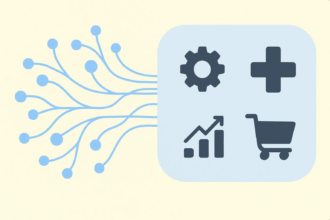
- AI improves convenience and efficiency in daily life, powering personal assistants and smart home devices.
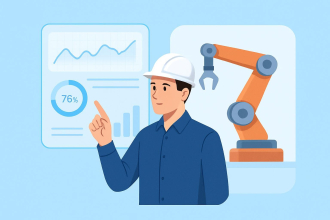
- In business, AI automates tasks, enhances customer service, and provides predictive analytics for better decision-making.
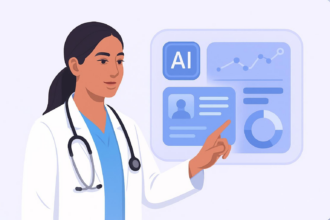
- AI is revolutionizing healthcare by improving diagnostics, enabling personalized medicine, and streamlining operations.
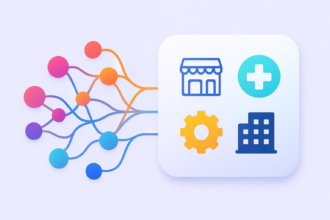
AI is now everywhere — in factories, hospitals, offices, and homes. It helps businesses work faster, keeps cars safer, and even powers smart assistants to listen more closely (sometimes a little too closely). Keep reading to discover what else AI is used for and how AI works in the real world.

1. AI in everyday life
AI has quietly become the extra pair of hands (or brains) most of us didn’t know we needed. It improves convenience, saves time, and makes our digital experiences smoother, whether we’re shopping, streaming, or setting reminders to drink more water.
You’ll spot AI in action every day through things like
- Personal assistants that answer questions, send texts, and manage calendars
- Smart home devices that adjust lighting, lock doors, and remind you when you’re out of milk
- Recommendation systems that learn your habits and suggest what to watch, read, or buy next
Think about how Alexa and Google Assistant have become part of our daily lives, from controlling the lights to reading the news. And how Netflix seems to know just what you’ll want to watch next. These systems use AI to learn your preferences, anticipate your needs, and make everyday tasks feel somehow effortless.
Even personalized tools like Jotform’s Personal Training Feedback AI Agents are bringing AI closer to our daily routines. Whether it’s your home, your phone, or your fitness plan, AI is quietly working behind the scenes to make life a little easier.
2. AI in business and industry
Businesses love AI because it not only works hard but smart too. From small startups to global corporations, AI helps save time, cut costs, and make better decisions backed by data. Using AI is like hiring a team of tireless problem-solvers who never need a lunch break.
Common uses of AI in business include
- Automation that handles repetitive tasks so people can focus on creative work
- Customer service powered by chatbots and AI agents that respond instantly
- Predictive analytics that help companies forecast sales and customer demand
- Cybersecurity systems that detect and stop threats faster than humans can blink
- Supply-chain management tools that reduce delays and keep inventory in check
With Transportation Request AI Agents improving logistics and Vehicle Inspection AI Agents ensuring safety, generative AI in business is reshaping how industries run. McKinsey & Company recently rolled out an in-house chatbot named Lilli that more than 70 percent of its employees now use for research and data analysis.
The use cases for AI in business are only growing — and the wisest companies are the ones that learn to work with it, not against it.
3. AI in science and technology
AI isn’t just helping us shop better; it’s also helping us understand the universe. Scientists use AI to sift through massive amounts of data, find patterns that humans might miss, and make discoveries that push the boundaries of what’s possible. From decoding DNA to predicting the weather, AI is speeding up research and innovation like never before.
Here’s where AI is making big waves in science and tech:
- AI is speeding up drug discovery by helping scientists develop new treatments in months instead of years. For example, researchers at Northeastern University are using AI to build virtual humans that test how a drug interacts with the body before clinical trials even begin.
- AI powers renewable energy systems that optimize how we capture, store, and distribute clean power.
- In space exploration, AI analyzes telescope data to spot new planets and distant galaxies.
- AI is improving climate modeling by predicting extreme weather patterns and tracking the impact of global warming. For instance, at the University of Washington, a model simulated up to 1,000 years of climate data in just hours — a huge leap from traditional methods.
- AI also drives materials science research that designs stronger, lighter, and more sustainable materials for the future.
By taking on the heavy data lifting, AI gives researchers more time to do what humans do best: ask the next big question.
4. AI in healthcare
AI has become one of healthcare’s most reliable partners, spotting illnesses earlier, cutting wait times, and helping doctors make better decisions. It’s turning patient care from reactive to proactive, all while making hospitals and clinics more efficient.
Here’s how AI is changing healthcare for the better:
- AI improves diagnostics by detecting diseases like cancer and diabetes from scans and lab results with greater accuracy.
- It supports personalized medicine by tailoring treatments based on each patient’s unique genetics and health data.
- AI enhances robotic surgeries by helping doctors perform complex procedures with more precision and fewer complications.
- It also powers virtual assistants that handle scheduling, billing, and patient communication, freeing up valuable staff time for critical patient care.
AI is also making healthcare more humane. By giving doctors more time to focus on patients instead of paperwork, improving access for people in remote areas, and helping reduce bias in diagnoses, AI is bringing empathy back to medicine. As an example, ambient-scribe technologies allow physicians to spend fewer minutes typing and more minutes talking with patients.
When machines take care of the routine, humans can do what they do best: care, listen, and heal. Jotform’s Healthcare Survey AI Agents and Healthcare & Wellness AI Agents are helping organizations collect feedback, streamline operations, and enhance patient care.
5. AI in education and skill development
AI is opening doors to more inclusive and personalized learning. It helps students learn at their own pace, supports teachers with efficient tools, and keeps schools running smoothly behind the scenes. From tutoring apps to automated grading, AI is turning traditional classrooms into dynamic, data-driven spaces for growth.
AI is transforming education via
- Personalized learning that adapts lessons to each student’s strengths and pace
- Virtual tutors that explain tough concepts and offer real-time feedback
- Administrative tools that handle grading, attendance, and scheduling faster and more accurately
- Language tools that help students with reading challenges or translation needs
- Data-driven insights that help educators spot learning gaps and improve outcomes
With the assistance of AI Agents for educators, such as Jotform’s Quiz AI Agent, teaching is becoming more flexible, inclusive, and focused on what really matters: helping students thrive. Many educators are also using Jotform’s Education AI Agents and Education Survey AI Agents to gather student feedback, tailor programs, and track progress with ease.
Another breakthrough example comes from Estonia, which is launching a nationwide initiative called AI Leap, aimed at bringing AI-powered tools and training to 58,000 students and 5,000 teachers by 2027. This effort is reshaping how students learn and how teachers teach, focusing on personalized instruction, digital literacy, and equal access to modern technology.
6. AI in finance
In the world of money, AI is like a watchful guardian, protecting customers, catching fraud, and making financial decisions more quickly and safely. Banks and credit unions use AI to manage risks, improve customer service, and keep sensitive information secure.
You’ll find AI at work in finance through
- Risk-assessment tools that predict and prevent loan defaults
- Fraud alerts that catch suspicious transactions in real time
- Automated systems that process claims and verify customer data
- Chatbots that handle routine banking questions 24-7
- Predictive analytics that help financial institutions make smarter investment decisions
Blending speed with accuracy, AI helps financial organizations build trust by safeguarding sensitive information.
According to the European Central Bank, banks using AI for credit scoring and fraud detection reported improved efficiency and better customer service, with neural-network models used mainly for fraud detection.
7. AI in marketing and social media
Marketers are getting a serious upgrade thanks to AI. By understanding audience behavior, predicting trends, and personalizing every click and scroll, AI helps brands connect with people in smarter, more authentic ways. It takes the guesswork out of marketing and replaces it with data-driven precision (and a dash of creativity).
Here’s how AI is powering modern marketing:
- AI sharpens audience targeting by pinpointing who’s most likely to engage or buy.
- It fuels content-creation tools that write copy, design visuals, and even suggest post ideas tailored to brand goals.
- AI drives trend analysis that spots what’s going viral before it becomes yesterday’s news.
- It powers forecasting tools that predict campaign spending and return on investment with impressive accuracy.
- AI enables personalized marketing campaigns that adapt in real time to each customer’s preferences and behavior.
From chatbots that boost engagement to algorithms that fine-tune ad placement, AI in social media is the secret sauce behind the most effective campaigns. It helps marketers reach the right people, at the right time, with the right message.
Zalando, an online European fashion retailer, used generative AI to create marketing imagery and digital twins of models, reducing its content production time from six to eight weeks down to three to four days and cutting associated costs by a whopping 90 percent.
Benefits of using AI
It’s no wonder AI has become the go-to tool for businesses and individuals alike. Its benefits are hard to ignore, especially as AI tools become easier to use and more affordable.
Here’s what makes AI worth the hype:
- Cost savings grow as automation takes over repetitive tasks, helping teams get more done with fewer resources.
- Accuracy improves as AI reduces human error and supports sharper, data-backed decisions.
- Scalability becomes easier as AI tools handle bigger workloads without major jumps in labor or infrastructure.
- Personalization gets smarter as AI learns user behavior and delivers experiences that feel tailor-made.
- Efficiency rises as AI cuts down manual work, freeing people to focus on creativity, strategy, and problem-solving.
The challenges of using AI
No powerful tool comes without a few challenges. AI’s swift rise brings up big questions about ethics, privacy, and the future of work — all issues that can’t be ignored.
Here are some key challenges of using AI:
- Ethical concerns arise around how data is collected, used, and shared, especially when privacy and fairness are at stake.
- Job displacement becomes a risk as automation replaces repetitive roles, pushing workers to adapt or reskill.
- High up-front costs can make AI adoption difficult for smaller businesses that need new tools, training, and infrastructure.
- Data-security risks grow as AI handles large amounts of sensitive information that could be exposed or misused.
- Dependence on technology can limit human oversight and creativity if people rely too heavily on algorithms.
Used wisely, AI can be a massive advantage. The trick is to balance innovation with responsibility, making sure the technology serves people, rather than the other way around.
The future of AI and emerging trends
The global AI market is projected to reach over $800 billion by 2030. Generative AI adoption is also surging, according to McKinsey: As of late 2024, 71 percent of organizations reported using generative AI regularly, up from 65 percent in early 2024.
And as more industries adopt machine learning and AI, there’s been a shift from experimenting with AI to building whole ecosystems around it.
Here’s what we see coming next:
- More efficient autonomous systems, like self-driving vehicles, delivery drones, and robots, will operate with minimal human guidance.
- AI and quantum computing will team up to solve problems that traditional computers can’t tackle, such as drug interactions, complex simulations, and optimization at scale.
- Better edge computing, thanks to AI, will run on devices (phones, wearables, or factory sensors) rather than always relying on the cloud.
- More powerful generative AI for business will create 3D models, digital twins, and synthetic data for training systems without revealing private data.
- AI embedded in public infrastructure will promote faster disaster response, smarter cities, and more climate resilience.
In short, the reach of artificial intelligence applications is expanding into former science-fiction territory: Autonomous systems, faster computing, more efficient sensors, and ethical frameworks will think beyond “Can we build it?” to “Should we build it?”
Embracing the power of AI with Jotform
From healthcare and education to finance and marketing, AI is transforming nearly every corner of modern life. And across all industries, the message is clear: Smart tools make work faster, decisions sharper, and experiences more personal.
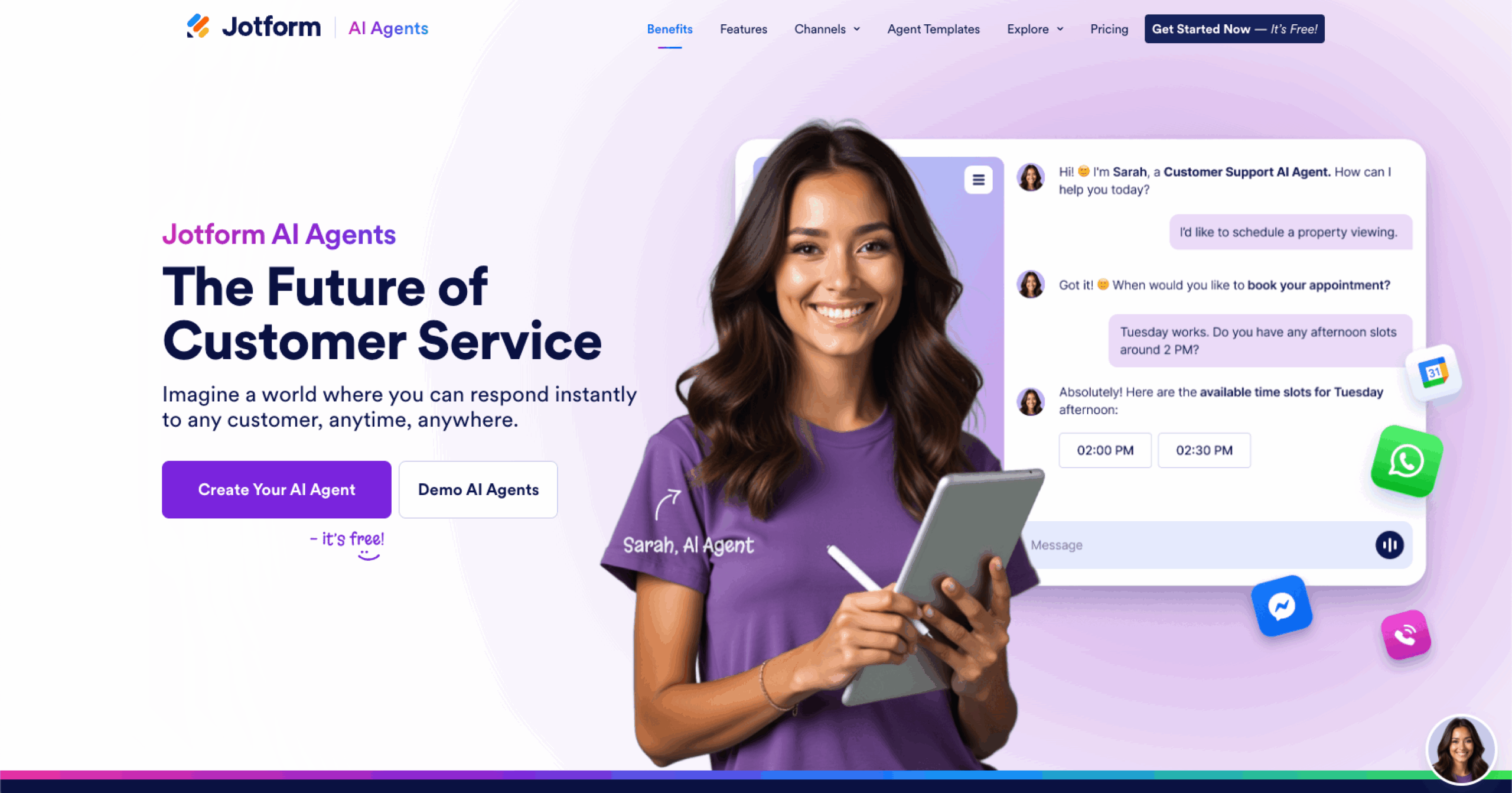
Jotform’s AI Agents bring that same power to your workflow. Whether you’re managing data, improving customer support, or automating routine tasks, these customizable AI assistants help you work better without adding complexity.
Explore Jotform AI Agents to find the right fit, and simplify, scale, and supercharge what you do every day.
This guide is for busy decision-makers and practitioners—founders, operations leaders, educators, and public-sector teams—evaluating where AI can add real value.




























































Send Comment: