
Steps to deploy AI assistants for e-commerce
- Choose the right AI assistant
- Train the AI
- Customize and brand
- Test and optimize
You’ve done it dozens of times. You’re shopping online and have a quick question about a product. Within seconds, you’ve opened a chat window and have your answer. How? You can thank artificial intelligence (AI) assistants for the fast response.
This tool has become essential to running an e-commerce business. That’s because this technology can guide shoppers, answer their questions, suggest products, and process orders automatically and at all times of the day and night.
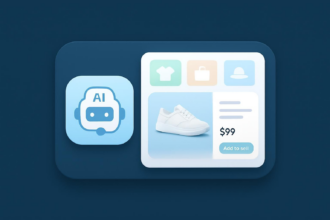
AI assistants for e-commerce used to require massive tech budgets and development teams. Now, with tools like Jotform AI Agents, businesses can create smart, conversational helpers that handle customer service, boost conversions, and keep shoppers engaged, all without writing a single line of code.
Discover how to implement an AI assistant in your business below.
What are AI assistants for e-commerce?
You can think of these tools as virtual employees who work 24/7 without supervision or prompting. They handle complex decisions and respond to customer requests in real time. Plus, they operate in the background, learning from past interactions and adapting as they go.
In e-commerce, their role is to assist shoppers in completing purchases. Despite their growing presence, research shows that while 43% of U.S. adults know about AI shopping assistants, only 14% have actually interacted with one. That gap means there’s still an opportunity for early adopters.
Most online shoppers encounter AI assistants in one of three forms: chatbots, virtual shopping assistants, or AI-powered recommendation engines.
Chatbots
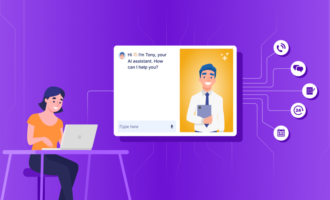
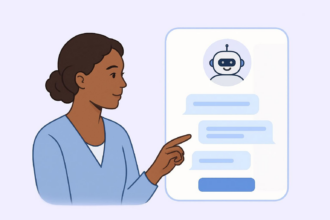
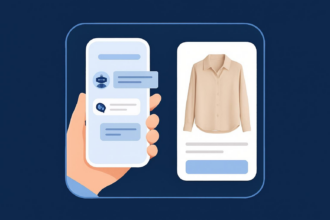
These text-based assistants appear on websites or in shopping apps to assist customers in just a few seconds. You’ve probably seen one pop up on the corner of your screen, ready to answer common questions (“Where’s my order?”) or walk you through the checkout process. For example, if you ask the chatbot about a promo code, it instantly presents a few options that match your request. For more complex inquiries, it can pass the conversation to a human support agent.
As the first line of customer service in e-commerce, chatbots offer around-the-clock support while keeping costs low. And they’re only getting smarter. Gartner predicts that by 2027, chatbots will become the main customer service channel for about a quarter of businesses.
Shopping assistants
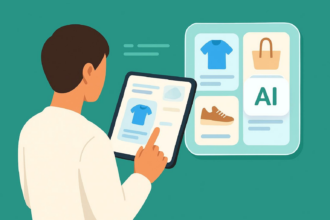
Virtual shopping assistants replicate the in-store experience of interacting with a knowledgeable sales associate, but entirely online. These tools often combine live chat, product recommendations, and visual interfaces or avatars to give shoppers a richer, more interactive experience.
In e-commerce, they can:
- Provide styling or product-use suggestions, such as “pair these jeans with that sweater” or “complete your order with these accessories.”
- Simplify overwhelming browsing experiences by narrowing down products based on customer preferences, budget, or style.
- Respond in real time and adapt as shoppers browse, pulling data from past behavior, inventory, and product details to deliver tailored guidance.
Take, for example, a shopper who’s searching for an office lamp under $200 on a furniture store site. The AI assistant shows them options and throws in some styling suggestions. Once the customer decides, the AI assistant handles checkout and order confirmation — all in the same place.
AI-powered recommendation engines
Unlike chatbots and shopping assistants, which engage with customers directly, recommendation engines work behind the scenes. They analyze everything from browsing behavior and purchase history to what similar shoppers bought to surface relevant products. Think about the helpful “You might also like” section that appears at the bottom of a clothing store’s website.
AI-powered recommendation engines can:
- Tailor product carousels, upsells, and cross-sells to each customer
- Learn from user data to predict what shoppers are most likely to buy next
- Automatically refresh recommendations as trends or preferences shift
Benefits of using AI assistants in e-commerce
Understanding what AI assistants can do is one thing. Understanding what they can do for your e-commerce business is another. The payoff shows up in two key areas: happier customers and a more efficient operation.
Let’s start with the customer side. People don’t shop on a set schedule, and AI assistants don’t work one either. They’re always available, so when someone has a question about sizing or shipping at 11 a.m. on a weekend and gets an instant answer, they’re far more likely to complete the purchase than if they were directed to an FAQ page or had to wait for an email response. That speed matters, but it’s only part of the equation.
The other half is relevance, which keeps people engaged. If you can analyze a shopper’s browsing behavior or purchase history, imagine how many personalized suggestions could turn into more revenue. An example of this could be when a customer who bought running shoes last month sees recommendations for moisture-wicking socks or a hydration vest.
Faster, more personalized service increases conversion rates and drives repeat purchases. It can also benefit your team. Automation eliminates repetitive requests that often slow workers down. Tasks like order tracking requests, return policy questions, and promo code inquiries eat up time without adding much value. Freeing your staff from this work lets them focus on complex customer issues and revenue-driving projects.
How to deploy AI assistants for e-commerce
Whether you’re adding a chatbot or a recommendation engine, follow these four steps:
- Choose the right AI assistant. Most businesses try to build an assistant that can do everything. Instead, identify one of your business’s pain points that needs improvement. Are too many customers leaving items in shopping carts? Start there. Meanwhile, the complexity of your assistant depends on your product catalog and the types of customer questions you receive. For example, if you get the same 10 questions repeatedly, a rules-based chatbot is ideal. If queries are complex or unpredictable, consider natural language processing. Whatever you choose, ensure it integrates with your e-commerce platform and customer relationship management (CRM) system.
- Train the AI. AI assistants are only as good as your data. Give it as much information as possible, and even train it on real inquiries from your support team, so it can handle more conversational questions and strike a similar tone to your human agents. Then, connect the assistant to your CRM and inventory system so it delivers real-time updates, such as “That item is back in stock!”
- Customize and brand. Remember that your AI assistant should sound like an extension of your business. Customize the tone and voice to match your business persona. So if you’re a playful cooking brand, you don’t want your assistant to sound like a stuffy corporation. Generic assistants can seem impersonal and hurt trust.
- Test and optimize. Start by rolling out your assistant to a small percentage of your site traffic, not everyone at once. That way, you can catch errors or inconsistencies to ensure it’s effectively helping customers. Track metrics like response time and accuracy, conversion rates, cart completions, and customer satisfaction and feedback.
Jotform AI Agents: Simplifying AI assistant deployment
Most businesses want AI assistants for e-commerce, but they may assume it takes working with a developer and days to build one. Tools like Jotform AI Agents remove that technical barrier entirely, making it easier than ever to create intelligent assistants without any coding.
Here’s how it works:
- Start from scratch, use a template, or clone an existing form: Jotform offers ready-made agents that can be used as is or customized based on your needs. These AI assistants can help with order tracking, product inquiries, and customer support.
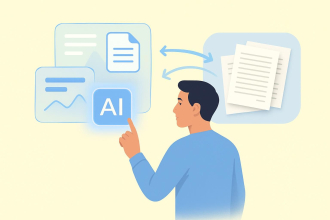
- Train the AI with documents or URLs: Upload your FAQs, product guides, or website links so the AI can respond accurately to customer questions. The more relevant information provided, the smarter and more precise your assistant becomes.
- Customize it using the Agent Builder: Give your assistant a voice and style that reflects your brand. With Jotform’s Agent Builder, it’s easy to adjust tone, behavior, and design, making interactions feel natural — not generic.
If you want to get straight to deployment, Jotform AI Agents lets you skip the building process by offering access to more than 7,000 free AI Agent templates that can be launched instantly. This includes some of the best chatbots for your e-commerce business, such as pre-built retail and e-commerce AI Agents like the retail business AI chatbot template and the e-commerce AI chatbot template.
Make your e-commerce experience a breeze with Jotform
AI assistants are no longer a concept of the future. They’re becoming the standard for what customers expect when they shop online. The good news? You don’t need a tech team or a huge budget to integrate one. With tools like Jotform AI Agents, you can have a working assistant up and running the same day, all while eliminating repetitive tasks and delivering faster, smarter service to every shopper.
Create one from scratch, start with a ready-made template, or try a prebuilt retail solution without writing a line of code. Get started with Jotform AI Agents and see how effortlessly your e-commerce company can embrace automation.
This article is for e-commerce business owners, online store managers, and digital marketers who want to enhance customer support, increase conversions, and streamline operations by deploying AI assistants without needing technical expertise.

















































































Send Comment: