

Moduli E-commerce

Modulo Lista Della Spesa
Tieni traccia della tua spesa con la nostra lista personalizzabile e gratuita. Organizza facilmente gli articoli da acquistare ovunque tu faccia shopping.
Vai alla Categoria:Moduli E-commerce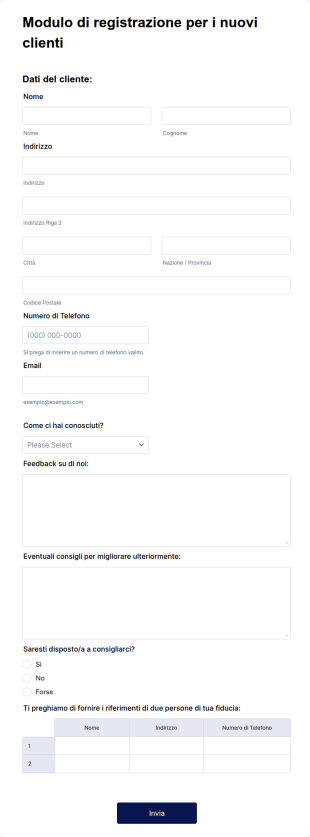
Modulo Di Registrazione Per I Nuovi Clienti
Un modulo di registrazione per i nuovi clienti è un modulo aziendale che i nuovi clienti compilano per fornire le proprie informazioni. Può essere utilizzato da aziende di qualsiasi tipo e dimensione. I nuovi clienti sono fondamentali per la crescita di ogni attività. Crea un modulo di registrazione per raccogliere e archiviare i dati dei nuovi clienti, sia che tu gestisca un negozio fisico, un ristorante o un’attività online.Grazie a un modulo pratico e ben strutturato, puoi facilitare la registrazione dei clienti e mantenere le informazioni sempre accessibili per eventuali acquisti futuri o segnalazioni. Con un modulo gratuito per la registrazione dei nuovi clienti, puoi raccogliere nomi, contatti, dati di pagamento e qualsiasi altra informazione utile per iniziare la relazione commerciale.Inizia subito a raccogliere informazioni online con un modulo gratuito: personalizzalo in base al tuo brand, al tuo sito web e all’esperienza che vuoi offrire ai tuoi clienti. Puoi aggiungere o rimuovere campi, regolare la visibilità dei campi e mostrare solo quelli necessari. Una volta creato il modulo, potrai incorporarlo nel tuo sito o condividerlo tramite link per iniziare a ricevere risposte. Quando ricevi nuove iscrizioni, potrai consultare le informazioni raccolte e inviare un’e-mail di benvenuto.Questo modulo di registrazione contiene un totale di 8 campi diversi, tra cui:Campi informativi: nome, cognome, indirizzo, numero di telefono, e-mailMenù a tendina: come ci hai conosciutiCampi di testo esteso: feedback, suggerimentiScelta singola: sei disposto/a a raccomandarci?Tabella dati: informazioni di riferimento
Vai alla Categoria:Moduli E-commerce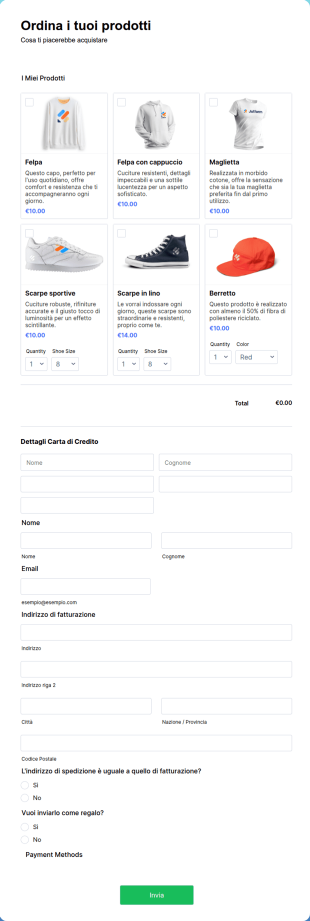
Modulo Di Pagamento PayPal
Il Modulo di Pagamento PayPal ti permette di vendere prodotti o servizi online. Puoi usare questo modello di modulo gratuito per raccogliere pagamenti immediatamente. Collega il modulo con il tuo account PayPal, poi personalizza il modello di modulo come preferisci, inserendo i tuoi prodotti e prezzi, e infine condividi il modulo o incorporarlo nel tuo sito web per iniziare a ricevere pagamenti. Jotform non applica costi di transazione aggiuntivi, quindi pagherai solo la tariffa standard di PayPal.PayPal consente di raccogliere pagamenti tramite carta di debito, carta di credito, PayPal e diversi altri metodi di pagamento locali, offrendo ai tuoi clienti più opzioni senza lasciare il modulo o il sito web. Con il Costruttore di Moduli drag-and-drop di Jotform, puoi personalizzare il modulo secondo il tuo stile aggiungendo il logo, modificando font e colori, riorganizzando il layout e persino integrandolo con oltre 100 app per inviare automaticamente gli ordini a strumenti che già utilizzi, come Google Drive, Google Sheets e altri ancora.
Vai alla Categoria:Moduli di Pagamento
Modulo Di Istruzioni Di Spedizione
Raccogli istruzioni operative per ritiro e consegna con il Modulo FORM di istruzioni di spedizione di Jotform, utile per logistica, magazzini e negozi online che vogliono migliorare la raccolta dati e gestire ogni invio del modulo.
Vai alla Categoria:Moduli Ordine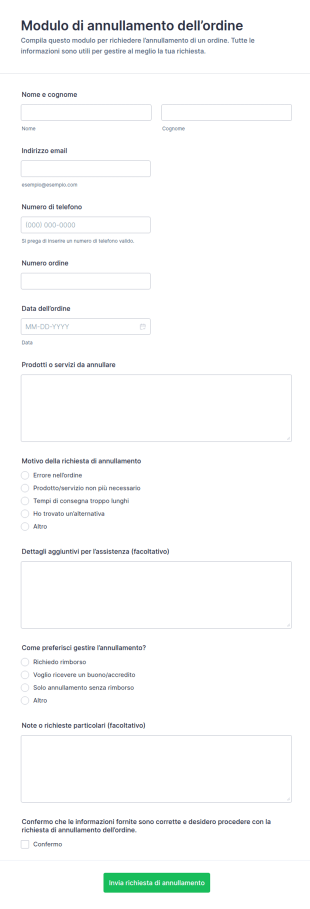
Modulo Di Annullamento Ordine
Gestisci le richieste dei clienti con il Modulo di annullamento dell’ordine di Jotform, utile per e-commerce e servizi per raccogliere dati e organizzare ogni invio del modulo in modo ordinato.
Vai alla Categoria:Moduli di Disdetta
Modulo Per Etichetta Di Spedizione
Raccogli dati di mittente, destinatario e dettagli della spedizione con il Modulo per Etichetta di Spedizione di Jotform, utile per e-commerce, magazzini e uffici che gestiscono invii in modo ordinato.
Vai alla Categoria:Moduli Ordine
Modulo D’Ordine
Raccogli ordini e richieste di consegna con il Modulo d’Ordine, ideale per negozi, artigiani e servizi a domicilio che vogliono centralizzare la raccolta dati e gestire ogni risposta in modo ordinato con Jotform.
Vai alla Categoria:Moduli Ordine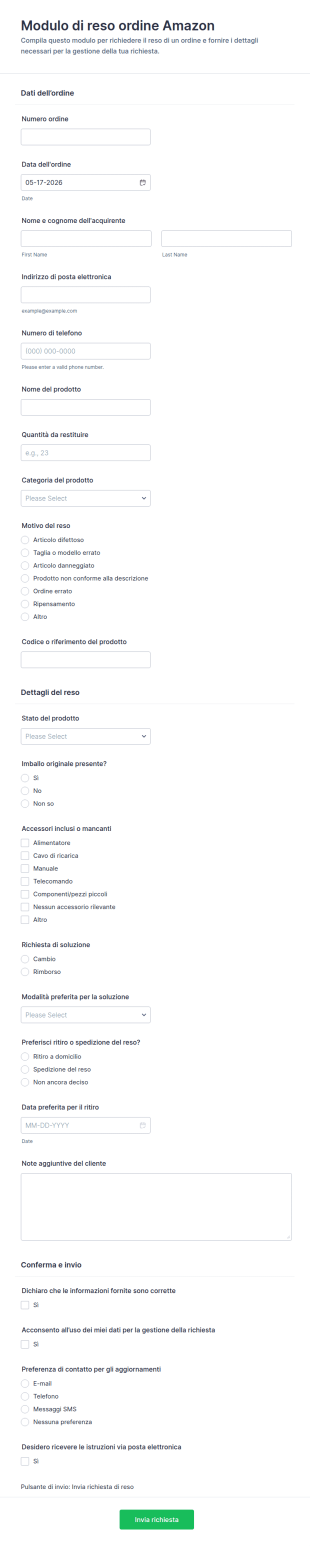
Modulo Di Reso Ordini Amazon
Gestisci le richieste di reso e assistenza post-acquisto con il Modulo di reso ordine Amazon Form di Jotform, ideale per negozi online e team clienti che vogliono organizzare la data collection e seguire ogni risposta in modo ordinato.
Vai alla Categoria:Moduli Ordine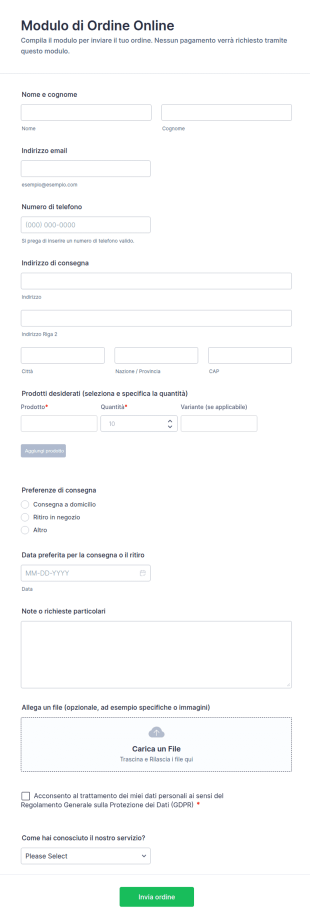
Modulo Di Ordine Online
Raccogli ordini online con il Modulo di Ordine Online di Jotform, ideale per negozi e attività che gestiscono consegne o ritiri e vogliono semplificare la raccolta dati e le risposte.
Vai alla Categoria:Moduli Ordine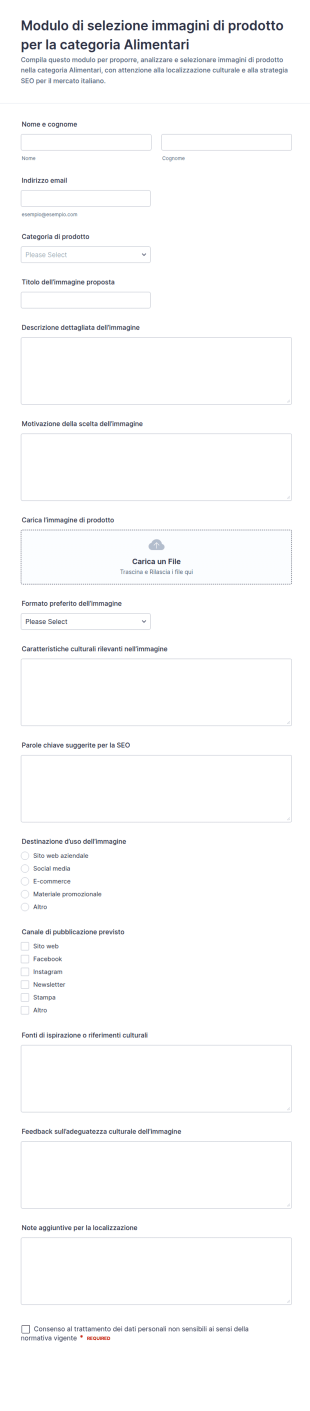
Selezione Immagine Prodotto
Raccogli, confronta e approva proposte di immagini per prodotti alimentari con il Modulo di selezione immagini di prodotto per la categoria Alimentari di Jotform, ideale per team marketing, e-commerce e agenzie che gestiscono contenuti per il pubblico italiano.
Vai alla Categoria:Caricamento Documenti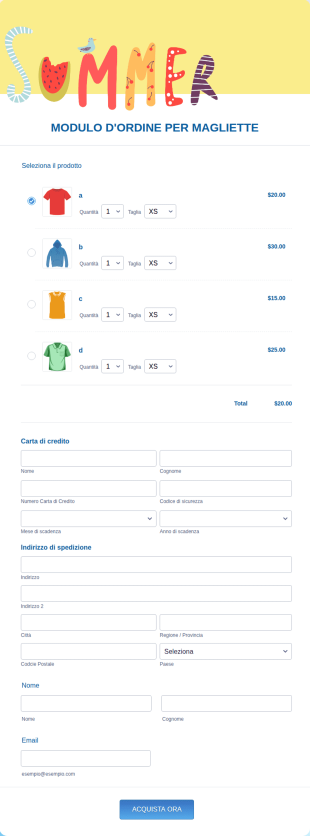
Modulo D’ordine Per Magliette
Gestisci i tuoi ordini online con un modulo d’ordine per magliette che permette ai clienti di visualizzare le immagini dei prodotti e scegliere quelli che preferiscono. Il modulo consente inoltre di indicare le quantità e le taglie desiderate, l’indirizzo di spedizione e i dati della carta di credito.
Vai alla Categoria:Moduli E-commerce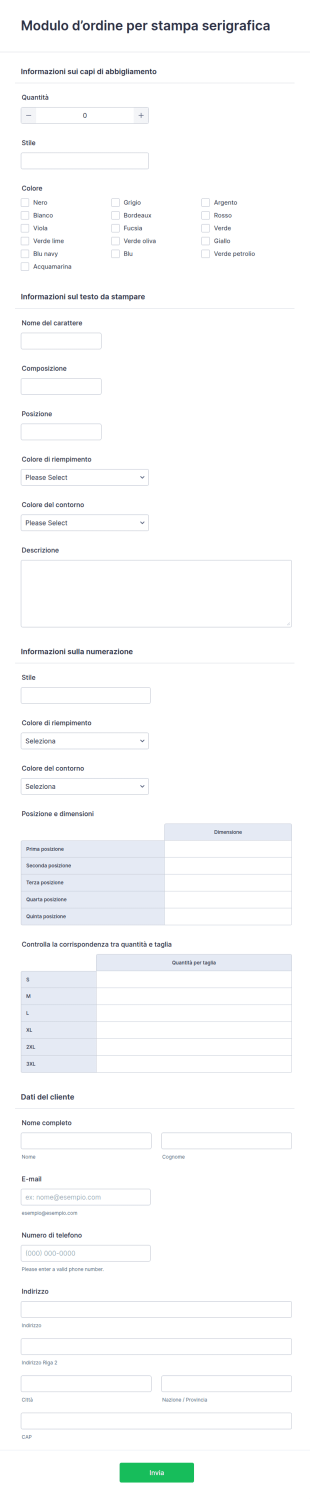
Modulo D’ordine Per La Stampa Serigrafica
Vendi magliette online con un modulo gratuito per gli ordini di stampa serigrafica. Personalizzalo rapidamente e integralo nel tuo sito web. Accetta pagamenti con carta. Sincronizza i dati con oltre 130 app.
Vai alla Categoria:Moduli E-commerce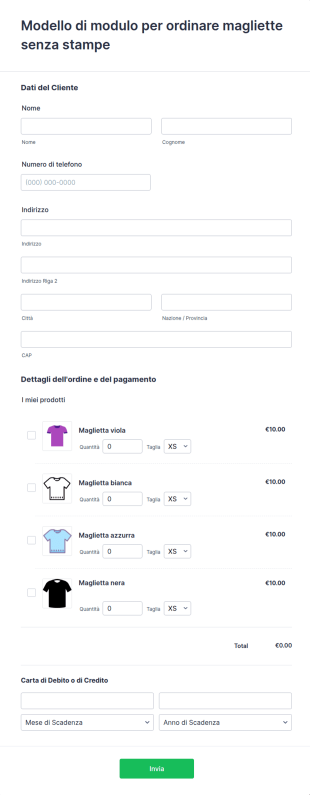
Modello Di Modulo Per Ordinare Magliette Senza Stampe
Raccogli online gli ordini di T-shirt con un modulo gratuito per magliette senza stampe. Personalizza il modello, integra il modulo nel tuo sito web e ricevi pagamenti online.
Vai alla Categoria:Moduli E-commerce
Modulo Di Presentazione Del Prodotto
Raccogli informazioni e materiali per creare schede prodotto coerenti e localizzate per il mercato italiano con il Modulo vetrina prodotto di Jotform, ideale per aziende, agenzie e team marketing che pubblicano su più canali.
Vai alla Categoria:Moduli Marketing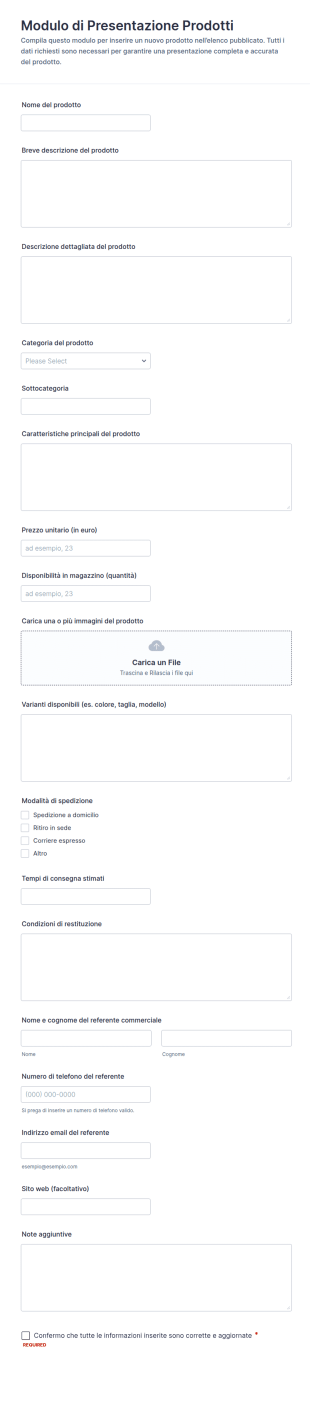
Modulo Di Invio Inserzioni Di Prodotto
Il Modulo di Presentazione Prodotti aiuta aziende e negozi a raccogliere e standardizzare le informazioni per inserire nuovi articoli a catalogo, migliorando la raccolta dati e la gestione di ogni risposta con Jotform.
Vai alla Categoria:Moduli E-commerce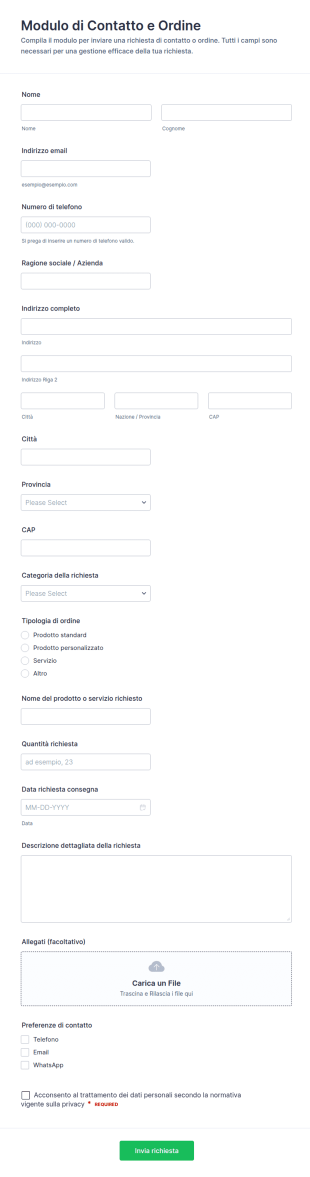
Modulo Richiesta Ordine Di Contatto
Raccogli richieste di contatto e ordini in un unico flusso con il Modulo di Contatto e Ordine, utile per aziende e professionisti che vogliono velocizzare la raccolta dati e gestire ogni risposta in modo ordinato con Jotform.
Vai alla Categoria:Moduli di Contatto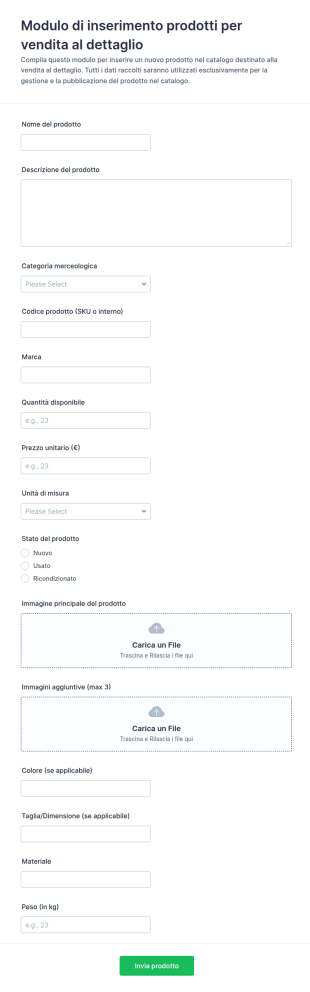
Modulo Di Inserimento Prodotti
Gestisci l’inserimento e l’aggiornamento degli articoli a catalogo con il Modulo di inserimento prodotti per vendita al dettaglio, ideale per negozi ed e-commerce che vogliono velocizzare la raccolta dati e ridurre gli errori.
Vai alla Categoria:Moduli E-commerce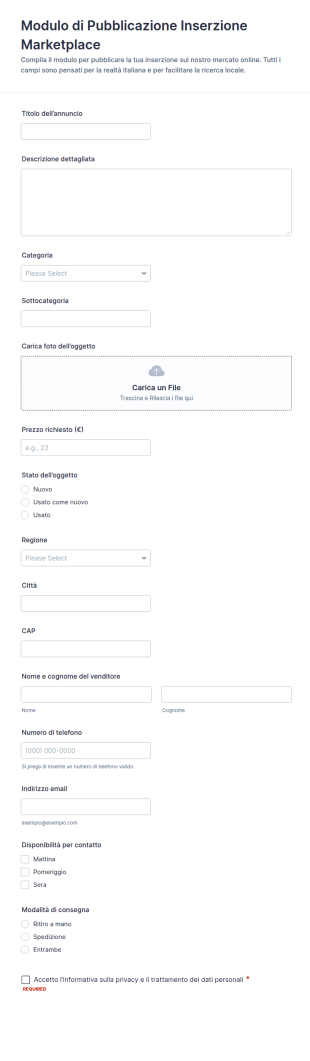
Modulo Di Inserzione Per Mercato Online
Raccogli e organizza le inserzioni dei venditori per un marketplace online con il Modulo di Pubblicazione Inserzione Marketplace di Jotform, utile per standardizzare annunci, foto e dettagli di contatto in un unico modulo web.
Vai alla Categoria:Moduli E-commerce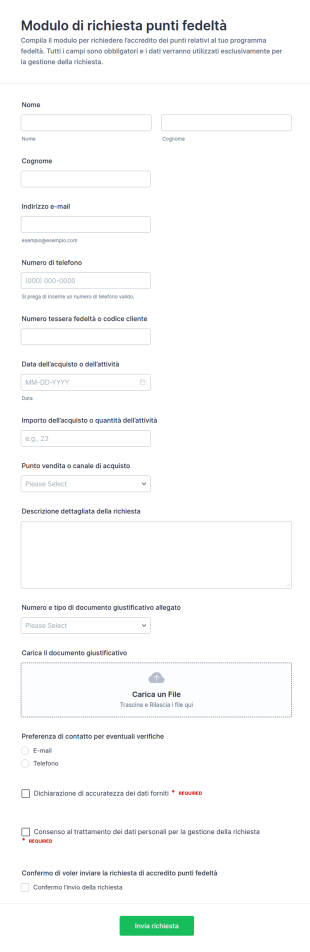
Richiesta Punti Fedeltà
Raccogli e gestisci le richieste di accredito punti con il Modulo di richiesta punti fedeltà Form di Jotform, utile per programmi fedeltà di negozi e servizi che vogliono migliorare la data collection e il controllo delle risposte.
Vai alla Categoria:Moduli di Richiesta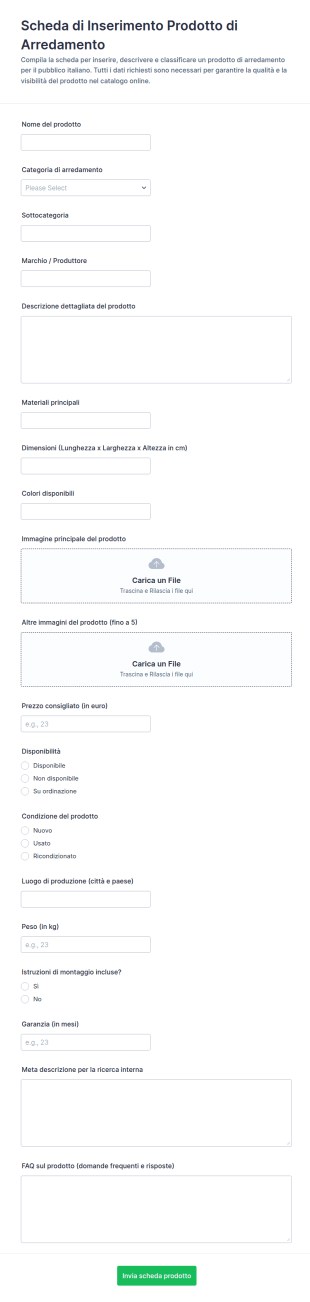
Modulo Di Inserimento Prodotti D’Arredo
La Scheda di Inserimento Prodotto di Arredamento supporta produttori, showroom e rivenditori nella raccolta dati per creare schede prodotto complete e uniformi nel catalogo online con Jotform.
Vai alla Categoria:Moduli E-commerce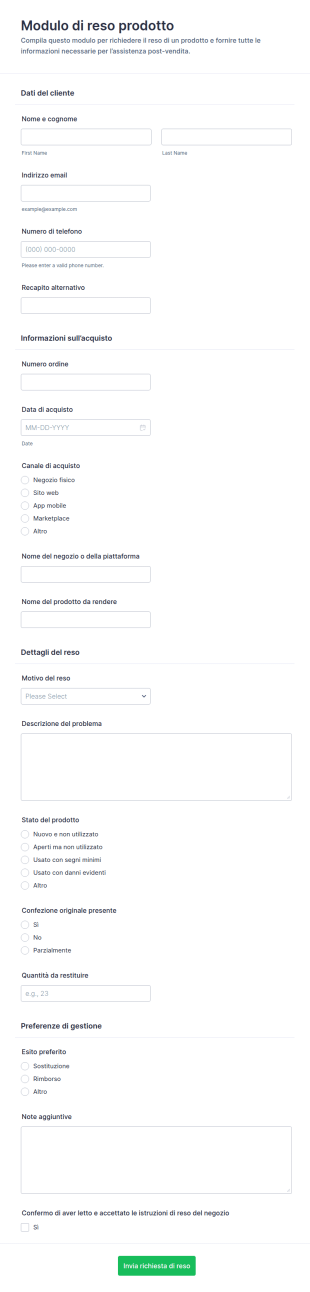
Modulo Di Reso Prodotti
Modulo di reso prodotto Form supporta negozi ed e-commerce nella gestione delle richieste di reso, migliorando la raccolta dati e l’organizzazione dell’assistenza post-vendita con Jotform.
Vai alla Categoria:Moduli Ordine
Modulo Di Raccolta Prodotti
Raccogli in modo ordinato i dettagli dei prodotti per cataloghi, vetrine e marketplace con il Modulo di raccolta prodotti di Jotform, ideale per negozi, produttori e fornitori che gestiscono inserimenti e aggiornamenti articoli.
Vai alla Categoria:Moduli E-commerce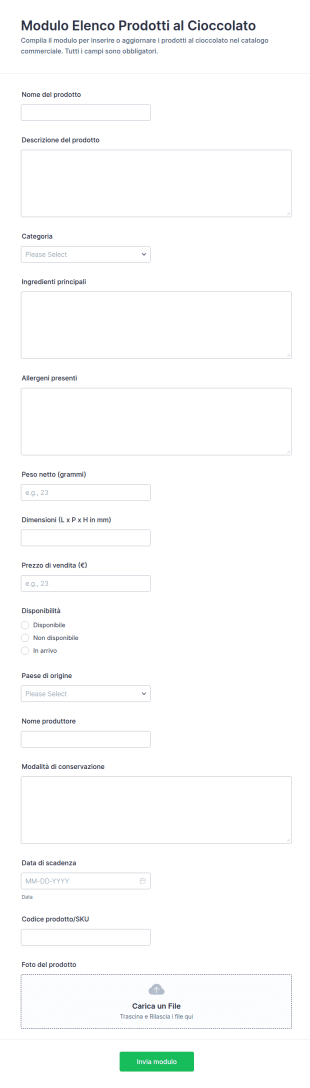
Modulo Di Inserimento Prodotti Al Cioccolato
Raccogli e aggiorna le informazioni dei prodotti al cioccolato con il Modulo Elenco Prodotti al Cioccolato di Jotform, ideale per cataloghi, listini e gestione interna di pasticcerie e aziende alimentari.
Vai alla Categoria:Moduli per Ordini Prodotti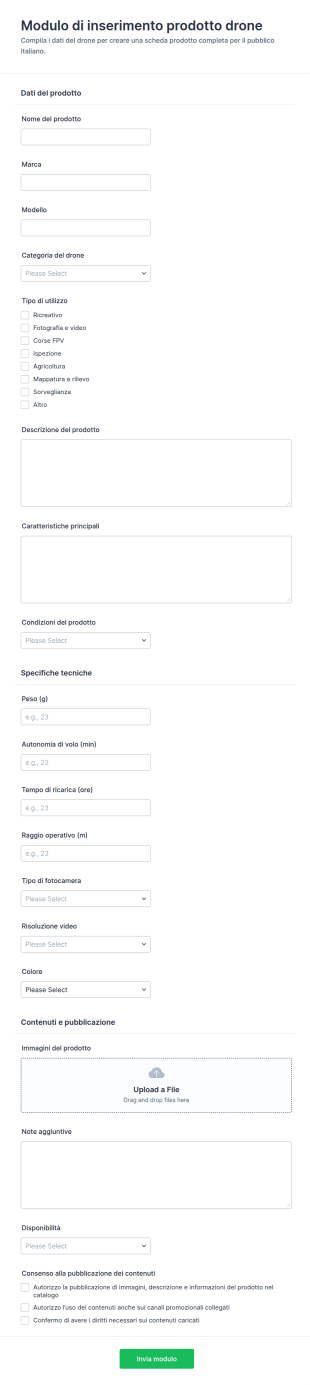
Modulo Di Inserimento Prodotti Per Droni
Raccogli e organizza con Jotform le informazioni per creare schede prodotto di droni, centralizzando descrizioni, specifiche e materiali utili per negozi online, distributori e team di catalogo.
Vai alla Categoria:Moduli E-commerce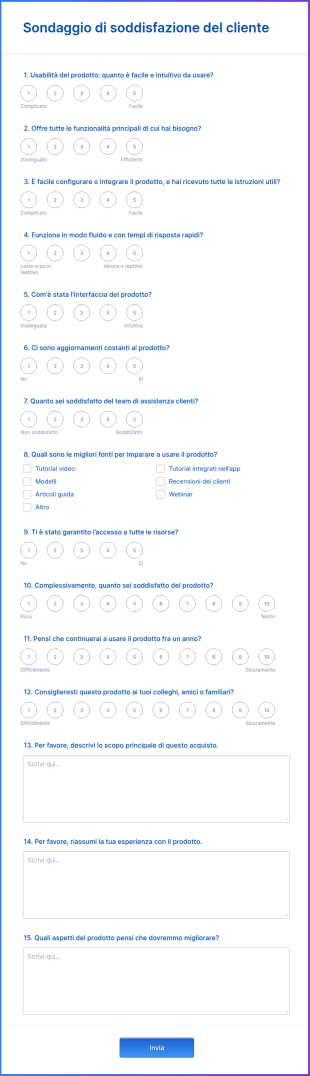
Sondaggio Di Soddisfazione Del Cliente
Un sondaggio di soddisfazione del cliente viene utilizzato dalle aziende per conoscere i desideri, le esigenze e le aspettative dei propri clienti. Con questo modello gratuito di sondaggio online, la tua azienda può raccogliere feedback importanti per migliorare il modello di business e aumentare i ricavi. Basta condividere il modulo incorporandolo nel tuo sito web o inviando un link tramite i social media, e iniziare a ricevere risposte da qualsiasi dispositivo in tempo reale.Puoi utilizzare le domande così come sono oppure modificarle facilmente con il nostro Costruttore di Moduli con funzione drag-and-drop, senza alcun bisogno di programmare! Inoltre, puoi aggiungere il tuo logo, cambiare font e colori per un tocco personalizzato. Analizza i dati del sondaggio trasformando automaticamente le risposte in report visivi con il Generatore di Report di Jotform o Tabelle Jotform. Migliora la raccolta e la gestione dei sondaggi per la tua azienda con il sondaggio gratuito sulla soddisfazione del cliente di Jotform.
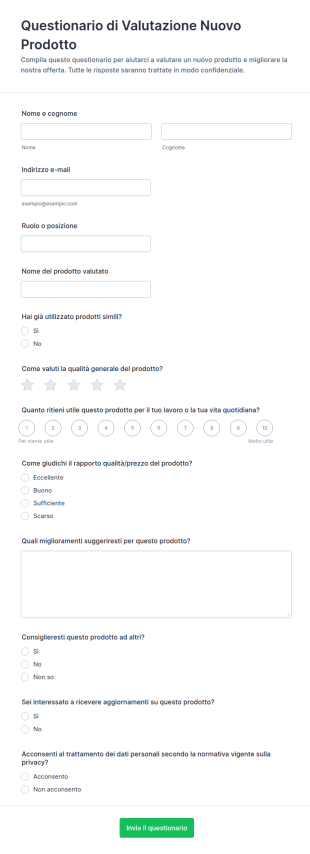
Questionario Di Valutazione Nuovo Prodotto
Raccogli feedback su qualità, utilità e percezione del valore con il Questionario di Valutazione Nuovo Prodotto, utile a team prodotto e marketing per analizzare le risposte e definire i prossimi miglioramenti.
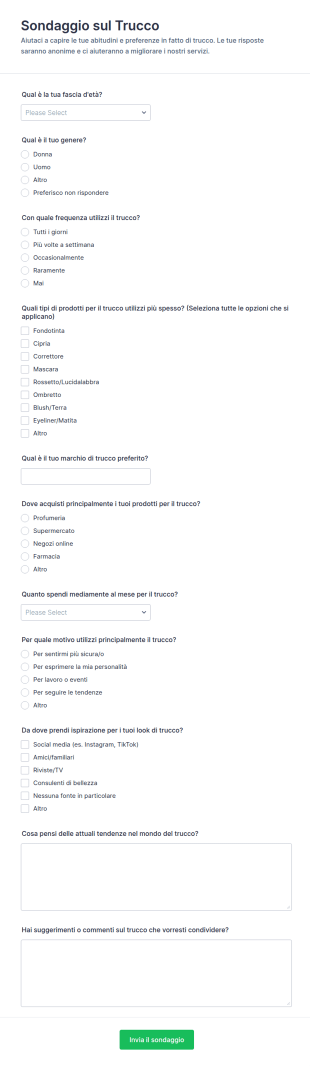
Sondaggio Sul Trucco
Raccogli abitudini, preferenze e opinioni sui cosmetici con il Modulo di sondaggio sul trucco di Jotform, ideale per negozi, truccatori e creator che vogliono migliorare ricerca di mercato e raccolta dati.
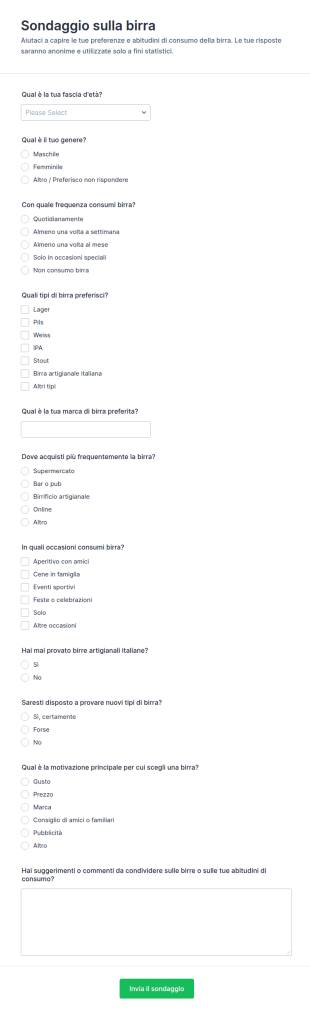
Sondaggio Sulla Birra
Raccogli dati su abitudini e preferenze di consumo con il Modulo Sondaggio sulla birra, ideale per birrifici, locali e team di ricerca che vogliono analizzare gusti, acquisti e apertura a nuove birre.
Informazioni su Moduli E-commerce
E-commerce Forms are specialized digital forms designed to streamline various aspects of online retail operations. These forms serve multiple purposes, including capturing customer information, processing orders, managing inventory, and handling customer feedback. In the fast-paced world of e-commerce, these forms facilitate critical workflows such as order tracking, customer service inquiries, and promotional campaigns. Retailers use them to automate repetitive tasks, enhance customer interaction, and ensure seamless data flow across different operational areas. By integrating these forms into their systems, e-commerce businesses can enhance their efficiency, accuracy, and customer satisfaction, ultimately driving more sales and improving operational effectiveness.
Jotform stands out as the premier online form builder for E-commerces, offering a versatile and user-friendly platform that caters to the unique needs of the e-commerce industry. Its drag-and-drop form builder enables users to easily customize forms to match their brand and operational requirements, while the ability to automate data collection streamlines processes and reduces manual input errors. Furthermore, Jotform Tables provide a centralized data management solution, allowing e-commerce businesses to organize and analyze data efficiently. This centralization not only saves time but also improves accuracy, ensuring that all relevant data is readily available for strategic decision-making and operational optimization.
Why Use E-commerce Forms?
- E-commerce Forms improve operational accuracy by reducing the potential for human error during data entry. Automated data capture ensures that customer and order information is recorded correctly, minimizing discrepancies and enhancing data reliability.
- These forms significantly increase processing speed, allowing businesses to handle high volumes of transactions efficiently. Automating order processes and customer interactions reduces turnaround times and enhances overall customer experience.
- E-commerce Forms facilitate professional data handling by providing a structured approach to information management. This ensures that data is collected, stored, and accessed in a manner that complies with industry standards and best practices.
- By using E-commerce Forms, businesses can enhance customer engagement through personalized interactions. Customizable fields and templates allow for the collection of detailed customer preferences and feedback, enabling tailored marketing strategies and improved customer service.
- The seamless integration capabilities of E-commerce Forms with various third-party platforms allow for efficient data sharing and workflow automation. This connectivity ensures that all business systems work cohesively, providing a unified customer experience.
Common Problems Solved by E-commerce Forms
- E-commerce Forms eliminate the need for cumbersome paperwork, which often leads to disorganized records and lost data. By digitizing forms, businesses can maintain a clear, searchable record of all transactions and interactions.
- Manual data entry is prone to errors, which can result in costly mistakes and customer dissatisfaction. E-commerce Forms automate data collection, ensuring accuracy and reducing the need for time-consuming manual corrections.
- Lost data is a common issue in e-commerce operations, where high volumes of transactions are processed daily. These forms provide secure data storage and retrieval, ensuring that critical information is always accessible and protected.
- Managing customer feedback and inquiries manually can be overwhelming for customer service teams. E-commerce Forms streamline this process by organizing and categorizing incoming information, allowing for timely and efficient responses.
- Inventory management is another area where E-commerce Forms excel. They provide real-time data collection and integration with inventory systems, reducing the chances of stockouts or overstock issues and optimizing supply chain efficiency.
Utilizzi e funzionalità
- For businesses seeking to create dynamic order forms, the Drag-and-Drop Form Builder allows for easy customization, enabling the creation of forms that capture all necessary order details efficiently.
- Utilizing Conditional Logic in E-commerce Forms can significantly enhance customer experience by personalizing form fields based on user responses, ensuring that customers only see the relevant sections of a form.
- The use of 30+ Payment Gateways, including Stripe, PayPal, and Square, allows businesses to seamlessly process payments directly through their forms, providing a secure and convenient payment experience for customers.
- With Jotform Sign, businesses can incorporate Electronic Signatures into their forms, facilitating contracts and agreements without the need for physical paperwork, thereby speeding up transaction times and reducing administrative overhead.
- The PDF Editor feature enables automated PDF generation from form submissions, allowing businesses to create professional invoices and order confirmations that can be easily shared with customers.
- Jotform’s Approval Workflows create structured approval processes within forms, ensuring that necessary authorizations are obtained quickly and efficiently, thus enhancing operational workflows.
- Integration with over 100 third-party platforms, including Google Sheets, Salesforce, and Slack, facilitates seamless data synchronization and enhances cross-platform collaboration, ensuring that all parts of the business are aligned and informed.
How to Create a E-commerce Form
- Browse the Template List for an E-commerces template or start from a blank form to begin crafting your customized form.
- Customize the design and fields using the Drag-and-Drop Form Builder, allowing you to tailor the form to meet specific business needs and branding guidelines.
- Publish and share your completed form via a Direct Link, Email, or Website Embed, making it easily accessible to customers and stakeholders.
Top Use Cases for E-commerce Forms
- For Managers: E-commerce Forms provide managers with real-time insights into sales data, customer interactions, and inventory levels. By leveraging these forms, managers can make informed decisions, optimize resource allocation, and enhance strategic planning. The ability to automate data collection and reporting streamlines administrative tasks, allowing managers to focus on growth initiatives and operational improvements.
- For Teams: E-commerce Forms streamline team workflows by providing a centralized platform for data entry and management. Teams can collaborate more effectively by accessing shared data and insights, reducing communication barriers and improving project coordination. These forms also facilitate task automation, allowing teams to allocate more time to high-value activities and innovation.
- For Customers: For customers, E-commerce Forms enhance the shopping experience by providing a user-friendly interface for placing orders, making inquiries, and providing feedback. These forms enable seamless communication with the business, fostering trust and satisfaction. The ability to securely process payments through the forms also adds a layer of convenience and assurance for customers, encouraging repeat business and brand loyalty.
Summarizing E-commerce Forms
E-commerce Forms are a vital component of modern e-commerce operations, providing businesses with the tools needed to streamline processes, enhance data accuracy, and improve customer interactions. By leveraging Jotform’s online form builder, businesses can create customized forms that cater to their specific needs, automate administrative tasks, and integrate seamlessly with existing systems. The result is a more efficient, responsive, and customer-centric operation that drives business success and growth.
Domande Frequenti
1. Che cos'è un modello di modulo di e-commerce?
Un modello di modulo e-commerce è un modulo online già pronto, che aiuta le aziende a raccogliere ordini, pagamenti e informazioni sui clienti per prodotti o servizi venduti online.
2. Perché i moduli IT sono importanti per le organizzazioni?
I moduli di e-commerce automatizzano il processo di vendita, riducono gli errori manuali e offrono un'esperienza senza soluzione di continuità per i clienti, facilitando la gestione degli ordini e dei pagamenti.
3. Quali informazioni vengono solitamente raccolte tramite un modulo di e-commerce?
Campi comuni includono selezione del prodotto, quantità, dettagli di contatto del cliente, indirizzo di spedizione, informazioni di pagamento e istruzioni speciali.
4. Esistono diversi tipi di moduli IT?
Sì, i moduli di e-commerce possono essere personalizzati per vendite di prodotti, prenotazioni di servizi, vendita di biglietti per eventi, donazioni, abbonamenti e ordini all'ingrosso.
5. Chi dovrebbe usare i moduli IT?
Piccole imprese, rivenditori online, organizzazioni no profit, organizzatori di eventi e liberi professionisti possono tutti trovare utile l'utilizzo dei moduli di e-commerce per ottimizzare le transazioni.
6. In che modo i moduli IT migliorano l'efficienza del flusso di lavoro?
I moduli di e-commerce possono includere campi per il monitoraggio dell'inventario e integrarsi con strumenti di gestione per aiutare le aziende a controllare i livelli di scorte ed evitare overselling.
7. I dati degli utenti raccolti tramite i moduli di e-commerce sono sicuri?
Sì, Jotform utilizza gateway di pagamento sicuri e crittografia dei dati per proteggere le informazioni dei clienti e garantire la privacy.
8. È possibile integrare i moduli di e-commerce con altri strumenti aziendali?
Certamente. I moduli di e-commerce possono essere collegati a sistemi CRM, piattaforme di email marketing e software di contabilità, per un'automazione fluida dei flussi di lavoro.