

Moduli Assicurazione
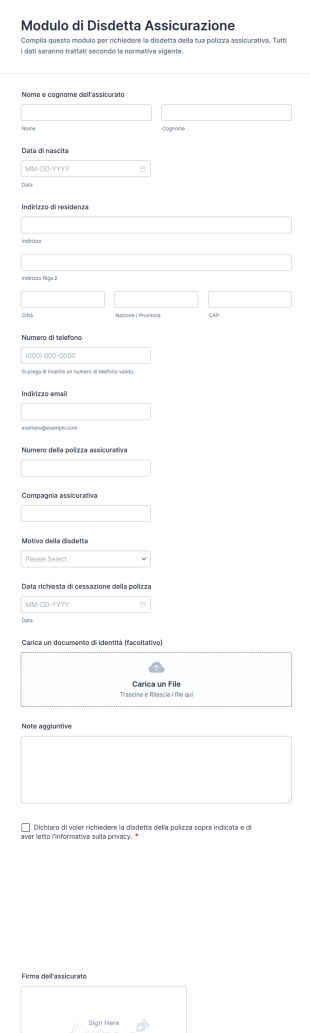
Modulo Di Disdetta Assicurazione
Raccogli richieste di disdetta assicurazione con il Modulo di Disdetta Assicurazione di Jotform, utile per privati e uffici amministrativi per gestire la raccolta dati e ogni invio del modulo in modo ordinato.
Vai alla Categoria:Moduli di Disdetta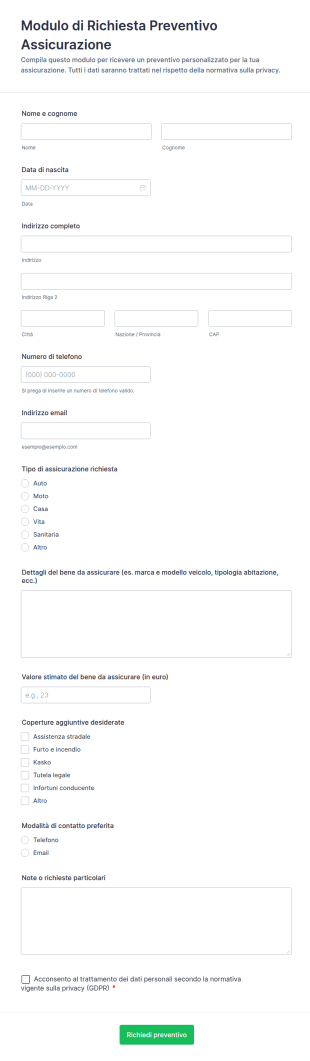
Modulo Di Richiesta Preventivo Assicurazione
Gestisci le richieste di preventivo e la data collection per polizze e coperture con il Modulo di Richiesta Preventivo Assicurazione di Jotform, utile per agenzie, broker e consulenti che vogliono organizzare ogni invio del modulo.
Vai alla Categoria:Moduli Assicurazione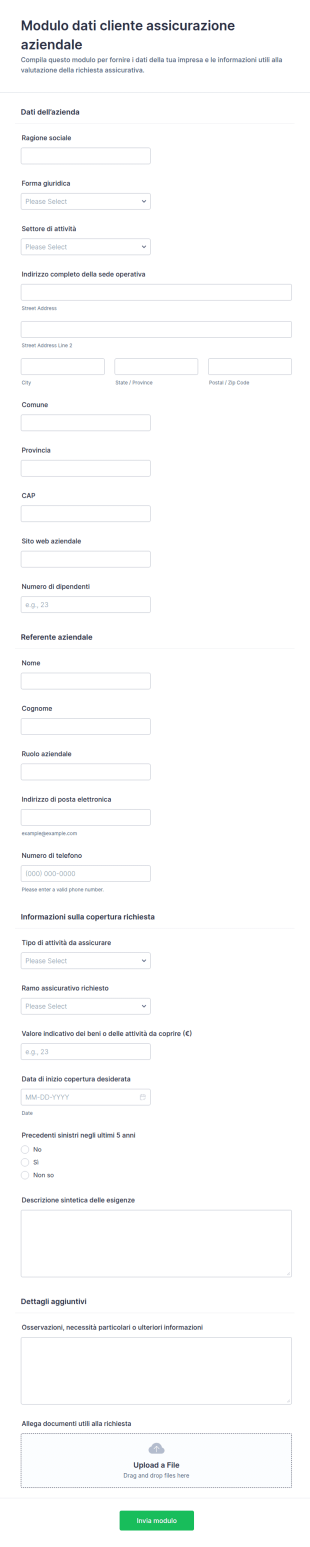
Modulo Di Raccolta Dati Cliente Per Assicurazioni Aziendali
Raccogli i dati aziendali necessari per richieste di assicurazione con il Modulo di Raccolta Dati Cliente per Assicurazioni Aziendali di Jotform, ideale per agenzie, consulenti e uffici amministrativi che gestiscono preventivi e rinnovi.
Vai alla Categoria:Moduli Assicurazione
Modulo Di Beneficiario Assicurazione Sulla Vita
Raccogli e gestisci le designazioni dei beneficiari per assicurazione vita con il Modulo beneficiari assicurazione vita di Jotform, ideale per assicurati e agenzie che devono aggiornare i dati e organizzare la raccolta dati online.
Vai alla Categoria:Moduli Assicurazione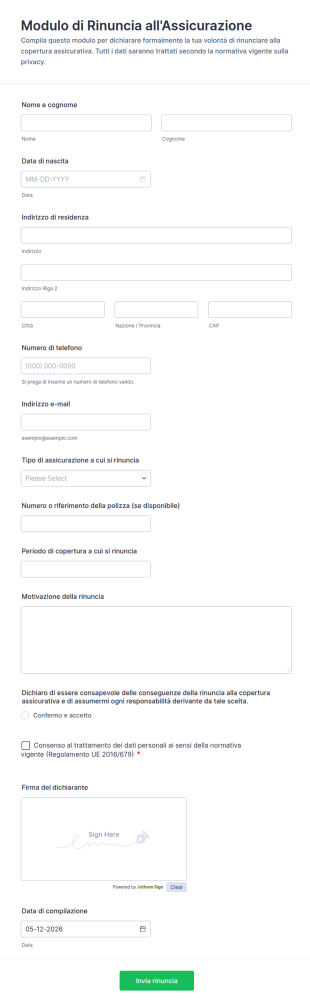
Modulo Di Rinuncia All'Assicurazione
Raccogli e archivia le richieste di rinuncia alla copertura con il Modulo di rinuncia all’assicurazione, ideale per aziende ed enti che vogliono gestire la raccolta dati e ogni invio del modulo in modo ordinato con Jotform.
Vai alla Categoria:Moduli di Consenso
Modulo Di Revisione Assicurativa Personale
Raccogli richieste di revisione assicurativa e organizza la raccolta dati su coperture e priorità del cliente con il Modulo di revisione dell’assicurazione personale di Jotform, utile per agenzie e consulenti.
Vai alla Categoria:Moduli Assicurazione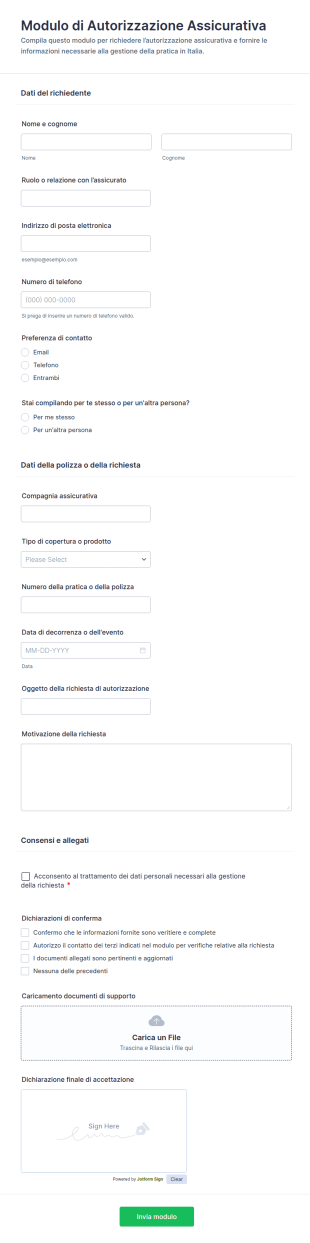
Modulo Di Autorizzazione Assicurativa
Raccogli autorizzazioni assicurative, consensi e documenti in un’unica richiesta con il Modulo di Autorizzazione Assicurativa, ideale per agenzie, consulenti e uffici amministrativi che gestiscono pratiche e deleghe.
Vai alla Categoria:Moduli di Consenso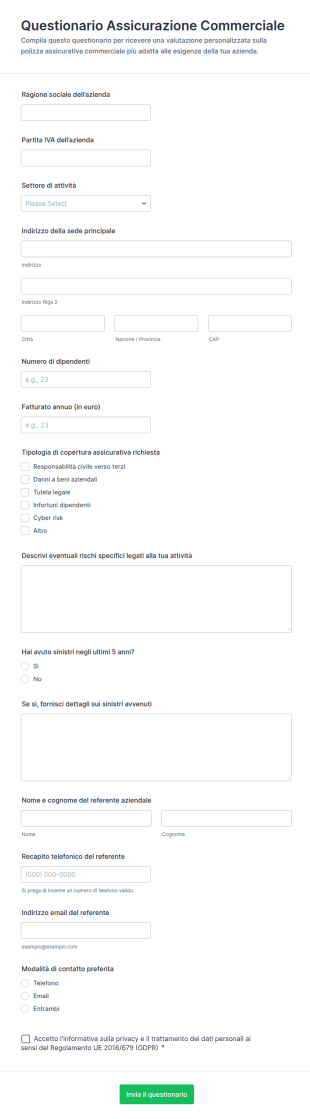
Questionario Assicurazione Commerciale
Raccogli le informazioni aziendali necessarie per valutare rischi e richieste di copertura con il Questionario per Assicurazione Commerciale, ideale per agenzie, broker e consulenti che gestiscono preventivi e contatti.
Vai alla Categoria:Moduli Assicurazione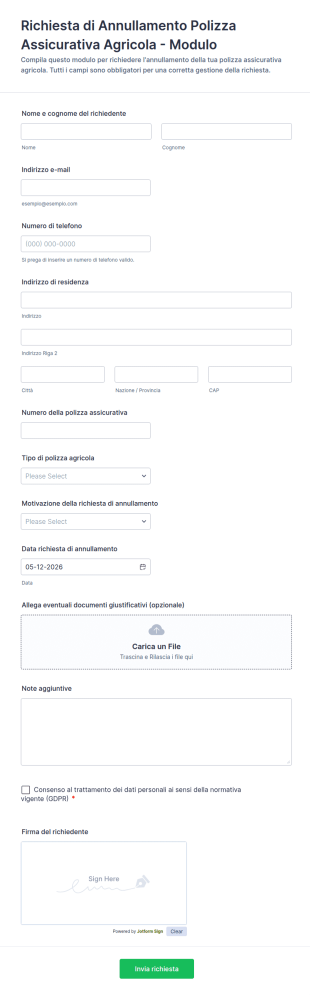
Richiesta Di Annullamento Polizza Assicurativa Agricola Modulo
Gestisci le richieste di annullamento per polizze assicurative agricole con il Modulo di richiesta di annullamento della polizza assicurativa agricola di Jotform, ideale per aziende agricole e intermediari che vogliono velocizzare la raccolta dati online.
Vai alla Categoria:Moduli di Disdetta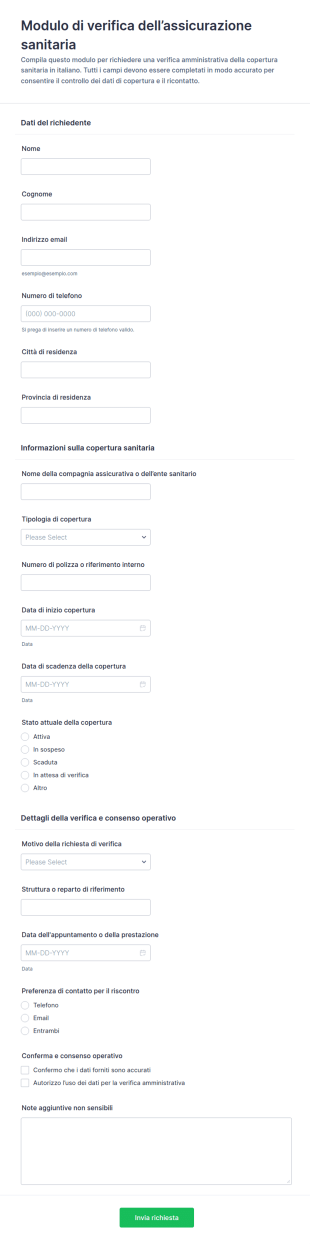
Modulo Di Verifica Dell’assicurazione Sanitaria
Raccogli richieste di verifica della copertura sanitaria con il Modulo di verifica dell’assicurazione sanitaria, ideale per strutture sanitarie e segreterie che vogliono semplificare la raccolta dati e il ricontatto dei pazienti.
Vai alla Categoria:Moduli Assicurazione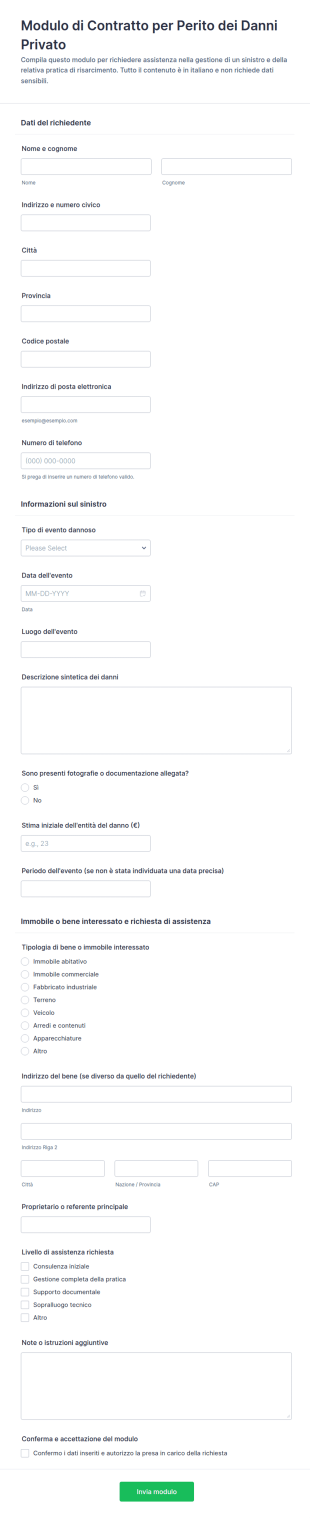
Contratto Di Incarico Per Perito Liquidatore
Raccogli richieste di assistenza per sinistri e avvia incarichi con il Modulo di Contratto per Perito dei Danni Privato di Jotform, ideale per periti liquidatori e studi tecnici che gestiscono pratiche di risarcimento.
Vai alla Categoria:Moduli per Professionisti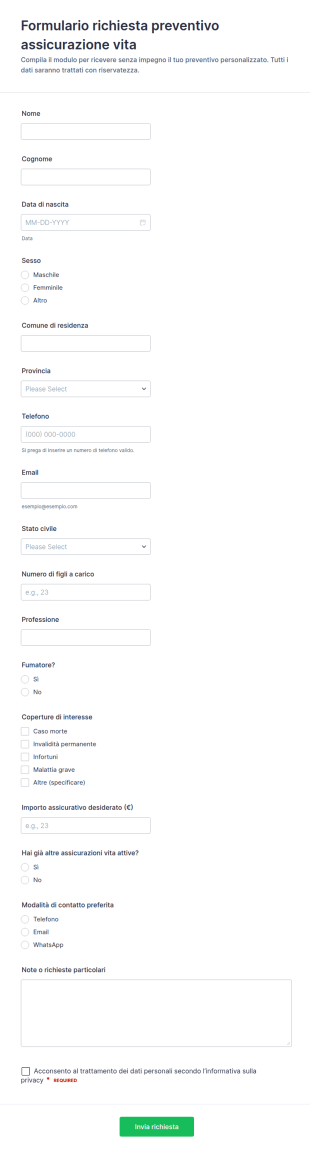
Richiesta Preventivo Assicurazione Sulla Vita
Raccogli richieste di preventivo per assicurazione vita con il Modulo di Richiesta Preventivo Assicurazione Vita di Jotform, ideale per agenzie e consulenti che vogliono velocizzare la data collection e gestire ogni risposta.
Vai alla Categoria:Moduli Assicurazione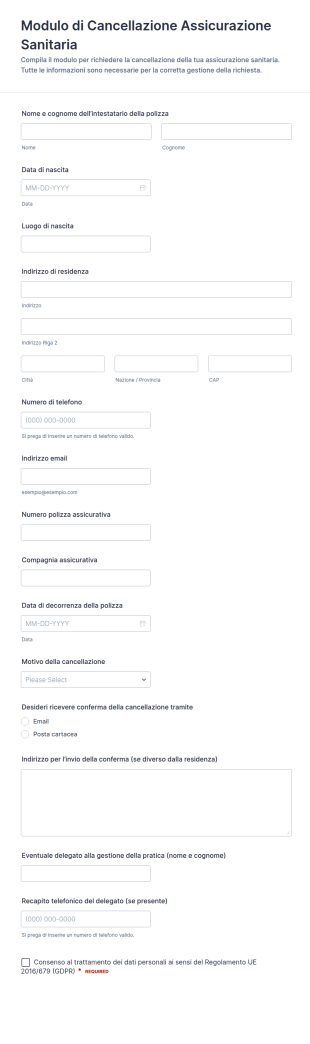
Modulo Di Disdetta Dell’Assicurazione Sanitaria
Raccogli richieste di disdetta della copertura sanitaria con il Modulo di Cancellazione Assicurazione Sanitaria di Jotform, ideale per privati e consulenti che vogliono gestire la pratica online e tenere traccia delle risposte del modulo.
Vai alla Categoria:Moduli di Disdetta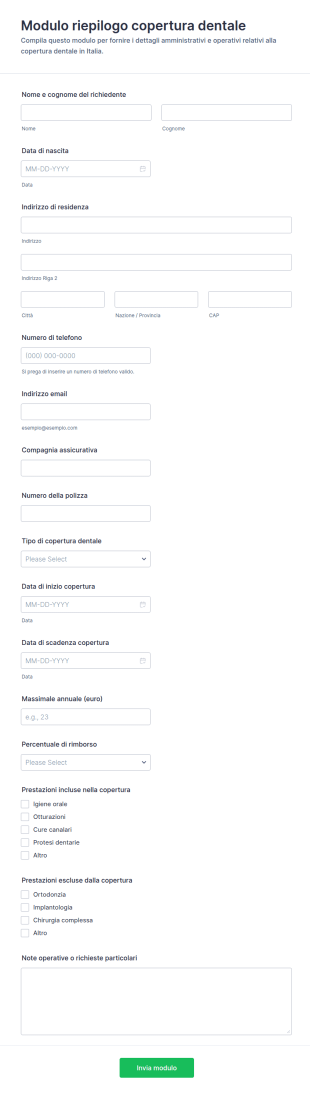
Modulo Di Dettaglio Assicurazione Dentale
Gestisci riepiloghi di polizze e prestazioni con il Modulo riepilogo copertura dentale, ideale per studi dentistici, cliniche e assistenza clienti che devono raccogliere dati e verificare rapidamente la copertura.
Vai alla Categoria:Moduli Assicurazione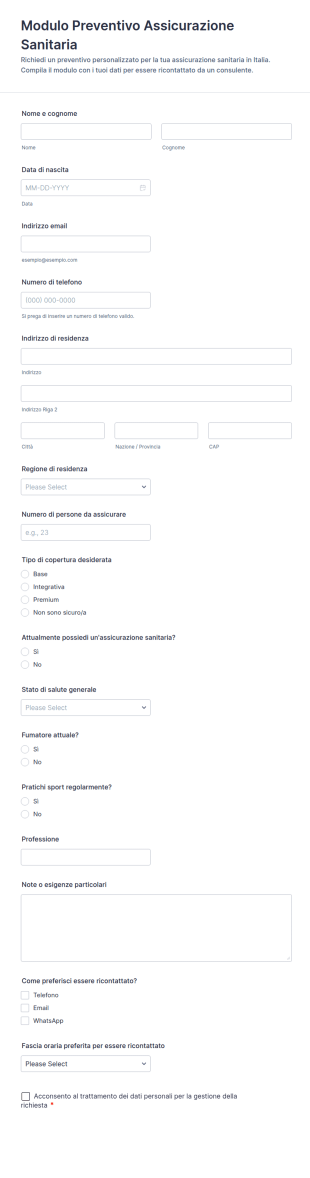
Richiesta Preventivo Assicurazione Sanitaria
Il Modulo di Richiesta Preventivo Assicurazione Sanitaria aiuta consulenti e agenzie a raccogliere richieste online, organizzare la raccolta dati e gestire ogni risposta in modo rapido con Jotform.
Vai alla Categoria:Moduli Assicurazione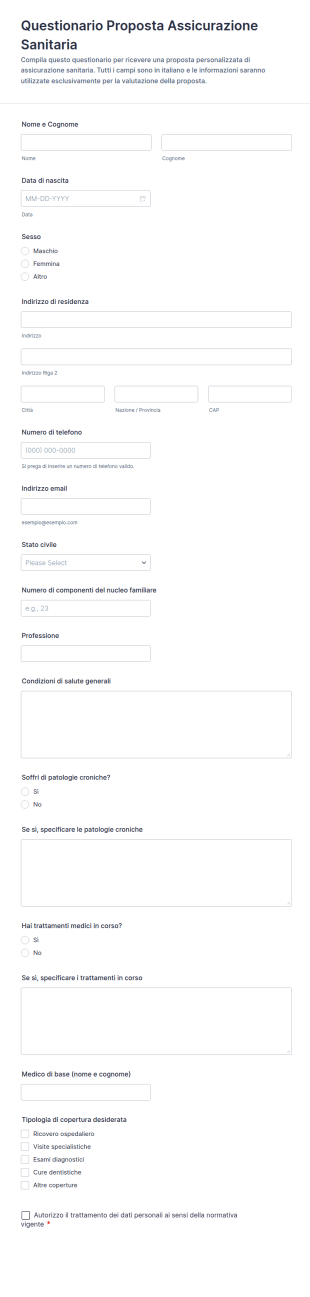
Modulo Di Proposta Assicurazione Sanitaria
Raccogli richieste di preventivo per coperture sanitarie con il Questionario Proposta Assicurazione Sanitaria Modulo e gestisci la raccolta dati online in modo chiaro per consulenti e intermediari assicurativi.
Vai alla Categoria:Moduli Assicurazione
Modulo Per Assicurazione Viaggio
Il Modulo per Assicurazione Viaggio semplifica la raccolta dati per richieste di polizze viaggio, utile per agenzie e intermediari che vogliono gestire online preventivi e preferenze di copertura con Jotform.
Vai alla Categoria:Moduli Assicurazione
Modulo Di Verifica Dell’assicurazione Dentale
Raccogli i dati necessari per verificare la copertura assicurativa dentale prima della visita con il Modulo di verifica dell’assicurazione dentale di Jotform, ideale per studi dentistici che vogliono organizzare le richieste in modo rapido.
Vai alla Categoria:Moduli di Verifica
Richiesta Di Polizza Assicurativa
Raccogli richieste di assicurazione del titolo per operazioni immobiliari con Jotform, gestendo la raccolta dati e ogni risposta del modulo da un unico modello di modulo pronto da personalizzare.
Vai alla Categoria:Moduli Assicurazione
Richiesta Di Assicurazione Sanitaria Form
Raccogli richieste di copertura sanitaria online con il Modulo di richiesta assicurazione medica, ideale per agenzie e consulenti che vogliono semplificare la raccolta dati e gestire ogni invio del modulo in modo ordinato.
Vai alla Categoria:Moduli Assicurazione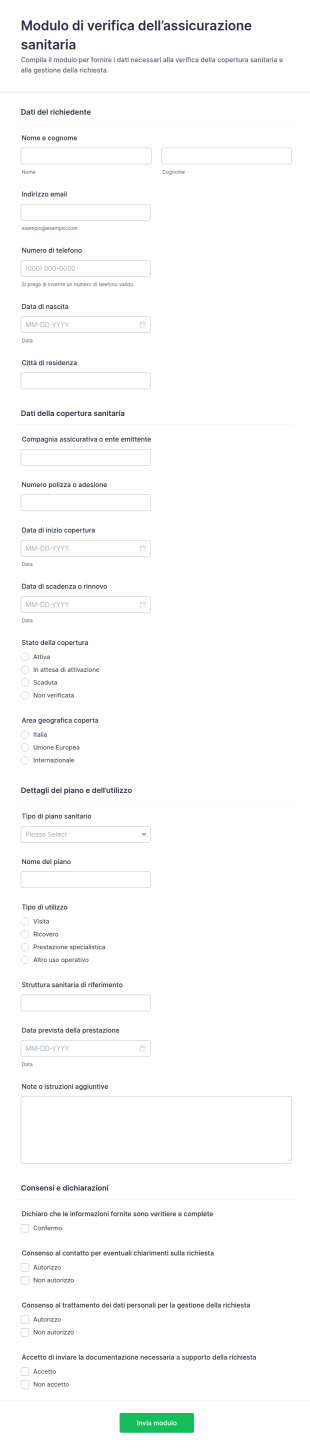
Modulo Di Verifica Assicurativa Sanitaria
Raccogli e verifica i dati di copertura assicurativa sanitaria prima di visite o prestazioni con il Modulo di verifica dell’assicurazione sanitaria di Jotform, ideale per cliniche, studi medici, assicurazioni e uffici amministrativi.
Vai alla Categoria:Moduli Assicurazione
Modulo Di Richiesta Certificato Assicurativo
Raccogli richieste di certificati assicurativi con Jotform, gestendo priorità e invio al destinatario ideale per agenzie, uffici amministrativi e aziende che devono organizzare la raccolta dati e ogni risposta in modo tracciabile.
Vai alla Categoria:Moduli Assicurazione
Modulo Di Richiesta Sinistri Assicurativi 🎯
Raccogli denunce di sinistro online con il Modulo di denuncia sinistro assicurativo, ideale per agenzie e aziende che vogliono velocizzare la raccolta dati e organizzare ogni risposta in modo ordinato con Jotform.
Vai alla Categoria:Insurance Claim Forms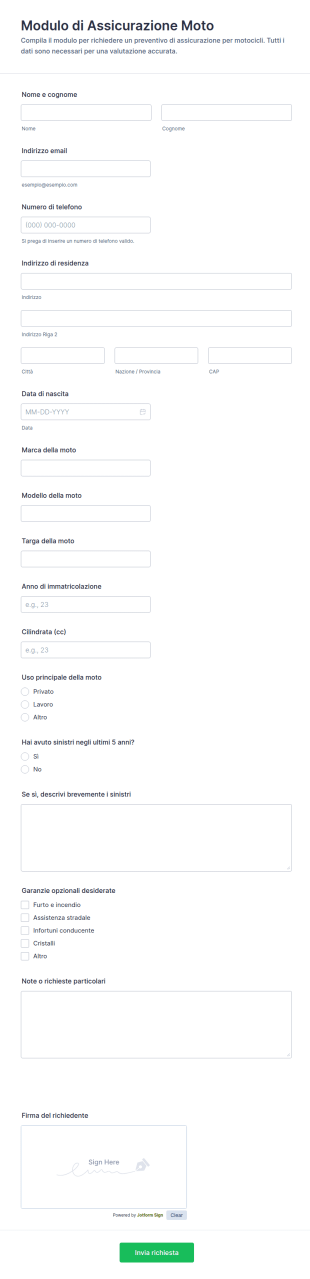
Modulo Di Assicurazione Motociclo 🏍️
Gestisci richieste di preventivo e raccolta dati per polizze moto con il Modulo di Assicurazione Moto Form di Jotform, ideale per agenzie, broker e concessionarie che vogliono organizzare ogni invio del modulo online.
Vai alla Categoria:Moduli Assicurazione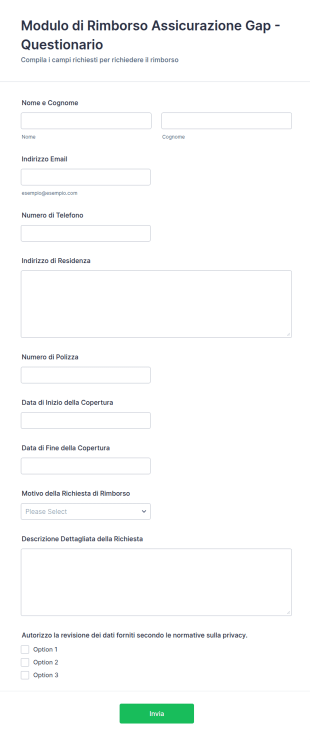
Modulo Di Rimborso Assicurazione Gap Questionario
Raccogli richieste di rimborso per assicurazione GAP con un questionario pronto all’uso, ideale per agenzie, intermediari e uffici amministrativi che vogliono velocizzare la raccolta dati e gestire ogni risposta con Jotform.
Modulo Di Richiesta Sinistri Assicurativi 🎯
Raccogli denunce di sinistro online con il Modulo di denuncia sinistro assicurativo, ideale per agenzie e aziende che vogliono velocizzare la raccolta dati e organizzare ogni risposta in modo ordinato con Jotform.

Modulo Di Richiesta Indennizzo Lavorativo
Raccogli e organizza richieste di indennizzo per infortunio sul lavoro con il Modulo di richiesta di indennizzo per infortunio sul lavoro, ideale per aziende e uffici del personale che vogliono semplificare la raccolta dati e gestire ogni risposta.

Modulo Di Richiesta Di Risarcimento Danni
Raccogli richieste di risarcimento danni complete con il Modulo di richiesta risarcimento danni, ideale per privati e aziende che devono documentare un evento e accelerare la gestione della pratica con Jotform.
Informazioni su Moduli Assicurazione
Semplifica la ricezione di offerte assicurative con un template di moduli per assicurazioni. Con un template di modulo per assicurazioni completamente personalizzabile, velocizzi i processi e riduci il lavoro d'ufficio ricevendo le informazioni che ti occorrono. I dati assicurativi saranno raccolti in modo sicuro e protetto e archiviati accuratamente nel nostro pannello di controllo di Jotform.
Jotform stands out as the premier online form builder for creating Insurance Forms due to its user-friendly drag-and-drop interface that simplifies the customization process. Users can easily tailor forms to meet specific business needs, enabling automation of data collection tasks to enhance productivity. With Jotform Tables, insurance companies can manage and centralize all collected data securely, ensuring information is organized and easily accessible. The platform’s ability to integrate with over 100 third-party services further enhances its utility, making it an indispensable asset for insurance professionals.
Why Use Insurance Forms?
- Insurance Forms are essential for ensuring accuracy in data collection, reducing the likelihood of errors that can occur with manual entry. By digitizing forms, insurance businesses can swiftly capture client information and verify it in real-time.
- The speed of data processing is greatly enhanced with online forms, allowing insurance agents to process applications and claims more rapidly than traditional methods. This efficiency leads to improved client satisfaction and faster service delivery.
- Professional data handling is guaranteed with Jotform, as it offers secure data management practices. Sensitive client information is protected through encrypted transmissions, ensuring compliance with industry regulations.
- Insurance Forms facilitate seamless communication and data sharing between departments. With automated workflows, information captured in forms can be instantly routed to the appropriate teams, reducing bottlenecks and improving internal collaboration.
- By adopting digital forms, insurance companies can significantly reduce their environmental footprint, minimizing paper usage and supporting sustainability initiatives within the industry.
Common Problems Solved by Insurance Forms
- One major pain point in the insurance industry is the reliance on cumbersome paperwork, which is prone to errors and delays. Insurance Forms eliminate this issue by providing a digital alternative that is both efficient and reliable.
- Manual data entry often leads to inaccuracies and lost data, which can have serious implications for client satisfaction and compliance. Digital forms ensure data is captured accurately and stored securely, mitigating these risks.
- The traditional process of managing and retrieving paper documents is inefficient and time-consuming. With Insurance Forms, all data is stored electronically, making retrieval quick and easy, thus enhancing operational efficiency.
- Many insurance companies struggle with integrating data across systems. Jotform’s Insurance Forms offer seamless integration capabilities with other software, ensuring that data flows smoothly into existing systems and processes without manual intervention.
Utilizzi e funzionalità
- For capturing detailed client information, the Drag-and-Drop Form Builder allows users to create customized fields tailored to specific insurance needs, resulting in comprehensive data collection.
- With Conditional Logic, insurers can create dynamic forms that adapt based on user input, ensuring that only relevant questions are displayed, thereby simplifying the form-filling process for clients.
- The integration of Electronic Signatures ensures that forms can be legally signed online, streamlining processes such as policy agreements and claim approvals, and reducing the need for in-person meetings.
- Utilizing Jotform’s 30+ Payment Gateways, insurance companies can easily collect payments directly through forms, simplifying the transaction process for clients and ensuring timely payments.
- Jotform’s PDF Editor allows automatic generation of professional PDF documents from form submissions, providing clients and insurers with neatly organized records for documentation and compliance.
- The Report Builder feature can be used to generate insightful analytics from form submissions, enabling insurance managers to make data-driven decisions and optimize business operations.
- Secure Data Management through Jotform Tables ensures that all client and policy data is protected and easily accessible, facilitating effective data governance and compliance with industry standards.
How to Create a Insurance Form
- Browse the Template List for an Insurances template or start from a blank form.
- Dipartimenti di comunicazione aziendale
- Consentono un rifornimento tempestivo e la prevenzione delle perdite
Top Use Cases for Insurance Forms
- For Managers: Insurance managers can leverage Insurance Forms to streamline operations and improve data governance. By utilizing digital forms, managers can ensure that data is collected accurately and efficiently, enabling better oversight and decision-making. The ability to generate reports and analytics from form submissions provides valuable insights into operational performance and client interactions, allowing managers to identify areas for improvement and drive business growth.
- For Teams: Teams within the insurance industry benefit from Insurance Forms by enhancing collaboration and communication. The seamless sharing of information between departments ensures that everyone has access to up-to-date and accurate data, reducing the risk of miscommunication and errors. Automated workflows facilitate the routing of information to the appropriate teams, improving response times and service delivery.
- For Customers: For customers, Insurance Forms offer a convenient and efficient way to interact with insurance providers. Clients can easily fill out forms online, submit claims, and update their policy information without the need for physical paperwork or in-person visits. The streamlined process enhances the customer experience by providing quick access to services and reducing wait times, ultimately leading to higher satisfaction levels.
Summarizing Insurance Forms
Insurance Forms are an indispensable asset for the insurance industry, offering a digital solution to traditional paperwork challenges. By leveraging Jotform’s capabilities, insurance professionals can create customized forms that enhance operational efficiency, improve data accuracy, and ensure compliance with industry regulations. The platform’s integration capabilities and secure data management further strengthen its value proposition, making it a critical component of modern insurance operations. By adopting Insurance Forms, companies can improve client satisfaction and drive business growth through streamlined processes and effective data management.
Domande Frequenti
1. Che cos'è un modulo assicurativo?
Un modulo assicurativo è un documento utilizzato per raccogliere informazioni relative a polizze assicurative, sinistri, domande o aggiornamenti. Aiuta i fornitori di servizi assicurativi a raccogliere efficacemente i dati necessari da clienti o titolari di polizze.
2. Perché i moduli IT sono importanti per le organizzazioni?
I moduli digitali assicurativi riducono il carico di lavoro cartaceo, minimizzano gli errori, accelerano i tempi di elaborazione e offrono un'esperienza più comoda sia per i clienti. che per i professionisti assicurativi.
3. Quali informazioni sono generalmente richieste in un modulo assicurativo?
Campi comuni includono i dettagli personali, i numeri di polizza, le descrizioni degli incidenti, la documentazione di supporto e le firme. Le informazioni esatte dipendono dallo scopo del modulo (ad es., reclami, registrazione).
4. Esistono diversi tipi di moduli IT?
Sì, ne esistono vari tipi come moduli di rilevamento del terreno, liste di controllo per l'ispezione, moduli di rilevamento ambientale, registri delle attrezzature e moduli di audit sulla sicurezza, ognuno progettato per compiti e settori specifici.
5. Chi dovrebbe usare i moduli IT?
Agenzie assicurative, broker, agenti indipendenti, periti liquidatori, dipartimenti delle risorse umane e persino titolari di polizze possono utilizzare questi modelli per ottimizzare i loro processi.
6. In che modo i moduli IT migliorano l'efficienza del flusso di lavoro?
Jotform utilizza archiviazione sicura dei dati, crittografia e conformità agli standard del settore per proteggere le informazioni sensibili raccolte tramite i moduli assicurativi.
7. I moduli assicurativi possono essere personalizzati per diversi tipi di assicurazioni?
Certamente. I moduli possono essere personalizzati per assicurazioni sanitarie, auto, immobiliari, vita, viaggio e altri tipi di assicurazioni, aggiungendo o modificando i campi per soddisfare requisiti specifici.
8. Quali sono i vantaggi dei moduli online per l'assicurazione per i clienti?
I clienti beneficiano di un'elaborazione più rapida, una riduzione della documentazione, la conferma istantanea delle risposte e la possibilità di compilare moduli da qualsiasi dispositivo, migliorando la soddisfazione complessiva.