

Moduli Chiese
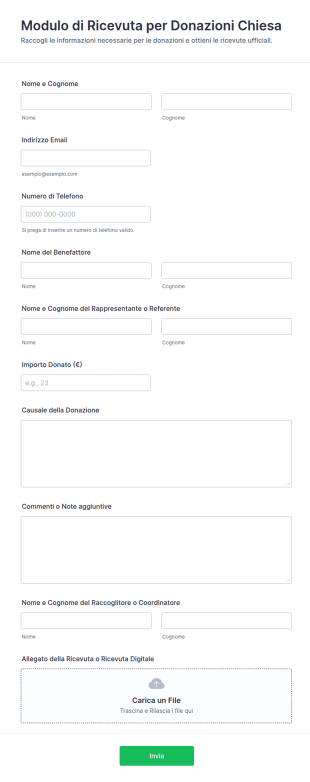
Modulo Di Ricevuta Per Donazioni Chiesa
Raccogli e archivia le ricevute delle offerte con il Modulo di Ricevuta per Donazioni alla Chiesa, utile a parrocchie e comunità religiose per la raccolta dati e la gestione ordinata di ogni risposta.
Vai alla Categoria:Moduli Chiese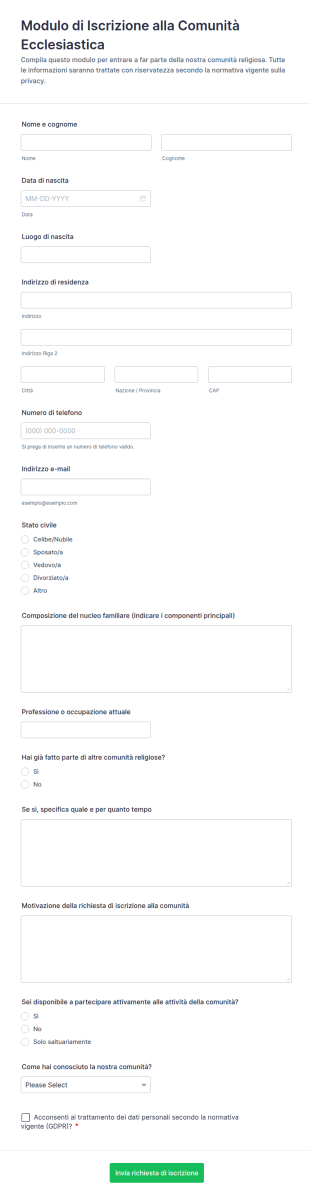
Modulo Di Iscrizione Alla Comunità Ecclesiastica
Raccogli richieste di adesione alla parrocchia o comunità con il Modulo di iscrizione alla comunità ecclesiastica, utile per segreterie e responsabili pastorali che vogliono gestire le risposte online in modo ordinato.
Vai alla Categoria:Moduli Chiese
Modulo Di Iscrizione Al Campo Estivo Della Chiesa
Raccogli e gestisci le iscrizioni al campo parrocchiale con il Modulo di iscrizione al campo della chiesa, pensato per organizzatori, animatori e segreterie che vogliono coordinare partecipanti, comunicazioni e autorizzazioni.
Vai alla Categoria:Moduli Chiese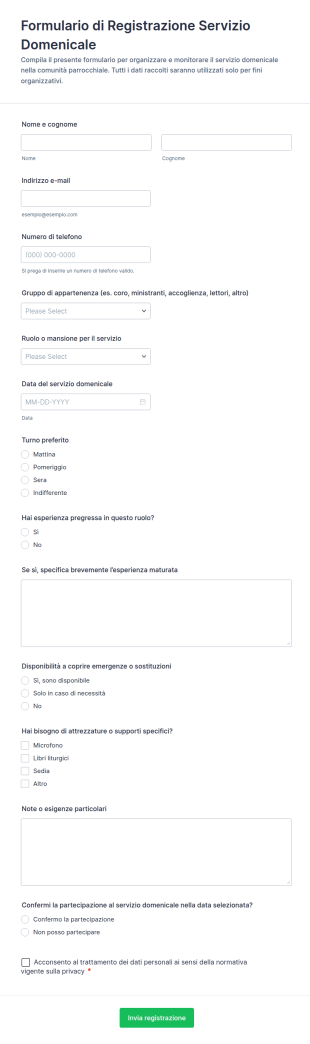
Registrazione Del Servizio Domenicale Form
Gestisci iscrizioni e disponibilità dei volontari con il Form di Registrazione al Servizio Domenicale, ideale per parrocchie e gruppi che vogliono coordinare turni e ruoli e centralizzare la raccolta dati con Jotform.
Vai alla Categoria:Moduli di Registrazione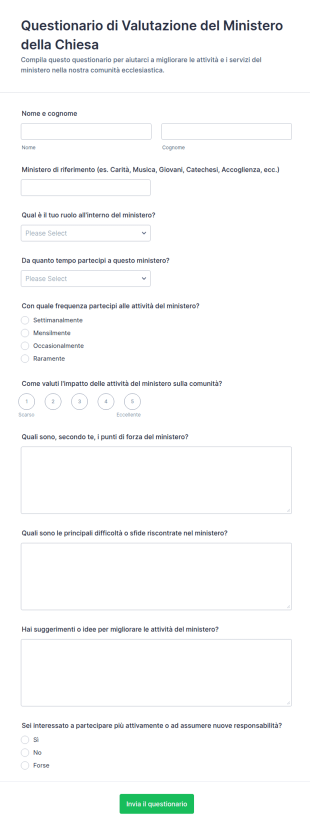
Questionario Di Valutazione Del Ministero Della Chiesa
Raccogli feedback su attività e impatto del tuo ministero parrocchiale con il Questionario di valutazione del ministero parrocchiale, utile a coordinatori e responsabili per migliorare organizzazione e partecipazione.
Vai alla Categoria:Template Questionario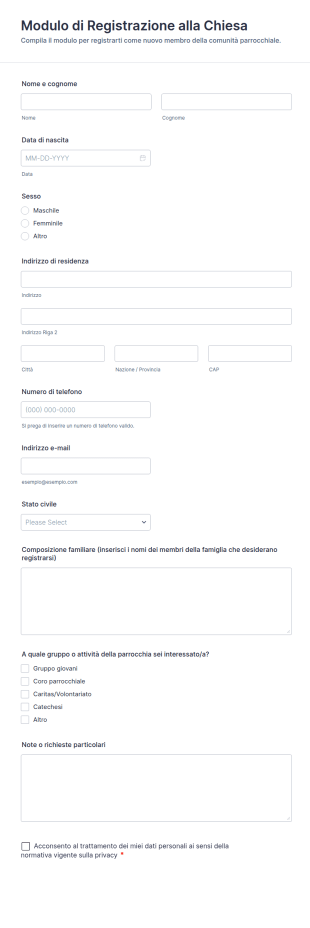
Modulo Di Registrazione Alla Chiesa
Raccogli le iscrizioni alla comunità con il Modulo di registrazione alla chiesa, ideale per parrocchie e gruppi religiosi che vogliono semplificare la raccolta dati e gestire ogni invio del modulo con Jotform.
Vai alla Categoria:Moduli Chiese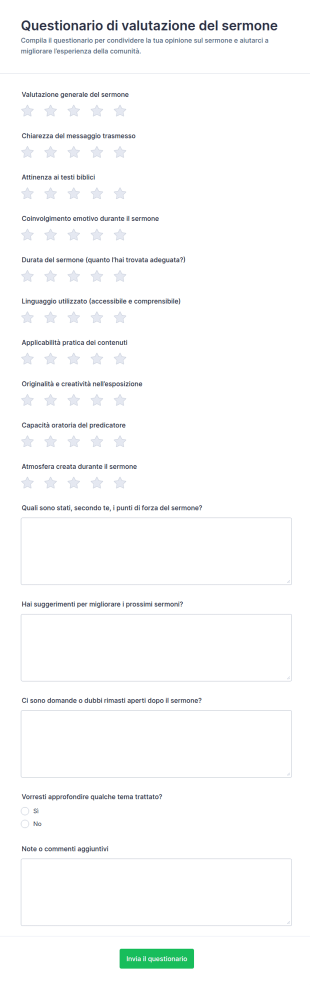
Valutazione Del Sermone
Raccogli feedback della comunità con il Questionario di valutazione del sermone e usa Jotform per la raccolta dati, analizzando le risposte per migliorare messaggi e incontri nelle tue celebrazioni.
Vai alla Categoria:Template Sondaggio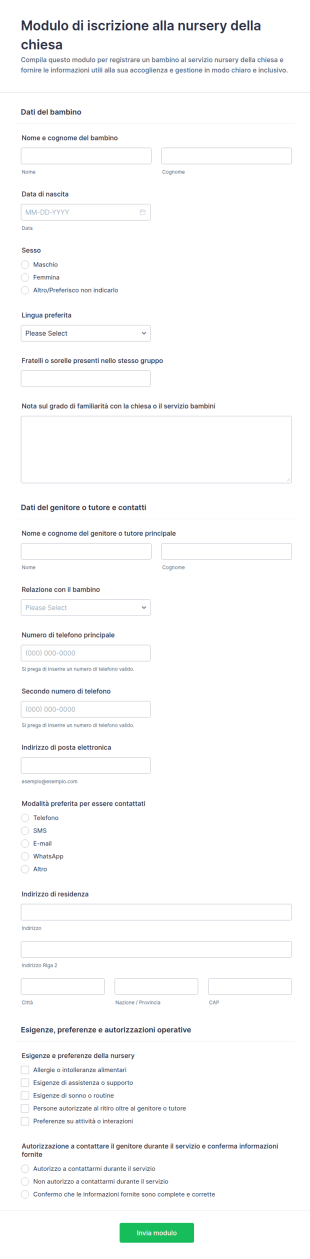
Iscrizione Al Nido Della Chiesa
Gestisci le iscrizioni al nido della chiesa con Jotform, raccogliendo informazioni per l’accoglienza e i contatti dei genitori, e centralizzando la raccolta dati in un modulo web pronto da condividere o incorporare.
Vai alla Categoria:Moduli Chiese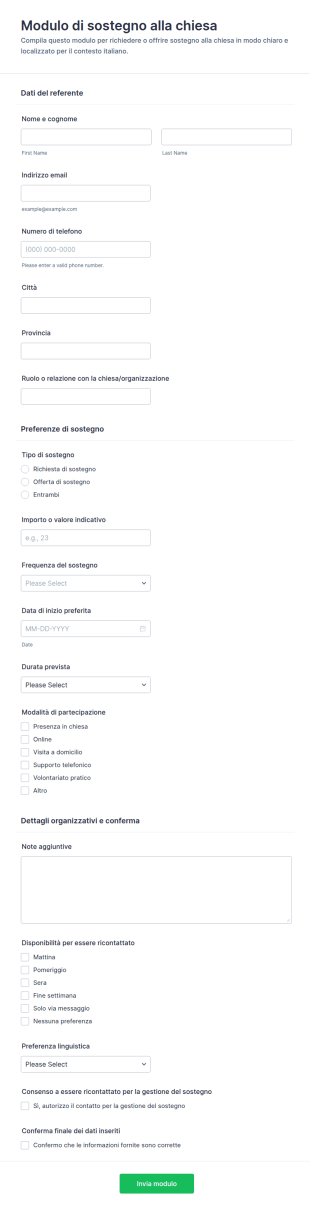
Modulo Di Sponsorizzazione Per La Chiesa
Raccogli richieste e offerte di aiuto per la comunità con il Modulo di sostegno alla chiesa, utile a parrocchie e gruppi organizzativi per coordinare la raccolta dati e gestire ogni risposta in Jotform.
Vai alla Categoria:Moduli Chiese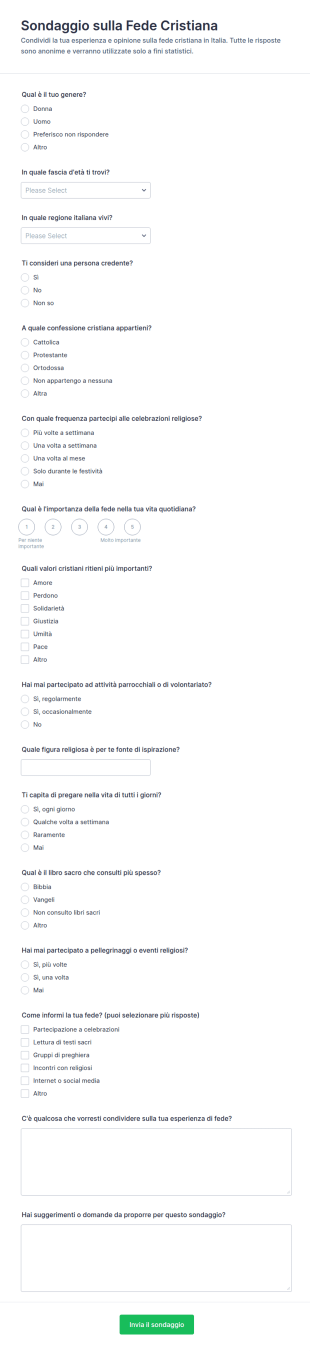
Sondaggio Cristiano
Raccogli opinioni e testimonianze sulla fede cristiana in Italia con il Modulo Sondaggio sulla Fede Cristiana, ideale per parrocchie, associazioni e ricercatori che vogliono analizzare la raccolta dati in modo ordinato.
Vai alla Categoria:Template Sondaggio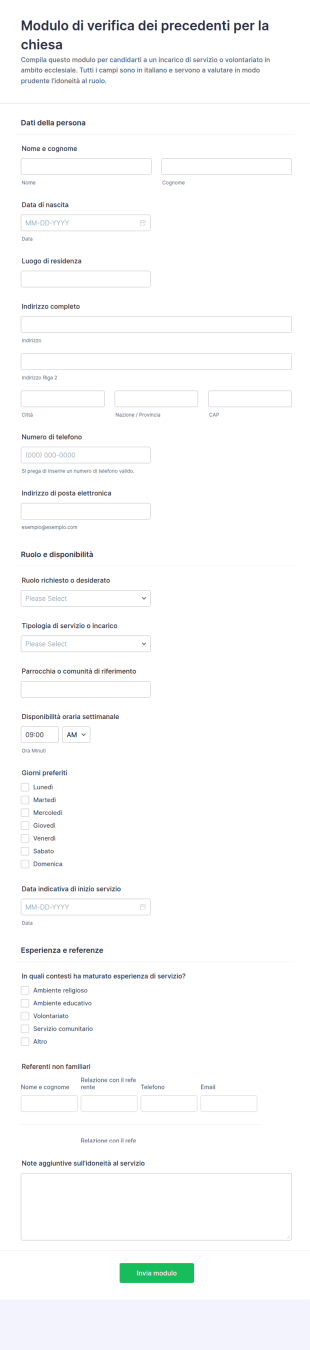
Modulo Di Verifica Dell’idoneità Per Incarichi Ecclesiastici
Gestisci le candidature per incarichi e volontariato ecclesiale con il Modulo di verifica dei precedenti per la chiesa di Jotform, ideale per parrocchie e comunità che vogliono organizzare la raccolta dati e le risposte in un unico flusso online.
Vai alla Categoria:Moduli Chiese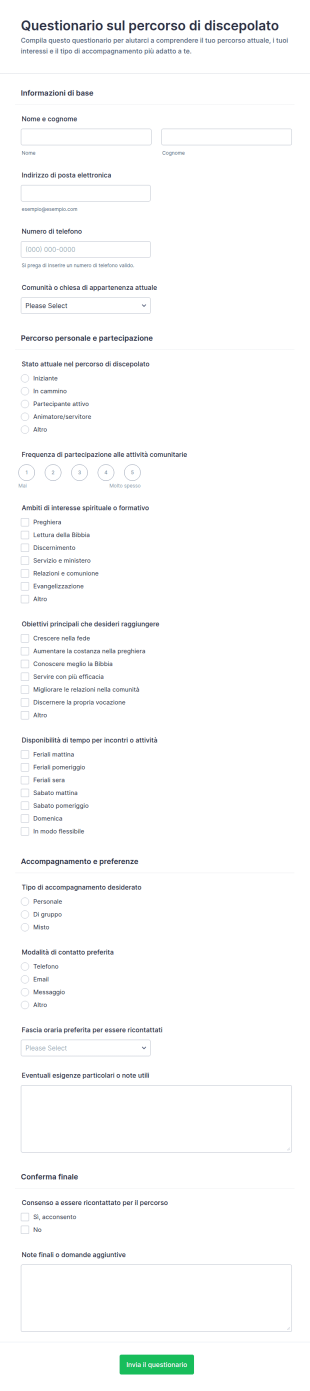
Survey Sul Percorso Di Discepolato
Raccogli informazioni sul cammino di fede dei partecipanti e organizza accompagnamento e attività della comunità con il Questionario sul Percorso di Discepolato Form di Jotform, ideale per parrocchie e gruppi di fede.
Vai alla Categoria:Template Sondaggio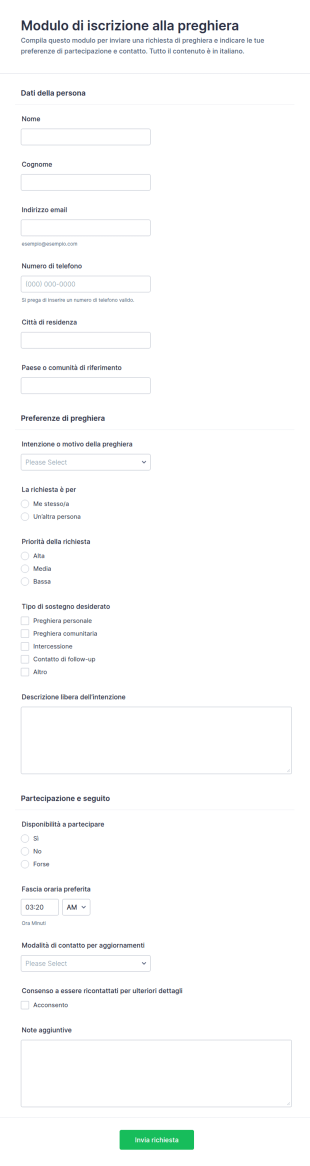
Iscrizione Alla Preghiera
Raccogli richieste e intenzioni di preghiera online con il Modulo di iscrizione alla preghiera di Jotform, ideale per parrocchie e comunità che vogliono organizzare la raccolta dati e gestire ogni risposta del modulo con facilità.
Vai alla Categoria:Moduli Chiese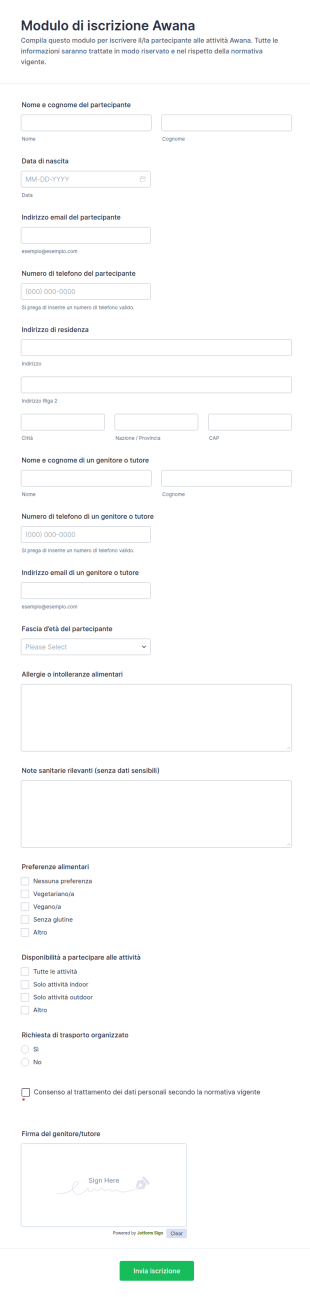
Modulo Di Iscrizione Awana
Raccogli le iscrizioni alle attività Awana con un modello di modulo Jotform pensato per parrocchie e comunità, utile per gestire partecipanti e contatti dei tutori, centralizzare la raccolta dati e organizzare le adesioni online.
Vai alla Categoria:Moduli di Registrazione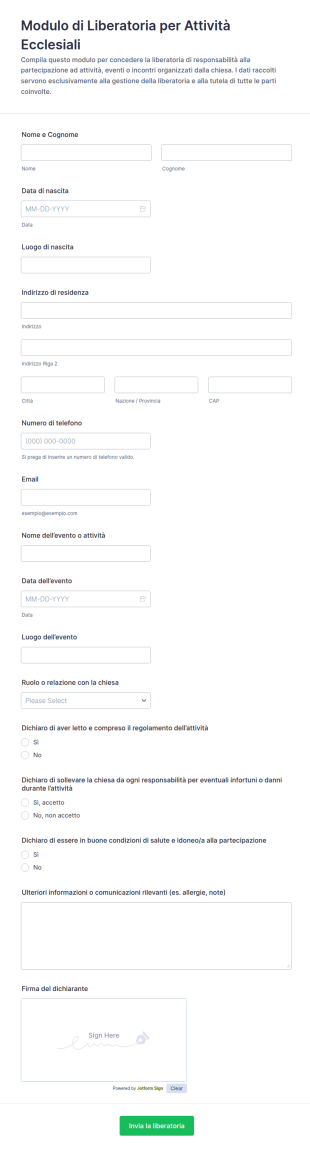
Liberatoria Di Responsabilità Per La Chiesa
Raccogli liberatorie per attività ed eventi della chiesa con il Modulo di Liberatoria per Attività Ecclesiali di Jotform, ideale per parrocchie e volontari che gestiscono partecipanti e autorizzazioni online.
Vai alla Categoria:Moduli di Consenso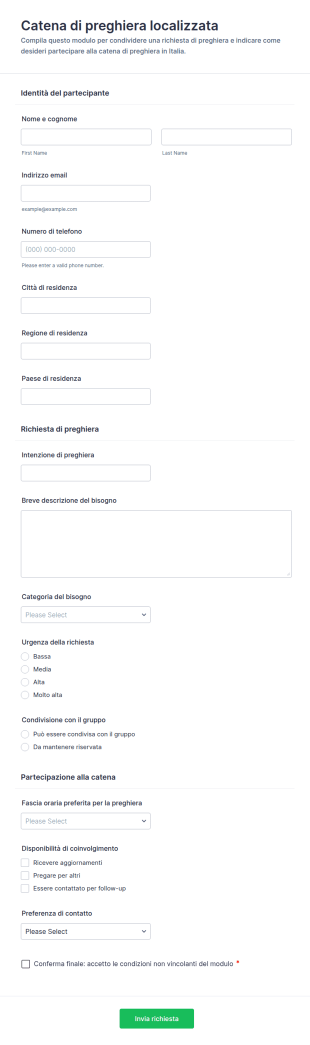
Catena Di Preghiera
Raccogli intenzioni e coordina la partecipazione di gruppi e comunità con il Modulo per catena di preghiera localizzata di Jotform, ideale per gestire richieste, riservatezza e turni in modo ordinato.
Vai alla Categoria:Moduli Chiese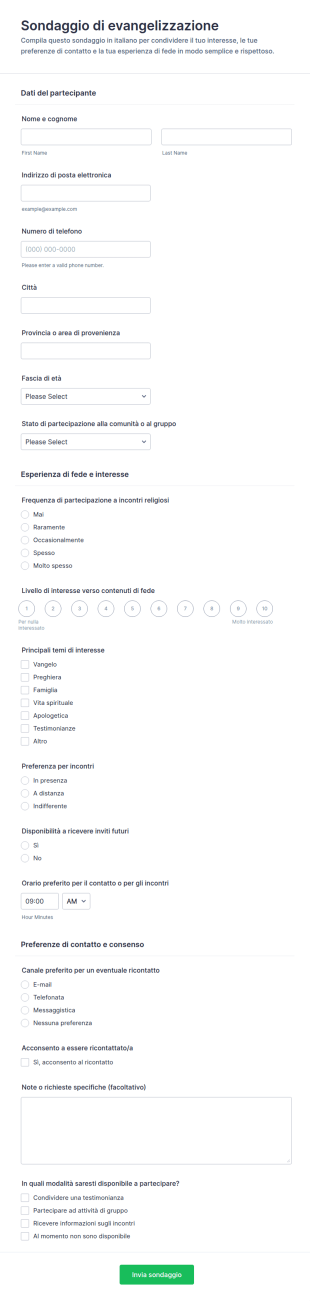
Sondaggio Di Evangelizzazione
Raccogli contatti e preferenze per attività di evangelizzazione con il Modulo Sondaggio di evangelizzazione di Jotform, ideale per parrocchie e comunità che vogliono migliorare la raccolta dati e la gestione di ogni invio del modulo.
Vai alla Categoria:Template Sondaggio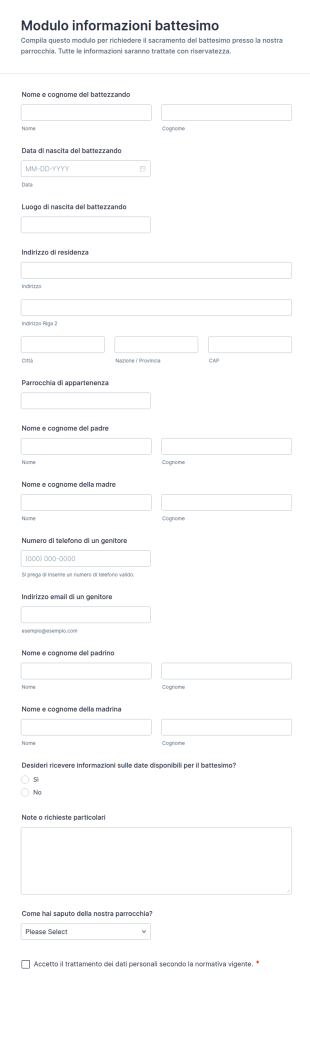
Modulo Informazioni Sul Battesimo
Raccogli le richieste di battesimo online con il Modulo informazioni sul battesimo, ideale per parrocchie e segreterie che vogliono gestire raccolta dati e risposta in modo ordinato con Jotform.
Vai alla Categoria:Moduli Chiese
Modulo Di Aggiornamento Delle Informazioni Della Congregazione
Raccogli e aggiorna i dati della comunità religiosa con il Modulo di aggiornamento delle informazioni della congregazione di Jotform, utile per segreterie e responsabili che gestiscono anagrafiche, attività e comunicazioni operative.
Vai alla Categoria:Moduli Chiese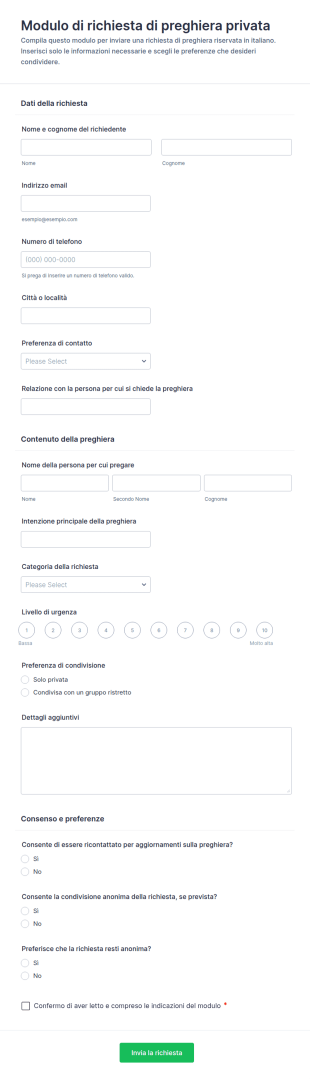
Richiesta Di Preghiera Privata Form
Raccogli e gestisci intenzioni e richieste riservate con il Modulo di richiesta di preghiera privata, utile per parrocchie e comunità che desiderano una raccolta dati ordinata e rispettosa tramite Jotform.
Vai alla Categoria:Moduli Chiese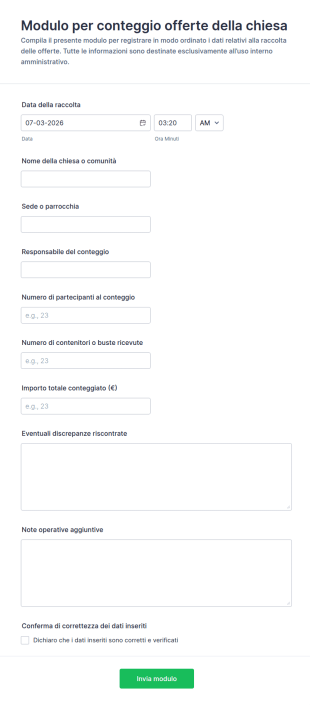
Rendiconto Offerte In Chiesa
Raccogli e archivia i rendiconti delle offerte per parrocchie e comunità con il Modulo per il rendiconto delle offerte in chiesa di Jotform, pensato per una raccolta dati interna ordinata e facilmente consultabile.
Vai alla Categoria:Moduli Chiese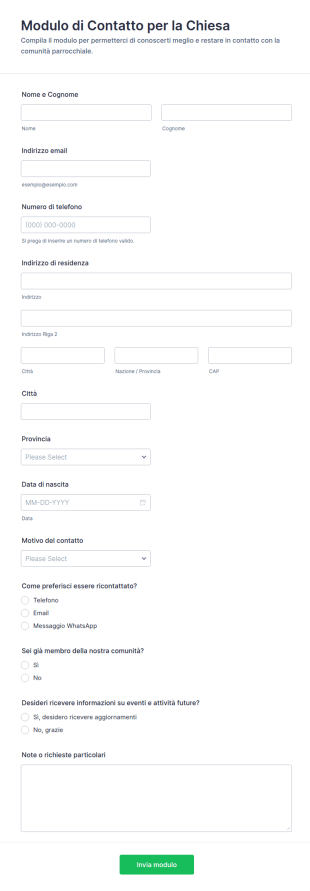
Modulo Di Contatto Della Chiesa
Raccogli richieste e messaggi della comunità con il Modulo di contatto per la chiesa, utile per parrocchie e segreterie per gestire la data collection online e organizzare i ricontatti con Jotform.
Vai alla Categoria:Moduli Chiese
Domanda Per L’Ordinazione Ministeriale
Raccogli e gestisci le candidature all’ordinazione ministeriale con un modulo web completo, ideale per chiese e commissioni che devono valutare profili, referenze e disponibilità in un unico processo di raccolta dati.
Vai alla Categoria:Moduli di Domanda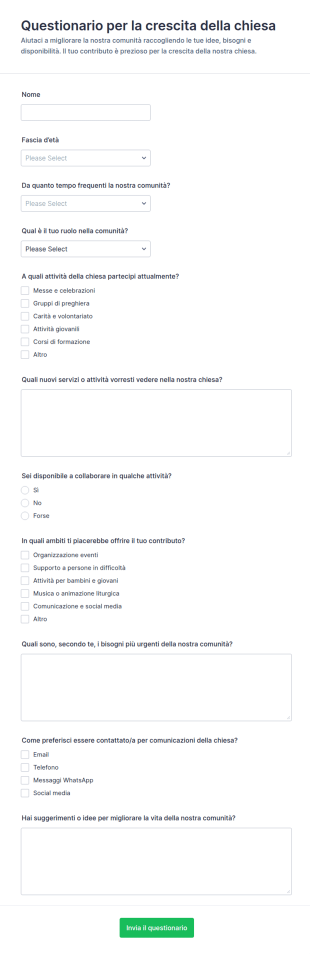
Questionario Di Crescita Della Chiesa
Raccogli feedback, bisogni e disponibilità dei membri con il Modulo Questionario per la crescita della chiesa, ideale per parrocchie e gruppi pastorali che vogliono migliorare attività, comunicazioni e coinvolgimento.
Vai alla Categoria:Moduli ChieseInformazioni su Moduli Chiese
Le Chiese utilizzano i moduli online per la registrazione di nuovi iscritti, per donazioni, eventi e per organizzare le riunioni e pianificare le visite presso la Chiesa o le riunioni di preghiera. Esplora uno dei nostri template di moduli online per la Chiesa che ti aiuterà a raccogliere le informazione di ogni partecipante, organizzare le candidature di volontari e raccogliere le informazioni dei partecipanti e le donazioni in modo semplice. Ognuno di questi template di moduli per la Chiesa è completamente personalizzabile e facile da modificare.
Jotform is the premier online form builder for creating Church Forms, offering an intuitive platform that allows for easy customization and automation of data collection processes. The drag-and-drop interface simplifies form design, enabling users to tailor forms to their specific needs without any technical expertise. With centralized data management through Jotform Tables, churches can efficiently organize and access all collected information in one secure place. This capability not only enhances operational efficiency but also ensures that data is readily available for analysis and reporting, making Jotform an indispensable asset for modern church management.
Why Use Church Forms?
- Church Forms provide a high level of accuracy in data collection, minimizing errors that often occur with manual paper-based methods. By utilizing digital forms, churches can ensure that all data is captured correctly and efficiently, leading to more reliable data management and reporting.
- The speed of data processing is significantly enhanced with Church Forms, as digital submissions are instantaneously recorded and accessible. This immediacy allows church staff to focus on more crucial tasks, such as planning events or engaging with the community, rather than being bogged down by administrative paperwork.
- Professional data handling is a key advantage of using Church Forms. With secure data management features, all sensitive information collected through the forms is protected, ensuring compliance with data protection regulations and safeguarding the privacy of church members and donors.
- Church Forms facilitate seamless communication between church members and administration. Through automated workflows, notifications can be set up to keep all stakeholders informed about upcoming events, volunteer opportunities, or community announcements, thereby enhancing engagement and participation.
- These forms offer the flexibility to integrate with over 100 third-party applications, such as Google Sheets and Salesforce, allowing churches to synchronize their data across multiple platforms for more comprehensive analysis and reporting. This integration capability ensures that all data collected is used effectively to support church operations.
Common Problems Solved by Church Forms
- One of the primary pain points for churches is the reliance on paper-based processes, which are prone to errors and inefficiencies. Church Forms eliminate the need for physical paperwork, offering a streamlined digital alternative that saves time and resources.
- Manual data entry often results in lost or inaccurate information, which can impede church operations. By using Church Forms, churches can automate data entry, ensuring that all submissions are accurately recorded and easily retrievable when needed.
- Churches frequently struggle with managing volunteer sign-ups and event registrations due to fragmented communication. Church Forms enable centralized data collection, making it easier to track and manage participant information and ensuring no volunteer or attendee is overlooked.
- Lost data is a significant concern, particularly when managing sensitive information such as donations and membership details. Church Forms provide secure, cloud-based storage, ensuring that all data is backed up and protected against loss or unauthorized access.
Utilizzi e funzionalità
- When organizing church events, using the Drag-and-Drop Form Builder allows for quick and easy customization of registration forms, ensuring all necessary information is collected efficiently. This feature streamlines event planning, making it easier to manage attendee details and logistics.
- Conditional Logic can be employed in donation forms to provide dynamic options based on the donor's preferences, enhancing the user experience and potentially increasing contributions by offering tailored giving opportunities.
- The ability to integrate with 30+ Payment Gateways, such as Stripe and PayPal, facilitates secure online donations directly through Church Forms, ensuring a seamless transaction process for donors.
- Electronic Signatures through Jotform Sign can be utilized for membership applications or consent forms, providing a legally binding solution that simplifies document handling and reduces the need for physical paperwork.
- With the PDF Editor, churches can automatically generate professional PDF documents from form submissions, such as donation receipts or event confirmations, ensuring that all records are maintained in a consistent and professional format.
- The Report Builder feature allows churches to analyze form data comprehensively, enabling them to generate insightful reports that inform decision-making and strategic planning.
- Jotform's Approval Workflows streamline the process of reviewing and approving form submissions, such as volunteer applications, ensuring that all entries are handled efficiently and in a timely manner.
How to Create a Church Form
- Start by browsing the Template List for a Churchs template that suits your needs or initiate the process from a blank form.
- Customize the design and fields of your form using Jotform's intuitive Drag-and-Drop Form Builder, which offers a user-friendly interface for tailoring the form to your specific requirements.
- Once your form design is complete, publish it and share it via Direct Link, Email, or embed it directly on your church’s website to start collecting responses.
Top Use Cases for Church Forms
- For Managers: Church managers can leverage Church Forms to streamline administrative tasks, such as managing member databases and tracking attendance at church events. The automated workflows and centralized data management allow managers to efficiently oversee all aspects of church operations, ensuring that information is consistent and up-to-date across the organization.
- For Teams: Church teams, such as those responsible for organizing community outreach programs or volunteer activities, can utilize Church Forms for efficient coordination and communication. By collecting and managing volunteer sign-ups and feedback digitally, teams can ensure that all participants are engaged and informed, leading to more successful and impactful initiatives.
- For Customers: Church members and attendees benefit from the ease of use and accessibility of Church Forms. Whether registering for events, signing up for newsletters, or making donations, the intuitive and user-friendly interface ensures a smooth and hassle-free experience. This convenience encourages greater participation and engagement from the church community.
Summarizing Church Forms
Church Forms represent a transformative approach to managing church operations by providing a digital solution that enhances accuracy, efficiency, and security. By leveraging the power of Jotform's online form builder, churches can streamline their processes, reduce reliance on paper-based systems, and ensure that all data is collected and managed in a professional manner. The ability to customize forms easily, automate workflows, and integrate with other platforms makes Church Forms a versatile and indispensable asset for any religious organization seeking to improve its administrative capabilities.
Domande Frequenti
1. Cos'è un modello di formulario per chiesa?
Un modello di modulo per le chiese è un modulo online già pronto, che aiuta le chiese a raccogliere e gestire informazioni per varie attività, come registrazioni agli eventi, donazioni, iscrizioni di volontari e richieste di preghiere.
2. Perché i moduli IT sono importanti per le organizzazioni?
I moduli online semplificano la raccolta dei dati, riducono la burocrazia e facilitano l'organizzazione di eventi, il monitoraggio delle donazioni e la comunicazione efficiente con la congregazione.
3. Quali informazioni vengono solitamente raccolte nei moduli per chiese?
I campi comuni includono nomi, dettagli di contatto, preferenze per gli eventi, importi delle donazioni, disponibilità dei volontari, richieste di preghiere e feedback.
4. Esistono diversi tipi di moduli IT?
Sì, ce ne sono molti tipi, inclusi moduli di registrazione per eventi, moduli di donazione, domande per volontari, moduli di iscrizione e moduli per richieste di preghiere, ciascuno adattato a specifiche attività della chiesa.
5. Chi dovrebbe usare i moduli IT?
Gli amministratori della chiesa, i pastori, i leader dei ministeri, i coordinatori degli eventi, i volontari e i membri della congregazione possono tutti utilizzare questi modelli per facilitare le operazioni e l'impegno della chiesa.
6. In che modo i moduli IT migliorano l'efficienza del flusso di lavoro?
Jotform garantisce che tutte le risposte ai moduli siano archiviate in modo sicuro e accessibili solo agli utenti autorizzati, aiutando le chiese a proteggere informazioni sensibili come donazioni e richieste di preghiere personali.
7. I moduli per le chiese possono essere personalizzati per diverse denominazioni o ministeri?
Certamente. I modelli di Jotform sono completamente personalizzabili, permettendo alle chiese di aggiungere o rimuovere campi, cambiare il design e adattare i moduli per soddisfare le loro specifiche esigenze di denominazione, ministero o evento.
8. Quali sono i vantaggi di utilizzare moduli digitali per le donazioni in chiesa?
I moduli di donazione digitali facilitano la donazione online da parte dei membri, offrono un'elaborazione sicura dei pagamenti, forniscono ricevute istantanee e semplificano il monitoraggio finanziario per il personale della chiesa.