

Moduli Banking

Modulo Di Richiesta Di Prestito Auto
Un Modulo di Richiesta di Prestito Auto è un modello di modulo progettato per raccogliere informazioni da persone che cercano un prestito auto. Questo modulo è uno strumento essenziale per i finanziatori e le banche indipendenti per raccogliere dettagli sui candidati e valutare la loro idoneità per un prestito automobilistico. Utilizzando questo modulo, i finanziatori possono facilmente raccogliere informazioni importanti come i dettagli personali del richiedente, il reddito, l'occupazione e l'affidabilità creditizia. Questo modulo fornisce tutte le informazioni necessarie per prendere una decisione informata sull'approvazione di un prestito automobilistico. Semplifica il processo di prestito e garantisce che i finanziatori abbiano tutte le informazioni richieste a portata di mano. Con il Costruttore di Moduli di facile utilizzo di Jotform, in pochissimo tempo otterrai il tuo Modulo di Richiesta di Prestito Auto. Basta trascinare e rilasciare per riorganizzare il layout, cambiare caratteri e colori o aggiungere il logo della tua azienda per un tocco personale. Con la selezione di widget e integrazioni gratuiti di Jotform, il tuo modulo avrà un bell'aspetto e funzionerà bene. Perché non includere un campo di caricamento di file per accettare documenti a supporto come bilanci, buste paga o documenti d'identità? Ottieni ciò di cui hai bisogno con un Modulo di Richiesta di Prestito Auto personalizzato: raccogli le richieste di prestito auto online, organizza i tuoi registri e migliora il flusso di lavoro in un colpo solo.
Vai alla Categoria:Moduli Banking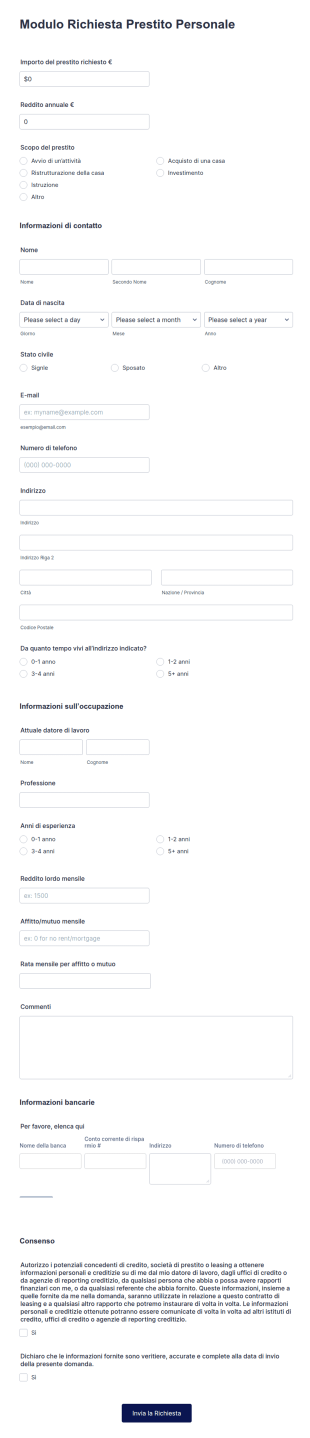
Modulo Richiesta Prestito Personale
Gestisci facilmente le richieste di prestito con il Modulo Richiesta Prestito Personale. Personalizza il form e gestisci tutte le domande online rapidamente.
Vai alla Categoria:Moduli Banking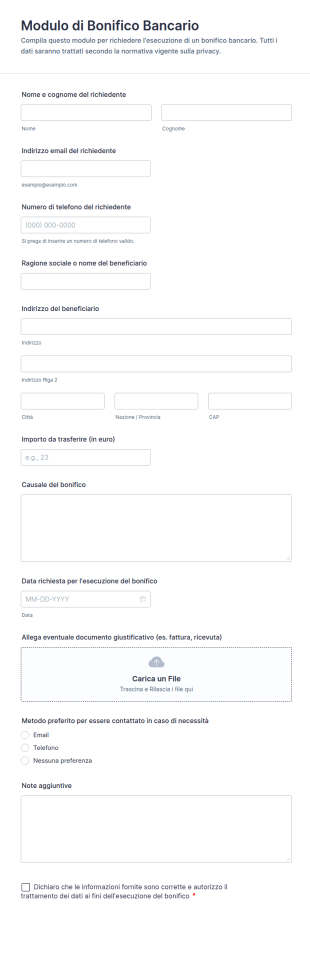
Modulo Di Bonifico Bancario
Gestisci richieste di bonifico con il Modulo di richiesta bonifico bancario di Jotform, utile per amministrazione, associazioni e piccole imprese che vogliono centralizzare la raccolta dati e monitorare ogni invio del modulo.
Vai alla Categoria:Moduli di Pagamento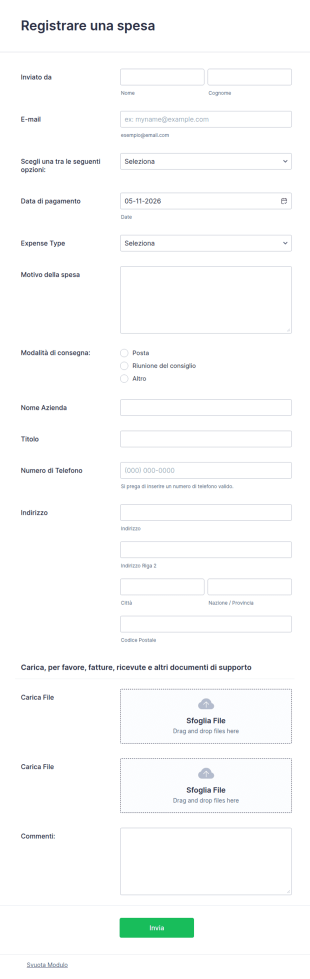
Modulo Di Monitoraggio Spese
Gli utenti possono fornire le informazioni sulle transazioni tramite questo modulo di monitoraggio delle spese, per aiutarti a gestirle più facilmente.
Vai alla Categoria:Moduli Banking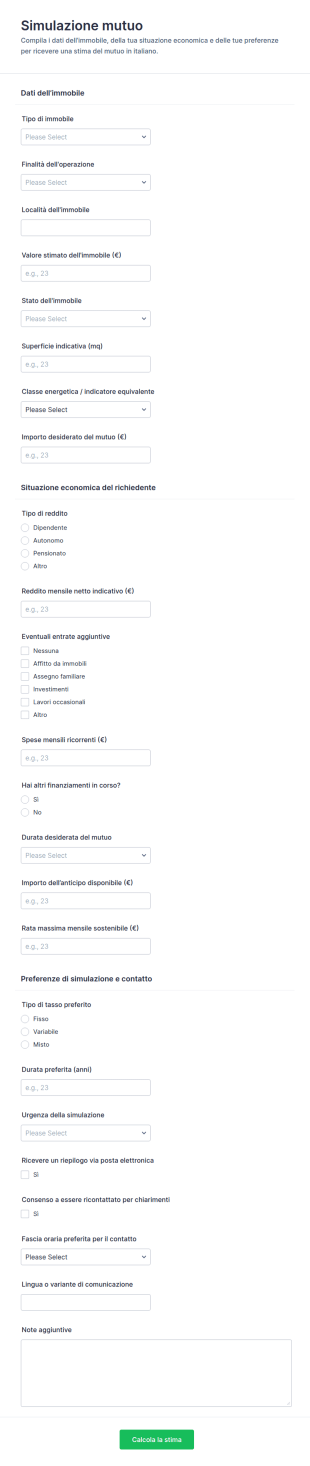
Modulo Di Calcolo Del Mutuo
Raccogli dati utili per una stima del finanziamento immobiliare con il Modulo per Simulazione Mutuo, ideale per consulenti del credito, agenzie e portali che vogliono velocizzare la raccolta dati e gestire ogni invio del modulo con Jotform.
Vai alla Categoria:Moduli Domanda Prestito
Test Di Attitudine Al Credito Quiz
Raccogli richieste per una valutazione preliminare del credito con il Modulo di valutazione dell’idoneità al credito di Jotform, utile a banche, intermediari e aziende che vogliono qualificare i contatti e accelerare la gestione.
Vai alla Categoria:Moduli Domanda Credito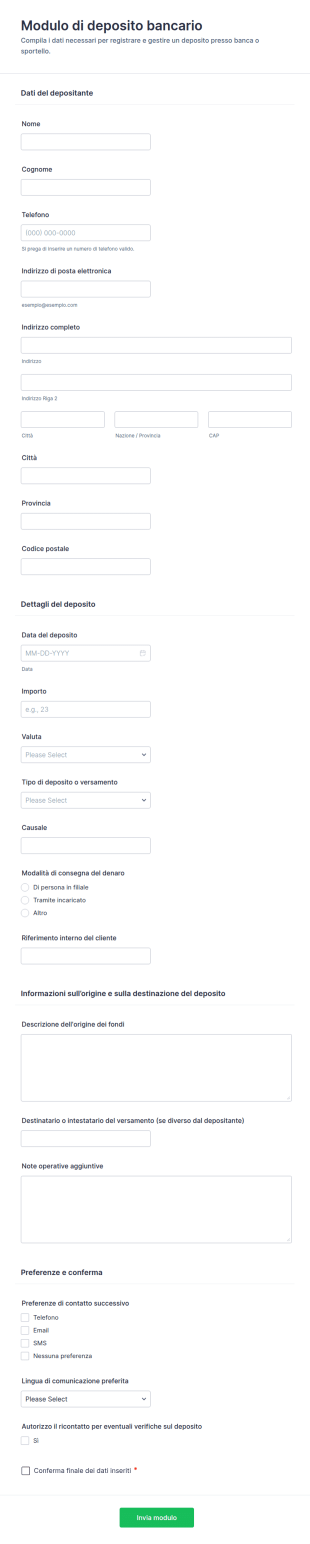
Modulo Di Deposito Bancario
Il Modulo di deposito bancario supporta banche e aziende nella raccolta dati online sui versamenti, migliorando tracciabilità e gestione delle risposte con Jotform e un modello di modulo personalizzabile.
Vai alla Categoria:Moduli Banking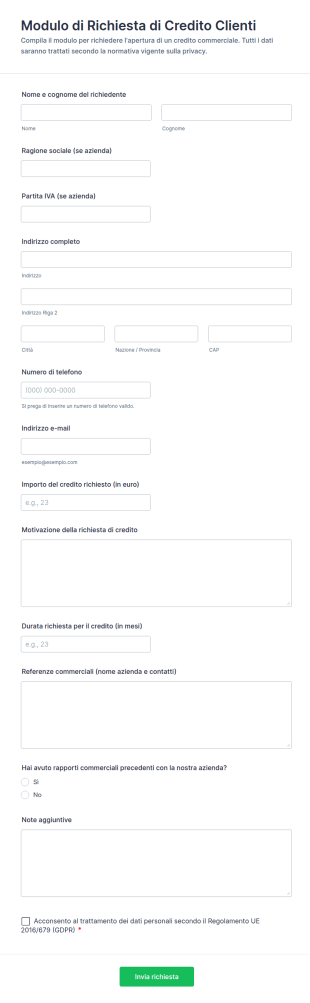
Modulo Di Richiesta Di Credito Clienti
Raccogli e gestisci le richieste di fido dei clienti con il Modulo di Richiesta di Credito Clienti, utile per aziende che vendono a fattura e vogliono velocizzare la valutazione interna e la raccolta dati con Jotform.
Vai alla Categoria:Moduli Domanda Credito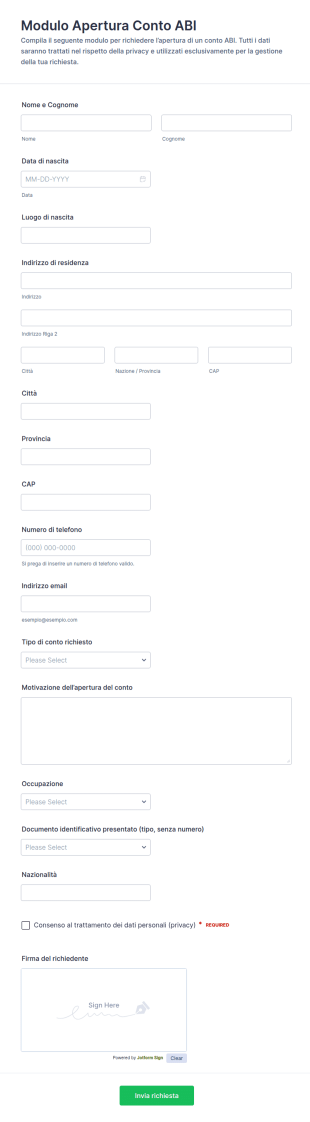
Richiesta Di Apertura Conto ABI Form
Raccogli richieste di apertura conto con il Modulo Apertura Conto ABI, ideale per istituti di credito e consulenti che vogliono gestire online l’avvio pratica e la data collection con Jotform.
Vai alla Categoria:Moduli Banking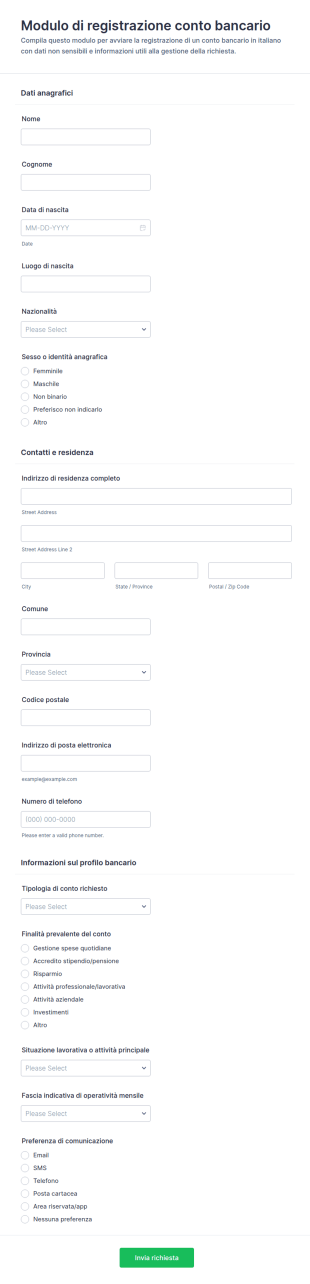
Modulo Di Registrazione Del Conto Bancario
Raccogli richieste di registrazione del conto bancario con il Modulo di registrazione del conto bancario di Jotform, ideale per banche e servizi clienti che vogliono gestire la raccolta dati online e le risposte in modo ordinato.
Vai alla Categoria:Moduli Banking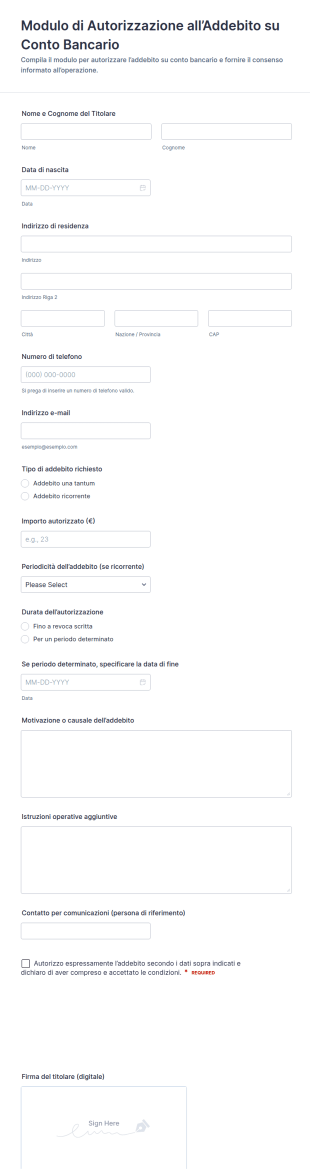
Autorizzazione Al Conto Bancario
Raccogli il consenso per addebiti su conto bancario una tantum o ricorrenti con il Modulo di autorizzazione all’addebito su conto bancario di Jotform, utile per abbonamenti, rette e servizi continuativi.
Vai alla Categoria:Moduli Banking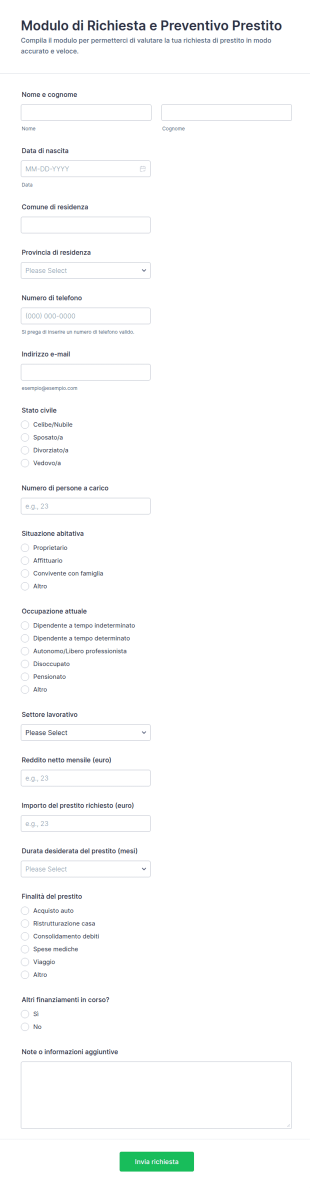
Richiesta Di Stima Del Prestito
Raccogli richieste di prestito e crea preventivi più rapidamente con il Modulo di Richiesta e Preventivo Prestito, ideale per banche e consulenti del credito che vogliono semplificare la raccolta dati e gestire ogni invio del modulo con Jotform.
Vai alla Categoria:Moduli Banking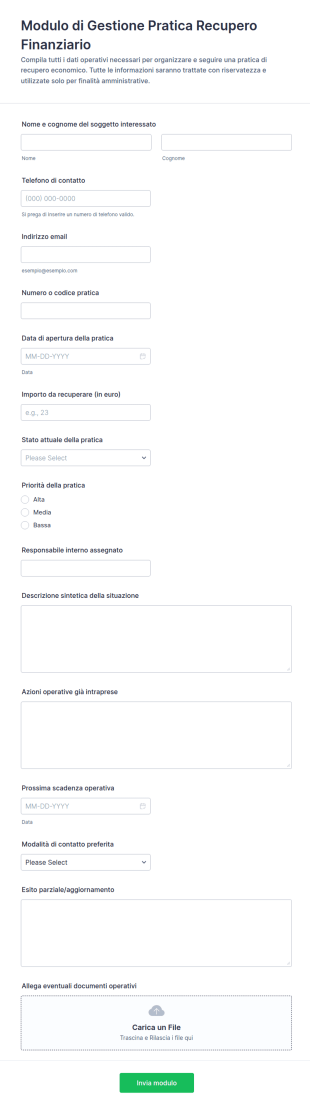
Modulo Di Recupero Finanziario
Gestisci pratiche di recupero finanziario con Jotform usando il Modulo di Gestione Pratica Recupero Finanziario, ideale per uffici amministrativi e consulenti che vogliono migliorare raccolta dati e tracciamento delle attività.
Vai alla Categoria:Moduli Banking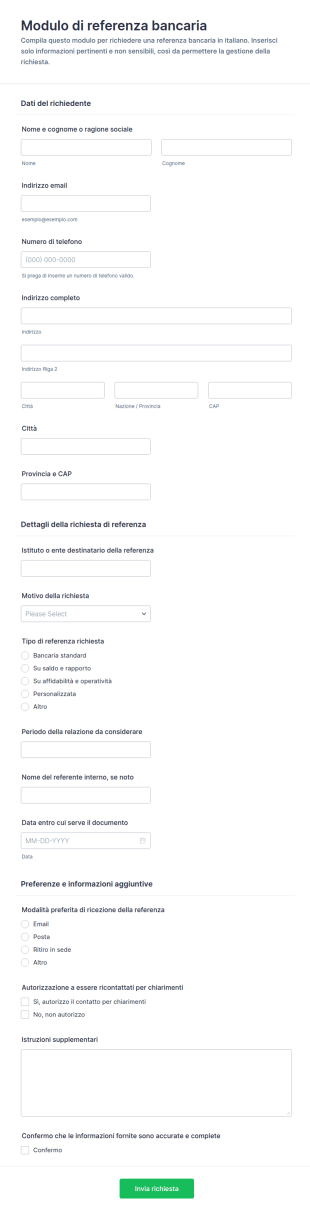
Modulo Di Riferimento Bancario
Raccogli e gestisci richieste di referenza bancaria da privati o aziende con il Modulo di Riferimento Bancario di Jotform, utile per banche, studi professionali e uffici amministrativi che vogliono velocizzare la raccolta dati online.
Vai alla Categoria:Moduli Banking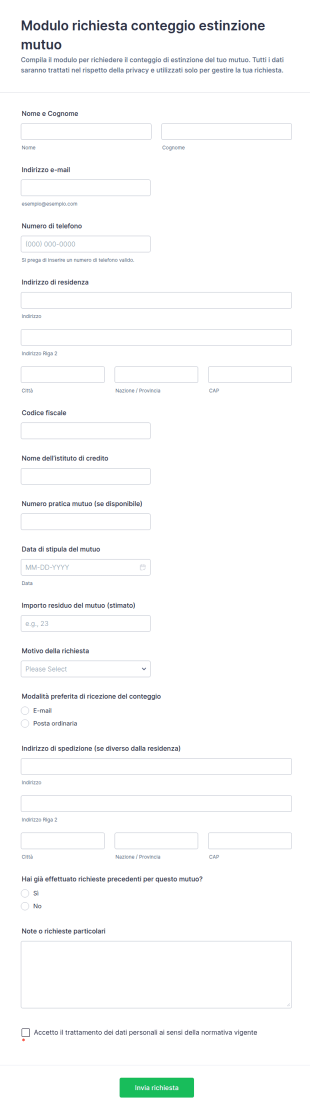
Richiesta Di Attestazione Di Estinzione Mutuo
Raccogli e gestisci le richieste di conteggio di estinzione mutuo con un modulo web di Jotform, ideale per istituti di credito e consulenti che vogliono semplificare la raccolta dati e organizzare ogni risposta.
Vai alla Categoria:Moduli Banking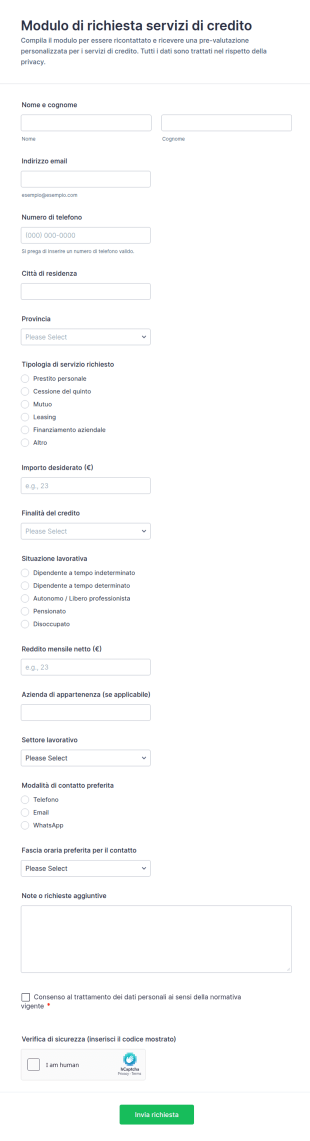
Modulo Di Richiesta Servizi Di Credito
Raccogli richieste di credito e avvia una pre-valutazione con il Modulo di richiesta servizi di credito di Jotform, ideale per consulenti e società finanziarie che vogliono gestire contatti e dati online in modo ordinato.
Vai alla Categoria:Moduli Domanda Credito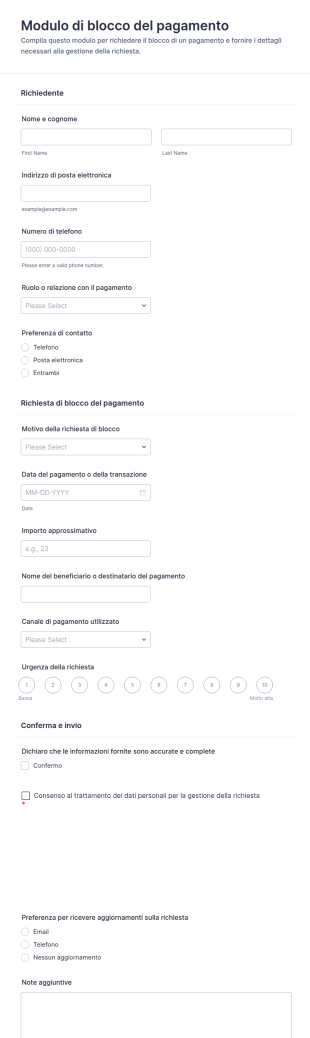
Richiesta Di Stop Pagamento
Gestisci le richieste di stop pagamento con il Modulo di blocco del pagamento di Jotform, ideale per banche, aziende e uffici amministrativi che vogliono raccogliere segnalazioni online e organizzare rapidamente le risposte.
Vai alla Categoria:Moduli di Pagamento
Modulo Di Pre Approvazione Del Mutuo
Raccogli in modo ordinato le informazioni preliminari per la pre-approvazione del mutuo con Jotform, ideale per privati, consulenti e agenzie che vogliono velocizzare la valutazione iniziale e la data collection.
Vai alla Categoria:Moduli Liste di Controllo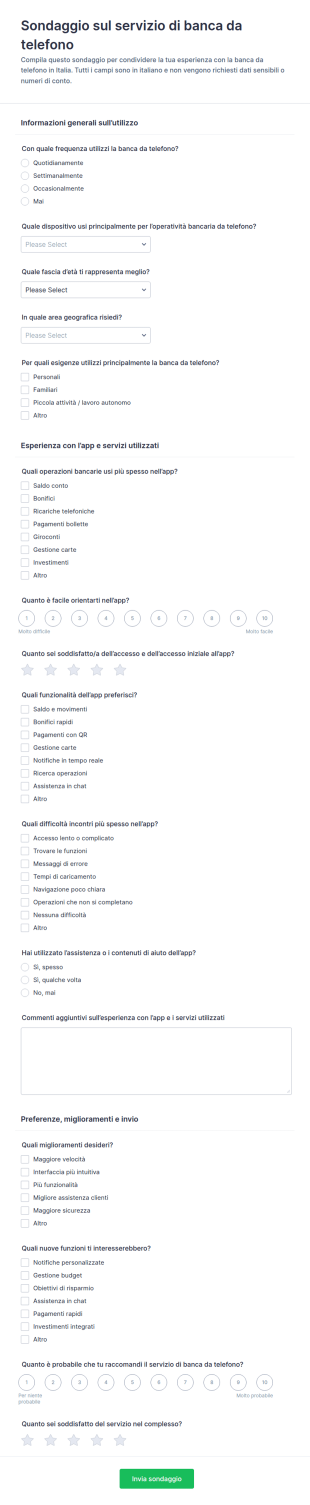
Indagine Sul Mobile Banking
Raccogli feedback sul mobile banking con il Sondaggio sul servizio di banca da telefono, ideale per banche e team digitali che vogliono misurare soddisfazione, usabilità dell’app e priorità di miglioramento tramite Jotform.
Vai alla Categoria:Template Sondaggio
Modulo Di Richiesta Credito Per Aziende
Raccogli richieste per l’apertura di un conto commerciale con affidamento con il Modulo di richiesta di conto commerciale con affidamento, ideale per banche e consulenti che vogliono gestire la data collection e ogni form submission online con Jotform.
Vai alla Categoria:Moduli Domanda Servizi Banking
Modulo Di Risparmio
Raccogli dettagli su obiettivi e piano di accantonamento con il Modulo di risparmio di Jotform, ideale per consulenti, programmi di educazione finanziaria e iniziative aziendali di benessere economico.
Vai alla Categoria:Moduli Personali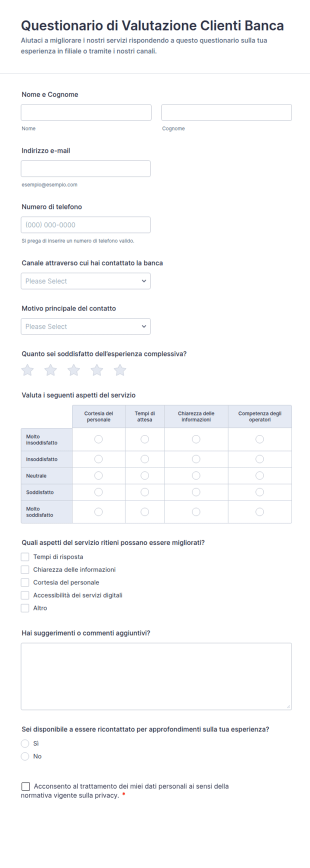
Modulo Di Valutazione Del Cliente Bancario
Raccogli feedback dei clienti dopo un contatto con la banca e monitora la qualità del servizio con il modulo Questionario di valutazione clienti banca di Jotform, utile per filiali e assistenza clienti.
Vai alla Categoria:Template Sondaggio
Modulo Di Chiusura Account
Raccogli richieste di chiusura conto da clienti e utenti con il Modulo di chiusura conto Form, ideale per banche e uffici amministrativi che vogliono gestire la raccolta dati e ogni invio del modulo in modo ordinato.
Vai alla Categoria:Moduli di Disdetta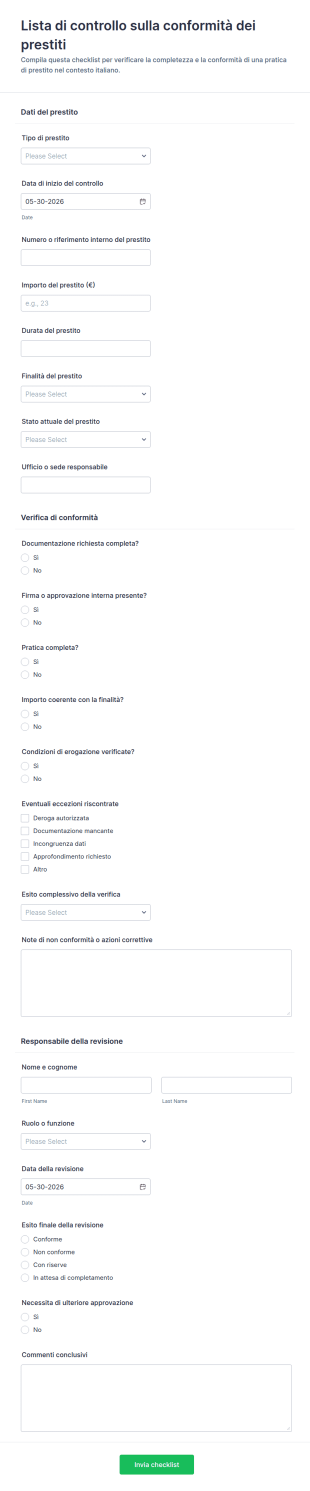
Checklist Di Conformità Del Prestito Modulo
Gestisci controlli interni e raccolta dati sulle pratiche di finanziamento con la Lista di controllo sulla conformità dei prestiti Form di Jotform, ideale per banche e intermediari che vogliono standardizzare verifiche e revisioni.
Vai alla Categoria:Moduli Liste di ControlloInformazioni su Moduli Banking
Banking Forms are specialized digital forms designed to facilitate various financial operations within the banking industry. These forms serve as crucial components for managing transactions, customer onboarding, loan applications, and numerous other financial services. In real-world workflows, Banking Forms streamline processes such as account opening, customer inquiries, and compliance procedures, ensuring that data is captured accurately and securely. By digitizing these workflows, banks can enhance customer experiences and improve operational efficiency significantly.
Prova oggi uno dei nostri template gratuiti di moduli bancari!
Why Use Banking Forms?
- Banking Forms are essential for ensuring the accuracy of financial data, as they minimize human errors associated with manual data entry. By automating entries, banks can maintain high levels of precision in their records, which is crucial for audits and regulatory compliance.
- Speed is a significant advantage of using Banking Forms, as they enable rapid processing of financial transactions and customer requests. This efficiency not only improves customer satisfaction but also boosts the overall productivity of banking operations.
- Professional data handling is achieved through Banking Forms by providing a secure and organized method for data collection and management. This ensures that sensitive financial information is protected and easily retrievable for authorized personnel.
- Banking Forms facilitate seamless integration with other banking systems, allowing for real-time data synchronization and improved workflow automation. This integration capability enhances the operational fluidity of banking institutions.
- Customizable templates in Banking Forms allow banks to adapt quickly to changing regulatory requirements and market conditions. This flexibility ensures that banks remain compliant and responsive to industry shifts.
Common Problems Solved by Banking Forms
- One of the primary issues addressed by Banking Forms is the reduction of paperwork. Traditional banking processes often involve copious amounts of paperwork, which can be cumbersome and prone to misplacement. Digital forms eliminate this by providing a reliable digital storage solution.
- Manual data entry is another significant pain point in the banking industry, often leading to errors and inefficiencies. Banking Forms automate this process, ensuring that data is entered accurately and swiftly.
- Lost data is a critical concern, especially in financial transactions where every piece of information is vital. Banking Forms ensure that all data is securely stored and easily accessible, reducing the risk of data loss.
- Compliance management can be complex and time-consuming. Banking Forms simplify this process by automating compliance checks and ensuring that all necessary information is collected and stored according to regulatory standards.
Utilizzi e funzionalità
- For customer onboarding, the Drag-and-Drop Form Builder enables banks to create personalized and intuitive forms that streamline the onboarding process, enhancing the customer experience.
- The use of Conditional Logic in Banking Forms allows for dynamic form behavior, adjusting questions based on previous answers. This feature is ideal for loan application forms where different pathways are needed based on customer responses.
- With 30+ Payment Gateways like Stripe and PayPal, Banking Forms facilitate seamless online transactions, making it easy for customers to make payments directly through the forms.
- Electronic Signatures (Jotform Sign) feature is crucial for contract and document approvals, allowing customers to sign documents digitally, thereby speeding up the processing time and reducing the need for in-person visits.
- The PDF Editor (Automated PDF Generation) is beneficial for creating professional, downloadable copies of submitted forms, which can be used for customer records or compliance documentation.
- Secure Data Management through Jotform Tables ensures that all collected data is stored securely, providing banking professionals with peace of mind regarding data protection and organization.
- Approval Workflows streamline the internal review process by automating the flow of form submissions to the relevant departments, ensuring timely actions and decisions.
How to Create a Banking Form
- Browse the Template List for a Bankings template or start from a blank form.
- Dipartimenti di comunicazione aziendale
- Consentono un rifornimento tempestivo e la prevenzione delle perdite
Top Use Cases for Banking Forms
- For Managers: Managers can leverage Banking Forms to gain real-time insights into financial operations and customer interactions. By utilizing Jotform's reporting features, they can analyze trends and make informed decisions that enhance operational efficiency. The centralized data management also ensures that all managerial decisions are based on accurate and up-to-date information.
- For Teams: Banking teams benefit from forms that streamline communication and data sharing. With Jotform's integration capabilities, team members can collaborate seamlessly, ensuring that all departments are aligned and working towards common goals. The automation of routine tasks allows teams to focus on more strategic initiatives, improving overall productivity.
- For Customers: Customers experience a smoother banking process with the use of digital Banking Forms. These forms reduce the need for physical branch visits, enabling customers to complete transactions, applications, and inquiries online at their convenience. The ease of use and accessibility of these forms greatly enhance customer satisfaction and loyalty.
Summarizing Banking Forms
Banking Forms are indispensable in transforming how banks handle data, interact with customers, and manage operations. By digitizing and automating various banking processes, these forms help institutions enhance accuracy, speed, and professionalism in their services. Jotform's online form builder provides the necessary tools to customize and manage these forms efficiently, ensuring that banks can meet both their operational goals and customer expectations. As the banking industry continues to evolve, these forms play a crucial role in maintaining competitive advantage and regulatory compliance.
Domande Frequenti
1. Cos'è un modello di modulo bancario?
Un modello di modulo bancario è un modulo digitale già pronto, utilizzato dalle istituzioni finanziarie per raccogliere, elaborare e gestire informazioni relative ai servizi bancari, come apertura di conti, richieste di prestiti e verifiche di conformità.
2. Perché i moduli IT sono importanti per le organizzazioni?
I moduli bancari digitali riducono la burocrazia, minimizzano gli errori, accelerano i tempi di elaborazione e migliorano la sicurezza dei dati, rendendo le operazioni bancarie più efficienti e orientate al cliente.
3. Quali informazioni sono generalmente richieste in un modulo bancario?
I campi comuni includono identificazione personale, dettagli di contatto, informazioni finanziarie, storia lavorativa, caricamento di documenti e firme di autorizzazione, a seconda dello scopo del modulo.
4. Esistono diversi tipi di moduli IT?
Sì, esistono vari tipi, inclusi moduli di apertura conto, domande di prestito, moduli di conformità KYC/AML, richieste di bonifico e sondaggi di feedback dei clienti.
5. Chi dovrebbe usare i moduli IT?
I modelli di moduli bancari sono utilizzati dal personale bancario, dagli ufficiali di prestito, dai team di conformità, dai consulenti finanziari e dai clienti che cercano di accedere o gestire servizi bancari.
6. In che modo i moduli IT migliorano l'efficienza del flusso di lavoro?
I moduli bancari possono essere personalizzati per raccogliere tutte le informazioni e la documentazione necessarie richieste per KYC, AML e altri standard normativi, aiutando la conformità e la preparazione agli audit.
7. Le informazioni inviate tramite i moduli bancari sono sicure?
Sì, Jotform abilita la crittografia SSL e supporta la conformità con standard di protezione dei dati come GDPR e PCI DSS per garantire che i dati finanziari sensibili siano mantenuti sicuri.
8. I moduli bancari possono essere integrati con altri software finanziari?
Certamente. Jotform consente l'integrazione con sistemi CRM, gateway di pagamento e strumenti di gestione documentale, per un trasferimento dati senza soluzione di continuità e l'automazione dei flussi di lavoro.