

Moduli Edilizia
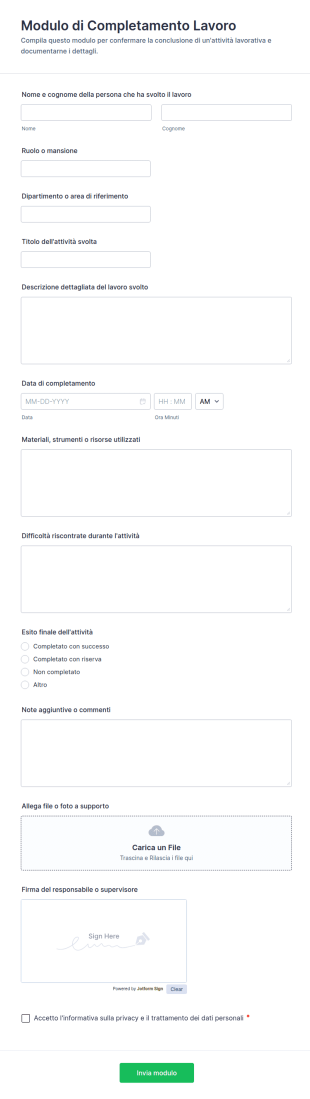
Modulo Di Completamento Lavoro
Documenta attività concluse, verifiche e approvazioni con il Modulo di completamento lavoro di Jotform, ideale per team tecnici, manutenzione e reparti operativi che vogliono una raccolta dati ordinata e tracciabile.
Vai alla Categoria:Moduli Edilizia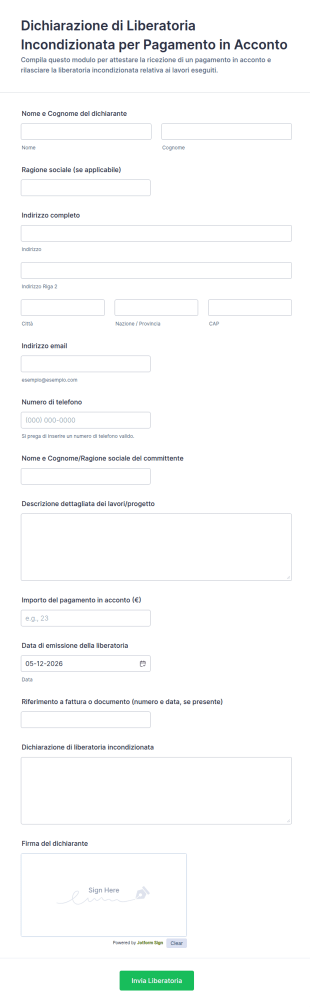
Dichiarazione Di Liberatoria Incondizionata Per Pagamento In Acconto
Raccogli e archivia online una Dichiarazione di Liberatoria Incondizionata per Pagamento in Acconto con Jotform, ideale per imprese e professionisti che gestiscono lavori a tranche e vogliono semplificare la raccolta dati e l’invio del modulo.
Vai alla Categoria:Moduli di Dichiarazione
Report Giornaliero Delle Attività Sul Campo
Registra attività, avanzamento, risorse e segnalazioni di cantiere con il Modulo di rapporto giornaliero di cantiere, ideale per imprese edili e direzioni lavori che vogliono una raccolta dati chiara e tracciabile con Jotform.
Vai alla Categoria:Moduli Edilizia
Modulo Di Ispezione Delle Saldature Form
Registra controlli visivi e strumentali sulle saldature, gestisci esiti e azioni correttive e centralizza la raccolta dati con il Modulo di Ispezione delle Saldature su Jotform.
Vai alla Categoria:Moduli Ispezione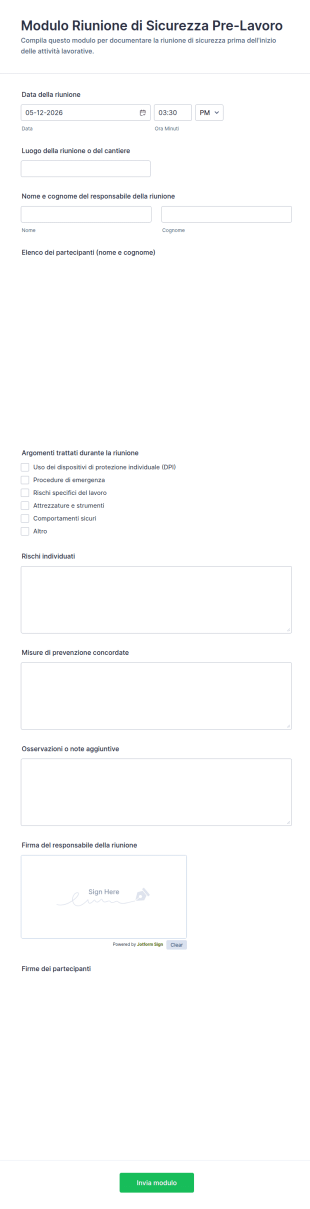
Modulo Riunione Di Sicurezza Pre Lavoro
Documenta briefing di sicurezza pre-lavoro con Jotform e il Modulo per Riunione di Sicurezza Pre-Lavoro, ideale per cantieri e reparti operativi che vogliono raccogliere dati e archiviare ogni risposta in modo ordinato.
Vai alla Categoria:Moduli per Meeting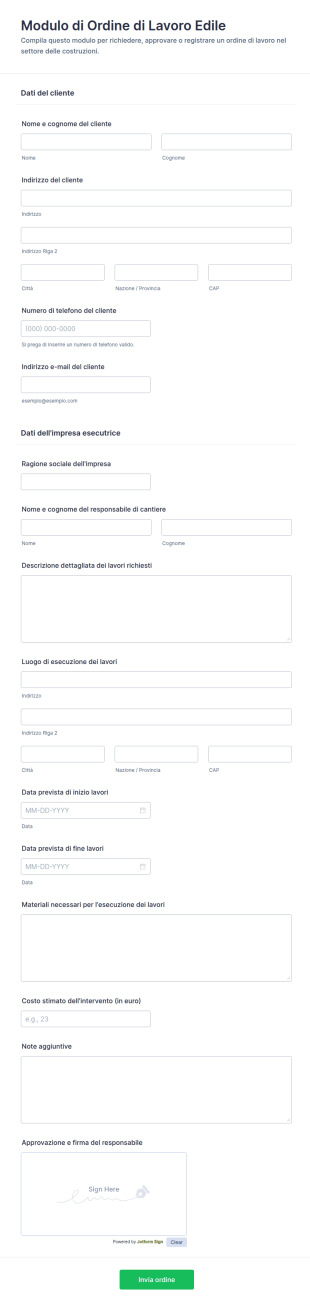
Modulo Di Ordine Di Lavoro Edile
Raccogli richieste di interventi edili, definisci attività e tempistiche e gestisci approvazioni interne con il Modulo di Ordine di Lavoro Edile di Jotform, ideale per imprese, artigiani e cantieri.
Vai alla Categoria:Moduli Edilizia
Modulo Di Completamento Installazione
Documenta la chiusura degli interventi con il Modulo di completamento installazione, ideale per tecnici e aziende di assistenza che vogliono raccogliere dati e conferme finali in modo ordinato con Jotform.
Vai alla Categoria:Moduli Edilizia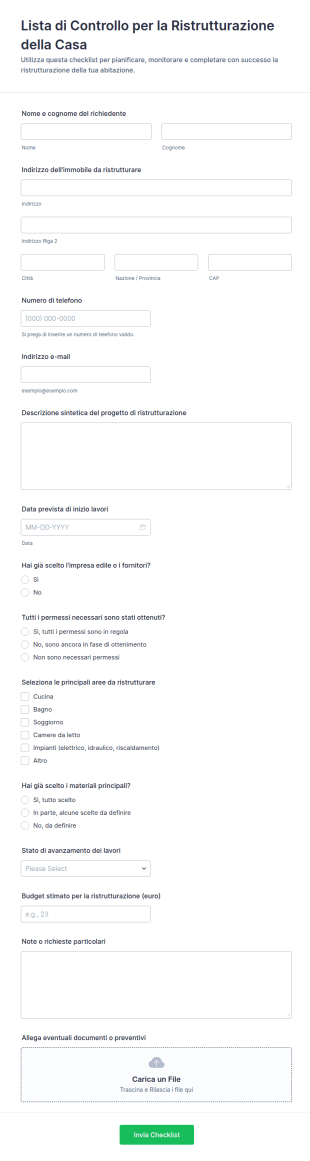
Lista Di Controllo Per La Ristrutturazione Della Casa
Gestisci ristrutturazioni domestiche e piccoli cantieri con la Lista di controllo per la ristrutturazione della casa, utile a proprietari e imprese per coordinare attività, permessi, budget e avanzamento tramite Jotform.
Vai alla Categoria:Moduli Liste di Controllo
Modulo Di Registrazione Impianto Termico
Raccogli e organizza la registrazione di un impianto termico con il Modulo di registrazione dell’impianto termico, utile per tecnici, amministratori e gestori di immobili che vogliono semplificare la raccolta dati online.
Vai alla Categoria:Moduli di Registrazione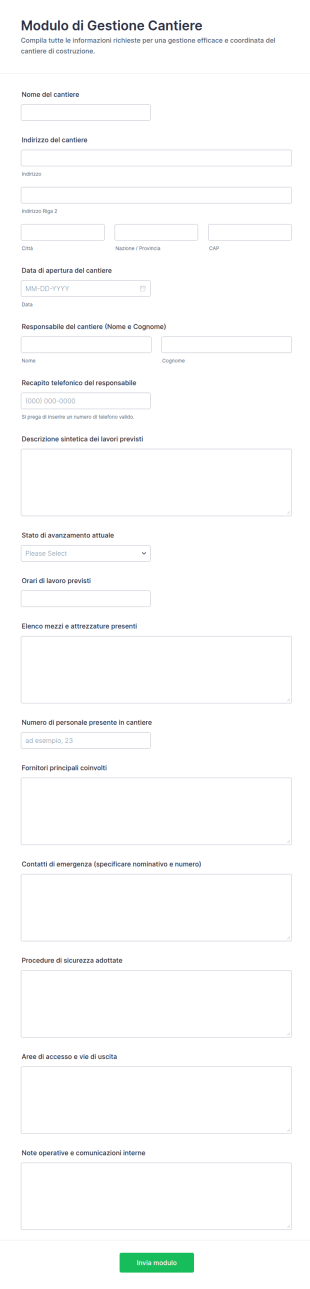
Modulo Informazioni Cantiere
Raccogli e centralizza le informazioni operative di un cantiere con il Modulo di Gestione Cantiere, ideale per imprese edili e responsabili di commessa che vogliono coordinare attività, contatti e avanzamento lavori.
Vai alla Categoria:Moduli Edilizia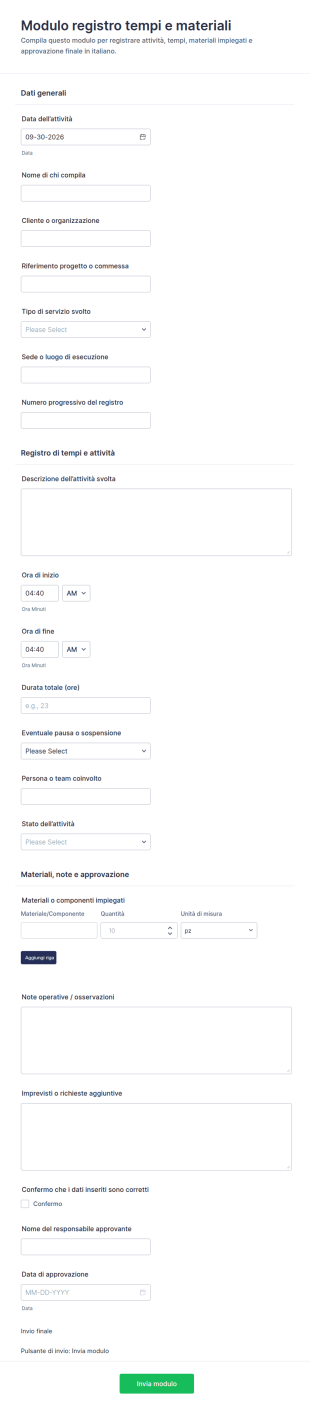
Registro Ore E Materiali
Raccogli ore lavorate, attività e materiali per commesse e interventi con il Modulo registro tempi e materiali, ideale per squadre sul campo, uffici tecnici e responsabili che devono approvare e archiviare i consuntivi.
Vai alla Categoria:Moduli per il Monitoraggio delle Ore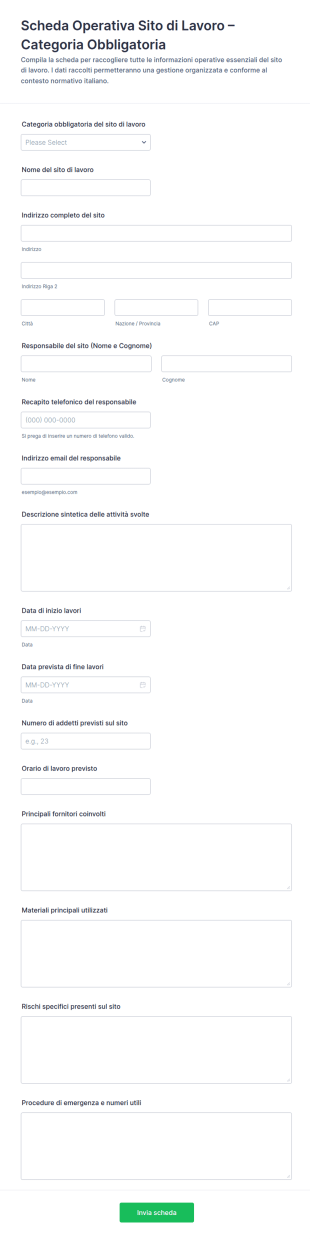
Modulo Informazioni Sul Sito Di Lavoro
Raccogli e organizza informazioni operative su cantieri e siti di lavoro con la Scheda operativa del sito di lavoro Form, ideale per imprese e responsabili che devono coordinare attività, contatti e tempi in modo ordinato.
Vai alla Categoria:Moduli Edilizia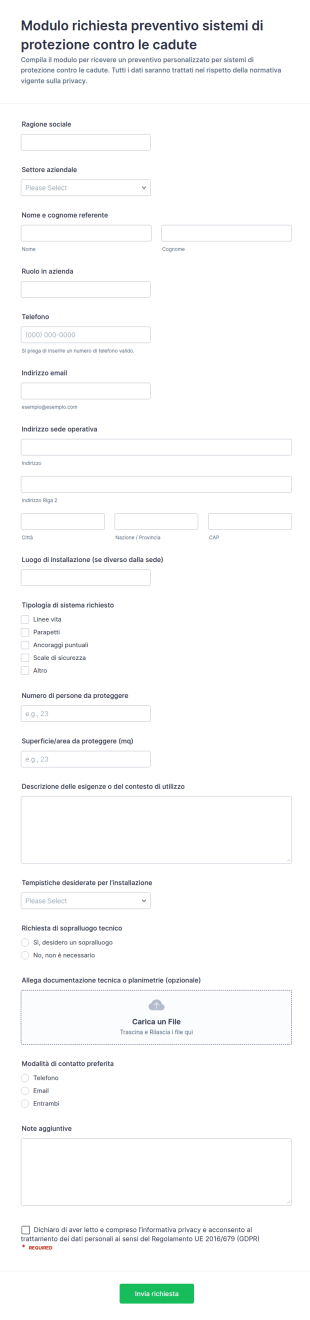
Richiesta Preventivo Per Protezione Anticaduta
Raccogli richieste di preventivo per sistemi di protezione contro le cadute da aziende e cantieri, centralizzando i dettagli del progetto e accelerando la gestione dei contatti con Jotform.
Vai alla Categoria:Construction Quote Forms
Modulo Di Richiesta Marketing Per Il Settore Edile
Raccogli in modo ordinato le informazioni per avviare progetti di comunicazione nel settore edile con il Modulo di raccolta marketing per imprese di costruzione di Jotform, ideale per agenzie, consulenti e imprese che vogliono allineare obiettivi e canali.
Vai alla Categoria:Moduli Marketing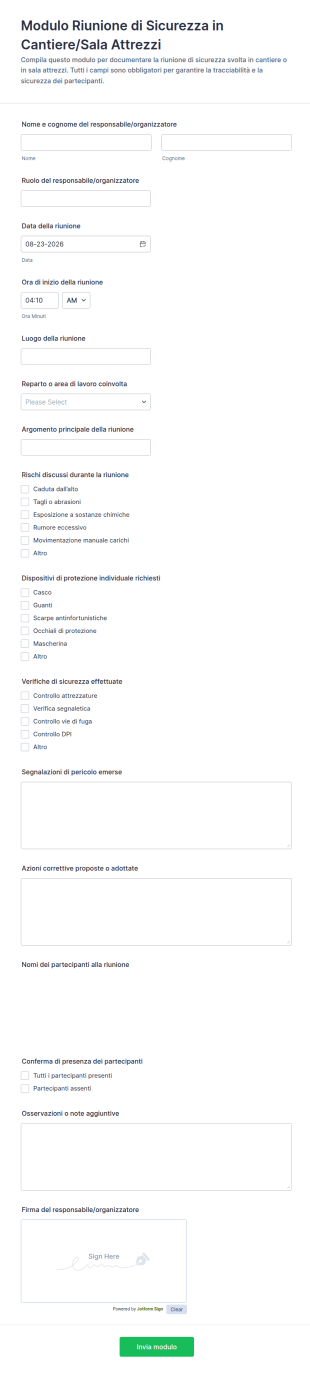
Verbale Riunione Di Sicurezza In Cantiere
Registra riunioni di sicurezza in cantiere o sala attrezzi con il Modulo per Riunione di Sicurezza in Cantiere e Sala Attrezzi di Jotform, utile a imprese edili e responsabili per documentare rischi, presenze e azioni correttive.
Vai alla Categoria:Moduli Edilizia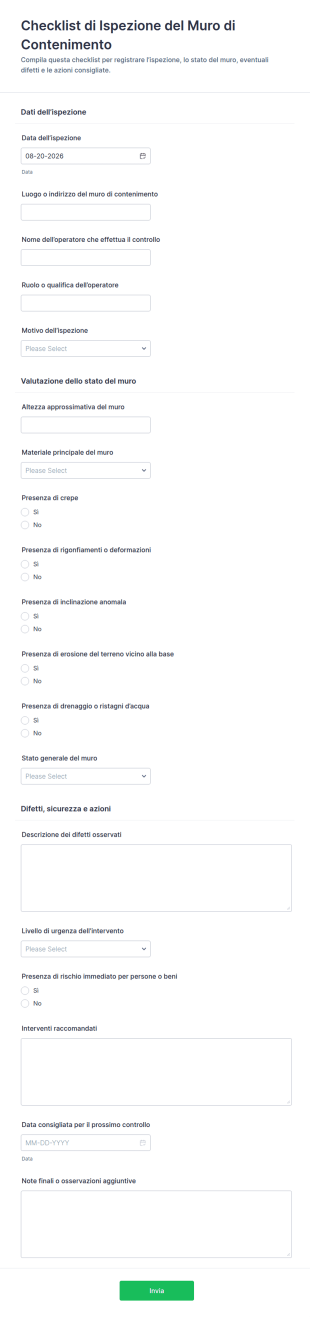
Ispezione Del Muro Di Sostegno Checklist
Registra ispezioni dei muri di contenimento e tieni traccia di condizioni, criticità e azioni consigliate con la Checklist di Ispezione del Muro di Contenimento, utile per imprese edili, tecnici e gestione immobili.
Vai alla Categoria:Moduli Liste di Controllo
Report Giornaliero Di Cantiere
Registra attività giornaliere, condizioni operative e note di cantiere con il Modulo di rapporto giornaliero di cantiere di Jotform, utile per imprese edili, capisquadra e coordinatori che gestiscono report quotidiani.
Vai alla Categoria:Moduli Edilizia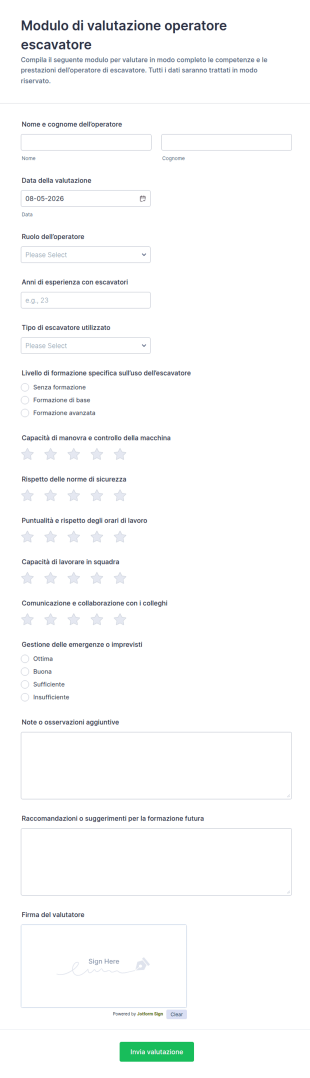
Valutazione Operatore Escavatore
Raccogli valutazioni coerenti degli operatori di escavatore in cantiere con Jotform, dal monitoraggio delle prestazioni alla documentazione interna, utile per imprese edili, formatori e responsabili della sicurezza.
Vai alla Categoria:Moduli di valutazione
Contratto Di Costruzione Formale
Raccogli i dati necessari per accordi tra committente e impresa con il Modulo di Contratto di Costruzione Gratuito di Jotform, ideale per ristrutturazioni e lavori edili con raccolta dati e invio del modulo online.
Vai alla Categoria:Moduli Edilizia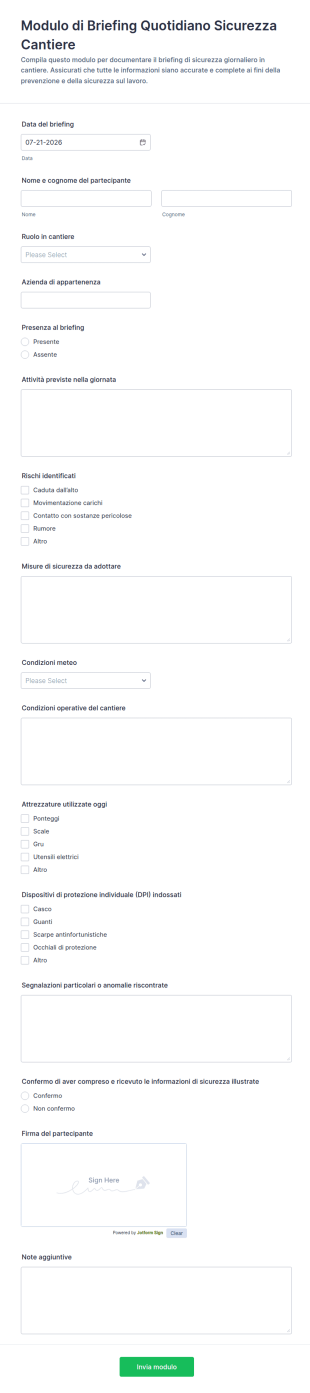
Verbale Di Briefing Sulla Sicurezza In Cantiere
Raccogli e archivia i briefing giornalieri di sicurezza in cantiere con Jotform, registrando attività, rischi e misure concordate per squadre, imprese e responsabili della prevenzione.
Vai alla Categoria:Moduli Edilizia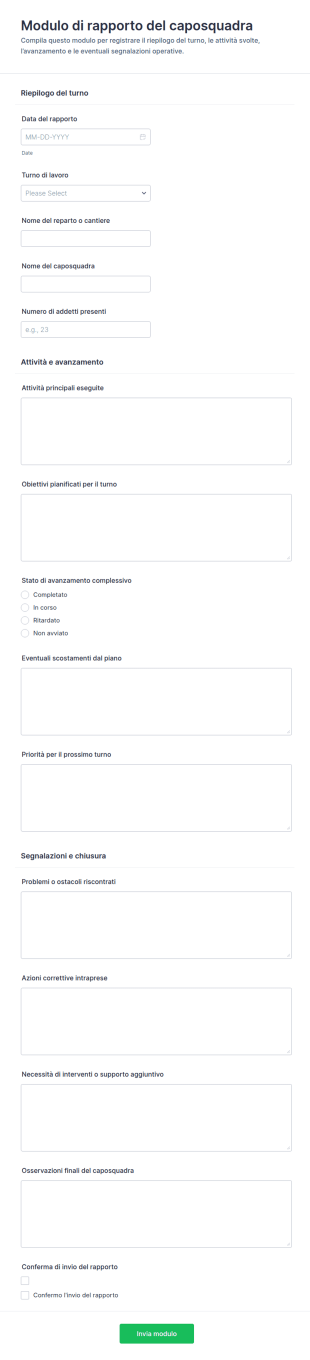
Segnalazione Caposquadra
Raccogli e archivia i riepiloghi di turno con il Modulo di rapporto del caposquadra, ideale per cantieri, reparti produttivi e squadre operative che vogliono migliorare la raccolta dati e la tracciabilità delle attività con Jotform.
Vai alla Categoria:Moduli Relazione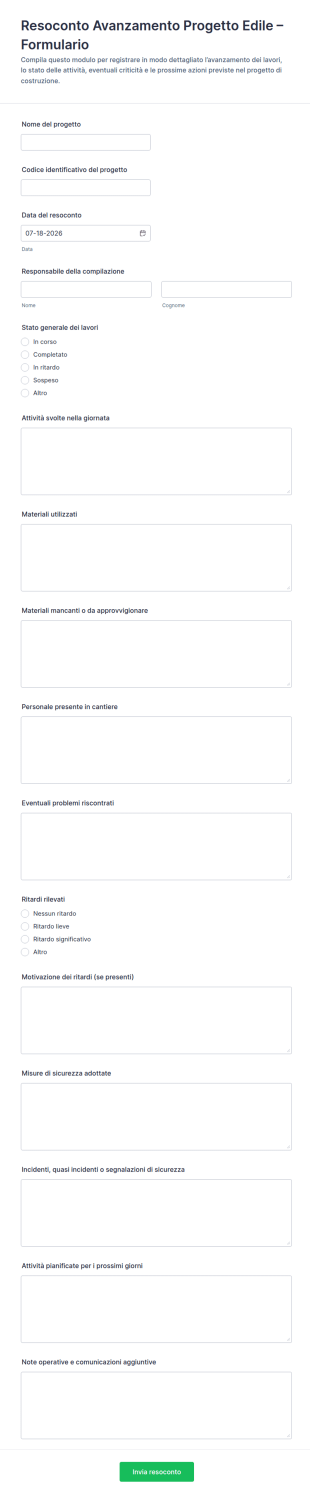
Report Di Avanzamento Del Progetto Edile Checklist
Raccogli e archivia aggiornamenti di cantiere con il modulo Resoconto avanzamento progetto edile, ideale per imprese e direzione lavori che vogliono centralizzare la raccolta dati e seguire lo stato del progetto su Jotform.
Vai alla Categoria:Moduli Edilizia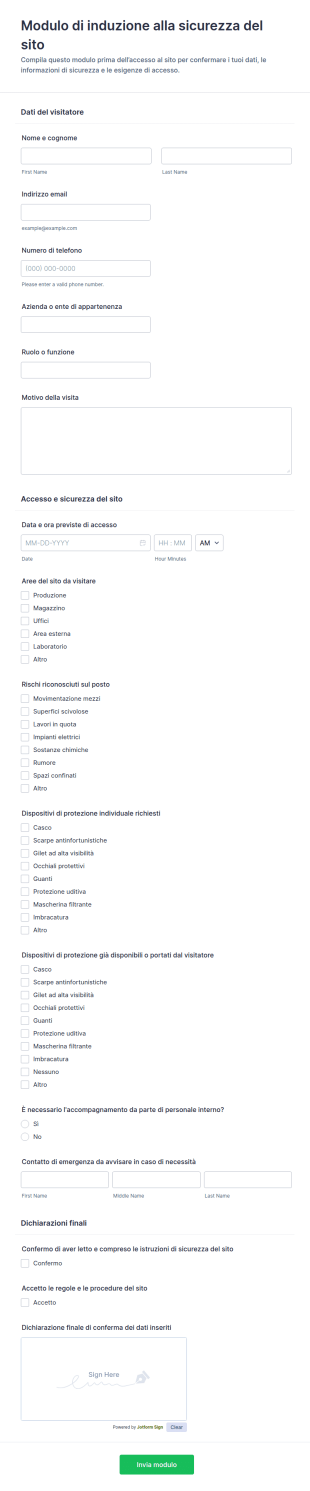
Modulo Di Induzione Alla Sicurezza Sul Sito
Gestisci l’accesso in stabilimento con il Modulo di induzione alla sicurezza del sito, ideale per aziende e fornitori che devono raccogliere dati di ingresso e conferme prima della visita tramite Jotform.
Vai alla Categoria:Moduli di Ispezione di sicurezza
Modulo Di Ispezione Edile
Gestisci sopralluoghi e controlli di sicurezza con il Modulo di ispezione di cantiere di Jotform, ideale per imprese edili e responsabili di sito che vogliono centralizzare la raccolta dati e le risposte in un unico flusso.
Vai alla Categoria:Moduli EdiliziaInformazioni su Moduli Edilizia
Potenzia la tua attività con i moduli di costruzione che semplificano il lavoro ed eliminano la necessità di documenti disordinati. Che tu sia un costruttore, un paesaggista o un fornitore di materiali, puoi utilizzare Jotform per gestire qualsiasi cosa, dalle richieste e preventivi di ordini di lavoro, alle ispezioni di sicurezza e alle liste di controllo del cantiere. Scegli dalla nostra libreria di template di moduli di costruzione gratuiti e già pronti per creare report, fatture, liberatorie e contratti da condividere con un link o incorporare nel sito web della tua azienda per un accesso immediato da qualsiasi dispositivo.
Jotform stands out as the premier online form builder for creating and managing Construction Forms. Known for its user-friendly interface, Jotform allows construction professionals to easily customize forms to suit specific project requirements, thus automating the tedious task of data collection. With Jotform, teams can benefit from centralized data management through Jotform Tables, facilitating secure storage, immediate access, and effective data analysis. This capability empowers construction businesses to maintain accurate records, improve decision-making, and optimize their workflow operations.
Why Use Construction Forms?
- Construction Forms significantly enhance accuracy in data collection by eliminating manual entry errors, ensuring that the information collected is precise and reliable. This precision is crucial for documentation that influences project outcomes and safety compliance.
- The speed at which data can be collected and shared using Construction Forms helps streamline project timelines. Quick data transmission reduces delays, enabling faster decision-making and action implementation, which is vital in the fast-paced construction environment.
- Professional data handling is a core benefit of using Construction Forms. With features such as electronic signatures, forms ensure that all collected data is verified and authenticated, which is essential for maintaining legal and regulatory compliance.
- The ability to customize forms according to specific project needs allows for a personalized approach to data collection. This customization ensures that each form captures all necessary information without unnecessary clutter, enhancing both usability and data relevance.
- By integrating with over 100 third-party applications, Jotform's Construction Forms facilitate seamless data flow across different platforms, ensuring that information gathered is easily accessible and utilized in other business processes.
Common Problems Solved by Construction Forms
- One major pain point in the construction industry is the overwhelming amount of paperwork, which often leads to inefficiencies and human errors. Construction Forms digitize these processes, providing a more organized and manageable approach to handling documentation.
- Manual data entry is not only time-consuming but also prone to errors that can have significant repercussions on project outcomes. Construction Forms automate data entry, reducing the likelihood of mistakes and freeing up valuable time for more strategic tasks.
- Lost data is a common issue due to the reliance on physical documents, which can be easily misplaced or damaged. By using Construction Forms, data is securely stored and backed up in the cloud, ensuring that it is never lost and can be retrieved whenever needed.
- Communication gaps often occur due to delayed information sharing among teams, leading to project delays. Construction Forms facilitate real-time data sharing, ensuring that all stakeholders are kept informed and aligned with project developments.
- Outdated information can lead to poor decision-making and project setbacks. Construction Forms provide up-to-date, accurate data that is essential for making informed decisions and maintaining project momentum.
Utilizzi e funzionalità
- Using the Drag-and-Drop Form Builder, construction managers can tailor forms to meet specific project needs, allowing for precise data collection and improved project tracking.
- Conditional Logic can be employed to create dynamic forms that adapt to user inputs, ensuring that only relevant information is gathered, thus enhancing form efficiency and user experience.
- With 30+ Payment Gateways like Stripe and PayPal, companies can collect payments directly through their forms, streamlining the billing process and improving cash flow management.
- Jotform Sign enables the collection of electronic signatures, ensuring that all agreements and approvals are legally binding and securely stored, which is critical for compliance and record-keeping.
- Through the PDF Editor, automated PDF generation transforms form submissions into professionally formatted documents, which can be easily shared and archived, maintaining a polished and organized documentation process.
- The Report Builder helps analyze the data collected from forms, providing valuable insights and visualizations that aid in project assessment and strategic planning.
- Integration with third-party platforms like Google Sheets and Salesforce allows for seamless data synchronization across different business systems, enhancing operational efficiency and data utilization.
How to Create a Construction Form
- Browse the Template List for a Constructions template or start from a blank form.
- Dipartimenti di comunicazione aziendale
- Consentono un rifornimento tempestivo e la prevenzione delle perdite
Top Use Cases for Construction Forms
- For Managers: Construction managers can leverage Construction Forms to maintain oversight of project progress and employee performance. These forms allow managers to efficiently track project milestones, manage resources, and ensure compliance with safety regulations. By centralizing all project-related data, managers can make informed decisions quickly and effectively, which is critical for maintaining project timelines and budgets.
- For Teams: Construction teams benefit from the collaborative features of Construction Forms, which facilitate seamless communication and task coordination. Field workers can easily submit real-time updates and reports, ensuring that all team members are informed of the latest developments. This real-time data exchange helps in resolving issues promptly and keeping the project on track, fostering a more productive and cohesive work environment.
- For Customers: Customers can use Construction Forms to provide feedback and report issues, ensuring that their voices are heard and their concerns are addressed promptly. These forms can also be used to manage client approvals and document communications, providing a clear record of interactions and agreements. By streamlining customer communication, businesses can enhance client satisfaction and build stronger, more trusting relationships.
Summarizing Construction Forms
Construction Forms offer a robust solution for managing the complexities of construction projects, from data collection to project management. By leveraging the capabilities of Jotform, businesses can significantly enhance their operational efficiency, reduce errors, and improve data accuracy. These forms facilitate seamless communication and coordination among all stakeholders, ensuring that projects are completed on time and within budget. In an industry where precision and timeliness are paramount, Construction Forms provide the essential infrastructure for success.
Domande Frequenti
1. Che cos'è un modulo per edilizia?
Un modulo di costruzione è un documento digitale o cartaceo utilizzato per raccogliere, registrare e gestire informazioni relative ai progetti edili, come ordini di lavoro, ispezioni di sicurezza, rapporti giornalieri ed elenchi di controllo delle attrezzature.
2. Perché i moduli IT sono importanti per le organizzazioni?
Contribuiscono a garantire una documentazione accurata, a migliorare la comunicazione, a supportare la conformità agli standard normativi e di sicurezza e a semplificare i processi di gestione dei progetti.
3. Quali informazioni sono solitamente incluse in un modulo per edilizia?
I campi tipici includono dettagli del progetto, date, personale coinvolto, descrizioni delle attività, checklist di sicurezza, rapporti sugli incidenti, firme e campi per il caricamento di file per foto o documenti.
4. Esistono diversi tipi di moduli IT?
Sì, ne esistono di vari tipi, tra cui proposte di progetto, ordini di lavoro, ispezioni di sicurezza, rapporti giornalieri sullo stato di avanzamento, checklist delle attrezzature e rapporti sugli incidenti, ognuno dei quali ha uno scopo specifico.
5. Chi dovrebbe usare i moduli IT?
Appaltatori generali, subappaltatori, project manager, supervisori di cantiere, responsabili della sicurezza e personale amministrativo utilizzano comunemente questi moduli per gestire vari aspetti dei progetti di costruzione.
6. In che modo i moduli IT migliorano l'efficienza del flusso di lavoro?
Centralizzano la raccolta dei dati, automatizzano le notifiche e offrono un modo strutturato per monitorare la partecipazione degli influencer, i deliverable e i risultati.
7. È possibile personalizzare i moduli di edilizia per diversi progetti?
Assolutamente sì. I moduli per edilizia possono essere personalizzati per soddisfare i requisiti specifici di ogni progetto, inclusi campi personalizzati, branding e flussi di lavoro.
8. I cantieri edili sono sicuri e riservati?
Utilizzando Jotform, tutti i dati vengono archiviati in modo sicuro e possono essere protetti tramite crittografia, password e controlli di accesso per garantire la privacy e la conformità agli standard del settore.