

Moduli per Biblioteche
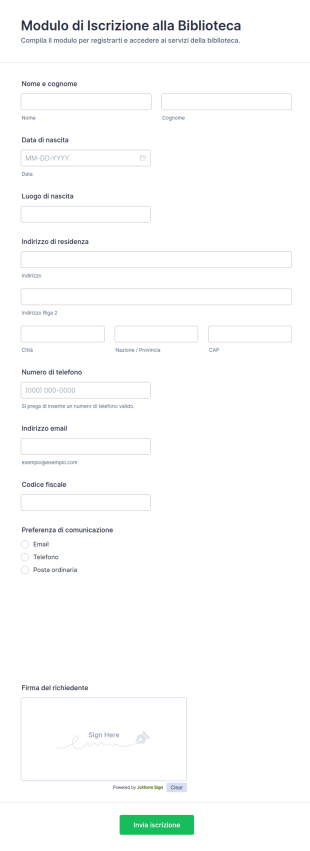
Modulo Di Iscrizione Alla Biblioteca
Raccogli le richieste di tessera con il Modulo di Iscrizione alla Biblioteca, utile per biblioteche pubbliche e scolastiche che vogliono gestire la registrazione online e organizzare la raccolta dati con Jotform.
Vai alla Categoria:Moduli di Registrazione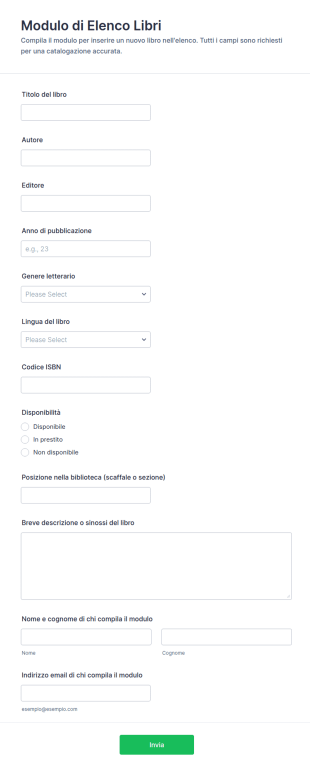
Modulo Di Elenco Libri
Organizza cataloghi e inventari con il Modulo di Elenco Libri di Jotform, ideale per biblioteche, scuole e associazioni che vogliono gestire la raccolta dati sui volumi e le risposte in un unico posto.
Vai alla Categoria:Moduli per Biblioteche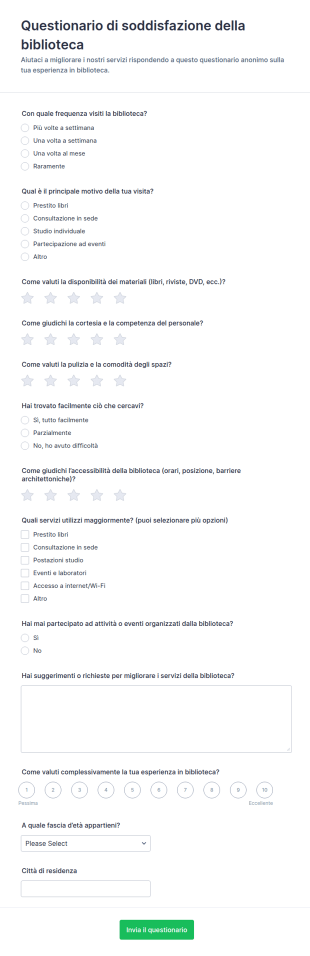
Sondaggio Di Soddisfazione Della Biblioteca
Raccogli feedback degli utenti su servizi, spazi e accessibilità con il Questionario di soddisfazione della biblioteca Form, ideale per biblioteche pubbliche e scolastiche che vogliono migliorare la qualità dell’esperienza.
Vai alla Categoria:Template Sondaggio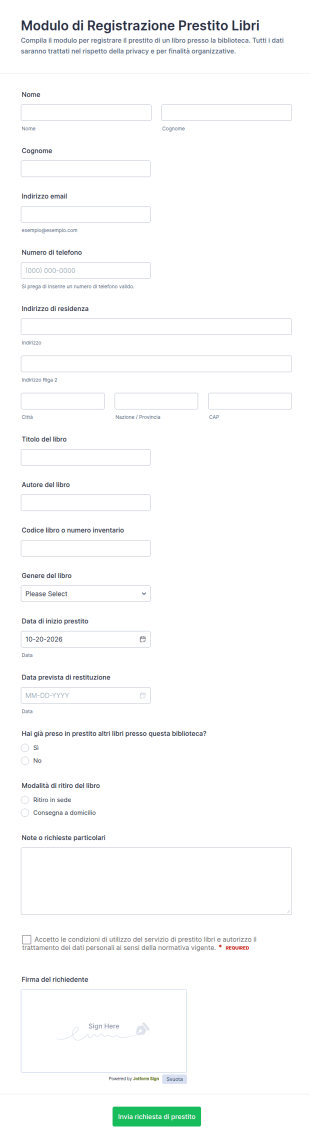
Modulo Di Registrazione Prestito Librario
Raccogli richieste di prestito e registra le operazioni di biblioteca con il Modulo di registrazione per il prestito libri di Jotform, utile per scuole e biblioteche che vogliono semplificare la raccolta dati e la gestione di ogni risposta.
Vai alla Categoria:Moduli di Registrazione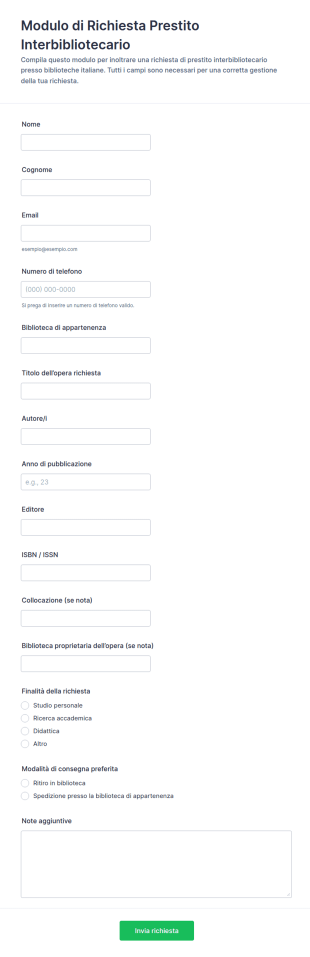
Modulo Di Richiesta Di Prestito Interbibliotecario
Gestisci le richieste di prestito interbibliotecario con Jotform, raccogliendo dati bibliografici e preferenze di consegna da studenti e utenti di biblioteche, scuole e università in un unico flusso di raccolta dati.
Vai alla Categoria:Moduli per Biblioteche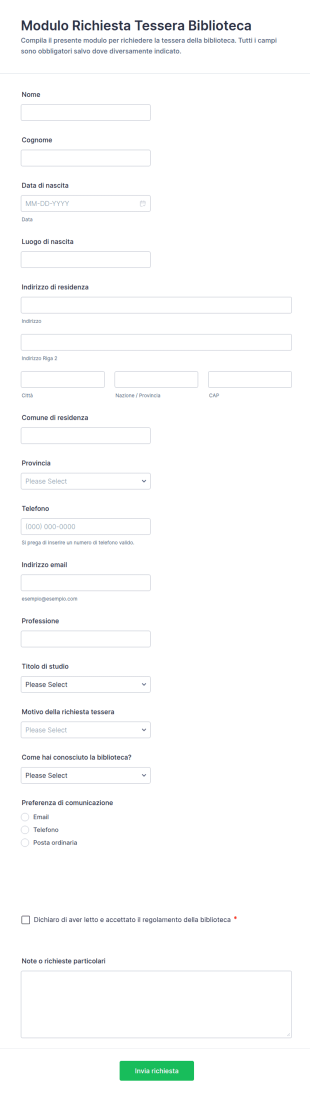
Richiesta Tessera Biblioteca
Gestisci le richieste di iscrizione alla biblioteca con il Modulo di richiesta tessera biblioteca di Jotform, ideale per biblioteche e punti di prestito che vogliono raccogliere dati online e organizzare le risposte in modo centralizzato.
Vai alla Categoria:Moduli di Registrazione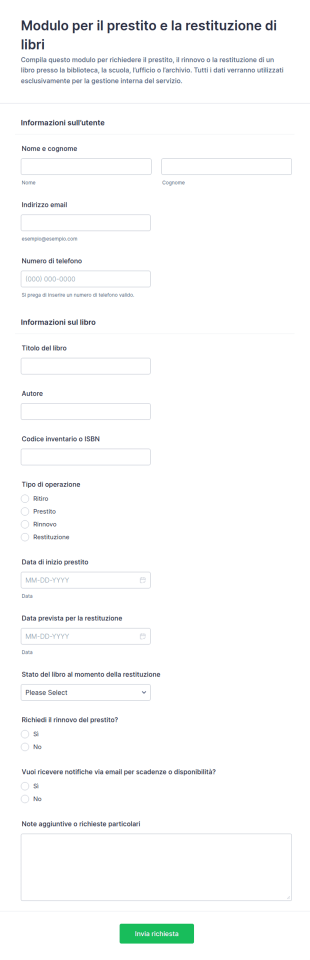
Modulo Di Ritiro E Restituzione Libri
Gestisci richieste di prestito, rinnovo e restituzione in biblioteca o a scuola con il Modulo per il prestito e la restituzione di libri di Jotform, utile per organizzare la raccolta dati e ogni risposta del modulo in un unico flusso.
Vai alla Categoria:Moduli per Biblioteche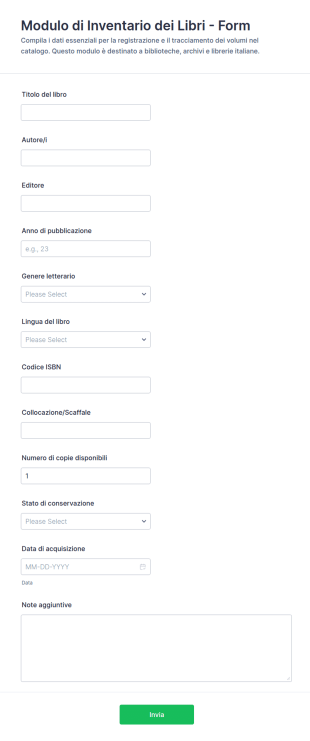
Modulo Di Registrazione Inventario Libri
Il Modulo di inventario dei libri supporta biblioteche, scuole e archivi nella raccolta dati per catalogare volumi e monitorare la disponibilità, usando i modelli di modulo di Jotform e gestendo ogni risposta in modo ordinato.
Vai alla Categoria:Moduli per Biblioteche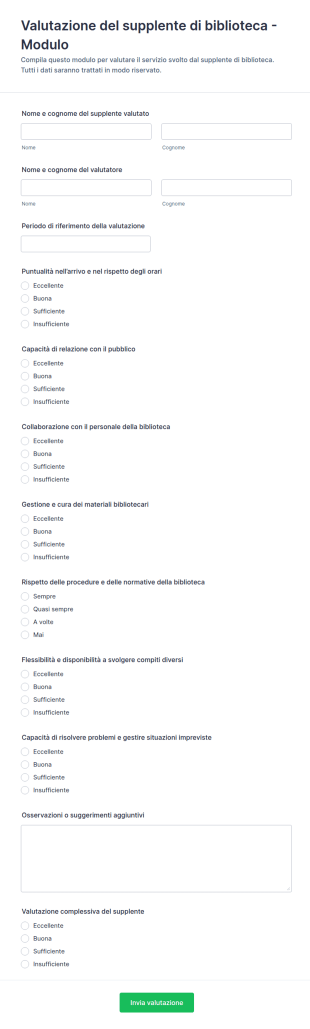
Modulo Di Valutazione Sostituzione Biblioteca
Raccogli valutazioni coerenti dei supplenti di biblioteca con il Modulo di valutazione del supplente di biblioteca di Jotform, ideale per scuole e biblioteche che vogliono gestire feedback e raccolta dati in modo ordinato.
Vai alla Categoria:Moduli Valutazione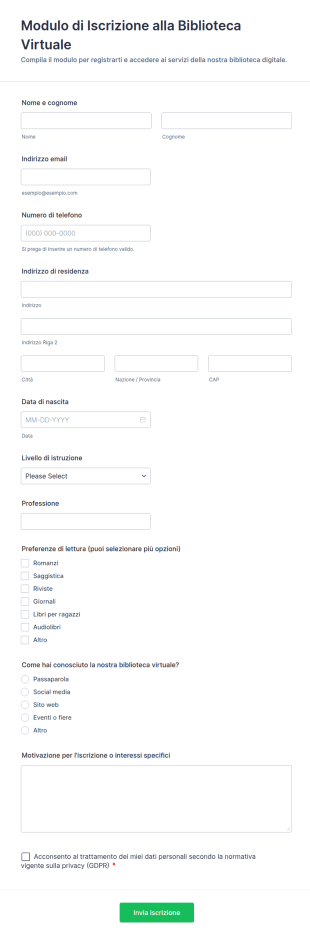
Modulo Di Iscrizione Alla Biblioteca Virtuale
Raccogli nuove iscrizioni alla tua biblioteca digitale con il Modulo di Iscrizione alla Biblioteca Virtuale di Jotform, ideale per biblioteche, scuole e associazioni che vogliono semplificare la raccolta dati online.
Vai alla Categoria:Moduli di Registrazione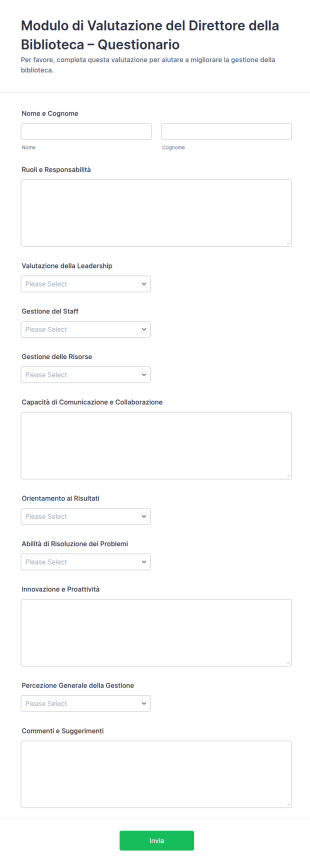
Modulo Di Valutazione Del Direttore Della Biblioteca – Questionario
Il Modulo di valutazione del direttore della biblioteca supporta biblioteche e istituti scolastici nella raccolta dati per valutazioni periodiche della direzione, centralizzando ogni risposta e facilitando l’analisi dei feedback.
Vai alla Categoria:Moduli ValutazioneInformazioni su Moduli per Biblioteche
Hai bisogno di semplificare le operazioni di prenotazione dei libri e gestione della tua biblioteca? I Moduli online gratuiti Jotform per Biblioteche facilitano la registrazione e gestione dei dati da un unico posto. Inizia subito scegliendo uno dei nostri template pronti all'uso qui sotto — e dagli uno stile personale in pochi secondi grazie al nostro costruttore di moduli no-code. Utilizza l'interfaccia drag-and-drop per caricare grafica e logo della tua attività, aggiungere utili widget e integrazioni, modificare campi del modulo, e molto altro. Condividi il tuo modulo incorporandolo sul sito web della tua biblioteca, o genera un QR code da esporre in biblioteca. Offri ai tuoi clienti un'esperienza innovativa e abbandona la carta stampata, con i nostri Moduli per Biblioteche totalmente personalizzabili che funzionano da qualsiasi dispositivo.
Jotform stands as the preeminent online form builder for creating Librarian Forms, offering a versatile platform that caters specifically to the needs of the library sector. The customization capabilities of Jotform allow librarians to tailor forms to their specific operational requirements, enabling them to automate data collection processes that once required manual input. Furthermore, Jotform Tables provide a centralized data management system that ensures all collected information is stored securely and can be accessed with ease. This centralized approach not only saves time but also minimizes errors, contributing to a more streamlined and professional library management system.
Why Use Librarian Forms?
- Librarian Forms enable precise data collection, ensuring that all information collected is accurate and up-to-date. This is particularly important in settings where data integrity is crucial, such as tracking book loans and returns, managing library memberships, and processing event registrations.
- The speed of form processing is greatly enhanced with Librarian Forms, as these digital forms allow for real-time data entry and instant access to information. This speed is essential when managing high volumes of patron interactions, such as during community events or peak library hours.
- Professional data handling is a hallmark of Librarian Forms, allowing for seamless integration with existing library management systems. This ensures that data collected is not only accurate but also readily available for reporting and analysis, aiding in strategic decision-making.
- By leveraging digital forms, libraries can reduce their reliance on paper-based systems, which not only cuts down on physical storage needs but also minimizes the environmental impact. This transition to digital forms supports libraries’ sustainability goals while improving operational efficiency.
- The use of Jotform's electronic signatures feature allows libraries to securely manage document sign-offs, such as agreements for inter-library loans or membership renewals, ensuring that all parties have a verifiable record of consent.
Common Problems Solved by Librarian Forms
- Librarians often struggle with the inefficiency of paper-based systems which can lead to misplaced documents and data loss. Librarian Forms solve this by digitizing processes, ensuring all data is captured and stored securely in the cloud.
- Manual data entry is time-consuming and prone to errors. With Librarian Forms, data is entered directly into the system, reducing the risk of errors and freeing up staff time for more critical tasks.
- The challenge of managing large volumes of data is significant in library environments. Librarian Forms offer a solution by organizing data into easily accessible formats, which can be retrieved and analyzed quickly.
- Privacy and data security concerns are prevalent in all data handling environments. Librarian Forms are equipped with secure data management features, ensuring that sensitive patron information is protected against unauthorized access.
Utilizzi e funzionalità
- For book request management, the Drag-and-Drop Form Builder allows librarians to create intuitive forms that patrons can use to request books quickly and easily. This feature simplifies the process for both librarians and patrons, ensuring requests are handled efficiently.
- Conditional Logic can be used to streamline event registration forms, automatically showing or hiding fields based on previous responses. This ensures that patrons only see relevant questions, making the registration process smoother and more personalized.
- Libraries can utilize the 30+ Payment Gateways to collect fees for late returns or special event tickets directly through their forms. This feature simplifies financial transactions and provides a seamless experience for both the library staff and patrons.
- The use of Electronic Signatures through Jotform Sign facilitates the management of approvals needed for inter-library loan agreements, ensuring that all necessary signatures are collected and stored securely.
- With the PDF Editor, librarians can automatically generate PDF versions of completed forms, such as membership applications, which can then be stored or sent to patrons as a record of their transaction.
- By integrating with platforms like Google Sheets and Salesforce, libraries can ensure that data collected through forms is synchronized with their existing systems, enhancing workflow efficiency and reducing the need for manual data transfers.
- Approval Workflows can be customized to manage internal approvals for library acquisitions or event planning, ensuring that all necessary parties review and approve actions in a timely manner.
How to Create a Librarian Form
- Begin by browsing the Template List for a Librarians template that suits your needs, or start from a blank form if you prefer a more personalized approach.
- Customize the design and fields of your form using the Drag-and-Drop Form Builder. This flexible interface allows you to add, remove, or rearrange fields to meet your specific requirements.
- Once your form is ready, publish and share it via a Direct Link, Email, or by embedding it on your library’s website to ensure it reaches the intended audience.
Top Use Cases for Librarian Forms
- For Managers: Librarian Forms provide managers with the tools they need to oversee library operations efficiently. By utilizing these forms, managers can monitor book inventories, track event participation, and manage staff schedules, all of which contribute to a well-organized library environment. The ability to generate reports from collected data allows managers to make informed decisions that enhance library services and patron satisfaction.
- For Teams: Library teams benefit immensely from the collaborative nature of Librarian Forms. These forms facilitate seamless communication and coordination among staff members, ensuring that everyone is on the same page when it comes to managing daily tasks and special projects. With real-time data access, team members can quickly address patron inquiries and manage library resources effectively.
- For Customers: Patrons enjoy a streamlined experience when interacting with libraries that utilize Librarian Forms. Whether they are registering for events, applying for memberships, or requesting book loans, patrons benefit from the hassle-free, digital-first approach of these forms. The convenience of accessing forms online and receiving instant confirmation enhances their overall experience with the library.
Summarizing Librarian Forms
Librarian Forms are an invaluable asset for libraries seeking to improve their operational efficiency and patron satisfaction. By digitizing essential processes, these forms reduce the burden of manual data entry, minimize errors, and ensure data is stored securely. Jotform's robust features, such as conditional logic and electronic signatures, further enhance the functionality and effectiveness of these forms. As libraries continue to adapt to the digital age, Librarian Forms offer a practical solution for managing data and improving services.
Domande Frequenti
1. Che cos'è un modulo per biblioteche?
Un modulo per biblioteche è uno strumento digitale utilizzato dalle biblioteche per raccogliere, gestire e organizzare le informazioni relative alle operazioni della biblioteca, come le domande di iscrizione, le richieste di libri, le registrazioni agli eventi e la raccolta dei feedback.
2. Perché i moduli IT sono importanti per le organizzazioni?
I moduli per biblioteche semplificano le attività amministrative, riducono la burocrazia, e migliorano la comunicazione con gli utenti, rendendo la gestione della biblioteca più efficiente e intuitiva.
3. Quali informazioni vengono generalmente raccolte con un modulo per biblioteche?
A seconda dell'utilizzo, i moduli possono raccogliere dettagli personali, informazioni di contatto, richieste di prenotazione o di attrezzature, preferenze per eventi, feedback e dettagli di pagamento.
4. Esistono diversi tipi di moduli IT?
Sì, ce ne sono vari tipi, inclusi moduli per richieste di adesione, moduli di prenotazione libri, moduli di registrazione agli eventi, moduli di consegna delle attrezzature e sondaggi di raccolta feedback.
5. Chi dovrebbe usare i moduli IT?
I moduli per biblioteche sono utilizzati dal personale della biblioteca, dagli amministratori e dagli utenti nelle biblioteche pubbliche, accademiche e scolastiche.
6. In che modo i moduli IT migliorano l'efficienza del flusso di lavoro?
Jotform fornisce un'archiviazione sicura dei dati e controlli sulla privacy, garantendo che le informazioni dei clienti siano protette e accessibili solo al personale autorizzato.
7. I moduli per biblioteche possono essere integrati con altri sistemi di gestione bibliotecaria?
Sì, i moduli Jotform possono essere integrati con fogli di calcolo, servizi email e altri strumenti per ottimizzare il trasferimento e la gestione dei dati.
8. Quali sono i vantaggi dell'utilizzo di moduli online per biblioteche rispetto ai moduli cartacei?
I moduli online riducono gli errori manuali, fanno risparmiare tempo, forniscono accesso immediato ai dati e rendono più facile tracciare e gestire le risposte, migliorando l'efficienza complessiva della biblioteca.