

Medical History Templates

Szablon Akt Medycznych Pacjenta
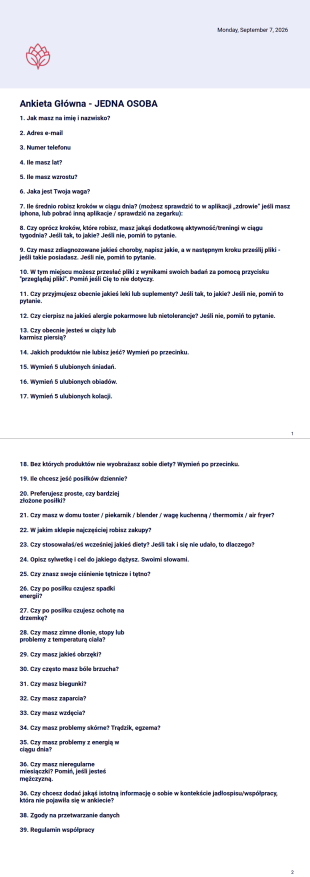
W razie wypadku, przekazaniem medykom historii medycznej może być dla pacjenta problematyczne. Szablon PDF akt medycznych pacjenta ułatwia lekarzom przechowywanie i porządkowanie historii medycznej pacjentów, pomagając im zapewnić lepszą opiekę i leczenie.Korzystając z tego szablonu PDF historii medycznej, możesz zebrać dane pacjentów, takie jak dane osobiste, informacje o kontakcie awaryjnym, ogólną historię medyczną i regularnie przyjmowane leki. Możesz również pozyskać informacje dotyczące ubezpieczenia. Nie musisz martwić się o bezpieczeństwo danych pacjentów - aktywuj zgodność z HIPAA, dostępną dla posiadaczy pakietów Srebro i Złoto, by przechowywać dane na specjalnie zabezpieczonym serwerze.
About Medical History Templates
Historia medyczna pacjenta to bardzo ważny element procesu pracy każdego lekarza - bez niej, niemal niemożliwe jest dobranie odpowiedniej terapii. Historia medyczna może obejmować szczegóły dotyczące przebytych chorób, chorób w rodzinie, poprzednich diagnoz, terapii, alergii i przyjmowanych leków. To nie wszystko, co potrzebne do zapewnienia pacjentowi doskonałej opieki, jednak szczegółowa historia medyczna pomaga lekarzom dostrzec w zachodzących u pacjenta zmianach pewne schematy.
Większość szpitali polega na papierowych formularzach. Inne korzystają z formularzy online, jeszcze inne - z formularzy PDF. Oto kolekcja szablonów formularzy PDF na dobry początek. Najpewniej chcesz zadać pacjentowi wiele pytań - skorzystanie z szablonu pozwoli Ci dostosować go do Twoich potrzeb, zachowując walory wizualne profesjonalnego projektu.
Why Use Medical History Templates?
- Medical History Templates are essential for maintaining accuracy in patient data collection, as they provide a consistent format that reduces the likelihood of errors. By capturing data in a standardized manner, healthcare providers can ensure that critical information is not overlooked, which is vital for effective patient care and treatment planning.
- The use of these templates significantly speeds up the patient intake process, allowing healthcare professionals to gather comprehensive patient information quickly and efficiently. This rapid data collection is crucial in medical settings where time is often of the essence, such as in emergency care or high-volume clinics.
- By employing professional Medical History Templates, healthcare organizations can present a polished and reliable image to patients. The structured and professional appearance of these templates reinforces patient confidence in the quality of care provided, fostering trust and patient satisfaction.
- Medical History Templates facilitate easy sharing and communication of patient information across different departments and healthcare professionals. This enhanced communication ensures that all parties involved in a patient's care have access to the same accurate and up-to-date information, promoting coordinated and effective treatment strategies.
- These templates support compliance with data management protocols by organizing patient information in a secure and accessible format. The use of digital templates allows for efficient data storage and retrieval, minimizing the risk of lost or misplaced records and ensuring that patient information is always available when needed.
Common Problems Solved by Medical History Templates
- One of the primary challenges in healthcare is the sheer volume of paperwork involved in patient data collection. Medical History Templates streamline this process by digitizing and automating data entry, drastically reducing the time and resources spent on manual paperwork.
- Manual data entry is prone to errors, which can have serious implications for patient care. By utilizing Medical History Templates, healthcare providers can minimize the risk of errors associated with manual data entry, ensuring that all patient information is recorded accurately and consistently.
- Lost or misplaced patient records are a common issue in paper-based systems. Medical History Templates eliminate this problem by providing a digital solution that ensures patient data is stored securely and can be easily retrieved whenever necessary, reducing the risk of lost information.
- The use of templates addresses the problem of inconsistent data collection methods across different departments or facilities. By standardizing the data collection process, these templates ensure that all necessary information is captured uniformly, supporting seamless communication and coordination in patient care.
- Medical History Templates can significantly reduce the administrative burden on healthcare staff, freeing up valuable time and resources that can be redirected towards patient care. By streamlining data collection and management processes, these templates enhance overall operational efficiency within healthcare organizations.
Matching Use Cases to Features
- The drag-and-drop form builder is instrumental in customizing Medical History Templates to fit specific healthcare needs. This feature allows users to easily modify templates by adding or rearranging fields, ensuring that all pertinent patient information is captured comprehensively.
- Conditional logic enhances the functionality of Medical History Templates by allowing healthcare providers to tailor the data collection process based on specific patient responses. This feature ensures that only relevant questions are presented, improving the efficiency and accuracy of data collection.
- Jotform Sign, the electronic signature feature, is crucial for obtaining patient consent and authorization directly within the Medical History Template. This capability ensures that all necessary legal acknowledgments are captured, facilitating compliance and streamlining the patient intake process.
- The PDF Editor enables automated PDF generation, allowing healthcare providers to convert completed forms into professional PDFs instantly. This feature ensures that patient information is documented in a polished and easily shareable format, supporting efficient communication and record-keeping.
- Jotform's Report Builder can be leveraged to generate detailed reports from the data collected through Medical History Templates. This capability supports data analysis and decision-making, allowing healthcare providers to identify trends and insights that can enhance patient care.
- Approval workflows can be integrated into Medical History Templates to streamline the review and approval process of patient information. This feature ensures that all collected data is verified and approved by the relevant parties, maintaining high standards of data integrity and accuracy.
- Jotform Tables offer secure data management, allowing healthcare organizations to store and organize patient information efficiently. This feature supports easy access and analysis of data, facilitating informed decision-making and enhancing patient care outcomes.
How to Create a Medical History Template
- Browse the Template List for a Medical History template or start from a blank Template. This initial step provides a foundation for designing a customized template tailored to specific healthcare needs.
- Customize the design and fields using the Drag-and-Drop Form Builder. This step allows for the addition of specific fields, logos, and design elements that align with the healthcare organization's branding and operational requirements.
- Publish and share via Direct Link, Email, or Website Embed. These sharing options ensure that the Medical History Template is easily accessible to patients and staff, facilitating efficient data collection and management.
Top Use Cases for Medical History Templates
- For Managers: Medical History Templates offer managers a streamlined approach to overseeing patient data collection and management processes. By standardizing data formats and automating entry, managers can ensure that their teams operate efficiently, reducing errors and enhancing the overall quality of patient records. This organized approach also allows managers to easily access and analyze data for reporting and decision-making purposes, ultimately driving operational improvements within the healthcare organization.
- For Teams: Healthcare teams benefit from Medical History Templates by gaining access to a reliable and consistent data collection tool that enhances communication and collaboration. These templates ensure that all team members are working from the same accurate and up-to-date patient information, supporting coordinated care efforts. Additionally, the automated data collection process reduces administrative burdens, allowing team members to focus more on patient care and less on paperwork.
- For Customers: Patients, as customers of healthcare services, experience improved interactions with healthcare providers through the use of Medical History Templates. These templates facilitate a smoother and more efficient patient intake process, reducing wait times and ensuring that all necessary information is collected in one go. This efficient process not only enhances the patient experience but also builds trust, as patients see that their healthcare provider values accuracy and professionalism in handling their personal medical information.
Summarizing Medical History Templates
Medical History Templates provide a comprehensive solution for healthcare organizations seeking to enhance the accuracy and efficiency of patient data collection. By standardizing the format and automating the entry process, these templates reduce errors and administrative burdens, allowing healthcare providers to focus more on delivering quality patient care. Jotform's capabilities, including its intuitive drag-and-drop builder and robust data management features, further empower healthcare professionals to customize and optimize their data collection processes. Ultimately, Medical History Templates support improved patient interactions, efficient operations, and informed decision-making within the healthcare sector.
Te szablony to tylko sugerowane formularze. Jeśli używasz swojego formularza jako kontraktu lub by zbierać dane osobowe lub dane o zdrowiu, lub w innych celach prawnie ograniczonych, sugerujemy zapoznanie się z lokalnym prawem i skonsultowanie się z prawnikiem przed rozpoczęciem korzystania z formularza.
Najczęściej Zadawane Pytania
1) Is it free to create Medical History Templates on Jotform?
Yes, Jotform offers a free plan that allows users to create and use Medical History Templates, with options to upgrade for additional features and storage.
Jak napisać biznesplan?
Yes, Jotform implements robust security measures, including SSL encryption and HIPAA compliance (for eligible plans), to ensure that all templates and submitted data are securely managed.
3) Do I need coding knowledge to build a Medical History template?
No, Jotform's drag-and-drop form builder allows users to create Medical History Templates without any coding knowledge, making it accessible to all users regardless of technical expertise.
4) What is Field Mapping in the context of Medical History Templates?
Field Mapping is the process of linking individual form fields on the template to specific data entries, ensuring that collected information is accurately positioned on the final PDF document.
Jakie błędy pojawiają się w biznesplanach najczęściej?
Yes, Medical History Templates can be accessed and filled out on mobile devices through Jotform Mobile Forms, supporting data collection in various settings.
6) What is Autoresponder PDF Attachment?
Autoresponder PDF Attachment is a feature that automatically sends a PDF copy of the submitted Medical History Template to the form submitter via email, enhancing communication and record-keeping.
7) How does Password Protection enhance template security?
Password Protection adds an additional layer of security by requiring a password to open or view the PDF document generated from a Medical History Template, safeguarding sensitive patient information.