
Top WooCommerce AI chatbots
WooCommerce runs on WordPress, the platform that powers much of the internet. Together, they’ve helped store owners launch and manage online businesses without needing enterprise-level resources.
However, even with this flexibility, common hurdles persist: abandoned carts, unanswered product questions, rising support costs, and shoppers who expect help at any hour of the day. A basic live chat or static FAQ page no longer suffices.
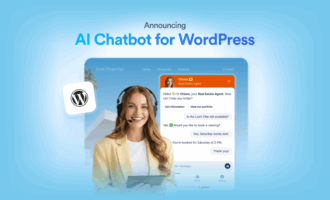
A WooCommerce chatbot plug-in can address these issues by recommending products, guiding checkout, and recovering lost sales. One of the newer, promising entrants in this space is the AI Chatbot by Jotform. Since the no-code plug-in crawls your site automatically, it stays current with product updates, FAQs, and content without manual training.
In this article, we discuss the Jotform AI Agent, along with several other contenders, in detail to help you select the best chatbot for WooCommerce. Plus, we share tips on choosing the right chatbot for your requirements.
What makes a great WooCommerce chatbot?
A WooCommerce chatbot plug-in can change the way customers interact with your store, but not every option delivers the same value. When deciding on the best chatbot for WooCommerce, we looked at the following features. These chatbot attributes help you serve your customers today and scale with your growth tomorrow.
Seamless installation and WordPress compatibility
Your store already depends on themes and plug-ins. A strong WordPress chatbot solution should install with minimal setup and integrate smoothly into existing workflows.
Compatibility with common WooCommerce extensions further prevents infrastructure conflicts. It also ensures that your site’s functionality and speed aren’t impacted negatively.
Live chat with human takeover
AI is powerful, but there are moments when human contact makes the difference. The best live chat for WordPress blends automated responses with seamless staff handoff. This way, customers never feel trapped in a loop of unhelpful replies.
Some businesses, especially resellers, may need to combine live chat with additional tools. Customers buying resold products typically have more queries, and WordPress plug-ins for resellers can streamline communication and customer management.
Customization, branding, and multilingual support
Shoppers should feel like the assistant belongs to your store, so the widget style, logo placement, and color choices should align with your company’s identity.
Multilingual features are equally important for stores serving global customers. A WooCommerce AI tool with these features will give every visitor a consistent and personalized experience.
Analytics and customer data access
The conversations customers have with your WooCommerce chatbot plug-in can also provide you with valuable insights into their behaviors and interests. Dashboards that show engagement rates, sales recovery, and customer sentiment help store owners make better decisions.
It also helps if the chatbot connects with other plug-ins for your business, like CRMs and marketing tools. These integrations enable you to view all customer-centric data in a single location.
Real-time product catalog integration
A chatbot that understands your catalog is far more useful than one that gives generic answers. Real-time product sync gives the chatbot accurate information on inventory, pricing, and availability. This feature makes a WooCommerce chatbot a genuine sales assistant instead of just a support tool.
AI-powered natural language understanding
The strength of any WooCommerce AI assistant lies in its ability to converse fluently. Natural language processing allows the chatbot to understand context and product-specific queries, creating smoother interactions.
Multichannel support
Customers don’t always shop directly at your store or go to your website to get information. They reach out on Messenger, WhatsApp, and other platforms.
A versatile WooCommerce chatbot plug-in extends its presence across these channels. No matter where conversations start, they remain connected to your store.
Customizable widget design
Since consistent design improves brand recall, the best chatbot for WooCommerce would allow you to customize widget design. If the widget aligns with your brand’s identity, it will appear more trustworthy. Plus, style alignment helps maintain continuity with the rest of your website’s design.
Pricing and value
Cost is often the main factor businesses consider when choosing a chatbot. Some businesses benefit from a free plan with limits on conversations, while larger stores may require premium tiers with advanced features.
Value comes from how well a chatbot’s features generate new sales and shorten support times. For example, a higher-priced plan that helps recover even a few extra checkouts per week may pay for itself many times over. When comparing plans, it’s less about the dollar amount and more about how each tool supports customer satisfaction and long-term scalability.
Best 6 chatbots for WooCommerce
| Tool | Best for | Pricing |
|---|---|---|
 Jotform AI Chatbot for WordPress |
No-code AI chatbot integration |
Free |
 Amio |
AI-driven customer support with a scalable knowledge base |
Starter: $150 per month AI Expert: $350 per month AI Scale: Starts at $2,950 per month |
 Tidio |
Small businesses seeking affordable options |
Starter: $29 per month Growth: $59 per month Plus: $749 per month Custom pricing is available for Premium plan |
 WoowBot Pro |
OpenAI and Dialogflow support |
Starter: $49 per year Professional: $99 per year Master: $189 per year |
 Robofy |
Businesses seeking a GPT-powered chatbot |
Basic: $12 per month Standard: $29 per month Professional: $79 per month Enterprise: $299 per month |
 WooCommerce Chatbot by Webkul |
Predefined answers and rule-based responses |
$599 for one-time purchase |
1. Jotform AI Chatbot for WordPress
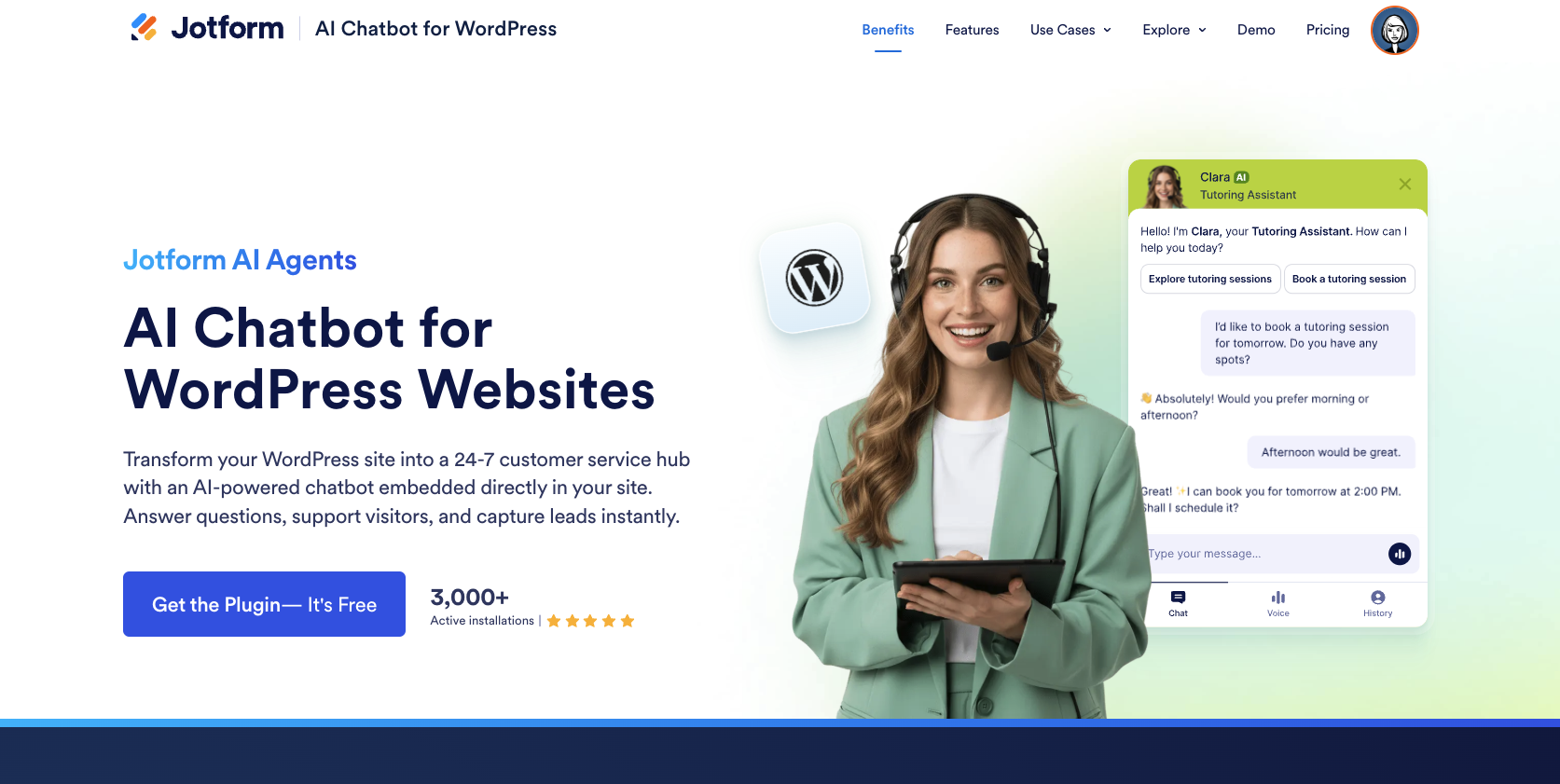
The Jotform AI Chatbot for WordPress, a no-code WooCommerce AI plug-in, feels less like a scripted chatbot and more like a knowledgeable assistant. It crawls your site automatically to stay updated with the latest information, so its answers are always accurate.
For store owners, it supports cart recovery, product Q&A, and order tracking and integrates forms that guide shoppers toward conversions.
Pros
- Strong Jotform WooCommerce integration with features like order tracking, abandoned cart recovery, and product recommendations
- Built-in human handoff, so staff can join any conversation
- Conversational Jotform form integration, which increases lead capture and checkout success
- Multilingual support and customizable widget design, for consistent store branding
Cons
- Free tier possibly restrictive for stores with high traffic or complex needs
- Integration setup required for advanced workflows
2. Amio
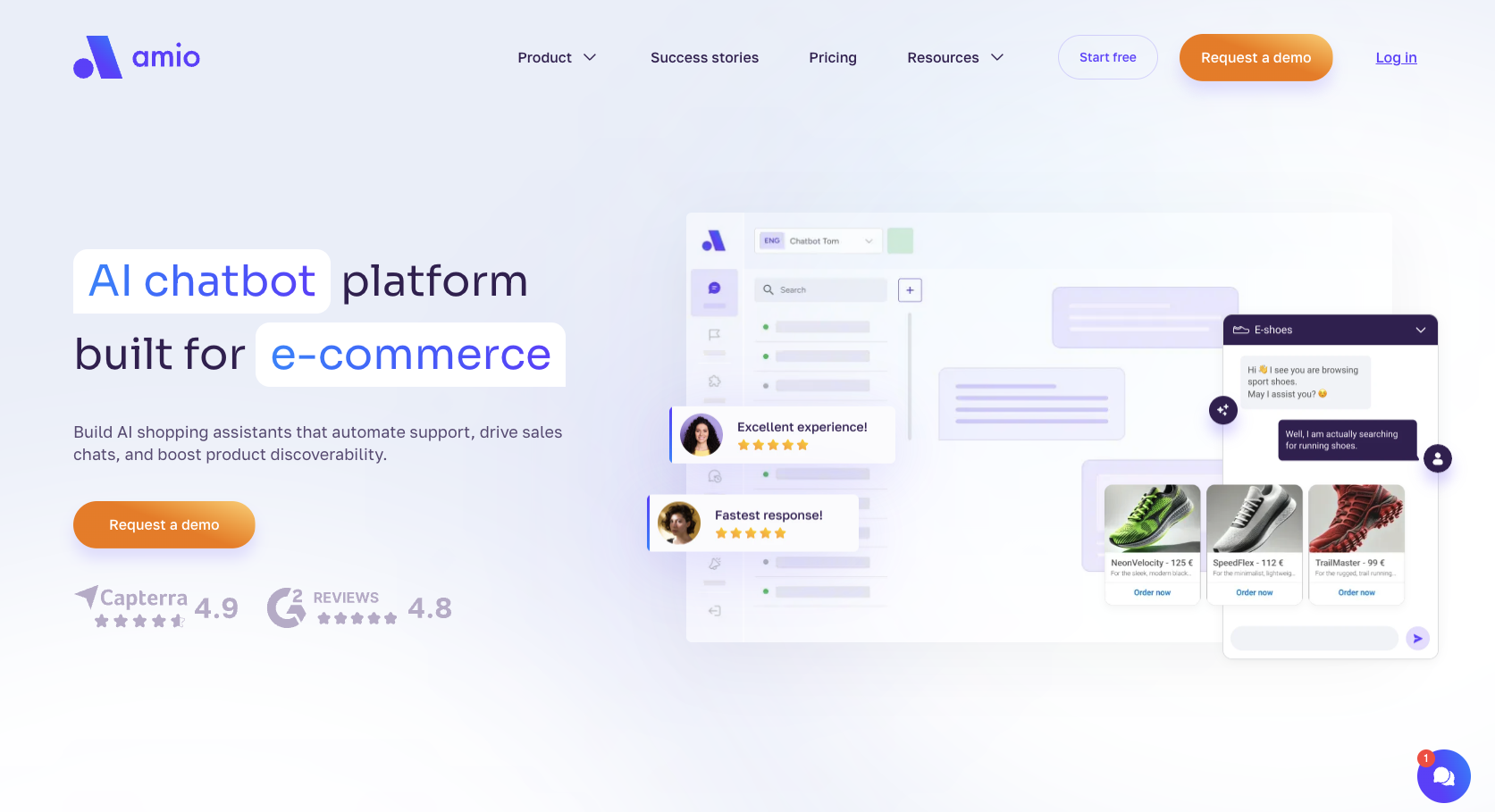
Amio is made for WooCommerce and broader e-commerce applications and gives store owners a chatbot powered by the latest GPT model (GPT-4o). It combines predefined responses with a custom AI knowledge base that draws from PDFs, text, and scraped site content. Other notable features include product search, autorefresh, and ready-to-use templates for e-commerce and customer support.
Pros
- Built-in GPT-4o integration, to ensure accurate responses
- Multichannel reach, covering live chat, email, Messenger, WhatsApp, and more
- Scalable design that handles higher chat volumes as a store grows
Cons
- Limited data export options
- Surface-level analytics
3. Tidio
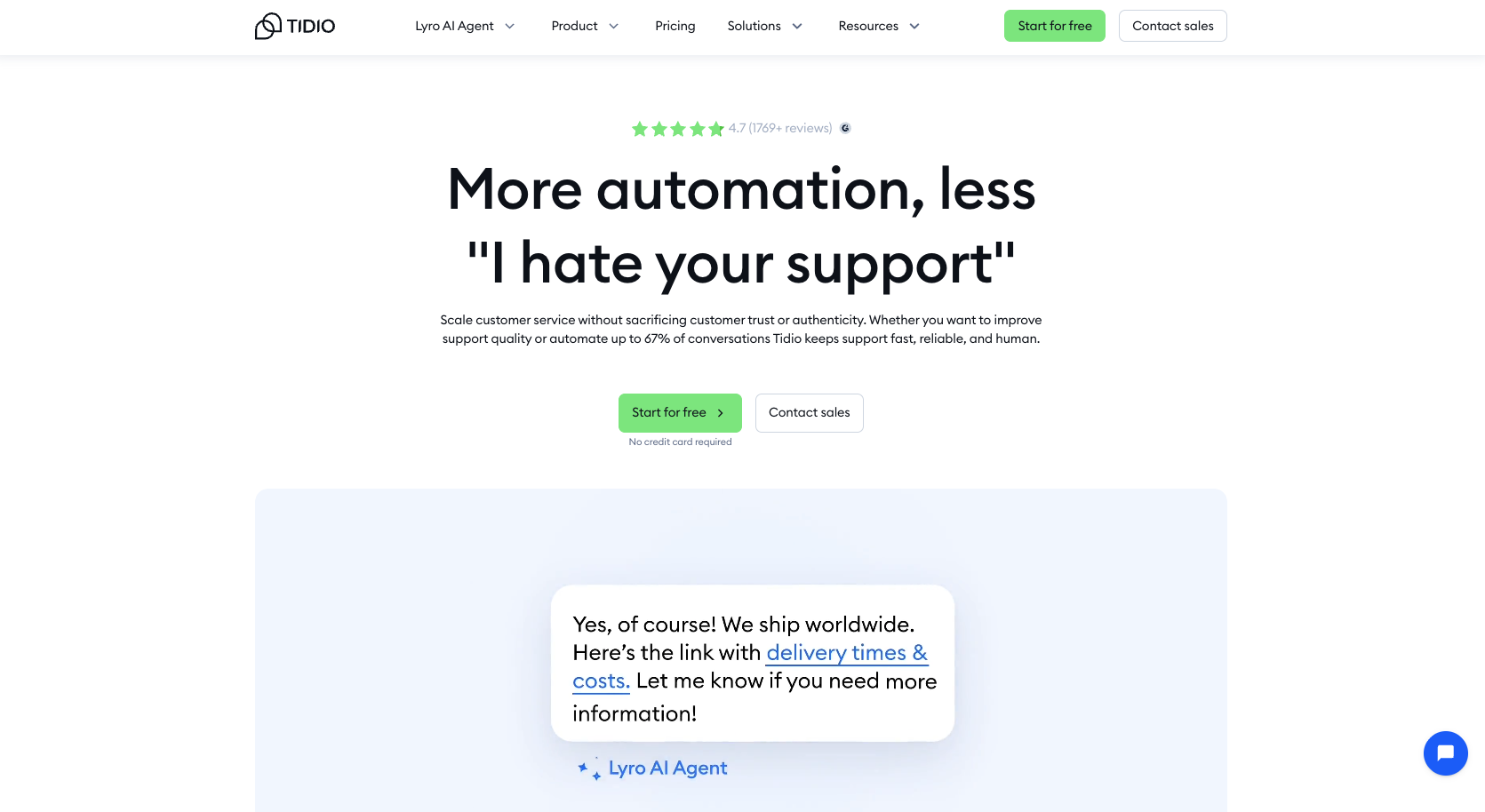
Tidio, a popular customer support platform, combines live chat, email, and social media into one dashboard. It includes AI chatbot functionality, which makes it a strong option for WooCommerce stores that want to unify communication channels while offering quick, automated responses.
Pros
- Smooth handover from chatbot to live agents
- Enhanced analytics for tracking customer interactions
- Attractive, customizable chat design
Cons
- Limits AI features on lower-tier plans
- Lacks direct product search or catalog integration for WooCommerce
4. WoowBot Pro
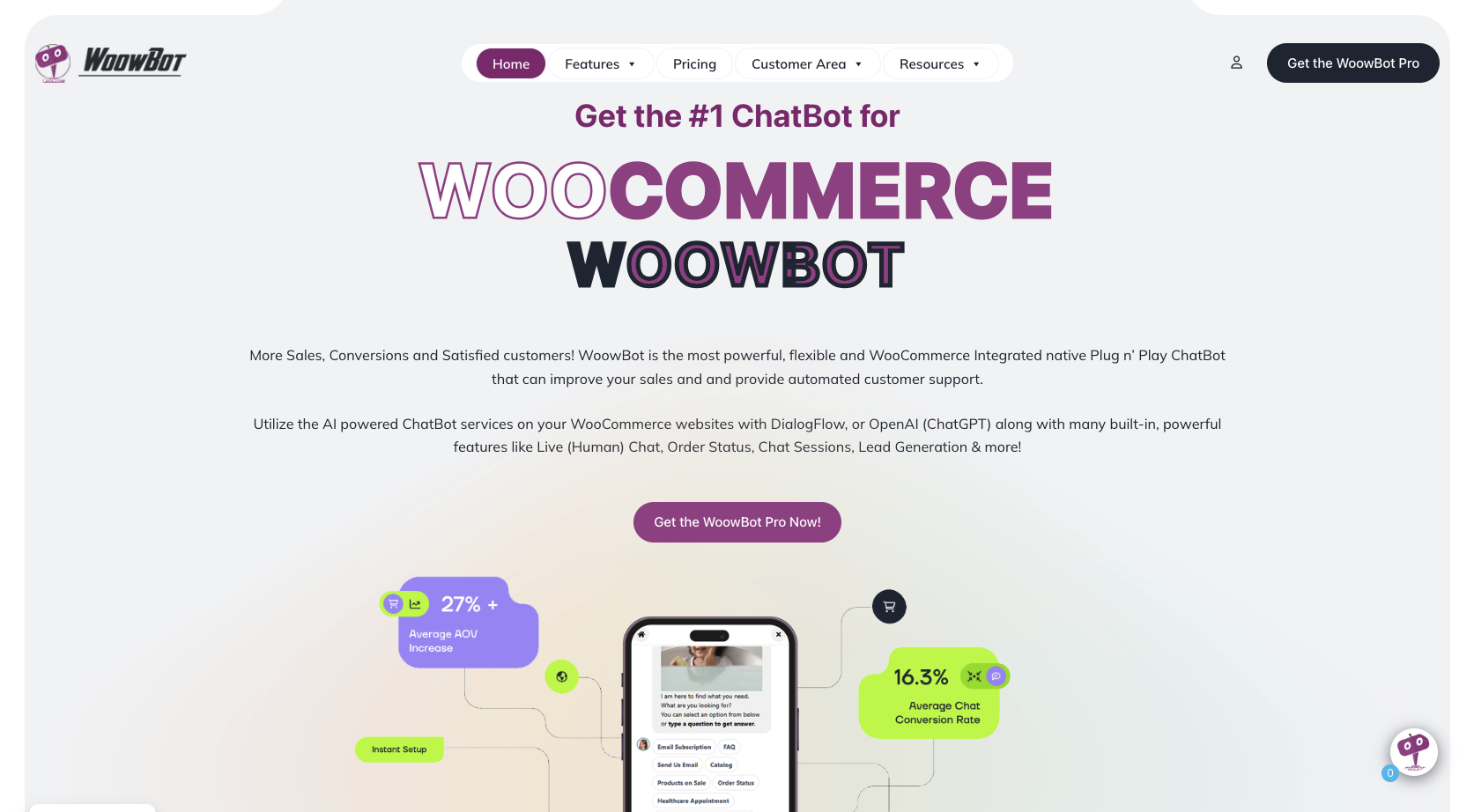
WoowBot Pro is a WooCommerce chatbot plug-in built with direct integration. It supports both OpenAI and Dialogflow, making it flexible for different AI engines. Its standout capability is showing product thumbnails within chat, creating an engaging shopping journey.
Pros
- Multiple-AI-engine integration
- Strong product search functionality directly inside the chat
- Visual engagement via product thumbnail display
Cons
- Lacks basic chatbot tools like predefined responses or ready-made templates
- Contains no live agent handoff option
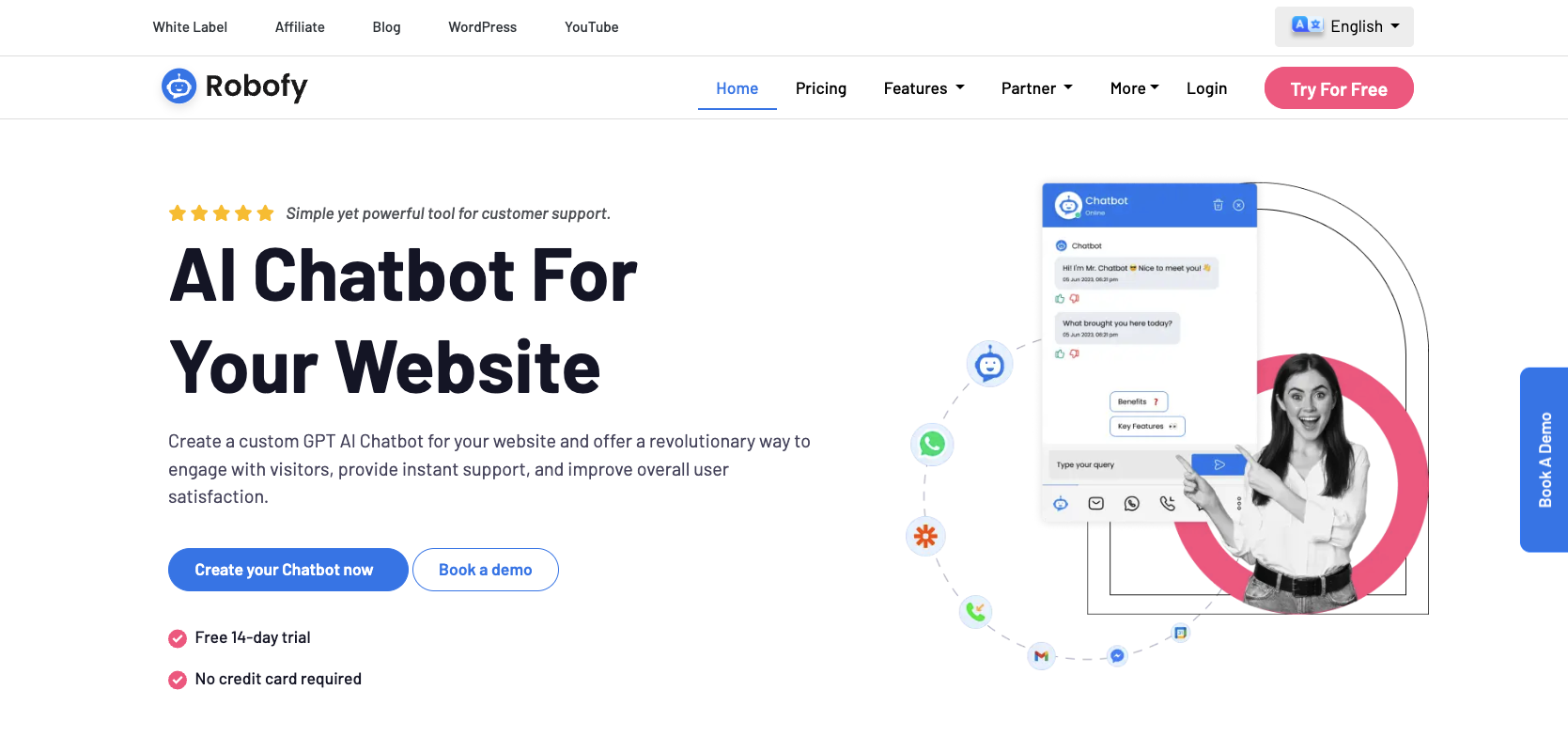
5. Robofy
Robofy is a GPT-powered chatbot that builds its knowledge base through website scraping. It supports multiple channels like live chat, Messenger, and WhatsApp, while offering a shared inbox where live agents can step in when needed. With WooCommerce integration and automatic data refresh, it keeps responses current.
Pros
- Team inbox for seamless handover to live agents
- Multichannel deployment
- Update data using autorefresh
Cons
- Limited customization for webchat branding
- No direct product search or catalog feed support
6. WooCommerce Chatbot by Webkul
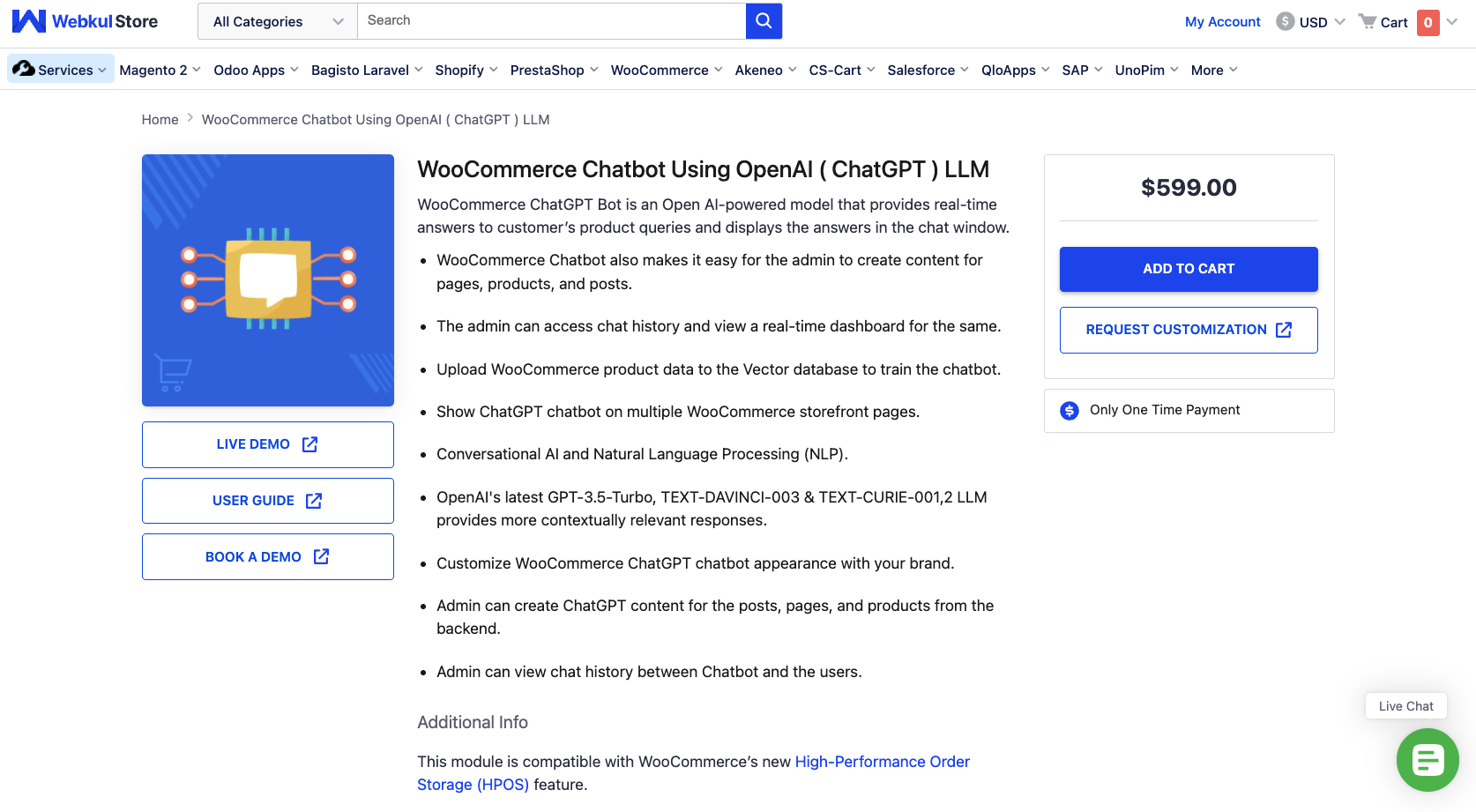
Developed by Webkul, this plug-in integrates a GPT-based chatbot into WooCommerce. It blends predefined responses with AI-generated answers to give store owners some control while offering natural interactions. Plus, it allows product information to be uploaded into the knowledge base.
Pros
- Predefined answers for rule-based responses
- Upload option to enter products directly into the AI knowledge base
- Natural language processing–driven responses combined with GPT capability
Cons
- Relies on an older GPT model (3.5 Turbo)
- Requires technical expertise to configure properly
How to choose the best WooCommerce chatbot for you
When you’re looking for the best chatbot for WooCommerce, consider how well it fits into your store’s structure and growth plans. Start by confirming that the chatbot offers WooCommerce integration with real-time syncing for product, inventory, and order details. It should also integrate with WooCommerce invoice plug-ins if you plan to automate billing.
The next factor is multichannel communication. Customers don’t just shop through your website; they ask questions on Messenger and WhatsApp, and even through email. A chatbot that supports multiple platforms keeps you accessible wherever conversations begin. This feature is even more important if you’re planning to use WooCommerce alternatives, since the same tool can adapt to all the ecosystems you’re a part of.
Because a generic widget can look out of place on your site, you need a tool that supports customization. Editable conversation flows and branding options allow the chatbot to reflect your store’s tone.
For complex queries, human handoff is a must. AI excels at routine requests, but escalation to live support prevents customer frustration. Tools that offer this transition, like the live chat feature in Jotform’s AI Chatbot, make it easier for teams to step in when necessary.
As for pricing, view it in relation to scalability. A free plan may suit a small shop with limited inquiries, but as volume grows, advanced tiers with analytics, product sync, and broader integrations justify the investment. The right choice balances budget against the potential return, such as reduced support overhead.
Ease of use and quality support should also be considerations in the decision-making process. Some plug-ins take only minutes to set up, while others demand more technical expertise. Strong vendor support helps smooth onboarding and provides ongoing assistance.
More importantly, match the tool to your actual needs. For example, if you’re interested in lead generation, you’ll want form integrations. If the focus is customer service, features like order tracking and help-desk-style dashboards take precedence. The right chatbot will facilitate your current workflows and align with where your store is headed.
Transform your WooCommerce store with AI support
Chatbots are now an integral part of WooCommerce stores, as they provide 24-7 support and streamline the buying journey. What’s considered the best chatbot really depends on your goals, whether that’s customer support, increased sales, automated FAQs, or integrations with CRM tools.
The Jotform AI Chatbot for WordPress stands out by offering an AI-native, no-code, and WooCommerce-ready solution that adapts as your store grows. If you’re ready to explore setup, check out this guide on how to use a Jotform AI chatbot on WordPress.
Start testing, track your conversions and satisfaction scores, and see firsthand how much impact the right chatbot can have.
This article is for WooCommerce store owners, WordPress site managers, eCommerce marketers, and anyone looking to improve customer support, reduce cart abandonment, and enhance user experience with AI-powered chatbots.






















Send Comment:
2 Comments:
December 8, 2025
I find that a custom chatbot for website can turn casual visitors into loyal customers. By guiding users through products, services, or support options, it creates a smooth, engaging journey. When the chatbot’s tone matches the brand, it enhances both experience and trust
December 8, 2025
Wow, this is a really helpful roundup of WooCommerce AI chatbots! I’ve been experimenting with a few chatbots on my own store, and I totally agree that the right AI assistant can transform customer experience.
For me, the key features are real-time product catalog integration and natural language understanding — it’s amazing when a chatbot actually feels like it “gets” the customer instead of giving robotic responses. I’ve tried Tidio and WoowBot Pro, and while both are solid, the no-code approach of Jotform AI is super appealing because it keeps up with updates automatically.
I’m curious — for others here, which WooCommerce AI chatbot do you find the best for boosting conversions without needing constant manual updates? Are there any hidden gems beyond the big six that you’ve tried recently?