
Students benefit from learning materials tailored to their needs. However, teachers don’t always have time to build customized educational programs from scratch.
ChatGPT education apps streamline learning by automating lesson planning and personalizing content. These AI-powered tools offer 24-7 tutoring and homework help for students. They can also help teachers grade assignments, build rubrics, and design quizzes.
Let’s take a closer look at how conversational AI supports education and which ChatGPT education tools might work best for you.

Top 5 ChatGPT education & learning apps
While all ChatGPT education apps facilitate learning, some are better suited for specific needs. Whether you want to build new skills quickly or tackle university-level coursework, the following apps support a range of learning styles and goals.
Build faster with Jotform AIDescribe what you need, and let Jotform AI build it for you instantly.
Get Started Now
Coursera
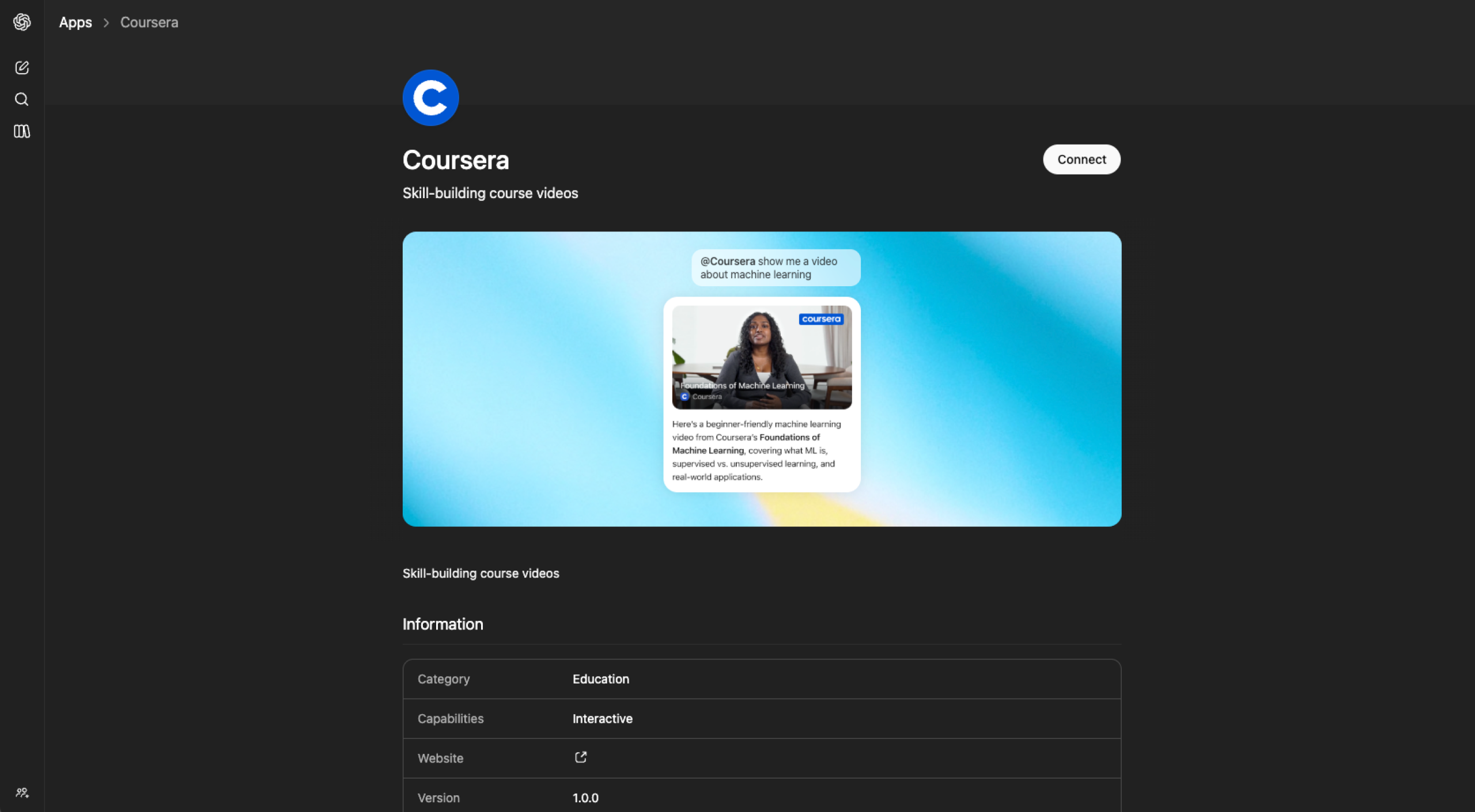
Coursera provides certifications, university-level courses, and degrees from companies and schools such as Google and Yale. Students can stream lectures and watch educational videos on their mobile devices. With ChatGPT, the platform functions as an AI coach to summarize lectures, answer questions, and suggest resources to help students meet their goals.
Best for: Students and professionals who benefit from structured, module-based learning, as well as self-paced and lifelong learners who want professional certifications or accredited degrees
Developer: Built by Stanford University computer science professors Andrew Ng and Daphne Koller, now owned and operated by Coursera Inc.
- Key features:
- Thousands of online courses across technology, business, health, and more
- Certifications and degrees from top universities and companies
- Self-paced learning options to make education more flexible
- AI-powered recommendations to help students find relevant courses
- Pros:
- High-quality courses from reputable institutions
- Flexible learning schedules
- Cons:
- Higher cost for certain degrees and certificates
- Limited real-time interaction with instructors
- Potential data privacy concerns when sharing information with chatbots
Quizlet
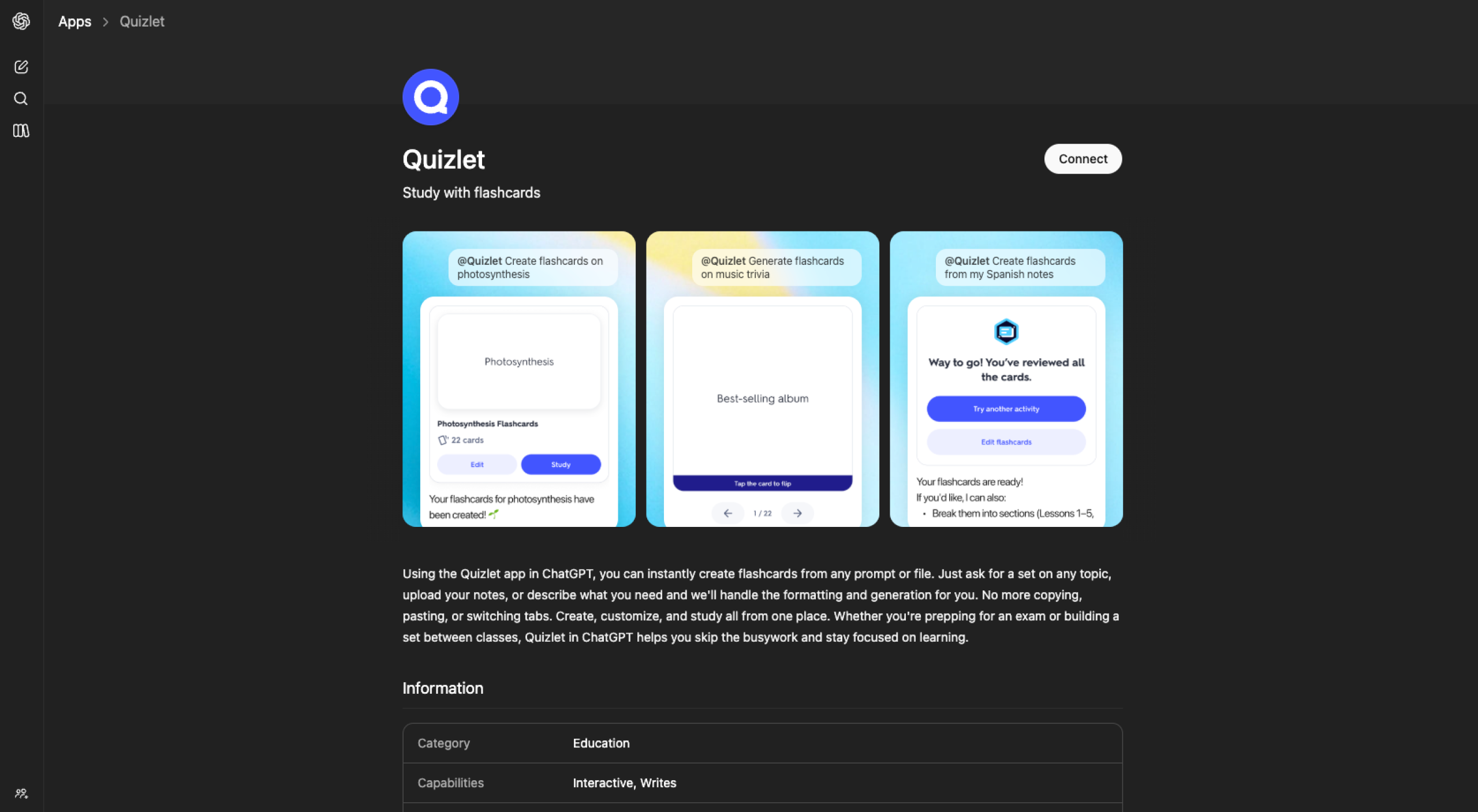
Quizlet turns user prompts or notes into study tools such as digital flashcards, practice tests, and games. Students can use it to prepare for tests and improve information retention. With ChatGPT, Quizlet includes a personalized AI tutor called Q-Chat that asks deeper questions and encourages critical thinking, such as applying concepts to real-world scenarios. This helps turn passive memorization into interactive learning and highlights knowledge gaps.
Best for: Independent learners preparing for tests, learning new languages, or reviewing complex vocabulary terms
Developer: Founded by Andrew Sutherland in 2005 and now owned and operated by Quizlet, Inc.
- Key features:
- Converts notes into flashcards and other study aids
- Tracks student retention
- Turns flashcard content into songs using the Brain Beats feature to improve retention
- Provides Q-Chat AI for personalized learning that helps students understand concepts, not just memorize information
- Pros:
- Saves time during test prep
- Interactive learning experience
- Promotes critical thinking
- Cons:
- Need to verify AI-generated content to confirm factual accuracy
- Less effective for complex subjects
Ace Quiz Maker
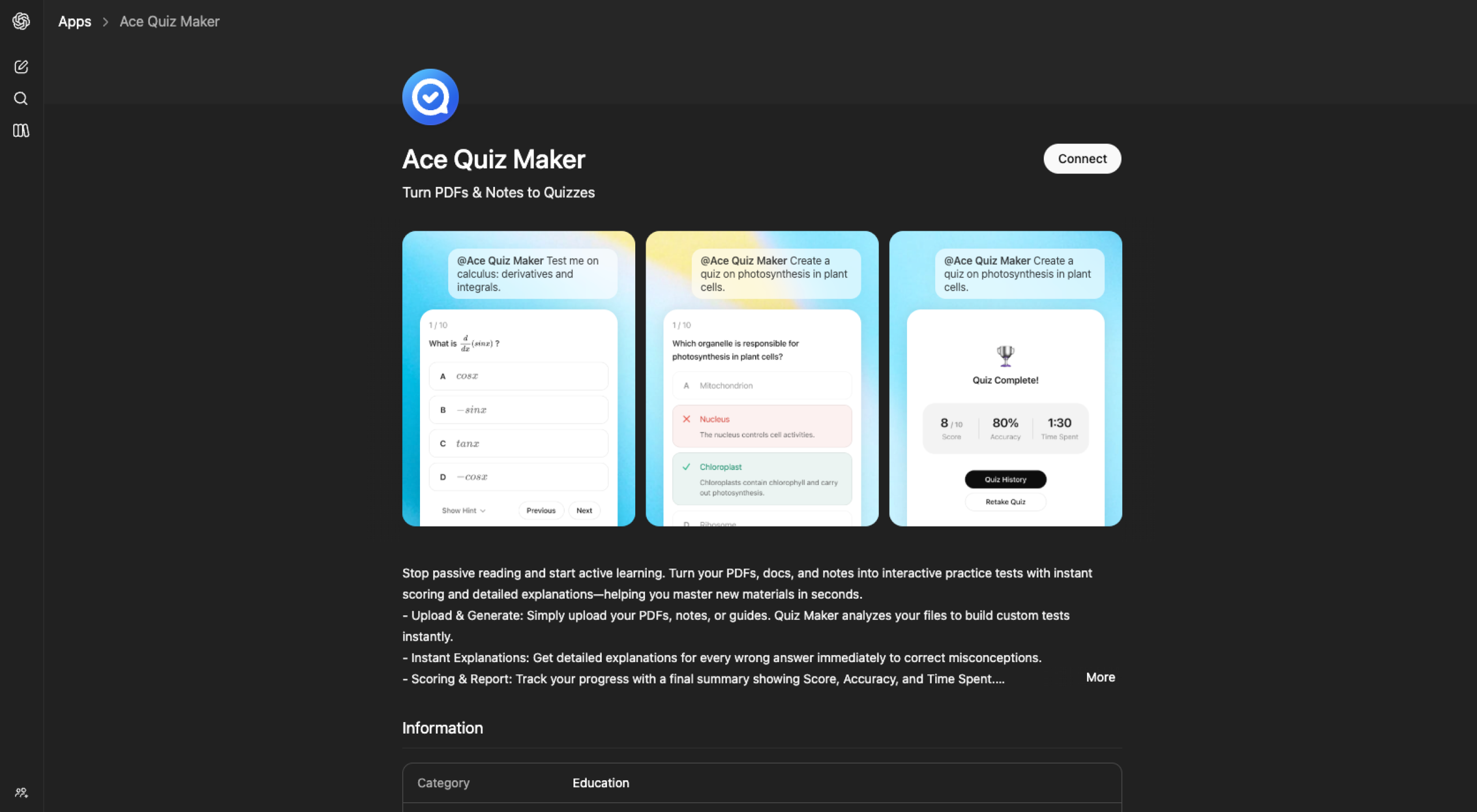
Ace Quiz Maker is a smart study aid that turns lecture notes, PDFs, video transcripts, and Word documents into personalized quizzes. It helps students prepare for tests and master new material while supporting teachers with test creation and grading. ChatGPT explains correct and incorrect answers and generates questions that encourage critical thinking and target specific learning gaps.
Best for: Teachers, trainers, and students who need to build quizzes quickly and tailor content to specific learning needs
Developer: Sider AI
- Key features:
- Processes written notes, PowerPoint presentations, PDFs, and digital text
- Generates true/false, fill-in-the-blank, multiple-choice, and open-ended question quizzes
- Adjusts test difficulty based on proficiency level
- Tracks student performance by identifying knowledge gaps
- Allows users to review or retake quizzes anytime
- Provides explanations for incorrect answers to improve comprehension
- Pros:
- Saves time for students and teachers by quickly generating quizzes
- Personalizes quizzes based on study needs and provides immediate answer feedback
- Cons:
- Generates quizzes that sometimes lack nuance compared with human-created quizzes
- Requires human review for accuracy and potential data bias
Udemy
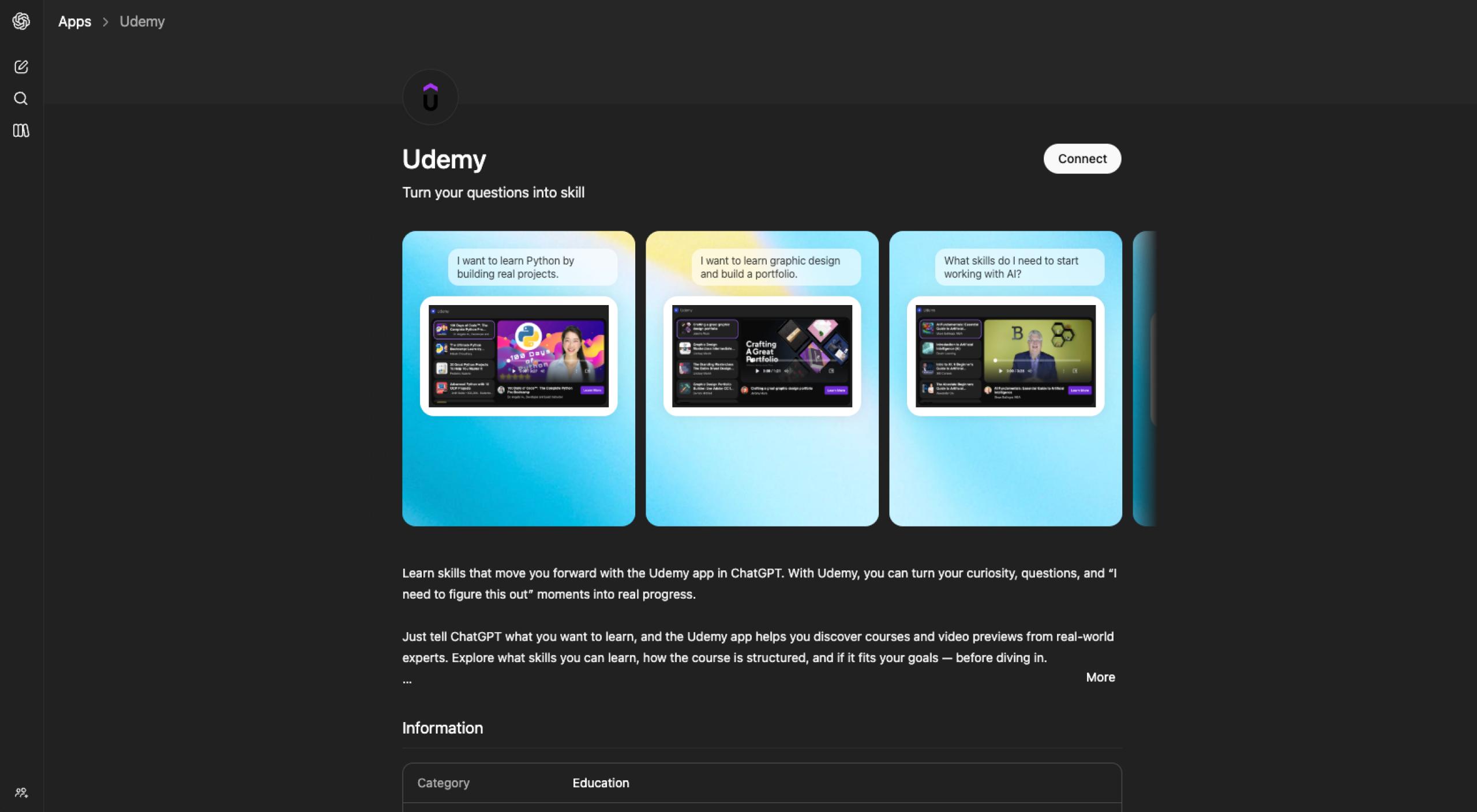
Udemy is a skills acceleration platform that connects learners with over 290,000 courses and 90,000 instructors across topics such as IT, business, and personal development. With ChatGPT integration, students can ask questions about course content in real time and get recommendations for relevant Udemy courses based on their individual needs and goals.
Best for: Self-motivated learners who want to update their technical and business skills; educators and subject-matter experts who want to monetize their expertise by offering courses through Udemy
Developer: Developed by Eren Bali, Gagan Biyani, and Oktay Caglar; acquired by Coursera
- Key features:
- Thousands of courses taught by subject-matter experts
- On-demand access to video lectures, so you can learn at your own pace
- Instructor Q&A features
- Personalized, ChatGPT-powered course recommendations
- ChatGPT integration for watching Udemy courses within the ChatGPT app
- Pros:
- Affordable, on-demand learning content
- Wide range of topics taught by experts
- Cons:
- Inconsistent course quality
- Self-directed learning paths that require combining multiple courses
DataCamp
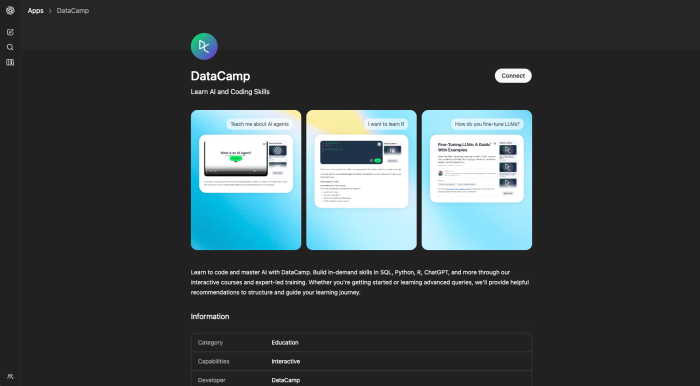
DataCamp provides hands-on, browser-based coding lessons through interactive courses and expert-led training. Learners can build skills and earn certifications in Python, Structured Query Language (SQL), ChatGPT, and more. Users write code directly in the browser and get real-time feedback. ChatGPT acts as an AI assistant that personalizes each student’s learning path by answering technical questions and recommending courses and additional resources to address skill gaps.
Best for: Aspiring data analysts and engineers building coding skills at the beginning or intermediate level; busy professionals who prefer bite-size, daily exercises; university instructors looking to add to their continuing education; managers who want to support team skill development
Developer: DataCamp
- Key features:
- Short video courses that include hands-on coding exercises
- Structured learning paths and curriculums
- Content covering Python, R, SQL, ChatGPT, and more
- Mobile app for on-the-go learning
- 24-7 tutoring support from ChatGPT
- Pros:
- Hands-on coding lessons that let students start practicing and developing skills immediately
- Mobile learning for building and practicing data skills on the go
- Real-time tutoring with ChatGPT
- Cons:
- Limited advanced content
- Fill-in-the-blank coding exercises rather than building projects from scratch
- Limited coverage of real-world data science workflows such as collaborating with others or complex debugging
How to choose the right ChatGPT education app
When choosing the best ChatGPT education app for your needs, start by identifying your specific learning goals.
What grade level(s) are you targeting? Quizlet and Ace Quiz Maker work well for high school students preparing for tests. Coursera is better suited for university-level learners. Meanwhile, Udemy and DataCamp support employees looking for professional development.
Certain apps are also better suited for educators. For instance, Ace Quiz Maker saves tutors and instructors time when creating learning materials. Meanwhile, Udemy gives professionals a place to turn their expertise into valuable online courses.
Consider how each app will integrate with your existing tools. Quizlet and Coursera work well with Google Classroom and learning management systems such as Canvas. If your employees prefer learning on the go, look for mobile-friendly apps. When your tools fit your existing digital ecosystem, transitions tend to be more seamless.
Don’t forget to factor in the cost of using each education app. Some courses and certifications are more expensive than others, and pricing can increase as you add additional AI functions or advanced features.
Finally, consider how much control you need over your instruction vs guided AI assistance. If your learners are self-motivated, AI assistants can help guide them on their learning paths. But you’ll still need to review AI-generated learning materials for factual accuracy and data bias to avoid spreading misinformation.
Bonus section: Introducing Jotform ChatGPT App
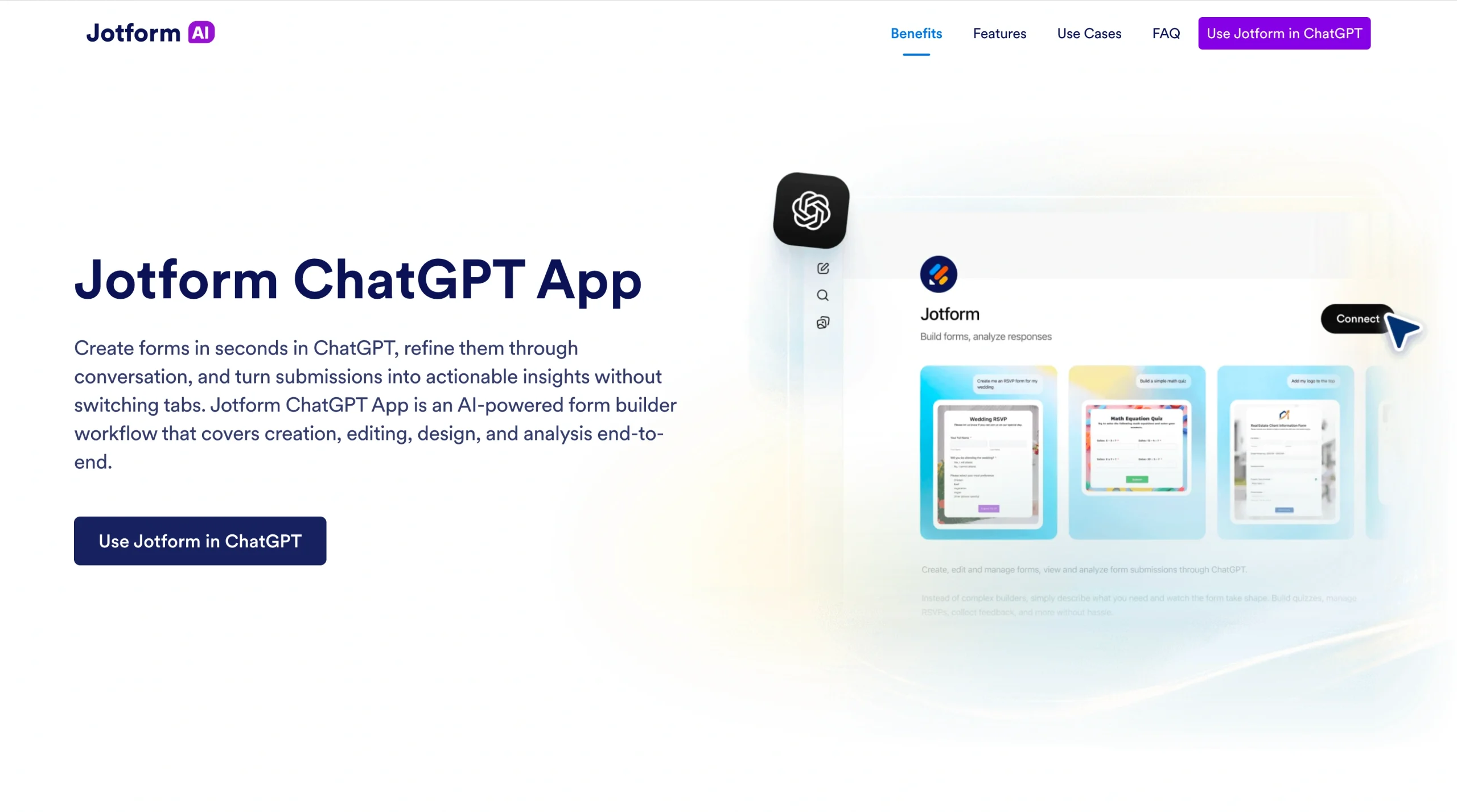
Beyond the five ChatGPT education apps covered here, ChatGPT can also support other apps used for education and learning purposes.
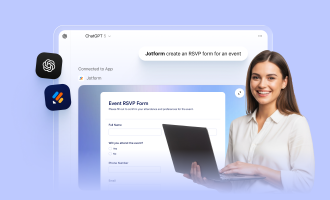
The Jotform ChatGPT App, for instance, is an AI-powered form builder and data management tool designed to improve workflow automation. Users can create, edit, design, and analyze forms simply by describing what they need. Because the Jotform Form Builder integrates directly with ChatGPT, you don’t have to switch tabs. Instead, you can just keep refining your form until it fits your needs.
This is especially useful for educators, who can use the Jotform ChatGPT App to
- Instantly generate quizzes or tests
- Build lesson plans and homework assignments quickly
- Manage workshop registrations, collect student feedback, and track student progress
- Create bilingual forms or quizzes to aid in language learning
- Design personalized assessments for diverse learning needs
By combining Jotform’s no-code Form Builder with ChatGPT, students and teachers can build quizzes, forms, and educational materials more efficiently. This makes the Jotform ChatGPT App a highly versatile and useful tool for creating educational content.
If you want to create engaging quizzes, assessments, and learning materials, customize them to your needs, and streamline the process with AI, you can also try Jotform’s native solution, Jotform AI.
Using ChatGPT in education workflows
ChatGPT education apps support both learners and educators. They make it simple to adapt notes and prompts into quizzes, identify knowledge gaps, and access learning resources on demand. They also provide access to university-level courses, helping students and employees build skills or earn certifications at their own pace.
When integrated into existing learning tools, ChatGPT creates a more interactive experience. Students can complete daily assignments on the go, while teachers can refine lessons via a chat interface. These tools fit naturally into today’s evolving education environment.
See how using apps for education-building can streamline your workflow by signing up for the Jotform ChatGPT App for free.







































































Send Comment: