Finding specific form submissions doesn’t have to be time-consuming. With Jotform AI, you can quickly search through your submissions using simple, natural language prompts, so there’s no need to manually filter or scroll through countless entries.
Instead of digging through your data, you can just describe what you’re looking for, like a name, date, or response—and Jotform AI will help surface the relevant results in seconds. This makes it easier to stay organized, save time, and focus on what matters most, especially when you’re working with large volumes of submissions.
Note
Jotform AI works best with clear, specific prompts. The more details you provide, the more accurate your results will be.
Searching Submissions with Jotform AI
Searching submissions with Jotform AI makes it easy to find exactly what you need in seconds. Get started like this:
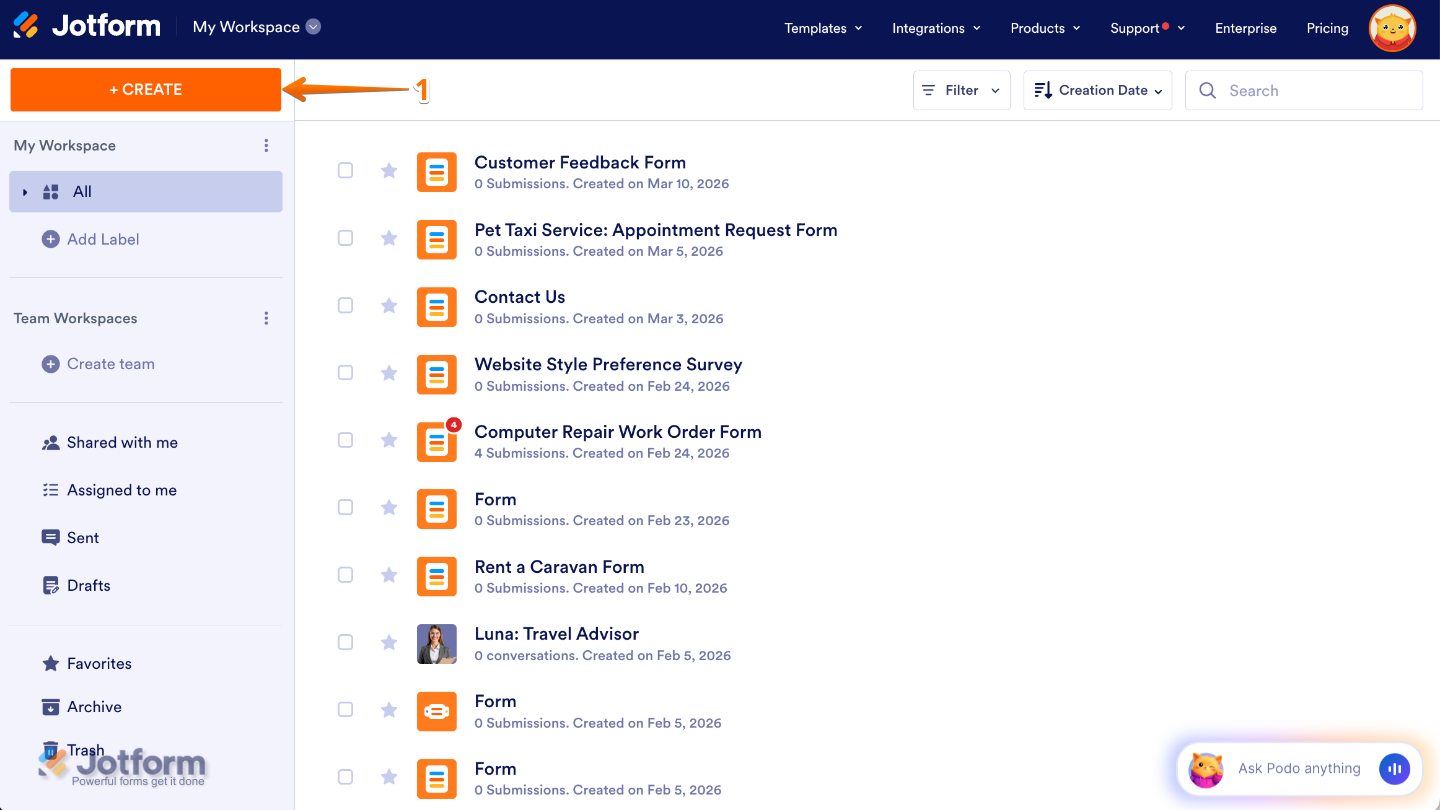
- In your Workspace, click on Create on the top-left side of the page.
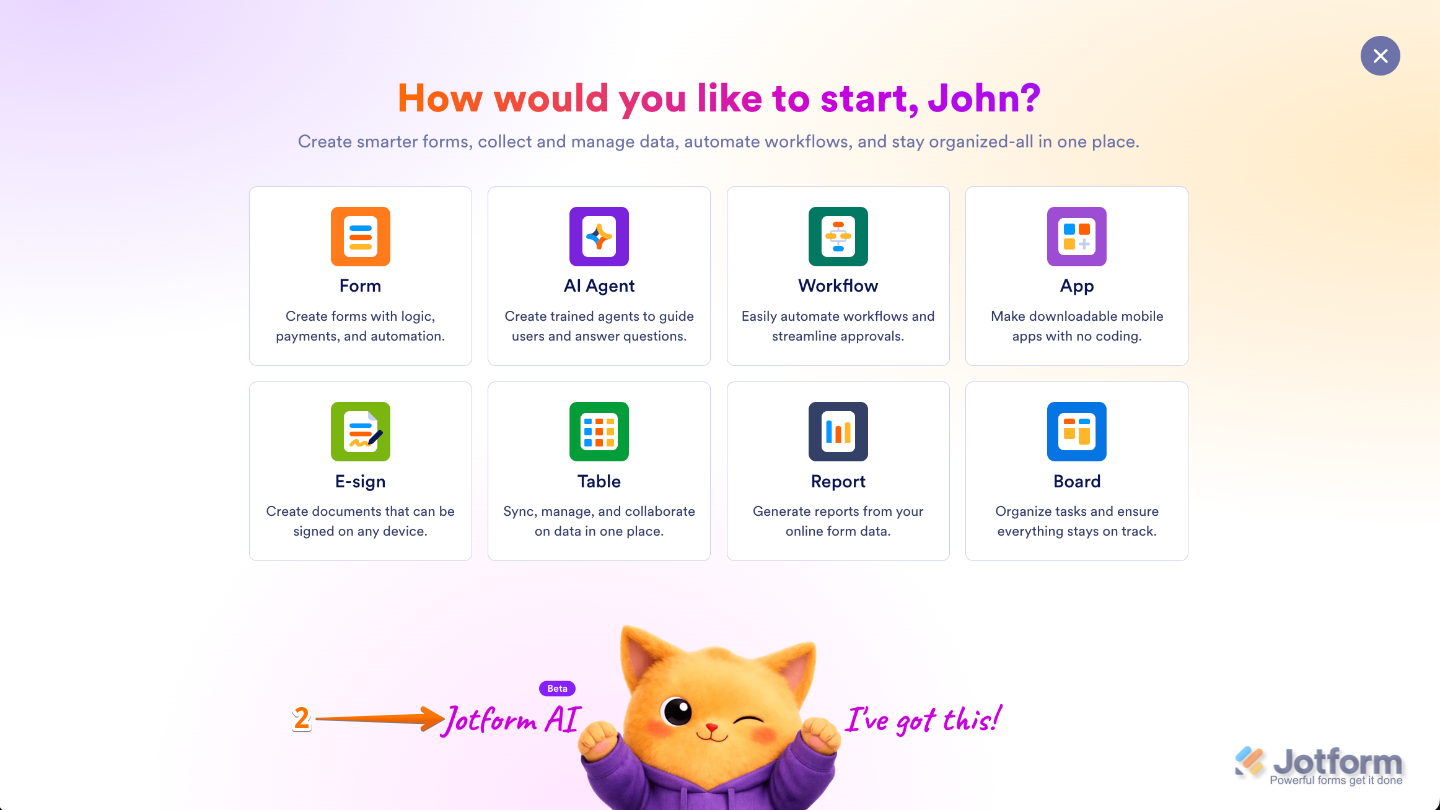
- Then, at the bottom of the window that opens up, click on Jotform AI.
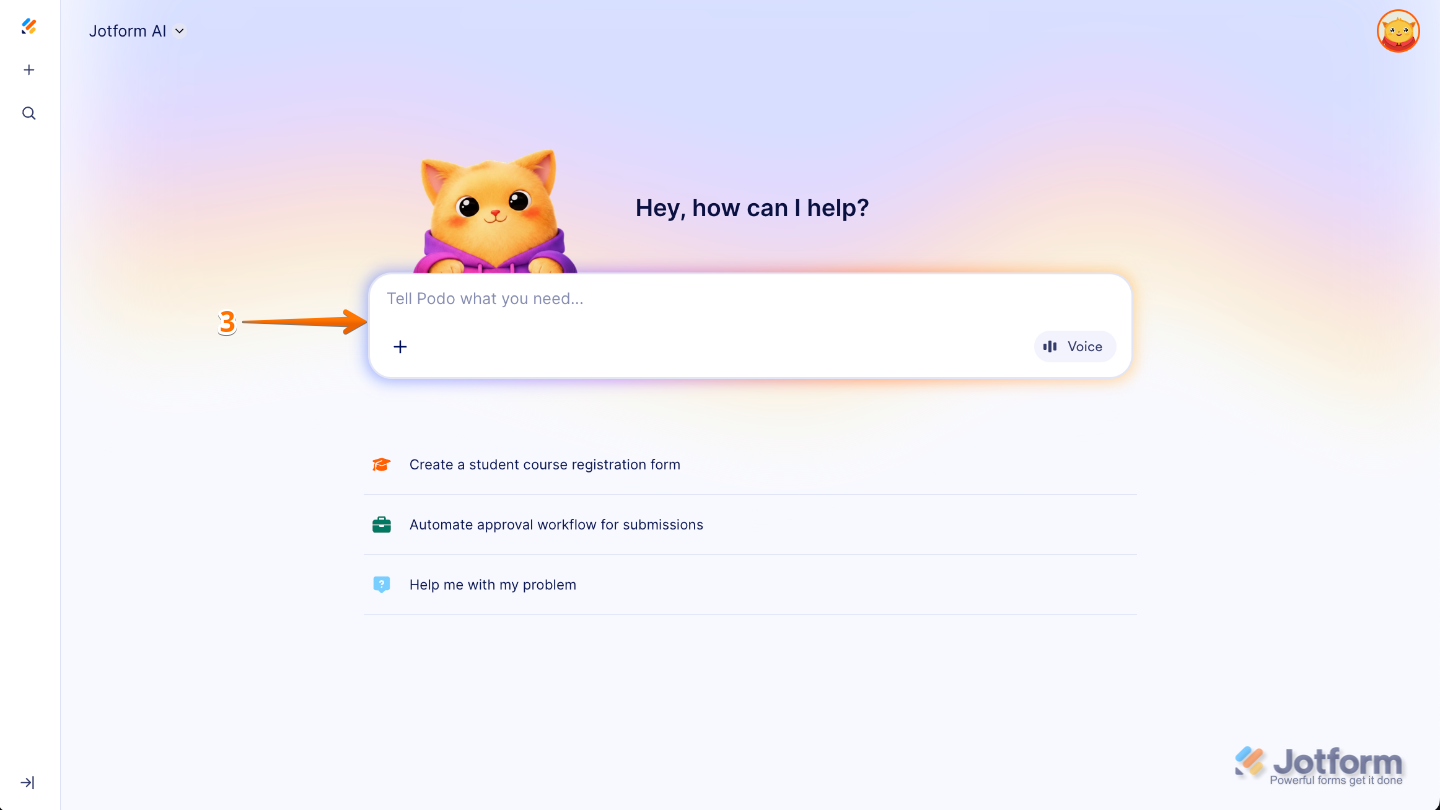
- Now, in the prompt box at the center of the page, enter the submission details you’d like to search, along with the name of the form in your account where the submission was made.
Here are some example prompts you can try to search for your form submissions:
- Show me the submission from [Name] for the form titled [Form Title].
- Find the response submitted by [Name] and summarize their answers.
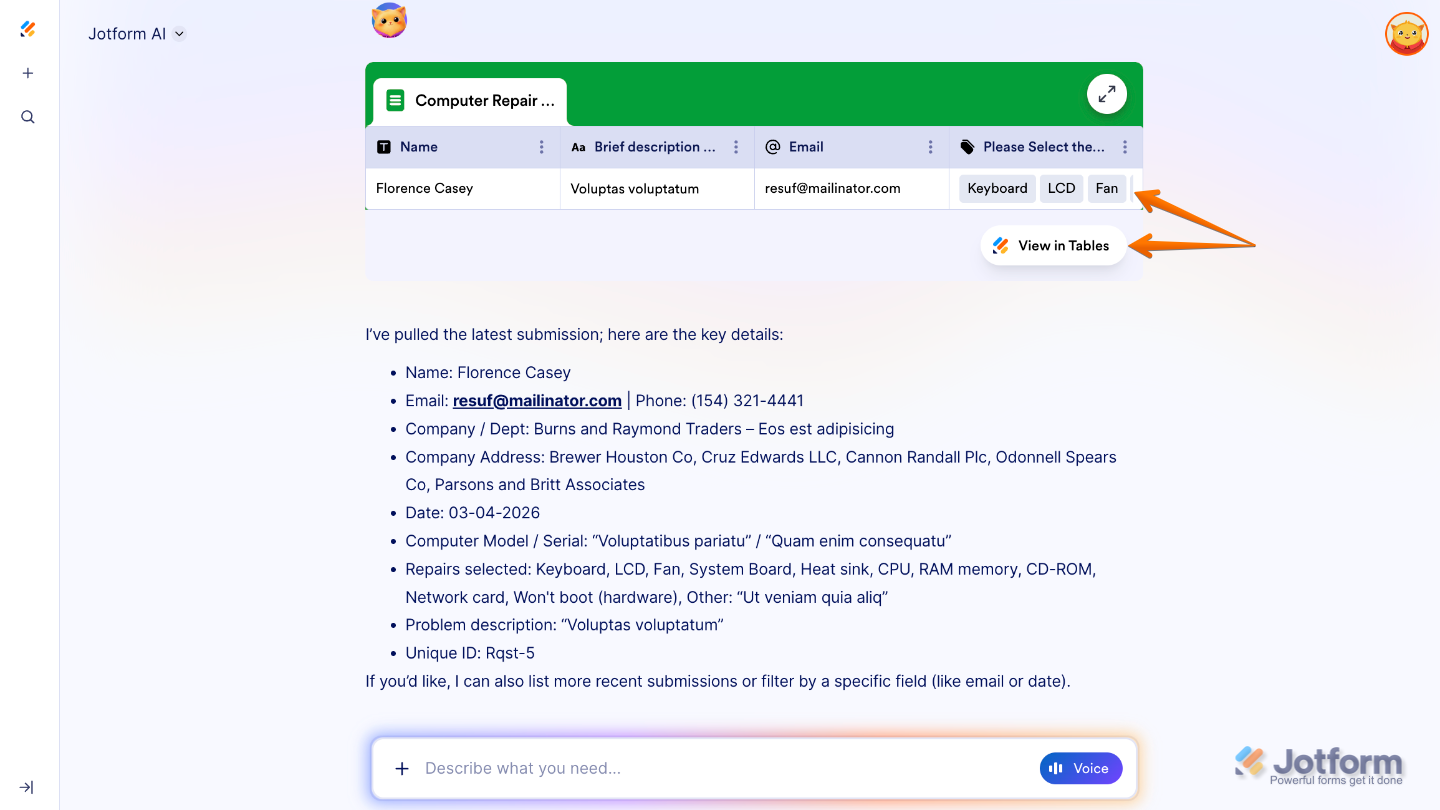
- Can you pull up the latest submission for the form titled [Form Title]?
- Show me submissions from today for the form titled [Form Title].
- Check if [Name] has already submitted a response for the form titled [Form Title].
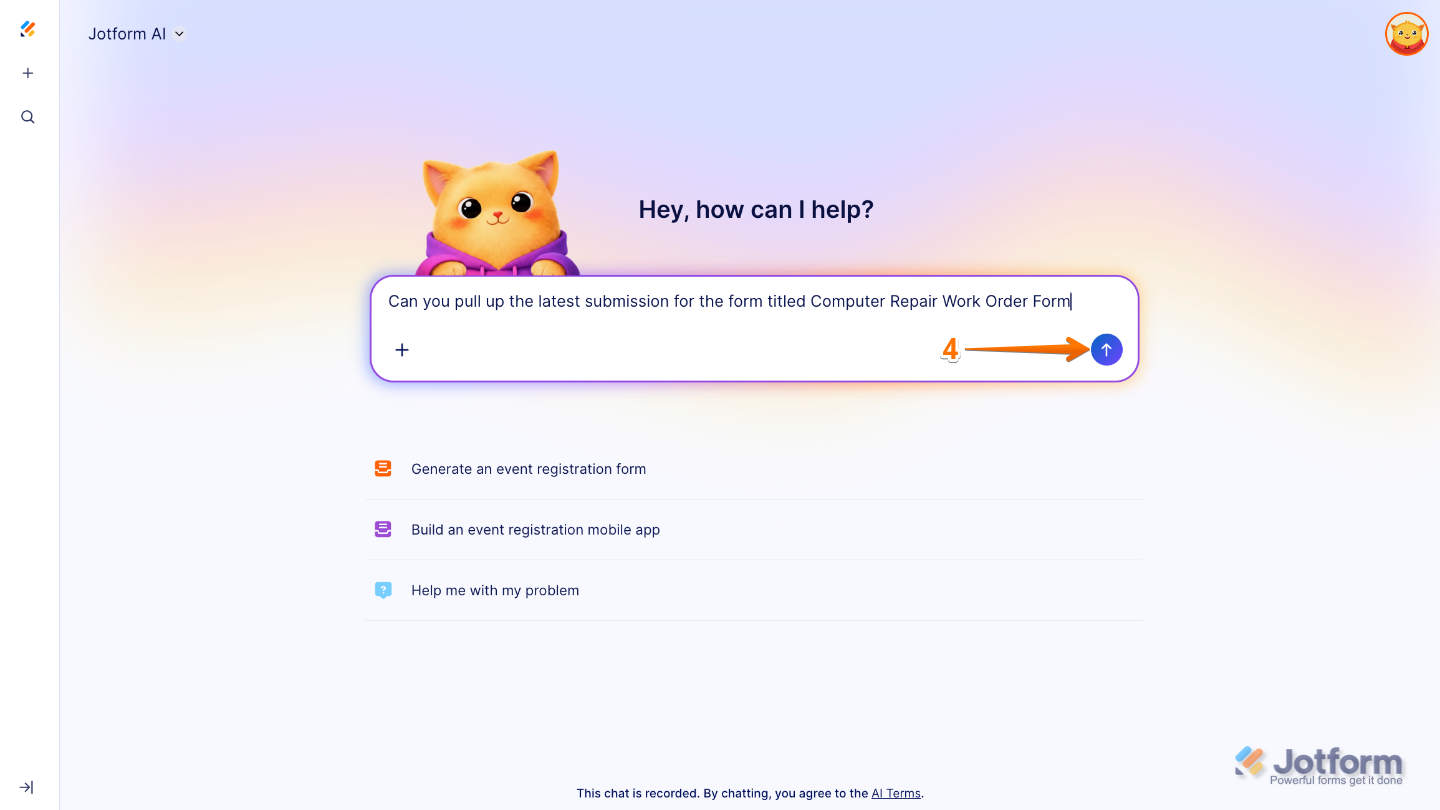
- Once you’re done, press the Enter key or click on the Upward Arrow button on the right side of the prompt box.
That’s it. You’ll see the results right away, along with a clear view of the matching submissions so you can quickly review them. If you’d like to explore further, you can click on View in Table to open your submissions in a table view in a new tab, where you can sort, filter, and manage them more easily.
Pro Tips
- Be as specific as possible by including dates, names, or keywords to get more accurate results.
- Use natural language when searching, just like how you would normally speak or type.
- If needed, refine your prompts to quickly narrow down results, especially when working with large sets of data.

Send Comment: