
Top 8 SendPulse alternatives
SendPulse is a popular omnichannel messaging platform for businesses that want to manage multichannel marketing and messaging from a single platform. It combines email campaigns, SMS, web push notifications, and chatbot tools.
However, the market is changing fast, and many businesses are looking for SendPulse alternatives that offer artificial intelligence (AI) native platforms, deeper customization options, and more flexible pricing. This is especially as customer expectations shift toward smarter, more conversational, and personalized interactions.
This guide explores the eight best SendPulse alternatives. I’ve included a description about each tool, who it’s best for, key features, pros, cons, and pricing to help you evaluate which tools offer the right mix of omnichannel messaging, automation, AI capabilities, and value.
Skip the intro, take me to the SendPulse alternatives.
What is SendPulse, and why look for alternatives?
SendPulse is a multichannel marketing platform that helps businesses communicate with audiences across email, SMS, web push notifications, and chatbots for channels like Messenger, WhatsApp, and Instagram. It’s commonly used for promotional campaigns, lead nurturing, and basic chatbot-driven engagement, giving teams a way to manage multiple messaging channels from a single dashboard.
While SendPulse is a comprehensive and capable platform, many teams are actively exploring alternatives in 2026. The reason isn’t that SendPulse is ineffective; it’s that expectations around automation, AI, and personalization have evolved quickly.
In particular:
- Chatbot functionality in SendPulse is largely flow- and template-based rather than truly AI-native or context-aware.
- Pricing increases as more channels and contacts are added, which can become costly for smaller or growing teams.
- There’s limited flexibility around custom data workflows, deeper integrations, and advanced automation compared to newer platforms.
But there’s more than just tool functionality when it comes to looking for SendPulse competitors. AI capabilities have matured, and customer journeys have become more complex. Many businesses now expect marketing platforms to do more than send messages.
Not only that, but customers expect more from brands and their automation. They want a service that can only be delivered by tools that understand context, learn from past interactions, and adapt conversations in real time, so they can feel heard and adequately looked after.
As AI-driven marketing, conversational automation, and real-time personalization become table stakes, many businesses are reassessing whether SendPulse still delivers the level of intelligence, flexibility, and value they now expect from a modern multichannel marketing platform.
Key features to look for in a SendPulse alternative
When it comes to choosing a SendPulse alternative, many features will impact your decision. In this next section, I’ve identified six dealbreakers, listing what each is and why it’s important.
Pro Tip
Don’t just take my word for it — speak to your team and your customers about what’s important to them so you can choose a tool that meets everyone’s needs.
Multichannel messaging support
A strong SendPulse competitor will likely need to support multiple communication channels such as email, SMS, social messaging, and live chat.
In 2026 and beyond, customers expect consistent, connected experiences across touchpoints. Plus, if your sales and customer service teams are already communicating across multiple platforms using SendPulse, this functionality is a must.
Although rare, there are circumstances in which businesses reduce their marketing channels. For example, if you find one channel doesn’t reach your ideal customer, then you might choose not to cover it at all. In this case, you need to choose a platform that supports the channels you need to use.
Pro Tip
When looking at channels covered, consider growth and where you want your business to go. If you end up investing in one tool and later have to change it as you expand your channels, it’ll be an expensive move — with new operational processes, the migration itself, and training costs.
AI-driven automation (beyond keyword flows)
Modern marketing platforms should offer AI-native automation, not just rule-based or keyword-triggered flows. AI-driven automation enables smarter, context-aware responses, better personalization, and less manual setup, helping teams scale engagement without scaling workload.
This shift is one of the biggest reasons teams are rethinking SendPulse in 2026. AI-native automation doesn’t just follow predefined paths; it adapts to intent, history, and context, including your customers’ nuances and needs within messages. In this way, it enables businesses to deliver better experiences without building hundreds of manual flows.
Simply put, it’s automation that provides a human-like experience where customers actually get the answers they want and need.
Campaign and audience segmentation tools
Segmentation tools let you group audiences by behavior, preferences, and engagement history. The more advanced segmentation leads to higher relevance, better conversions, and less message fatigue.
Customer relationship management or customer data management integration
Built-in customer relationship management (CRM) features or deep integrations with customer data platforms make it easier to manage contacts, track interactions, and personalize messaging.
Pricing flexibility
Pricing models vary across email marketing automation tools and omnichannel platforms. Flexible pricing, whether per channel, per user, or flat-rate, allows you to pay for what you actually use and avoid cost spikes as you scale.
Pro Tip
Think about growth and how costs for pay-per-channel or user models might look in the future.
Scalability for small to large teams
The best multichannel marketing platforms should grow with your business. Whether you’re a small team getting started or a larger organization managing complex workflows, scalability ensures you won’t need to switch tools again as your needs evolve.
The 8 best SendPulse alternatives for 2026
| Tool name | Best for | Plans/pricing |
|---|---|---|
 Jotform Gmail Agent |
AI-powered email automation with the ability to scale into full omnichannel engagement |
Paid plans start from $34 per user per month |
 ManyChat |
Social media direct message (DM) automation on Instagram, Messenger, and WhatsApp |
Paid plans start from $15 per month |
 ActiveCampaign |
Advanced email automation with built-in CRM and lead scoring |
Paid plans start from $15 per month |
 Mailchimp |
Easy-to-use email marketing for small to mid-sized businesses |
Paid plans start from $20 per month |
 Brevo |
Multichannel campaigns with email, SMS, WhatsApp, and CRM |
Paid plans start from $8.08 per month |
 Omnisend |
E-commerce-focused email and SMS automation |
Paid plans start from $11.20 per month |
 GetResponse |
All-in-one email marketing with funnels and webinars |
Paid plans start from $15.58 per month |
 Tidio |
AI-powered live chat and chatbot automation |
Paid plans start from $24.17 per month |
1. Jotform Gmail Agent
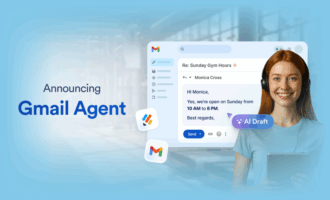
Jotform Gmail Agent is a smarter communication automation tool for teams who rely heavily on email within the Gmail ecosystem.
While Gmail Agent doesn’t have SendPulse’s functionality, other Jotform tools do — it’s simply part of Jotform’s broader customer engagement ecosystem. This includes things like AI agents, which are suitable for various marketing channels, contact management, workflow automation, and so much more.
You can also use Jotform AI Agents to create conversational form-based automation, starting with five agents for free. They come with 7,000-plus customizable templates to help make setup easy and fast.
I’ve set up a Jotform AI Agent on my website, and the no-code Jotform AI Chatbot Builder made it a breeze — I had a chatbot live within minutes. The speed at which you can deploy a Jotform AI Agent matters for teams who want to test, iterate, and improve customer interactions without relying on developers or lengthy setup processes. It also makes Jotform particularly appealing for fast-growing businesses that need flexibility without added technical overhead.
There are also Jotform Tables for managing contact and customer data. See the CRM Table Templates for inspiration.
Finally, Jotform Workflows allow teams to automate internal processes like ticket routing, approvals, and follow-ups, ensuring customer messages are handled efficiently from first contact to resolution.
- Best for: Teams that want AI-powered email automation without leaving Gmail, plus the option to expand into broader omnichannel engagement
- Key features
- AI-generated email replies that learn from your sent items, so replies are generated in your voice
- Nothing is sent without your review — the draft is written, and you can edit it before sending
- Inbox prioritization and filtering, so you can focus on high-impact conversations and reduce noise
- Native integration with Jotform’s AI tools, enabling you to connect email with chatbots, CRM data, and workflows
- Pros
- Truly AI-native, not template- or rule-based
- Extends beyond email via Jotform’s wider engagement platform
- Cons
- Focused primarily on email, so SMS and push messaging require other Jotform tools (though these are all managed from the same dashboard and at no extra cost)
- Plans/pricing
- Free: Up to five AI agents and 100 monthly conversations
- Bronze ($34 per user per month, billed annually): 25 AI agents and 1,000 monthly conversations
- Silver ($39 per user per month, billed annually): 50 AI agents and 2,500 monthly conversations
- Gold ($99 per user per month, billed annually): 100 AI agents and 10,000 monthly conversations
- Enterprise (custom pricing)
2. ManyChat
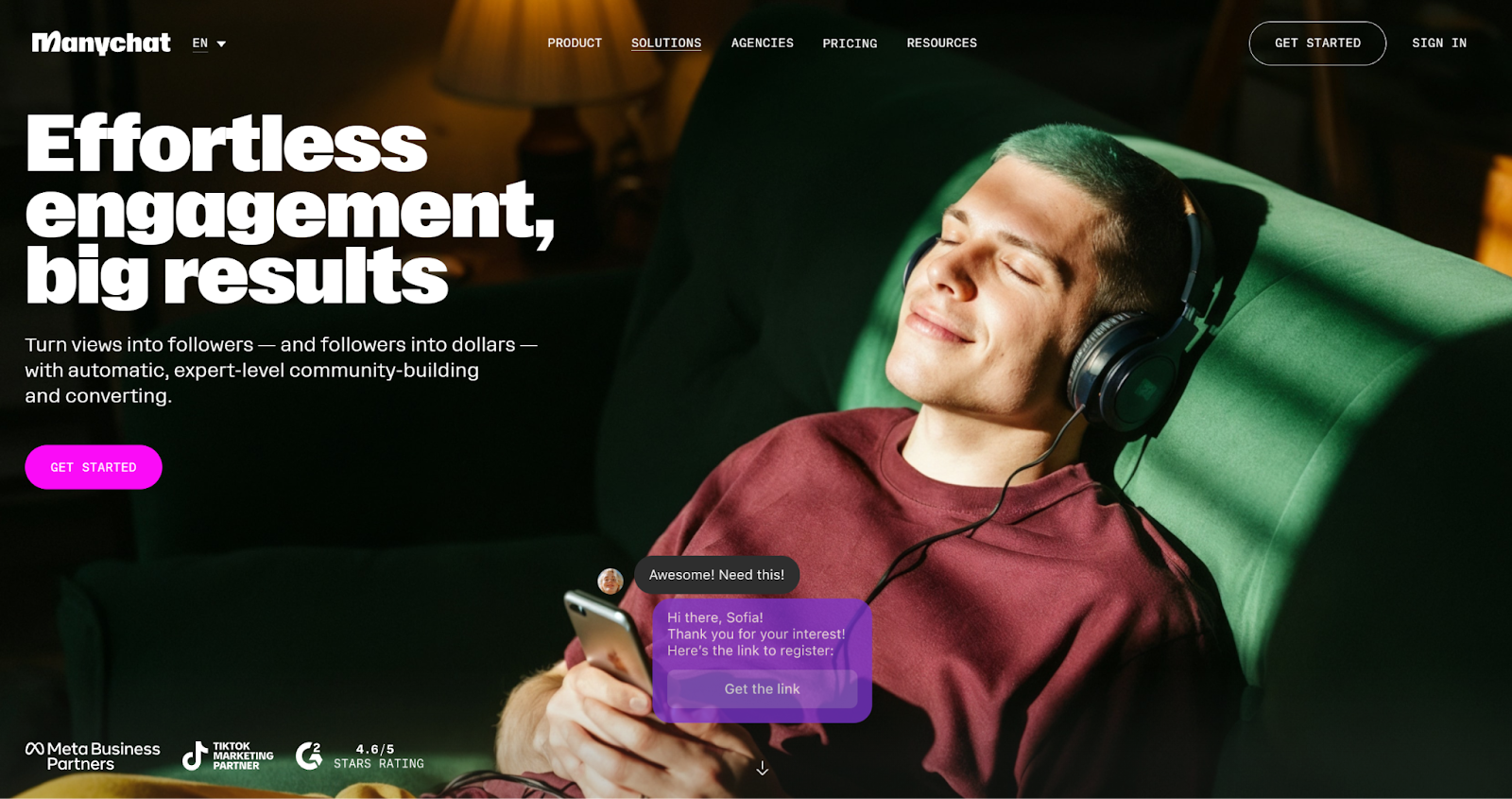
ManyChat is a chatbot-first marketing platform designed to help businesses automate conversations across social messaging channels. It’s a popular SendPulse alternative for teams that prioritize communications across social media — including Messenger, Instagram, TikTok, and WhatsApp — over email-led campaigns.
- Best for: Businesses focused on social media DM automation
- Key features
- Visual chatbot builder, enabling you to create automated conversations without code
- Multichannel messaging for Messenger, Instagram, WhatsApp, and TikTok, so you can engage your customers wherever they are online
- Audience segmentation and tagging for personalized follow-ups based on user behavior
- Pros
- Excellent for social-first marketing and DM automation, intuitive and a no-code interface
- Cons
- Limited email and broader omnichannel capabilities compared to SendPulse or Jotform
- Plans/pricing
- Essential ($14 per month, billed annually)
- Pro ($29 per month, billed annually)
- Business ($69 per month, billed annually)
- Advanced ($139 per month, billed annually)
3. ActiveCampaign
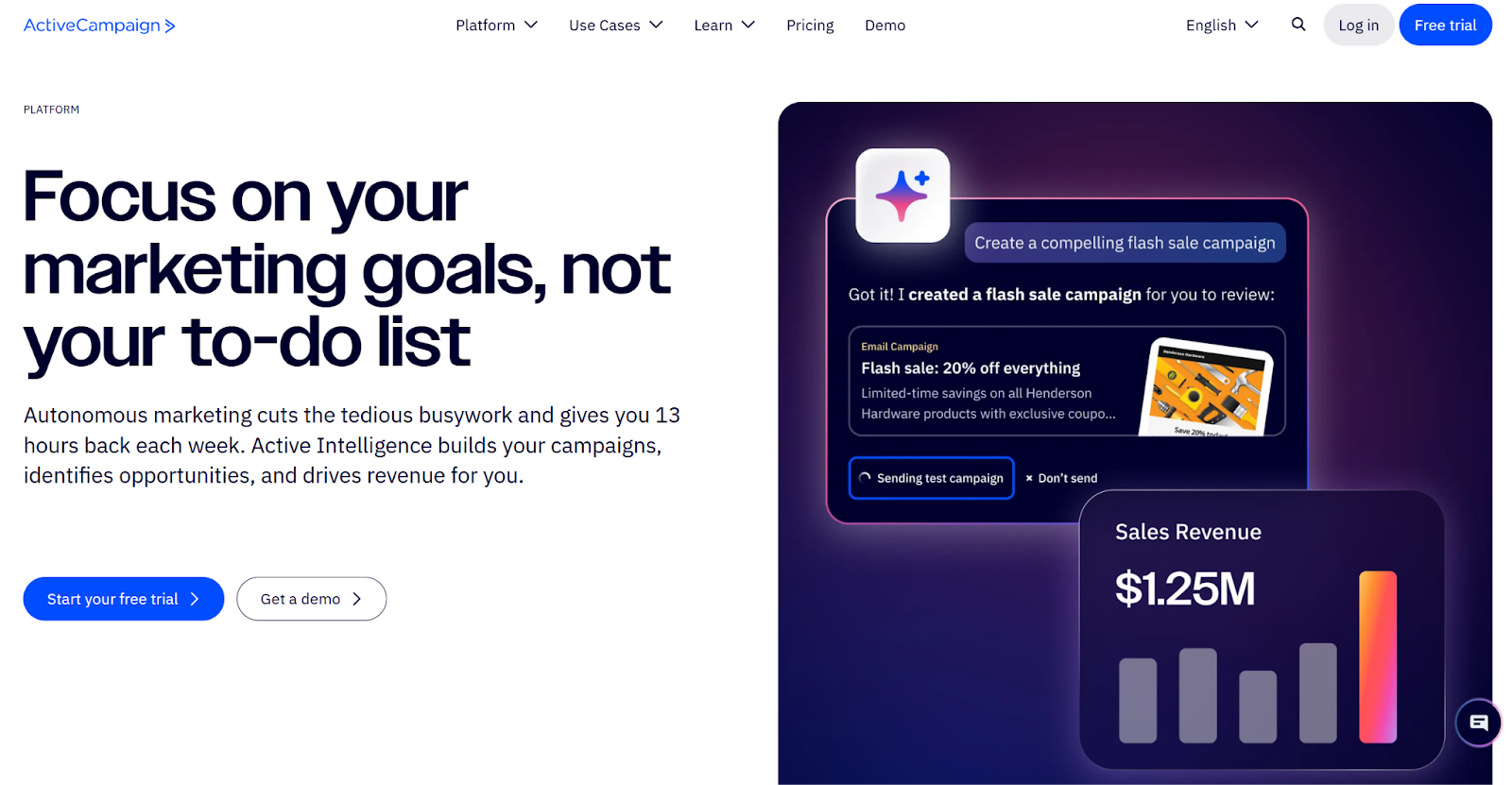
ActiveCampaign is a powerful email marketing automation and CRM platform known for its advanced workflows and deep personalization. It’s a strong SendPulse alternative for teams that want sophisticated email automation backed by robust customer data.
- Best for: B2B and B2C teams that need advanced email automation, lead scoring, and CRM-driven personalization
- Key features
- Advanced automation workflows, which allow marketers to trigger highly personalized campaigns based on behavior and data
- Built-in CRM and lead scoring, so you can align marketing and sales around real-time engagement signals
- Predictive sending and content tools to optimize send times and messaging automatically
- Pros
- Industry-leading automation depth
- Strong CRM and segmentation capabilities
- Cons
- Can feel complex and expensive for smaller teams or simple use cases
- Plans/pricing
- Paid plans ($15 per month, billed annually)
- Plus ($49 per month, billed annually)
- Pro ($79 per month, billed annually)
- Enterprise ($145 per month, billed annually)
4. Mailchimp
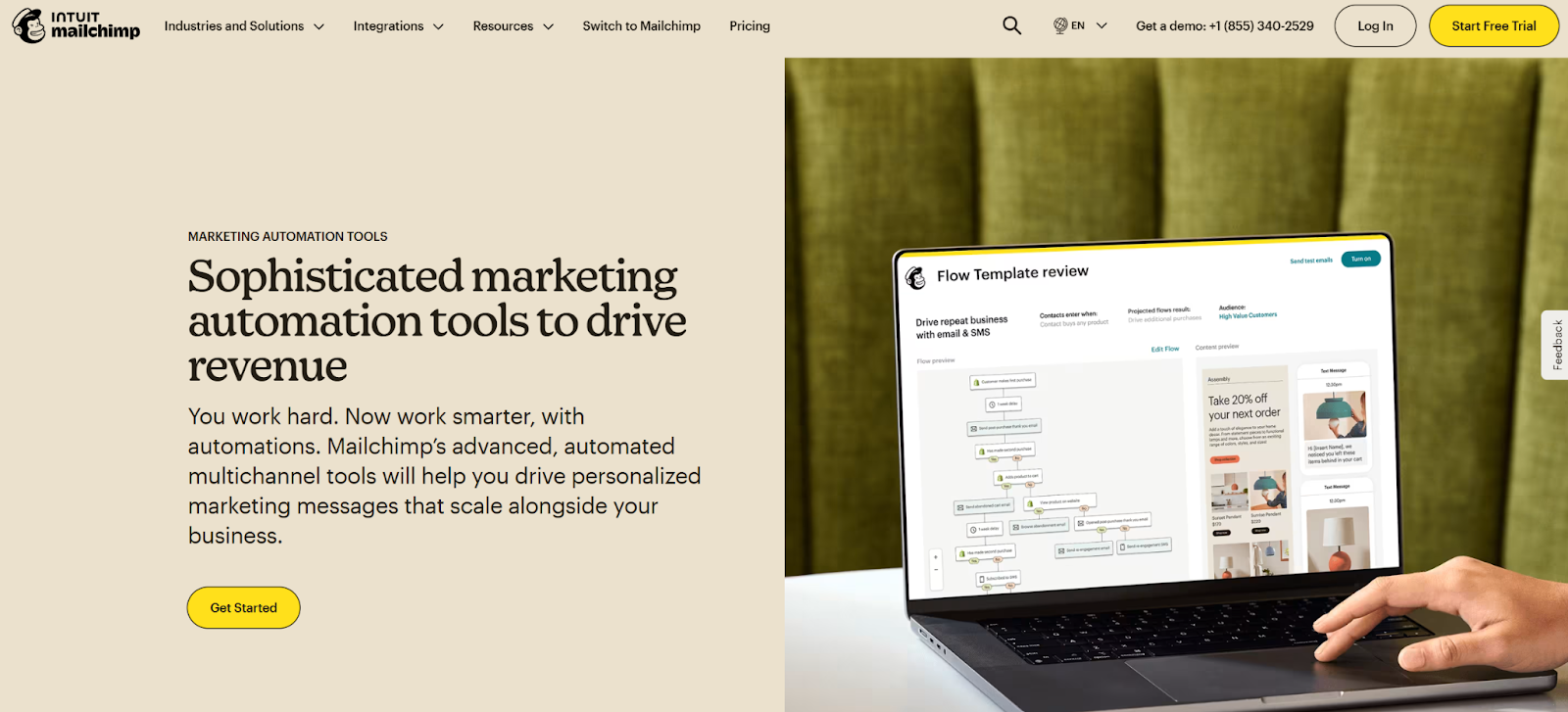
Mailchimp is one of the most well-known AI email marketing platforms, offering a broad set of tools for campaigns, automation, and audience management. While it’s not chatbot-focused like SendPulse, it remains a popular alternative for teams prioritizing email-first marketing.
I don’t do a lot of email marketing, but when I have helped clients, I’ve always used Mailchimp. Its automations, including pop-ups for email capture and automated email lists, are incredibly easy to set up.
- Best for: Small to mid-sized businesses looking for an easy-to-use email marketing platform with built-in analytics and templates
- Key features
- Email campaign builder and templates, helping you to launch professional campaigns quickly
- Audience segmentation and basic automation, so you can send targeted messages based on subscriber behavior
- Marketing analytics and reporting to track performance and optimize campaigns
- Pros
- Very user-friendly with a short learning curve
- Strong ecosystem and integrations
- Cons
- Limited advanced automation and AI capabilities compared to newer platforms
- Pricing structure can be confusing at first glance, with multiple tiers and add-ons based on both features and contact volume
- Plans/pricing
- Paid plans (starts from $20 per month)
- Premium plans (starts from $350 per month)
5. Brevo
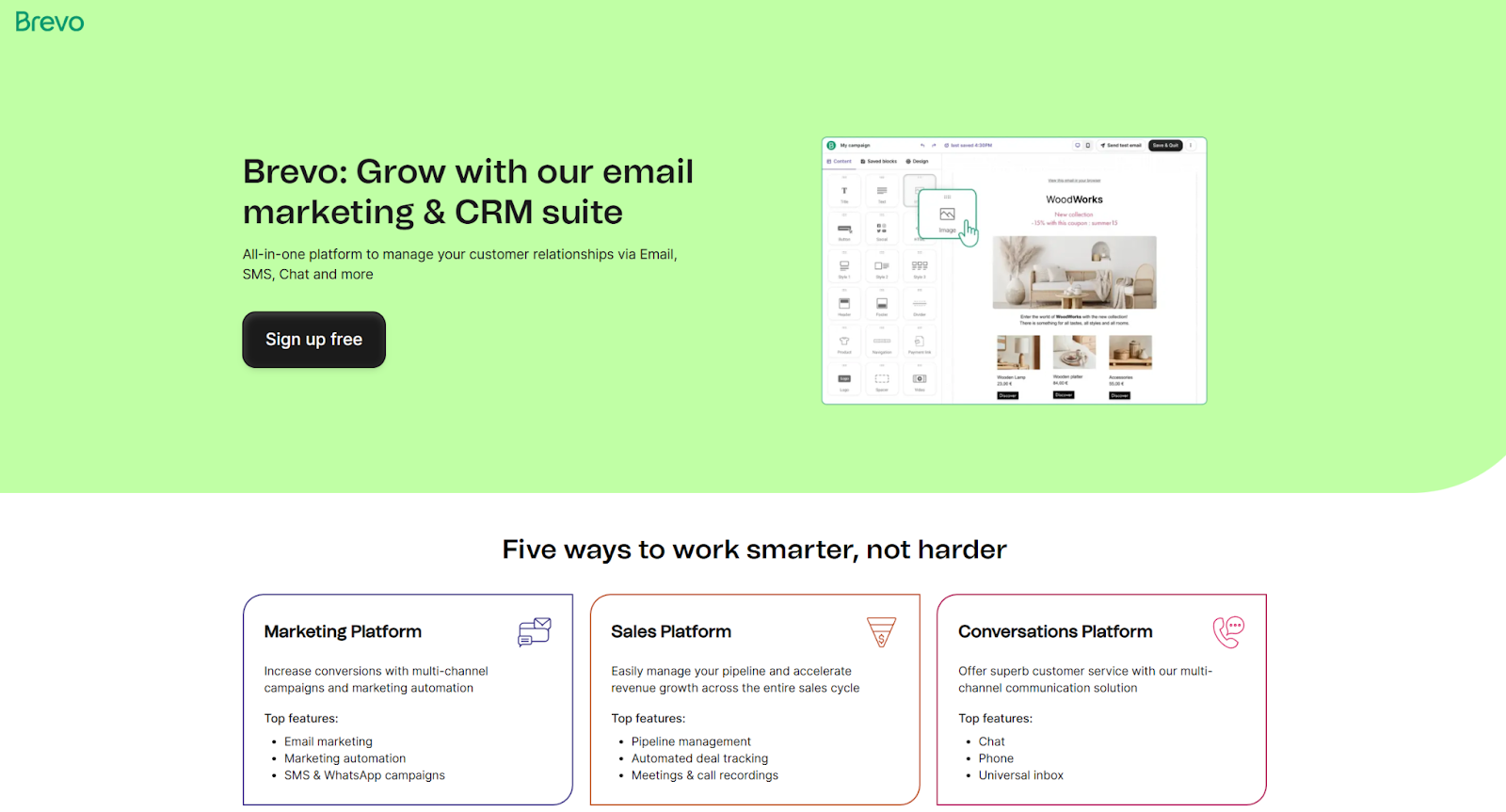
Brevo is an all-in-one email marketing, SMS, and CRM platform that helps businesses manage campaigns, automation, and customer relationships from a unified dashboard. It’s a solid SendPulse alternative for teams that want robust multichannel campaign tools with flexible pricing based on email volume.
- Best for: Small to mid-sized businesses that need multichannel campaigns with built-in CRM and automation
- Key features
- Multichannel campaign support makes managing email, SMS, WhatsApp, and chat messaging in one place easy
- Visual automation workflows, so you can automate lead nurturing and trigger personalized sequences based on behavior
- Built-in CRM and contact management, enabling you to centralize customer data and segment audiences for targeted messaging
- Pros
- Affordable tiered pricing with a free plan
- Flexible multichannel support beyond email
- Cons
- Advanced features often require higher tier plans
- Plans/pricing
- Starter ($8.08 per month)
- Standard ($16.17 per month)
- Professional ($449.08 per month)
- Enterprise (custom pricing)
6. Omnisend
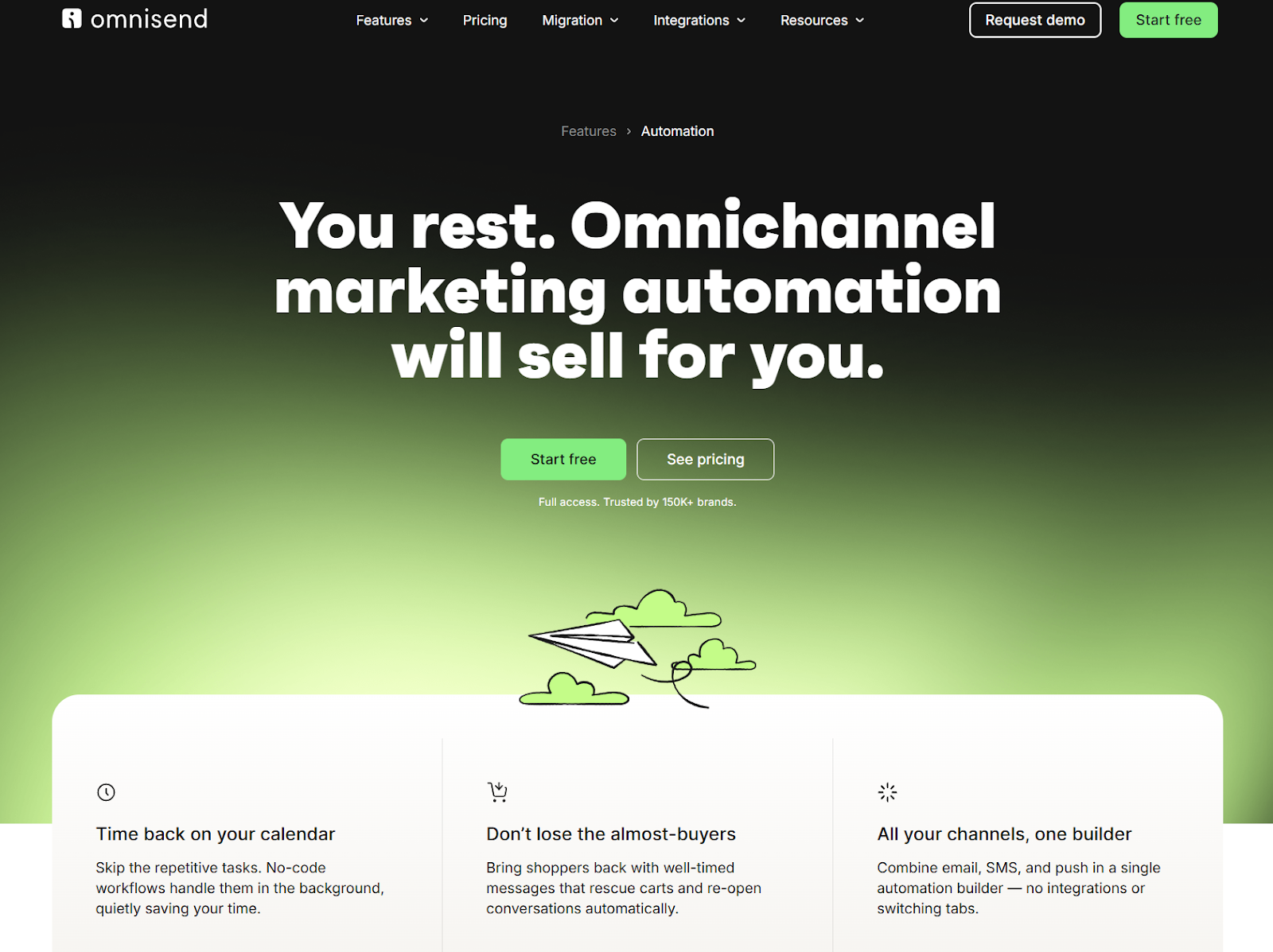
Omnisend is an e-commerce-focused marketing automation platform that combines email, SMS, and push notifications with pre-built workflows to help online stores drive more sales with less effort. It’s a strong SendPulse alternative if you’re looking for automated, revenue-driven engagement tied directly to shopping behavior and audience segmentation.
- Best for: E-commerce brands and online stores focused on email and SMS automation to boost conversions
- Key features
- Email and SMS campaigns with automation workflows, enabling you to nurture customers and recover abandoned carts without manual sending
- The drag-and-drop email builder and templates make it easy to build campaigns, even for users who aren’t tech-savvy
- Audience segmentation and pre-built triggers help with message personalization
- Pros
- Excellent automation and e-commerce-centric features that boost revenue potential
- Intuitive interface with 24-7 support and easy onboarding
- Cons
- Not as useful for non-e-commerce use cases compared with broader tools
- Plans/pricing
- Free
- Standard ($11.20 per month)
- Pro ($41.30 per month)
- Enterprise (custom pricing)
7. GetResponse
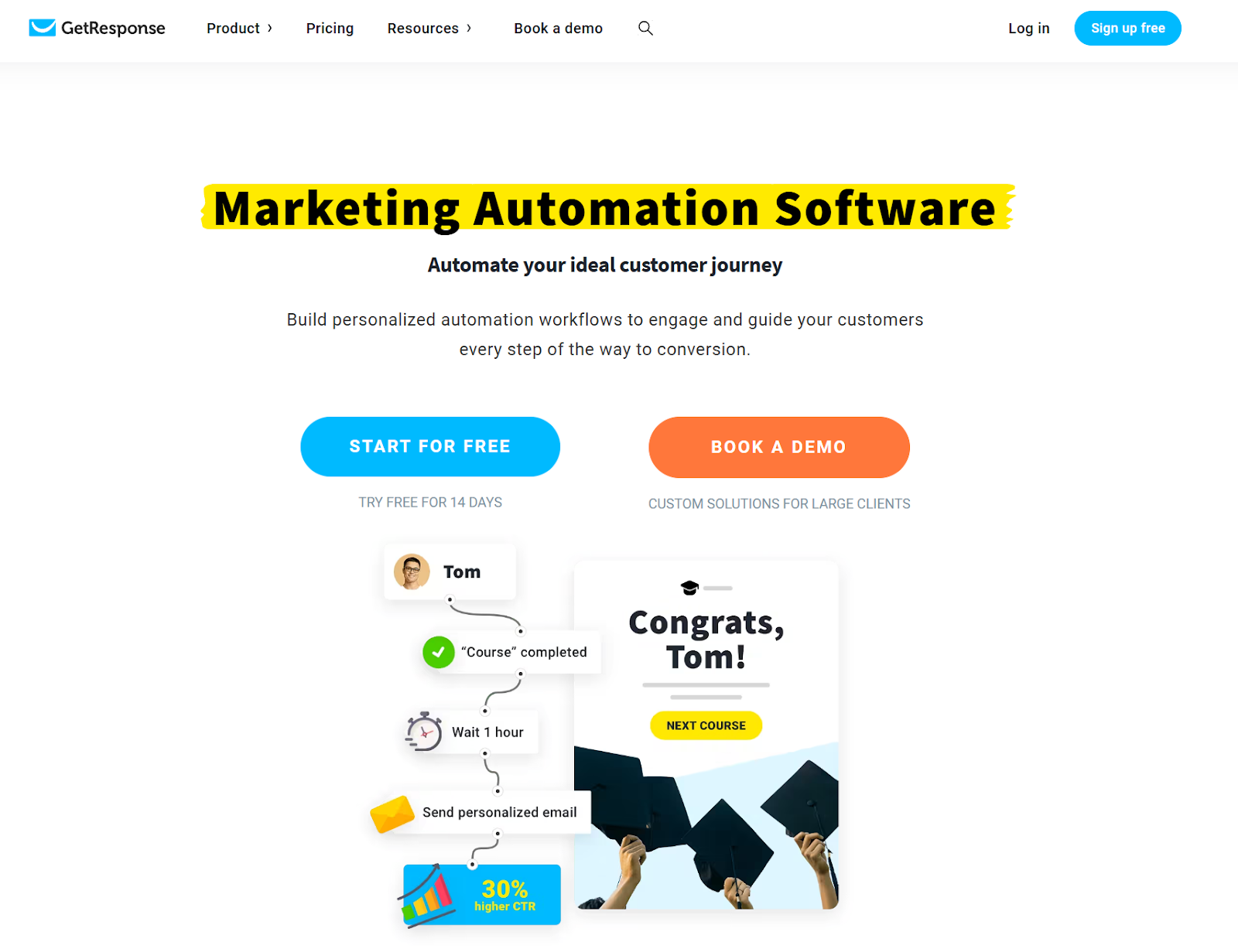
GetResponse is an email marketing and automation platform with tools for campaigns, landing pages, and funnels, as well as CRM features.
- Best for: Businesses and creators who want an all-in-one email marketing solution with automation workflows and lead-capture tools
- Key features
- Visual automation workflows, so you can easily build and run sophisticated email and marketing sequences without coding
- Landing pages and conversion funnels to capture leads and drive sales from campaigns to conversion
- Built-in CRM and contact segmentation, so you can organize and target subscribers based on behavior and data
- Pros
- Strong all-in-one features covering email, automation, landing pages, and CRM
- Integrated webinar and event tools make GetResponse popular among creators
- Cons
- This is an email tool — unlike SendPulse, it doesn’t cover communications across marketing channels
- Plans/pricing
- Starter ($15.58 per month, billed annually)
- Marketer ($48.38 per month, billed annually)
- Creator ($56.58 per month, billed annually)
- Enterprise (custom pricing)
8. Tidio
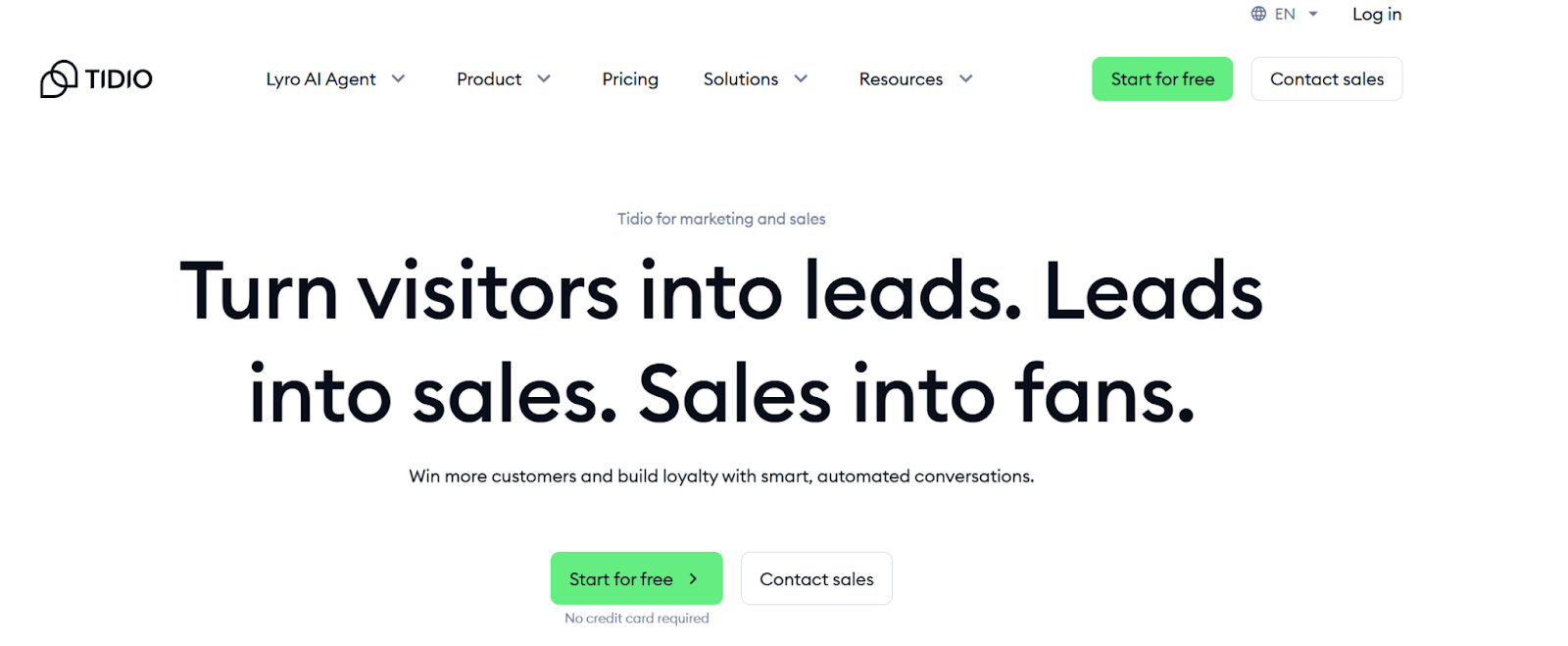
Tidio is a conversational engagement platform combining live chat, chatbots, and email automation to help businesses connect with visitors in real time.
- Best for: Businesses that want to automate customer support with AI-assisted chat
- Key features
- AI chatbots and automation flows that can respond instantly to website visitors and capture leads, enabling your web traffic to self-serve
- Live chat with a unified inbox, so multiple team members can manage multiple inboxes from web chat, email, and messaging apps in one place
- Behavior-based triggers and messaging, so you can send relevant messages based on user actions and how they interact with your site
- Pros
- Strong real-time chat and chatbot capabilities
- Easy setup with customizable templates
- Cons
- Less robust email and multichannel campaign automation compared with broader platforms
- Plans/pricing
- Free
- Starter ($24.17 per month, billed annually)
- Growth ($49.17 per month, billed annually)
- Plus ($749 per month, billed annually)
- Premium (custom pricing)
Jotform as a complete engagement platform
While SendPulse focuses on multichannel messaging, Jotform goes further by offering a fully connected, AI-native engagement platform that covers communication, data, automation, and support in one ecosystem.
Together, these five tools can replace or enhance SendPulse’s core functionality:
- Gmail Agent: AI-powered, on-brand email replies that work directly inside Gmail
- AI Agents: Trainable conversational bots for lead capture, FAQs, and customer support
- Tables: Centralized, fully customizable contact and customer data management
- AI Chatbot Builder: No-code, AI-driven live chat for websites and apps, available 24-7
- Workflows: Custom automation for ticket routing, approvals, and internal handoffs
Instead of juggling disconnected tools or rigid templates, Jotform gives teams the flexibility to design smarter, faster, and more scalable customer engagement across email, chat, forms, and internal processes.
Customer messaging and customer service couldn’t be easier with Jotform. You can run all your messaging, automation, and data workflows from a single, integrated platform. It’s powered by AI, tailored to your business, and built to grow with you. Try it for free today.
This article is for marketing managers, small business owners, e-commerce store operators, and customer service teams looking for AI-powered, customizable alternatives to SendPulse for email marketing, chatbots, and multi-channel engagement.














































Send Comment: