

Formulários para Comerciantes

Formulario De Pedido De Crudos Azul
Usted puede recibir solicitudes para sus productos con este formulario, en color azul.
Ir para Categoria:Formulários para E-commerce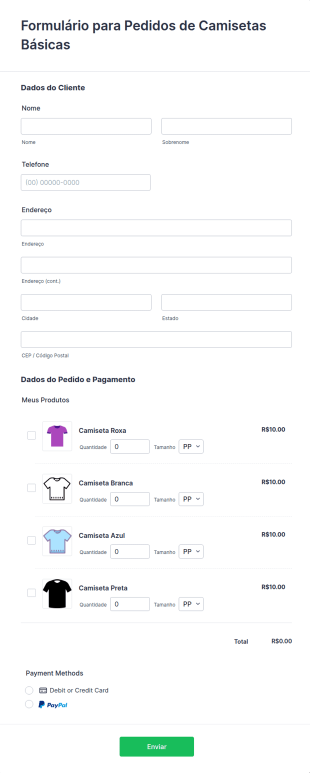
Formulário Para Pedidos De Camisetas Básicas
Receba pedidos de camisetas online com o Formulário para Pedidos de Camisetas Básicas. Personalize o modelo, incorpore-o no seu site e colete pagamentos pela internet com facilidade.
Ir para Categoria:Formulários para Pedidos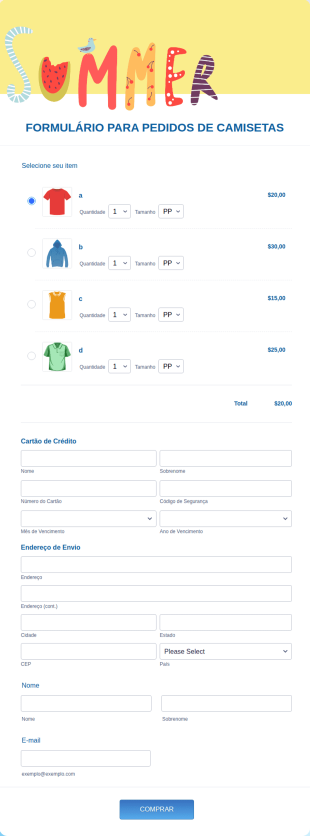
Formulário Para Pedidos De Camisetas (Verão)
Processe seus pedidos online com um Formulário para Pedidos de Camisetas que mostra as opções visuais aos clientes, solicita a quantidade e o tamanho desejados, além do endereço de entrega e das informações de pagamento.
Ir para Categoria:Formulários para Pedidos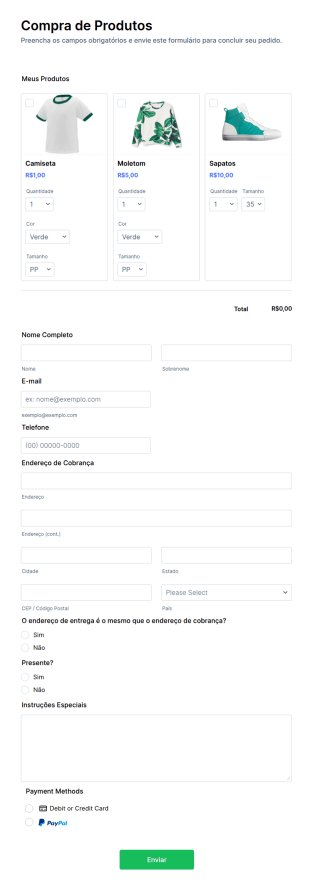
Formulário Para Compra De Produtos
Com nosso formulário de compra de produtos online gratuito, você pode customizar e adicionar ao seu site para começar a receber pedidos em instantes! O modelo foi criado para engajar seus clientes, proporcionando uma experiência simples, rápida e intuitiva.
Ir para Categoria:Formulários para Pedidos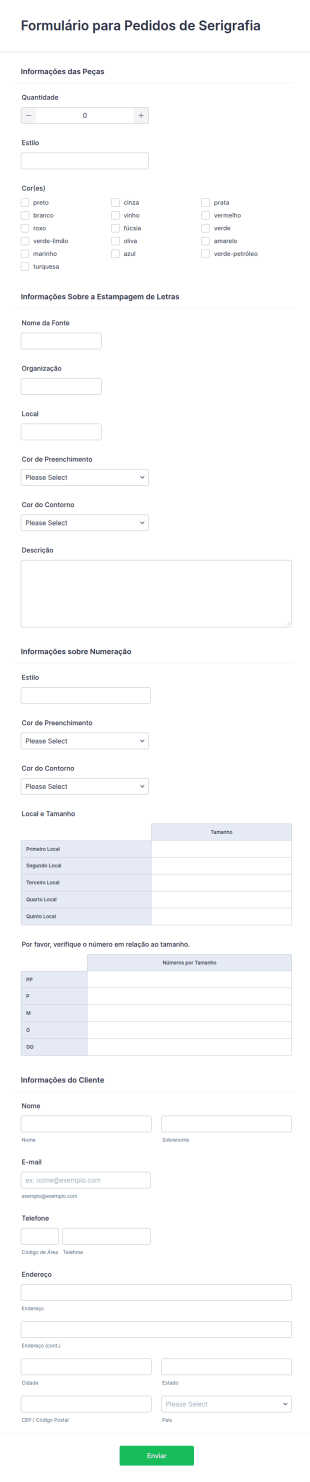
Formulário Para Pedidos De Serigrafia
Venda camisetas online com o Formulário para Pedidos de Serigrafia gratuito. Personalize e incorpore no seu site em poucos minutos. Aceite pagamentos com cartão e sincronize com +130 apps.
Ir para Categoria:Formulários para PedidosSobre Formulários para Comerciantes
Merchant Forms are specialized digital forms tailored to streamline operations within the retail and commerce sectors. These forms are designed to facilitate a variety of common tasks such as order processing, inventory management, and customer feedback collection. In real-world workflows, Merchant Forms can be used to automate the checkout process, manage supplier information, and gather customer insights quickly and efficiently. By converting traditional paper-based processes into digital formats, merchants can improve operational efficiency and reduce the likelihood of human error in data entry.
Jotform stands out as the premier online form builder for creating Merchant Forms, offering an intuitive drag-and-drop interface that allows for seamless customization. With Jotform, users can automate data collection processes, ensuring that information is captured accurately and stored securely. The platform's integration with Jotform Tables enables centralized data management, allowing merchants to organize and analyze their data in a streamlined manner. This ease of customization and powerful data management capabilities make Jotform an essential tool for any business in the retail sector looking to optimize their operations.
Why Use Merchant Forms?
- Merchant Forms enhance accuracy by eliminating the need for manual data entry, which reduces the risk of human error. This ensures that customer information, inventory details, and sales data are recorded precisely, leading to more reliable reporting and decision-making.
- Speed is a significant advantage when using Merchant Forms, as they facilitate quick data collection and processing. By digitizing workflows, merchants can respond faster to customer inquiries, process orders more swiftly, and update inventory levels in real-time, enhancing overall operational efficiency.
- Professional data handling is a core benefit of Merchant Forms, as they provide a structured system for capturing and storing information. This ensures that all data is organized systematically, making it easier for businesses to retrieve and analyze information when needed.
- The ability to integrate with over 100 third-party services like Google Sheets and Salesforce allows Merchant Forms to fit seamlessly into existing business processes. These integrations enable merchants to automate various aspects of their operations, from customer relationship management to financial reporting.
- Merchant Forms also support electronic signatures through Jotform Sign, which is crucial for transactions requiring formal approvals. This feature streamlines the authorization process, ensuring that agreements are legally binding and securely documented.
Common Problems Solved by Merchant Forms
- One of the primary challenges faced by merchants is dealing with extensive paperwork, which can be cumbersome and prone to errors. Merchant Forms digitize these documents, reducing clutter and the likelihood of losing important information.
- Manual data entry often leads to inconsistencies and inaccuracies, which can affect business operations. By automating data collection with Merchant Forms, businesses can ensure that data is captured consistently and accurately, minimizing errors.
- Lost data is a significant concern when relying on paper forms or unorganized digital systems. Merchant Forms provide a secure, centralized repository for all collected data, ensuring that it is always accessible and protected against loss.
- The time-consuming nature of traditional data processing can slow down business operations. Merchant Forms accelerate this process by automating data entry and integration, allowing businesses to focus on more strategic tasks.
Relacionando casos de uso aos recursos
- For merchants needing to streamline inventory management, the Drag-and-Drop Form Builder allows for customized forms that track stock levels and reorder triggers. This ensures that inventory is maintained at optimal levels, preventing stockouts or overstock situations.
- Sales and order processing can be optimized through the use of Conditional Logic, which enables forms to adapt based on user input. This feature can guide customers through a personalized purchase experience, improving satisfaction and conversion rates.
- Businesses looking to offer online payment options can leverage the integration of 30+ Payment Gateways, such as Stripe and PayPal. This feature facilitates secure and efficient transaction processing directly through the forms, enhancing the customer checkout experience.
- Merchants who require formal approvals for transactions can utilize Electronic Signatures (Jotform Sign) to capture legally binding signatures digitally. This feature simplifies the authorization process and ensures compliance with industry regulations.
- For data analysis, the Report Builder can transform form submissions into insightful reports that help businesses make data-driven decisions. By visualizing trends and patterns, merchants can optimize their strategies and operations.
- Integration with Jotform Tables allows for Secure Data Management, ensuring sensitive information is protected and easily accessible. This capability is crucial for maintaining the integrity and confidentiality of customer and business data.
How to Create a Merchant Form
- Browse the Template List for a Merchants template or start from a blank form to suit your specific business needs.
- Customize the design and fields using the Drag-and-Drop Form Builder, ensuring that the form aligns with your brand and operational requirements.
- Publish and share your form via Direct Link, Email, or Website Embed, making it accessible to customers, suppliers, or team members as needed.
Top Use Cases for Merchant Forms
- For Managers: Merchant Forms provide managers with comprehensive tools to oversee operations, track performance metrics, and make informed decisions based on real-time data. By utilizing these forms, managers can ensure that all aspects of the business are running smoothly, from inventory management to customer satisfaction. The centralized data collection and analysis capabilities allow managers to monitor trends and adjust strategies promptly, boosting overall business performance.
- For Teams: Teams benefit from the collaborative nature of Merchant Forms, which streamline communication and task management. These forms enable team members to share information seamlessly, ensuring that everyone is on the same page and working towards common goals. By automating routine tasks and providing clear data insights, teams can focus on more strategic initiatives, enhancing productivity and cohesion.
- For Customers: Merchant Forms enhance the customer experience by simplifying interactions such as order placements, feedback submissions, and support requests. Customers can enjoy a seamless and efficient process, which improves their overall satisfaction and loyalty to the brand. By providing a user-friendly interface and reliable data handling, these forms help businesses meet and exceed customer expectations.
Summarizing Merchant Forms
Merchant Forms are a vital component for businesses in the retail sector, offering a robust solution for streamlining operations and enhancing data accuracy. By leveraging Jotform's powerful features, merchants can automate data collection, integrate with essential third-party services, and maintain secure data management. These forms not only improve operational efficiency but also support strategic decision-making by providing valuable insights into business performance. Overall, Merchant Forms empower businesses to operate more effectively and deliver superior customer experiences.
Perguntas Frequentes
1. O que é um formulário para comerciantes?
Um formulário para comerciantes é um formulário online usado por empresas para coletar pedidos, pagamentos e informações de clientes sobre produtos ou serviços. Ele simplifica o processo de transação e centraliza a coleta de dados.
2) Os formulários e dados enviados são seguros?
Formulários para comerciantes automatizam a coleta de pedidos e pagamentos, reduzem erros manuais e oferecem uma experiência profissional e fácil de usar para os clientes, ajudando os negócios a operar com mais eficiência.
3. Quais informações são normalmente coletadas em um formulário para comerciantes?
Campos comuns incluem seleção de produto ou serviço, quantidades, dados de contato do cliente, informações de envio e dados de pagamento.
4) Posso receber pagamentos diretamente pelos meus formulários?
Sim, os formulários para comerciantes podem ser personalizados para pedidos de produtos, reservas de serviços, cadastro de fornecedores, solicitações de inventário e muito mais, dependendo das necessidades do negócio.
5) Esses formulários podem ser usados em dispositivos móveis?
Proprietários de pequenas empresas, varejistas de comércio eletrônico, prestadores de serviços, organizadores de eventos e qualquer pessoa que precise coletar pagamentos ou gerenciar pedidos online podem se beneficiar dos formulários para comerciantes.
6) Posso transformar os envios aos formulários em documentos PDF profissionais?
Jotform integra-se com gateways de pagamento seguros, garantindo que as informações de pagamento dos clientes sejam processadas de forma segura e em conformidade com os padrões do setor.
7. Os formulários para comerciantes podem ser personalizados para refletir o branding da marca?
Com certeza. Você pode adicionar seu logo, ajustar cores e fontes, e até mesmo personalizar a URL do formulário para refletir a identidade da sua marca.
8. Quais medidas de privacidade são adotadas nos formulários para comerciantes?
Jotform utiliza criptografia, integrações seguras de pagamento e conformidade com regulamentações de privacidade (como o RGPD) para proteger os dados tanto dos comerciantes quanto dos clientes.