Episode 110: What If AI Could Decide Who Gets Hired? Inside RChilli's AI Revolution with Sneh Lata
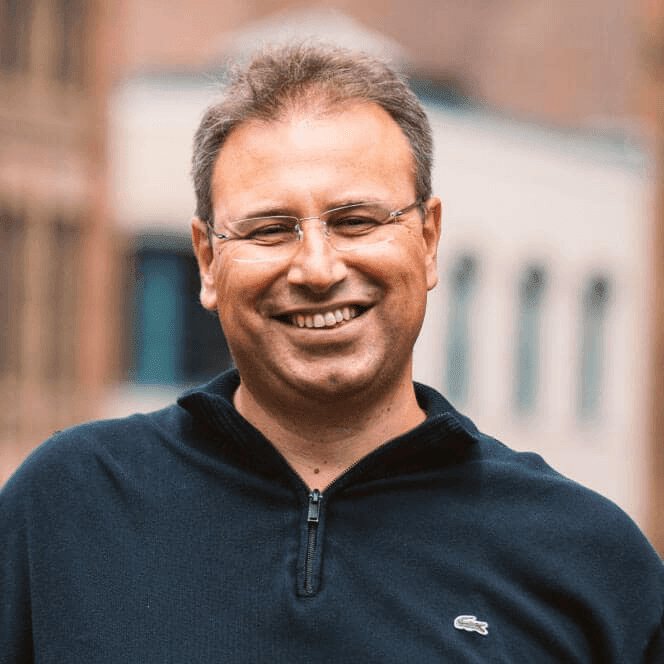
Co-Host
Aytekin Tank
Founder & CEO, Jotform

Co-Host
Demetri Panici
Founder, Rise Productive




About the Episode
Discover how AI is revolutionizing talent acquisition in this episode of the AI Agents Podcast featuring Sneh Lata, Director of Product at RChilli. She shares her journey from business analyst to product leader and delves into how RChilli is using generative AI agents to streamline recruitment processes within enterprise platforms like Oracle, SAP, and Salesforce. Learn how AI can clean, structure, and enrich talent data while reducing bias and accelerating hiring decisions. Explore how RChilli’s modular suite—Recruitment AI, Data Hygiene, Unbiased Hiring, and Recruitment Hub—is transforming human capital management with actionable, standardized insights. Sneh also reveals how their AI agents work within existing workflows to enhance candidate data dynamically, while maintaining a human-centric approach rooted in ethical and responsible AI practices. Whether you're in HR tech or simply AI-curious, this episode offers a pragmatic look at real-world AI integration.
This artificial intelligence is not a new concept; it has been around for a century. Just look at a simple calculator, which is also an AI machine. AI is a big umbrella that includes machine learning, deep learning, and generative AI. AI agents basically sit inside these generative AI systems. We have seen this progression, and simply put, AI are machines that possess human intellectual equivalence.
Hi, my name is Demetri Panici, and I'm a content creator, agency owner, and AI enthusiast. You're listening to the AI Agents podcast brought to you by Jotform and featuring our CEO and founder, Aytekin Tank. This is the show where artificial intelligence meets innovation, productivity, and the tools shaping the future of work. Enjoy the show.
Hello and welcome back to another episode of the AI Agents podcast. In this episode, I have the director of product at Archily. How are you doing today, Snake?
I'm doing very well. Thank you so much for having me.
Yeah, absolutely. Really excited to chat with you. So just to kick things off, I'd love to know a little bit about your background and how you got into the world of AI.
I work at the intersection of AI agents and human capital management. I mostly work with clients and enterprise platforms like Oracle Cloud, CM, SAP, Salesforce, and HR tech platforms. My focus is to build AI agents that actually work in production inside these workflows.
As far as my journey is concerned, I did not start as an AI expert. Back in high school, we didn't even attend conferences or translate requirements into systems. I remember in 2009, the first conference I attended was the HR Technology Expo in Chicago. I had a quest for knowledge that kept me going and interested in how technology is moving and where it is going.
Later, I moved to the United States and worked with enterprises like GAP and Bank of the West. I spent my first decade as a business analyst leading transformation projects in retail and banking.
To give you more insight, at GAP in San Francisco, I worked on a high-visibility flagship transformation project called Product End to End ET, which modernized how GAP planned, sourced, and moved merchandise from vendors to more than 3,000 customers. My role was to translate business vision into detailed workflows and systems.
They had an old legacy platform called ACT Assorted Costing Pool running for a long time, and the new system, Pete, was designed to replace it and connect to all other fragmented systems while keeping the legacy system alive for downstream applications and reporting. It was a complex project rolled out first for GAP Outlet, then Old Navy, and Banana Republic.
After working in retail, I moved into financial services with Bank of the West, where I worked on auto lending products applied to RVs and Marines. I designed extensions of their single auto lending products to multiple offerings that enhanced business for the bank and leadership. It was called the Plus Program as the preferred lender in the US.
Bank of the West was under BNP Group, a French entity trying to build more business and market share in the US. Today, [__] took over Bank of the West. I also worked on cloud-based lending transformation focused on non-prime lending, building a fee-based model to accommodate non-prime segments, allowing the bank to cover risk and make lending products accessible to non-prime scorers.
Later, I worked at Shackling, an online wellness company, joining as part of the e-commerce modernization program. My focus was to redesign digital workflows, integrate several backend systems, accommodate new motions, help teams adopt agile ways of working, and improve site stability and performance of their e-commerce presence.
More importantly, I became the bridge between business development and operations, keeping everyone aligned while maintaining ethical standards. All these roles taught me that transformation can only work when strategy, data, and execution are tightly connected.
One main problem was fragmented data and unclear ownership. When I came to Archily, I brought this experience. I lead AI and cloud innovations powering enterprise systems and job boards. I use what I learned in early US projects to design AI agents that run in production inside complex ecosystems like Oracle, Salesforce, and SAP.
For AI agents to succeed in HR, we must fix data, workflows, and integration with these platforms. I moved from being a business analyst to a product leader for AI and cloud innovations in HR.
Interesting. How long have you been in this specific role?
I joined Archily last year. Before that, I worked for a decade in the US. Currently, I operate from Canada.
Archily is doing many interesting things, like reinventing ERP recruiting. How do you approach taking a complicated process and reverse engineering it so AI can function as recruitment?
Archily is an AI-powered HR tech company that structures and enriches talent profiles. We turn profiles into usable data inside HR systems. Enterprises face three core issues: data is unstructured, often stale, and can carry bias and inconsistency.
When I took on my role, Archily had around 15 fragmented offerings. My responsibility was to unify them into a modular AI-driven suite that's easier to use and scale. We compiled four major modules: Recruitment AI, Data Hygiene, Bias, and Recruitment Hub.
Recruitment AI is our industry-leading parser that matches talent data with keywords and brings it to your dashboard quickly. Imagine having heaps of talent data in your system or many resumes; based on your search criteria, the AI agent finds the right candidate profiles fast.
Data Hygiene removes noise cluttering the data and leaves clean, structured, normalized data. For example, if you're looking for a Java developer but resumes say JS or React, our tool rolls those up into the right skill families and presents them to you.
We built five taxonomies: sales, job titles, degrees, universities, and postcards across many industries and languages. We use ontology-driven mapping, so we don't just match keywords but map every skill, job title, and technology into a structured knowledge graph. This lets AI platforms search, match, and build agents on clean, standardized talent data.
The third module is unbiased hiring. Unconscious bias can slip into decisions based on resume details. To avoid bias, we built a reduction tool in the hiring workflow using around 55 DEI-related parameters like diversity, equity, and inclusion values to identify bias signals.
The hiring panel then sees a more neutral profile focused purely on skills and experience. We support human judgment by removing noise and bias signals, building trust in the hiring process, supporting diversity goals, reducing legal and reputational risk, and improving outcomes.
The last module is Recruitment Hub. When hiring, you get results from different channels like Indeed, CareerBuilder, LinkedIn, emails, and internal data. Recruitment Hub provides a browser extension to consolidate all decentralized data into a centralized location within your system, helping you make better decisions.
What are some of the harder things you have to discuss to convince people this is feasible? There's optimism and skepticism about AI capabilities. How do you articulate your work to make companies comfortable with AI replacing human elements in recruitment?
I want you to think of us as the reliable intelligence layer powering AI agents for talent data. You pull clean data in and get better decisions out. Archily has proven records: candidate experience up by 85%, profile accuracy up by 68%, and deployment time reduced from months to less than an hour, a 98% reduction in hiring process time.
These numbers build trust. We have clients like Oracle, Salesforce, and operate in 36 industry domains, 39 languages, over 52 countries, with more than 8,801 customers and process over 4 billion resumes annually. This is just about the products Archily offers, not even the AI agents yet.
Regarding AI agents, we delivered the Talent Data Refresh Agent, currently working in production within Oracle workflows. Oracle accepts only validated partner-built agents that pass a rigorous 21-point security and functionality checklist. Archily is a flagship agent in talent data refresh.
This agent automatically scans existing talent records, enriches them with fresh, structured, validated data, updates skills, experience, and attributes as needed, and sets updated data back into Oracle SEM compliantly. It's a next-generation AI-powered profile enhancement system integrated within Oracle Fusion Cloud SCM.
It autonomously identifies missing or outdated information in candidate profiles and enriches them with verified real-time data from external sources and platforms. It works in steps: AI-driven gap detection identifies missing employment history, education, or skills; parsing integration extracts structured data; connects with external sources for validation and updates; and normalizes data.
Decision intelligence means the recruiter retains control. It's a human-centric tool improving recruiter decision-making through precise, bias-free, up-to-date candidate insights. Recruiters can search on current data, not stale data. This agent enriches profiles with fresh data, improving search results and trust in data quality.
I like your point about calculators being AI. It's a framing thing. AI has been synonymous with large language models, but that's only part of AI. We are progressing into deep learning and generative AI, like Gemini 3.0 Pro with Nano Banana Pro, revolutionizing the field.
AI agents augment and elevate enterprises, especially small and medium businesses, making them indistinguishable from large companies. The question is, what would you do if you had unlimited resources and were no longer limited by employee numbers? This is your moment with AI agents.
What are some of the biggest misconceptions you have to overcome when explaining your work to clients or in marketing?
AI agents and humans must work together. The bus has left the station; AI agents are already here. Start simple, focus on workflows, users, systems, and decisions. Fix data foundations like job titles, skills, and locations. Invest heavily in taxonomies and multilingual normalization. Your AI agents should feel like first-class citizens in platforms like Oracle.
Governance from day one is vital. Responsible AI has eight pillars: compliance, fairness and inclusiveness, technical robustness and security, transparency, accountability, explainability, human-centric design, and environmental sustainability. Compliance means legal adherence; Archily is FedRAMP ready, enabling federal contracts and supporting US government hiring.
Human-centric means decisions remain in human hands, driven by empathy. Technology should lead to humanity. Environmental sustainability means building energy-efficient models. Following these pillars makes AI agents reliable team members, not science experiments. AI agents are 92-93% accurate but not better than humans, who lead and guide them.
How does Archily ensure human-in-the-loop capability and empathy in AI agents?
The Talent Data Refresh AI Agent has workflows for AI-driven gap identification, parsing, data normalization, and storing validated data from trusted sources. It presents data to recruiters who can accept, override, or decide on actions. The human loop is essential, with recruiters having the final say. Repetitive or low-IQ tasks are automated, but empathetic decisions remain human.
Do you think AI will overtake most work or will humans always have a role?
AI augments us by handling repetitive, low-IQ tasks better. We must decide what to automate and what to keep. One person today can do 90% more than in 1995, 400% more than in 1960, and a million percent more than in 1800. Technology has increased production and value creation globally.
We are moving from single agents to ecosystems where specialized agents communicate. Agents prepare data and insights; humans focus on judgment and empathy. AI agents are powerful but tools enhancing human potential. Machines will be designed to understand how humans work, not the other way around. Archily builds technology adapting to HR professionals' workflows.
Personally, what AI tools do you use daily to save time?
I use AI tools extensively, like ChatGPT paid version, Claude for large documents, Gemini for images, and the Nano Banana Pro. These tools revolutionize productivity. A tip: in ChatGPT settings, you can toggle off data sharing to prevent your chats from training models, which I do for personal work but keep on for enterprise work.
When did you realize AI could help you do much more work?
I vividly remember when OpenAI launched their chat model. Earlier, AI was limited to calculators and face recognition. Google's search was just retrieval. Around six years ago, OpenAI's chat model was mindboggling and a game changer. Since then, AI has become ubiquitous. We must lead with judgment and responsibility because AI is powerful.
The real question is not what we can build but what we should build with AI. Every enterprise and user should consider this responsibility. AI can take over many tasks better, but we must steer and direct it for humanity's benefit.
I appreciate your insights on new models like Nano Banana and Gemini 3, which are incredible leaps forward. AI capabilities continue to improve rapidly.
Regarding AI agents and reasoning improvements, when did you notice large-scale reasoning and capability improvements?
Large language models have improved significantly. They are trained on public data but need to work more with private data for better decision-making. We must be mindful of what data we expose. The next phase is models working deeply with private data, improving outputs and integration.
Devices like Alexa listen constantly, gathering data to provide better results. The next phase is designing systems to work the way users want, not the other way around. Archily aims to be the intelligence and data layer behind agents, making talent data and AI behavior consistent across platforms.
Finally, stay close to your end users and customers. Talk to them, understand their pain points, and build accordingly. Growth comes from augmenting users and making their work easier. When everyone grows, the whole ecosystem benefits.
Thank you for listening to this episode. Check out everything Snake is doing at Archily at archily.com. If you liked this episode, please leave a like and subscribe to the YouTube channel. If you're listening on Apple or Spotify podcast, please leave a review. We'll see you in the next one. Bye-bye.
Stay Ahead with the AI Agents Podcast
Get the latest insights on AI agents, their future, and developments in the AI form industry.