Episode 115: Building AI Ads with Ray Jang (Atria)
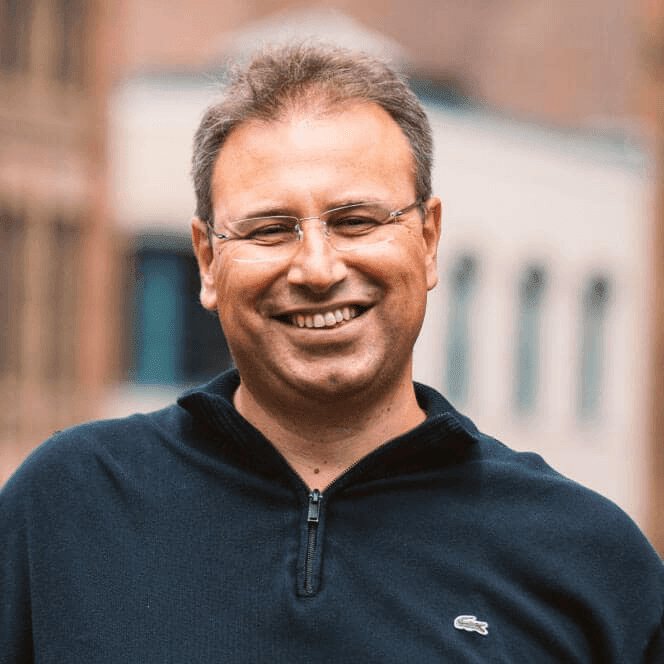
Co-Host
Aytekin Tank
Founder & CEO, Jotform
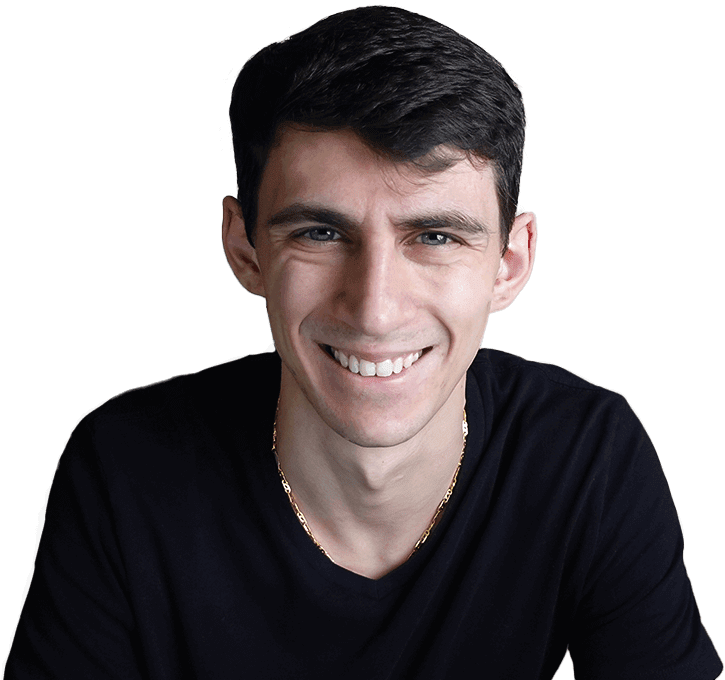
Co-Host
Demetri Panici
Founder, Rise Productive




About the Episode
AI isn’t just changing how we work — it’s redefining who truly belongs in their craft. In this episode of the AI Agents Podcast, host Demetri Panici sits down with Ray Jang, Founder & CEO of Atria, to discuss how AI is reshaping creative work, careers, and the future of modern advertising. From Ray’s journey leaving TikTok to surviving a near-death startup pivot, to building a creative intelligence platform used by brands and agencies alike, this conversation dives deep into: - How AI is lowering the floor but raising the ceiling - Why the “middle” of many careers is disappearing - The future of creative work, advertising, and AI agents - What it really takes to build and adapt in an AI-first world Whether you’re a founder, marketer, creative, or builder, this episode will challenge how you think about skills, leverage, and long-term relevance.
It used to be more like, hey, you can kind of fluff and do the job and you'll be able to get by because there was no strong alternative.
But AI, what it's doing, it's been a great binary filter.
Do you truly belong in this craft? Do you treat it as a craft or are you more just there to kind of pay the bills but also kind of fluff?
In that sense, I think it's become this great realizer as well in terms of where you kind of need to go and direct your energy in terms of your profession.
Hi, my name is Demetri Panici and I'm a content creator, agency owner, and AI enthusiast.
You're listening to the AI Agents podcast brought to you by Jotform and featuring our very own CEO and founder Aytekin Tank.
This is the show where artificial intelligence meets innovation, productivity, and the tools shaping the future of work. Enjoy the show.
Hello and welcome back to another episode of the AI Agents podcast. I'm here with Ray Jen, the founder and CEO of Atria. How you doing today, Ray?
I'm doing great. Excited to be here.
Happy to hear that. Yeah, for sure. Happy to have you. Just to kind of kick things off, I really like checking out what you were doing over there at Atria.
So you founded it in 2022, is that correct?
The company itself has been around since 2022. Atria is a pivot that we started about 22 months ago, slightly less than two years.
Gotcha. So what was the original thing? What was the pivot?
And how did you kind of get into AI? What was your path there?
Yeah, 100%. So I used to work at TikTok. I was a senior product manager there for close to two years.
It was a dog eats dog world but in the best way. It prepared me for entrepreneurship.
I come from a family of entrepreneurs. I knew I wanted to start a company.
I left TikTok and did an 11-day silent retreat as part of meditation and had this feeling that I wanted to reconnect to my childhood self.
What was the thing I gravitated most towards when I was a kid? It was gaming.
I loved playing games from a competitive, team bonding, and strategy standpoint.
I was aiming to build an alternative to Steam, but it was too big of a project and many people have failed attempting to do it.
I assembled a team and after a year and a half, we were flatlining in terms of growth.
With three months of runway, I decided to pivot and find a new direction.
While I didn't have a plan B, I was summiting one of the highest peaks in Southeast Asia, Mount Kinabalu.
I had an epiphany that if we're not growing, why not focus on building a platform that helps companies grow?
It had been painful figuring out how to get distribution and get people to care about us.
So we put the team together, had to say goodbye to some team members, and told ourselves we had three months to make it work or the company shuts down.
We built the first version of Atria in January 2024 and within the first week we were already making money.
That's when I realized there was something here.
I was always curious about AI and learning about it on the side more as a dabler.
I had a stint at an insurtech company where we tried to apply machine learning in claims processing and policy management.
With improvements in image and video generation, there was a world to be unlocked through automation of copy using GPT and frontier models.
Going multimodal to string together images, videos, the full stack with AI is very interesting.
That's a pretty bold thing to do, just completely pivot and say we got to make this work in three months.
What was going through your head during those three months?
It was the hardest period in my adult life because it was self-imposed.
I believe if you have conviction, you can go much further in your idea distillation and distribution.
One thing I underestimated was listening to real-world data and signals and making that part of the equation in building your ideas.
You should be open and flexible in terms of where your idea lives and your process.
I was not flexible. I said it had to be this way, and the real pain was letting go.
Letting go of the idea and recognizing that giving up at this point is actually healthy to take a step back to go two steps forward.
I put myself in isolation, ate once a day, cleaned up my diet, lost access to external stimulus like Instagram and caffeine.
I lost friends because I wasn't going to parties and dedicated myself to understanding why the first idea failed.
I treated the idea like a science of finding product-market fit and was obsessed with it.
It's not only about going after a big market but a customer you can directly address with clear time to value.
I came up with a framework as a prism or filter to apply to every new idea consideration.
I looked through at least a thousand ideas a day on Crunchbase and Y Combinator to have conviction on the next thing.
I put myself in a cave and didn't come out until I had the next thing.
It was the most painful thing but on the other side of pain is what you're looking for, and I did find it.
You feel pain or disappointment but at some point you feel pain and it's like are you doing it to yourself?
That's a fair assessment from what I've experienced.
That's incredible. I like hearing your story about that.
Just to dive into what you're doing now, as Atria has evolved, it's an ad intelligence platform.
We started more as a competitor spying tool, and now we're creative intelligence end to end.
We help optimize and create ads and soon we'll add launch so you can deploy ads automatically through our platform for Meta and TikTok with YouTube coming in Q1 next year.
There's a lot of different platforms to choose from, so how do you pick which platforms to target first?
Each platform optimizes for different things. YouTube is education, people go there to learn, so it's great for longer formats.
Within shorts, people are there more to learn, and Meta is more about top of funnel, building awareness and retargeting at consideration.
Consumer-oriented companies like e-commerce and D2C perform well on Meta, while B2B SaaS apps get exposed more on YouTube.
Different companies leverage platforms differently.
I have had less ads about productivity apps and more about AI since I shifted from productivity app YouTuber to AI YouTuber.
Just to go more in depth, tell me about examples of campaigns or people you've worked with and how you help them do a better job.
When I first started, there was a company called True Classic that makes amazing t-shirts.
They were a dream customer because they understood creative experimentation and were always at the cutting edge.
Initially, they wouldn't get back to me, but recently I was in LA sitting with the founder and CEO talking about creative strategy.
They spend more than seven figures monthly on Meta and realized they need a platform that gives strategic insights on creatives.
If you run thousands of ads, it's impossible to know which are worth doubling down on the spot.
Everyone's goal with AI is to trim the team and have the best and brightest perform the job of two or three people.
They love Radar, our in-house algorithm that scans creatives, scores different ad building blocks, and gives tailor-made recommendations.
It acts like a marketing teammate built in for you.
We're evolving to couple it with benchmarks to understand how similar companies perform and give better industry understanding.
The founders told me to keep doing great work and the dream customers will find you.
We also help growing brands, not just nine-figure ones.
For example, a protein bar founder inspired by David's protein bar started using our platform to clone ads and generate creative briefs in his brand tone.
Our goal is not to put out more AI slop but to put more human-inspired, strategic thought behind ideas so you can do more with less.
We're not here to replace agencies but to empower them. Many customers are agencies like VaynerCommerce.
Agencies love platforms like Atria because it helps them be more useful, contextual, and strategic across clients.
Did you get the blueberry joke?
There's a YouTuber called Captain Sinbad who did a meme series mocking people including Gary Vee's affinity for blueberries.
It's hilarious how many memes people have made about it.
I like hearing that you guys aren't trying to replace agencies. I used to work in marketing agencies and paid ads.
I managed about 70 million a year in ad spend on paid search.
From a product standpoint, how does it work to recreate different ads without being repetitive and without Meta freaking out?
The key to mutation is to introduce randomness from ad principles they haven't tried before.
We know their historic data and what they're currently running, so we index randomness to see what picks up instead of repurposing their content.
We also source ideas from non-adjacent industries to validate new ideas.
It's important to draw inspiration from outside your industry to avoid capping out and perpetuating sameness.
That tells you the difference between you guys, which is ultimately what I try to get to in these conversations.
Many people are concerned about AI taking over jobs. What's your opinion on the creative side, especially for graphic designers?
AI is making outcomes and jobs more binary. It used to be you could fluff and get by, but now AI filters who truly belongs in the craft.
It's become a realizer of where to direct your energy professionally.
If you're creative and find the industry is more data-oriented and scientific, maybe find a path that fulfills your creative purpose elsewhere.
AI reduces the floor by giving more access and reduces gatekeeping, allowing more people to enter.
We find affinity towards interns and recent grads who can prove their worth beyond resumes.
AI increases the bar by enabling pattern breaking and advanced creative work like CGI effects.
True creatives are dedicating time to learn and create unique content empowered by AI.
AI empowers creatives by reducing gatekeeping and enabling independent work with consistent online presence.
Despite negative sentiment about job replacement, AI is an equalizer and transformation in the nature of work.
I run a content agency that utilizes AI heavily and have seen how automation and organization have been hot trends.
I made a tutorial every day for 300 days and was able to quit my job by showing proficiency in a subject.
What are your thoughts on AI after these discussions?
There are three camps: AI will replace jobs, AI will enhance outputs and slow hiring, or AI will enable many to hyperfocus and build niche businesses.
I fall between the second and first camps, believing employees who utilize AI will be very effective.
I don't think all jobs will disappear; new jobs will be found as history shows with ATMs increasing bank clerk jobs.
Power to individuals is growing with solopreneurs using AI to automate processes and achieve more.
It's fun like a video game where you gain gear as models improve.
What is your long-term vision for the company and product in 3 to 5 years?
I try not to be deterministic due to past failure but have ideas like a product-market fit engine to validate products quickly.
Another idea is to build our own advertising channel to complement Meta, TikTok, and YouTube.
Lastly, to become the most insightful platform for customer data synthesis to target personas effectively.
I learned to internalize trends and data and develop bottoms-up understanding in company building.
The world is nonlinear with accelerating trends in robotics, computer vision, and LLMs, making long-term plans difficult.
I operate on 90-day plans to adapt to rapid changes.
Model improvements are happening at insane speed, like text inside AI-generated images becoming possible recently.
Multiple competing models now create better and funnier meme videos and code faster.
Tutorial production improved by uploading screen recordings to models that understand context and generate scripts.
We built a QA agent that checks video edits with Gemini 3.0, speeding up editing feedback.
Small companies can move faster than big ones by leveraging AI and systems thinking.
Systems thinking is key to leveraging AI and automation effectively.
Despite fears of job loss, new jobs are emerging and we're empowered by AI.
What is one of your personal favorite AI tools that's not your own company?
I love using Whisper for voice-to-text, which helps me write emails and product docs by rambling and then refining with GPT or Claude.
Voice mode helps me ask questions while traveling and feel less lonely.
I'm tinkering with n8n.com to build automations, which is fun and productive.
Another favorite is Krisp AI, which removes background noise and acts as a meeting notetaker with minimal delay.
Where can everyone go to check out the cool stuff you're doing?
Tryatria.com is our site, though we're aiming to buy atria.ai next year.
I'm big on LinkedIn at Ray Space J and our YouTube channel Atria AI.
We're building AI agents to autogenerate creative briefs and soon ready-made image and video ads that outperform current ads, launching Q1 next year.
I hope everyone enjoyed this episode. Check out Tryatria.com, hit like, subscribe, and leave a review.
Thanks for watching and listening. We'll see you in the next one. Peace.
Stay Ahead with the AI Agents Podcast
Get the latest insights on AI agents, their future, and developments in the AI form industry.