Momentum Episode 13:
From Micro-influencer to Tech Marketing
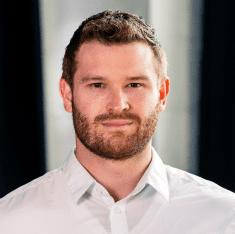
Host: Elliott Sprecher
Apr 04, 2022




About the Episode
Ever wonder what goes into becoming a micro-influencer? In this episode of Momentum — a podcast by Jotform — we sat down with our very own Kimberly Pulito to discuss her personal background and journey to becoming a micro-influencer with 10k+ followers. Learn how Kimberly built a subscriber base from scratch, and how her unique combination of video creation skills and technical know-how eventually landed her a job at Jotform.
What does a home decor and fragrance micro influencer have to do with B2B tech marketing? Well, you'd be surprised sometimes a company finds what they're looking for in the most unlikely places and today that's exactly what we'll be exploring on Momentum, a podcast by Jotform where we talk about the technology, productivity tips, insights, and best practices that help us move forward in business and in life. Let's get started.
Maintaining momentum. This is Elliot, your host, and today I am here with Jotform's very own Kimberly Polito. If you've watched any one of our numerous product videos, you've probably seen her. We have hundreds of tutorial videos that she has personally been in. She is a micro influencer who now works for us at Jotform full time and I couldn't be any more excited to share her story today.
Kimberly, welcome to the show.
Thank you, excited to be here. It's great to have you.
So before we go any further, I think we should define what a micro influencer really is for those who might not be familiar. There are varying levels of social media influencers, of course. You all are familiar with them. Anyone who has social media probably follows one or multiple. They range from mega influencers, people who have over a million followers, to nano influencers, people with less than a thousand. Bigger doesn't always mean better, especially for a niche industry where the goal is to maintain an engaged following who's actually taking constructive things away from your content as opposed to just falling for the fame or celebrity.
So you are right sort of in that sweet spot. I think being a micro influencer you have just over ten thousand subscribers on your channel, The Fragrance Collective. I think it's a really interesting story how you went from that to being noticed by us at Jotform, a B2B tech company, to then working for us full-time and sort of how that came full circle and your unique role here and the skill set you used from your micro influencing days which are still ongoing to now working for us.
Let's start at the beginning. Why don't you just tell us a little bit about your background and kind of your YouTube journey and we'll dive into how that all translated to you being here right now.
Sure. I think it's really funny because before I started my business, I never did video. I never really had a reason to do video. Once I joined my company, I noticed the other successful people in my field were all doing videos and I was like, you know what, I should probably figure out how to do this. So I started my channel back in 2012 and I just consistently added videos. If you go back to my beginning videos, they were horrible but over that time it was really just about adding value, giving more than I take, and really showing people how I was doing my business and how I was seeing success. I think that's where a lot of the subscriber count came from. They saw that I was showing them exactly step by step pretty much what I do here at Jotform, how to do something. They know that whenever I upload a video, it's most likely going to be something like that. I'm going to teach them how to do something to make their business better.
Absolutely. How did you get involved with Scentsy to start?
Back in 2008, someone had brought the products into the company that I worked for at the time and I had never heard of it before. I thought it was really neat so I ended up purchasing it. At some point, I wanted to buy some more but couldn't find anyone that sold it, so I just joined to get all the products myself and smell all the scents. It pretty much just took off from there. There was no intent of making it a business; it just took off like crazy.
That's often how the best businesses are born. There must have been a learning curve when it came to the actual video aspect because that's an entirely different skill set than running, managing, or starting a business. How was that process for you?
Pretty much everything I do, I am self-taught. I Google and YouTube to figure out how to do something. In the very beginning, it was very raw content. I just shot the video with no editing and put it up on YouTube. Over time, I realized I could make videos shorter and cut out unnecessary parts to increase watch time. I taught myself how to edit, split, and make videos more compact. I think that's why people like to watch the videos because they know as soon as I hit record, they're going to get content that's really compact and able to give them what they need.
Definitely. It's kind of unique coming from that perspective because mega influencers have whole teams for video production, but you do everything on the front end and produce the finished deliverable asset. That's a cool aspect of successful micro influencers because they have to be competent in both areas.
What would you say was the key to really building up the subscriber base and success? I know you mentioned they relate to you for the content, but at what point did something start to really click and you started to see that subscriber count grow?
I think it was when I switched from making videos for my customer base to making videos for other consultants in my company. From there, of course, there were more customers out there, but building that knowledge and trust factor with other consultants was really easy to do when creating those videos. I started putting everything out there and once I did, the subscriber count went up really fast. You always have really good engagement on your videos because people appreciate what you're putting out. A lot of that is the trust factor and relating to the audience in a straightforward way.
What would you say was the most rewarding part of your micro influencer journey for the years you were on it and are still on it?
I think it has helped me build my team even more because with the company I'm with, people end up leaving for certain reasons like family or other things, but they're able to come back in the future. If they followed me before and thought I have really good content, they're going to come back and be under me. That has probably been the most rewarding thing, knowing that in the future it'll come full circle, a boomerang effect.
Prior to joining Jotform, how much of your time would you say was devoted to making, curating, and maintaining content?
Probably from start to finish on a weekly basis maybe two to three hours, nothing crazy.
It's honestly not as much as I would have guessed. In the beginning, it was probably more but now I know exactly where to go and what to do. It's a really easy process to get that stuff across.
Working in your niche, you probably know everything you're talking about, so maybe not a huge amount of research is needed. I'm sure that changed a bit when you got to Jotform and had to start researching all of this.
Let's pivot to that. Obviously now you're here working at Jotform and it's kind of an interesting story how that came about from your particular niche as a YouTuber to us finding you. I believe it started because you did a video about Jotform on your channel, totally unprompted by us. We had no idea what was going to happen but I think that was how it first began. Do you want to talk a little bit about that?
Sure. The concept is whenever I'm using something in my business, I want to shoot a video for it. Jotform was one of those things. I think it was an integration with PayPal that I did a video on back in 2017. I was in my kitchen in my pajamas. If you're watching or listening and think what I put out there doesn't really matter, it does because it's the value you bring. Who would have thought a video I did in my kitchen in my pajamas would be seen by the company that I did it about? You never know what will come back.
It makes sense because a couple years ago we were ramping up our video production and marketing efforts. As we rolled out products, we looked for someone who could make videos about Jotform for us or on another channel. We did an audit and your video came up surprisingly high on YouTube search results for Jotform. You spoke about it well, connected with your audience, and had good engagement. We reached out to you about making some sponsored Jotform videos and then videos for our channel. That's when it really kicked into gear because you had to start doing research on Jotform products and tools, which was a learning curve for you.
Yeah, when I got that email, I was like, is this real? I needed to do research and Google it. It was crazy. I use very specific things in Jotform, so when asked to do videos outside my wheelhouse, I had to take time to figure out how to do those things. But Jotform is super simple to figure out, the easiest form builder, no code.
Because the first few videos were related to your audience and wheelhouse, but then because we liked your delivery, we started asking you to do videos that had less to do with your core audience and more with ours. You did a great job with research and high-quality videos. As we ramped up marketing efforts, we looked for a role to fill that matched what you were doing because we wanted someone who could talk about the technical aspects of our product and engage an audience cohesively. We didn't want to script everything, and you can put together a polished professional presentation without a script, which is a unique skill set you bring from being a micro influencer.
We thought, why don't we just ask Kimberly to come on full time? I remember that discussion; you thought we were going to say something different on that call.
I was freelancing for a few months and when you said you wanted to jump on a call, I thought it was finally coming to an end. But then you asked if I wanted to come on full time, and I was like, that is not where I thought this was going.
Holistically thinking back, what skills transferred from your micro influencer days and what was especially new about starting full time as your job?
A lot transferred over, like knowing how to speak with the video, script it, shoot it, edit it, and finalize it. But Jotform has really leveled up my video skills in the last year. Your videos have definitely gotten better. Trying to improve every single video with editing and camera footage has been major.
Let's talk about the process from beginning to end of making a video. You have to have the topic, research it, know what to show, record it with voiceover, screen capture, graphics, edit it, and then have the final product. What does a day look like when you get a video request, say a new Jotform apps video?
If it's brand new, most of my time is researching and playing around with it to understand how it works and what needs to be shown. I make sure I can replicate what needs to be shown before shooting the video. Then I set up my green screen, camera, and lights and record myself and the screen. After that, I slice it all together and edit it. It pretty much takes a day for those types of videos, which is crazy because the final videos are often between two and four minutes, sometimes up to five, but there's a lot of research and editing that goes into making it short and concise.
The process normally is I get a link or information, sometimes based on a support article, and you do a video on it. Those are easier because the steps are laid out. But when we give you new products to record videos for, often the week before the product comes out, it's a whole other adventure because those products aren't 100% ready, still in beta, with final tweaks. You get to see what's being perfected, which has been an interesting experience for you.
It's fun and frustrating because when you find things that aren't working, you get to be part of the process to fix it. But when recording live, if something doesn't work, you have to stop and troubleshoot with the support team. I think that's more fun than frustrating because I'm glad to find things to make better.
It's good because when writing articles or blog posts, you can reload the screen and just need screenshots, but in videos, you have to show the seamless process from beginning to end. If there's a hiccup, you can't just redo it; you have to start over unless you get fancy with editing. This has helped our product because you almost QA it and talk to the product team about issues, helping us fix bugs and make a better product.
How many takes does it normally take to get through a whole video?
Normally one take, just one complete sentence if I say something wrong, I go back a couple of sentences and start over. But it's usually one take, which can be 10 or 12 minutes that I cut down.
How long does editing usually take?
It depends on how much editing is needed. Sometimes if I did a good job, it takes 10 minutes, but if I have to cut and splice, it can take 40 minutes.
So 10 minutes recording, 40 minutes editing, and hours of research to get there. That sounds like a day in the life of a micro influencer, even working for a tech company. Some things don't change when you wear all the hats and aren't given a script.
Not having a script is a big piece. What you see is me pulling a couple of sentences from the newsletter topic and working that in, then going step by step. We don't have to script it for you; we rely on you to intro it, give the value proposition, and free flow the tutorial, which is great for the video team.
What is the most challenging part of it for you?
The only challenging thing is when a video worked the first time but not the second. That's really the most challenging, but it's nothing that can't be fixed. It's not a big deal, which makes this job really amazing.
You tend to have a knack for finding bugs, which is good because I don't want someone to come in and do videos for older support articles or widgets that haven't been touched in a long time and have people try to use them and give up. Fixing those helps more people use the product.
It helps our end product whether it's a new product, an older one, or functionality that needs a facelift. Having videos to explain simple support guides and functionalities makes a world of difference compared to reading a huge block of text. Seeing it on screen is much easier to learn.
People learn differently, but more learn from seeing someone do it and where it goes. Being able to see clicks and steps is the easiest way to learn because they can literally do it beside you.
Holistically, what is the most rewarding part of being brought on to work at a tech company?
Being paid to do something I love. I went 10 years shooting and editing videos for my own content and now being seen by a company I love and being paid for it has been the most rewarding thing for sure.
It's been rewarding for us as well, and we're glad we found you and brought you on board. You still make videos for The Fragrance Collective, which is ongoing. You're almost at 12,000 subscribers. I recommend checking out your channel. We'll definitely keep seeing Kimberly on our YouTube page, probably more often than not. We're so happy to have you on board.
Anything else we didn't cover up to this point?
I think we've gotten it all and ticked all the boxes.
Thanks for coming on the show. I really appreciate it. This was informative and useful for me and hopefully for all our viewers as well. We'll see everybody next time.