
AI is changing performance management, but will it fix longstanding issues or create new ones?
There’s no denying that the use of AI in HR management is becoming increasingly common. It’s more than an HR technology trend; it’s here to stay. If you’re reading this, then you’re probably thinking about using AI for performance reviews and weighing the pros and cons of the approach.
AI-driven performance reviews, which use AI to automate and improve the employee evaluation process, are gaining traction due to benefits such as real-time feedback, greater objectivity, and better efficiency.
If you’ve implemented HR automation to improve efficiencies in your HR department, you know what a difference it can make for your HR team and your entire organization. Adopting AI for employee evaluations has the potential to do the same.
Having a manager manually review notes, reports, project completion times, and other performance data is time consuming and can lead to a subjective assessment. AI, however, can aggregate data from multiple sources and analyze it to give a more comprehensive, objective view of employee performance.
While using AI in performance reviews has its advantages, there are also drawbacks to consider, such as risk of bias, lack of human empathy, absence of contextual understanding, and the potential for decreased employee morale if the role of AI isn’t transparently communicated. It’s important to bring human judgment and insight into the process and ensure that performance reviews are based on more than metrics, because AI doesn’t tell the whole story.
In this article, we’ll explore how AI is reshaping the traditional employee review process, review the pros and cons of AI in performance management, examine best practices for implementing AI in performance reviews, and highlight Jotform resources that can help enhance the performance evaluation process.
How AI is reshaping performance reviews
Performance reviews are one of the primary functions of HR. But with the assistance of AI tools, employee evaluations no longer need to rely on the time-consuming task of gathering troves of information from multiple sources and recalling past performance over the last few months or the previous year. Instead, AI can access data from company systems, analyze objective performance metrics, and provide real-time performance data in a fraction of the time.
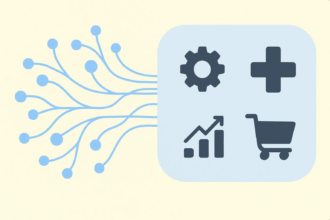
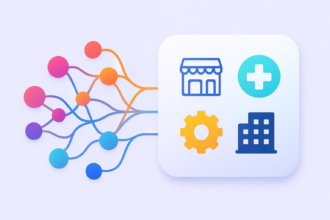
AI performance management tools gather information from several channels using web scraping, structured data access, and API integration with company systems. These sources include CRM activity, HR systems, emails, calendars, past reports, productivity tools, Slack and other employee communication channels, project updates, colleague feedback, skill maps, Zoom or Microsoft Teams meetings, and project management tools.
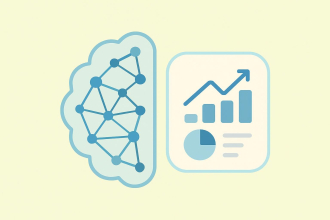
Once the data is gathered, machine learning algorithms analyze performance trends over time to identify patterns, predict future performance, understand what drives employee and team success, and deliver other insights. This data-driven approach provides real-time feedback, reduces human bias, and ensures more objective evaluations.
The pros and cons of AI in performance management
While AI can be a powerful tool in performance management, it’s important to understand both the benefits and challenges of AI-driven feedback before adopting it for your organization.
With that in mind, let’s review some of its pros and cons.
Pros of AI in performance management
- Data-driven objectivity: AI reduces the risk of unconscious bias by processing factual data from multiple sources, providing objective insights, and standardizing the employee evaluation process, resulting in evidence-based decisions.
- Continuous feedback: Continuous feedback allows employees to adapt and strengthen their performance in real time throughout the year as issues arise, rather than rushing to improve or make changes just before a review, leading to continuous employee development.
- Elimination of subjective manager bias: Traditional performance reviews have the potential to be distorted by subjective bias, such as when a manager’s personal opinions or preferences influence the employee assessment. AI reduces subjective bias by using data-driven insights and a standardized evaluation process. AI can also mitigate recency bias, as it collects data over time. These factors combine to provide fairer and more comprehensive reviews.
Other pros of AI in performance reviews include
- Improved feedback accuracy and consistency
- Increased efficiency
- Less chance of human error
- Personalized feedback and career plans for employees
- Reduced administrative burden
Cons of AI in performance management
Lack of human emotional intelligence: AI is great at providing data-driven insights because it can analyze large amounts of information to reveal patterns and predict trends. Unfortunately, it lacks human emotional intelligence, which can lead to inaccurate perceptions. For example, AI might conclude an employee has performance issues based on metrics alone, without considering context such as illness, family emergencies, or other personal challenges.
AI is prone to algorithmic bias: Because an AI system can only reflect the data it’s trained on, there is the possibility for bias. For example, if training data favors one gender, race, attribute, or characteristic over another, the AI can unintentionally reinforce these biases, potentially leading to discriminatory outcomes and raising ethical concerns. One solution for this dilemma is to be sure your AI system is trained on diverse and representative data, and update and audit it regularly to ensure fairness.
AI can misinterpret qualitative achievements: Because AI doesn’t have the ability to understand the subtleties of human behavior or the context behind achievements, it may overemphasize quantitative data. A focus on quantifiable metrics that ignore key qualitative attributes like creativity, teamwork, leadership abilities, or strong communication and collaboration skills results in incomplete or unfair evaluations.
Other cons of AI in performance reviews include
- Distrust among employees if they feel performance reviews lack a human touch
- High implementation costs
- Inaccuracies
- Learning curve in AI adoption
- Risk of over-reliance on AI without factoring in human context and empathy
- Security and privacy concerns
Companies are addressing these concerns about AI in performance reviews by focusing on fairness in decision-making, emphasizing transparency in how the AI works, and integrating human oversight. They’re using AI to analyze communication patterns, identify performance trends, and produce actionable insights, while ensuring that human judgment plays a key role in final evaluations.
The goal is to use AI to enhance, rather than replace, human intervention. The focus on human oversight, transparency, and reducing biases while leveraging AI’s efficiency and data-driven insights help ensure objective, accurate reviews.
The human-AI balance in performance reviews
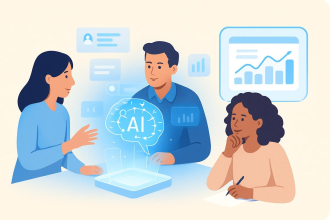
The best method for using AI in performance reviews is a hybrid approach that blends AI’s strengths (such as data-driven insights, objectivity, and continuous feedback) with human oversight, where managers oversee the process, contextualize results, and add emotional intelligence.
AI is meant to generate reliable data for a smart, perceptive manager to base an objective evaluation on, not to replace the human element altogether. AI in performance management without human input increases the risk for bias, privacy concerns, inaccuracies, low-quality work, and distrust among employees. That’s where human oversight comes in; it’s necessary to make sure evaluations are fair, accurate, and unbiased.
Best practices for blending AI-driven feedback with human discretion include
Keeping context in mind: Algorithms can replicate biases from the data they’re trained on, which may lead to inaccurate or unfair feedback. A missed deadline or sales goal, for example, could be the result of illness or technical challenges, a nuance AI doesn’t understand.
Combining the strengths of AI with a human touch: Tap into AI for its core strengths, such as data analysis, pattern identification, and automated review generation, while letting a human manager decode the findings, look for the context, and add nuance.
Practicing transparency with employees about the role of AI in performance reviews: No one wants to feel like their review was generated solely by AI, so be sure to communicate how AI is used in evaluations, while stressing that human oversight and input is a key part of the process.
Emphasizing that AI is used only to enhance, not replace, human judgment: Be sure your HR team knows that AI will help them do their jobs but won’t take the place of their experience and expertise.
Establishing ethical guidelines and policies: Clearly set forth how AI will be used in HR processes along with guardrails for ensuring fairness, accuracy, and data privacy.
Providing thorough training for HR teams: Set up training sessions that instruct HR on how to use AI responsibly while getting the most out of its performance review capabilities.
Organizations can train managers to interpret AI-generated insights effectively by providing instruction on AI literacy and fundamentals, bias mitigation, proper data analysis, and the ethical use of AI in performance evaluations. Managers should also receive hands-on practice with the AI tools and platforms they’ll be using, along with instructions on how to prompt correctly.
And because AI continues to change and improve, ongoing training should be provided to keep managers current with new developments and best practices.
Best practices for implementing AI in performance reviews
Successfully implementing AI in performance reviews involves recognizing AI’s strengths, such as its data-driven objectivity and continuous feedback, while understanding the necessity of human oversight to ensure contextual understanding and fairness.
It’s also important to integrate AI into your HR processes without disrupting company culture. You can do this by communicating transparency about how AI will be used in performance management, offering robust employee training, relying on gradual implementation of AI methods and tools, and prioritizing data privacy and ethical concerns.
Other practical steps for AI adoption include
- Selecting an AI-driven performance management tool: Choose AI tools based on your organization’s specific needs that integrate with your existing HR software and communication platforms, while keeping in mind scalability and any customization options you may need.
- Training HR teams and managers on ethical AI use: Focus on establishing clear guidelines for AI use in your organization and include training on ethical considerations such as fairness, transparency, and accountability.
- Implementing safeguards against algorithmic bias: AI is only as good as the data it’s trained on, so if the input is biased or incomplete, the output will be, too. Review the data and algorithms your AI tools use regularly to look for sources of bias or error.
- Balancing AI-generated insights with qualitative evaluations: The most effective method for performance reviews is a hybrid approach in which AI gathers data, identifies trends, and provides objective analysis, while human oversight offers contextual understanding, empathy, and nuanced feedback.
- Auditing AI decisions regularly to maintain fairness: You can do this by testing on diverse datasets and analyzing the results. Involve diverse teams in decision-making, provide bias training, and continuously monitor and adjust algorithms or data inputs based on your audit findings.
A good time to review your AI adoption steps, choose your AI performance management tool, and establish ethical guidelines and policies is during your regular HR planning as part of your overall human resource management strategy and goal-setting.
Why Jotform AI Agents belong in performance reviews
Jotform AI Agents is the ideal no-code AI-powered solution that streamlines the performance review process by automating and simplifying data collection, providing personalized feedback mechanisms, and supporting more effective conversations about employee performance. AI Agents give your organization the ability to gather detailed feedback efficiently, create comprehensive evaluations, and foster open communication between employees and management.
Key AI Agents features include
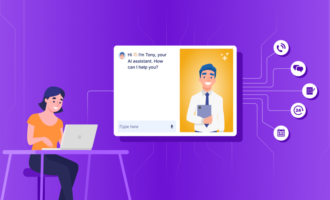
- Chatbot to answer user questions
- Live chat for switching from AI chatbot assistance to human agents
- Personalized conversations where AI Agents interact with your users, answering questions and automating tasks
- Forms that can be transformed into dynamic conversations with AI Agents that fill out forms, collect feedback, and process secure payments
- Tools enhanced with capabilities for sending emails, sharing video links, automating workflows, and more
- Integrations that allow you to seamlessly sync data and enhance productivity by connecting your AI Agent with popular apps and services, like Slack and Google Calendar
- Multichannel support in which AI Agents can assist users via a chatbot on your website, phone, SMS, WhatsApp, or QR Code for seamless interactions
- Security features for AI Agents to safeguard your data
- And more!
Other Jotform AI solutions include Performance Tracking AI Agents that transform traditional form-based tracking into dynamic conversations that capture, analyze, track progress, and report on key performance metrics with no coding required. There’s also our Simple Annual Performance Review AI Agent, which engages employees and managers in a dynamic conversation that transforms traditional reviews into interactive discussions for insightful evaluations.
You can also check out our AI Tools Directory, with 34 additional resources that combine the power of Jotform’s existing capabilities with AI, and our User Guide for Jotform AI Agents, where you can learn how to set up your first AI Agent, use AI Agent templates, create an AI Agent from an existing form, or clone yourself as an agent, and so much more.
AI in performance reviews: Where do we go from here?
While AI offers many benefits and efficiencies for improving traditional performance reviews, such as continuous, data-driven insights and the potential to reduce human bias, it isn’t likely to replace standard evaluations entirely. Human oversight is essential to ensure contextual understanding, empathy, and fair, nuanced feedback based on qualitative characteristics.
Future trends in AI-driven feedback include predictive talent analytics (which uses data and analytics to gather valuable insights, inform strategic decisions and forecast future outcomes) and AI-powered coaching (where AI provides real-time feedback on performance, offers suggestions for improvement, and delivers targeted training).
Other trends in AI-driven performance reviews include hyper-personalized feedback, more nuanced chatbots, greater automation and efficiency, virtual reality integration, and career path modeling.
No matter how advanced AI tools for HR become, however, it’s important to always incorporate human oversight into the performance management process. If AI is left unchecked in HR decisions, you run the risk of overlooking qualified job candidates, creating biased and discriminatory outcomes, and even potential legal issues. You may also encounter decreased employee morale if team members feel reviews are based more on machine learning than on human engagement in the process.
HR professionals should explore AI to assist with performance reviews and use it to its full potential in the evaluation process, while maintaining a human-first approach, remembering that AI enhances but does not replace the human touch.
This article is for HR leaders, People Ops teams, HRIS administrators, and people managers who are evaluating AI to modernize performance reviews without sacrificing fairness, empathy, or culture.



































































Send Comment: