
If your business is focused on delivering better experiences for consumers in 2026, you’ll need to set tangible goals. Customer service objectives should be specific and measurable goals that define what success looks like for your support team; they also should align with your broader business priorities. Vague objectives like “improving customer service” won’t cut it. They need to be clear, realistic, and time-bound to support long-term team performance gains.
Our guide explores 12 customer satisfaction goals you should aim for this year, as well as specific examples and tips for aligning them with your broader business goals.
Benefits of client service objectives
Assigning measurable objectives to your customer service strategies creates alignment across teams by establishing shared priorities and expectations. When everyone understands what success looks like, your team can focus its efforts on the outcomes that matter most. This clarity reduces confusion, improves collaboration, and helps employees make better decisions during high-pressure customer interactions.
Customer service objectives also play a key role in measuring performance. If you don’t have defined goals, it’s difficult to evaluate whether your strategies are actually working. Tie your objectives to metrics such as
- Response time
- First-contact resolution rate
- Customer satisfaction ratings
This approach gives your managers concrete data to help them assess performance and identify gaps. Use what you learn to pursue continuous improvement and avoid reactive problem-solving. Well-defined service objectives also lead to more consistent and reliable experiences for your customers, who will benefit from
- Quicker responses
- Less time spent on hold
- Clearer communication
- Smooth resolution processes
Over time, this consistency builds trust and loyalty. According to the Zendesk 2025 CX Trends report, 63 percent of consumers are willing to switch to a competitor after only one bad customer experience. Achieving desirable service objectives will directly support your broader business goals, such as maintaining high retention rates or earning referrals.
Key types of customer service objectives
Customer service objectives typically fall into several core categories, each addressing a different aspect of the customer service experience and internal operations. One of the most common focuses on response and resolution times. Objectives in this area aim to reduce how long customers have to wait for help and how quickly issues are resolved. Research from HubSpot’s 2024 State of Service Report shows that 82 percent of customers want their issues solved immediately. Faster response times are closely tied to higher customer satisfaction.
Another major category centers on customer satisfaction and experience metrics. These objectives allow you to gauge and improve how satisfied customers are when interacting with your brand, as well as how they rate their overall experience. To improve in these areas, prioritize the following:
- Better communication
- Training
- Customer-focused service strategies
A third area of focus is team efficiency and cost management. While customer service is about delivering value, it also needs to be sustainable. Your objectives may include
- Reducing ticket backlogs
- Increasing first-contact resolution rates
- Improving staffing levels based on demand
The goal is to get customers the assistance they need when they need it. You also want to make sure you use your resources optimally so your employees can handle higher volumes of requests without sacrificing quality. Consumers will be more satisfied, you’ll avoid unnecessary overhead, and employees will have manageable workloads.
Examples of measurable customer service objectives
Here’s a look at some customer service objectives your organization can set for itself in 2026:
1. Reduce first-response time to under 30 minutes
Responsiveness is often one of the strongest drivers of perceived service quality. A fast first response reassures customers that their request has been received and prioritized, lessening frustration and preventing unnecessary follow-ups.
When working on this objective, set targets for each channel, such as email, chat, and social media. Offering shorter wait times on each channel will mean less friction for customer service teams when they take a call or send an email.
2. Achieve a customer satisfaction score (CSAT) of 90 percent or higher
A customer satisfaction score (CSAT) target of 90 percent or higher is a clear benchmark for evaluating how customers feel about their service experience. This objective encourages your team to focus on empathy and offer quality resolutions. Speed alone is not enough to improve your CSAT scores.
Once you set this objective, you’ll need to closely monitor customer satisfaction. A satisfaction survey is the best way to measure and track changes in CSAT over time. Tracking trends will help you identify gaps in your service strategy.
3. Increase Net Promoter Score® (NPS®) by 10 points within six months
Your Net Promoter Score® (NPS®) measures how likely customers are to recommend your business, making it a strong indicator of long-term growth. If increasing your NPS is an objective, give yourself a target point increase and a set time frame, as in our example above. Setting this goal pushes your team to deliver consistently positive experiences.
An NPS survey tool is useful for tracking your NPS over time. It consists of a series of questions for customers that gauge their willingness to advocate for your brand. A higher score allows you to tap into the power of word-of-mouth referrals.
4. Resolve 80 percent of customer inquiries on first contact
First-contact resolution is a powerful metric that reveals how efficient you are and how satisfied your customers are. No customer wants to make call after call to your service center to resolve a problem. This objective encourages your team to improve knowledge-sharing and reduce unnecessary handoffs among departments.
Resolving four out of five customer inquiries on the first contact is a solid goal to set for your business. According to SQM Group research, the industry average for first contact resolution is 70 percent, with top performers achieving 80 percent or higher. If you hit that goal, raise the stakes slightly. To excel at first-contact resolution, you’ll need to provide your agents with quality tools and exceptional training.
5. Reduce average ticket resolution time by 20 percent
Many businesses aim to reduce how long it takes to resolve tickets. Slashing ticket resolution times by 20 percent or more demonstrates to customers that you value their time. It also can increase internal efficiency.
To achieve faster resolution times, you’ll need to become more efficient and eliminate bottlenecks. You will also need a system for identifying and prioritizing high-impact issues.
While speed is important, you cannot sacrifice quality to solve problems faster. Strive to give your customers a great interaction with your brand and solve their problems efficiently.
6. Lower customer complaint volume by 15 percent year over year
Reducing the volume of customer complaints you receive is a strong long-term goal. Again, make sure the target is realistic. Look beyond individual interactions and address the root causes of dissatisfaction.
Analyze trends to determine which issues customers complain about most frequently. For example, you may have a policy that is unclear, forcing customers to contact the service team for clarification.
7. Improve customer retention rate by 5 percent through proactive support
Your customer service team plays a huge role in your ability to retain customers and increase their lifetime value. Offering proactive support, such as checking in after onboarding or anticipating common issues, helps customers feel appreciated before they encounter a problem.
Improving your retention rate by even a small percentage can have a huge impact on revenue and lifetime value. This objective will align closely with broader business goals related to overall growth and long-term stability. Remember, it’s cheaper to keep an existing customer than it is to acquire a new one.
8. Increase self-service usage by 25 percent
Encouraging customers to use self-service resources improves internal efficiency while empowering them to find answers on their own. To accomplish this objective, you will need to
- Create or expand knowledge bases
- Improve search functionality
- Make “help” content easier to access
Higher self-service usage rates will reduce support ticket volume and shift the burden away from your internal team, letting them focus on solving more complex issues.
When offering self-service, make sure to gather feedback about the customer experience. Not sure what to ask? Check out this list of customer service survey questions for inspiration.
9. Train 100 percent of customer service staff on updated service protocols
Make sure all of your customer service employees are trained on the latest policies and procedures. They need to know what they can and cannot do without supervisor approval, when to escalate calls, and how to route tickets to the appropriate departments. When everyone follows the same set of rules, the customer experience becomes much smoother.
Track training completion data through your learning management system. Set firm, but reasonable, deadlines for completing the coursework.
10. Maintain a customer effort score (CES) below a defined threshold
Interacting with your brand should never feel tedious. Track your customer effort score (CES) and set a target threshold to strive for. To achieve and maintain a low CES, you will need to
- Simplify processes
- Reduce unnecessary steps
- Communicate clearly
Customers should walk away from every interaction with your brand feeling satisfied, not frustrated.
11. Respond to all customer feedback within 48 hours
Timely responses show customers that you value their opinions. Respond to all feedback, including negative reviews. Answering quickly can build trust and prevent minor concerns from escalating.
Establish clear ownership for following up with customers so employees know who is responsible for reaching out.
12. Reduce service-related costs per ticket by 10 percent
Make it a goal to reduce your service costs per ticket. Aiming for a cost reduction of about 10 percent is realistic for most organizations. To achieve this goal, you’ll need to improve your processes, implement automation, and allocate resources more wisely.
Challenges in achieving customer service objectives
Common hurdles you’ll face when striving to achieve customer service objectives include the following:
- A lack of team buy-in
- Resource constraints
- Limited staffing
- Unclear priorities
Customer forms are great tools for identifying the root causes of these challenges and fixing them at their source.
Best practices for aligning team efforts with objectives
To get your team on board with these objectives, you must communicate your goals clearly. Don’t just share what the goal is but also include why you have set those targets for the organization. When employees understand the “why” behind a goal, they will be more supportive of your new initiatives.
Leadership plays a crucial role in reinforcing objectives by providing the training and support teams need to succeed. Make sure you set realistic targets and recognize employees or shifts that hit milestones.
Over time, adjust your customer service strategies based on performance data. A culture of transparency and continuous improvement will keep your objectives relevant and within reach.
Invest in customer service automation to reduce the burden on your staff and place your objectives within reach. While you don’t want to force self-service or automation-driven interactions on your customers, you do want to make them available and appealing.
Give Jotform a try for customer service management
Jotform can help you hit your customer service objectives and provide a smoother experience for your consumer base. You can register new patients and collect user feedback with ease. Jotform is also incredibly flexible, thanks to our user-friendly interface and huge library of forms, which include the following:
Our platform includes conditional logic, meaning you can trigger forms after specific interactions. Take control of how customers interact with your brand with Jotform.
With Jotform Report Builder, you can easily generate reports from the forms your customers submit. Once you collect this data, you can analyze common service issues, improve your offerings, and monitor resolution times.
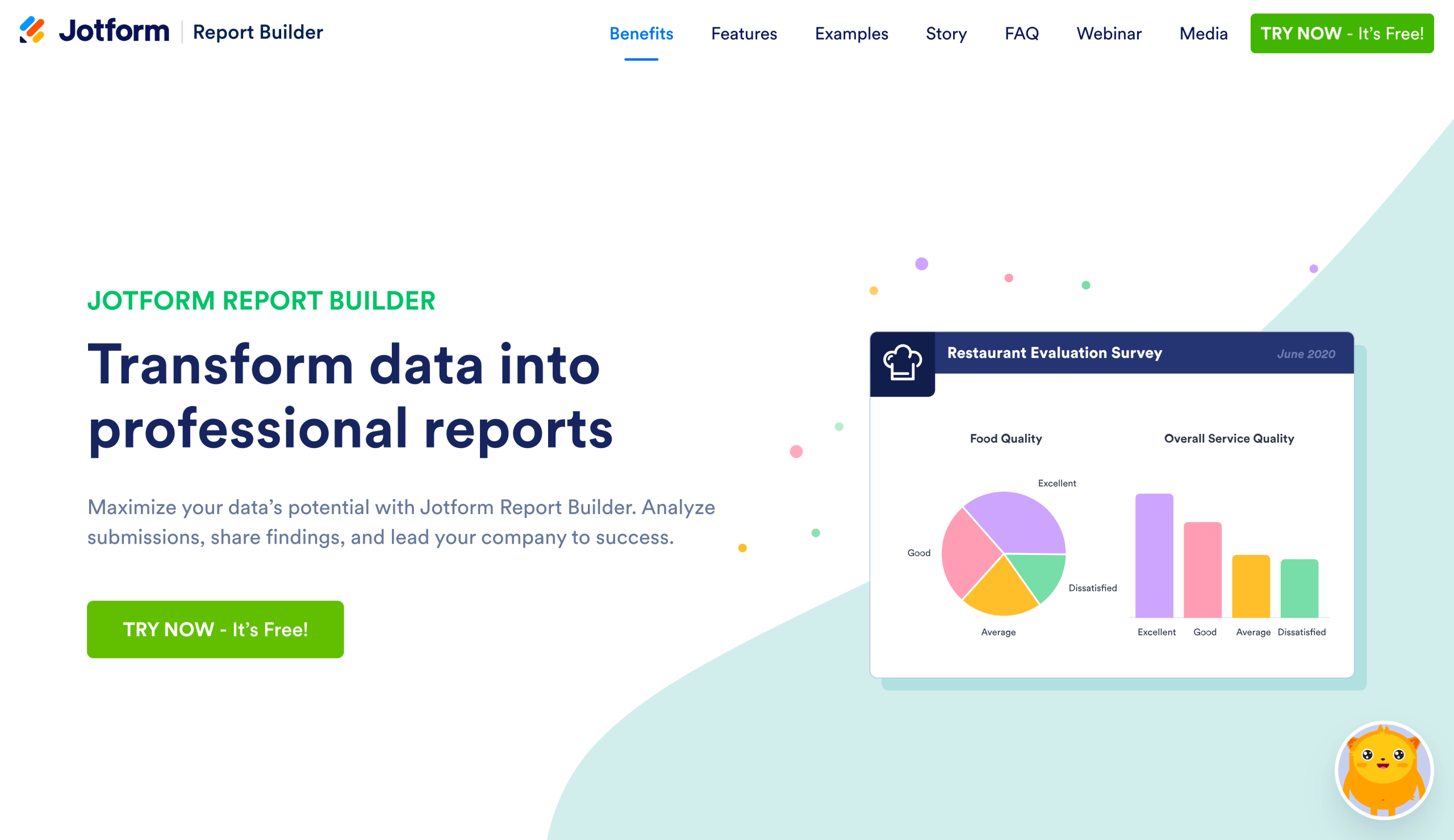
Ready to learn more? Explore Jotform Report Builder today.
Net Promoter®, NPS®, NPS Prism®, and the NPS-related emoticons are registered trademarks of Bain & Company, Inc., NICE Systems, Inc., and Fred Reichheld. Net Promoter ScoreSM and Net Promoter SystemSM are service marks of Bain & Company, Inc., NICE Systems, Inc., and Fred Reichheld.
This article is for teams looking to set clearer customer service goals, measure support performance, and improve customer experiences with practical objectives, feedback collection, and reporting tools that support better day-to-day decision-making.





















































Send Comment: