
Key takeaways
- Excel can work for simple project tracking, timelines, budgets, and small-team planning.
- Templates make Excel more useful, but project tracking becomes harder as workflows grow more collaborative and complex.
- Jotform is a better fit for teams that need structured intake, approvals, tracking, and reporting in one place.
Excel can be an effective project management tool for simple planning, task tracking, budgeting, and timelines, especially for small teams or straightforward projects. With the right template, it’s possible to organize work, monitor progress, and create useful project views without investing in additional dedicated software.
This flexibility is a major reason why Microsoft Excel remains a popular choice for project management. Teams can build custom spreadsheets with formulas, filters, and conditional formatting and use them for task lists, project timelines, resource tracking, status reports, or lightweight dashboards. For businesses that already use Microsoft Office, Excel also offers a familiar and accessible starting point with little to no learning curve.
At the same time, Excel has limits. As projects become more complex, spreadsheets can turn into time-consuming, manual systems that are difficult to update, share, and scale across teams. Real-time collaboration, automated workflows, approvals, and cross-functional visibility are not Excel’s strengths.
For teams finding themselves stretching spreadsheets into full workflow management systems, tools like Jotform offer a cleaner, more collaborative alternative to project management forms while still supporting the flexibility teams value in Excel.

Can Excel be used for project management?
Absolutely, Excel can be used for project management for small teams, straightforward workflows, and projects that don’t require advanced automation or collaboration features. With the right setup, Excel can help teams organize tasks, track deadlines, manage budgets, and monitor project progress in a familiar, flexible environment.
When Excel works well
- Managing small projects with limited team members and clear deliverables
- Tracking budgets, expenses, invoices, or resource allocation
- Creating simple timelines, task lists, status trackers, or lightweight project dashboards
Where Excel starts to break down
- Managing large, complex projects with multiple dependencies and moving parts
- Coordinating real-time collaboration across large or distributed teams
- Handling advanced workflows such as automated notifications, workload balancing, or cross-project reporting
Excel’s flexibility is one of its biggest strengths, but you can extend that flexibility even further by using an appropriate project management template.
You can find Excel templates online, each designed to meet different needs, from basic task trackers to detailed Gantt charts and budget planners. Choosing the right template for your project and your specific needs can save significant setup time, reduce manual work, and make it much easier to keep projects organized and on schedule.
5 Excel templates to use in project management
A blank spreadsheet can take a project only so far. The real value of Excel for project management comes from using structured templates that organize information clearly and reduce manual work. With the right setup, Excel can handle everything from scheduling and budgeting to assigning responsibilities and tracking project risks.
The following Excel project management templates are some of the most practical and widely used ways for teams to manage projects in Excel.
1. Gantt charts
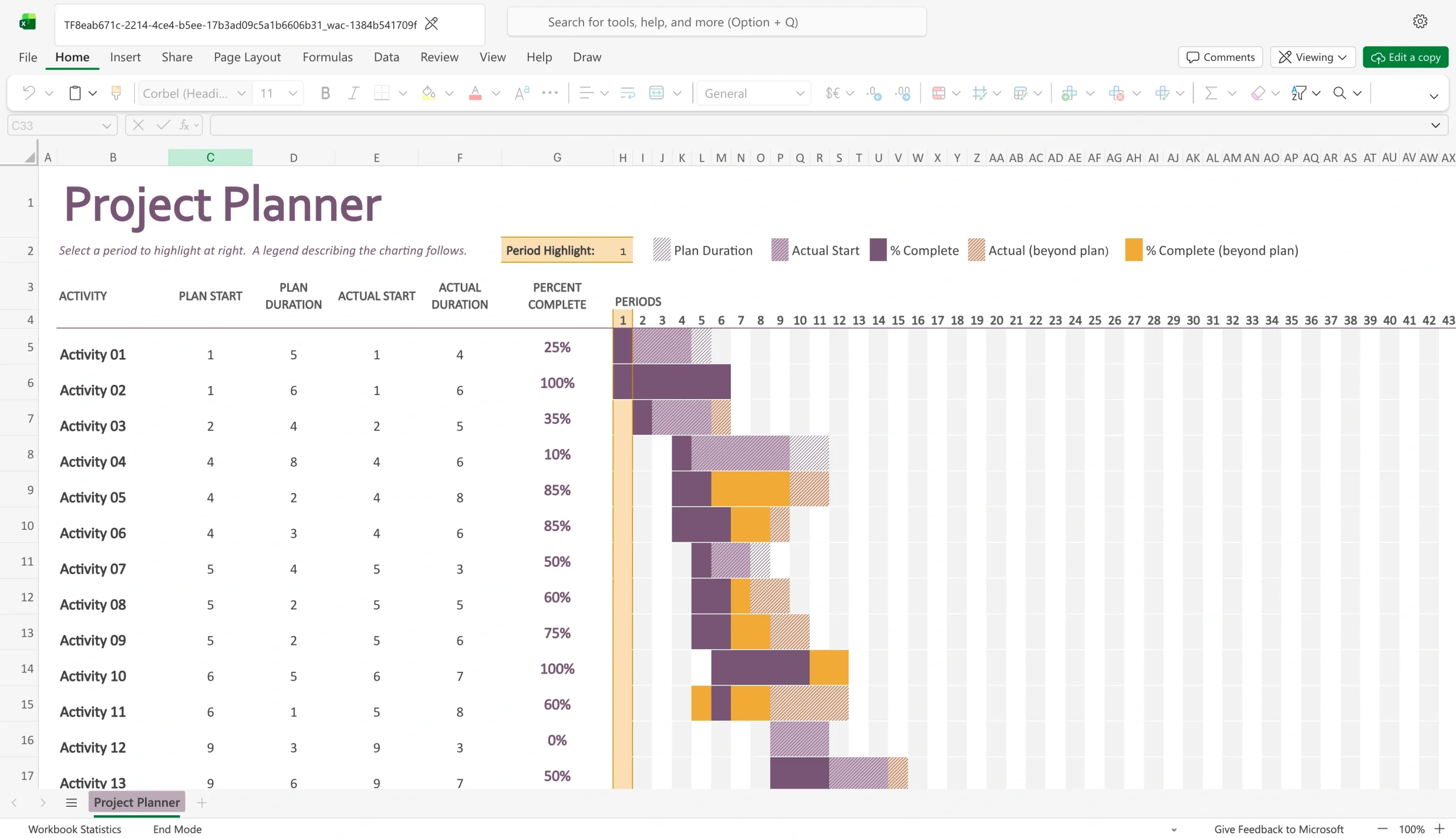
Gantt charts are among the most popular Excel project management templates because they make project timelines easy to visualize. Each horizontal bar represents a task or project phase and shows start dates, end dates, overlaps, and overall progress at a glance.
In Excel, Gantt charts are typically built from task and scheduling data, then converted into stacked bar charts to create a visual timeline. Teams use them to plan deadlines, schedule work, monitor progress, and spot potential delays before they disrupt the project.
Teams can save time by using prebuilt templates. These templates often include automatic date calculations, progress tracking, conditional formatting, and customizable layouts that make project scheduling far easier to manage.
2. RACI matrices
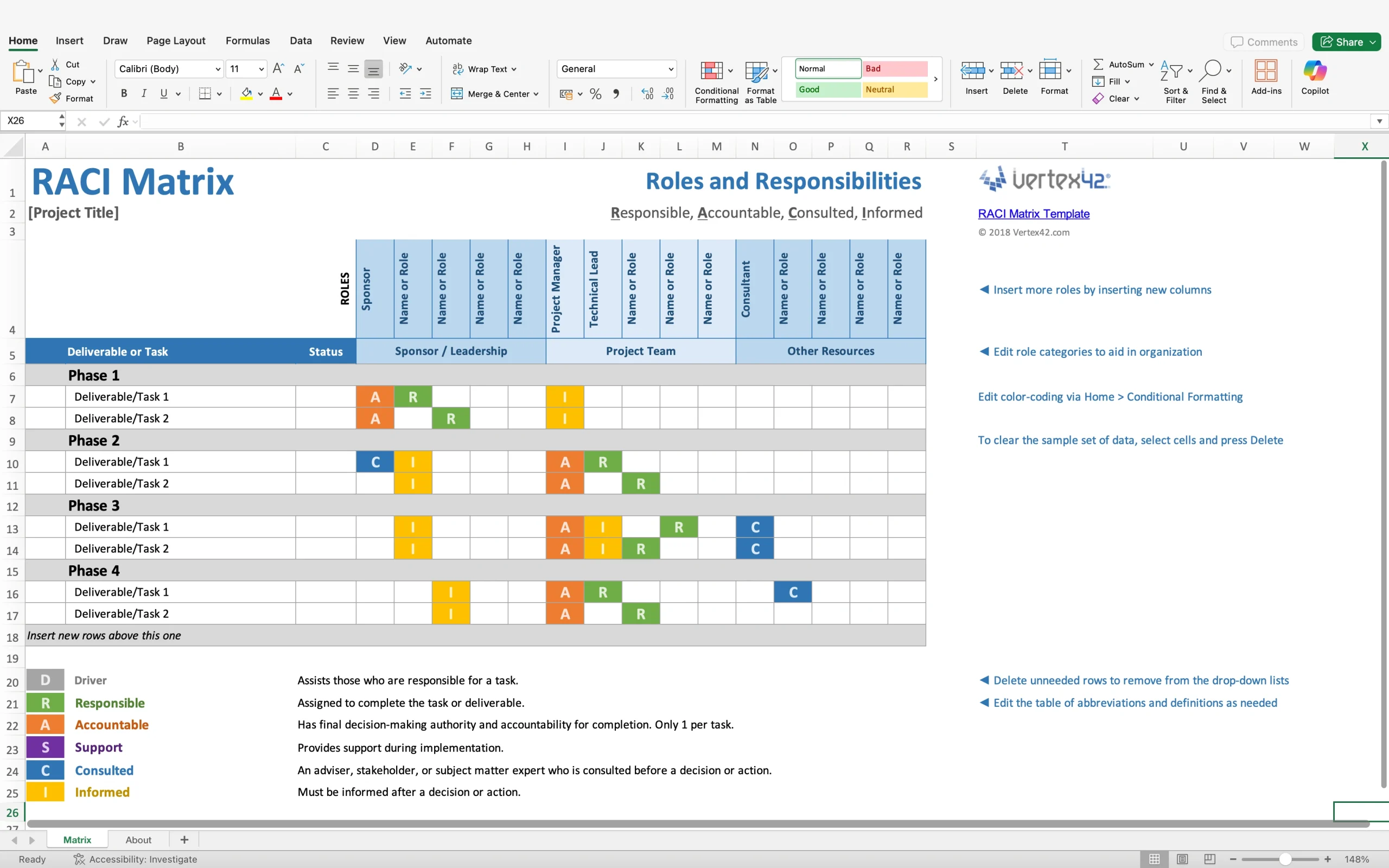
One of the biggest project management challenges is making sure everyone knows who owns which tasks. Without clear responsibility tracking, tasks can stall, overlap, or fall through the cracks. A RACI matrix helps solve that problem by clearly defining roles and accountability across a project.
In an Excel RACI template, team members are assigned one or more of these roles for each task or project phase. This creates a clear view of who is doing the work, who approves the work, who provides input, and who needs updates.
Pro Tip
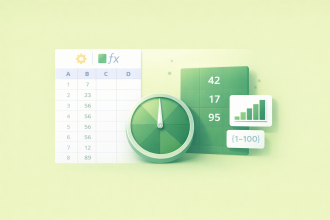
If you need a fair way to distribute tasks or resources in a project tracker, learning how to generate random numbers in Excel can help you create random assignments, groups, or reference values.
3. Budgeting and financial templates
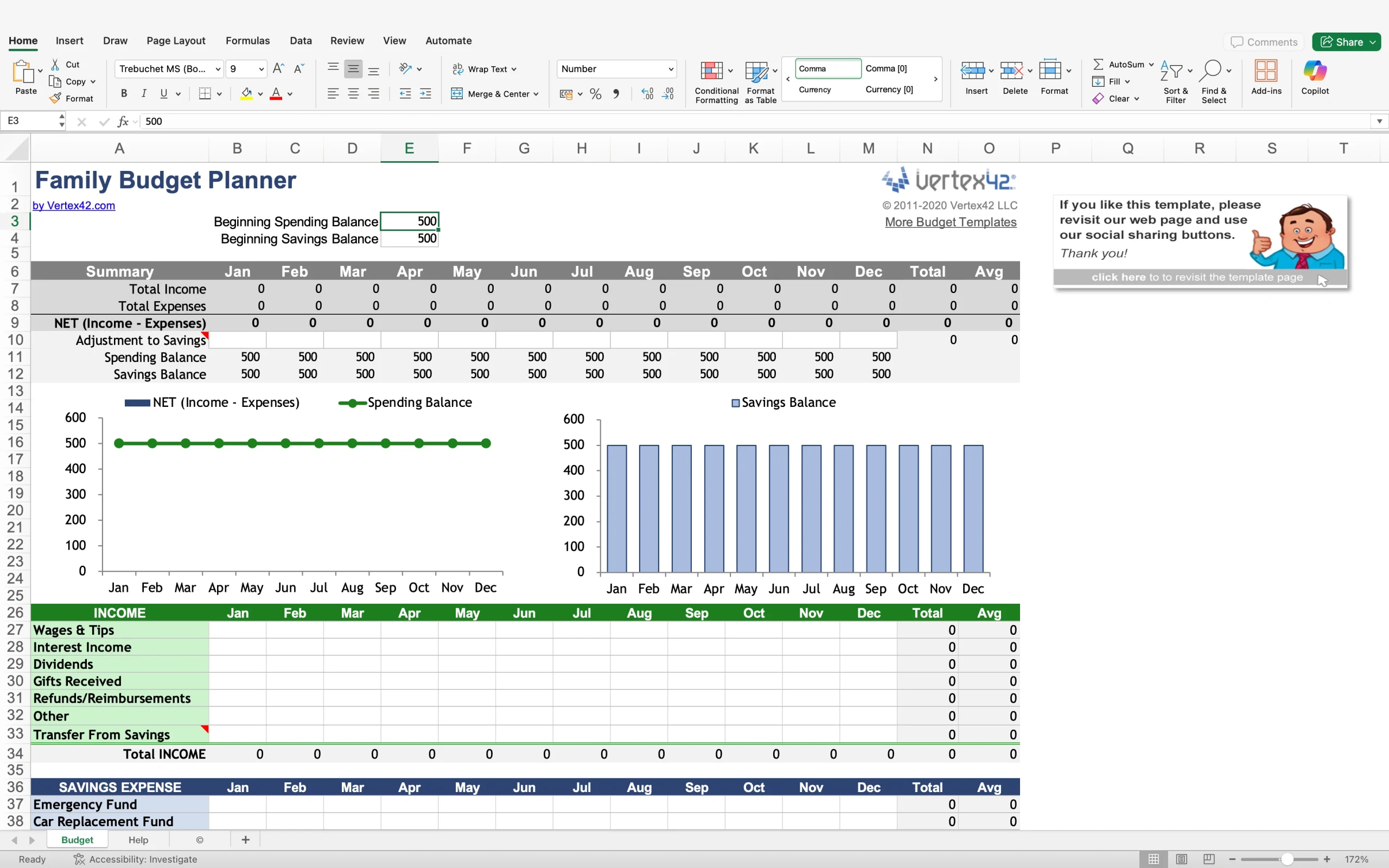
Budget tracking is a critical part of project management, and Excel remains one of the most accessible tools for managing project finances. Budgeting templates help teams organize estimated costs, monitor actual spending, and quickly identify overruns before they become larger problems.
Many Excel budget templates include side-by-side comparisons of projected versus actual expenses. This makes it easier to track labor costs, materials, vendor payments, and overall project performance in real time. More advanced templates can also provide monthly profit-and-loss tracking, giving teams a broader view of how projects are performing financially.
Excel’s built-in charts and reporting tools also make it simple to turn financial data into visual summaries for interested parties, managers, or clients.
4. Task-tracker templates
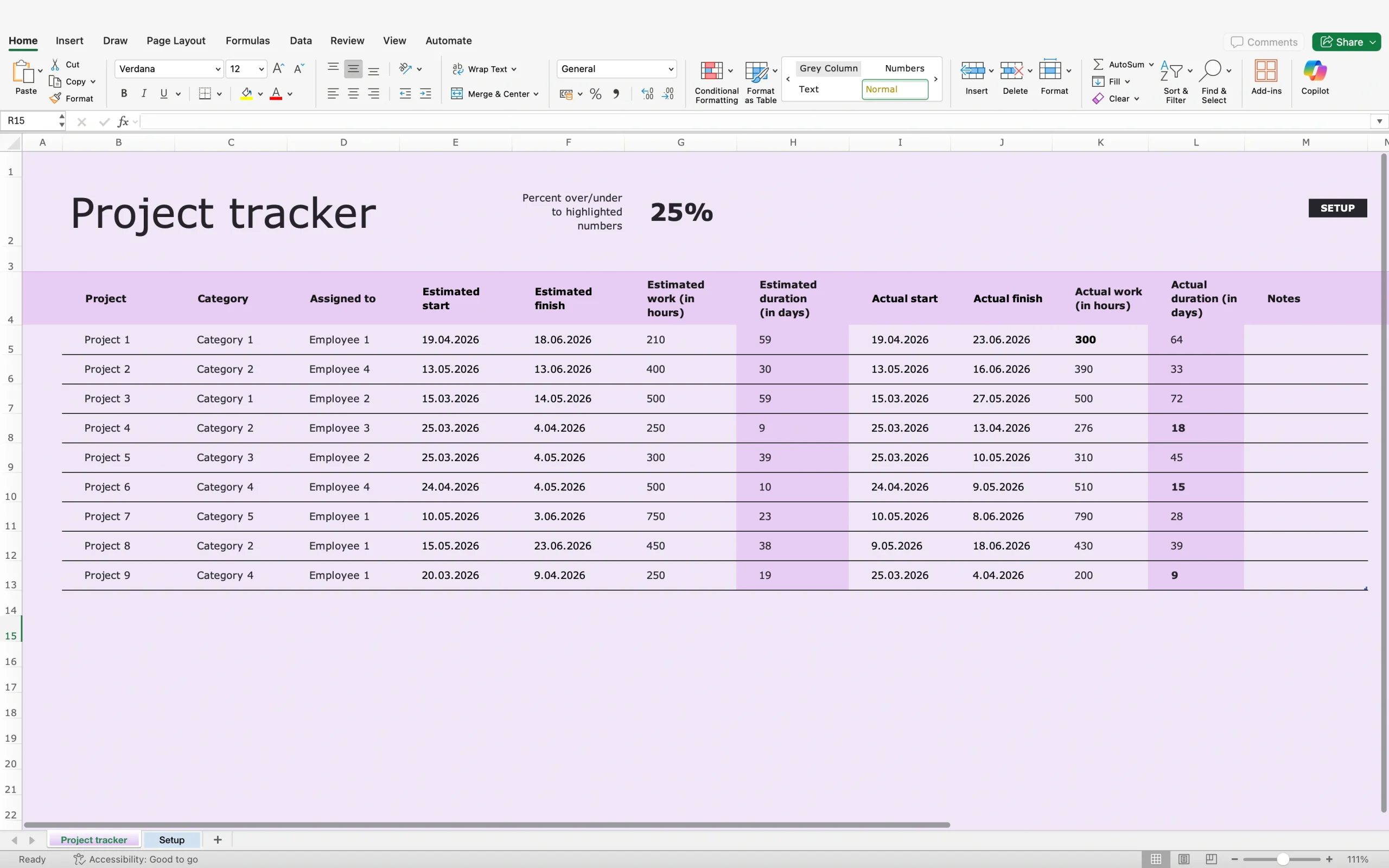
A task-tracker template is one of the simplest and most effective ways to manage projects in Excel. These templates give teams a centralized view of assignments, deadlines, priorities, and completion status, which makes it easier for team members and managers to stay organized and keep work moving forward.
A typical Excel task tracker includes fields for task owners; due dates; progress updates; priority levels; and status indicators, such as “not started,” “in progress,” or “completed.” Many templates also use conditional formatting, filters, and progress bars to highlight overdue tasks and provide quick visual updates.
For smaller teams and straightforward projects, task-tracker templates can serve as a lightweight alternative to dedicated project management software.
5. Risk-tracking templates
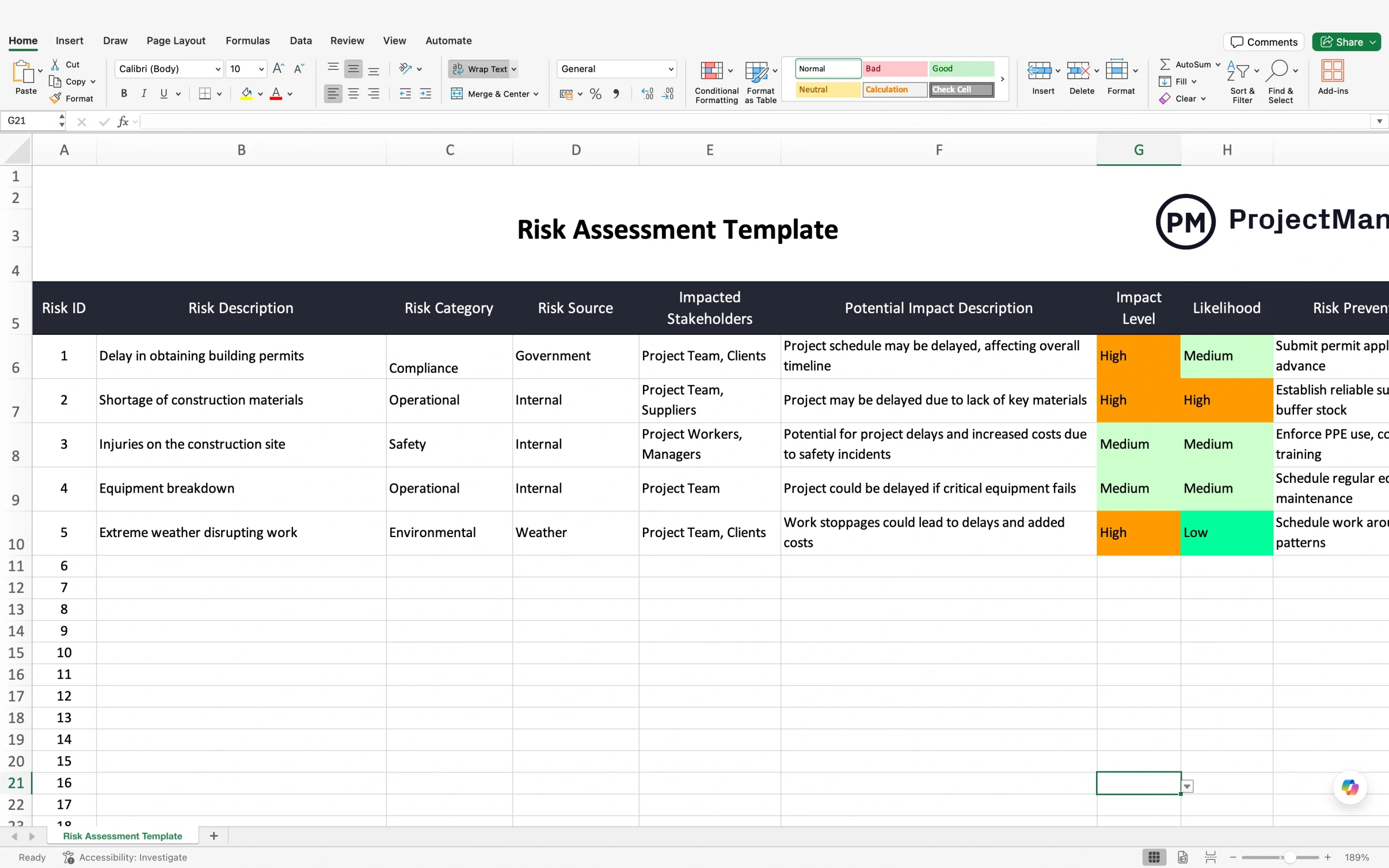
Every project comes with potential risks, from missed deadlines and budget overruns to staffing issues and shifting priorities. Risk-tracking templates help teams and managers identify, assess, and monitor those issues before they can develop and disrupt the project.
In Excel, a risk tracker typically includes fields for risk descriptions, likelihood, potential impact, ownership, mitigation plans, and current status. Many templates also use color coding or scoring systems to help teams prioritize high-risk issues and focus attention where it’s needed most.
5 more ways to use Excel in project management
Excel isn’t the perfect project management tool for every case. A project’s size, timeline, and complexity will determine how far Excel can go as a project management tool. But its flexibility means it can support far more than basic tracking when paired with the right structure, formulas, and templates.
Beyond the five core templates discussed above, you can also use Excel for
- Earned value analysis: Track project performance against the budget and schedule to forecast whether deliverables will be on time and within cost expectations. This helps project managers spot early warning signs, compare planned vs actual progress, and make adjustments before issues escalate.
- Progress and milestone reporting dashboards: Build dashboards that consolidate key project data into charts and summaries. These views make it easier to communicate status updates to stakeholders, highlight completed milestones, and identify what’s coming next without digging through raw data.
- Resource allocation tracking: Monitor how team members, time, and materials are distributed across tasks to prevent overload or bottlenecks. This type of tracking can help managers balance workloads more effectively and ensure that no part of the project is under- or over-resourced.
- Risk scoring and trend analysis: Develop simple or advanced models that evaluate risk likelihood and impact over time. By assigning scores and tracking changes, teams can prioritize mitigation efforts and respond proactively to emerging issues.
- Change log and version tracking: Maintain a structured record of project updates, scope changes, and key decisions. This creates transparency and helps teams understand how and why a project evolved, especially for longer or more complex initiatives.
Connecting Excel to your data collection workflow is another powerful approach. With Jotform’s native Microsoft Excel integration, you can automatically send form submissions directly into your Excel worksheets or as new rows in your tables, whether they’re task updates, budget requests, or risk reports.
Pro Tip
Another powerful approach is connecting Excel to your data collection workflow. With Jotform’s native Microsoft Excel integration, you can automatically send form submissions, whether they’re task updates, budget requests, or risk reports — directly into your Excel worksheets or tables as new rows. This keeps your project management sheets continuously updated without manual data entry, so your analysis and tracking tools always reflect the latest information.
Tracking and workflows live in one place, which equals better project management
While Excel works well for organizing project information, many teams eventually run into the same problem: The spreadsheet becomes only one piece of a much larger manual process that can quickly become cumbersome and overly complex.
Task requests arrive through email, approvals are given in chat threads, updates are shared in live meetings, and project status is spread across multiple disconnected tools. The spreadsheet may still be the “source of truth,” but updating it with accurate information becomes a project of its own.
That’s where a workflow-based approach can make project management significantly more efficient.
Teams can use Jotform to collect project information, route requests automatically, track progress in real time, and generate reports from a single connected system. For teams already using Excel as a lightweight project management solution, Jotform provides a way to keep the spreadsheet-style visibility they like while eliminating most of the related manual tasks.
Collect project requests and updates with Jotform Forms
One of the biggest weaknesses of spreadsheet-based project management is inconsistent data collection. When teams receive updates through emails, Slack messages, meetings, or handwritten notes, the information needs to be manually entered into Excel.
Jotform Forms streamline this process by giving teams a standardized way to collect project-related information from employees, managers, vendors, or clients. Teams can create forms for
- New project requests
- Task submissions
- Budget approvals
- Change requests
- Risk reports
- Progress updates
- Incident tracking
- Resource requests
Forms are customizable, so teams can specify which types of information are required before a request is submitted. Conditional logic can simplify more complex workflows by showing only relevant fields based on user responses.
For example, a marketing department could use a project intake form that routes creative requests to the appropriate manager, captures deadlines and asset requirements, and automatically logs submissions into a centralized tracking system. An operations team could create a maintenance request workflow that assigns requests based on urgency or location. Teams benefit from cleaner data with fewer missed details and a decreased need for manual follow-up.
Use Jotform Tables for spreadsheet-style project tracking
Many teams stay with Excel because spreadsheets are familiar and flexible. Jotform Tables keeps that spreadsheet-style experience while adding workflow functionality that traditional spreadsheets often lack.
With Jotform Tables, project managers can organize submissions in a centralized, collaborative workspace that functions much like a live project tracker. Teams can sort, filter, group, and update records without worrying about version-control issues or manually consolidating data from multiple sources.
This approach works particularly well for
- Task tracking
- Editorial calendars
- Budget monitoring
- Issue tracking
- Vendor management
- Content production workflows
- Cross-functional project coordination
Unlike static spreadsheets, Tables updates automatically as new form submissions arrive. This creates a more reliable, real-time collaborative view of project activity.
For organizations already comfortable with Excel-style layouts, the transition to Tables is relatively intuitive.
Automate approvals and task routing with workflows
As projects grow, approvals and handoffs can quickly become bottlenecks. A spreadsheet may track the status of a request, but it usually doesn’t manage the process itself.
Jotform Workflows adds automation to these operational steps by routing requests, notifications, and approvals to the right people automatically. Instead of manually forwarding emails or checking spreadsheets for updates, teams can create structured approval chains that move work forward with minimal intervention.
For example:
- A purchase request can automatically route to finance for approval before it’s added to a budget tracker.
- A project intake form can notify department leads when new work is assigned.
- A risk report submission can escalate directly to leadership if it meets certain criteria.
- A content production request can move through drafting, editing, legal review, and publishing stages automatically.
This reduces delays, improves accountability, and creates a more consistent process across teams.
For project managers, automation also provides real-time visibility into potential bottlenecks in the workflow.
Improve visibility with centralized reporting
Project management depends heavily on visibility. Teams need to understand project health, workload distribution, deadlines, risks, and financial performance without spending hours assembling reports manually.
Jotform Report Builder helps turn collected project data into visual summaries that are easier to share with stakeholders, department heads, or clients. Because reports pull directly from connected forms and tables, information stays current and the need for duplicate data entry is eliminated.
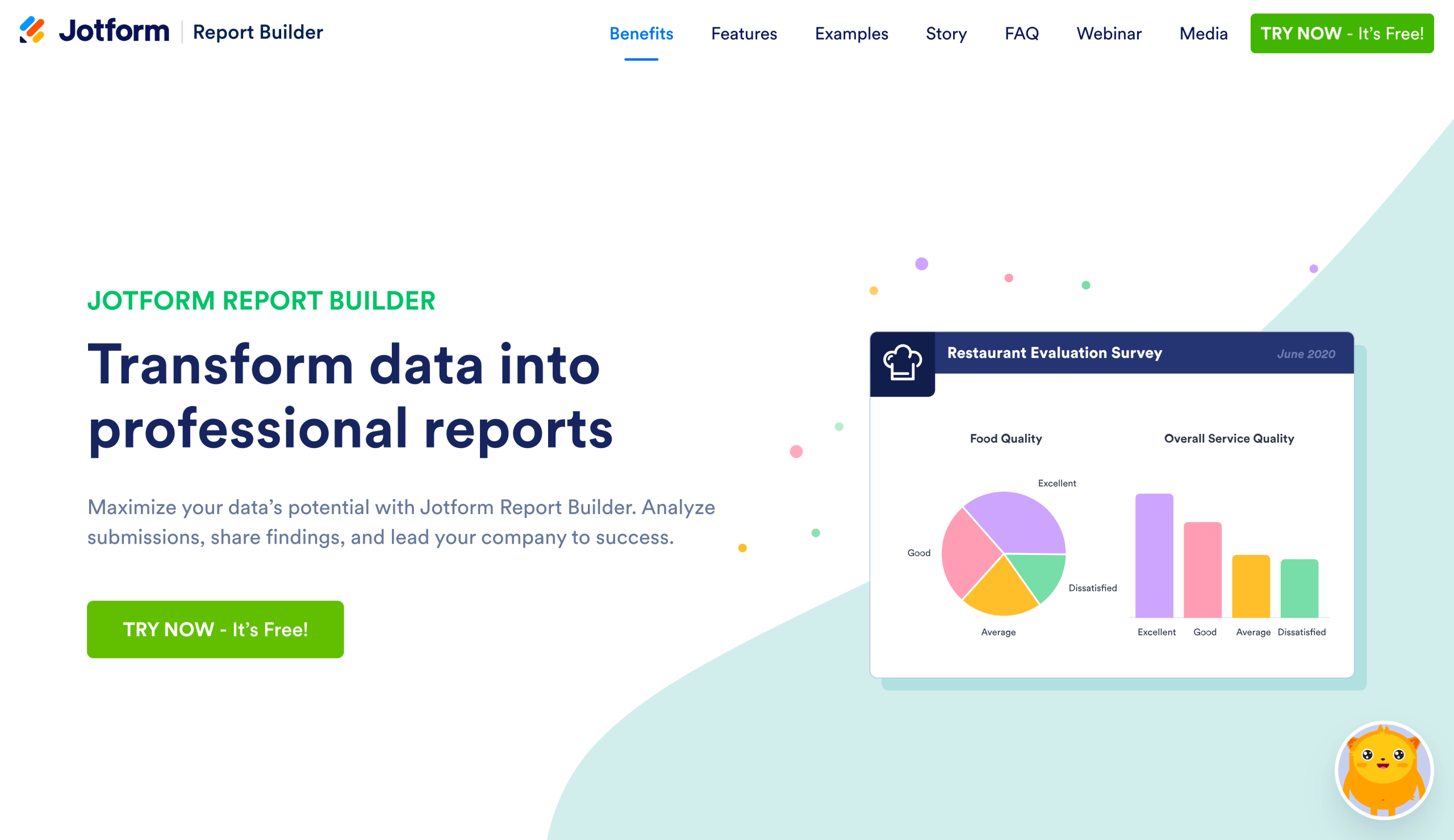
Teams can use reports to track
- Project completion rates
- Open vs completed tasks
- Budget utilization
- Approval turnaround times
- Risk trends
- Team workloads
- Request volume over time
Centralized reporting that reflects current activity across workflows can be especially useful for managers overseeing multiple projects.
A better fit for growing teams
Excel can still play an important role in project management, particularly for lightweight planning, budgeting, and template-based tracking. But as collaboration increases, manual spreadsheet management often becomes difficult to maintain.
Teams that are already using Excel as a workflow system can benefit from moving tracking, approvals, reporting, and data collection into a more connected environment. Using Jotform Forms, Tables, Workflows, and Report Builder together allows teams to keep the organizational clarity of spreadsheets while reducing repetitive administrative work.
For growing teams, that combination can lead to faster processes, better visibility, fewer communication gaps, and more reliable project tracking overall.
Use Excel for simple planning, Jotform for real project workflows
Excel remains a useful project management tool for simple planning, lightweight tracking, and template-based organization. Spreadsheets can still provide a flexible solution in a familiar environment for smaller projects or teams that need only a basic way to manage timelines, budgets, tasks, or risks.
But as projects become more collaborative and complex, spreadsheets often have responsibilities they were never designed to handle. Collecting updates manually, managing approvals through email, consolidating information from multiple people, and maintaining accurate reporting can quickly create bottlenecks and version-control problems.
Jotform offers a more scalable approach to project management. Instead of patching together workflows across spreadsheets, inboxes, and chat tools, teams can use Jotform to collect project requests, organize data automatically, route approvals, and generate real-time reports from a single system.
With Jotform Tables and Jotform Workflows, teams can move beyond static spreadsheets and build project management systems that are easier to maintain, easier to scale, and far more efficient to manage.
This article is for project managers, operations teams, small business owners, and anyone who wants to use Excel for project planning and tracking while understanding when a dedicated workflow platform like Jotform is a better fit for managing approvals, collaboration, and reporting.












Send Comment: