

Çalışan Değerlendirme Formları

Çalışan Performans Değerlendirmesi
Bu form şablonu, iş yerlerinde iş performansı incelemesi için tasarlanmıştır. İçerik ve sorular MIT'in sayısal ölçek performans incelemesinden alınmıştır. http://hrweb.mit.edu/performance-development/forms/performance-review-forms
Kategoriye git:Çalışan Değerlendirme Formları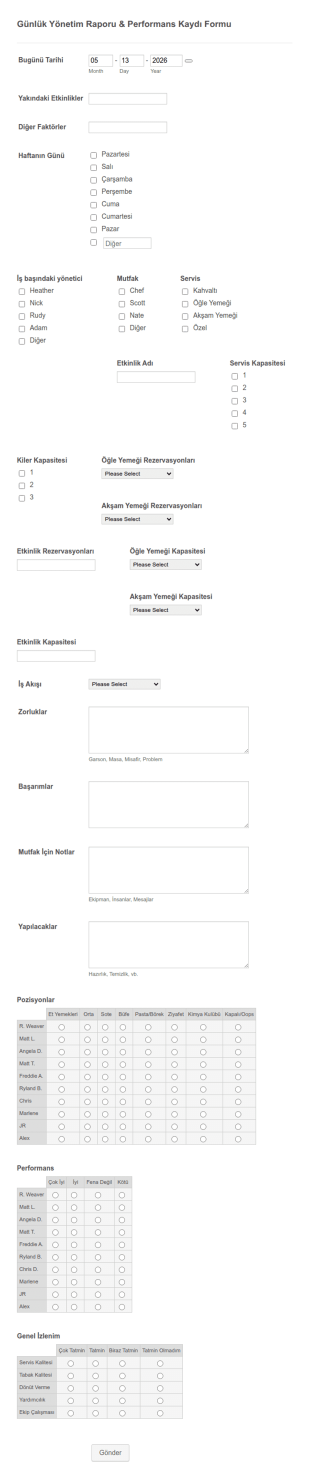
Performans Değerlendirme Formu
Çalışanlarınızın günlük performanslarını değerlendirebileceğiniz pratik bir form
Kategoriye git:İnsan Kaynakları Formları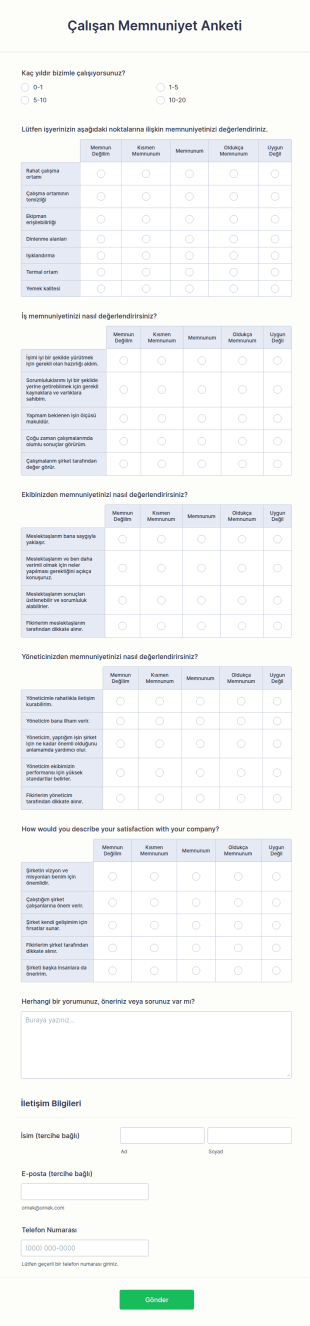
Çalışan Memnuniyet Anketi
Çalışanlarınızın başarısı, verimliliği, mutluluğu ve rahatı işyeriniz için oldukça önemlidir. Çalışanlarınızın iyi şartlar altında çalıştığından emin olmak istemez misiniz? Çalışanlarınızın işyerinde mutlu ve enerjik olmasını istemez misiniz? Çalışan Memnuniyet Anketi tüm bu ihtiyaçlarınız için burada! Çalışan Memnuniyet Anketini kullanarak çalışma şartlarınızı iyileştirebilmek için çalışanlarınızın şirketinizden ne kadar memnun olduklarını öğrenebilirsiniz. Böylelikle, çalışanlarınızın beklentilerini öğrenebilir ve onları daha iyi şartlar altında daha verimli çalışmaları için gereken iyileştirmeleri yapabilirsiniz.Jotform, Çalışan Memnuniyet Anketini ücretsiz bir şekilde sunmaktadır. Formu istediğiniz gibi değiştirmekten, detay ekleyip çıkartmaktan çekinmeyin. İhtiyacınız olan bilgileri toplamak için soruları kişiselleştirmeyi, Google Drive ve DropBox dahil 100’den fazla popüler platformlara formunuzu entegre etmeyi unutmayın. Jotform’un kodlama gerektirmeyen özellikleriyle gelişiminizi hızlandırın. Artık etrafa dağılmış belgelere gerek kalmadı!
Kategoriye git:İnsan Kaynakları Formları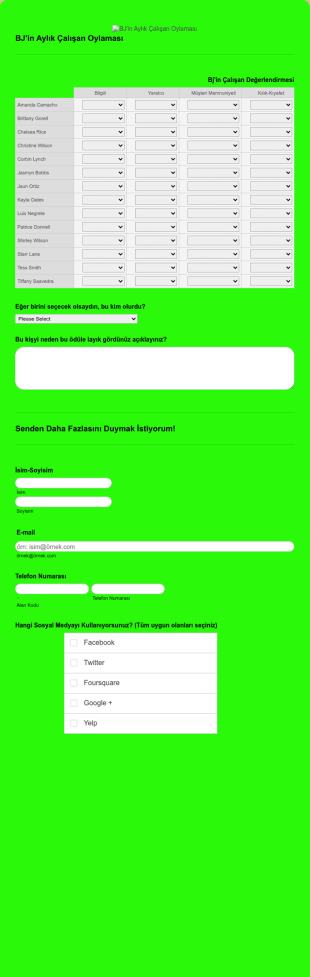
Ayın Elemanı Oylama Formu
Bu, Bumper Jumpers Greensboro, NC'de kullandığımız biçimdir.
Kategoriye git:İş Formları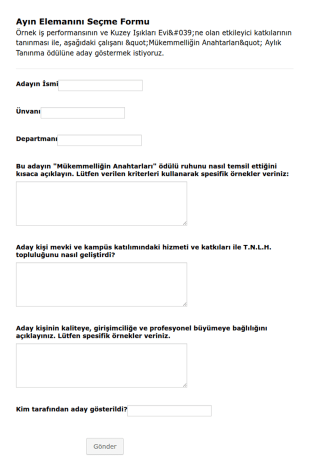
Ayın Elemanını Seçme Formu
Bu formu kullanarak ayın elemanını seçebilirsiniz.
Kategoriye git:Eğlence Formları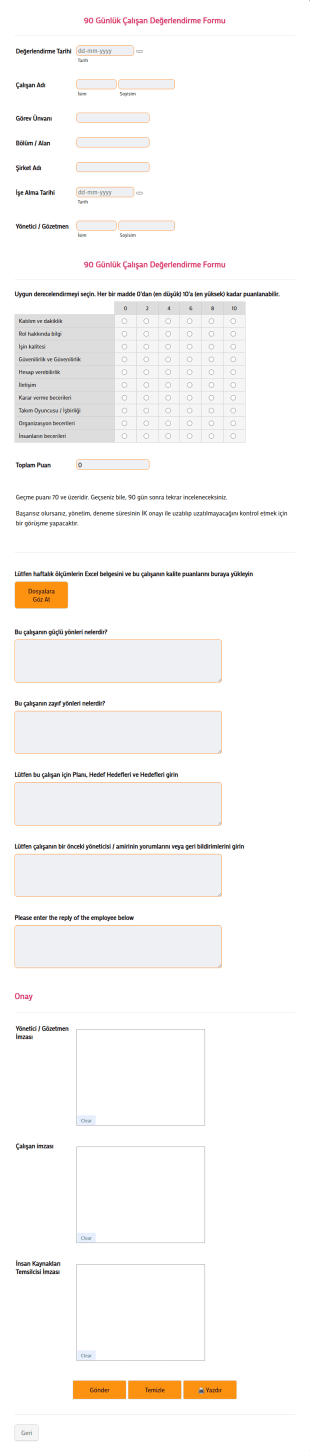
90 Günlük Çalışan Değerlendirme Formu
90 Günlük Çalışan Değerlendirme Formu
Kategoriye git:Çalışan Değerlendirme Formları
Mesleki Gelişim Planı Formu
Mesleki gelişimle alakalı hangi alanlarda gelişim gösterildiğini öğrenme formu
Kategoriye git:Çalışan Değerlendirme Formları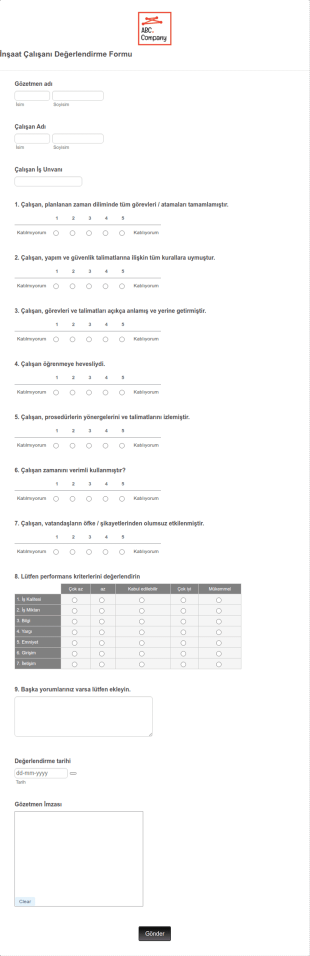
İnşaat Çalışanı Değerlendirme Formu
İnşaat çalışanı değerlendirme formu sayesinde şantiye şeflerinin çalışanlarını kolayca form üzerinden değerlendirmesine olanak sağlıyoruz.
Kategoriye git:İş Formları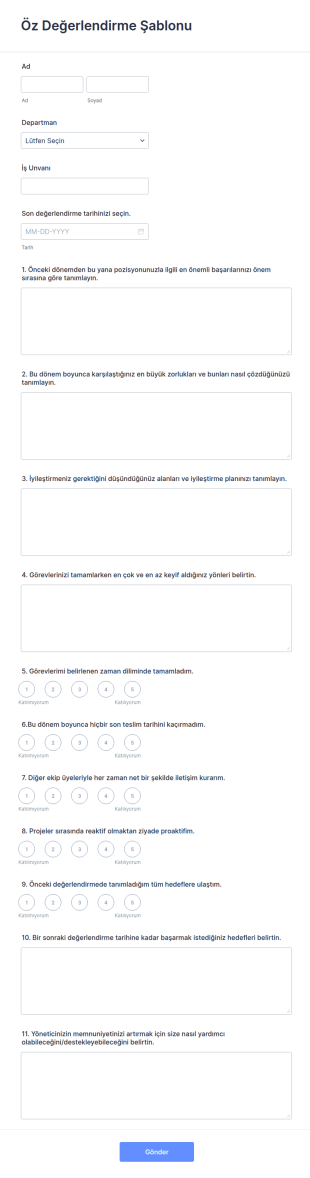
Öz Değerlendirme Şablonu
Çalışan öz değerlendirme formu, çalışanların kendilerini ve işyerindeki katkılarını nasıl gördüklerini anlamak için kullanılan son derece etkili bir performans değerlendirme aracıdır. Ücretsiz şablonumuzla kendi online çalışan öz değerlendirme formunuzu oluşturun! Formu olduğu gibi kullanın veya şirketinizin ihtiyaçlarına göre özelleştirin, ardından çalışanların herhangi bir cihazdan doldurmasını sağlayın. Tüm yanıtlar güvenli bir şekilde Jotform hesabınızda saklanır. Daha sonra çalışan öz değerlendirme formlarını tek bir merkezde online olarak görüntüleyebilir, yönetebilir ve saklayabilirsiniz.Bu ücretsiz Öz Değerlendirme şablonunu şirketinizin markasına ve ihtiyaçlarına uygun hale getirerek özelleştirmeye başlayın. Jotform Form Oluşturucu ile istediğiniz görünümü elde etmek, öğeleri sürükleyip bırakmak kadar kolaydır. İşletme logonuzu ekleyin ve kişiselleştirilmiş yanıtlar toplamaya başlamak için soruları gerektiği gibi düzenleyin. Jotform’un 100'den fazla uygulama entegrasyonu ile çalışan öz değerlendirme formunuzu güçlendirin — performans değerlendirmelerini en sevdiğiniz bulut depolama platformuna, CRM sistemine, Google Workspace uygulamasına ve daha fazlasına gönderebilirsiniz. Basit online Öz Değerlendirme şablonumuzla iş akışınızı kolaylaştıracak ve zaman alıcı el yazısı performans değerlendirmelerini geçmişte bırakacaksınız.
Kategoriye git:İnsan Kaynakları Formları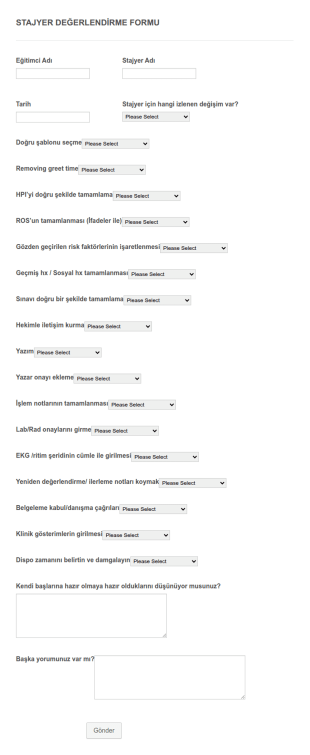
Stajyer Değerlendirme Formu
Bu stajyer değerlendirme formu şablonu ile stajyerlerinizi değerlendirebilir ve geri bildirim verebilirsiniz. Sadece stajyerin adını girin ve performansını birçok farklı kategoride derecelendirin. Bu stajyer değerlendirme formu şablonu sağlık bakımı ve doktor stajyerleri için hazırlanmış olsa da, işinize uygun hale getirmek için özelleştirebilirsiniz. Stajyer değerlendirme formu örneğimizle başlayın veya yepyeni bir form oluşturun.
Kategoriye git:Çalışan Değerlendirme Formları
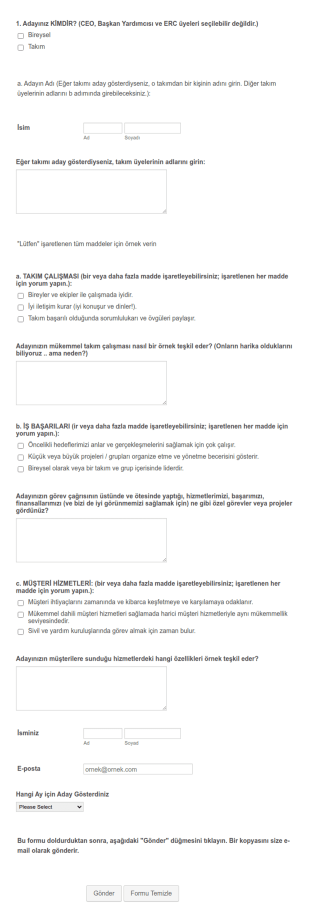
Çalışan Adaylık Formu
Bir şirket içindeki adaylıklar moralinizi artırmak için harika bir yoldur. Ve bu durumlar için, bir çalışan adaylığı formu oy toplamak için en kolay yoldur. Bu çalışan ödül adaylığı form şablonu, aday gösterilen çalışanı en iyi tanımlayan alanlara sahip olacaktır. Bir çalışan tanıma formu şablonu, adayların başarılarının yanı sıra bir ekiple çalışırken de güçlü yanlarını vurgulayacak sorular içermelidir. En iyi çalışan adaylığı formunu kullanın ve oyların kullanılmaya devam etmesini sağlayın.
Kategoriye git:İş Formları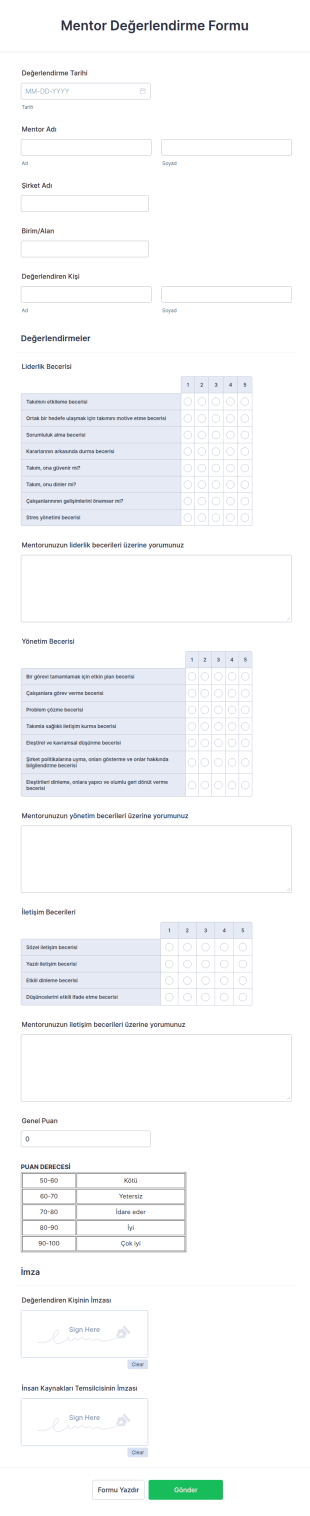
Mentor Değerlendirme Formu
Bu Mentor Değerlendirme Formunu kullanarak şirketinizdeki takım liderlerinin performans değerlendirmesini yapın. Formun kullanımı oldukça basittir ve Form Düzenleyici yardımıyla kişiselleştirilebilir.
Kategoriye git:İnsan Kaynakları Formları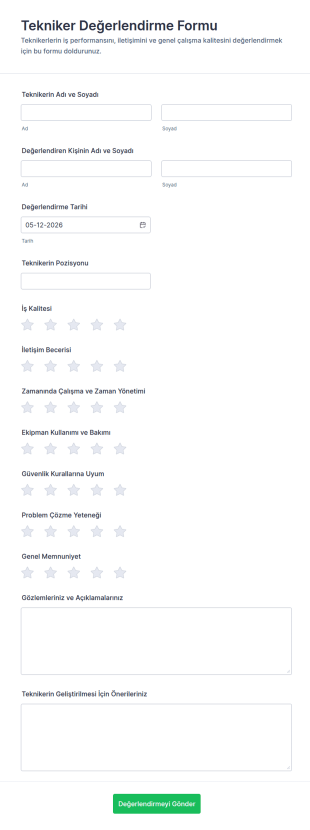
Teknisyen Değerlendirme Anketi
Tekniker Değerlendirme Formu, ekip performansını düzenli olarak ölçmek ve gelişim alanlarını takip etmek isteyen kurumların Jotform ile veri toplama ve form yanıtı yönetimini kolaylaştırmasına yardımcı olur.
Kategoriye git:Değerlendirme Formları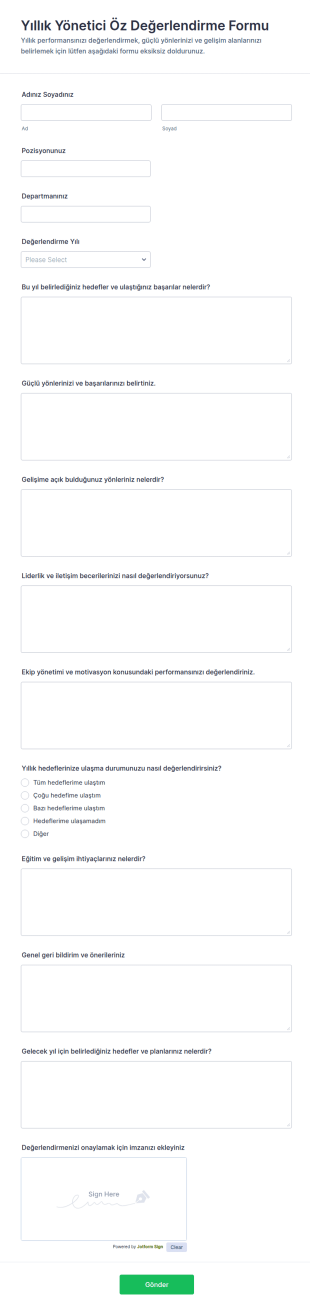
Yönetici Yıllık Öz Değerlendirme Formu
Yönetici Yıllık Öz Değerlendirme Formu ile yöneticilerden yıl sonu performans değerlendirmelerini toplayın, hedef ve gelişim planlarını tek yerde yönetin ve Jotform ile veri toplamayı kolaylaştırın.
Kategoriye git:İnsan Kaynakları Formları
Terfi Görüşmesi Anketi
Terfi Görüşmesi Formu ile terfi değerlendirmelerini kurum içinde tutarlı şekilde yönetin, görüşmeleri planlayın ve karar gerekçelerini tek yerde toplayarak Jotform üzerinden veri toplama sürecini düzenleyin.
Kategoriye git:İnsan Kaynakları Formları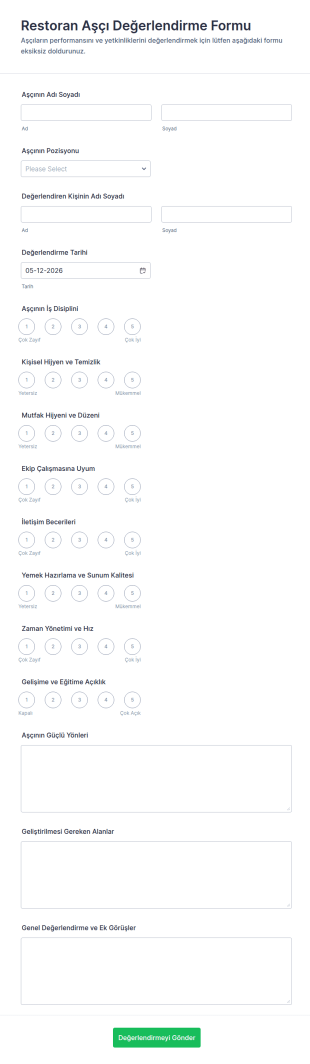
Restoran Aşçı Değerlendirme Formu
Restoran Aşçı Değerlendirme Formu, aşçı performansını puanlayıp gelişim alanlarını takip etmek isteyen restoran yöneticileri ve mutfak ekipleri için Jotform üzerinde hızlı veri toplama olanağı sunar.
Kategoriye git:Aşçı Formları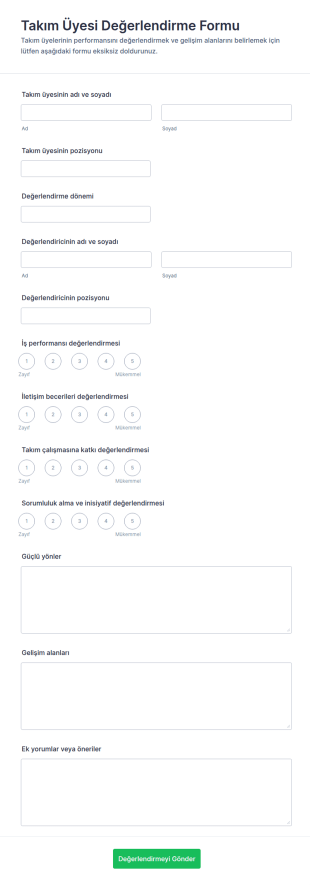
Takım Üyesi Değerlendirme Formu
Takım Üyesi Değerlendirme Formu ile dönemsel performans değerlendirmelerini dijitalleştirin, Jotform üzerinden veri toplama sürecini kolaylaştırın ve her form gönderimini tek merkezden takip edin.
Kategoriye git:Çalışan Değerlendirme Formları
Mutfak Personeli Değerlendirme Anketi
Mutfak Personeli Değerlendirme Formu, işletmelerin mutfak ekibinin performansını dönem bazında izlemesini, gelişim ihtiyaçlarını belirlemesini ve veri toplama sürecini düzenli şekilde yönetmesini sağlar.
Kategoriye git:Çalışan Değerlendirme Formları
Eczacı Personel Performans Değerlendirme Anketi
Eczane Çalışan Performans Değerlendirme Anketi Formu, eczanelerde personel performansını dönemsel olarak ölçmek, güçlü yönleri ve gelişim alanlarını belgelemek ve veri toplama sürecini düzenlemek isteyen yöneticiler için idealdir.
Kategoriye git:Eczane Formları
Çalışan Görüşme Kaydı Anketi
Çalışan Görüşme Kayıt Formu, insan kaynakları ve yöneticilerin bire bir görüşmeleri düzenli biçimde kayıt altına almasına, aksiyonları takip etmesine ve Jotform üzerinden veri toplama sürecini standartlaştırmasına yardımcı olur.
Kategoriye git:İnsan Kaynakları Formları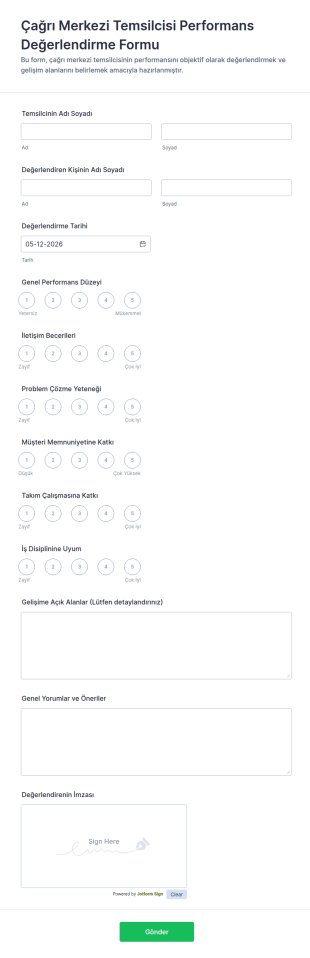
Çağrı Merkezi Temsilcisi Performans Değerlendirme Formu
Çağrı Merkezi Temsilcisi Performans Değerlendirme Formu, ekip liderlerinin temsilci performansını düzenli veri toplama ile takip etmesine ve Jotform üzerinden form yanıtlarını tek yerde yönetmesine yardımcı olur.
Kategoriye git:Çalışan Değerlendirme Formları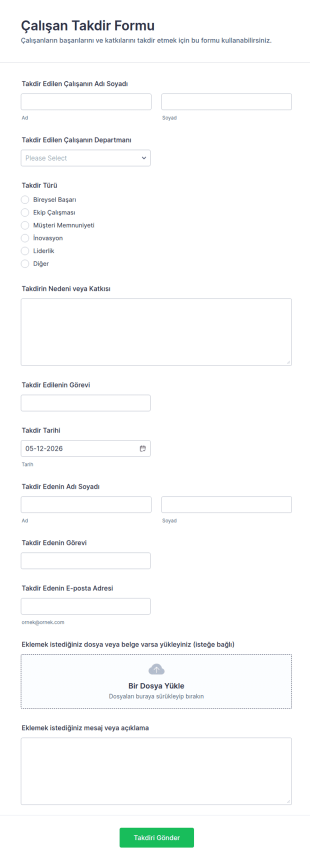
Çalışan Takdir Formu
Çalışan Takdir Formu, ekip içi başarıları kayıt altına almak ve kurum içi teşekkür kültürünü desteklemek isteyen insan kaynakları ve yöneticiler için Jotform Form Şablonları içinde pratik bir form şablonudur.
Kategoriye git:İnsan Kaynakları Formları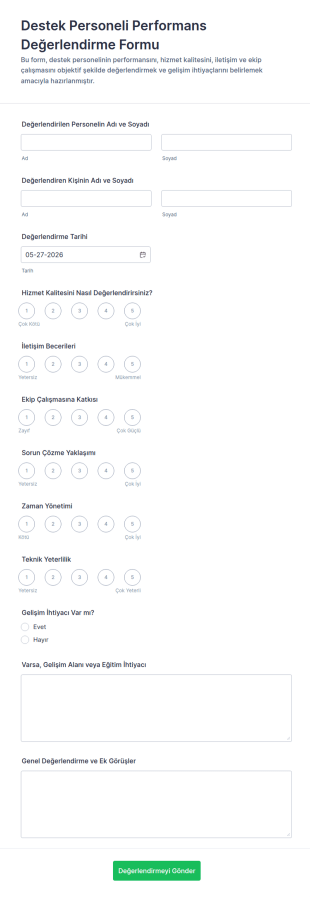
Destek Personeli Değerlendirme Anketi
Destek Personeli Performans Değerlendirme Formu, yöneticilerin destek ekiplerinde hizmet kalitesi ve gelişim ihtiyaçlarını düzenli veri toplama ile izleyip raporlamasına yardımcı olur.
Kategoriye git:Çalışan Değerlendirme FormlarıÇalışan Değerlendirme Formları Hakkında
Çalışan değerlendirme formu; çalışanların becerileri, hedefleri ve başarıları hakkında bilgi toplayarak çalışanların ilerlemesini izlemek için kullanılan bir performans değerlendirme aracıdır. Ücretsiz Çalışan Değerlendirme Formu şablonlarımızla, çalışanlarınızın neleri iyi yaptığını kolayca görmek ve iyileştirme alanlarını belirlemek için yanıtları online olarak toplayabilirsiniz. Çalışan değerlendirmelerinizi bilgisayarınızdan veya mobil cihazınızdan yaptıktan sonra, Jotform hesabınızda güvenli bir şekilde saklanacaktır, bu da değerlendirmeleri yönetmeyi ve yazdırılabilir PDF'lere dönüştürmeyi kolaylaştırır!
Şirketiniz veya İK departmanınız için çalışanların durumunu değerlendirmek için harika bir çalışan değerlendirme formu şablonuna ihtiyacınız olacak. Hazır Çalışan Değerlendirme Formu şablonlarımızdan biriyle başlayın ve ihtiyaçlarınıza uygun mükemmel değerlendirme formunu oluşturmak için Jotform Form Oluşturucu ile özelleştirin. Şablon düzenini yeniden düzenleyin, sorular ekleyin ve güncelleyin, şirket logonuzu yükleyin ve daha fazlasını yapın - hatta matris tabloları ve derecelendirme ölçekleriyle formu görsel olarak daha ilgi çekici hale getirebilirsiniz! Evrak işlerini azaltmak ve daha verimli performans değerlendirmeleri yapmak için ücretsiz Çalışan Değerlendirme Formlarımızla çalışanların ilerlemesini online olarak izleyin.
Neden Personel Değerlendirme Formları Kullanmalısınız?
- Personel Değerlendirme Formları, standartlaştırılmış alanlar ve biçimler sunarak çalışan performans metriklerinin doğru bir şekilde kaydedilmesini sağlar; bu da hata ve tutarsızlık olasılığını azaltır. Bu tutarlılık, kuruluş genelinde değerlendirmelerde adaleti ve nesnelliği korumak için kritik öneme sahiptir.
- Personel Değerlendirme Formlarının doldurulup işlenebilme hızı, değerlendirme döngüsünün verimliliğini önemli ölçüde artırır. Bu formlar süreci dijitalleştirerek manuel veri girişinin zaman alıcı doğasını ortadan kaldırır ve İK ekiplerinin daha stratejik görevlere odaklanmasını sağlar.
- Profesyonel veri yönetimi, Personel Değerlendirme Formlarının ayırt edici bir özelliğidir; çünkü bu formlar hassas performans verilerinin güvenli bir şekilde toplanmasını, saklanmasını ve analiz edilmesini kolaylaştırır. Şifreli yanıtlar ve erişim kontrolleri gibi özelliklerle kuruluşlar, çalışan bilgilerinin korunmasını sağlayabilir.
- Personel Değerlendirme Formları, çalışanların hangi kriterlere göre değerlendirildiklerini görmelerine olanak tanıyarak şeffaflığı teşvik eder. Bu açıklık, yöneticiler ile ekip üyeleri arasında diyaloğu teşvik eder ve güven ile sürekli iyileştirme ortamı besler.
- Bu formlar ölçeklenebilirliği destekleyerek kuruluşların büyüdükçe değerlendirme süreçlerini kolayca genişletmesini sağlar. Bir şirketin ister 50 ister 5.000 çalışanı olsun, Personel Değerlendirme Formları değişen ihtiyaçları sorunsuz bir şekilde karşılayacak şekilde uyarlanabilir.
Personel Değerlendirme Formlarının Çözdüğü Yaygın Sorunlar
- Geleneksel kağıt tabanlı değerlendirmeler kaybolmaya veya yanlış yerleştirilmeye elverişlidir; bu da eksik kayıtlara ve olası anlaşmazlıklara yol açar. Personel Değerlendirme Formları, tüm verileri dijital olarak saklayarak bu riski azaltır ve kayıtların kolayca erişilebilir ve düzenli olmasını sağlar.
- Manuel veri girişi ve işleme, performans sonuçlarını çarpıtabilecek hatalara ve tutarsızlıklara yol açabilir. Kuruluşlar Personel Değerlendirme Formlarını kullanarak veri toplamayı otomatikleştirebilir, insan kaynaklı hataları azaltabilir ve değerlendirmelerin kesin ve güvenilir olmasını sağlayabilir.
- Geleneksel değerlendirme süreçlerinin zaman alıcı doğası, geribildirimi geciktirebilir ve çalışan gelişimini engelleyebilir. Dijital formlar süreci hızlandırarak daha kısa geri dönüş süreleri ve daha zamanında geribildirim sağlar; bu da çalışan motivasyonu ve gelişimi için kritik öneme sahiptir.
- Departmanlar arasında tutarsız değerlendirme kriterleri, adil olmayan değerlendirmelere yol açabilir. Personel Değerlendirme Formları, değerlendirme sürecini standartlaştırarak tüm çalışanların aynı kriterler ve ölçütler kullanılarak değerlendirilmesini sağlar; bu da eşitliği ve adaleti teşvik eder.
Kullanım Senaryolarını Özelliklerle Eşleştirme
- Değerlendirme kriterlerini özelleştirmek isteyen kuruluşlar için Jotform'un Sürükle-Bırak Form Oluşturucu'su, form alanlarının kolayca değiştirilmesine olanak tanır; böylece İK ekipleri değerlendirmeleri belirli rollere veya departmanlara göre uyarlayabilir. Bu özellik, formların ilgili ve iş hedefleriyle uyumlu olmasını sağlar.
- Koşullu mantık, kullanıcı girdilerine göre uyarlanan dinamik formlar oluşturmak için kullanılabilir; yalnızca ilgili soruları göstererek değerlendirme sürecini kolaylaştırır. Bu, daha verimli bir form doldurma deneyimi sağlar ve gereksiz veri girişini azaltır.
- Jotform'un Elektronik İmza özelliğiyle kuruluşlar, yöneticilerden ve çalışanlardan doğrulanmış onaylar toplayarak değerlendirmelerin resmi olarak kabul edilmesini ve üzerinde uzlaşılmasını sağlayabilir. Bu özellik, değerlendirme sürecine bir hesap verebilirlik ve resmiyet katmanı ekler.
- Google E-Tablolar ve Salesforce gibi 100'den fazla üçüncü taraf platformla entegrasyon, sorunsuz veri aktarımı ve senkronizasyonu sağlar. Bu bağlantı, değerlendirme verilerinin diğer iş metrikleriyle birlikte kolayca paylaşılabilmesini ve analiz edilebilmesini garanti eder.
- Jotform'un Otomatik PDF Oluşturma özelliği, İK departmanlarının tamamlanan formları otomatik olarak profesyonel PDF belgelerine dönüştürmesine olanak tanır; bu belgeler ihtiyaca göre saklanabilir, paylaşılabilir veya yazdırılabilir. Bu özellik, tutarlı belgeleme ve kayıt tutma uygulamalarını sürdürmek için son derece değerlidir.
Personel Değerlendirme Formu Nasıl Oluşturulur
- Şablon Listesi'nde bir Personel Değerlendirmeleri şablonu bulun veya boş bir formla başlayın.
- Sürükle-bırak Form Oluşturucu'yu kullanarak tasarımı ve alanları özelleştirin.
- Doğrudan Bağlantı, E-posta veya Web Sitesine Yerleştirme yoluyla yayınlayın ve paylaşın.
Personel Değerlendirme Formlarının Başlıca Kullanım Alanları
- Yöneticiler İçin: Personel Değerlendirme Formları, yöneticilere çalışan performansını değerlendirmek için yapılandırılmış bir yaklaşım sunar. Yöneticiler bu formları kullanarak değerlendirmelerin tutarlı, nesnel ve departman hedefleriyle uyumlu olmasını sağlayabilir. Formlar, performans değerlendirmeleri sırasında anlamlı görüşmeleri kolaylaştırarak yöneticilerin yapıcı geribildirim vermesine ve gelecekteki performansa yönelik net beklentiler belirlemesine olanak tanır.
- Ekipler İçin: Ekipler, performansa dair daha bütünsel bir bakış açısı elde etmek için Personel Değerlendirme Formlarını akran geribildirimi ve öz değerlendirmeler toplamak amacıyla kullanabilir. Bu iş birliğine dayalı yaklaşım, ekip üyelerini birbirlerinin gelişimini desteklemeye teşvik eder ve sürekli iyileştirme kültürünü besler. Toplanan geribildirim, güçlü yönleri ve geliştirilmesi gereken alanları belirlemeye yardımcı olarak ekip dinamiklerini ve verimliliğini artırır.
- Müşteriler İçin: Personel Değerlendirme Formları öncelikle şirket içinde kullanılsa da, özellikle hizmet odaklı sektörlerde çalışan etkileşimlerine ilişkin müşteri geribildirimi toplamak için de uyarlanabilir. Bu dış geribildirim, çalışan performansına müşterinin bakış açısından değerli bilgiler sunarak kuruluşların müşteri memnuniyetini ve hizmet kalitesini artırmasına yardımcı olur.
Personel Değerlendirme Formlarının Özeti
Personel Değerlendirme Formları, çalışan performansını değerlendirmek için kolaylaştırılmış ve standartlaştırılmış bir yöntem sunarak etkili insan kaynakları yönetiminin hayati bir bileşenidir. Kuruluşlar, Jotform'un online form oluşturucusundan yararlanarak doğru ve verimli veri toplama, analiz ve geribildirimi kolaylaştıran özelleştirilmiş formlar oluşturabilir. Mevcut sistemlerle entegre olma ve değerlendirme sürecini otomatikleştirme yeteneği, şirketlerin stratejik karar alma ve çalışan gelişimine odaklanabilmesini sağlar. Genel olarak bu formlar, kurumsal başarıyı yönlendirmede ve sürekli iyileştirme kültürünü beslemede kritik bir rol oynar.
Sıkça Sorulan Sorular
1) Is it free to create Employee Evaluation Forms on Jotform?
Çalışan değerlendirme formları işletmeler için çeşitli şekillerde önemli araçlardır. İlk olarak, bir çalışanın güçlü ve zayıf yönlerini değerlendirmek ve ölçmek için yapılandırılmış bir yol sağlayarak performans gelişimini teşvik ederler. Ayrıca, yöneticilerden ve idarecilerden gelen yapıcı geri bildirimler yoluyla performans iyileştirme alanlarının belirlenmesine yardımcı olurlar.
2) Formlar ve gönderilen veriler güvenli mi?
Diğer taraftan, bu formlar çalışanların ulaşılabilir hedefler ve performans beklentileri belirlemelerine olanak tanır. Ayrıca, çalışanların başarılarını ve gelişimlerini belgelemeleri için bir yol olarak hizmet ederler, bu da terfiler için savunuculuk yaparken değerli olabilir. Son olarak, çalışan değerlendirme formları, performansın kağıt üzerinde bir izini oluşturarak hem şirket hem de çalışan için yasal koruma sağlayabilir.
3) Do I need coding knowledge to build a Employee Evaluation Form?
Etkili çalışan değerlendirme formları tipik olarak isim, pozisyon, departman, değerlendirme dönemi, ekip vb. dahil olmak üzere çalışan hakkında tanımlayıcı bilgiler içerir. Daha sonra çalışanın amaçlarını, hedeflerini veya performans göstergelerini listeler ve her birindeki performansını derecelendirmenin bir yolunu sunarlar.
4) Ödemeleri doğrudan formlarım aracılığıyla toplayabilir miyim?
Genel olarak, çalışan değerlendirme formu, çalışanın güçlü yönlerini ve gelişim alanlarını genişletmek için hem çalışandan hem de yöneticiden geri bildirim ve yazılı yorumlar için bölümler içerir. Bunu, büyüme adımlarını listeleyen bir gelişim planı takip edebilir.
5) Bu formlar mobil cihazlarda kullanılabilir mi?
Evet, Jotform formları tamamen uyumludur ve her mobil cihazdan erişilip doldurulabilir; böylece hareket halindeki kullanıcılara kolaylık sağlar.
6) Form yanıtlarını profesyonel PDF belgelerine dönüştürebilir miyim?
Çalışan değerlendirmesinin bir başka türü de yeni çalışanları veya deneme süresine tabi tutulmuş olanları izleyen deneme süresi değerlendirmesidir. Son olarak, çalışanların yöneticileriyle görüşmeden önce kendi performanslarını değerlendirmelerine olanak tanıyan öz değerlendirmeler vardır.
7) Personel Değerlendirme Formları İK sistemleriyle entegre edilebilir mi?
Çalışan değerlendirme formlarınızdan en iyi şekilde yararlanmak için aşağıdaki uygulamaları aklınızda bulundurmalısınız:
8) Personel Değerlendirme Formları uzaktaki ekipleri nasıl destekleyebilir?
Çalışan değerlendirme formları, başta çalışan performansının iyileştirilmesi olmak üzere bir dizi potansiyel fayda sunar. Bu formlar, yöneticilerin çalışanların gelişim alanlarını belirlemelerine ve bu hedeflere ulaşmalarına yardımcı olacak planlar hazırlamalarına yardımcı olur. Buna karşılık, bu bilgiler mesleki gelişime rehberlik eder ve çalışanları sürekli takdir yoluyla mükemmelleşmeye motive eder. Ayrıca, çalışanlar ve yöneticiler arasında çalışma ilişkilerini geliştirebilecek düzenli ve yapıcı konuşmaları teşvik ederler.