Top 5 AI tools for advertising
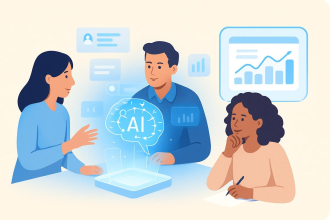
AI in advertising is no longer a prediction for the future, but a very present reality for marketing professionals across industries. According to Nielsen’s 2025 Annual Marketing Report, 47 percent of companies use AI for content creation, 44 percent for customer segmentation, and 42 percent for personalization. This means machines aren’t just crunching numbers anymore — they’re helping marketers tell better stories.
Traditional ad processes often leak resources through mistargeted audiences, stale creative, and budgets driven by guesswork. AI plugs those gaps by analyzing massive datasets in seconds, spotting what’s working (and what’s not), and adjusting on the fly.
Explore how AI is reshaping everything from creative production to media buying and how you can use AI agents to make your advertising faster, sharper, and a lot more profitable.
Benefits of AI advertising
With AI tools for digital marketing, you can predict customer behavior, create hyper-personalized experiences, and make data-backed decisions in a matter of seconds.
Here’s how AI for marketing delivers a measurable impact:
- Analysis of vast datasets: AI can instantly analyze massive amounts of customer and campaign data to find trends that humans might overlook. For example, you can uncover which demographics engage most with your content or which keywords drive conversions at the lowest cost.
- Hyper-personalization at scale: AI marketing automation allows you to personalize experiences for millions of users simultaneously. For instance, Netflix uses algorithms to choose the perfect thumbnail for each viewer, increasing the chances of a user clicking and watching a certain title.
- Cost efficiency and scalability: By analyzing performance metrics and audience data, AI ensures your campaigns grow profitably without ballooning budgets. Brands that use AI-powered ROI tracking report faster optimization cycles and stronger long-term returns.
- Real-time ad performance optimization: AI tools can monitor and adjust campaigns in real time, ensuring every ad dollar goes toward what’s working best. Facebook’s Meta Advantage+ suite, for instance, automatically tests ad variations and reallocates budgets toward top performers without human intervention.
- Automated task management: AI can automate tasks like ad scheduling, bid management, and audience segmentation, freeing you from manual work. This kind of automation helps you stay focused on what’s important: strategy, creative direction, and storytelling.
Top use cases for AI in advertising
From smarter targeting to hands-free content creation, AI tools for marketing are taking over the most repetitive and time-consuming parts of advertising.
Here are the top ways AI and machine learning in advertising are transforming the industry:
- Programmatic advertising: AI automates ad buying through real-time bidding, ensuring ads reach your target audience. Brands using AI-driven programmatic platforms report faster optimization cycles and better ROI thanks to data-backed placement decisions.
- Predictive analytics for consumer behavior: Tools like Google Analytics 4 (GA4) use predictive insights to help you understand what customers are likely to do next, from purchasing to dropping off. This helps you tailor campaigns to match user intent.
- AI content creation: AI can automate repetitive tasks, such as generating visuals, copy, or even video ads. For instance, Amazon’s AI video generator creates custom product videos in minutes without a proper script. It’s creativity powered by code.
- Dynamic optimization: AI uses natural language processing and A/B testing to automatically refine ad headlines, calls to action (CTAs), and visuals based on performance data. Tools like Adobe Sensei are perfect for this.
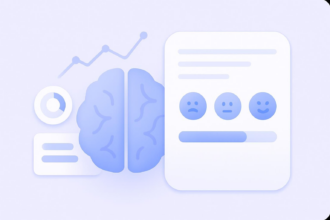
- Sentiment analysis: By scanning reviews, social posts, and comments, AI can identify emotional tones (positive, neutral, or negative) and help you adjust your messaging accordingly. Google’s AI sentiment analysis API is a good example of this capability.
5 best AI tools for advertising
Here are some of the best AI chatbots and platforms that should be on your radar. These tools bring together features like AI-driven ad campaigns and AI content marketing all in one platform.
1. Google Ads
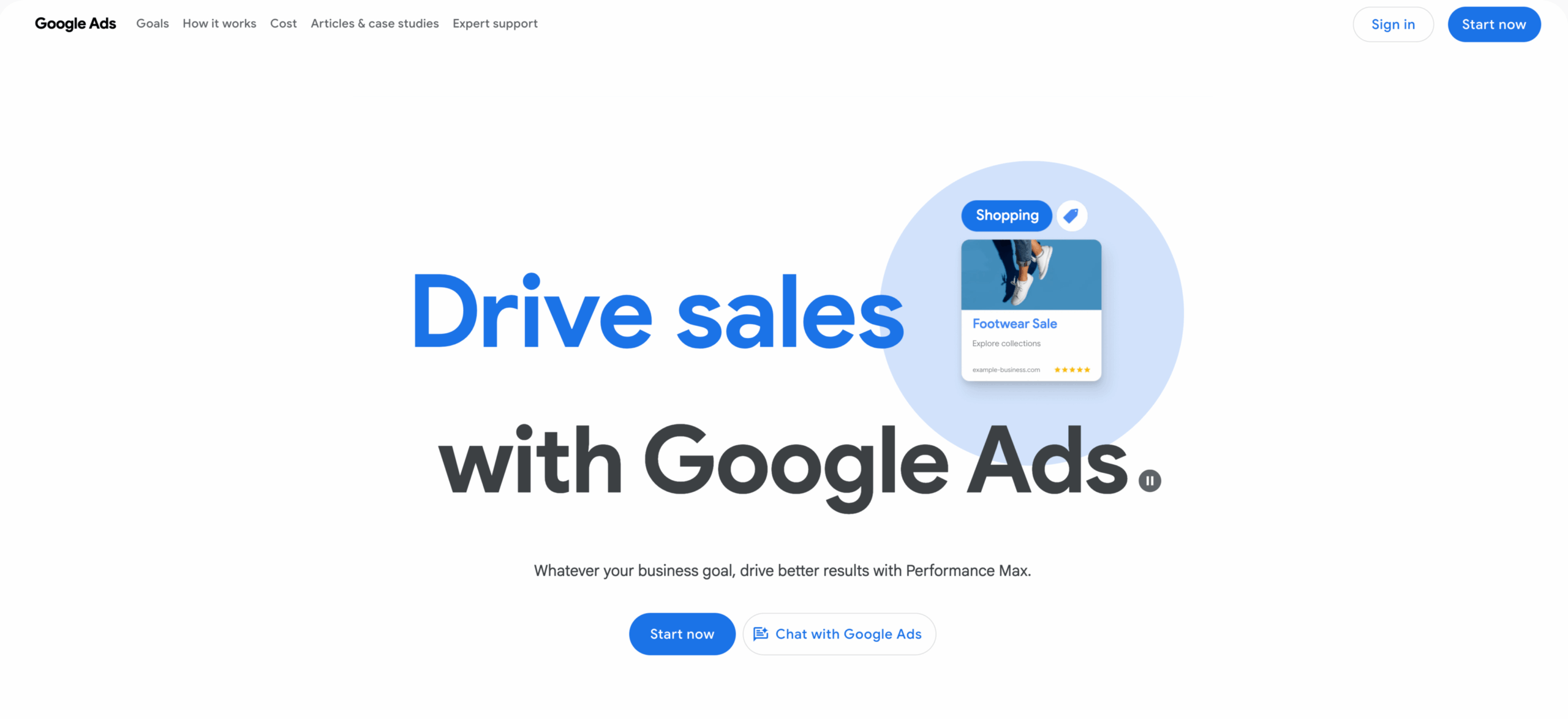
- Best for: Large-scale search, display, and shopping campaigns with heavy automation
- Key features: Smart bidding, Performance Max (all-in-one automated campaign), predictive analytics, and broad match with AI support
- Starting price: Pay as you go (minimum budget depends on region), often hundreds per month for meaningful spend
For marketers comfortable with data and scale, Google Ads is one of the most mature platforms for automating campaigns without losing control. It uses generative AI to surface the right audiences, craft better ad combinations, and optimize bids in real time.
Thanks to tools like Performance Max, you don’t just target keywords — you let the system decide where and how your ads get shown across search, display, YouTube, and more.
2. Meta Ads
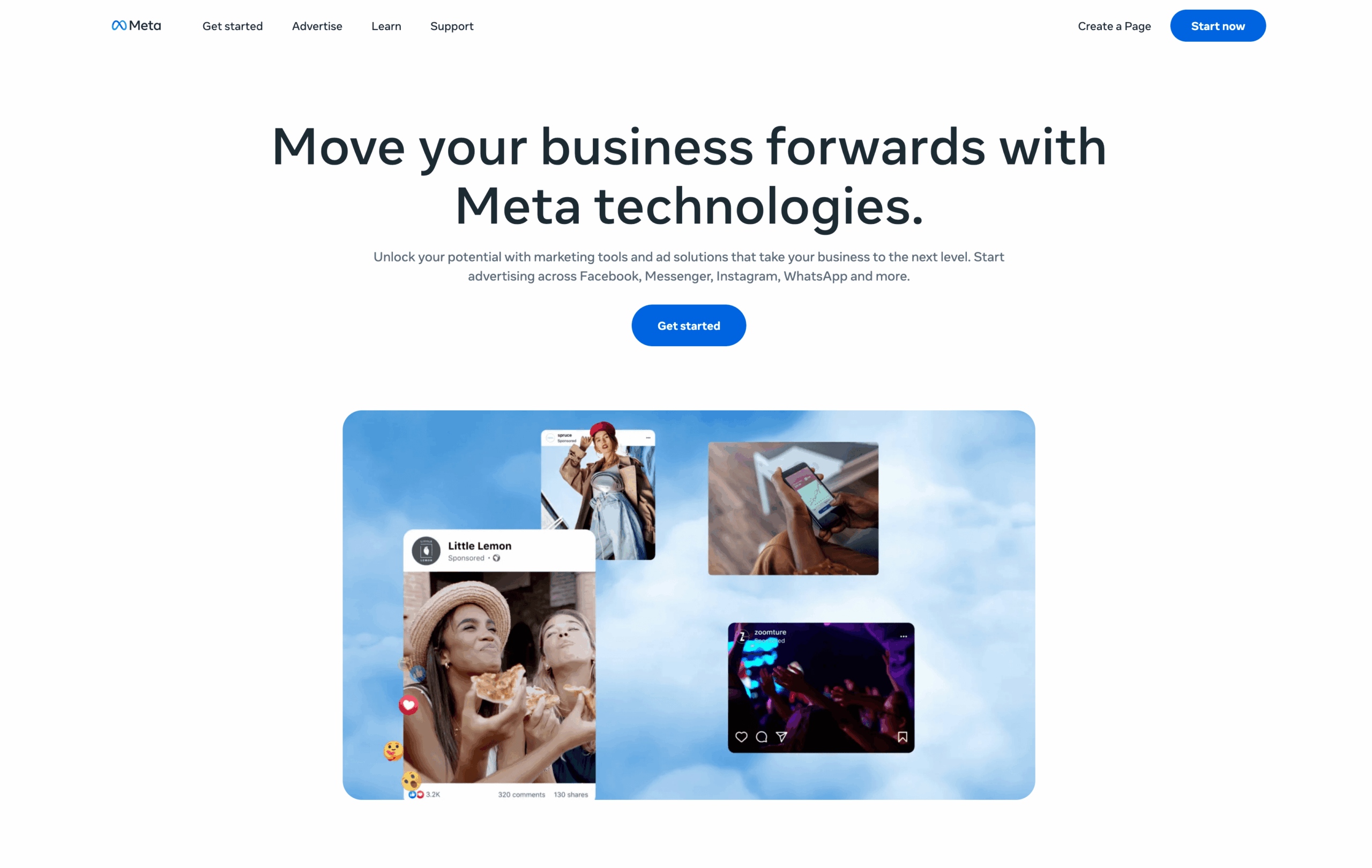
- Best for: Social platform campaigns with strong visual and creative demands
- Key features: AI-generated ad variants, look-alike audiences, dynamic ad optimization, and real-time frequency optimization
- Starting price: Pay as you go, daily budgets often start from tens of dollars but meaningful results usually require larger spend
If you’re doing AI-driven ad campaigns on platforms like Facebook, Instagram, and WhatsApp, Meta Ads is a great option. Its creative automation tools let you generate multiple variations of images and text in minutes.
For example, its text generation feature can create multiple headlines and captions automatically.That means faster testing, less manual grunt work, and better insights on what creative format works best.
3. ActiveCampaign
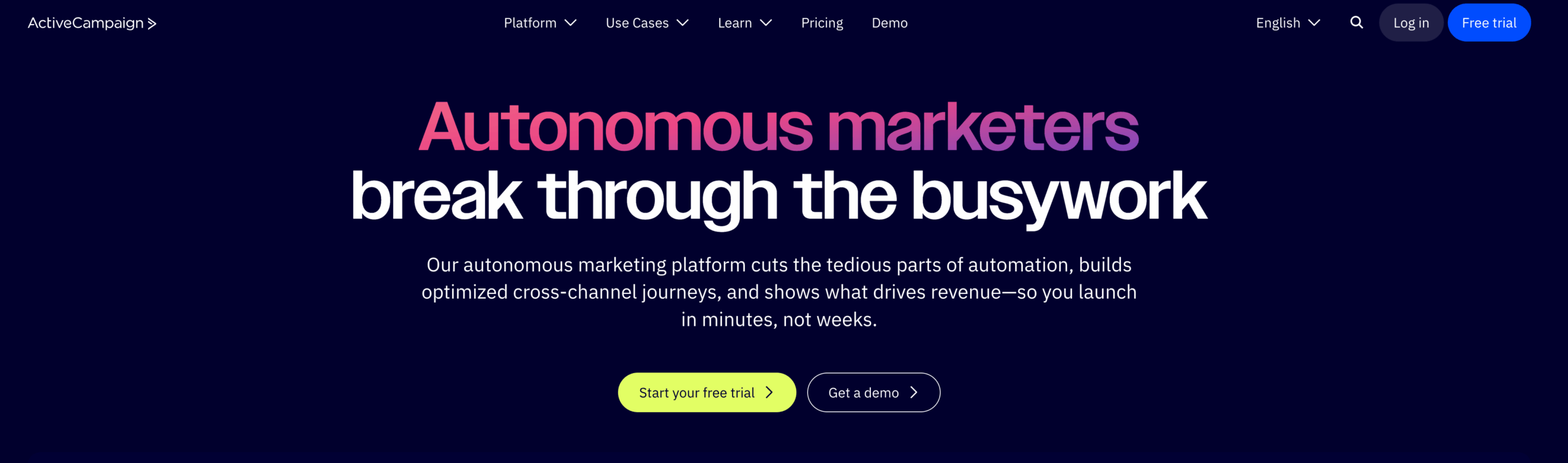
- Best for: Automating multichannel customer journeys, including email, SMS, chat, and WhatsApp
- Key features: Email follow-ups, automated workflows, and content generation via conversational AI
- Starting price: $15 per month (billed annually)
ActiveCampaign is a powerful tool in the conversational AI space. Instead of just running ads, you automate what happens after someone engages with your content: welcome sequences, nurture flows, follow-ups, and segmentation.
The system learns when someone is likely to open, click, or convert and adapts accordingly. This means you’re guiding customers from first touch to purchase.
4. Surfer
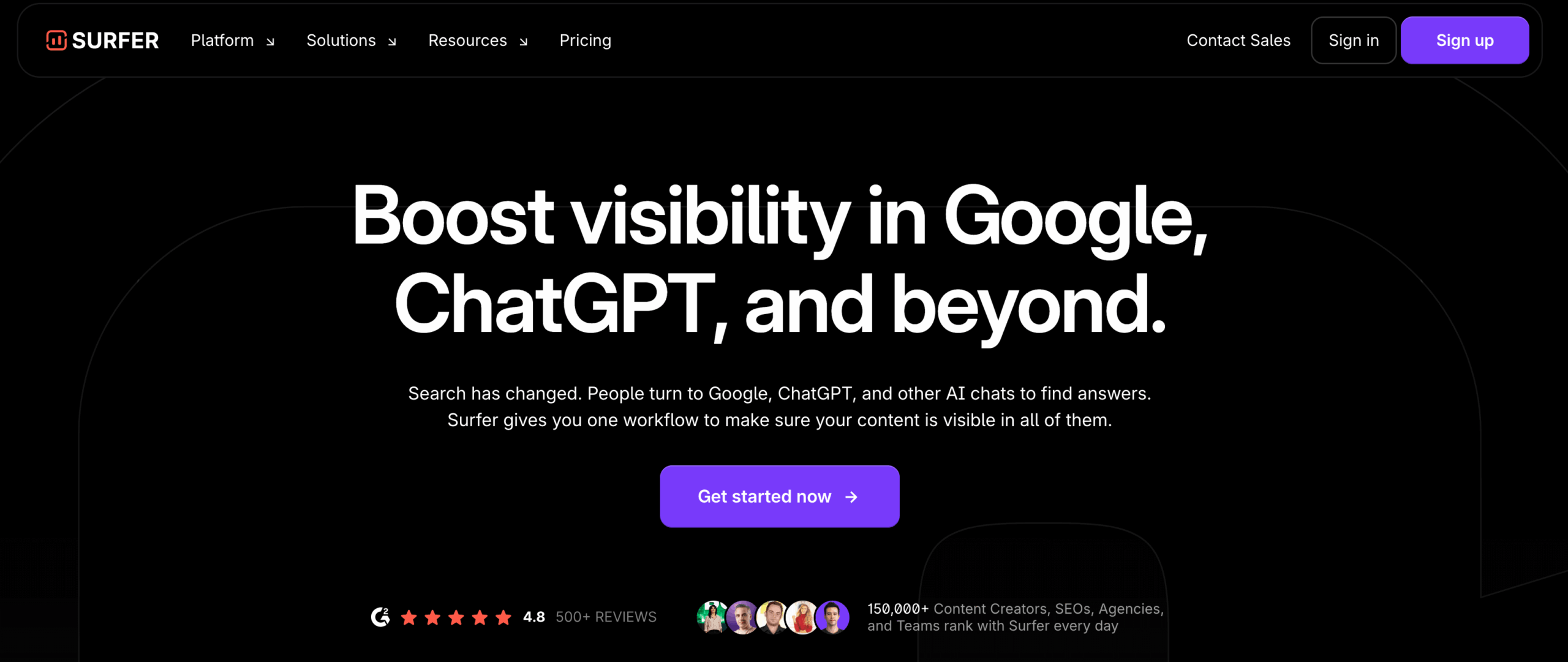
- Best for: Improving organic content performance in your AI digital marketing stack
- Key features: Optimizing web pages, keyword tracking, an AI writing assistant, and internal linking suggestions
- Starting price: $79 per month (billed annually)
Even though Surfer is not a paid ad tool, it supports AI digital marketing by making sure your content ranks well, complements your ads, and captures traffic you might otherwise miss.
It helps you analyze top-ranking pages and recommends structure, keywords, and context so your content is ad friendly and SEO smart. By optimizing your organic reach, Surfer keeps your funnel full, even when your ad budget takes a breather.
5. Persado
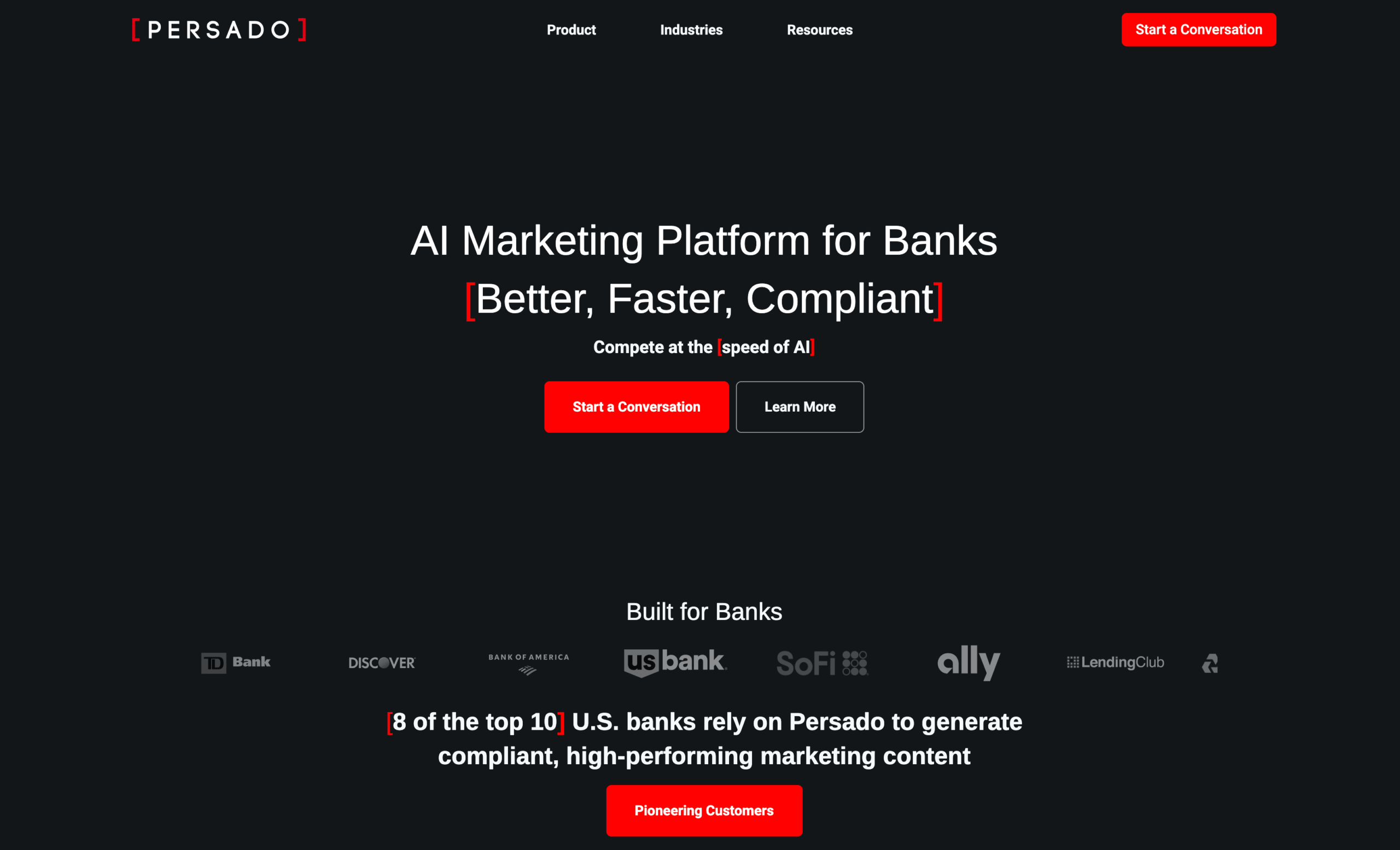
- Best for: Generating high-impact messaging and creative across channels
- Key features: Personalized language generation, multichannel support, and tailored messaging based on emotional and behavioral data
- Starting price: No up-front pricing on its website, custom quotes
Persado is the ideal tool if you want your messaging to feel smart and personalized. It uses AI to test different words, tones, and emotions, then crafts messages that truly connect.
It’s automation with strategy baked in. By analyzing emotional triggers and audience responses, Persado helps brands consistently hit the right note, driving higher engagement, click-through rates, and conversions across every channel.
Real-world examples of AI in advertising
Here are some examples of how big brands are using AI in advertising, what’s working, and what we can learn from them for our own campaigns.
Coca‑Cola
Coca-Cola pushed hard into using generative AI with its 2024 holiday campaign, reimagining its classic “Holidays Are Coming” ad, only to meet major backlash for feeling cold, uncanny, and soulless. Viewers pointed out odd visual glitches, such as red trucks with floating wheels, and a lack of emotional warmth in the commercial.
Takeaway: Using AI to automate creativity is tempting (faster and cheaper, too) but you can’t skimp on the human touch. If your brand relies on emotional resonance, make sure you blend generative AI with human storytelling.
Alibaba
In October 2025, Alibaba announced that AI investments in its e-commerce operations had already broken even, meaning its returns, including those from smarter marketing, targeting, and logistics, now offset the spend. The credit goes to its AI-driven product recommendations and search optimizations across platforms.
Takeaway: When you deploy AI digital marketing for advertising, tracking ROI matters. Set clear metrics, such as cost per acquisition and incremental sales, so you know when your system is paying for itself.
Amazon Ads
Amazon has introduced a growing suite of generative AI tools for advertisers, including image and video generators that turn product photos into ready-to-run ad creatives in minutes. Its Marketing Cloud even features an AI-powered SQL generator that lets marketers build precise audience segments using simple, plain-language prompts.
Takeaway: If you’re producing lots of creative — ads, videos, and visual assets — look for tools that automate the heavy lifting so your team stays focused on strategy and messaging.
RedBalloon
RedBalloon, a small e-commerce brand, used AI-driven ad targeting and saw a spectacular — up to 3,000 percent — return on ad spend (ROAS). It used AI to automate segmentation and creative tweaks, proving that the big brand advantage isn’t mandatory.
Takeaway: Whether you’re a big or small enterprise, AI for marketing is accessible. You just need the right setup (data, goals, and tools) and a willingness to test and learn.
Spotify
Spotify uses AI to power everything from personalized playlists to dynamic audio ads. Its AI Playlist (in beta) predicts which songs listeners are most likely to enjoy based on mood, listening habits, and day-to-day behavior. These signals help brands place audio ads that feel natural rather than intrusive, improving customer engagement and completion rates.
Takeaway: Personalization works best when it feels helpful instead of pushy. Look for ways your own campaigns can match the message, moment, and mood — keeping the experience seamless across channels.
Unilever
Unilever uses AI to test thousands of creative variations before campaigns ever go live. Its system predicts which images, colors, and messages will resonate most with each audience segment, helping the brand reduce wasted spend and shorten production cycles. AI in retail also helps analyze shopper behavior across regions so you can tailor ads based on cultural preferences and retail patterns.
Takeaway: Testing doesn’t have to slow you down. With the right AI tools, you can experiment faster, refine creative in real time, and launch campaigns that are far more likely to land on day one.
Challenges and limitations of AI in advertising
Even the best AI tools for marketing come with their fair share of speed bumps. From ethics to execution, these challenges can make or break your strategy with AI advertising tools and business process automation (BPA).
Ethical concerns
AI runs on huge amounts of user data, which makes privacy, consent, and transparency major responsibilities for marketers. When algorithms learn from biased historical data, targeting can become inaccurate or unfair without anyone noticing at first. Even well-intended campaigns can accidentally exclude or stereotype certain audiences.
On top of that, brands have to keep up with strict laws like CCPA and GDPR, which continue to evolve. Using AI ethically is essential for maintaining trust and enabling compliance.
Data quality issues
AI only works as well as the data you feed it. Low-quality inputs lead to low-quality results. Outdated, inconsistent, or incomplete data can seriously distort predictions and audience insights.
Marketing teams often underestimate how much ongoing cleanup and validation are needed to keep data usable. If the system learns from the wrong patterns, it can quickly push your campaigns in the wrong direction. Keeping data fresh becomes a constant behind-the-scenes job for anyone using these tools.
Implementation costs and complexity
Setting up AI isn’t just about buying a tool. It often requires new data pipelines, cloud resources, and technical expertise. Even with outside support, there’s still ongoing tuning, monitoring, and maintenance to budget for.
Many businesses are surprised by the hidden costs that show up months after launch. The payoff is real, but the setup takes time, careful planning, and steady follow-through.
Overreliance on automation
Automation is great for speed, but it can weaken the creative spark if you lean on it too much. For example, AI can predict behaviors but it doesn’t understand culture, timing, or nuance the way humans do.
Over-automation can also make campaigns feel repetitive or too safe. The best work happens with human creativity at the fore, and AI supporting the execution. Remember, balance is key — not a full handover.
Ad fatigue and personalization limits
Hyper-personalized ads can start to feel intrusive, especially when they reveal more about a user than they’re comfortable with. When every message is laser-targeted, audiences quickly lose that sense of freshness and surprise.
Over time, this can cause them to ignore or actively avoid ads. Marketers need to mix content personalization with variety to keep things engaging and appropriate. Fresh creative rotations matter just as much as smart targeting.
Brand safety and quality control
Automated ad systems sometimes place content in risky or inappropriate environments without warning. A perfectly good ad can end up next to harmful, offensive, or misleading material.
AI-generated creative isn’t immune to mistakes — it may break brand rules or miss cultural cues. Marketers still need human review to catch issues early. Safe, consistent advertising requires keeping people in the loop.
Integration and workflow friction
New AI tools don’t always play nicely with existing ad tech systems, dashboards, or workflows. Even small mismatches can slow down teams or cause data to fall through the cracks.
Adopting AI may require retraining staff, reshaping processes, or redefining roles. That learning curve can stall momentum if you don’t plan for it. Smooth adoption takes time, patience, and a clear rollout plan.
Consumer trust and perception
Not all audiences are comfortable with AI shaping the ads they see or the content they interact with. Some feel more at ease when campaigns clearly show a human hand behind them.
If the tech feels too pushy or opaque, trust can erode quickly. Skepticism around manipulation or privacy can also lower engagement. Transparency and thoughtful use of AI can go a long way toward keeping audiences on your side.
Trends in AI advertising
AI in marketing is expected to generate $107 billion by 2028, a sign of just how quickly brands are shifting toward smarter, automated workflows. That growth is driven by a new wave of tools and habits reshaping how marketers plan, create, and measure campaigns.
Here are the key business automation trends shaping the future of advertising right now:
- Hyper-personalized ads: One-size-fits-all is out. AI now builds unique ad experiences for each viewer, from tailored visuals to product suggestions. Think Spotify Wrapped, but in real time for every user, powered by data-driven creativity.
- Behavioral predictive targeting: By analyzing browsing patterns, purchase history, and engagement signals, AI predicts what customers will want next.
- Interactive AI ads: Static banners are being replaced by ads that talk back. Dynamic, voice-enabled, chatbot-style experiences let users ask questions or explore products directly within the ad. It’s engagement reimagined through AI advertising tools.
- Conversational advertising: Brands are using AI chatbots to start real-time conversations inside social platforms and apps. These tools turn curiosity into conversions, guiding users naturally without pushing too hard with salesy copy.
- Generative AI in ad production: AI isn’t just optimizing ads anymore — it’s making them. From copy and visuals to entire video scripts, generative AI shortens production cycles and helps you test hundreds of creative variations instantly.
- Fully autonomous campaign management: The future of BPA is hands-off. AI systems like Google’s Performance Max and Meta’s Advantage+ can manage budgets, test creatives, and optimize performance end to end with minimal human input.
- Privacy-first AI advertising: As data laws tighten, privacy-first ad tech is gaining traction. AI models now rely on anonymized, aggregated, or on-device data, allowing personalization without invading privacy.
How Jotform’s AI Agents can help
Jotform’s Marketing AI Agents are specialized AI assistants that can turn your static forms into dynamic, conversational experiences that actually engage with your audience.
Here are a few things you can do with Jotform’s AI advertising tools:
- Capture leads conversationally: Use our Sales Lead Generation AI Agent to ask smart, human-like questions, qualify prospects in real time, and feed data directly into your CRM without needing a human rep on standby.
- Streamline lead capture: Our Lead Capture AI Agent makes signups and inquiries feel effortless. It learns from your marketing materials to provide personalized responses that make every interaction feel custom.
- Generate on-brand ad copy: You can use our Text Only Advertisement AI Agent to craft headlines, CTAs, and ad copy that align with your brand’s voice.
- Run targeted demographic research: Use our Demographic Survey AI Agent to interactively gather age, education level, income, interests, and more from your audience. It adapts its questions based on previous responses and helps you segment users effectively.
- Streamline client intake for marketing services: Our Digital Marketing Client Intake AI Agent guides prospects through onboarding, asking about goals, budget, platforms, and preferences in a conversational style.
- Support go-to-market planning and strategy: Use our Go to Market Strategy AI Agent to collect vital insights like target segments, pricing strategy, competitive gaps, and launch milestones via chat.
These AI Agents integrate easily with your existing AI marketing tools, letting you collect, analyze, and act on data without manual effort.
Improve your ROI with AI in advertising
The world of AI in advertising is moving fast, and staying competitive means finding tools that make smart marketing simple. Jotform AI Agents do just that for you.
These AI Agents will be your behind-the-scenes team, handling the routine work, personalizing conversations, and freeing you up to focus on strategy and creativity. That means stronger engagement and less guesswork — oh, and better returns on every campaign.
Explore Jotform’s Marketing AI Agents to see how you can start improving your ROI.
This article is for marketers, advertisers, and business owners who want to leverage AI to improve campaign performance, automate workflows, and boost ROI. It’s also ideal for teams looking to streamline creative production, enhance targeting, and use smarter tools to scale their digital advertising efforts.































































Send Comment: