Top agentic AI tools
Agentic AI is artificial intelligence that does more than simply respond to commands — it takes initiative. These systems plan, make decisions, and act toward a goal with minimal human input. In that way, they function more like digital coworkers than mere tools.
Traditional AI or chatbots only answer questions based on previously written scripts or perform preprogrammed tasks. In contrast, agentic AI can reason through multi-step problems, decide on the best course of action, and adjust responses as conditions change. It bridges the gap between automation and autonomy, so organizations can move from reactive to proactive workflows.
Modern agentic AI systems can plan tasks, execute them across multiple tools, learn from past outcomes, and refine their approach over time. Large language models (LLMs) such as GPT-4o provide the reasoning and natural language understanding that make these agents capable of interpreting context, interacting with systems, and coordinating complex tasks, while continuously improving their performance.
Why agentic AI matters now
Agentic AI is gaining traction because it addresses real-world challenges businesses face every day, from repetitive administrative work to multi-step research and data tasks that eat up hours of human effort. Not that long ago, people were searching for a definition of AI Agents. Now, companies are deploying AI agents that don’t just assist but actively and somewhat independently manage workflows, analyze data, generate content, and even coordinate development operations without constant supervision.
These agents can craft and perform a chain of complex processes. They optimize marketing campaigns in real time; manage IT system updates and troubleshoot before issues escalate; and synchronize operational tasks across departments. The result is a new layer of automation that isn’t limited by fixed scripts or single-step actions.
Key features of agentic AI tools
Agentic AI tools should possess core capabilities to transcend the limitations of mere AI chatbot responders. These tools enable features like
- Autonomous goal planning: The system breaks down a goal into tasks, prioritizes actions, and sets a sequence of steps based on context.
- Memory and context awareness: The agent remembers past interactions and user preferences, so it acts more intelligently over time.
- Tool use and environment interaction: The agent is not confined to generating text. It can manipulate files, browse the web, call APIs, query databases, chain tasks together, and interact with other systems.
- Task chaining and execution: The agent executes multi-step workflows: e.g., monitoring for an alert, gathering relevant data, creating a summary, triggering a task in a workflow, and following up if needed.
Other valuable bonus traits include real-time collaboration, where multiple agents or humans work together; continuous learning, meaning the system learns and improves based on previous outcomes; and deep context-awareness, enabling the tools to understand organizational rules and domain-specific nuances.
The best agentic AI tools for 2026
 Jotform AI Agents |  AWS |  Moveworks |  Snowflake |  ServiceNow |  Salesforce |  Microsoft |  IBM |  Databricks |  UiPath | |
|---|---|---|---|---|---|---|---|---|---|---|
| Best for | SMBs looking for lead capture, customer service automation | Enterprises building custom autonomous agents at scale | Medium to large organizations with heavy internal support workloads | Data- and analytics-led organizations that want to integrate agents into data flows | Ops and IT service management (ITSM) teams automating cross-department workflows | Sales/marketing/customer-support teams needing AI agents | Broad business and enterprise IT users looking for agentic within productivity | Regulated industries needing strong controls and agentic workflows | Data science & machine learning (ML) teams building agents on top of lakehouse | Automation/ops teams automating business processes end-to-end |
| Key feature | Rapid custom AI-agent creation (forms & workflows) | Full cloud stack plus agentic AI (Bedrock/AgentCore) | Enterprise-agentic AI assistant that automates internal workflows, e.g. in IT, HR, & Finance | Data-cloud plus agentic AI readiness | Workflow automation and enterprise AI agents | CRM-centric agentic workflows (Agentforce) | Unified Copilot and Azure AI Agent Services help build & deploy autonomous AI agents directly | Enterprise-grade AI agents and governance | Unified data & AI platform supporting agentic workloads | Robotic process automation (RPA) plus agentic automation (robots, agents and process) |
| Pricing | Free trial; paid plans start at about $34/user/month | Usage-based | Custom enterprise pricing only | Usage-based with $2-4 per credit base; 30-day free trial | Custom pricing; licenses around $90-$200/user/month | Tiered/feature based, per user/month | Hybrid model of two main tracks — usage based and per user. | Usage-based; watsonx Assistant starts around $140/1,000 monthly active users (MAUs) | Pay-as-you-go from $0.20/DBU or $500+/month for small teams | From $25 to $420/user/month, plus custom pricing for enterprise |
1. Jotform AI Agents
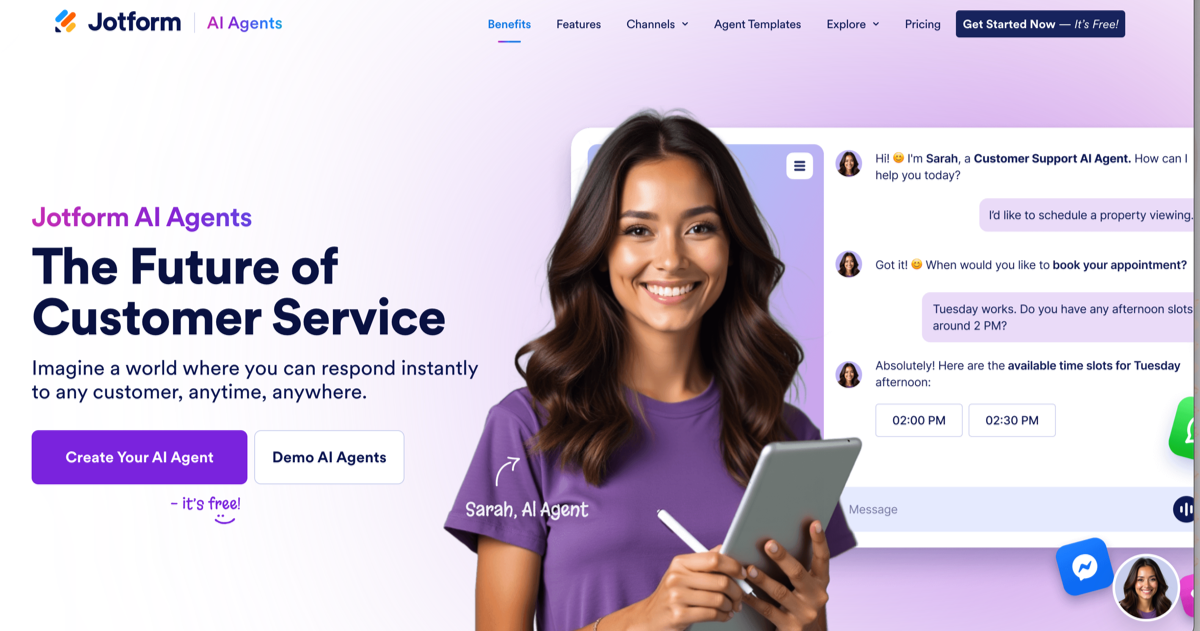
Overview: With Jotform AI Agents, you can build powerful AI agents without writing a single line of code. Designed for organizations in e-commerce, healthcare, finance, and education, this solution transforms basic form-filling into a dynamic, conversational experience. You can train your AI Agent with relevant data — then let it collect customer information, autofill forms, and answer questions, all at the same time. The result? A more intuitive, efficient, and engaging way to gather information.
Jotform AI Agents offer advanced features without the coding complexity:
- Enhanced data integration: Automatically format and structure responses to match your form layout, ensuring clean, organized data and reducing manual errors.
- Personalization: Adapt the experience based on user input, delivering a relevant journey for both customers and employees; for example, the tattoo studio AI Agent, the real estate consultant AI agent, or the school administrator AI agent.
- AI Agent templates: Start quickly by customizing an AI template, building from scratch, or converting an existing form into an AI Agent.
- Scalability: Effortlessly handle growing demand while maintaining service quality — Jotform AI Agents scale as your business grows.
Best for: Small to midsize businesses looking for lead capture and customer service automation
Key feature: Rapid custom AI-agent creation that integrate with forms and workflows
Pros:
- Highly user-friendly setup and strong no-code customization
- Cost-effective, especially for smaller teams and organizations
Cons:
- Agents that struggle with extremely complex or highly nuanced tasks; need for ongoing training
- Some features may require moving up to a higher tier, with a higher cost
Plans/Pricing: Starter plan is free for up to five agents, while paid plans range from $34 to $99 per month for additional usage and access to increasingly advanced features. Enterprise-level organizations are encouraged to inquire for custom pricing.
2. Amazon Web Services (AWS)
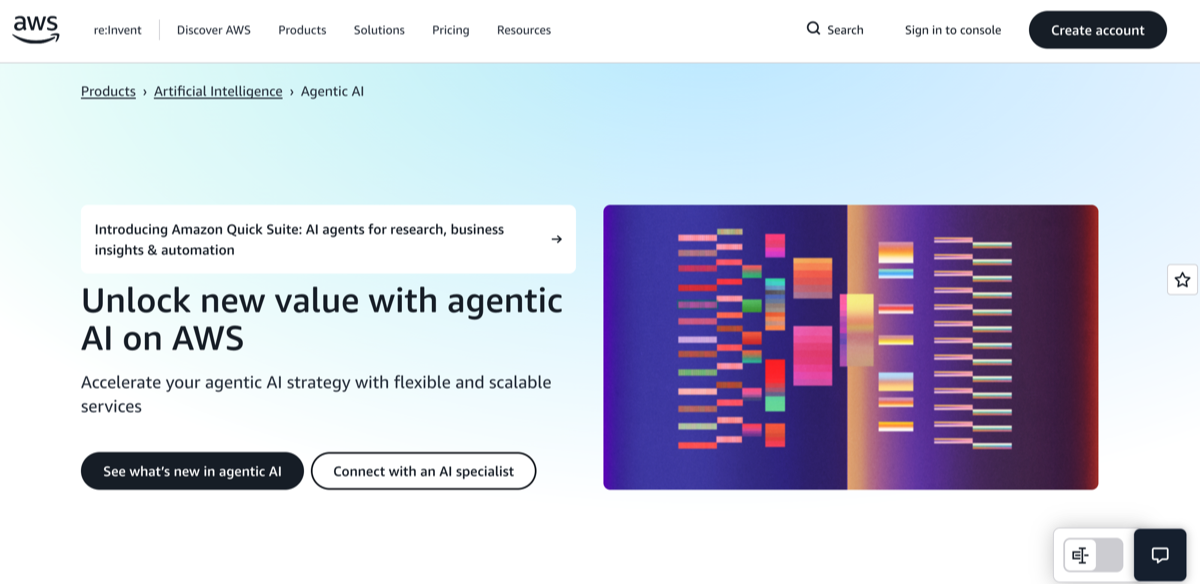
Overview: AWS is known for its massive cloud-platform ecosystem but is advancing rapidly into agentic AI with services that let AI agents plan, act, and integrate across tools and data. It’s strong in infrastructure, scale, tool-use, and enterprise-grade deployment.
Best for: Large enterprises or product/data/engineering teams who need to build custom autonomous agents at scale, especially where the team is already using AWS or where it anticipates heavy infrastructure demands
Key feature: Full support for agentic workflows, giving teams the tools to design, run, and monitor AI agents so they can work safely, efficiently, and transparently
Pros:
- High degree of scalability and infrastructure, capable of bearing heavy workloads and enterprise readiness
- Broad ecosystem and marketplace of third-party agent tools, enabling quicker adoption
Cons:
- Complexity; steep learning curve for teams without strong engineering resources
- Cost and governance escalate quickly, especially when using many integrated tools and custom agents
Plans/Pricing: AWS uses consumption-based pricing, based on infrastructure, tools, and agent services.
3. Moveworks
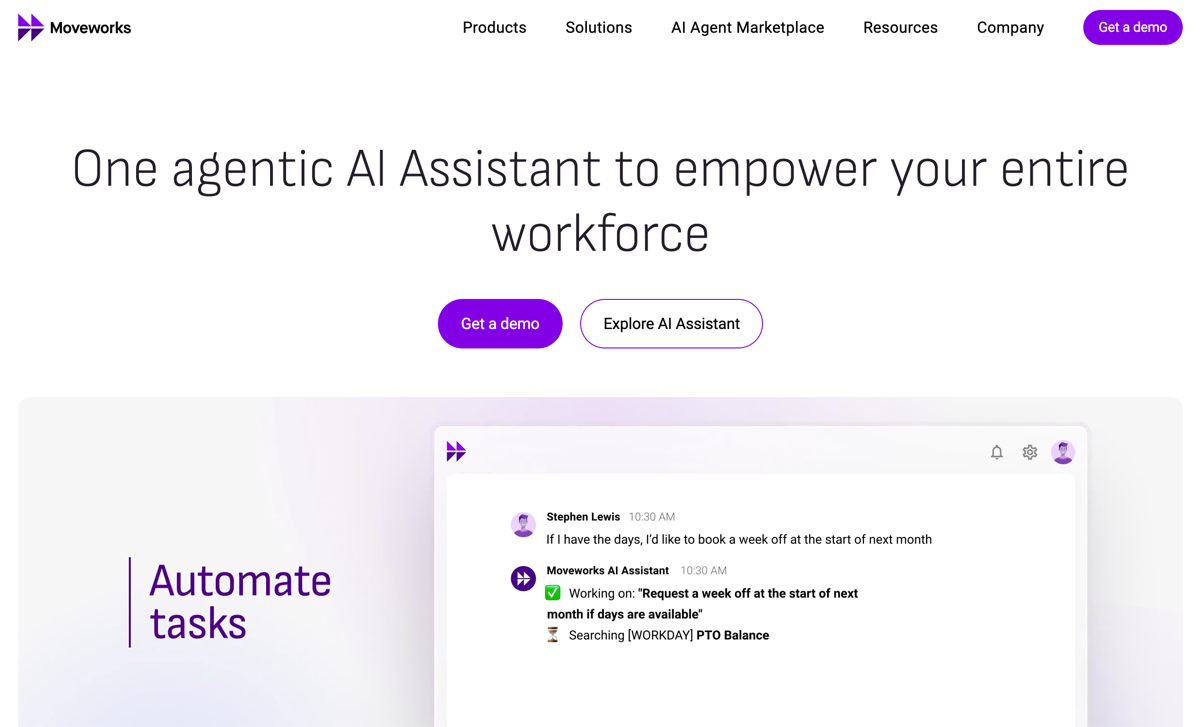
Overview: Moveworks is a specialist agentic AI platform built for automating internal enterprise workflows (especially IT/HR support). It emphasizes end-to-end automation for employee service experiences rather than just chat.
Best for: Medium to large organizations with heavy internal support workloads (helpdesk, employee onboarding, provisioning) seeking to automate internal service operations
Key feature: One AI assistant that integrates with hundreds of out-of-the-box systems, uses multiple LLMs and plugins, and resolves tasks end-to-end. For example, it can take a support request from ticket creation through resolution with minimal human effort.
Pros:
- Strong reductions in ticket volume and support costs
- Natural-language and integration capabilities for accessible internal automation
Cons:
- High and custom pricing, often reaching six figures, which may be prohibitive for smaller organizations
- Narrower scope (internal operations), so it may not fit all use-cases
Plans/Pricing: Custom pricing only. Median buyer pays around $130,000 per year, with a general range of $90,000 to $264,000, according to marketplace data.
4. Snowflake
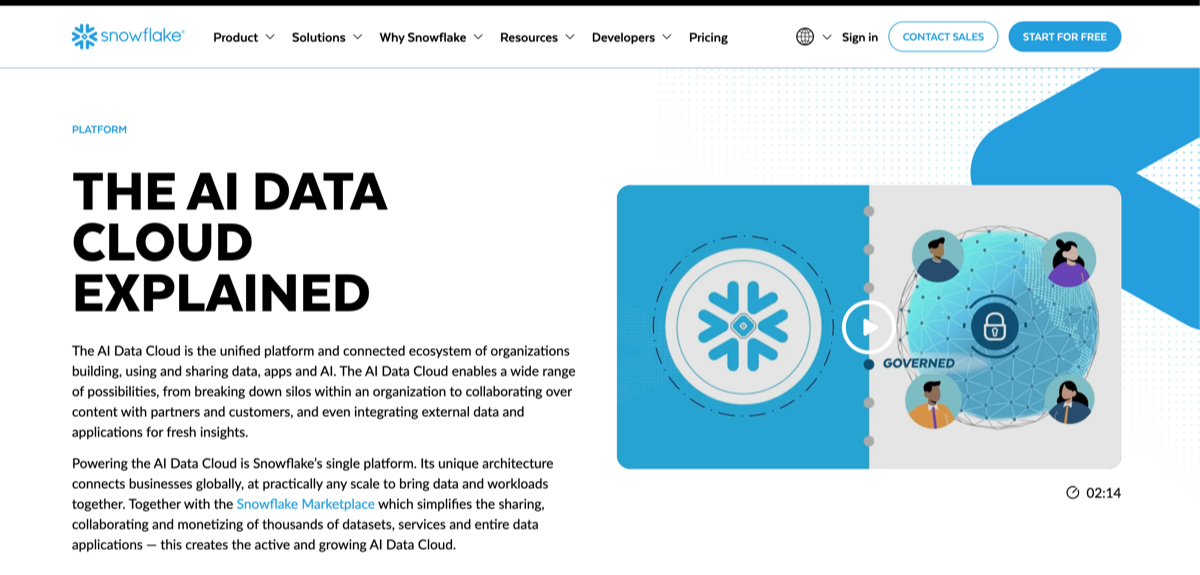
Overview: Snowflake began as a data cloud and warehouse platform but has broadened into AI data and agentic AI workloads, through its Cortex/AI Data Cloud capabilities. It’s strongest at the business juncture where data and agents meet.
Best for: Data- and analytics-led teams (data engineers, ML teams, and operations) who want to embed agentic AI into their data platform and workflows
Key feature: Provides a unified data platform where agentic workloads can be built directly on data, so LLM functions and agents operate from within the context of the data warehouse
Pros:
- Highly scalable, with fast query performance
- Enables non-ML specialists to apply agentic/LLM functions through SQL and low-code contexts
Cons:
- Unpredictable costs based on usage, which requires constant monitoring
- High degree of data maturity required to implement agentic AI
Plans/Pricing: Usage-based model; you’ll pay for storage, compute, and data transfer. Credits cost from between $2 to $4 per credit on demand in some regions.
5. ServiceNow
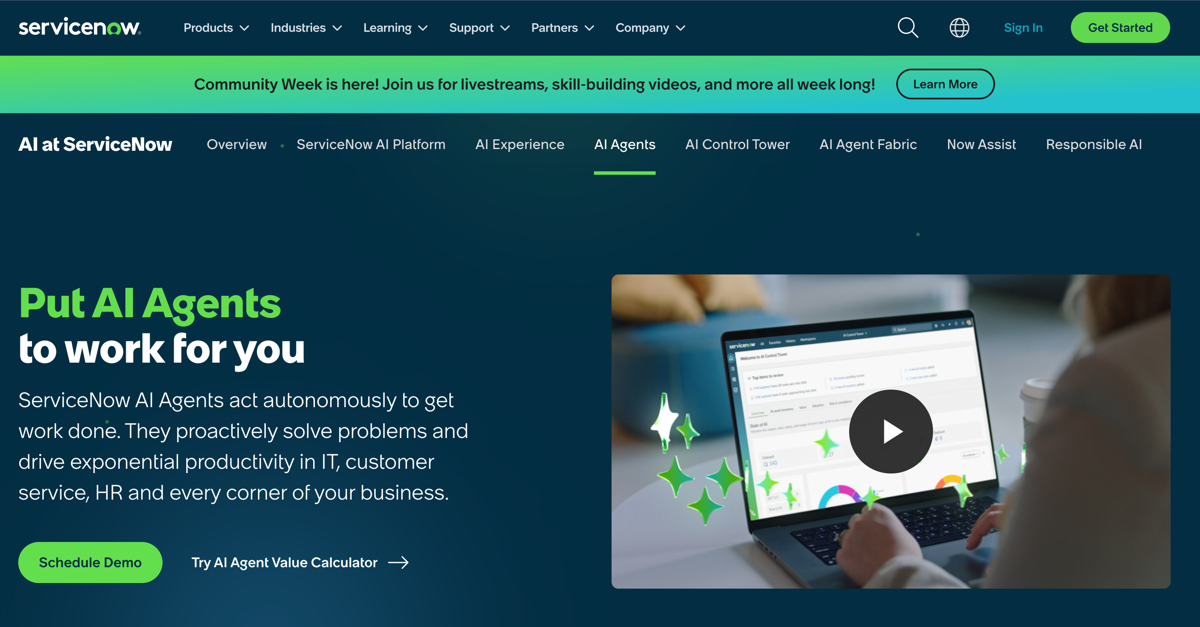
Overview: ServiceNow is known for its workflow and IT service management. It has extended its services into agentic AI (AI Agents/Studio) to automate cross-department processes with autonomy.
Best for: Operations, ITSM, HR, and service-management teams in enterprises that want to automate complex workflows involving multiple departments
Key feature: ServiceNow’s AI Agent Studio and Control Tower empower you to build and customize agents, integrate with your enterprise workflows, set governance, and deploy across IT, HR, and service functions.
Pros:
- Strong automation of repetitive service tasks and improved response times
- Strong governance and enterprise-grade workflow integration (especially for mature organizations)
Cons:
- Typically best suited for large, mature enterprises with existing ServiceNow ecosystems; high complexity/cost for smaller organizations
- Lengthy implementation timeline; significant change-management required for healthy ROI
Plans/Pricing: Pricing is largely custom, with both subscription/licensing and consumption models. Implementation costs and modules vary greatly by use case.
6. Salesforce
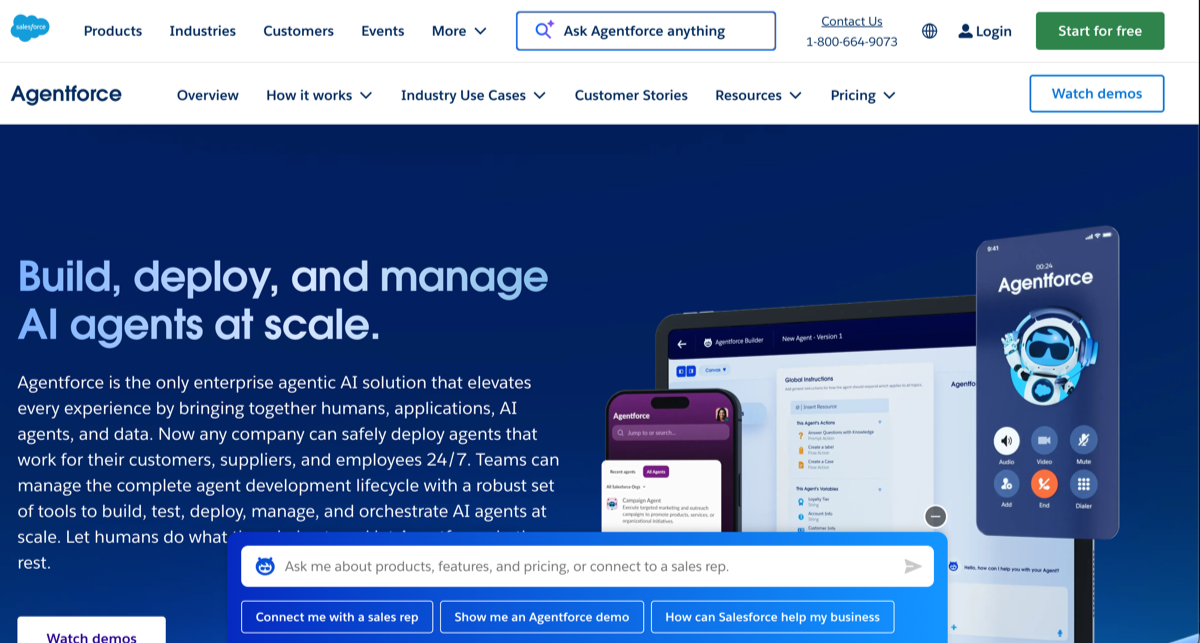
Overview: Salesforce brings agentic AI into its CRM and business-workflow ecosystem with Agentforce, positioning AI agents that act within sales, service, field, and the broader enterprise context. These agents use Salesforce’s Einstein 1 platform to automate complex tasks, such as qualifying leads, responding to customer issues, or coordinating workflows across departments, all while keeping data secure and contextually aware within the CRM.
Best for: Sales, marketing, customer-support, and product teams that use Salesforce and want AI agents to automate workflows, interactions, and operational tasks within that ecosystem
Key feature: Agentforce is an agentic AI layer inside Salesforce that automates tasks, and triggers actions.
Pros:
- Seamless integration into an established CRM environment with minimal disruption for CRM-centric teams
- Flexible pricing models for cost aligned with actual agent actions instead of seat licenses
Cons:
- Complex and opaque pricing and licensing structure; challenges with ROI
- Newer in the agentic AI space; not yet as mature as more specialized or mature platforms
Plans/Pricing: Standard add-on costs about $125 per user per month for some Agentforce tiers. Action-based Flex Credits cost about $0.10 per action (20 credits) when buying bulk packages.
7. Microsoft
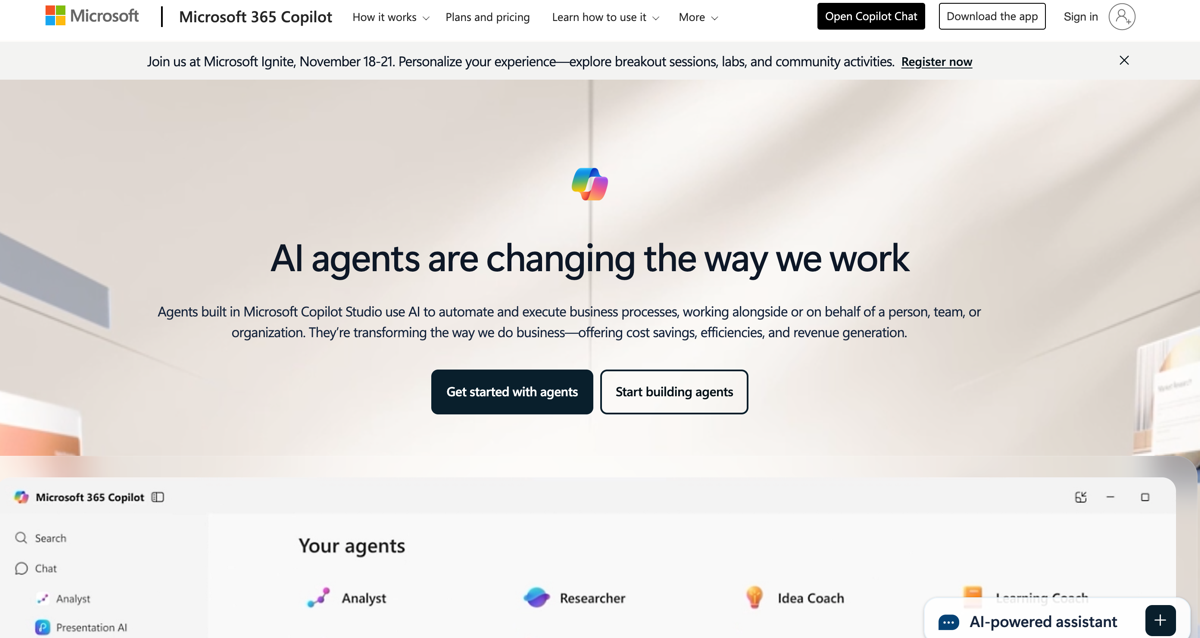
Overview: Microsoft is bringing agentic AI into productivity and enterprise platforms through its Copilot and Agent capabilities, enabling custom retrieval agents, automation, and multi-tool orchestration across Microsoft 365 and Azure.
Best for: Organizations already heavily invested in Microsoft ecosystems (Office 365, Azure, Teams) that are looking to build agentic workflows inside familiar productivity tools and require broad enterprise support
Key feature: Advanced agent building platform lets building agents act inside the Microsoft stack (Teams, SharePoint, etc.), integrate with enterprise data and services, and automate tasks across systems.
Pros:
- Strong enterprise-grade security, compliance, and integration with widely used productivity tools
- Relatively quick to deploy in familiar environments for teams already using Microsoft tools
Cons:
- UX or complexity issues (e.g., Microsoft interface heaviness)
- Outcomes heavily dependent on correct setup of data and governance
Plans/Pricing: Varies by specific product. For example, Copilot Studio uses a credits system, enterprise licenses, and add-ons. Many components charge depending on volume, region, and usage.
8. IBM
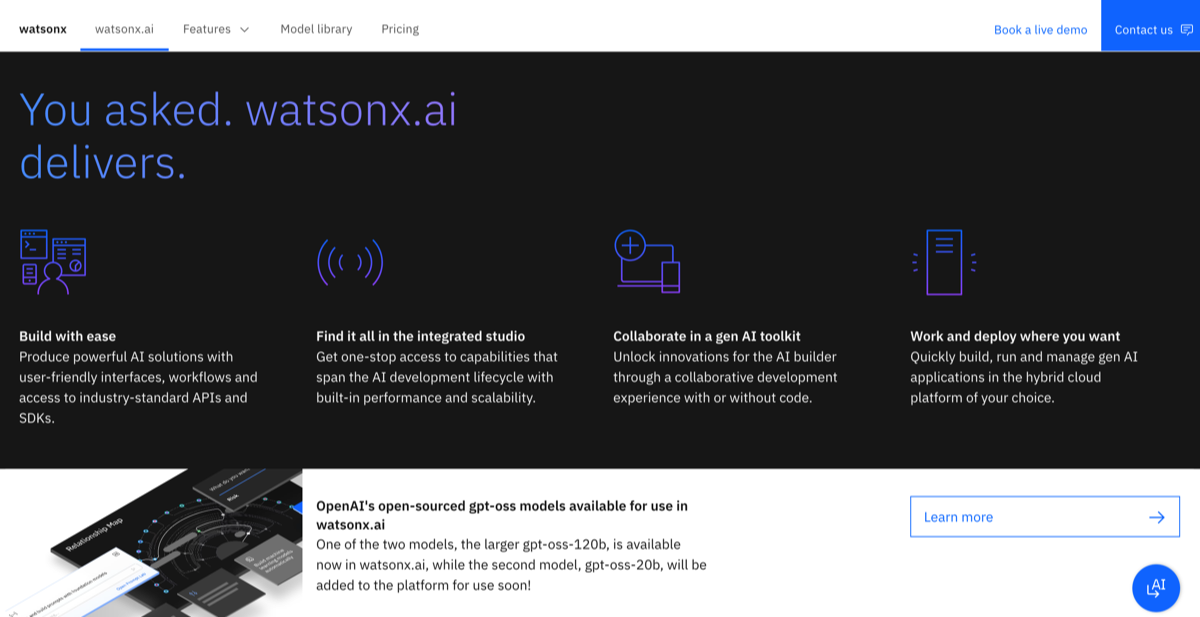
Overview: IBM’s watsonx platform offers enterprise-grade AI/agent capabilities with a focus on governance, compliance, and bridging experimentation to production for agentic AI.
Best for: Regulated industries, such as finance, healthcare, and government, or large enterprises where governance, security, and enterprise-scale deployment are essential
Key feature: watsonx.ai & watsonx Orchestrate provide a low-code studio environment plus tools to build, deploy, and monitor AI agents, in addition to strong support for model governance, multi-agent orchestration, and more.
Pros:
- Strong governance, security, and enterprise-grade features; ease of building agents and reliability
- Integration with open models, flexibility, and broad capability across the enterprise stack
Cons:
- Complex integration or slower deployment compared to lighter-weight platforms
- High cost and implementation time due to enterprise-use focus when compared to simpler agentic tools
Plans/Pricing: Custom/enterprise pricing. Some user-review notes suggest ease of use but cost and complexity of pricing remain higher.
9. Databricks
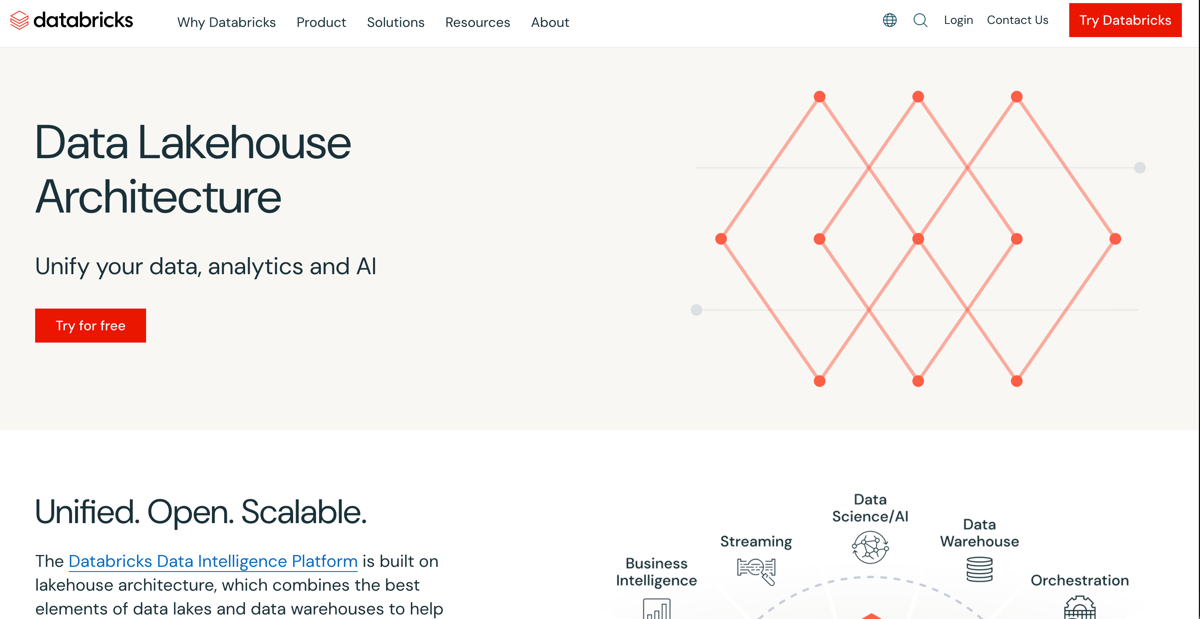
Overview: Databricks is a unified data, analytics, and AI platform. It’s advancing into agentic AI by enabling the creation of AI agents on its data platform, with workflows, vector search, foundation models, and evaluation frameworks.
Best for: Data science/ML teams, analytics teams, and product teams that need to build custom agents on top of rich data sets and want the flexibility and ability to experiment with agentic AI
Key feature: Agent Framework and Mosaic AI let you define custom agents, evaluate them, connect to vector search and data lakes, and orchestrate multi-step processes
Pros:
- Excellent for teams that already have strong data/ML maturity and want to experiment
- Good support for “agentic AI” in the sense of building custom agents instead of just accepting standard out-of-box models
Cons:
- Possibly more developer-centric than other platforms and may require more technical resources
- Less “plug-and-play,” so longer period needed for non-data to realize full value
Plans/Pricing: Usage-based; specific agentic features may add to your cost. Custom quotes available as well.
10. UiPath

Overview: UiPath merges robotic process automation (RPA) with agentic AI. It offers agents and automation workflows that combine robots, AI, and people across business processes, bringing “agents, robots, and humans” into the mix.
Best for: Operations and automation teams seeking to automate business processes end-to-end, especially front/back offices, task automation, document workflows, and humans-and-bots orchestration
Key feature: UiPath’s Agent Builder, Maestro, and robots make up a platform that enables building full business-process automation agents that can coordinate tasks, invoke tools, automate workflows, and integrate with APIs/robots.
Pros:
- Good fit for process-heavy environments such as finance, operations, and services teams, where automating manual tasks brings quick and visible value
- Clear starting plans and accessible entry point through its basic plans for automation journeys
Cons:
- Complex pricing and licensing; quickly increasing cost as scale increases
- More orchestration required to move to higher-level agentic AI capabilities as opposed to pure agent platforms
Plans/Pricing: Its Basic plan starts at $25 per month for an individual user or a small team, offering limited features, with Pro plan running $420 per month or more. Enterprise organizations get custom price quotes.
How to choose the best agentic AI tool for you
Not every agentic AI platform fits every team. Some tools, like Jotform AI Agents or Moveworks, offer low-code or no-code environments where you can create useful agents with simple prompts or form logic. Others, like AWS, Microsoft Azure, or Databricks, are developer-first platforms — and they’re ideal if you have technical teams that want to build fully customized, goal-driven agents with direct access to APIs and data pipelines.
If you plan to train your agents on your own data, look for platforms that support secure data integration or vector database connections. Agents learn from internal documents, CRM records, or knowledge bases while keeping that data private.
Choose your tool based on your specific goal. A customer service agent might thrive on Salesforce or ServiceNow; a data analysis agent could excel on Snowflake or Databricks; and a lightweight automation agent might run best on UiPath or Jotform. The best platform is the one that balances control, scalability, and simplicity for the specific problem you need to solve.
Finally, it’s smart to test safely in a sandbox environment first. Limit what systems the agent can touch, track its actions closely, and set boundaries around what data or commands it can access. This ensures your agents perform as expected without disrupting workflows or exposing sensitive data.
Transform your work with Agentic AI
Agentic AI is fast becoming the new standard for intelligent automation. These tools don’t just assist with tasks. They think, plan, and act toward business goals. This frees teams from repetitive work and improves efficiency across operations, service, and product development. They can move from asking, “What are AI agents?” to deploy these agile and robust AI systems that save time and money.
By adopting the right agentic platform, organizations can streamline complex workflows, enhance decision-making, and dramatically reduce manual effort. The key is to match your tool to your needs — whether that means a low-code builder like Jotform AI Agents for quick deployment or an enterprise solution like AWS or Salesforce for deep integration and scale.
Ready to see what agentic AI can do for you? Start by exploring Jotform AI Agents and experiment with creating your first autonomous workflow today.
Frequently asked questions about agentic AI
The best models are large language models (LLMs) like GPT-4o or Claude 3. These let agents reason, plan, and act autonomously within defined goals.
For fast, nontechnical setup, Jotform AI Agents or Moveworks are great. For advanced customization, AWS, Azure, or Databricks provide full developer control.
Yes. Agentic AI can dramatically cut manual work, improve accuracy, and boost productivity when matched to the right workflow and level of technical expertise.
This article is for tech leaders, operations managers, product teams, and anyone seeking the best agentic AI tools to automate complex workflows, drive business efficiency, and build autonomous, goal-oriented AI agents.
































































































Send Comment: