
Maybe you’ve dreamed about hiring a support team that works 24-7, never gets tired, and never calls in sick. Now, that team has a name: conversational AI. These digital assistants are no longer the future, and they’re transforming how companies interact with customers, gather data, and run their operations.
From chatbots that answer questions in real time to AI agents that can schedule appointments, recommend products, or even talk customers through filling out a complex form, conversational AI is showing up in industries you might not expect. We’ll outline how these AI-powered tools work, examine why so many companies are on board with this tech trend, and review some conversational AI applications in various sectors.
Introduction to conversational AI
The mechanics of conversational AI boil down to a simple concept: It makes machines feel more like helpful humans than glorified phone trees. And, with any luck, it helps to prevent customers from throwing their phones across the room in frustration.
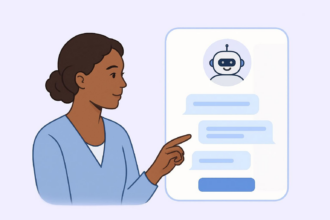
At its core, conversational AI refers to computer technology that understands, processes, and responds naturally to human language. These are chatbots that actually answer your questions, voice assistants that understand what you’re saying, and virtual agents that work around the clock. Conversational AI tools rely on a combination of natural language processing (NLP), machine learning (ML), and, sometimes, a hint of deep learning (DL) to keep up their end of the conversation.
So why does all of this matter in modern business?
Let’s be honest: Our attention spans are shortening by the minute, and our patience can often be even shorter. Companies that want to stay in the game are turning to conversational AI to give people what they want: fast, accurate answers without the long wait times and hold music. With conversational AI tools, you and your clients get
- Better customer experiences: AI can handle the repetitive stuff, so human agents can jump in when it counts. That means fewer annoyed customers and happier support teams.
- More efficiency: Chatbots don’t take breaks, don’t need caffeine, and don’t have to step away when a customer’s angry words cut too deeply. These agents are on 24-7 to help your company respond faster and scale smarter.
- A personal touch (without getting too comfortable): AI assistants can remember preferences, make recommendations, and even recognize tone, which makes interactions feel customized, not canned or creepy.
Conversational AI is showing up everywhere: chat windows, messaging apps, voice-activated gadgets, and even virtual forms that talk back. And with services like Jotform making it ridiculously easy to build your own AI agents, conversational AI isn’t just for tech giants anymore.
Key components of conversational AI
A lot of people hear “conversational AI” and immediately think “chatbot.” In reality, conversational AI consists of several moving parts that work together to understand what people are saying, work out how to respond, and keep the conversation flowing like a real human interaction, minus the awkward pauses.
Natural language processing
This is the brainpower behind the small talk. NLP helps AI systems understand words and phrases, the context behind them, and even the intent. NLP is how a chatbot knows you’re asking for your account balance, not just casually dropping the word “balance” into a rant about your day.
NLP breaks sentences into pieces AI can analyze: grammar, keywords, sentiment, and even slang. That’s how conversational AI can interpret things like “Can I get a refund?” or “Hey, my order’s all messed up!” and recognize that both of those mean, “This person needs help, fast.”
Without NLP, conversations with AI would feel like shouting commands at a brick wall. With it, users can interact naturally, typing or speaking the way they usually do.
Machine learning and deep learning
This is where the real magic happens. With ML, conversational AI can improve over time by learning from data, including all the conversations it’s already had. Every interaction teaches the system something new, which helps it give better responses in the future.
DL takes it even further, mimicking how the human brain works using layered neural networks. These models help AI agents catch subtleties, like emotional tone or context changes. For example, if someone says, “I’m superfrustrated right now,” the system can shift its tone and prioritize that person’s query.
Together, ML and DL make AI assistants more helpful, less robotic, and infinitely more adaptable to real-world messiness.
Integration with business systems
AI is a great listener, but it’s even better when it has access to the right information. You can better equip your AI assistant by integrating it with your existing business systems.
By connecting conversational AI to tools like customer relationship management (CRM platform, inventory system, scheduling software, or internal knowledge base, you can create AI assistants that actually accomplish things instead of just talking about them. Does a customer want to check their delivery status? Schedule a service? Update their account info? If the AI is integrated properly, it can handle all of that in one smooth, natural conversation.
The real benefit here is continuity. Customers don’t have to repeat themselves. The AI already knows who the customer is, what they’ve ordered, and what happened last time, because it’s pulling data straight from your core systems in real time.
Industry-specific use cases of conversational AI
There’s no one-size-fits-all approach to conversational AI, and that’s exactly the point. These tools are flexible enough to fit into just about any industry.
In some cases, AI is answering simple questions and allowing human staff to focus their time and energy on more complex tasks. In others, it’s offering personalized advice, handling transactions, or even helping users through sensitive moments. The range of conversational AI applications is huge, and it’s growing fast.
Let’s take a look at conversational AI in practice across industries.
1. Customer service and support
If you’ve ever had a chatbot solve your problem without ever involving a human agent, you’ve seen the power of conversational AI. Many companies have begun using AI-driven assistants to field incoming questions, process requests, and troubleshoot issues, all without needing to employ a full customer service team to work 24 hours a day.
These assistants can
- Answer FAQs (like “Where’s my order?” or “How do I reset my password?”) instantly
- Route more complicated inquiries to the right human agent
- Stay calm and helpful, no matter how agitated the user gets
With Jotform AI Agents, you can even train an AI assistant to handle specific topics or policies using your company’s own documents, forms, and URLs as training material. So the agent isn’t just guessing. It’s pulling real answers from real data.
And because these conversations are happening in real time, often through website widgets, chat apps, or even SMS, the customer experience feels smoother and less irritating. Customers get help fast, they leave happier, and your team doesn’t drown in repetitive questions.
2. Healthcare
Healthcare might not be the first place you’d expect to find conversational AI, but it’s proving to be surprisingly transformative. As patient loads rise and staff are spread thinner, AI is stepping in to help manage routine communication and improve the overall patient experience, without replacing the human care that matters most.
Virtual health assistants can manage
- Appointment scheduling and reminders
- Pre-visit check-ins and symptom collection
- Medication instructions and follow-up care guidance
- Basic triage questions to help patients figure out next steps
AI chatbots, of course, can’t diagnose complex conditions, but they can absolutely lighten the load. For example, a patient feeling under the weather might chat with an AI assistant to describe their symptoms. The system can then recommend whether they should rest, book a visit, or seek urgent care. That initial filtering saves everyone time.
Jotform’s healthcare and wellness AI agents make it easy for providers to build assistants tailored to their exact workflows. Here are a few of our 1,100-plus templates:
- Pharmacist AI Agent
- Patient Care Coordinator AI Agent
- Hospice Care Coordinator AI Agent
- Request an Appointment AI Agent
- Therapy AI Chatbot Template
Creating your own agent is as simple as choosing a template, uploading documents or forms, and setting the tone.
The real clincher is less time spent on paperwork and more time focused on patient care. And in an industry where minutes matter, that’s no small thing.
3. Finance and banking
Financial talk can be confusing, stressful, and full of acronyms that make your eyes glaze over. Conversational AI in this arena doesn’t replace financial advisors, but it makes banking and personal finance more accessible, faster, and a lot less painful.
Conversational AI assistants in finance can
- Help customers check balances, track spending, and manage budgets
- Flag unusual account activity and help with fraud detection
- Answer common questions about branch hours, bank fees, interest rates, and loan options
- Provide reminders for balances owed and upcoming financial deadlines
These assistants are available 24-7, so there’s no need for customers to wait until business hours just to find out why their deposit hasn’t posted or where that suspicious transaction came from. And because they’re trained on real data and policies, they can provide accurate, timely answers without making users dig through fine print.
We make this even easier with Jotform’s finance AI agents, which you can customize to fit your organization’s needs. From onboarding a new client to explaining your institution’s savings products, these AI agents can handle repetitive questions while keeping things conversational and user friendly.
For customers, it feels like someone’s always there to help. For financial institutions, it’s a major improvement in efficiency and trust: two things the industry could always use more of.
4. E-commerce and retail
With its endless product options, comparison shopping, and abandoned carts, e-commerce can be total chaos. Customers want fast answers, personalized recommendations, the best prices, and zero friction from the time they land on a site to the second they check out. Conversational AI ensures all that and then some.
Retail and e-commerce companies use conversational AI to
- Recommend products based on the customer’s individual preferences or browsing history
- Answer questions about sizing, availability, return policies, and shipping
- Guide shoppers through checkout and offer upsells or add-ons in real time
- Follow up on abandoned carts with a gentle, “Hey, still interested?” nudge
And this isn’t just happening in chat windows anymore. Conversational AI has found a home on product pages, messaging platforms, mobile apps, and essentially wherever customers spend their time.
Retailers who use Jotform’s retail and e-commerce AI agents can build assistants that know your entire catalog inside and out. These agents can even walk users through customizable order forms using Jotform’s powerful form options, simplifying the shopping process from start to finish.
Instead of searching high and low for answers or bouncing off the page in frustration, customers get an interactive, guided experience, almost like having an experienced, efficient personal shopper who knows their style.
5. HR
HR teams juggle a ton of responsibilities, including screening resumes, answering employee questions, and conducting exit interviews. Conversational AI can help to lighten the administrative load.
HR-specific AI assistants can
- Filter candidates by collecting application information and asking screening questions
- Schedule interviews and send automatic reminders via email or text
- Guide new hires through onboarding tasks, benefits signup, and other paperwork
- Answer FAQs about payroll, time off, benefits, and more
With Jotform’s human resources AI agents, you can customize assistants to fit your exact HR needs. So you spend less time on routine tasks and more time on the human side of HR.
6. Real estate
Buying or renting property can be overwhelming. With conversational AI, the process can be significantly smoother, more convenient, and less confusing.
Virtual real estate agents can
- Provide instant answers about property listings, including features, prices, and availability
- Offer virtual tours and walk-throughs anytime, day or night
- Schedule property visits and send automatic reminders
- Answer questions about neighborhoods, schools, pet policies, and financing options
Use Jotform’s real estate AI agents for faster responses, fewer hassles, happier clients, and more time to focus on closing deals.
Benefits of implementing conversational AI
Conversational AI chats with clients and answers questions, but on a higher level, it transforms how your company operates and engages with customers. Let’s talk about some of this technology’s selling points.
Enhanced customer engagement
AI assistants provide personalized, real-time interactions that make customers feel heard and valued. This leads to happier clients, more customer loyalty, and more repeat business.
Operational efficiency
Automating routine questions and tasks saves time and cuts costs. With the repetitive inquiries and tasks handled, your team can instead focus on complex problems, and this boosts productivity overall.
Scalability
Unlike humans, AI can handle huge volumes of inquiries simultaneously, without losing quality or speed. You can avoid support bottlenecks and grow your business without worrying about the expense of hiring more people.
Data collection and insights
Every interaction is a gold mine of information. Conversational AI collects valuable data that helps you understand customer needs, preferences, and pain points. This wealth of information can guide the implementation of better strategies.
Future trends in conversational AI
Don’t expect conversational AI to slow down. It’s only getting smarter, more refined, and more human by the minute. Here’s what’s around the corner.
Advancements in NLP and ML
As we noted, NLP and ML are the brains behind the bots. As they improve, AI assistants will better understand nuance, context, slang, and tone, making conversations feel less robotic and more natural.
Multilingual capabilities
As companies go global, so will AI. Expect more systems to handle multiple languages and dialects without awkward translations. Soon, your AI assistant might speak better Spanish than your high school teacher ever did. (Sorry, señora.)
Voice-activated assistants
Text-based chat was a great place to start, but voice chat is gaining ground. Expect to see more businesses using AI that talks and listens with no typing required, from smart speakers to in-app voice features. These tools are fast, convenient, and great for multitaskers, such as a harried mom calling customer service between leaving work and picking up her kids.
AI in augmented reality and virtual reality
Before long, we’ll see the advent of virtual stores where AI assistants help us find the perfect couch or troubleshoot a product in augmented reality with real-time guidance. AI combined with augmented reality and virtual reality is the future of immersive customer support and interaction, and it’s coming sooner than you think.
Implementing conversational AI in your business with Jotform
Ready to bring conversational AI into your business but don’t want to wrestle with complicated code? Jotform’s got your back.
Jotform AI Agents turn your forms into interactive, conversational experiences. Here’s how, step-by-step:
- Start from scratch, use a template, or clone an existing form. Whatever suits your style, we can help.
- Train the AI with your documents or URLs, so it knows your business inside and out.
- Customize your assistant using the Agent Builder. You don’t even need to know how to code. You decide how it interacts with customers, what it asks, and what tone it uses.
- Launch your AI agent, and watch as it handles questions, collects information, and guides users through your workflow.
If you want to skip this setup, you can pick from a plethora of ready-made AI agents in Jotform’s agent templates and tweak them to fit your needs.
With Jotform’s versatile services and powerful forms, you can collect data more intuitively and efficiently, making customer interactions easier and way more helpful.
The future of business is conversational AI
Conversational AI is shaking up how businesses connect with customers, gather insights, and run their operations. These conversational AI applications demonstrate that AI assistants can adapt to a variety of industries, and they’ve more than proven their versatility and value.
Businesses that jump on this tech can expect more than just efficiency gains. You’ll build stronger relationships, scale smarter, and keep up with rapidly shifting customer expectations.
If you’re ready to take the plunge, Jotform AI Agents make it easy. With no coding headaches and plenty of customization, you can craft your own AI assistant that fits your company’s specific needs.
Demo Jotform AI Agents today, and see how conversational AI can upgrade your business interactions.
This article is for business leaders, customer experience teams, marketers, and tech professionals who want to understand how conversational AI can streamline operations, enhance customer engagement, and improve efficiency across different industries.

































































































Send Comment: