
Customer retention drives growth. But manual processes such as spreadsheet tracking and reactive follow-ups leave customer success managers (CSMs) bogged in admin work when they could be building client relationships. That’s where customer success automation comes in. It uses technology to streamline repetitive tasks, including onboarding and feedback collection.
Think of it as your digital assistant that handles routine work so your CSMs can focus on building relationships and solving complex problems.
Modern businesses face tight margins and high customer expectations. You definitely don’t want to risk missing subtle signs of churn. Automation tackles these pain points head-on.
By using customer success automation tools like Jotform, you create a smoother customer journey and boost retention.
What is customer success automation?
As a CSM, you help customers use a company’s products or services to promote long-term customer satisfaction and loyalty. Traditional customer service management techniques can be labor-intensive. You might begin onboarding a new customer with a manually written email. Then you create a spreadsheet, filling in customer data by hand. You might make a mistake transferring info from emails to spreadsheets. This creates more work later and risks upsetting the customer. Then you’re left scrambling to resolve issues only after the customer complains.
Automation flips this model. Instead of waiting for problems, it proactively identifies risks and opportunities using real-time data. It helps CSMs manage repetitive tasks so you can focus on what really matters: customer satisfaction and loyalty. You can use an onboarding form to help write a welcome email sequence. If your customer asks a question, you can autoreply with customized responses to save time and reduce the risk of making mistakes.
Automation isn’t limited to one stage. You can use it to support customer retention strategies. For example, you can set an alert when customers stop using key features or fall behind in the customer journey. Automated check-ins keep customers on schedule, while health score monitoring flags at-risk accounts so your team can step in before minor issues become cancellations.
When you automate your customer success workflows, you make sure no critical moment slips through the cracks. But it doesn’t replace human judgment. CSMs are the ones who manage the customer life cycle. You can use automation to flag issues, but then you step in to resolve a frustrated customer’s concerns or show them how your other products or services solve their problems.
This hybrid approach merges efficiency with empathy. It provides scalability without sacrificing the personal touch that builds customer loyalty.
Why it matters: Key benefits and business impact
Customer success automation isn’t just about saving time. It offers many ways to transform your operations and revenue:
- Efficiency: Automation handles routine tasks such as onboarding emails. When your team saves hours on admin work, they can fix tricky client issues and craft customer retention strategies that actually work.
- Proactive engagement: Spot at-risk accounts before churn happens. Automation flags low product usage or missed milestones, triggering personalized check-ins or tailored resource recommendations. For instance, low-usage flags act as early warning signs that give your team time to address concerns before cancellation emails hit inboxes.
- Cost savings: Reduce manual labor and errors in workflows for tasks such as data entry or ticket routing. Automation can cut operational costs while maintaining or improving service quality.
Reduce churn and boost upselling opportunities
Automation turns raw data into actionable insights. Your automated solution can track when your customer is about to hit their subscription limit. Then it sends an automated offer inviting them to a higher subscription tier. Or maybe you set up a tool to track inactivity. If your customer starts a task and then abandons it, you can send an automated email reminding them to complete it. You can include an incentive, such as trial access to a new feature, to keep them engaged with your offering.
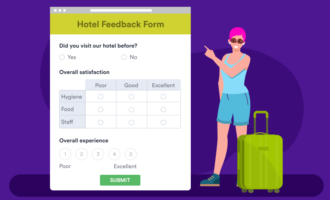
Sometimes behaviors such as abandoned tasks or inactivity can signal that your customer will stop using your offering, which is called “churn.” You can help prevent churn by scheduling customer satisfaction surveys. If a customer cancels their service, set up an automated churn survey to understand why they’re leaving.
Maybe you’re difficult to get in touch with. You can use an AI phone answering system to automate responses and guarantee every call is handled.
Synergy across teams
CSMs aren’t the only ones who benefit from customer success automation. Sales teams can use automated data tracking to identify expansion opportunities. For instance, a customer using 80 percent of their license capacity becomes a prime candidate for an upgrade pitch.
Marketing teams can use automated feedback surveys to refine their campaigns. For example, if customers frequently praise a feature, the marketing team can highlight it in nurture sequences.
When different teams work together using data from automated tools, they can better understand and serve customers. This collaboration helps the whole company grow, because happy customers are more likely to stay and upgrade their services.
Core use cases and practical examples
Customer success automation transforms friction points into seamless workflows.
Onboarding
Customer onboarding automation can include emails to guide the customer through setup steps. In-app checklists help them track their progress. You can set up video tutorials that are triggered if customers stall at specific steps.
Automation removes the guesswork for customers and reduces manual follow-ups for your team. Instead of chasing accounts, your CSMs can focus on clients needing more guidance, such as troubleshooting unique use cases.
Health score monitoring
Health scores are a pulse check for customer satisfaction. You can use automation to analyze product usage, support ticket history, and feedback sentiment. You can even use Jotform AI Agents to help track important metrics, such as your Net Promoter Score®.
When your Net Promoter Score® dips, the system alerts your team to intervene. For example, a CSM might schedule a call to address unspoken concerns or share tailored resources to reengage the customer. This proactive approach stops minor issues from snowballing into churn risks.
Engagement
Automation excels at responding to subtle signals in consumer behavior. If a user hasn’t logged in for two weeks, the system can send a reengagement email. Or when a customer finishes their first big task on your platform, your system can auto-send a congratulations note and suggest next-step features.
These timely nudges keep customers motivated. And because the interactions are personalized, customers don’t feel overwhelmed, as they might with generic outreach.
Upselling
Instead of relying on guesswork to figure out when customers might buy more, you can use automation data to know exactly when to make an offer. If your customer consistently hits storage limits or relies on basic tools, the system flags them as candidates for upgrades. Your sales team then receives a prioritized list of accounts ready for expansion conversations.
Each use case solves real headaches: onboarding gaps or last-minute churn management. Automate these steps, and you’ll serve customers smoothly without your team burning out.
Common obstacles and solutions
Customer success automation is highly effective, but common setup pitfalls trip up even the best teams.
Integration complexity: When you’re researching automation tools, look at the setup process. If it’s complicated, how quickly can you get IT help? If your team is less tech-savvy, prioritize tools that require less know-how.
Quick fix: Prioritize platforms with pre-built integrations and API support.
Data synchronization issues: When customer information lives in multiple systems, such as your CRM, support desk, and billing platform, keeping it consistent becomes a challenge. These inconsistencies can lead to embarrassing mistakes, such as sending upgrade offers to customers who have already upgraded or reaching out about problems they’ve already resolved.
Quick fix: Run regular data audits and use unified dashboards.
Resistance to change: CSMs often pride themselves on their personal relationships with clients and might worry that automation will make interactions feel robotic or impersonal. Remember that automation tools can’t replace a human touch. Show your teams how automation helps reduce the tasks they don’t like to do so they can spend more time on the tasks they like.
Quick fix: Involve CSMs early in tool selection.
Over-automation: Using automation for tasks that require human judgment and empathy can backfire. When a customer writes a detailed explanation of their problem and receives a generic “We’ve received your message” bot response, followed by more automated troubleshooting steps, minor frustration can turn into genuine anger. Effective customer success automation enhances rather than replaces meaningful human conversations.
Quick fix: Automate routine tasks and let your team handle the complicated ones.
Choosing the right platform, and key considerations
When you’re researching automation tools, look for the features that solve your problems.
- Integration capabilities: Pick tools that connect to the software you already rely on daily, such as your CRM and billing platform. If customer data lives in disconnected systems, you’ll miss red flags. Integration funnels health scores and active tickets into one real-time dashboard.
- Scalability: Can the platform handle a flux in your current customer base? Test its ability to automate onboarding for multiple accounts as smoothly as it handles a few.
- Governance controls: Role-based access limits who can edit workflows or view sensitive data. This prevents oversharing customer information across departments.
- Support infrastructure: Prioritize vendors that offer 24-7 real-time support and a library of video tutorials. When workflows break, quick fixes matter.
Measure and track success
Monitor your automation tools. Conduct monthly workflow audits to identify bottlenecks, such as delayed ticket escalations. Can you adjust your tool to fix the bottleneck? Compare quarterly churn rates against pre-automation baselines to monitor customer retention. These measurements will help you refine your automation strategy.
Most important, check in with your team. Do your CSMs feel like automation is helping them? The right tools should feel like an extension of your team, not another hurdle.
Short-term and long-term ROI
In the first few weeks, track how much time you save on manual tasks such as sending follow-ups or updating health scores. Compare it to the hours you spend on high-value activities such as strategic account reviews. This information will give you a good snapshot of short-term ROI.
For long-term ROI, measure your customer churn rate. Compare it to your customer effort scores and other customer feedback. Are you upselling more features? How is your revenue trending? Identify the metrics that are most important for your business goals to calculate your ROI.
How Jotform can help
Customer success automation thrives when tools adapt to your workflows, not the other way around. That’s where Jotform AI Agents come in.
You can automate and personalize onboarding with the Website Onboarding AI Agent. It guides website visitors through a structured onboarding process while collecting vital information, such as contact details and user preferences, through natural dialogue.
You can streamline customer interactions across the entire customer journey. The Customer Support AI Agent acts as a first-line responder, gathering key details such as account information and issue descriptions before routing tickets to the right agent. It cuts resolution times by handling repetitive data collection. The Customer Satisfaction Survey AI Agent delivers pulse checks at strategic moments, such as after a support interaction, product update, or renewal. And the Customer Success Story AI Agent is a conversational assistant that can help you collect valuable customer feedback effortlessly.
Whether you’re streamlining onboarding or measuring satisfaction, Jotform integrates seamlessly with the tools and workflows you already use. You can customize the agents to use your brand voice and scale them as your customer base grows.
Jotform’s automation tools turn routine tasks into strategic wins.
Next steps
Customer success automation doesn’t replace human connection; it enhances it. With the right automation tools, you can free your teams from time-consuming tasks to focus on what really matters: your customers.
So why wait? Jotform offers customizable solutions to help you improve customer success automation today.
Net Promoter®, NPS®, NPS Prism®, and the NPS-related emoticons are registered trademarks of Bain & Company, Inc., NICE Systems, Inc., and Fred Reichheld. Net Promoter ScoreSM and Net Promoter SystemSM are service marks of Bain & Company, Inc., NICE Systems, Inc., and Fred Reichheld.
This article is for customer success managers, support teams, and business leaders who want to streamline their workflows and improve customer retention through automation. If you’re looking to scale efficiently without losing the human touch, this guide will help you build a smarter, more proactive customer success strategy.






















































Send Comment: