Generative artificial intelligence (AI) has been taking the world by storm. McKinsey estimates that its contribution to global annual productivity could climb as high as $4.4 trillion. One area that will benefit the most is marketing.
Generative AI has already been a boon for marketers, who are using it to accelerate content production, create personalized customer experiences at scale, and boost productivity. Gen AI has expanded creativity and redefined what is possible when it comes to marketing initiatives.
In this article, we’ll explore generative AI for marketing, including the benefits it offers marketers and how it can be used. Plus, we’ll share five leading generative AI tools marketers can use to enhance their work, including AI agents that streamline customer interactions and data collection.
Defining generative AI for marketing
Generative AI for marketing refers to the use of AI technology to create new marketing content, enhance existing content, and develop innovative and creative insights for campaigns.
This technology enables marketers to personalize marketing content for their target audiences efficiently and at scale, so content meets specific criteria in real time. Personalization is key to attracting and keeping customers, with 71 percent of customers saying they expect personalization from businesses and 76 percent saying they feel frustrated when they don’t get it.
AI allows marketers to get significantly more work done in less time. Generative AI tools help teams review and enhance their marketing strategies, quickly develop campaign material (both written and visual) based on those strategies, and accurately segment audiences according to specific criteria. This technology enables marketers to generate more customer experiences without burning out.
“I run a custom screen printing and embroidery shop, and most days I’m doing everything myself: printing, quoting, emailing, updating the website, managing social media, you name it,” says Cohen DeYoung, owner of Pulse Merch. “Generative AI isn’t just a trendy tool for me. It’s how I stay sane. It helps me sound professional when I’m tired, behind schedule, or just mentally exhausted.”
Key generative AI benefits for marketers
Organizations that use generative AI tools for marketing elevate their output and operate more efficiently. Specific benefits include the following:
- Hyper-personalization: Generative AI considers data on customer behavior and preferences to develop content, campaigns, and recommendations that are relevant to the buyer at each stage of the marketing funnel. The results are a higher ROI and conversion rate.
- Increased efficiency: While human marketers can do many of the same things generative AI tools can, they can’t do them as quickly. For example, generative AI tools can write, edit, or polish content in seconds. These tools let marketers accomplish significantly more in a shorter amount of time.
- Scalability: One of the greatest benefits is generative AI’s ability to handle massive volumes of customer interactions. Using AI marketing automation, organizations can engage with more prospects and customers without having to increase their employee head count.
- Improved customer experiences: With generative AI, marketers can use micro-segmentation to learn more about their target audiences and engage them with relevant content. This level of care shows customers how much they matter to your business. Marketers can also use generative AI to polish written communications when they’re juggling multiple tasks.
- Cost effectiveness: You can use generative AI for low-value tasks and reserve human marketers for more strategic, high-value activities. Plus, generative AI is versatile, so it can be used for writing content, thinking of ideas, or taking notes.
- Unlimited creativity: Marketing is a creative field, but marketers can’t be creative every minute. Generative AI tools help marketers generate ideas, turn rough notes into polished drafts, and boost innovation.
Use cases of generative AI for marketing
How can generative AI best support your marketing efforts? Consider these common use cases:
- Textual and visual content generation: One of the most popular uses of generative AI tools is content creation. AI can help you develop a range of content, from blog posts and social media copy to promotional images and educational videos. You can even use it to create voice-overs that sound like your own voice.
- Idea generation: Generative AI can be a great source of creativity. Even the best marketers sometimes run out of good ideas. Generative AI is like a colleague you can bounce information off to create something spectacular.
- Chatbots and voicebots: Being able to interact with customers at scale is one of the most compelling reasons to adopt generative AI tools. Chatbots and voicebots can answer customer questions, provide product information, schedule appointments, and so much more. They can even act without human intervention, such as completing a sale or processing a return. Conversational AI tools can also remember details from past interactions, making communication personal and relevant.
- AI-driven personalization and segmentation: Generative AI tools can analyze vast amounts of data in seconds. Using these tools, you can send hyper-personalized communications to specific market segments. For example, you could conduct segmented email campaigns based on past purchases. Generative AI can also create personalized digital ads based on customers’ online behaviors.
- Process automation: Many organizations use AI marketing automation tools to streamline various processes. Automation increases a marketing team’s efficiency and reduces the administrative burden on human marketers. For an online campaign, for example, you could use generative AI to write and send personalized emails to prospects who filled out a contact form.
- Predictive analytics: Generative AI can analyze past prospect and customer data to predict future behavior and recommend business strategies based on relevant insights. For example, if analysis shows that prospects consistently leave the site after visiting a product page, you could consider using a chatbot to engage visitors before they leave.
Overcoming common concerns
No technology is perfect, and generative AI in marketing has its disadvantages. Be aware of these common concerns before implementing generative AI into your work:
- Potential lack of accuracy: If the source data used to train the AI tool is inaccurate, the output will also be incorrect. Always double-check important information generative AI tools create. “It can be wrong,” says DeYoung. “I never copy and paste without checking, especially when it comes to pricing or technical information.”
- Security and privacy: It’s crucial to protect your and your customers’ data. Ensure the AI tool follows industry and government privacy and security regulations. Be transparent with customers and prospects so they know they are interacting with AI, and give them the opportunity to choose whether they want to share personal data. Implement data governance guidelines to ensure your organization uses data collected by generative AI in the right way.
- Imperfect tone: If you’re using AI to create a brand voice, it will take considerable trial and error to get the tone right, including repeatedly asking the tool to edit itself or editing the content yourself until you achieve the right tone.
- Loss of control: Many marketers worry about losing control over their output when using generative AI. Consider what role you want the tool to play. For example, the tool can be an assistant in creating content and campaigns that human marketers review and approve. Or the tools can have more agency, with marketers staying hands-off unless it becomes necessary to step in.
Best generative AI tools for marketing
There are many generative AI tools available that can support your marketing efforts. Here are five of the leading contenders.
1. ChatGPT
ChatGPT is one of the most popular generative AI tools. It is intuitive, easy to use, and versatile. Marketers can use it to write website content, customer emails, and much more.
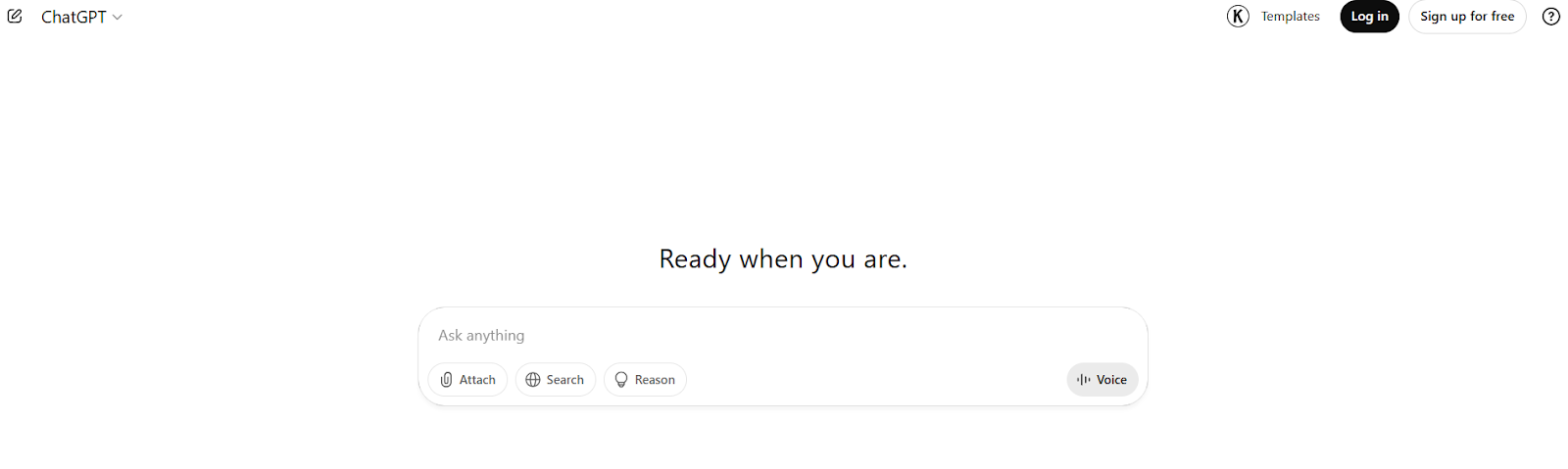
Best for: Ideation and writing content
Developer: OpenAI
Key features:
- Voice mode
- Ability to search the web (available in some plans)
- Option to ask ChatGPT to provide reasoning for responses
Limitations: Advanced features are available only in the paid plans.
Pros: ChatGPT is highly intuitive, making it a good introductory tool for those who are unfamiliar with generative AI in marketing.
Cons: Users have noted that ChatGPT sometimes provides inaccurate responses.
Plans and pricing: ChatGPT has a free plan and multiple paid plans, starting at $20 per user per month.
G2 rating: 4.7/5
2. Jotform AI Agents
Jotform AI Agents offer dynamic conversational experiences for your customers by answering questions and helping them fill out forms. For example, a Jotform AI Agent can provide customers requesting quotes with information. DeYoung regularly uses this form to save time and reduce back-and-forth communication.

Best for: Customer-facing processes or form-based processes
Developer: Jotform
Key features:
- No-code user interface to customize and train AI agents
- Marketing AI agents that streamline data collection and customer interaction through intelligent online forms
- Omnichannel support, including websites, mobile, WhatsApp, and chatbots
Limitations: Jotform AI Agents aren’t designed for generating long-form content such as blogs or websites.
Pros: Jotform AI Agents come with several marketing-specific templates, such as for conducting demographic surveys, collecting email addresses, and estimating marketing budgets.
Cons: Some users would like to be able to implement AI agents trained by other users.
Plans and pricing: Jotform AI Agents has a free plan plus four paid plans, starting at $34 per month.
G2 rating: 4.4/5
3. Canva
Canva is a graphic design tool that enables marketers to easily create stunning marketing materials. It has both an AI image and text generator.
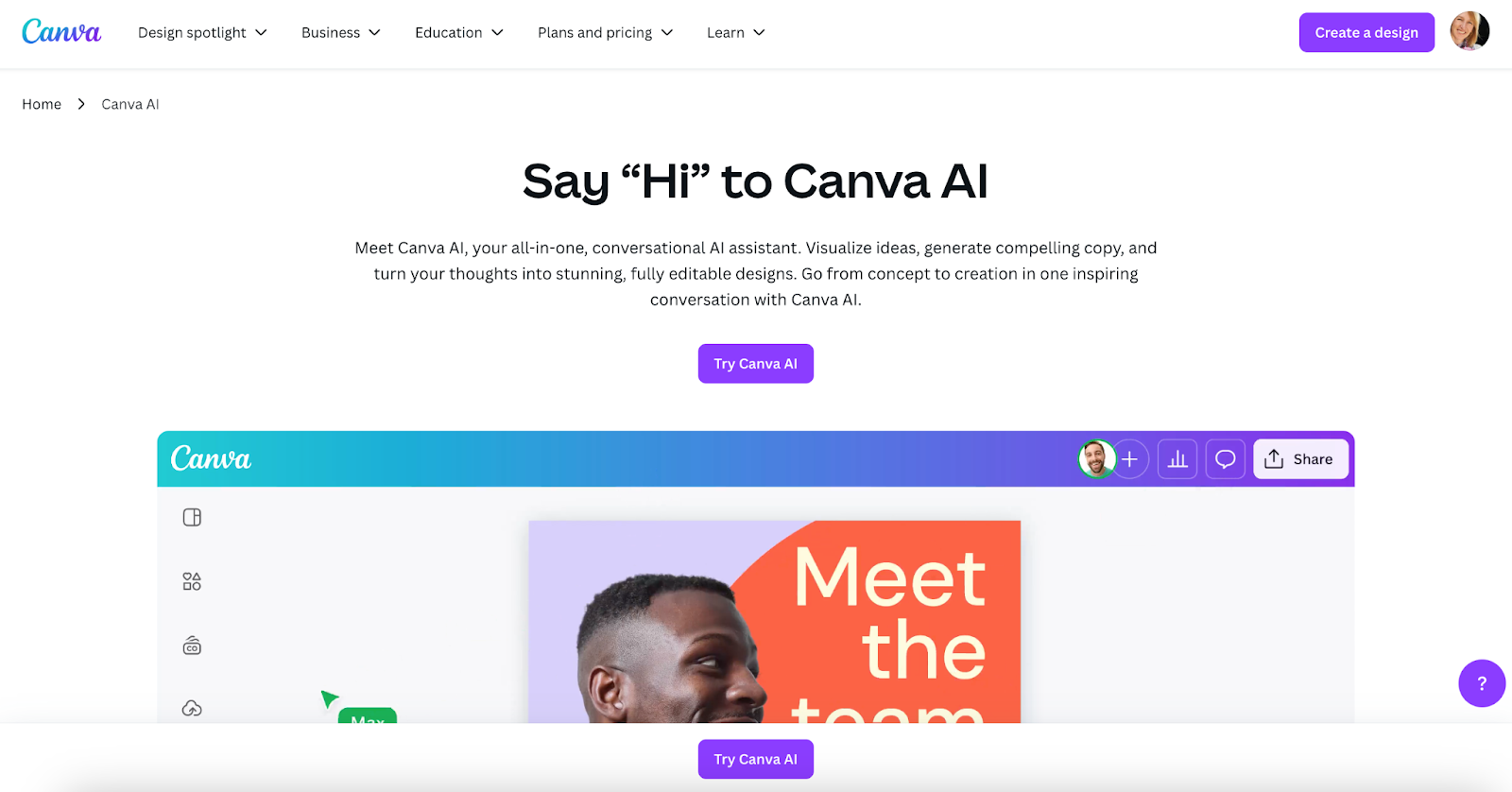
Best for: Creating marketing materials like flyers and invitations
Developer: Canva
Key features:
- Thousands of templates
- AI generation for images and text
- Brand kits
Limitations: Canva’s loading speed is slow, especially with AI generation and complex projects.
Pros: Canva integrates with hundreds of third-party apps, extending its functionality for users.
Cons: Some users feel the template customization options are too limited.
Plans and pricing: Canva has a free plan and three paid plans, starting at $150 per year per user.
G2 rating: 4.7/5
Pro Tip
Turn your Canva designs into interactive experiences by embedding Jotform AI Chatbot, matching it to your design, and chatting with visitors instantly, no coding required.
4. Zapier
While not strictly a generative AI tool, Zapier uses AI automation to connect apps and tools together. Marketers can use it to connect their generative AI tools with other business solutions for smooth content and data sharing.
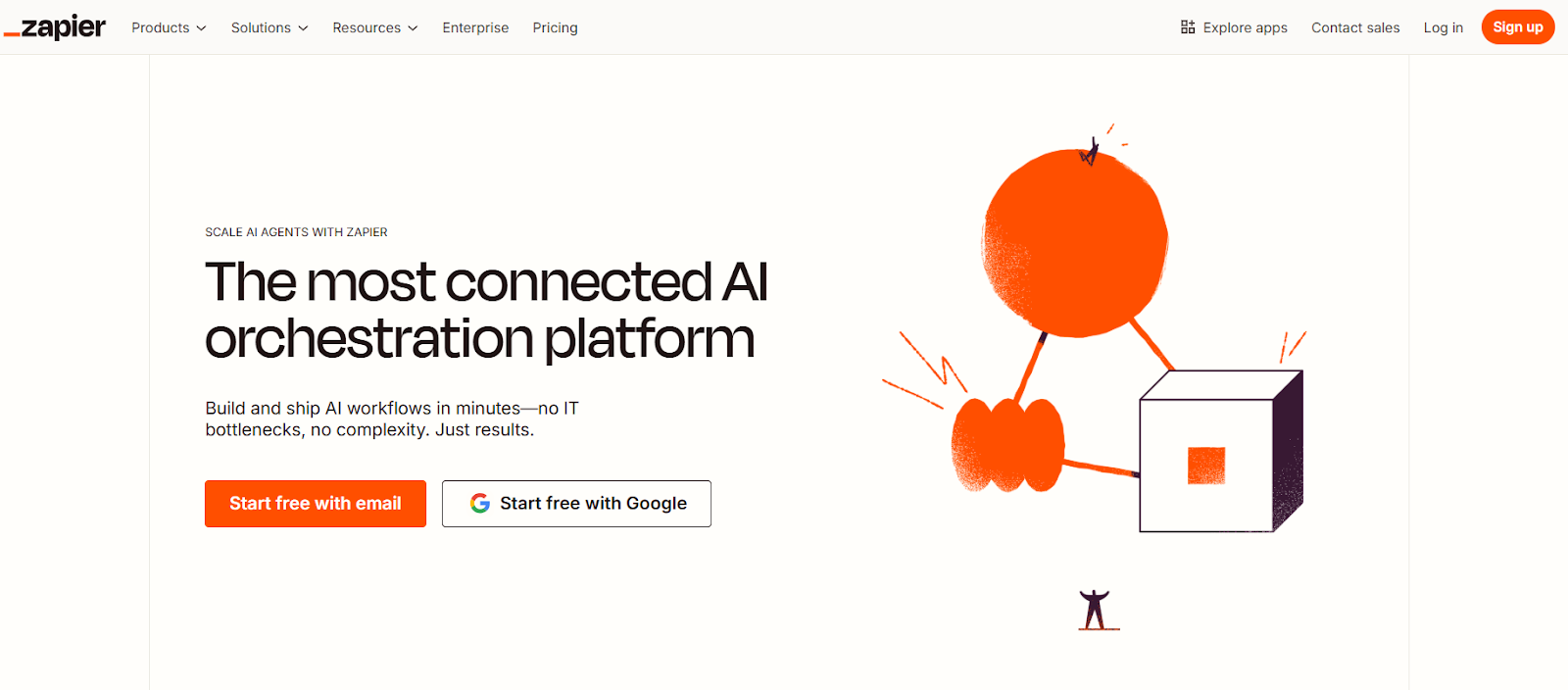
Best for: Connecting generative AI tools with other tools
Developer: Zapier
Key features:
- No-code user interface
- Action and trigger workflows
- Thousands of built-in connectors
Limitations: Zapier does not generate text or visual content.
Pros: No technical experience is needed to use Zapier because it is intuitive.
Cons: Some users note that advanced uses require more technical workarounds.
Plans and pricing: Zapier has a free plan and three paid plans starting at $19 per month.
G2 rating: 4.5/5
5. Invideo
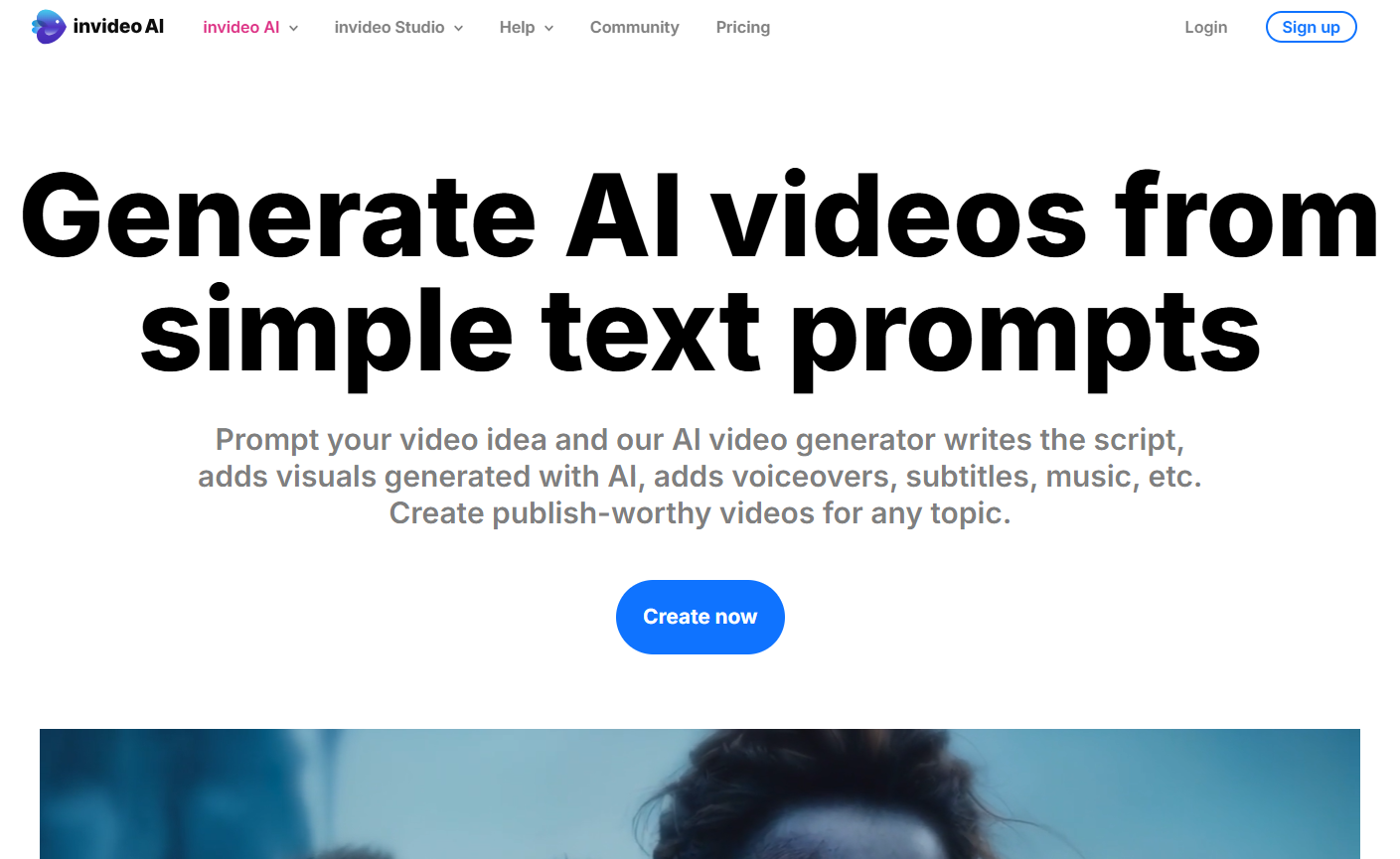
Invideo is an AI video generator that allows marketers to create videos from simple text prompts. It can also add subtitles, voice-overs, and music to videos.
Best for: AI video generation
Developer: Invideo AI
Key features:
- Video creation from text prompts
- Editing video via text prompts
- AI image generation
Limitations: The free plan includes only 10 minutes per week of AI generation.
Pros: Invideo is easy to use and can generate and edit videos in seconds.
Cons: The price may be too high for some users.
Plans and pricing: Invideo has a free plan and three paid plans starting at $28 per month per user.
G2 rating: 4.5/5
How will you use generative AI for marketing?
Modern marketing will never be the same, thanks to generative AI. This technology enables marketers to create personalized campaign materials, engage with prospects and customers at scale, and unleash their creativity.
Don’t fall behind your competitors. Timely adoption of generative AI is the key to success. One of the best tools to start with is Jotform AI Agents because of its intuitive user interface and versatile template library.
With Jotform AI Agents, you can create and personalize your AI agent to fit your needs for marketing, customer service, and sales interactions,, as well as streamline customer conversations and data collection. Give Jotform AI Agents a try today!
This guide is for marketers; from solo operators to fast-growing teams and enterprise leaders, who want to use generative AI to work smarter.























































































Send Comment: