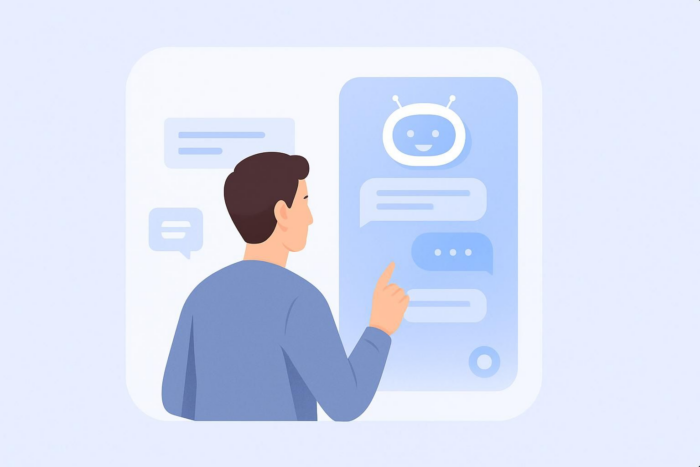
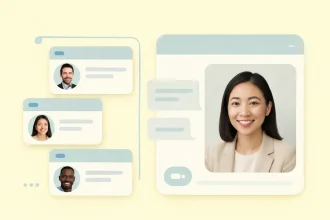
Omnichannel chatbots are computer programs that interact with customers, delivering consistent, personalized support across multiple communication channels.
Ask anyone in the business world, and you’ll likely get the same answer: Omnichannel chatbots are the future of customer service.
This digital era has conditioned us to demand instant gratification, and few things demonstrate this dynamic more effectively than customer expectations. More than three-quarters of customers expect immediate responses to their queries, regardless of the platform they use to communicate.
However, your customer service team can’t magically grow extra ears or hands, and your staff can only respond as quickly as humanly possible. This limitation can result in missed messages, frustrated would-be buyers, and lost sales.
To satisfy and retain their customers, many companies are trading in their clunky phone trees and voicemail boxes for cutting-edge omnichannel AI chatbots: tools that interact with customers across multiple platforms, including websites, WhatsApp chat, and Instagram direct messages (DMs).
Jotform is here to explain what omnichannel chatbots are, how they work, and why their importance is skyrocketing in modern customer service and marketing.
What is an omnichannel chatbot?
Omnichannel chatbots are computer programs that interact with customers, delivering consistent, personalized support across multiple communication channels. They even keep up with the context of the customer’s conversation from one platform to the next.
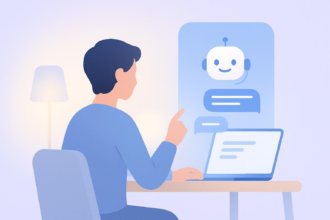
Say a customer begins chatting with an AI voice agent in the car, but they don’t want to sit there after they pull into the driveway. With an omnichannel chatbot, they can head inside the house, sit down at their laptop, open your company’s website, and pick up the conversation right where they left off.
How it works across channels
An omnichannel chatbot represents your company across every touchpoint, such as Facebook Messenger, your website, and WhatsApp. It follows the customer from channel to channel, preserving conversational history, context, and personal preferences.
Omnichannel chatbots integrate your company’s various communication channels into a centralized, AI-driven platform. The conversational AI engine uses natural language processing (NLP) to decipher customer intent, respond consistently, and transfer conversations across channels. It even adjusts its responses based on past interactions.
Because of the AI’s memory, the customer never has to repeat themselves and enjoys a seamless, personalized experience.
What are the four main types of chatbots?
There are four main types of chatbots: omnichannel, single channel, multichannel, and cross channel.
When a company employs a single-channel chatbot, the customer can use the chatbot only on a single platform, such as the company’s website.
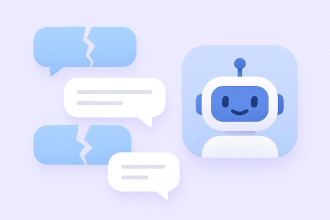
In contrast, multichannel chatbots are available on various platforms, but the company treats each channel as a separate entity. If a customer engages the chatbot on the company’s mobile app and switches to Facebook Messenger, it’s a whole new conversation. The mobile app chatbot is separate from the Facebook Messenger chatbot, and the two don’t share conversational context or history.
A cross-channel chatbot uses multiple integrated channels to engage customers, sharing information between channels so the customer can move easily between them.
Omnichannel chatbots take this a step further, using interconnected, interactive channels to exchange information about the customer, maintain a consistent conversation, and bring the same experience to any platform the customer uses. Essentially, it removes any barriers between the customer’s online and offline journeys.
Why companies are choosing omnichannel chat software
Standalone chatbots, whether single channel or multichannel, served many companies well in the past. Times change, however, and so do customer expectations. Now that omnichat capability exists, there’s no sense in hitching your metaphorical horse to a wagon with a missing wheel.
Standalone chatbots are limited in several ways, including the following:
- They’re not connected to the company’s other systems.
- They can answer only simple questions.
- They struggle more with complex language.
- They lack emotional intelligence.
- They can’t build rapport or relationships.
What is a chatbot’s place in your company’s customer experience strategy? You’ll quickly realize its potential extends across every channel, so limiting it to a single channel (or to multiple disconnected channels) simply doesn’t make business sense.
How does an omnichannel chatbot work?
The real power of omnichannel chatbots lies in their connection to all of your customer touchpoints (social media, mobile apps, email, and beyond), creating a single, seamless experience. Here’s how it works:
- You connect the chatbot to your CRM software and its various frontline channels, like Instagram, WhatsApp, your mobile app, your website, your phone system, and Facebook.
- The customer initiates a chat on any of the available channels.
- The chatbot recognizes the user and retrieves their conversation history, preferences, and past interactions.
- The NLP model processes the customer’s text or voice input to determine the customer’s intent and sentiment.
- The chatbot responds appropriately and, if necessary, escalates the chat to a human agent.
- The customer’s data syncs across channels, so the human agent can continue the conversation seamlessly, without losing context.
Understanding this workflow sets the stage for the next step: looking at what these capabilities mean in practice.
Features and benefits of omnichannel chatbots
When you choose to take the omnichannel route, the benefits of chatbots are numerous. These are some of the largest advantages of omnichannel chatbots.
Multichannel support
Your company can provide customers with multichannel support, but what distinguishes omnichannel chatbots from other standalone bots is that it connects these channels. The customer enjoys a smooth, unified experience instead of various separate support options.
Depending on your company’s customer-facing channels, customers could receive support through web chat, WhatsApp, SMS, Facebook Messenger, Instagram DMs, email, voice calls, and even QR codes.
Cross-platform conversation with context
The ability of omnichannel chatbots to maintain context across customer support platforms provides conversation continuity regardless of where the customer chooses to chat.
Customer personalization
Unlike traditional chatbots, which were confined to a single channel and reset after every interaction, omnichannel chatbots use AI with NLP to maintain a consistent, personalized conversation across platforms. The AI remembers the conversation, even when a customer switches channels, and accesses their history, data, and preferences to tailor the chatbot’s responses to that customer.
Various integrations
The ability to connect with a variety of communication platforms and business systems is what defines an omnichannel chatbot.
Communication channels
Omnichannel chatbots integrate with the channels customers use, including
- Websites
- Mobile apps
- Social media platforms (Facebook, Instagram, X)
- Messaging apps (WhatsApp, Telegram)
- SMS
Business systems
To provide intelligent, automated service, these chatbots also connect to your company’s internal programs, such as
- CRM software: To access customer history, preferences, and past interactions for a personalized customer experience and automatic profile updates
- Help desk and ticketing systems: To escalate complex issues by creating a support ticket and handing off the conversation to a human agent
- Marketing automation tools: To initiate campaigns and send targeted messages based on customer interactions and transactions
Analytics dashboards
With these analytics, you can monitor chatbot usage and tweak the chatbot as necessary. You can also optimize the overall customer journey.
24-7 instant responses
Customer service used to involve sending an email and hoping to get a response within two business days, or waiting on hold for 40 minutes just to speak with a human. With omnichannel chatbots, that’s no longer the case. They provide instant responses to customer inquiries 24-7, 365 days a year.
Business benefits
On the business side, omnichannel chatbots offer multiple benefits that all point to a fantastic ROI. These include
- Improved customer experience
- Consistent brand voice
- Higher customer engagement and satisfaction
- Increased operational efficiency
- Reduced operational costs
- Boosted sales and revenue
- Increased conversion rates
- Data-powered insights
- Seamless scalability and flexibility
Customer benefits
Customers will also see an assortment of positives from omnichannel chatbot implementation, such as
- Instant, 24-7 support
- Seamless, consistent user experiences
- Personalized interactions
- Convenient self-service options
- Faster resolution times
- Increased satisfaction
Use cases: How businesses use omnichannel chatbots
Businesses in various industries are using omnichannel chatbots to improve the customer experience.
Retail industry
Retail companies use omnichannel chatbots for
- Personalized product recommendations: Sephora’s Virtual Artist chatbot offers personalized beauty advice and allows users to try on makeup virtually via augmented reality.
- Around-the-clock customer support: Sporting-goods retailer Decathlon UK’s conversational AI agent, DECA, has automated more than half of the company’s customer interactions across various channels.
- Order management and tracking: The company 1-800-FLOWERS uses an omnichannel chatbot to give customers shipping updates and delivery estimates.
Healthcare field
Omnichannel bots are streamlining processes for various healthcare organizations:
- Virtual health assistant: OSF HealthCare uses a virtual health assistant named Clare as a single point of contact through which patients can access self-service care options around the clock.
- Appointment scheduler: This healthcare giant’s chatbot-driven system allows patients to schedule and manage appointments at their convenience, vastly reducing the number of calls its contact center fields.
SaaS companies
Businesses in the SaaS field use omnichannel chatbots throughout the entire customer life cycle, from lead generation to post-sale support:
- Customer service: Intercom’s AI-fueled chatbot, Fin, features advanced customer service capabilities, proactive support tools, and a knowledge hub accessible by both the AI and the company’s human support team.
- Ticket management: Freshworks’s cloud-based suite of business software acts as a unified system for ticket management and automated customer service across all channels.
Travel industry
Companies in the travel industry use omnichannel chatbots for
- Ride management: Uber’s omnichannel chatbot allows customers to book rides, obtain fare estimates, and track their driver’s route.
- Trip planning: Expedia’s AI-powered chatbots help users plan trips, find activities, and manage itineraries.
- Booking assistance: AI travel agents help Hotel Planner customers book hotel stays in multiple languages.
Jotform AI chatbots: Powering seamless omnichannel experiences
If you’re looking for the simplest AI chatbot builder on the market, look no further. Jotform AI chatbots and Jotform AI Agents are no-code, fully customizable AI solutions designed for unified omnichannel customer engagement.
Key capabilities include
- Omnichannel presence: Omnichannel presence across websites, SMS, WhatsApp, phone (with voice AI agents), email, Messenger, and QR codes
- Simple creation and customization: Frictionless chatbot-building and customization via our intuitive Agent Builder, with no coding knowledge required
- Data collection and more: Forms that transform data collection into engaging dialog
- AI assistance for human agents: Escalation of complex issues and option for a human agent to take over the chat when necessary
- Extensive integrations: Direct integration with a vast array of third-party software and communication channels, such as Slack, Google Calendar, and CRM systems, enabling workflow automation
- Customizable or ready-made bots: Various brand customization options for appearance, tone, and behavior; access to Jotform AI Agents directory, with thousands of ready-made agents (such as Order AI Agents and Booking AI Agents)
With Jotform AI chatbots, your company can deliver consistent, personalized, efficient omnichannel customer support 24-7, and you don’t need to hire more staff or even learn to code.
Omnichannel chatbots: The future of customer engagement
Let there be no mistake: Omnichannel chatbots are far more than a passing trend. They’re becoming a necessity for businesses that want to stay competitive. These chatbots provide customers with seamless, personalized support, while helping your company reduce costs, improve efficiency, and strengthen relationships across every platform.
With Jotform AI chatbots, adopting an omnichannel strategy doesn’t require coding skills or a team of developers. You get a simple, scalable, powerful solution that connects every communication channel, integrates with your existing tools, and keeps customers engaged and satisfied.
Take the next step toward transforming your customer experience. Explore Jotform AI Agents today, and see how effortless engagement can be.
This article is for website operators, content managers, marketing agencies, and business leaders who want to understand how omnichannel chatbots can elevate customer engagement, streamline support across platforms, and drive growth through personalized, seamless interactions.
FAQs: Common questions about omnichannel chatbots
A bot is any automated software program that performs tasks. A chatbot is a type of bot that simulates human conversations through either text or voice.
To determine chatbot ROI, use this formula: (Total Benefits − Total Costs / Total Costs × 100%).











































Send Comment:
1 Comment:
December 9, 2025
An interactive chatbot for website can act as a digital guide, making complex pages feel more accessible. When businesses use tailored prompts and thoughtful automation, the chatbot becomes a valuable tool that enhances clarity and supports users throughout their visit