
2026 guide to the best affiliate programs
Affiliate marketing is a performance-based model where businesses reward partners for driving sales, leads, or clicks. Affiliates — from creators and bloggers to educators and agencies — earn commissions by recommending products that resonate with their audience.
While it might feel like a modern trend, affiliate marketing has been around for decades and remains one of the easiest ways to turn content, expertise, and audience trust into income.
That said, success comes down to choosing the right program. The affiliate partner you work with can affect your conversion rate, commission potential, and long-term earnings. Even high-traffic content can underperform with weak payouts, short cookie windows, or poor support — while the right program can help you earn more from content you’ve already published.
Why companies create affiliate programs
Affiliate marketing keeps growing because it’s low risk for brands and high leverage for publishers. Industry estimates put the global affiliate marketing market at about $18.5 billion, with long-term growth still expected as more companies adopt performance-based acquisition.
Here’s why companies continue to invest in affiliate programs:
- Performance-based growth: Brands usually pay after a measurable action, like a sale or qualified signup, which makes affiliate marketing easier to justify than broad awareness campaigns.
- Cost-efficient customer acquisition: Instead of paying upfront for uncertain results, companies can tie spend to revenue or lead generation.
- Always-on promotion: Affiliates create tutorials, comparisons, reviews, videos, and newsletters that keep driving traffic long after publication.
- Expanded brand awareness: A good affiliate program gets a company in front of niche audiences that might be expensive or hard to reach through ads alone.
- Trust transfer: Recommendations from creators, educators, and industry experts often feel more credible than direct advertising.
For affiliates, all this matters because companies with mature programs tend to offer better dashboards, creative assets, faster approvals, and more consistent payouts.
10 best affiliate programs in 2026
The best affiliate programs combine strong payouts with products people already want, reasonable cookie windows, and enough educational content to help you convert.
Below, you’ll find a mix of beginner-friendly options with higher-ticket SaaS and education programs, so you can compare models.
| Tool | Type | Commission | Creative assets |
|---|---|---|---|
 Jotform Affiliate Partner Program |
SaaS |
30 percent recurring for one year |
Generation social post with AI, custom product links, account manager |
 Amazon Associates |
Retail |
Category-based rates |
Product links, native ads |
 Shopify |
SaaS |
Commission on eligible merchants |
Guides, lessons, assets |
 ClickBank |
Marketplace |
Varies by offer |
Marketplace tools, links |
 HubSpot |
SaaS |
30 percent recurring for one year |
400-plus assets, demos |
 Semrush |
SaaS |
Fixed bounties and trials |
Links, banners, manager |
 eBay Partner Network |
Marketplace |
Category-based rates |
Smart links, widgets |
 Coursera |
Education |
15–45 percent |
Banners, text links |
 Adobe |
SaaS |
85 percent for the first month or 8.33 percent for the first year |
Banners, text links |
 Teachable |
SaaS |
30 percent recurring commission |
PartnerStack assets |
1. Jotform Affiliate Program
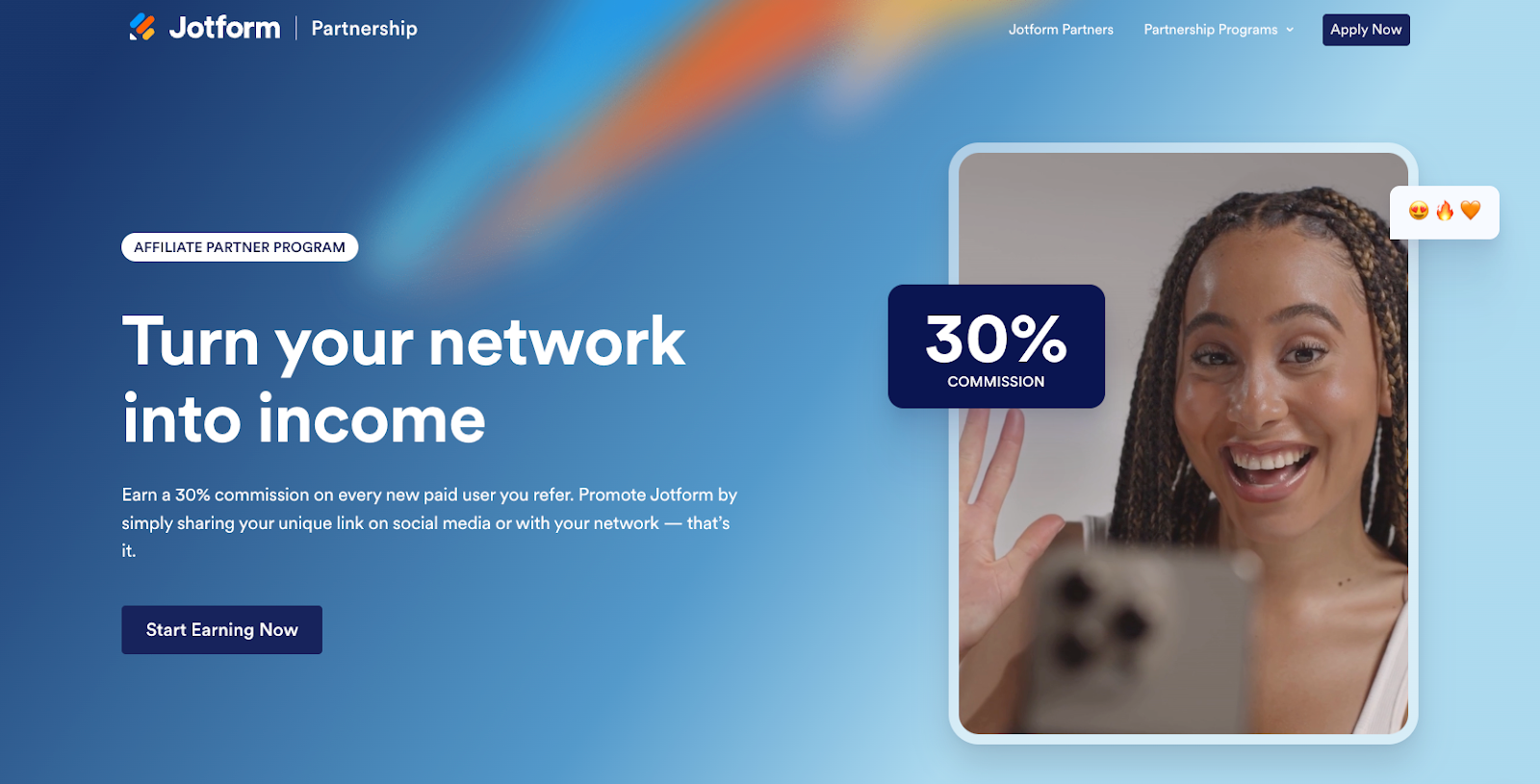
Jotform is a no-code platform for building forms, collecting payments, automating workflows, and gathering data without needing a developer or coding expertise. Its affiliate program is one of the easiest SaaS programs to join because the application process is simple, the value proposition is clear, and the product has a wide range of use cases across business, education, nonprofits, HR, healthcare, events, and more.
The Jotform Affiliate Program pays a 30 percent commission on every new paid user you refer, and that commission continues for the customer’s first year as a subscriber. Applications are typically reviewed within one business day. Conversions are attributed when users subscribe within about 60 days of clicking your link.
How the program works is refreshingly straightforward: apply, share your unique link, and earn. That three-step setup makes Jotform especially appealing for beginners, bloggers, YouTubers, agencies, consultants, creators, and anyone with an existing network. For content creators specifically, the partner dashboard also includes video campaign opportunities with fixed-fee offers, giving them an additional way to monetize beyond recurring commissions. Because Jotform can fit so many real-world scenarios, from lead capture to registration to internal approvals, it is often easier to recommend naturally than a niche product.
That simplicity and flexibility really matter if you want one partner program that fits tutorials, templates, comparison posts, lead-generation advice, and practical workflow content — without forcing you to constantly reinvent your promotion strategy every time you publish.
- Best for: Beginners, influencers, agencies, bloggers, businesses, educators, and creators who share business tools with their audience
- Pros: 30 percent recurring commission for one year, fast approval and simple setup, broad use cases make referrals easier to convert, additional monetization via fixed-fee video campaigns available in the partner dashboard, dedicated affiliate support
- Cons: Best fit for audiences interested in productivity, forms, automation, or business tools; recurring payout depends on the customer staying subscribed
- Commission: 30 percent recurring for one year
- Cookie duration: Conversions are attributed if users subscribe within about 60 days of clicking your referral link
- How to get started:
- Visit the affiliate page and complete the application form.
- Wait for review, which is usually completed within one business day.
- Grab your unique tracking link from the dashboard.
- Share the link in tutorials, reviews, newsletters, templates, or resource pages.
- Track clicks, conversions, and payouts as referrals upgrade.
2. Amazon Associates
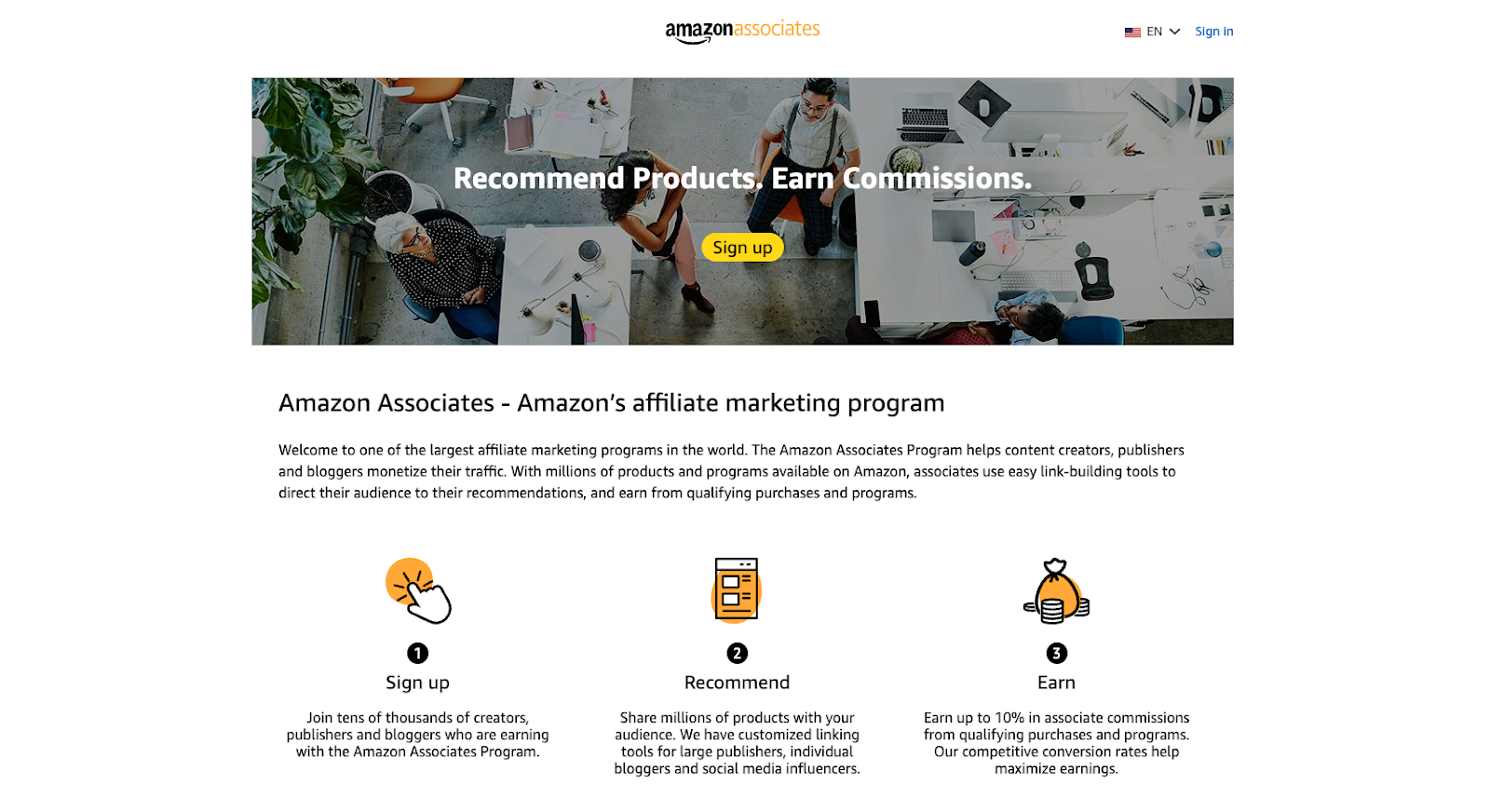
Amazon Associates is one of the most recognizable affiliate programs in the world, which is exactly why it remains a starting point for many creators. The company’s huge catalog gives affiliates near-unlimited content angles, from product roundups and gift guides to niche tutorials and seasonal shopping lists. Commission rates vary by category, with fixed standard rates published by Amazon, so your earning potential depends heavily on the products you promote.
Almost every audience already understands the brand, making the Amazon program incredibly beginner-friendly. The trade-off is that retail commissions are often lower than SaaS payouts, and buying intent matters a lot. It works best for review sites, deal publishers, YouTubers, and bloggers whose readers are already comparing products.
- Best for: Bloggers, publishers, influencers, and niche site owners with shopping-focused content
- Pros: Massive product selection, familiar brand with high buyer trust, easy to match offers to many niches
- Cons: Lower commissions than many SaaS programs; category rates vary, so earnings can be unpredictable
- Commission: Varies by category
- Cookie duration: Usually 24 hours
- How to get started:
- Apply through Amazon Associates.
- Build content around products your audience already researches.
- Create compliant product links and storefront recommendations.
- Optimize pages for search and buying intent.
3. Shopify
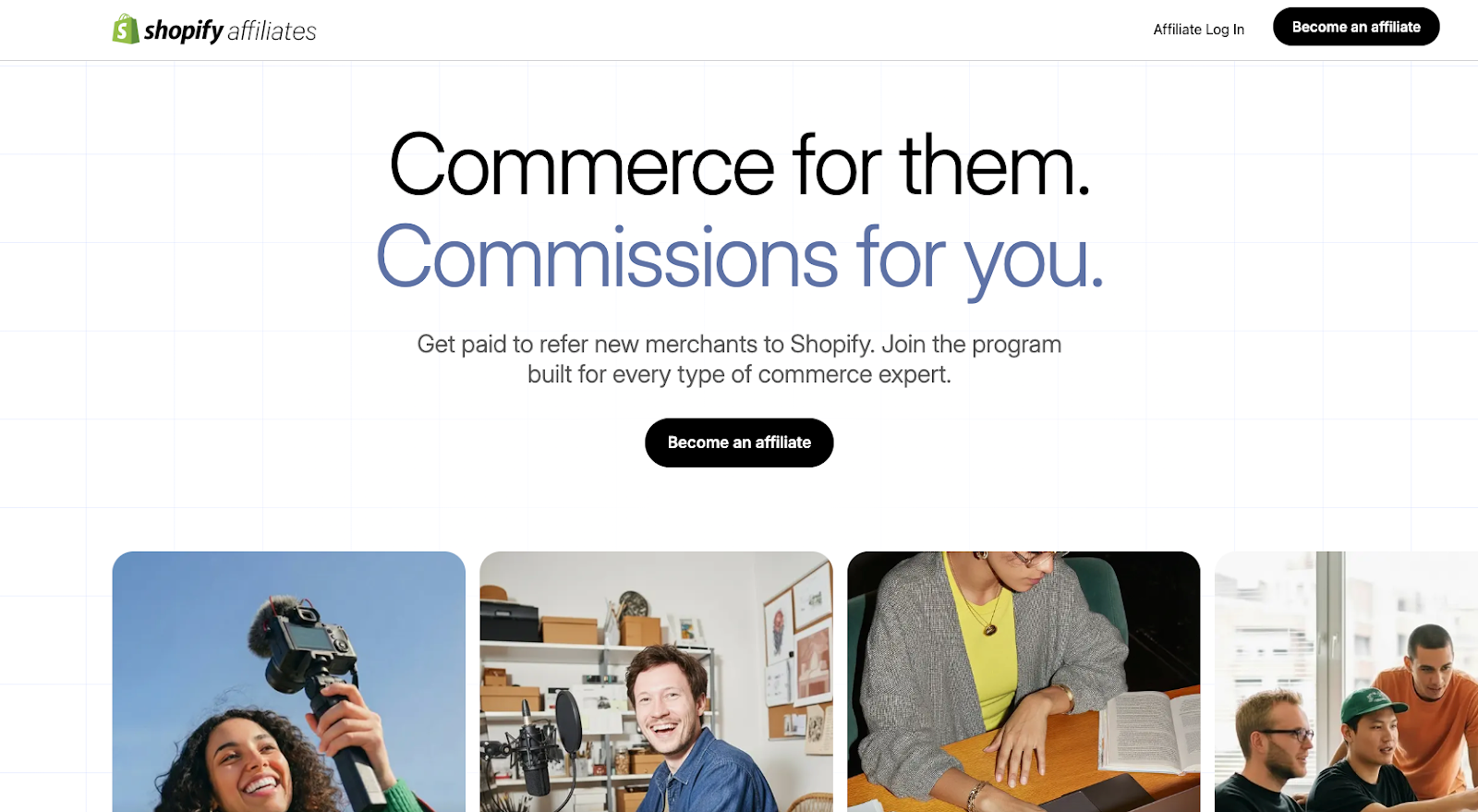
Shopify is an e-commerce platform that helps merchants build and grow online stores, making it a strong fit for creators who talk about entrepreneurship, dropshipping, retail, or digital commerce. The Shopify Affiliate Program works especially well for educators, business YouTubers, consultants, and bloggers whose content already attracts aspiring store owners.
The Shopify Affiliate Program lets partners earn commission when new merchants sign up for and pay for an eligible Shopify plan through their referral link. Shopify also notes that the referral window can extend up to 30 days, giving potential customers time to move from free trial to full-price conversion. This longer referral window is especially helpful because many merchants need time to explore the platform, compare options, and set up their store before committing.
- Best for: Educators, influencers, review sites, and creators serving e-commerce or business audiences
- Pros: Strong brand in e-commerce, long referral window, high relevance for business content
- Cons: Best results usually require a business-focused audience, qualified referrals must convert to a paid plan
- Commission: Commission on eligible merchant referrals
- Cookie duration: 30 days
- How to get started:
- Join the Shopify Affiliate Program.
- Publish store-building tutorials, comparisons, and launch guides.
- Use your affiliate links in videos, blogs, newsletters, and courses.
- Support your audience with practical e-commerce content.
4. ClickBank
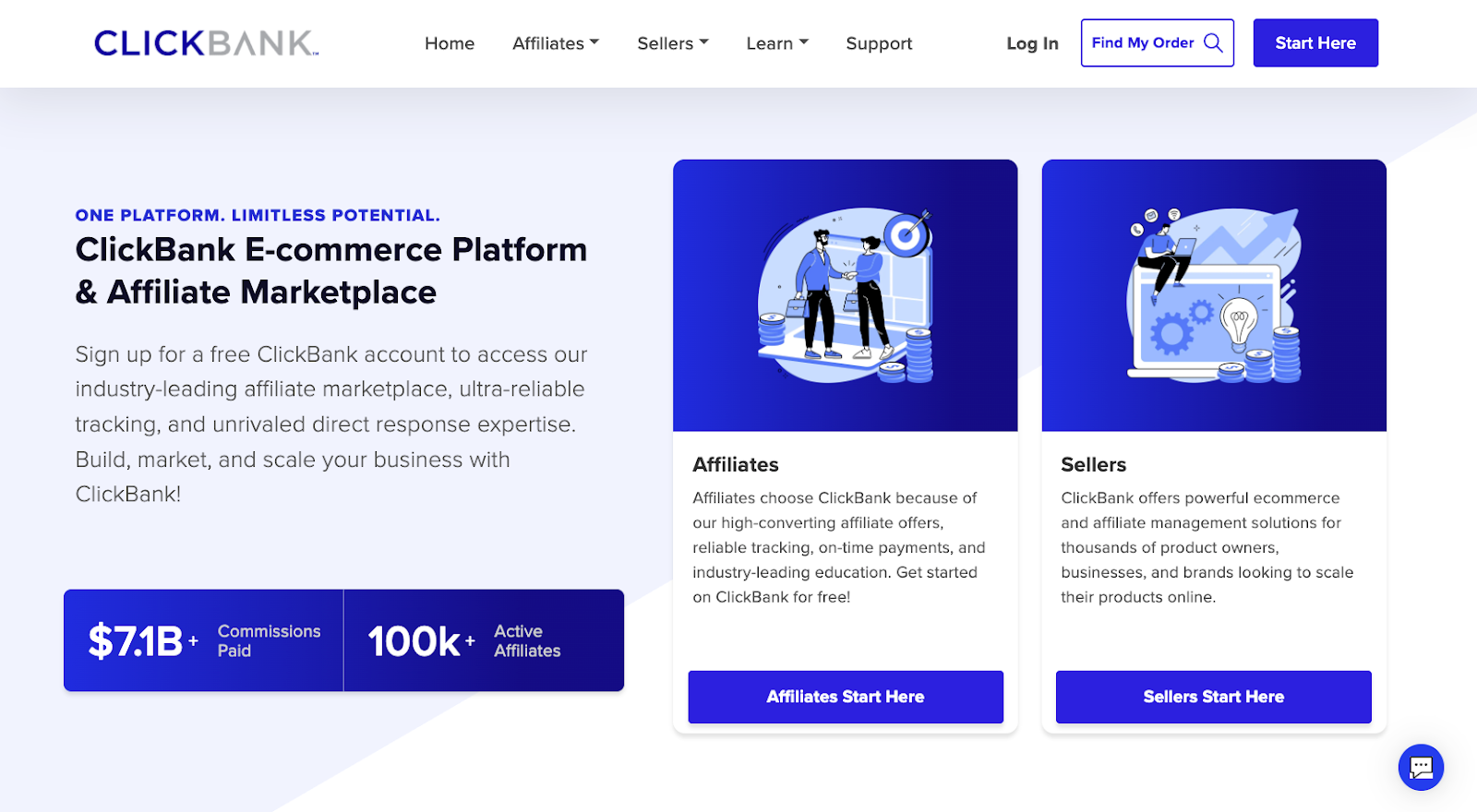
ClickBank isn’t a single brand offer. It’s an affiliate marketplace with thousands of products, especially in digital categories like education, health, software, and online business. That variety is its biggest advantage — affiliates can browse offers, compare gravity and payout data, and choose products that fit their niche. ClickBank says it has paid over $7 billion in commissions and serves more than 100,000 affiliates worldwide.
Because ClickBank is a marketplace, commission rates and cookie durations vary by individual product. That flexibility can be great for experienced affiliates, but beginners need to be selective. The best results usually come from promoting reputable offers you’d feel comfortable recommending without a disclaimer-heavy sales pitch.
- Best for: Content creators, email marketers, niche publishers, and paid traffic affiliates
- Pros: Huge range of offers, often high commission percentages, easy to test multiple niches
- Cons: Quality varies across offers, you need to vet products carefully
- Commission: Varies by offer
- Cookie duration: Varies by offer
- How to get started:
- Open a free ClickBank account.
- Search the marketplace for offers aligned with your audience.
- Review commission structure, product quality, and sales materials.
- Promote only the offers that fit your brand and content style.
5. HubSpot
HubSpot is a customer relationship management and marketing platform that’s widely used by growing businesses. Its affiliate program is built for creators who publish content around marketing, sales, customer service, and business operations.
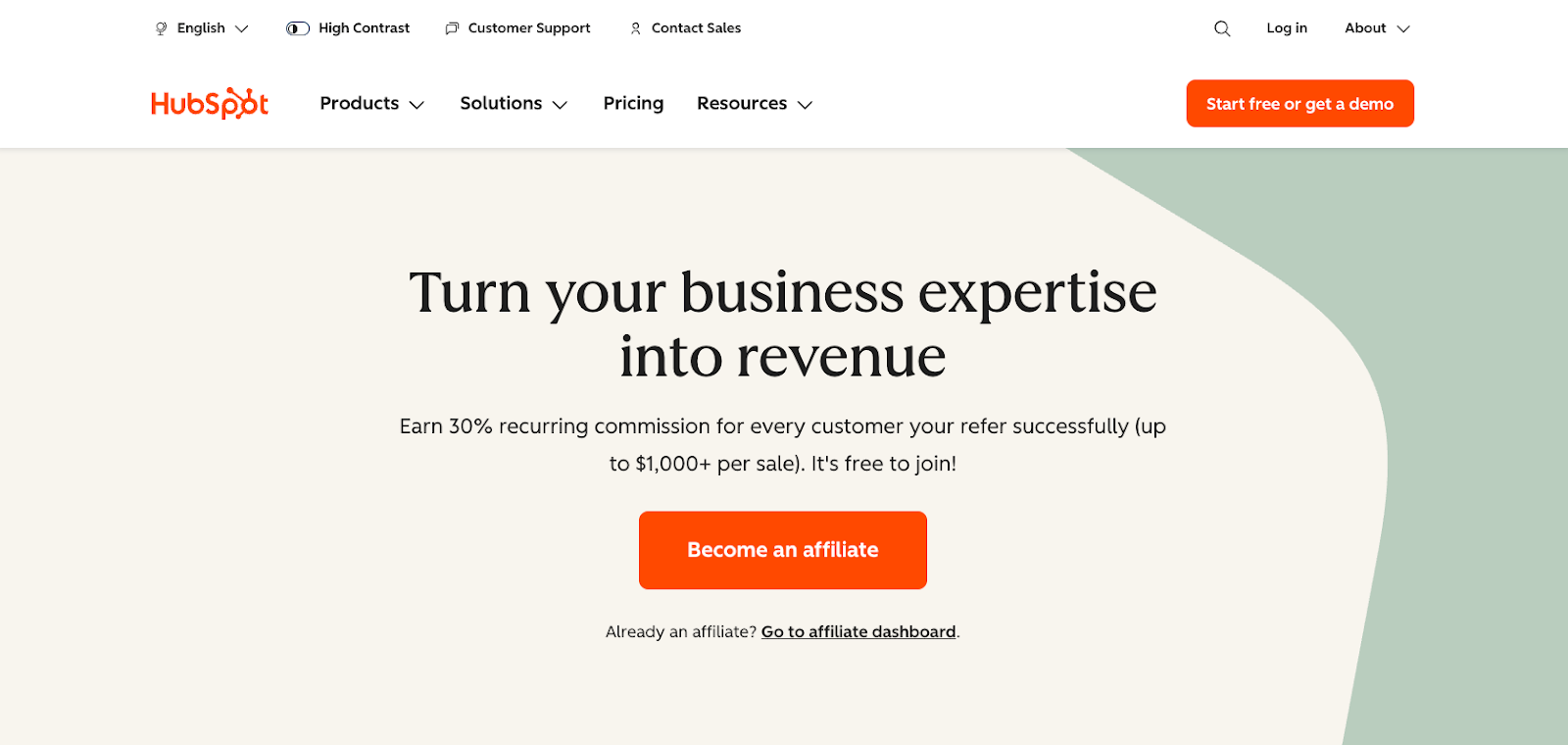
The program is a strong option for SaaS reviewers, educators, and B2B publishers because the product is well known and the long cookie window (180 days) gives content more time to convert. The downside is that HubSpot can be harder to promote casually than a simpler tool, since the buying journey may be longer.
HubSpot offers a 30 percent recurring commission for up to one year and access to more than 400 marketing assets. It also reviews applications within roughly two to three business days.
- Best for: SaaS reviewers, content creators, digital educators, and integration partners
- Pros: 30 percent recurring commission for one year, 180-day cookie window, large library of promotional assets
- Cons: Longer buying cycle than some simpler products, best fit for B2B or marketing-focused audiences
- Commission: 30 percent recurring for up to one year
- Cookie duration: 180 days
- How to get started:
- Apply through HubSpot’s affiliate page.
- Wait for approval, usually within two to three business days.
- Access links, reports, and promotional materials.
- Publish reviews, comparison posts, and educational content.
6. Semrush
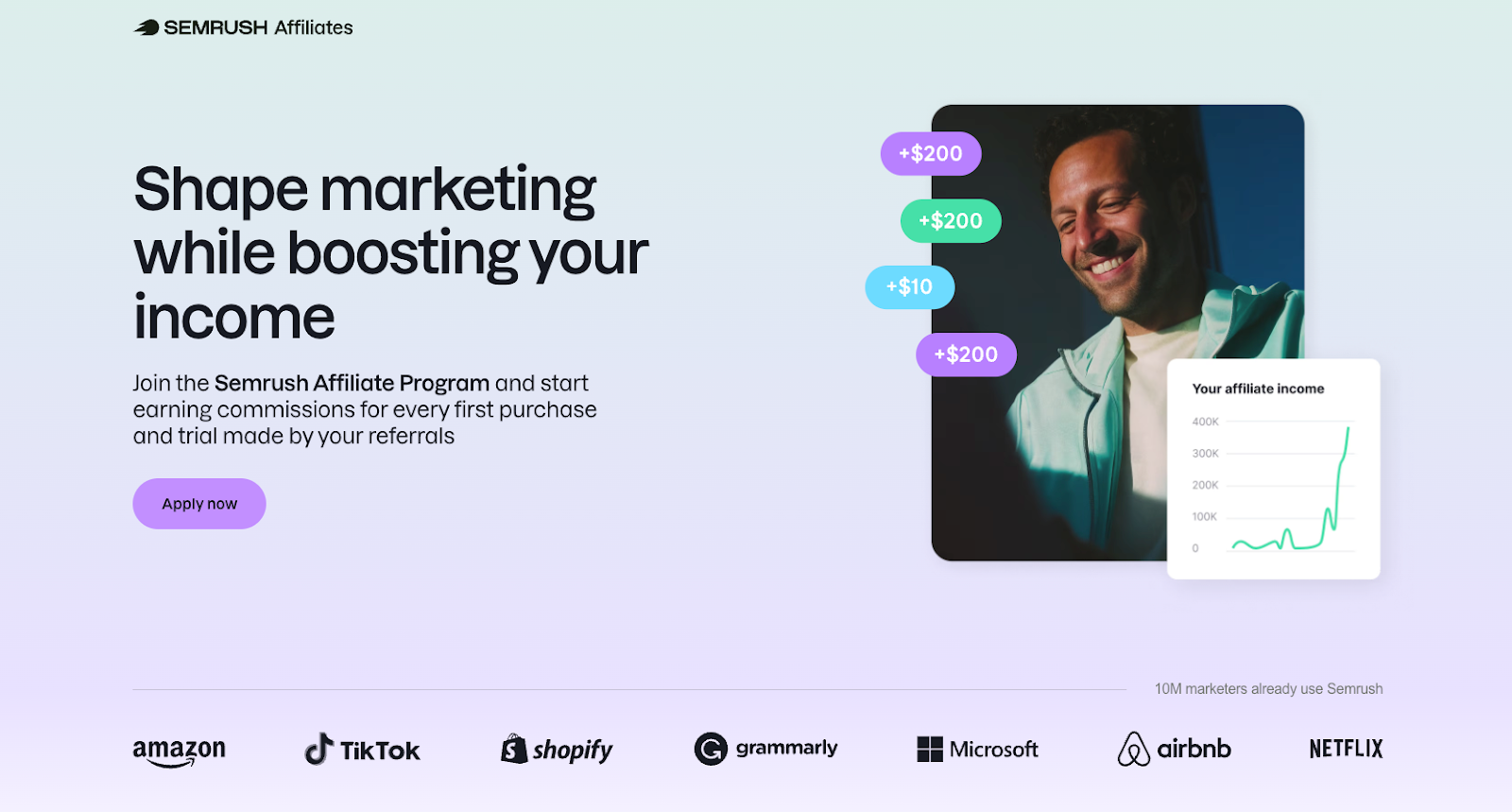
Semrush is an SEO and digital marketing platform used by agencies, in-house marketers, and publishers. Its affiliate program is powered by Impact and pays fixed commissions for sales and trial activations. Semrush also offers a 120-day cookie life and application reviews that are typically completed within two working days.
If you’re an SEO blogger, agency educator, or marketer who teaches keyword research, competitive analysis, or content strategy, Semrush is a smart pick. It’s not the easiest recommendation for broad lifestyle audiences, but it performs well in focused marketing niches.
- Best for: SEO creators, marketing educators, agencies, and business-content publishers
- Pros: Long 120-day cookie window, strong fit for SEO and marketing content, dedicated affiliate support
- Cons: Narrower audience than general consumer brands, best results require a marketing-savvy readership
- Commission: Fixed commissions for sales and trial activations
- Cookie duration: 120 days
- How to get started:
- Join through Impact.
- Access links and creative assets in the affiliate dashboard.
- Publish tutorials, case studies, and tool comparisons.
- Optimize for readers with active marketing needs.
7. eBay Partner Network
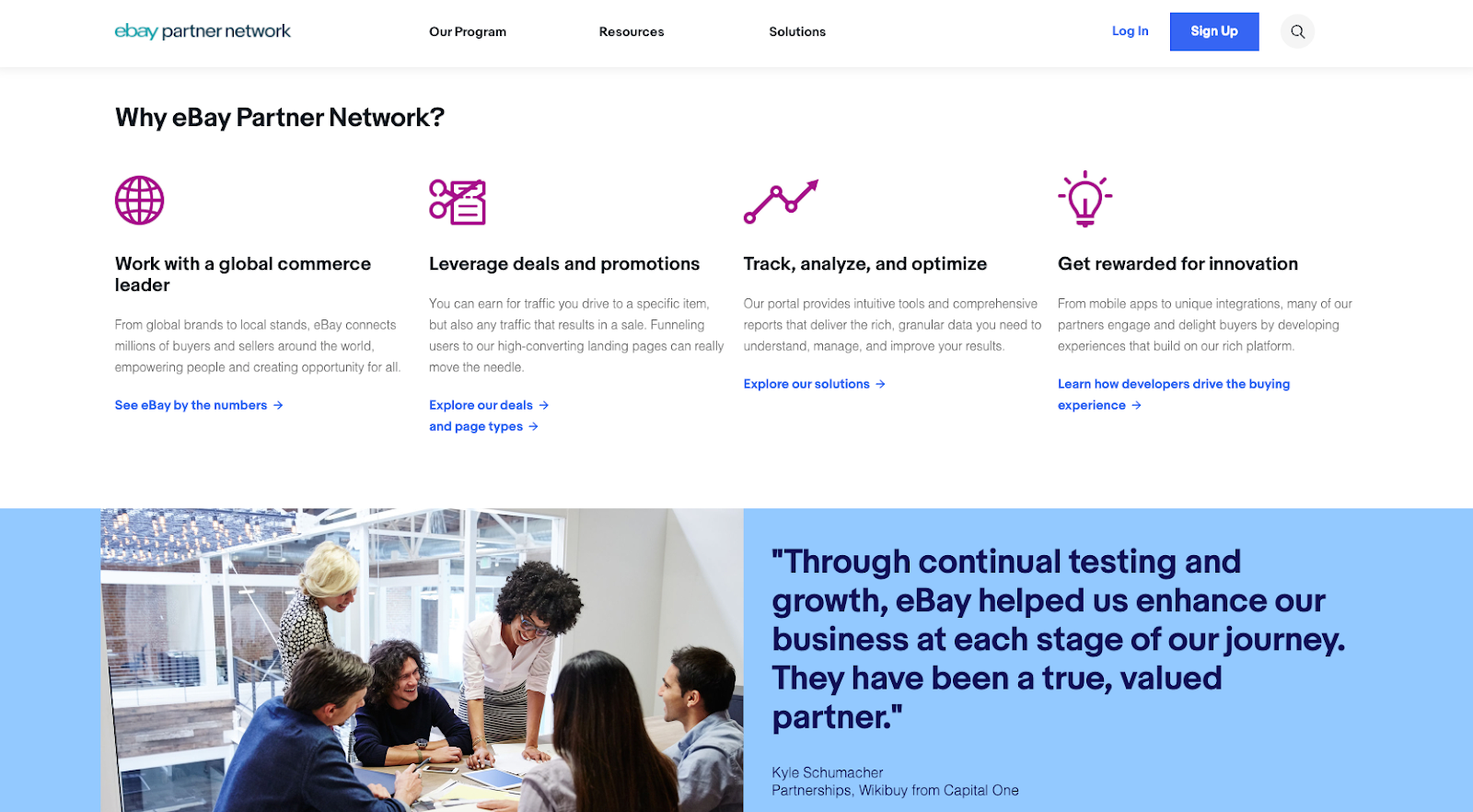
eBay Partner Network gives affiliates access to one of the largest online marketplaces for new, used, and collectible products. Like Amazon, it benefits from buyer familiarity and broad product coverage. eBay states that referrals are tracked with a 24-hour cookie, and qualified transactions made during that period can be credited to the affiliate on a last-click basis.
This program works well for deal sites, collectibles creators, refurbished tech reviewers, and publishers who focus on product discovery. It’s less ideal if you want predictable recurring revenue.
- Best for: Publishers, review sites, coupon creators, and product-focused content brands
- Pros: Broad marketplace appeal, useful for niche product hunting and deals, easy to pair with shopping content
- Cons: Short cookie duration, typically lower upside than recurring SaaS offers
- Commission: Category-based rates
- Cookie duration: 24 hours
- How to get started:
- Join eBay Partner Network.
- Create links to relevant listings, categories, or collections.
- Publish gift guides, buying advice, and niche roundups.
- Refresh content often as listings change.
8. Coursera
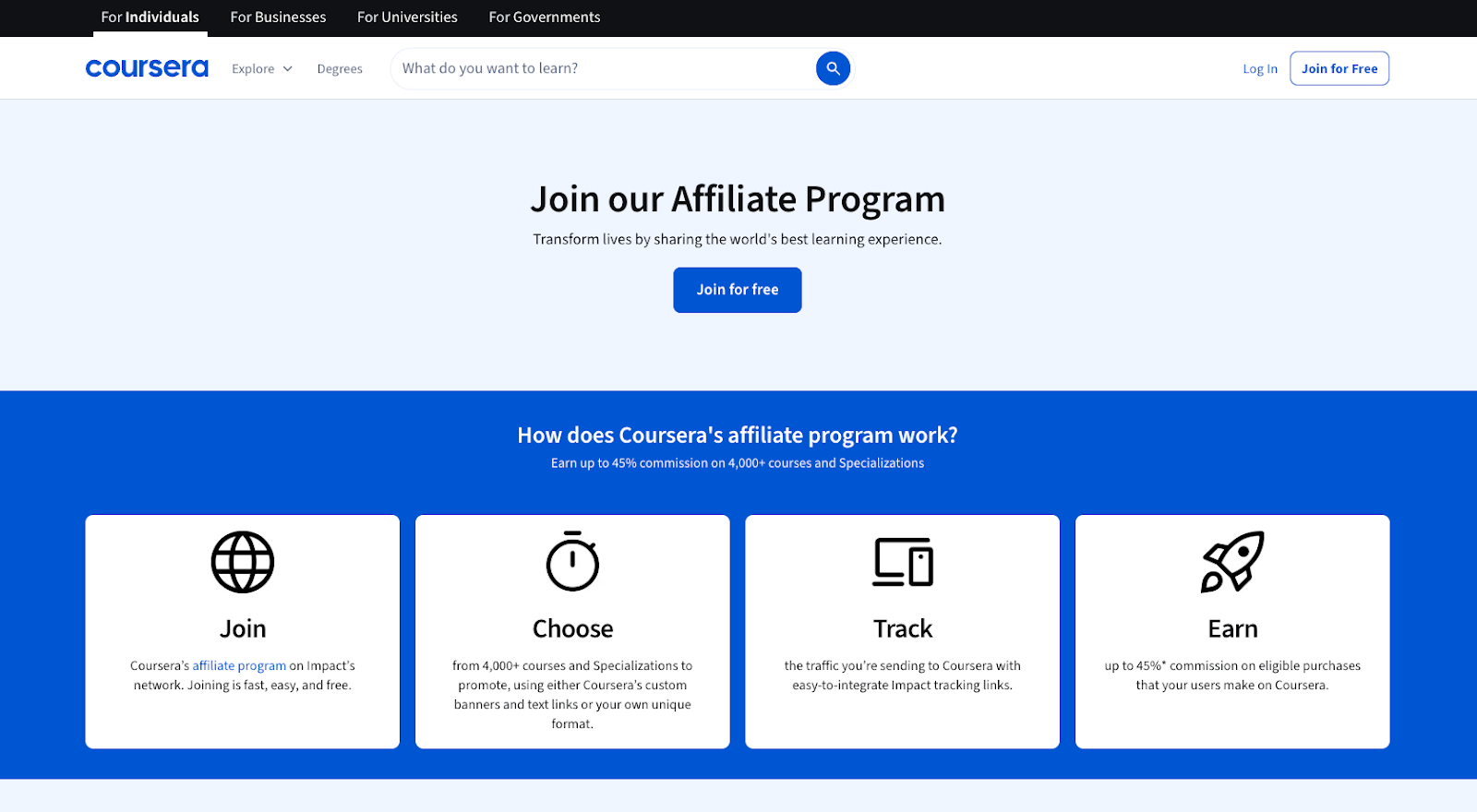
Coursera is an online learning platform offering courses and specializations from universities and companies. Its affiliate program is attractive for education creators because the brand is trusted, the catalog is broad, and the value proposition is easy to understand. Coursera says affiliates can earn baseline commissions between 15 percent and 45 percent on eligible purchases made within 30 days of clicking a qualified link. It also provides banners, text links, newsletters, and updated merchandising data.
All this makes Coursera a good fit for career-focused blogs, student creators, productivity newsletters, and channels centered on upskilling.
- Best for: Educational publishers, career creators, bloggers, and review sites
- Pros: Trusted learning brand, up to 45 percent commission on eligible purchases, wide range of courses to match many niches
- Cons: Degrees and some certificates are excluded, not every audience is in active learning mode
- Commission: 15–45 percent on eligible purchases
- Cookie duration: 30 days
- How to get started:
- Join via Impact.
- Choose courses and specializations that match your audience.
- Use banners or text links in educational content.
- Focus on career outcomes and practical value.
9. Adobe
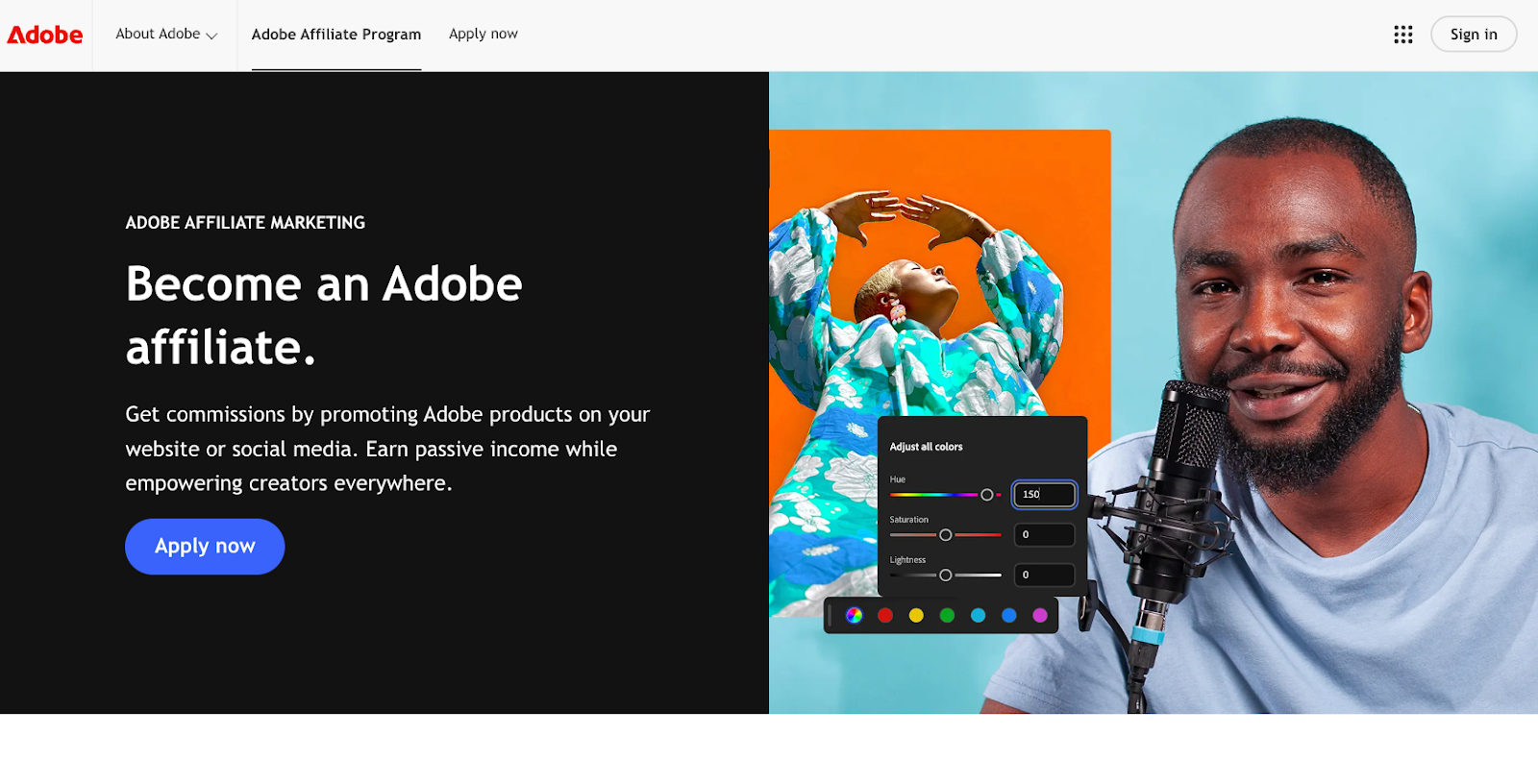
Adobe is one of the strongest affiliate options for audiences interested in design, video, photography, and creative software. It states that affiliates can earn 85 percent of the first month’s subscription price on eligible monthly plans, or 8.33 percent of the first year for eligible annual plans, with a 30-day cookie duration.
For creators who already teach Photoshop, Premiere Pro, Acrobat, or Creative Cloud workflows, Adobe can be a natural fit. It’s less universal than a productivity tool, but highly relevant audiences can convert well because the software often solves a clear professional need.
- Best for: Design educators, photographers, video creators, and creative-tech reviewers
- Pros: Strong brand recognition, high first-month payout on eligible plans, excellent fit for tutorial content
- Cons: Best for creative audiences, payout structure is more complex than flat recurring offers
- Commission: 85 percent for the first month or 8.33 percent for the first year on eligible plans
- Cookie duration: 30 days
- How to get started:
- Apply through Adobe’s affiliate partner page.
- Select campaigns inside the partner platform.
- Publish workflow tutorials, reviews, and software comparisons.
- Match the product to specific creative jobs to improve conversion.
10. Teachable
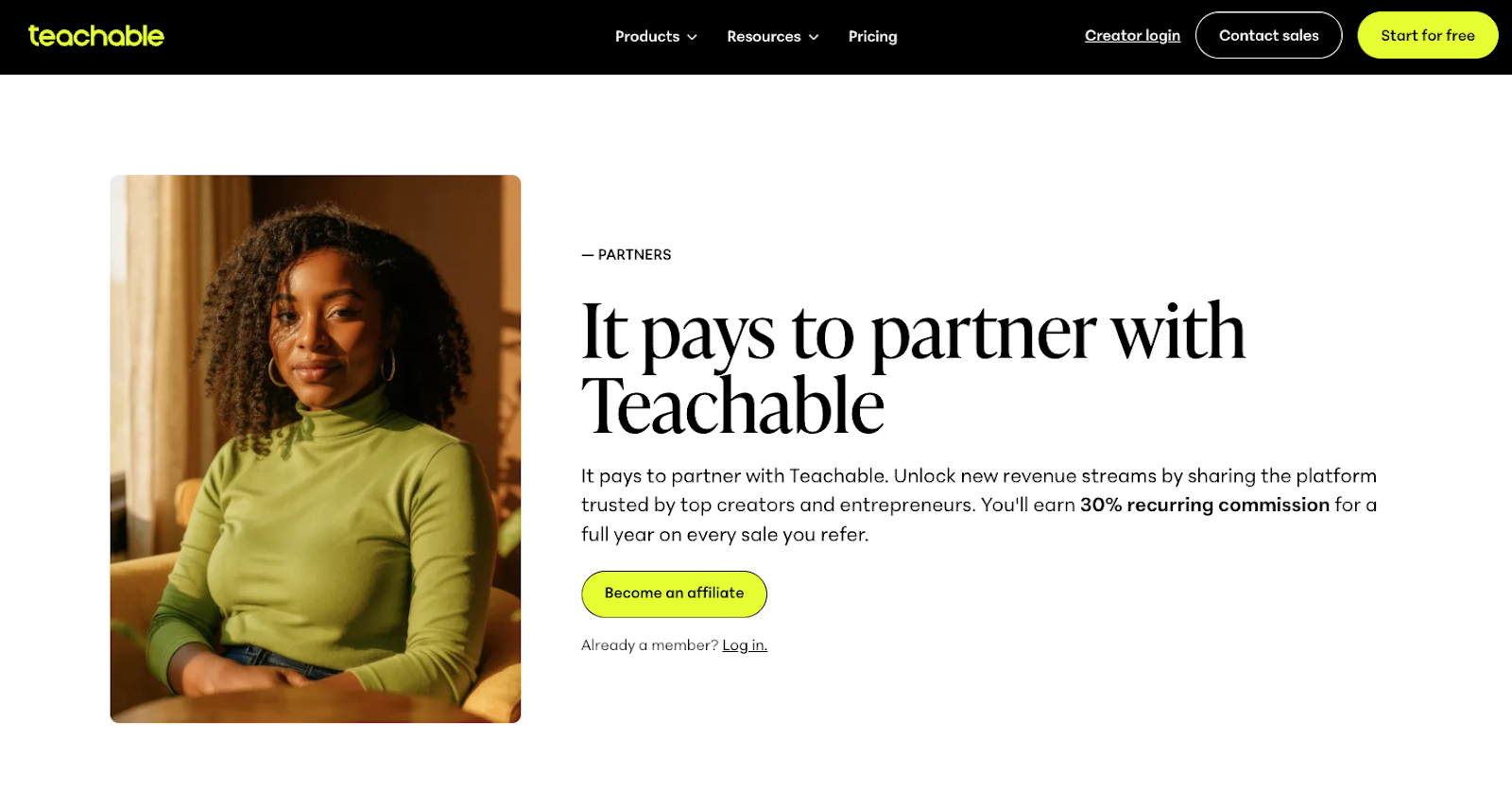
Teachable is a platform for creators who sell courses, coaching, and digital products. Its affiliate partner program focuses on referring creators to the platform and highlights recurring commissions, with applications typically reviewed within two to three business days.
This is a good affiliate match for creator-economy blogs, online business newsletters, and YouTube channels about course building. The biggest strength is audience alignment: If you guide people on monetizing knowledge, Teachable is easy to recommend.
- Best for: Creator educators, bloggers, consultants, and online business publishers
- Pros: Strong fit for creator audiences, recurring commission model, simple message for course creators
- Cons: Best for business or creator niches, commission details can vary by offer terms and partner setup
- Commission: 30 percent recurring commission
- Cookie duration: 30 days
- How to get started:
- Apply through the Teachable partner page.
- Wait for approval, which is often two to three business days.
- Access creative assets and partner resources.
- Promote through launch guides, creator tutorials, and email funnels.
How to choose the best affiliate program
A lot of affiliates make the same mistake: They choose based on headline commission alone. In reality, the best affiliate program is the one your audience can understand, trust, and act on. Low payouts, shrinking commissions, short cookie windows, weak tracking, and poor affiliate support can all eat into your results — even if the offer looks attractive at first glance.
When comparing programs, look at five things:
- Audience fit: Does the product solve a real problem for the people who already follow you?
- Commission quality: Is it one-time, recurring, fixed, or category-based?
- Cookie duration: Do referrals have enough time to convert?
- Creative support: Are there banners, educational resources, demos, or templates to help you sell?
- Ease of recommendation: Can you naturally mention the product in tutorials, workflows, comparisons, or case studies?
This is where the Jotform Affiliate Partner Program stands out. Its recurring commission model, broad use cases, simple onboarding flow, and quick review timeline reduce many of the common friction points that affiliates face. Instead of relying on impulse buys or narrow use cases, you can recommend a tool that works across lead generation, customer intake, registrations, approvals, payments, and more. That makes it especially useful for publishers already creating content around sales pipeline management, lead generation, referral tracking, lead tracking, and AI affiliate marketing tools.
How to make money with affiliate programs
Most affiliate programs use one of three payout models:
- Pay per sale: You earn when someone buys a product through your referral link. This is the most common model in SaaS affiliate programs and often the most lucrative.
- Pay per lead: You earn when someone completes a qualified action, like signing up for a demo, free trial, or consultation.
- Pay per click: You earn for sending traffic. This model is less common in high-quality SaaS programs but still appears in some media or network offers.
Once you understand the payout model, the next step is building a strategy that can generate consistent affiliate revenue over time.
- Build your platform before you apply: Start with a website, newsletter, YouTube channel, or focused social media account, then choose a niche you can speak about with authority. Affiliate income is easier to grow when your recommendations match a clear audience need.
- Focus on evergreen content: Tutorials, comparison pages, template galleries, and “best tools” articles can keep earning for months if the product stays useful and the program terms remain competitive. These often outperform short-lived trend-based offers.
- Compare the full partner experience: Look beyond the payout number to factors like approval speed, transparent reporting, reliable attribution, and ready-made assets. Strong support can save time and make it easier to build content that converts.
- Recommend products you genuinely trust: The best affiliate strategy is to choose products you understand and that solve a specific audience problem, and promote offers you would mention even without a commission. That helps protect trust, improve conversions, and keep your content aligned with your brand.
Turn your network into income
The best affiliate program isn’t always the one with the flashiest payout. It’s the one you can recommend confidently, consistently, and helpfully. If your audience includes businesses, creators, educators, nonprofits, or anyone who needs a better way to collect information and automate workflows, Jotform is one of the easiest affiliate programs to start promoting in 2026.
You can apply in minutes, get reviewed quickly, share your link, and start earning 30 percent recurring commission for every new paid user you refer. Explore the Jotform Affiliate Partner Program today and see how easily your existing network can become a long-term income channel.
FAQs about affiliate programs
Jotform Affiliate Program, Amazon Associates, and Coursera are all beginner-friendly in different ways. Jotform is strong if you want recurring commission income, Amazon is easy for product-based content, and Coursera works well for educational audiences.
Programs with simple applications, clear brand recognition, and broad product appeal are usually the easiest to join and promote. Jotform is especially accessible because the application process is quick, the product is easy to explain, and the setup is built around three steps: apply, share, and earn.
Software, business tools, finance, education, and B2B services often offer stronger affiliate economics than low-margin retail. That’s one reason SaaS affiliate programs remain so popular with creators and publishers.
This article is for content creators, marketers, bloggers, and entrepreneurs looking for the best affiliate programs to monetize their traffic and earn recurring commissions online.



















Send Comment: