

Mental Health Forms
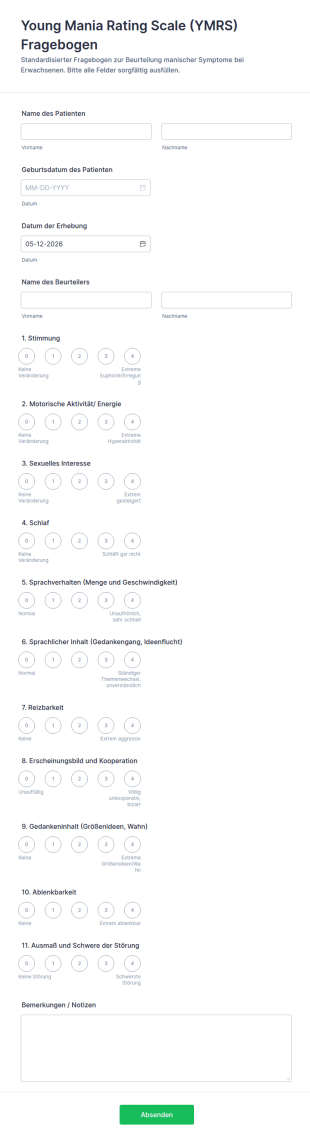
Young Mania Rating Scale (YMRS) Fragebogen
Erfassen Sie manische Symptomverläufe mit dem YMRS-Fragebogen-Formular und vereinheitlichen Sie die Datenerfassung in Praxis, Ambulanz oder Klinik, inklusive übersichtlicher Dokumentation der Formularantworten in Jotform.
Zur Kategorie:Medizinische Umfragen & Fragebögen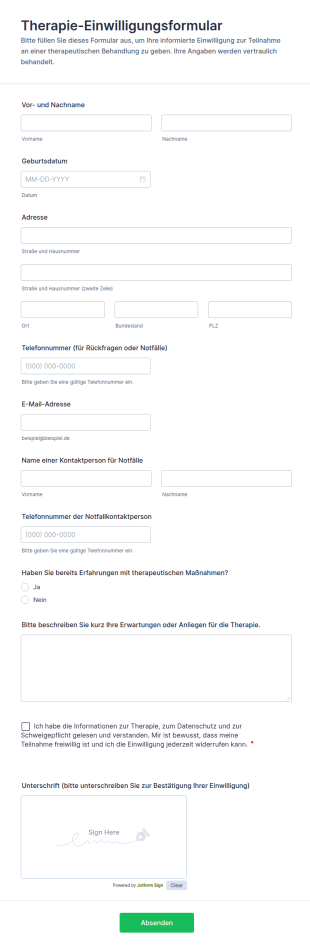
Therapie Einwilligungsformular
Dokumentieren Sie Einwilligungen zur Therapie digital und erfassen Sie Kontaktdaten für die Datenerfassung mit dem Therapie-Einwilligungsformular aus den Jotform Formularvorlagen.
Zur Kategorie:Einverständniserklärungen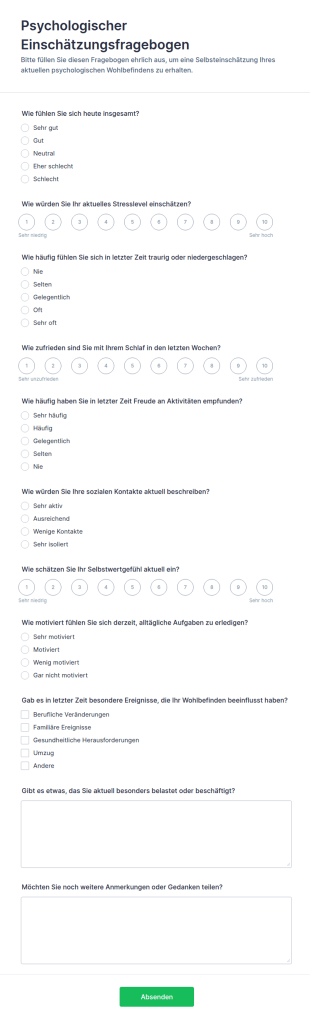
Psychologische Bewertungsbogen
Das Psychologischer Einschätzungsfragebogen Formular unterstützt bei der Datenerfassung zu Stimmung, Stress und Wohlbefinden und eignet sich für Praxen, Beratungsstellen und Coaches, die Entwicklungen regelmäßig dokumentieren möchten.
Zur Kategorie:Vorlagen für Fragebögen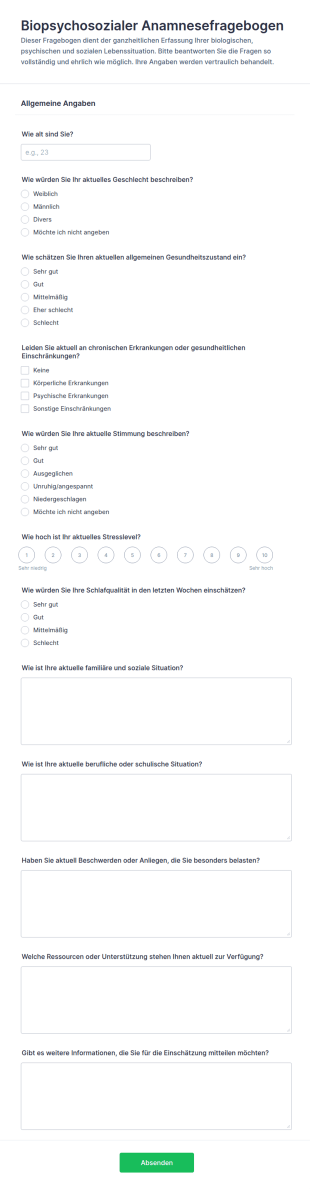
Biopsychosoziales Bewertungsformular
Das Biopsychosozialer Anamnesefragebogen Formular unterstützt Praxen und Beratungsstellen bei der digitalen Datenerfassung vor dem Erstgespräch, damit Anliegen, Belastungen und Ressourcen frühzeitig sichtbar werden.
Zur Kategorie:Medizinische Umfragen & Fragebögen
Emotionale Bewältigungsbewertung Fragebogen
Das Fragebogen zur Wutbewertung Formular unterstützt Beratung, Coaching und Praxen bei der digitalen Datenerfassung zur Wut-Selbsteinschätzung und der Vorbereitung passender Folgeschritte mit Jotform.
Zur Kategorie:Bewertungsformulare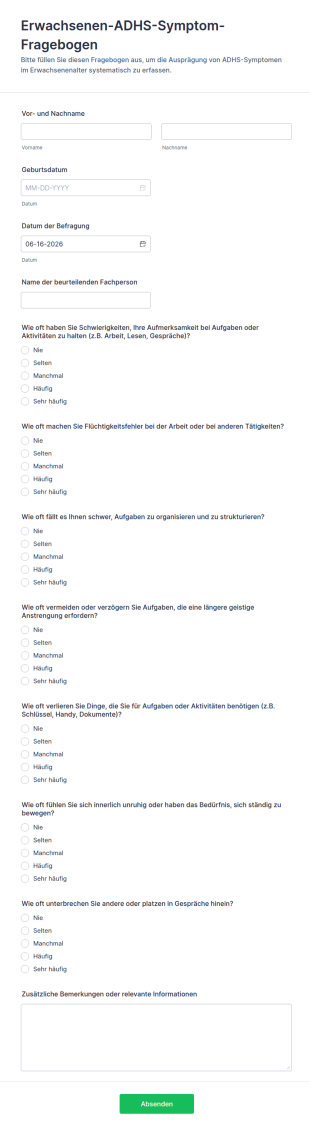
Erwachsenen ADHS Symptom Fragebogen
Der Erwachsenen-ADHS-Symptom-Fragebogen erleichtert Fachpersonen die Datenerhebung zu typischen ADHS-Symptomen bei Erwachsenen und unterstützt eine nachvollziehbare Dokumentation für Praxis, Beratung und Coaching.
Zur Kategorie:Vorlagen für Fragebögen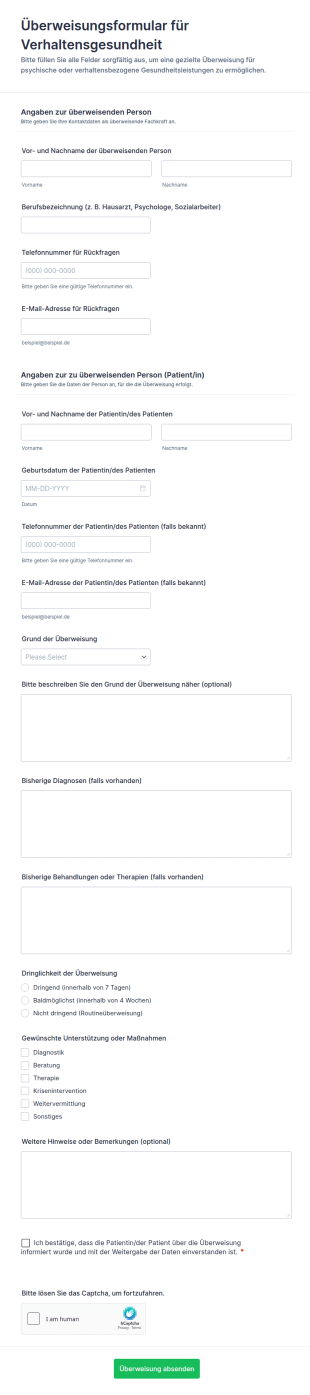
Überweisungsformular Für Verhaltensgesundheit
Überweisungsformular für Verhaltensgesundheit erleichtert die Online-Datenerfassung für Praxen, Beratungsstellen und Kliniken, damit Überweisungen nachvollziehbar eingehen, priorisiert werden können und jede Formular-Antwort zentral verfügbar ist.
Zur Kategorie:Mental Health Forms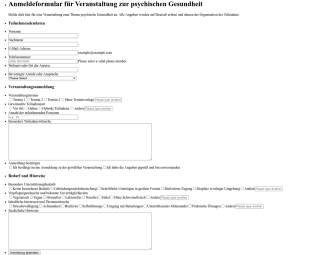
Anmeldung Zum Mentalgesundheits Event
Koordinieren Sie Anmeldungen zu Veranstaltungen rund um psychische Gesundheit mit Jotform, inklusive Termin- und Teilnahmeauswahl, und vereinfachen Sie die Datenerfassung für Organisationen, Vereine und Bildungsträger.
Zur Kategorie:Veranstaltungsanmeldeformulare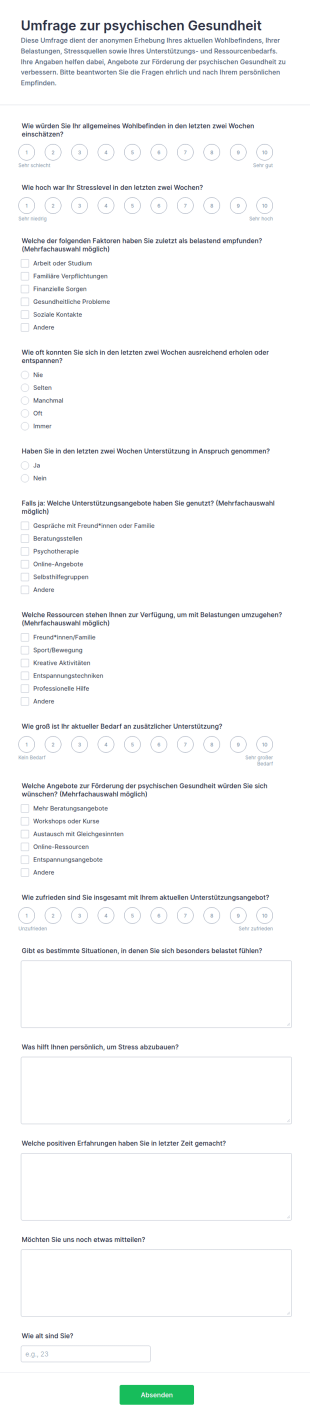
Psychische Gesundheitsbefragung
Erfassen Sie mit der Form zur Umfrage zur psychischen Gesundheit anonymes Feedback zu Wohlbefinden, Stress und Unterstützungsbedarf und nutzen Sie die Ergebnisse für datenaufnahme in Organisationen, Teams oder Bildungseinrichtungen.
Zur Kategorie:Mental Health Forms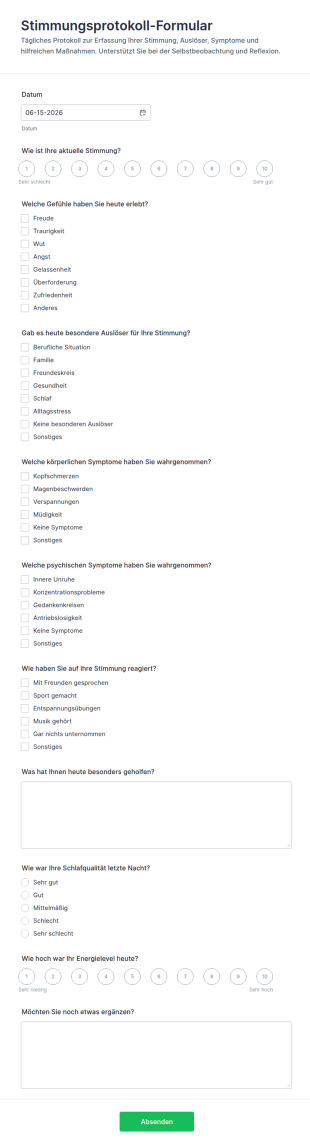
Stimmungsprotokoll Formular
Das Stimmungsprotokoll-Formular hilft Einzelpersonen, Praxen und Beratungsstellen dabei, Stimmung, Auslöser, Symptome sowie Schlaf und Energielevel täglich zu erfassen und für Verlaufsbeobachtung und Reflexion auszuwerten.
Zur Kategorie:Formulare zur Gesundheitsüberwachung
Psychotrope Medikamentenüberwachungsformular
Dokumentieren Sie Verlauf, Wirkung und Verträglichkeit psychotroper Medikation mit dem Psychopharmaka-Überwachungsformular und unterstützen Sie Praxen und Betreuungsteams bei der fortlaufenden Datenerfassung und Auswertung.
Zur Kategorie:Monitoring Formulare
Vertraulichkeitserklärung Für Gruppentherapie Formular
Das Gruppentherapie-Vertraulichkeitsformular erleichtert Praxen und Beratungsstellen die Dokumentation von Vertraulichkeit und Gruppenregeln vor dem Start einer Gruppentherapie und unterstützt eine konsistente Datenaufnahme mit Jotform.
Zur Kategorie:Einverständniserklärungen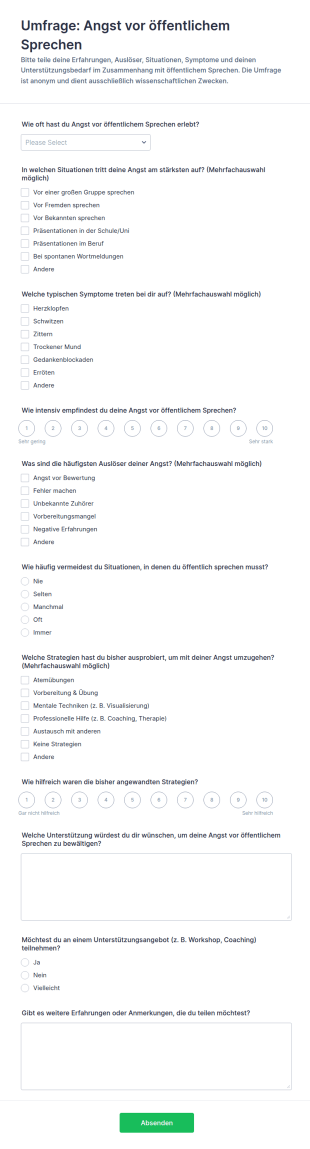
Umfrage Zur Angst Vor öffentlichem Reden
Erfassen Sie mit dem Umfrageformular zur Angst vor öffentlichem Sprechen Erfahrungen und Unterstützungsbedarfe für Coaching, Workshops, Bildungskurse oder interne Programme und nutzen Sie Jotform für einfache Datenerfassung und Auswertung.
Zur Kategorie:Umfragen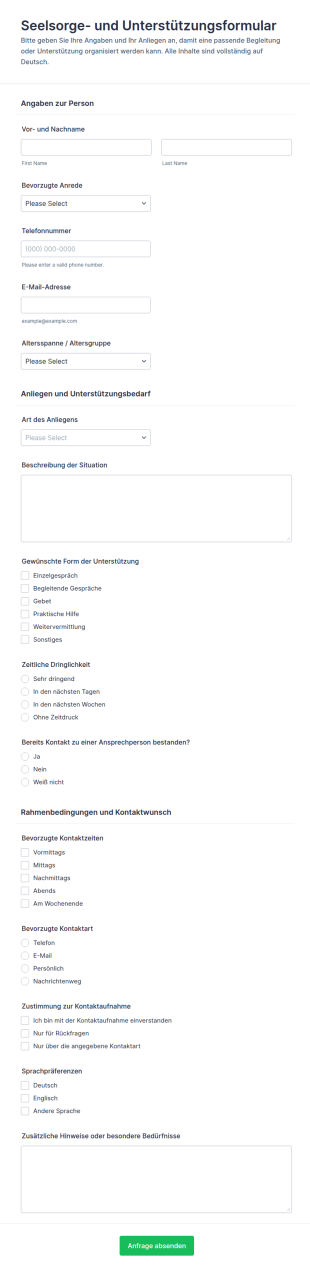
Pflege Und Unterstützungsformular
Erfassen Sie seelsorgliche Anliegen und Unterstützungsbedarf mit dem Seelsorge- und Unterstützungsformular in Jotform, damit Gemeinden und Beratungsstellen Anfragen gezielt zuweisen und die Datenerfassung sowie Formularantworten zentral verwalten können.
Zur Kategorie:Kontaktformulare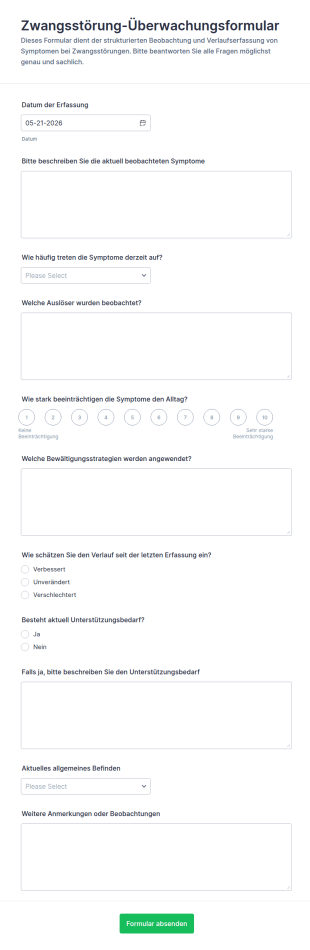
OCD Monitoring Umfrage
Dokumentieren Sie mit dem Zwangsstörung-Überwachungsformular Beobachtungen über Symptome, Verlauf und Unterstützungsbedarf für Therapie, Beratung oder Selbstbeobachtung und bündeln Sie die Datenerfassung in Jotform.
Zur Kategorie:Mental Health Forms
Ambulanter Psychiatrischer Fortschrittsbericht Fragebogen
Dokumentieren Sie ambulante psychiatrische Termine einheitlich mit dem Ambulanten psychiatrischen Verlaufsformular in Jotform, um Beobachtungen, Maßnahmen und nächste Schritte zentral zu erfassen und für Teams nachvollziehbar abzulegen.
Zur Kategorie:Mental Health Forms
Bewertung Der Geistigen Fähigkeiten Fragebogen
Dokumentieren Sie mit dem Einschätzung der geistigen Entscheidungsfähigkeit Formular Beobachtungen und Empfehlungen für Betreuung, Beratung oder Versorgung, und nutzen Sie Jotform für digitale Datenerhebung und übersichtliche Formularantworten.
Zur Kategorie:Bewertungsformulare
Psychiatrie Und Therapierichtlinien Zustimmungserklärung
Dokumentieren Sie Zustimmungen zu Hausordnung, Terminorganisation und internen Informationswegen im Zentrum für psychische Gesundheit mit dem Einverständniserklärung-Formular von Jotform für klare Abläufe und verlässliche Datenerfassung.
Zur Kategorie:Einverständniserklärungen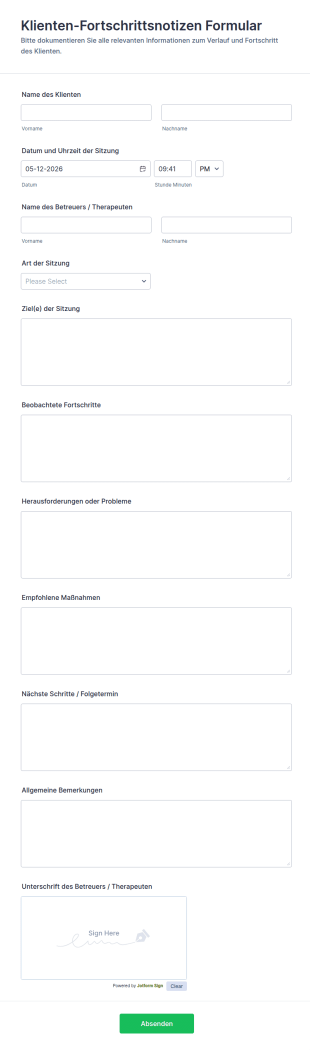
Klientenfortschrittsnotizen Formular 📝
Dokumentieren Sie Sitzungen, Fortschritte und nächste Schritte zuverlässig mit dem Klienten-Fortschrittsnotizen-Formular und vereinfachen Sie die Datenerfassung für Therapie, Coaching und Betreuungsteams mit Jotform.
Zur Kategorie:Formulare für Therapeuten
Hypnotherapie Kundeninformationen Fragebogen
Erfassen Sie mit dem Hypnotherapie-Kundeninformationsformular zentrale Angaben vor der Sitzung und vereinfachen Sie die Datenaufnahme für Praxen und selbstständige Therapeutinnen und Therapeuten mit Jotform.
Zur Kategorie:Aufnahmeformulare
Datenschutzerklärung Für Psychische Gesundheit
Erfassen Sie Einwilligungen zur Weitergabe von Informationen zur psychischen Gesundheitsversorgung, inklusive Empfänger, Zweck und Gültigkeitszeitraum, mit einer anpassbaren Formularvorlage von Jotform für Organisationen im Gesundheits- und Sozialbereich.
Zur Kategorie:Einverständniserklärungen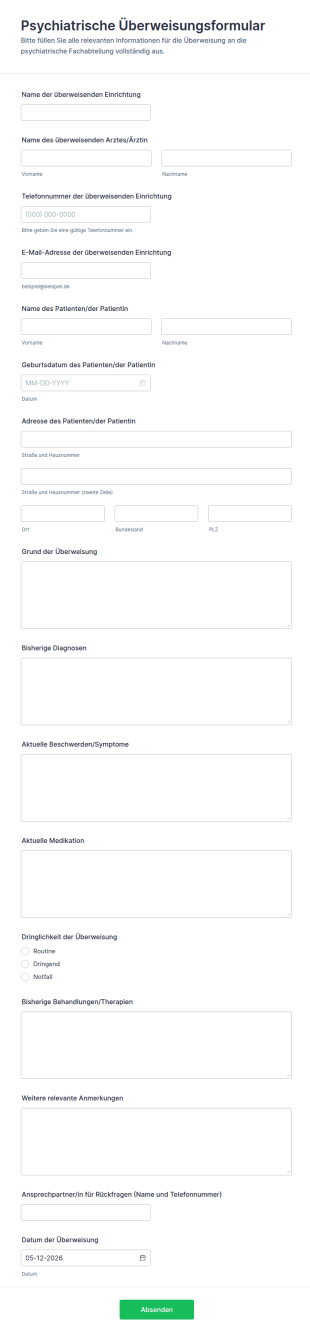
Psychiatrische Überweisungsformular
Erfassen und übermitteln Sie Überweisungen an psychiatrische Fachstellen mit dem Psychiatrischen Überweisungsformular von Jotform, ideal für Praxen, Kliniken und Beratungsstellen zur digitalen Datenerfassung und sicheren Weiterleitung.
Zur Kategorie:Mental Health Forms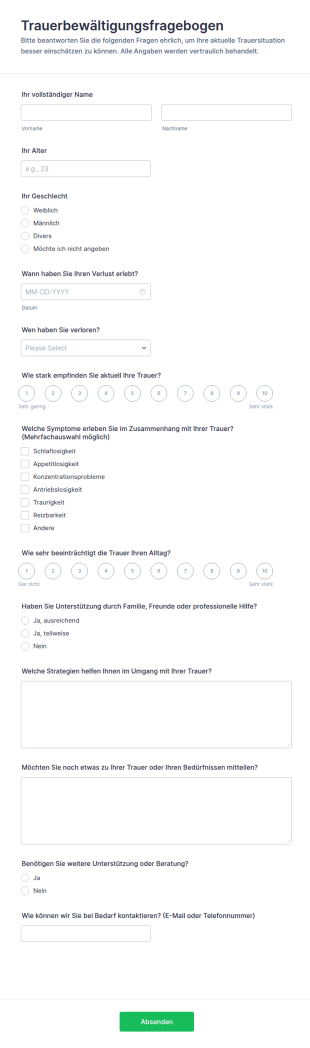
Trauerbewältigungsfragebogen
Trauerbewältigungsfragebogen-Formular für Beratungsstellen und Praxen zur einfühlsamen Datenerfassung rund um Trauer, Belastung im Alltag und Unterstützungsbedarf, damit Gespräche gezielt vorbereitet und Formularantworten geordnet gesammelt werden können.
Zur Kategorie:Vorlagen für Fragebögen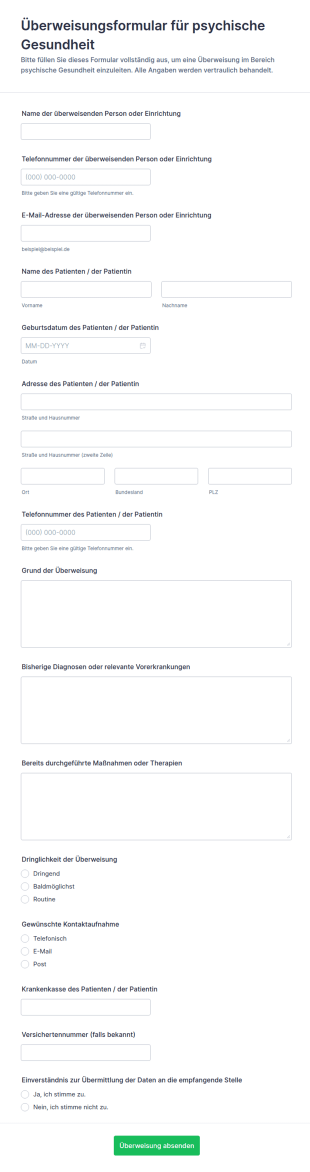
Psychische Gesundheitsüberweisung Umfrage
Erfassen Sie Überweisungen an psychische Unterstützungsangebote mit dem Überweisungsformular für psychische Gesundheit Formular von Jotform, ideal für Praxen, Beratungsstellen und Kliniken zur digitalen Datenerfassung und schnellen Weiterleitung.
Zur Kategorie:Mental Health FormsÜber Mental Health Forms
Mental health forms are structured documents used to collect, assess, and manage information related to emotional well-being, psychological support, and behavioral health needs. They help professionals understand a person’s mental health context, identify concerns, and document support or care processes in a clear and consistent way. Mental health forms are commonly used by therapists, counselors, psychologists, clinics, schools, wellness programs, and employee assistance programs. Typical use cases include new client intake, mental health screenings, ongoing therapy check-ins, consent documentation, and program feedback. By standardizing how sensitive information is collected, mental health forms support better decision-making, continuity of care, and clearer communication between providers and individuals.
With Jotform, mental health forms can be created quickly using a no-code, drag-and-drop Form Builder and adapted to different care settings. Conditional logic helps show only relevant questions based on responses, making forms easier and less overwhelming to complete. Submissions are stored in Jotform Tables, allowing authorized teams to review responses, track progress, and maintain organized records. Automated notifications and confirmations help streamline workflows while reducing manual follow-ups.
Use Cases of Mental Health Forms
Mental health forms support a wide range of support, assessment, and documentation workflows. Below are common ways these forms are used and the problems they help solve.
Mögliche Anwendungsfälle:
- Psychologische Erstuntersuchung neuer Klienten oder Studierender
- Psychische Gesundheitsuntersuchungen und Wellness-Check-ups
- Vorbereitung und Nachbereitung der Therapiesitzung
- Krisen-Support und Überweisungsanfragen
- Einholung der Einwilligung und Erfassung der Kommunikationspräferenzen
- Programmbewertung für Beratungs- oder Gesundheitsinitiativen
Lösungsansätze:
- Führen Sie eine einheitliche Methode zur Erfassung sensibler Informationen zur psychischen Gesundheit ein
- Helfen Sie dabei, Probleme frühzeitig zu erkennen und Fälle passend weiterzuleiten
- Reduzieren Sie den Verwaltungsaufwand für Anbieter und Support-Teams
- Bessere Kontinuität durch eine übersichtliche Organisation der Unterlagen zur psychischen Gesundheit
Mögliche Eigentümer und Nutzer:
- Therapeuten, Berater und Psychologen
- Kliniken, Wellnesszentren und Telemedizin-Anbieter
- Schulbetruer und Support für Schüler
- HR- und Arbeitnehmerhilfsprogramme
- Kunden, Studierende oder Teilnehmende, die Formulare ausfüllen
Unterschiede der Erstellungsmethoden:
- Psychologische Aufnahmeformulare erfassen Hintergrundinformationen, aktuelle Hauptprobleme, den Verlauf der Symptome, auslösende Faktoren, frühere Behandlungen, Medikamente und das vorhandene Unterstützungsnetzwerk.
- Formulare für psychische Gesundheitsuntersuchungen und Check-ins setzen auf strukturierte Bewertungsskalen und kurze Fragen, um Stimmung, Stress- oder Angstzeichen, Funktionsfähigkeit und mögliche Risikofaktoren zu erfassen.
- Zustimmungs- und Datenschutzformulare für die psychische Gesundheit legen den Schwerpunkt auf die Bestätigung der Einwilligung nach Aufklärung, Vertraulichkeitsgrenzen, Kommunikationspräferenzen und erforderliche Bestätigungen.
How to Create a Mental Health Form
Creating a mental health form with Jotform helps you collect sensitive information in a clear, respectful, and structured way. A well-designed form should feel easy to complete while still capturing the details needed for support or care decisions.
1. Wählen Sie eine Vorlage oder beginnen Sie komplett neu
Klicken Sie in „Mein Workspace“ auf „Erstellen“ und wählen Sie „Formular“. Sie können mit einer Vorlage für psychische Gesundheit oder zur Aufnahme von Daten beginnen oder ein benutzerdefiniertes Formular erstellen. Ein klassisches Formular eignet sich gut für umfassende Aufnahmen, während ein Kartenformular die Ermüdung der Befragten verringern kann, indem es sie Schritt für Schritt durch das Formular führt.
2. Add Identification and Context Fields
Klicken Sie auf „Element hinzufügen“, um grundlegende Informationen wie Name, Alter oder Geburtsdatum, Kontaktdaten und den Grund für das Ausfüllen des Formulars zu erfassen. Ist Anonymität wichtig, machen Sie identifizierende Felder optional und weisen Sie darauf in der Formularbeschreibung hin.
3. Build the Core Mental Health Sections
Fügen Sie Abschnitte für Anliegen oder Ziele, Symptombeschreibungen, Dauer und Auswirkungen auf das tägliche Leben hinzu. Verwenden Sie Bewertungsskalen oder Multiple-Choice-Fragen für Stimmung, Stress oder Angstzustände und fügen Sie Freitextfelder nur ein, wenn zusätzlicher Kontext nötig ist.
4. Use Conditional Logic to Keep Forms Focused
Bedingte Logik hilft, unnötige Fragen zu vermeiden. Zeigen Sie Follow-up-Fragen zum Beispiel nur an, wenn eine Person hohen Stress, schlechte Laune oder bestimmte Bedenken angibt. So wirkt das Formular kürzer, erfasst aber weiterhin alle wichtigen Details.
5. Add Consent and Communication Preferences
Fügen Sie die erforderlichen Checkboxes für Einwilligung, Vertraulichkeit und Kommunikationspräferenzen hinzu. So legen Sie Erwartungen fest und unterstützen ethische sowie professionelle Standards.
6. Publish, Test, and Manage Responses in Jotform Tables
Schauen Sie sich das Formular vor der Veröffentlichung an und testen Sie es. Senden Sie es über einen sicheren Link, per E-Mail oder über Ihr internes Portal. Alle Antworten landen in Jotform Tabellen, wo autorisierte Personen sie bequem prüfen, filtern und verwalten können.
Häufig gestellte Fragen
1. What are mental health forms?
Mental health forms are documents or online forms used to collect information related to emotional well-being, psychological support, and behavioral health services.
2. Why are mental health forms important?
They standardize information collection, reduce missing details, and support clearer communication and better-informed support decisions.
3. What information is typically included in mental health forms?
Common fields include background information, current concerns, symptom descriptions, rating scales, consent acknowledgments, and communication preferences.
4. Who uses mental health forms?
Therapists, counselors, schools, clinics, wellness programs, HR teams, and individuals seeking support all use mental health forms.
5. Are mental health forms used only in clinical settings?
No. They are also used in schools, workplaces, community programs, and wellness initiatives.
6. Can mental health forms be completed online?
Yes. Digital forms allow individuals to complete them remotely and help teams manage responses more efficiently.
7. How can mental health forms improve care or support?
They provide structured insights before sessions, help track changes over time, and reduce administrative overhead.
8. How should sensitive mental health data be handled?
Access should be limited to authorized users, only necessary information should be collected, and clear consent and privacy acknowledgments should be included.