

Tehlikeli Madde Formları
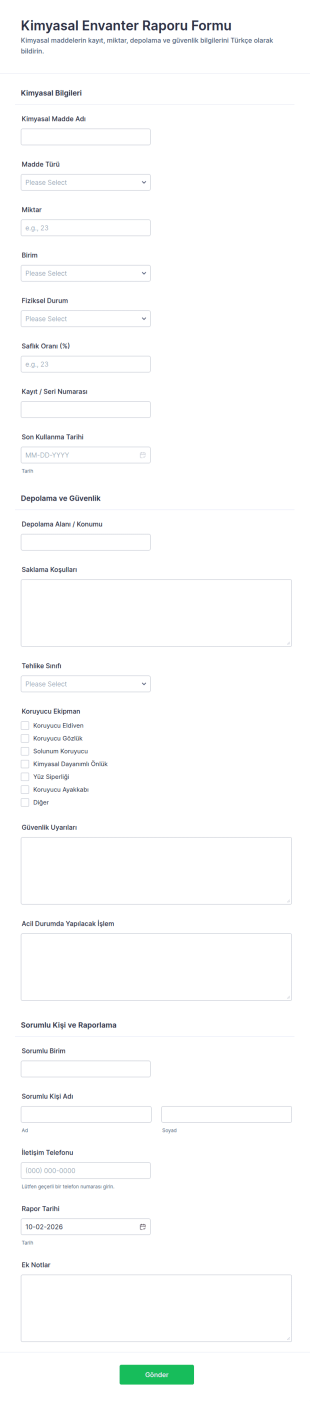
Kimyasal Envanter Raporu Formu
Kimyasal Envanter Raporu Formu ile kurumunuzdaki kimyasalların envanterini düzenli veri toplama ile kaydedin, raporlayın ve Jotform üzerinden form yanıtı takibini kolaylaştırın.
Kategoriye git:Tehlikeli Madde FormlarıTehlikeli Madde Formları Hakkında
Hazardous material forms are structured documents used to manage, document, and control activities involving hazardous substances, including handling, storage, transport, disposal, and incident reporting. They help organizations collect consistent information about materials, risks, safety requirements, and compliance steps so hazardous materials are managed safely and in line with regulations and internal policies. Hazardous material forms are commonly used in laboratories, manufacturing sites, warehouses, construction environments, healthcare facilities, and environmental services for workflows like hazardous material inventory, safety checklists, spill reporting, waste disposal requests, and transport declarations. By standardizing hazardous material documentation, these forms reduce safety risks, improve accountability, and support audit readiness.
With Jotform, hazardous material forms can be created quickly using a no-code, drag-and-drop Form Builder and tailored to different material types and safety procedures. Conditional logic can show specific questions based on hazard class or activity type, and file upload fields can collect SDS documents, permits, photos, and compliance records. Submissions are stored in Jotform Tables, making it easy to track materials, approvals, and incidents by site and status. Automated notifications can alert safety teams immediately when spills, exposures, or urgent hazards are reported.
Use Cases of Hazardous Material Forms
Hazardous material forms support safe operations, compliance documentation, and incident response across hazardous substance workflows. Below are common ways these forms are used and the challenges they help solve.
Olası Kullanım Senaryoları:
- Tehlikeli madde envanteri ve depolama dokümantasyonu
- Tehlikeli madde elleçleme ve güvenlik kontrol listesi yanıtları
- Dökülme, maruzluk ve olay raporlama
- Tehlikeli atık imhası ve toplama talepleri
- Tehlikeli madde nakliye beyanları ve sevkiyat kayıtları
- Eğitim onayları ve uyumluluk teyitleri
Problem Çözme Noktaları:
- Tehlikeli maddeler için tutarlı güvenlik dokümantasyonu oluşturun
- Prosedürlerin ve onayların takip edilmesini sağlayarak riski azaltın
- Denetim için hazır kayıtlar ve eklerle uyumluluğu destekleyin
- Açık raporlama ve yükseltme adımlarıyla olay müdahalesini hızlandırın
Olası Sahipler ve Kullanıcılar:
- İş güvenliği görevlileri ve İSG ekipleri
- Lab yöneticileri ve teknisyenleri
- Depo ve faaliyet personeli
- Tesis ve atık yönetimi koordinatörleri
- Tehlikeli maddeleri kullanan çalışanlar
Oluşturma Yöntemlerinin Farkları:
- Tehlikeli madde envanter ve depolama formları, madde tanımlaması, tehlike sınıflandırması, depolama konumu, miktar, konteyner durumu ve SDS ek alanlarına odaklanır.
- Tehlikeli madde kullanımı ve taşıma formları görev veya sevkiyat detaylarını, gerekli KKD'yi, etiketleme ve paketleme kontrollerini, onayları ve gözetim zinciri veya taşıyıcı bilgilerini vurgular.
- Tehlikeli madde dökülmesi ve olay raporu formları, olay zamanı ve yeri, maruzluk detayları, alınan acil önlemler, önem derecesi ve soruşturma için fotoğraf veya belge yüklemelerini önceliklendirir.
How to Create a Hazardous Material Form
Creating a hazardous material form with Jotform helps you standardize safety workflows and keep hazardous substance records organized and easy to review.
1. Şablon Seçin veya Sıfırdan Başlayın
In My Workspace, click “Create” and select “Form.” Start with an incident, inventory, or checklist template and customize it for hazardous materials.
2. Define the Hazardous Material Workflow Type
Add a field for workflow type such as inventory, handling checklist, transport, disposal request, or incident report. Use conditional logic to show the right sections.
3. Add Material and Safety Information Fields
Include chemical or material name, hazard class, quantity, storage location, and required PPE. Add checkboxes for required safety steps.
4. Use Conditional Logic for Different Hazard Types
Show different questions for corrosives vs flammables vs biohazards, and require extra approvals or documentation where needed.
5. Collect Supporting Documents and Evidence
Use file uploads for SDS files, permits, labels, photos, or incident evidence.
6. Publish and Track Submissions in Jotform Tables
Store submissions in Tables and filter by site, hazard type, status, and severity.
Sıkça Sorulan Sorular
1. What are hazardous material forms?
Hazardous material forms are documents or online forms used to manage and document hazardous substance workflows such as storage, handling, transport, disposal, and incident reporting.
2. Why are hazardous material forms important?
They support safety and compliance by standardizing procedures, documenting approvals, and creating records for audits and investigations.
3. What information is typically included in hazardous material forms?
Common fields include material identification, hazard class, quantity, location, PPE requirements, SDS attachments, and incident details when applicable.
4. Who uses hazardous material forms?
EHS teams, lab staff, warehouse teams, facilities staff, and employees handling hazardous materials may use these forms.
5. Can hazardous material forms include SDS uploads?
Yes. Jotform file upload fields can collect SDS files, permits, and other required compliance documents.
6. Can hazardous material forms be used for spill reporting?
Yes. Spill and exposure incident forms are a common use case, capturing details for response and investigation.
7. Can hazardous material forms support transport documentation?
Yes. Forms can capture packaging checks, labeling requirements, carrier info, and shipment details for hazardous material transport workflows.
8. Can hazardous material forms be customized by hazard type?
Yes. Conditional logic and custom fields can tailor questions based on hazard classification and required safety procedures.