
AI sales enablement is the use of artificial intelligence to streamline and improve how sales teams work across the entire sales process, from identifying and qualifying prospects to engaging buyers and closing deals.
Modern sales teams are up against challenges like long decision cycles, managing multiple stakeholders, and too much admin work that steals precious selling time. With the average B2B sale involving five decision-makers and long, winding processes, the old ways just don’t cut it anymore.
New ones, such as AI sales enablement, are paving the way. Using AI for sales enablement helps you simplify workflows, automate repetitive tasks, and free your representatives to focus on building relationships and closing deals.
Learn what AI sales enablement actually means, why sales automation matters for B2B sales, and which tools can help you along the way.
What is AI sales enablement?
AI sales enablement uses artificial intelligence to streamline how your sales teams work, from identifying prospects to closing deals. Spreadsheets don’t close deals. AI for sales does the heavy lifting — capturing data, flagging hot leads, and giving your reps the context they need to connect with customers who are ready to buy.
Here’s how AI-driven sales tools are transforming the process:
- Call monitoring with natural language processing (NLP): AI listens to sales calls in real time, picking up keywords, tone, and sentiment.
- AI algorithms for sales intelligence: These tools analyze past sales data to spot trends and recommend the next best actions, helping you target prospects more effectively.
- Predictive analysis for automated lead generation: By studying behavior and purchase history, AI forecasts which leads are most likely to convert, so you can focus its energy where it counts.
- Generative AI for personalized content: From proposals to follow-up emails, AI crafts tailored, on-brand messages that sound human — minus the hours spent writing them.
Compared to traditional sales methods that rely heavily on manual note-taking and guesswork, AI tools for sales handle analysis and feedback instantly. Instead of waiting days for reports or reviews, your reps can now get insights mid-call or mid-campaign, making sales faster and more efficient.
Benefits of using AI in sales enablement
By combining smart automation with data-backed insights, sales enablement software helps you move faster, connect better, and close smarter.
Here’s how:
- AI sales automation: From CRM updates to scheduling and follow-ups, automation keeps everything running smoothly. For example, HubSpot’s AI CRM automatically logs calls, updates contact details, and even drafts follow-up emails.
- Enhanced lead qualification: AI tools like Salesforce Einstein analyze engagement history and fit signals to rank leads automatically. That means your reps spend more time talking to high-quality prospects instead of chasing cold ones.
- More accurate sales forecasting: Tools like Gong and Clari use AI to track email responses, deal activity, and buyer behavior to predict which opportunities are most likely to close.
- Personalized customer engagement: By studying customer preferences and previous interactions, platforms like Drift craft product suggestions and tailor personal campaigns.
- Faster response times: AI-driven chatbots and virtual agents (like Intercom’s Fin) qualify leads instantly and route them to the right reps, ensuring no potential deal gets stuck waiting in the queue.
10 best AI tools for sales enablement
When it comes to AI sales tools, there’s no shortage of options — from lead intelligence to automation and training.
The right mix can help you build a successful sales team, streamline workflows, and use AI to boost business productivity without adding more headcount.
Here are the top 10 options to consider:
| Platform | Starting price | Key features |
|---|---|---|
 Jotform AI Agents |
Free (paid plans from $34/mo) |
Conversational AI forms, no-code setup, multichannel chat, and analytics dashboard |
 Gong |
Custom |
Conversation analytics, deal insights, CRM sync, and best practice libraries |
 Salesloft |
Custom |
Conductor AI recommendations, multichannel outreach, and deal health scoring |
 Highspot |
Custom |
Content management, CRM integration, and performance analytics |
 Drift |
Custom |
AI chatbots, BANT lead qualification, and automated meeting scheduling |
 ZoomInfo |
Custom |
Contact and company database, intent data, job-change alerts, and enrichment |
 HubSpot Sales Hub |
Free (paid plans from $15/user/mo) |
All-in-one CRM, AI lead scoring, and forecasting dashboards |
 Outreach |
Custom |
AI email sequencing, A/B testing, multichannel outreach, and CRM integration |
 Mindtickle |
Custom |
Learning paths, AI role-play training, and enablement analytics |
 Saleshandy |
$25/mo |
AI lead search, personalized emails, and analytics and deliverability tracking |
1. Jotform
Best for: Turning static forms into interactive, intelligent sales touchpoints
If you want to efficiently use AI for sales enablement, Jotform is a powerful option. It helps transform ordinary web forms into smart, conversational experiences that guide prospects, qualify leads, and gather valuable data without overwhelming your sales team, working seamlessly with Jotform’s Sales AI Agents to maximize and streamline communication with potential leads.
Tons of flexibility. I was able to create exactly the form I wanted. Almost no downside. Even Stripe integration was straightforward. There’s a learning curve, of course, but very easy to get up and running.
Setting up a Jotform AI Agent is easy — you have the option to train it via chat, manually adding logic and conditioning rules, and even uploading key documents. These AI agents act as advanced live chatbots and can even take calls from potential clients, answering questions on the fly and routing qualified leads to the proper sales rep. This 24/7 support allows your sales team to achieve smoother workflows and more meaningful engagements.
Key features:
- Agent templates directory: Pick from 7,000+ pre-built templates to speed up deployment.
- No-code customization: Build and edit agents via drag-and-drop, pick tone/voice, select the channel, and embed them in the site.
- Multichannel support: Use it via web chat, voice call, SMS, WhatsApp, and more.
- Form integration: Agents integrate with existing forms, automating collection, lead capture, and routing.
- Knowledge base and training: Train the AI Agents on your documentation so they give consistent, accurate responses.
- Analytics and insights: Track conversations to see what prospective leads ask and which paths convert.
| Pros | Cons |
|---|---|
| – Quick to deploy, thanks to templates – No coding requiredIntegrates smoothly with forms you already use – Multichannel support increases reach – Good value for small/medium teams | – Free tier supports limited conversations – Advanced features may only show value at higher tiers |
Plans and pricing: Here’s what Jotform’s pricing looks like (billed annually):
- Starter: Free
- Bronze: $34/month
- Silver: $39/month
- Gold: $99/month
- Enterprise: Custom
2. Gong
Best for: Deep-dive conversation analytics and pipeline visibility for B2B sales teams
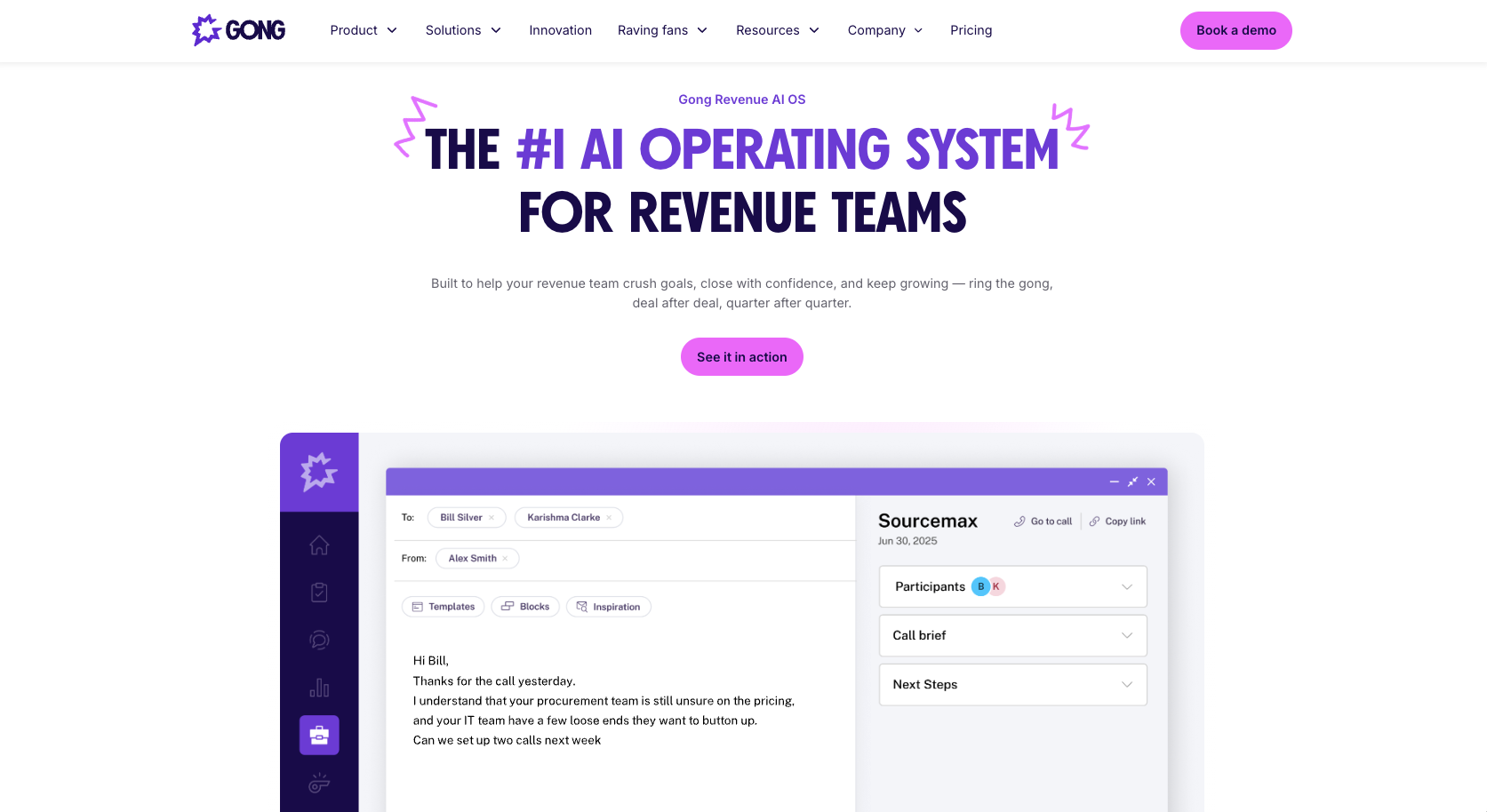
Gong is built around the concept of sales intelligence. It first records and transcribes sales calls, emails, and meetings. Then, it applies AI to surface insights like talk ratios, objections handled, and patterns that top performers follow. This makes it a strong tool for AI-driven sales teams looking to level up coaching, forecasting, and deal visibility.
Rather than manually reviewing call recordings or trying to guess what’s blocking deals, sales and enablement leads can use Gong to quickly identify what works and what doesn’t. This allows your team to spend more time selling and less time hunting for root causes.
Key features:
- Conversation insights dashboard: Highlight trends, such as questions asked, competitor mentions, and talk vs. listen ratios.
- Pipeline and deal risk tracking: Flag deals at risk based on interaction signals, helping to sharpen forecasting.
- CRM integration and activity syncing: It works with systems like Salesforce to ensure conversations are tied to opportunities.
- Call libraries and best practice sharing: Store top rep conversations for training and replication.
| Pros | Cons |
|---|---|
| – Rich analytics about what’s actually happening on sales calls – Enables better coaching and quicker ramp-up of new reps – Ideal for enterprises with complex B2B sales motions | – Premium cost – Some essential modules may require add-ons – Not designed for live call handling |
Plans and pricing: Pricing for Gong is custom and depends on factors like team size, modules selected, and the amount of onboarding required.
3. Salesloft
Best for: Sales teams wanting an all-in-one platform with solid workflows and multichannel outreach
Salesloft centers around its Conductor AI engine, which reviews past buyer behavior, seller activities, and opportunity data to suggest next best steps. Say a prospect opened a pricing page twice but hasn’t replied to your last email. Conductor AI might recommend a follow-up call, surface a relevant case study, or flag the deal as needing executive outreach.
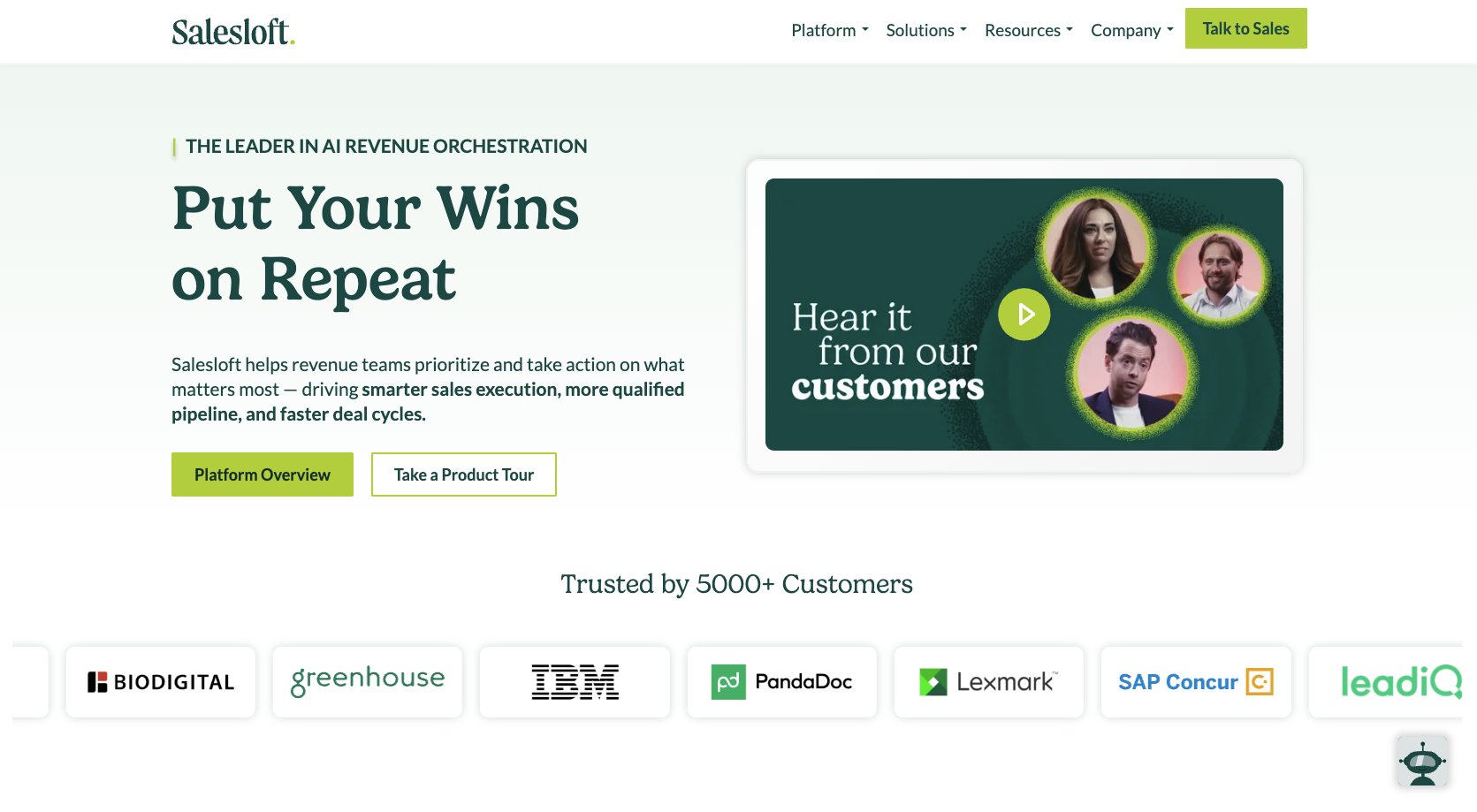
Beyond that core, it also offers multichannel support, including email, call, social, and cadences, and tracks deal health scoring, helping reps focus on the opportunities that matter most.
Key features:
- Multichannel outreach and cadences: Manage email, calls, and social touches in one workflow.
- Deal health scoring: Flag pipelines at risk and monitor buyer engagement to improve forecasting.
- CRM integrations and activity sync: It works with major CRMs so data stays aligned.
- Conversation intelligence: Record and analyze calls and emails to surface coaching insights.
| Pros | Cons |
|---|---|
| – Strong workflows and actionable insights – Multichannel support helps outreach scale – Deep CRM integrations for smoother data flow | – User interface can feel complex to set up – Email limits and formatting issues reported – Mixed reviews on customer support and reliability |
Plans and pricing: Salesloft uses custom pricing, which means you’ll need to contact their sales team for exact rates.
4. Highspot
Best for: Unifying content, training, and analytics in one place so your sales team stops hunting and starts closing
Highspot keeps reps stocked with the right content by tagging every asset with metadata: industry, product line, buyer stage, and even past performance. So when a rep searches for “manufacturing case study” or “mid-funnel pitch deck,” the platform pulls up the exact piece that has converted well in similar deals.
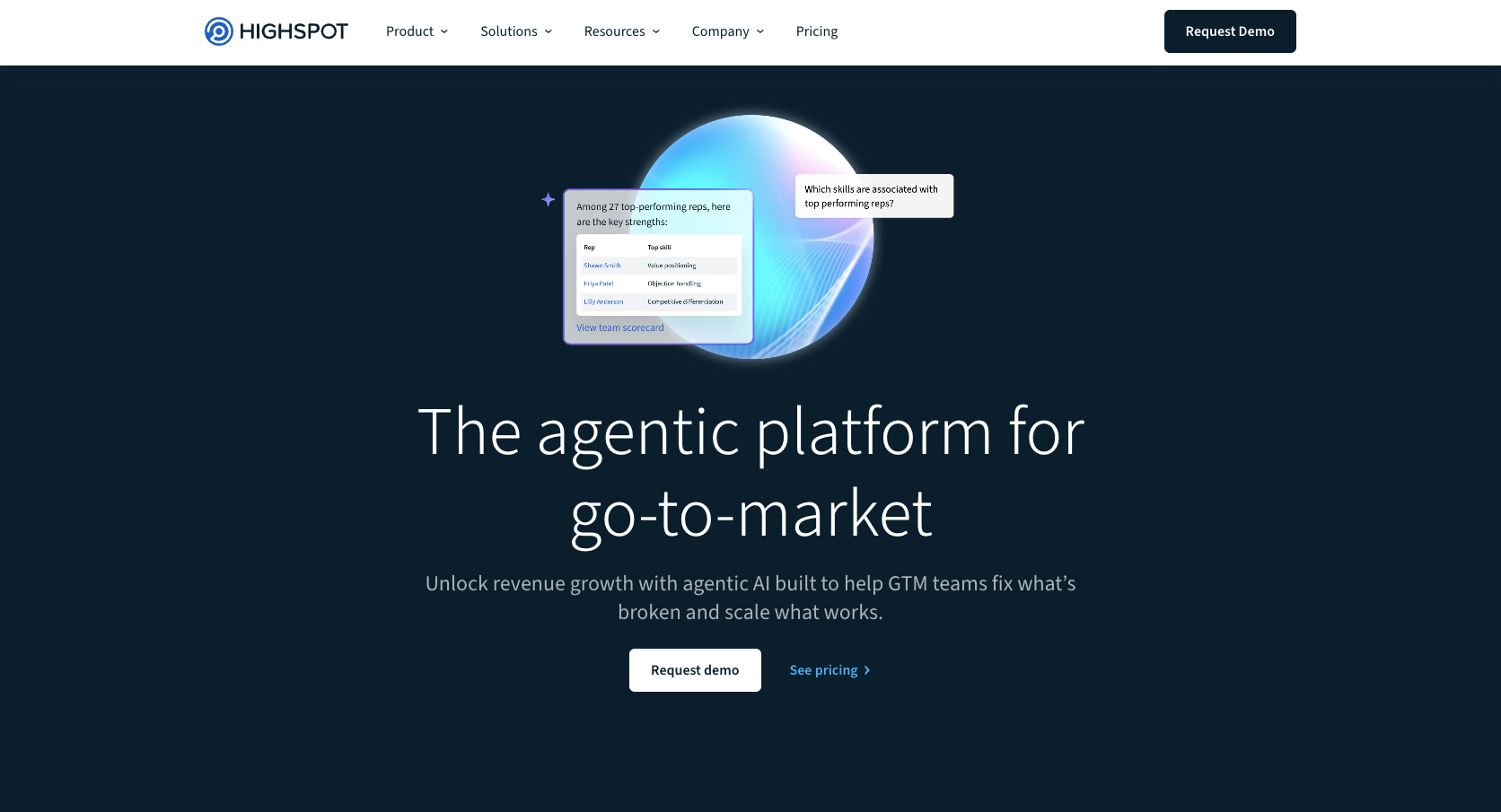
At the same time, its deep CRM integration means everything — content use, training modules, and buyer engagement — is tied back to your sales workflows. The built-in analytics give you a bird’s-eye view of what content is working, which reps are using it, and how that correlates with deals closing.
Key features:
- Content management and repository: Centralize storage and get version control, role-based views, and personalized access.
- CRM integration across major systems: Plug into tools like Salesforce and Microsoft Dynamics so your sales reps don’t leave their workflow.
- Sales content analytics: Track which assets are used, how buyers engage, and tie that back to outcomes.
| Pros | Cons |
|---|---|
| – Makes content accessible and searchable for reps – Strong integration into sales workflows – Helps tie training, content, and deals together | – Reporting and analytics sometimes feel less flexible – Can be costly and complex for smaller teams – Some customers find that module-based pricing adds confusion |
Plans and pricing: Highspot uses custom pricing — no public flat-rate tiers are displayed.
5. Drift
Best for: Automating real-time lead qualification and meeting booking via conversational AI
Drift uses AI chatbots that engage website visitors, ask qualifying questions, and book meetings straight into your sales rep’s calendar.
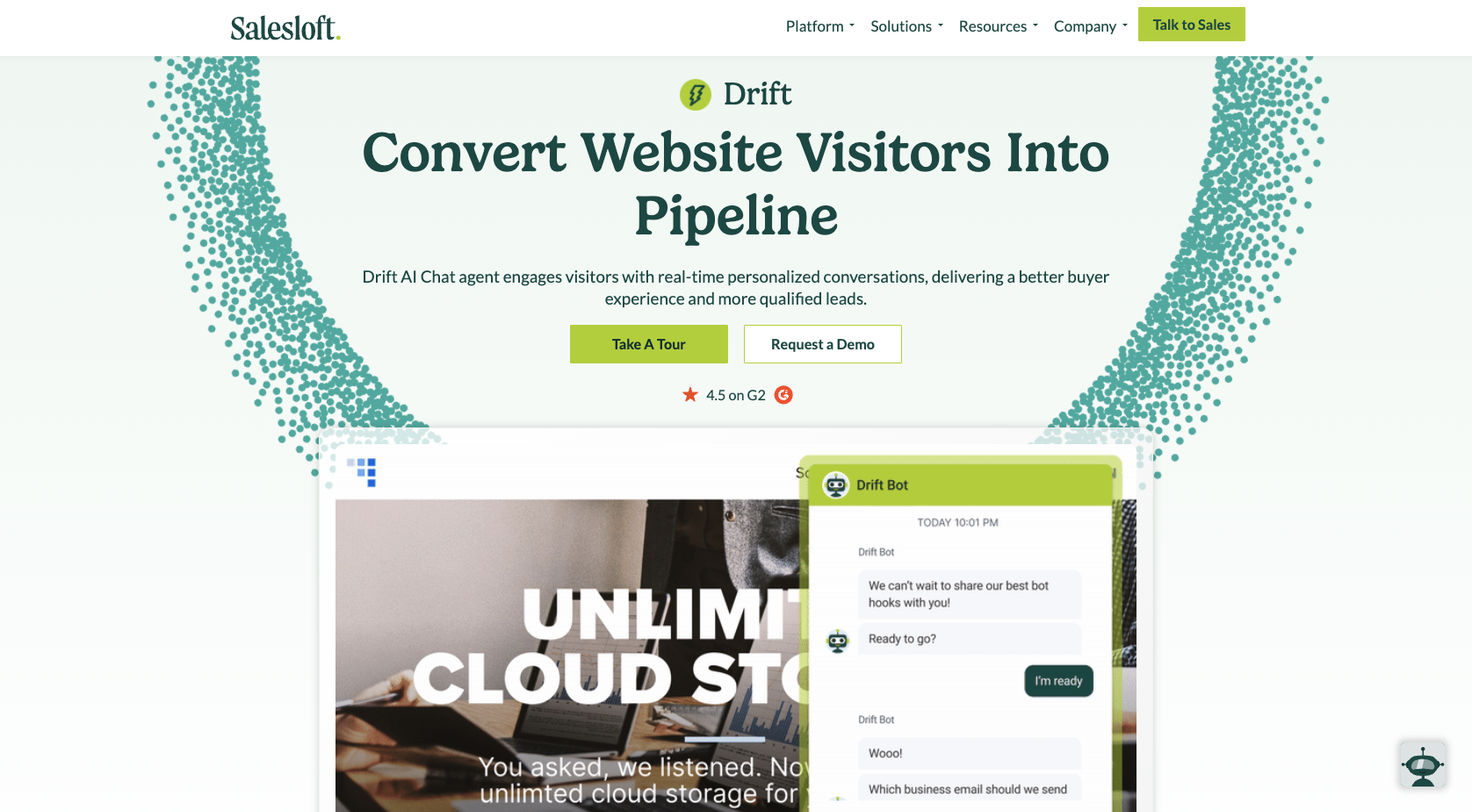
Its use of the BANT framework (Budget, Authority, Need, Timeline) means leads are pre-screened before a rep ever picks up the phone. And it blends in scheduling logic to book meetings for sales reps, turning curious visitors into booked demos.
Salesloft acquired Drift in 2024, so you can integrate the two platforms to create a more complete sales cycle: Use Drift to handle initial engagement and qualification, and Salesloft to manage the follow-up sequences and deal progression.
Key features:
- AI chatbots: Immediately engage site visitors, qualify or disqualify them, and route in real time.
- BANT lead qualification: Built-in logic assesses budget, authority, need, and timeline inside conversational flows.
- Meeting scheduling and routing: Automatically book reps’ calendars once a lead passes the bot’s filters.
- CRM integration: It syncs with major CRMs so chat-qualified leads populate your pipeline, avoiding manual transfer.
| Pros | Cons |
|---|---|
| – Strong lead qualification automation – Fast meeting booking leads to quicker pipelines – Good integrations and conversational focus | – Expensive for smaller teams – Setup and playbook design can be complex – Lead quality may vary greatly, according to user reviews |
Plans and pricing: Drift uses custom pricing — there’s no fixed public rate for all features.
6. ZoomInfo
Best for: Accessing a rich B2B contact database combined with intent signals and job change alerts to fuel high-velocity sales pipelines
ZoomInfo offers a robust contact and account database to support AI and sales enablement. You get access to detailed business profiles, accurate data enrichment, and alerts when key personnel change roles.
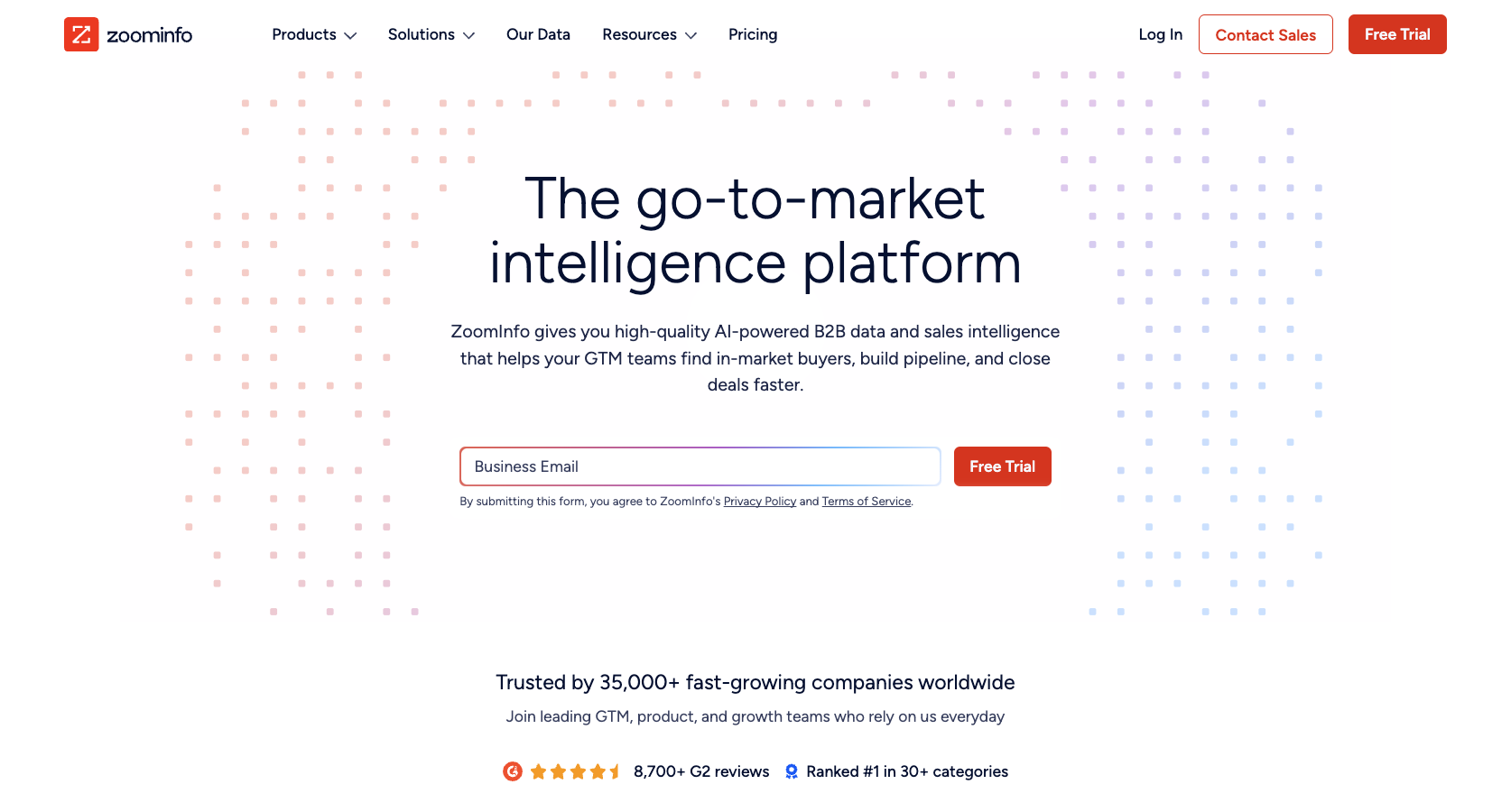
On top of that, its AI-powered intent signals help you spot companies actively researching solutions like yours, and job change alerts ensure you’re engaging the right stakeholders at the right time.
Key features:
- Comprehensive contact and company database: Get deep firmographic, technographic, and personnel data to power outreach.
- Job change alerts: Receive notifications when key decision-makers move roles so you can act on fresh opportunities.
- Enrichment and data cleansing: Keep your CRM records up-to-date by filling missing fields and updating outdated info.
- Search and segmentation tools: Use advanced filters to build lists of prospects matching your ideal customer profile or buyer persona.
| Pros | Cons |
|---|---|
| – One of the largest B2B databases – Intent and job change alerts bring timely, actionable data – Strong enrichment keeps CRM data more reliable | – High pricing and cost per user can be prohibitive – Data accuracy issues reported – Users note long contracts and complex terms |
Plans and pricing: ZoomInfo uses custom pricing based on the modules you select, the number of users, and contract length.
7. HubSpot Sales Hub
Best for: A unified sales platform combining CRM, lead scoring, and forecasting under one roof
HubSpot Sales Hub delivers on the promise of artificial intelligence sales enablement by embedding AI-driven lead scoring and smart dashboards directly into its core.
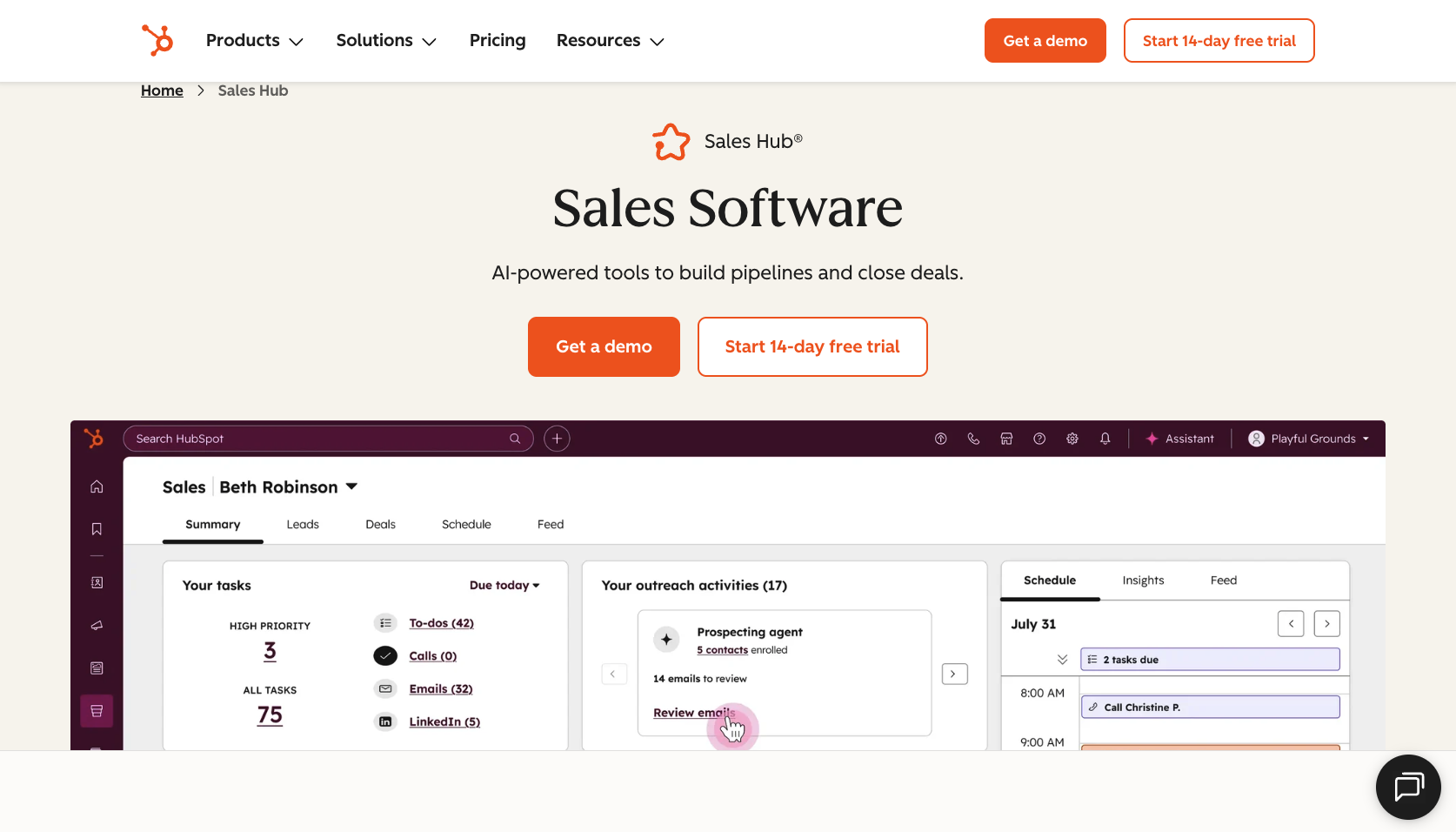
With its built-in CRM, your team can keep every contact, deal, and meeting in one place — and the system uses those data points to highlight the leads most likely to convert. For example, the platform offers AI-powered predictive lead scoring that draws on behavior and firmographic data to calculate a likelihood to close score.
Key features:
- Reporting dashboards and forecasting: Visualize pipeline stages and revenue forecasts to support data-driven decisions.
- Workflow automation: Automate follow-ups, task assignments, and deal stage transitions.
- Conversation intelligence: Capture call and meeting data, links to deals, and surfaces insights.
- Custom object support and advanced segmentation: Model business-specific data and segment accordingly.
| Pros | Cons |
|---|---|
| – Strong unified platform for sales – Advanced AI lead scoring – Excellent ecosystem and ease of use | – Costs escalate quickly as your contact base grows – Some key features need expensive tiers – Support and onboarding may be lacking, according to reviews |
Plans and pricing: HubSpot Sales Hub has a free plan and three paid plans:
- Starter: $15/month/seat
- Professional: $100/month/seat
- Enterprise: $150/month/seat
8. Outreach
Best for: Scaling multichannel outreach with smart automation and custom sequencing
Outreach is packed with features that transform how sales teams engage. It offers AI email sequencing, allowing you to automate a series of emails and responses based on engagement behavior.
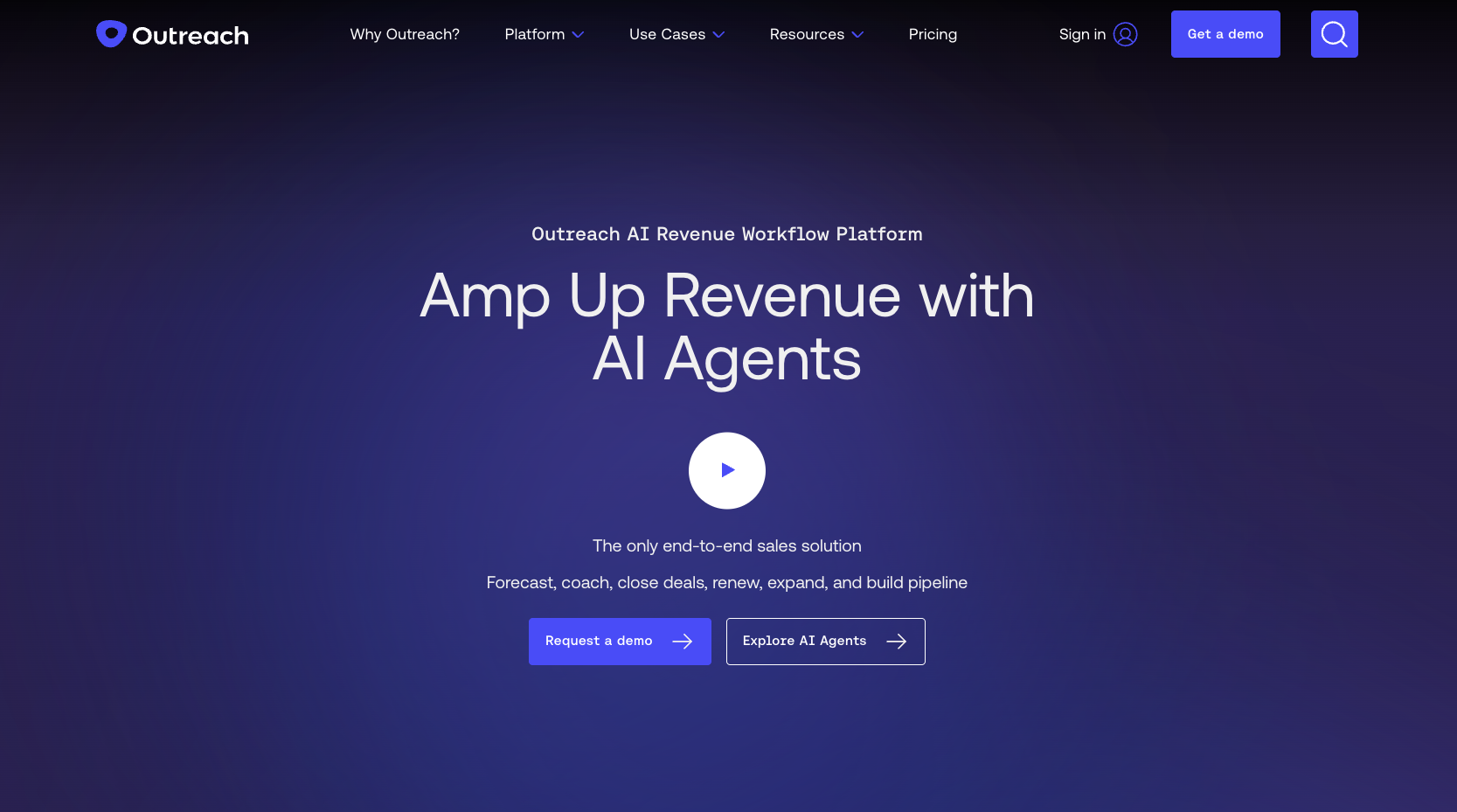
The tool supports multichannel outreach, meaning you can do email, calls, social touches, and SMS all from one platform. It also includes A/B testing for messages so you can test what works — subject lines, body copy, timing, and more — and optimize your outreach over time.
Key features:
- AI-powered email sequencing: Automate tailored email flows based on prospect behavior.
- Multichannel support: Manage outreach via email, calls, social, and SMS from one platform.
- Engagement tracking and analytics: Monitor opens, clicks, replies, and sequence performance.
- CRM integration: Sync with major CRMs to keep outreach aligned with deal data.
| Pros | Cons |
|---|---|
| – Excellent for automated, large-scale outreach – Allows multichannel sales touch coordination – Strong analytics on message performance | – Steeper learning curve and setup complexity – Pricing is custom and may be high for smaller teams – Customer support and billing issues flagged by multiple users |
Plans and pricing: Pricing for Outreach is custom and not publicly listed.
9. Mindtickle
Best for: Sales teams aiming to improve rep performance via immersive learning, AI role-plays, and measurable impact on revenue
Mindtickle stands out as an enablement platform built for action. It delivers structured learning paths that target specific rep roles, scenarios, and skill gaps. This ensures your teams aren’t just consuming modules; they’re improving.
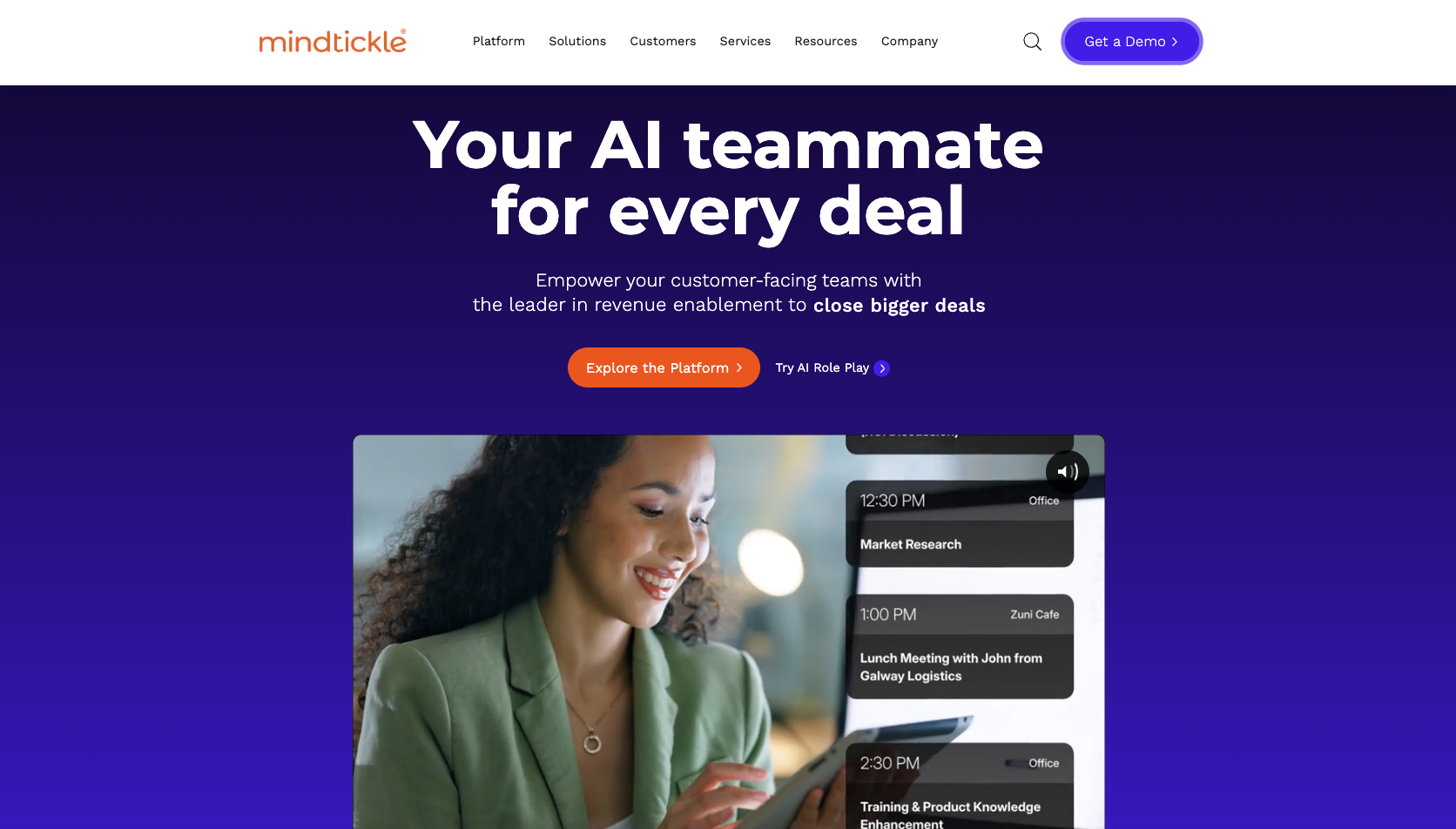
Equally important, it offers AI role-play situations that let reps practice real-world conversations, such as cold calls, objections, and discovery, with an AI buyer. These simulations use natural language and behavioral feedback to build confidence and competence.
Key features:
- Analytics and training impact measurement: Track how training and enablement efforts translate into behavior change and revenue outcomes.
- Sales content management and readiness index: Store and distribute sales content, deliver just-in-time learning, and measure readiness against ideal rep profiles.
- Conversation intelligence and coaching: Analyze calls, surface insights, and coach reps based on real data rather than guesswork.
- Integrations and scalability: Use it with larger tech stacks and connect with CRMs.
| Pros | Cons |
|---|---|
| – Comprehensive platform training – Strong for sales readiness and role-specialized programs – Clear linkage of enablement to revenue | – Can be complex; lots of features means a steeper learning curve – Might be overkill if your team is small or your needs are simple |
Plans and pricings: Custom pricing — Mindtickle does not publish straightforward flat-rate plans.
10. Saleshandy
Best for: Small to mid-sized teams looking to embed sales enablement and AI into their cold email outreach
Saleshandy offers a robust platform where you can combine AI lead search, AI-driven email personalization, and strong analytics and reporting to optimize your outreach.
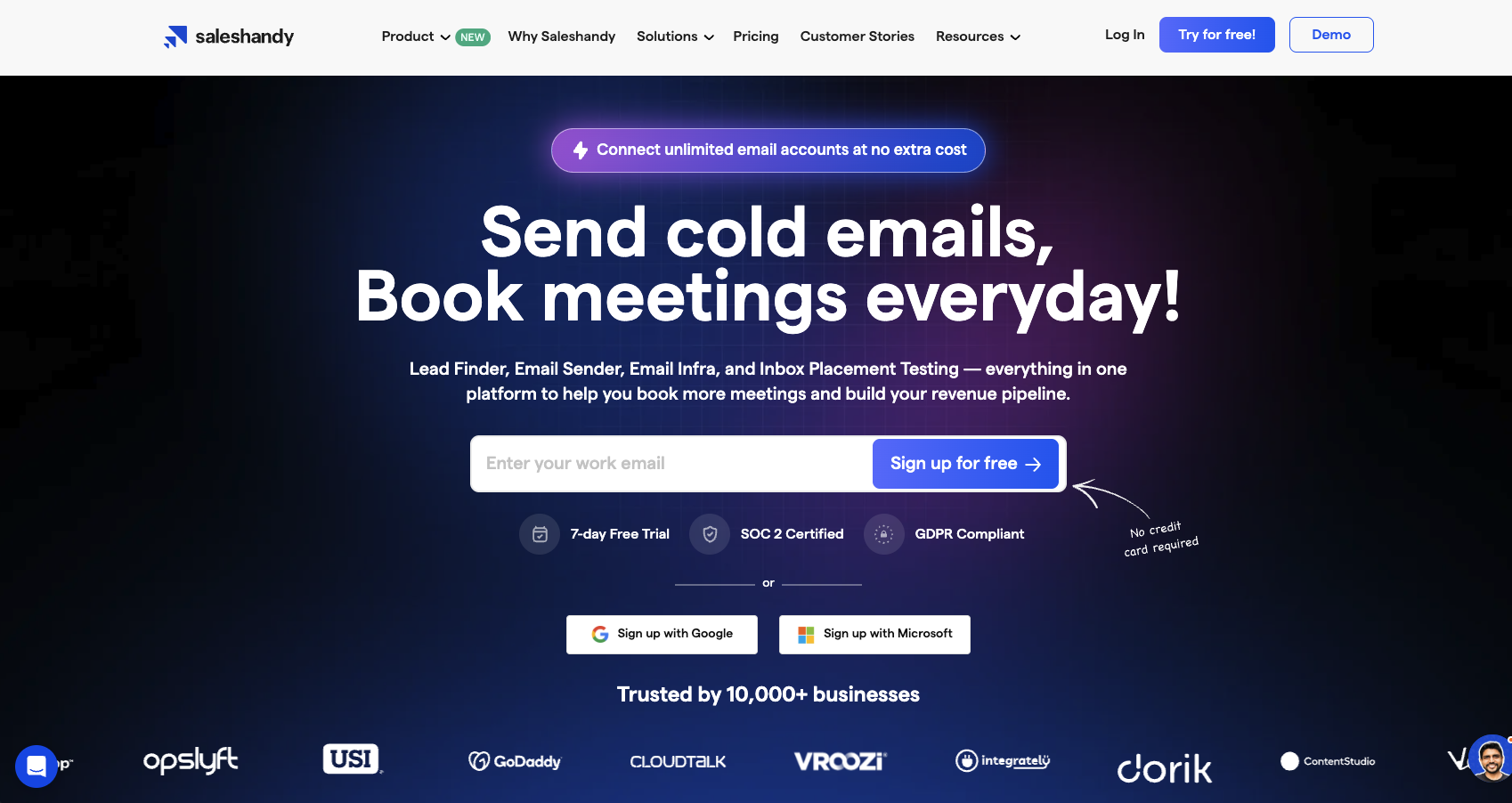
Its lead-finding features help you build prospect lists faster, AI personalization tools make each email feel human, and the analytics dashboard shows you what’s working and what isn’t. For example, it uses AI to generate multiple email variants and evaluate deliverability to keep you out of the spam folder.
Key features:
- AI lead search: Build prospect lists via smart filters and large databases of B2B contacts.
- AI email personalization: Use merge tags, spintax, and AI-generated variants to make each message feel bespoke.
- Analytics and reporting: Get real-time tracking of opens, replies, click-throughs, sequence performance, and deliverability.
- Email automation/sequences: Set multistep cold email campaigns with automatic follow-ups based on prospect behavior.
| Pros | Cons |
|---|---|
| – Easy to use with intuitive UI and quick setup – Strong personalization and lead search capabilities – Real-time analytics provide actionable insights | – Some users report deliverability issues at scale – Limited multichannel support compared to larger platforms – Advanced features require a higher tier or more spending |
Plans and pricing: Here’s what Saleshandy plans cost (billed annually):
- Outreach Starter: $25/month
- Outreach Pro: $69/month
- Outreach Scale: $139/month
- Outreach Scale Plus 100k: $209/month
Improve your ROI with AI
Building a successful sales team doesn’t always mean hiring more people. You can hit the same targets with a leaner team when you automate routine tasks, get clearer visibility into your pipeline, and spend more time talking to qualified buyers instead of chasing dead ends.
With AI in the sales process, you can automate repetitive tasks, score leads with precision, and craft personalized proposals at scale using sales proposal software.
AI tools like Jotform AI Agents make this smarter, leaner approach easy to achieve. Our agents can engage leads, qualify them, and even book meetings — and sync all that data seamlessly with your CRM. By weaving AI sales enablement into your workflow, these agents help cut hiring costs while boosting productivity and closing deals faster.
Explore Jotform AI Agents to see how automation can transform your sales strategy!
This article is for B2B sales leaders, revenue operations professionals, and anyone who wants to streamline sales workflows, boost team productivity, and close more deals by leveraging AI-powered sales enablement tools.



































































































Send Comment: