

Best practices for building an outstanding chatbot
- Understand the objectives of your chatbot
- Design an effective chatbot
- Ensure transparency and build trust
- Integrate human support seamlessly
- Personalize user interactions
- Regularly maintain and update your chatbot
- Measure chatbot performance
- Define a consistent chatbot personality and tone
- Optimize chatbot onboarding and first messages
- Design for mobile-first interactions
- Use buttons and quick replies to guide users
- Handle errors and unknown inputs gracefully
- Ensure accessibility and inclusivity
- Protect user data and comply with privacy regulations
- Continuously test and improve chatbot conversations
Chatbots have become the cornerstone of modern customer service. They can respond instantly, offer round-the-clock support, and reduce operational costs.
Beyond these advantages, well-planned chatbots help humanize digital interactions, leading to a better user experience.
In this post, we’ll explore essential chatbot best practices, ensuring your virtual assistant meets customer expectations and improves your business’s efficiency. Understanding goals, innovative design, and ongoing chatbot maintenance can make or break a chatbot’s success. Let’s dive in!
1. Understand the objectives of your chatbot
Before building your chatbot, decide what you want it to accomplish. Common goals include answering FAQs, reducing support response times, generating leads, or guiding users through sign-ups and purchases. Clear objectives help you create focused conversations and avoid unnecessary features.
Every chatbot feature should support that main goal. A support-focused chatbot should prioritize quick answers and self-service options, while a conversion-focused chatbot should guide users to products, forms, or booking actions. Clear goals also make it easier to measure success after launch.
It’s equally important to set clear expectations for users. Be upfront about what your chatbot can and can’t do to avoid frustration. A short introduction explaining its capabilities helps users understand how to interact with the chatbot and builds trust from the start. These principles become clearer when you see how different businesses apply them in practice.
Real-world example
An online retail store uses a chatbot to answer shipping questions, track orders, and recommend products based on customer input. Meanwhile, a B2B SaaS company deploys a chatbot to qualify leads, book demo calls, and guide users to relevant documentation. In both cases, the chatbot’s design reflects a clearly defined business goal, making it easier to evaluate performance and improve results over time.
Pro Tip
Launch Jotform AI Chatbot for WordPress, an AI chatbot plugin embedded directly in your site, with branded tone, clear prompts, and smart form routing so visitors get instant help and reach the right action faster.
2. Design an effective chatbot
An effective chatbot is easy to understand and simple to interact with. Conversations should feel natural and guide users step by step toward a clear outcome. Clear language, logical flow, and consistent responses help users complete tasks without confusion or extra effort.
Good chatbot design also means preparing for different ways users might phrase the same request. A well-designed chatbot can recognize intent, ask follow-up questions when needed, and adapt its responses based on user input.
To achieve this, chatbot builders often rely on natural language processing (NLP) and structured conversation paths. These tools help the chatbot interpret user messages, respond accurately, and keep conversations on track instead of leading to dead ends. The goal is to make every interaction feel helpful and effortless, regardless of how a user starts the conversation.
These design principles are easier to understand when applied to real-world chatbot interactions.
Real-world example
A customer types, “I need to change my shipping address.” An effective chatbot responds by asking for the order number, then adapts if the customer doesn’t have it by offering an alternative, such as searching by email. This flexible flow allows users to complete their task without restarting the conversation or contacting support, creating a smoother and more satisfying experience.
Leverage Jotform Chatbots for code-free innovation
Jotform’s AI Chatbot Builder easily transforms your website into a dynamic, interactive platform. Featuring advanced customization, instant responses, seamless form assistance, and customizable branding, it’s designed to meet your unique business needs. Whether you’re optimizing e-commerce support or driving real estate leads, the chatbot enhances user experience and streamlines operations.
 Jotform AI Agents
Build Your Custom AI Agent in Minutes
Jotform’s AI Chatbot allows businesses to deliver personalized, real-time assistance by leveraging its advanced customization and training features. With the Agent Builder, users can customize the chatbot’s tone, responses, and branding to align with their business goals. Training the chatbot using FAQs and specific business insights ensures it provides relevant, accurate information every time.
Discover how Jotform’s AI Chatbot can simplify workflows, boost engagement, and align with your brand — get started for free today, no coding required!
3. Ensure transparency and build trust
Transparency is essential for building trust with users. Always let people know when they’re interacting with a chatbot instead of a human. A short message like, “I’m an AI chatbot here to help,” sets clear expectations and prevents users from feeling misled later in the conversation.
Being transparent also means explaining how user data is handled. If your chatbot collects personal information, clearly state how that data is stored, whether conversations are logged, and how the information is used. When users understand how their data is protected, they’re more likely to engage and share accurate details.
It’s equally important to communicate the chatbot’s limitations. Even advanced chatbots can misunderstand requests or struggle with complex or unusual questions. Letting users know what the chatbot can and can’t handle helps avoid frustration and endless conversation loops. Simple fallback messages that explain the issue and offer next steps can preserve a positive experience and guide users forward.
Clear communication and honesty work best when applied consistently in real interactions.
Real-world example
A customer support chatbot opens with, “I’m an AI assistant that can help with order status, returns, or account questions.” When a user asks a complex billing question the bot can’t resolve, it responds with, “I’m not able to help with this yet, but I can connect you with a support agent.” This transparency reassures users, protects trust, and keeps conversations productive instead of frustrating.
4. Integrate human support seamlessly
Chatbots can handle many routine tasks, but some situations require human expertise. Complex billing issues, urgent requests, or emotionally sensitive feedback are often better handled by a live agent. By defining clear triggers, such as repeated failed responses, specific keywords, or signs of frustration, you can ensure users are escalated to a human at the right moment.
Human intervention should be treated as an extension of your chatbot, not a failure. Providing an easy way to reach a support agent prevents users from feeling stuck in automation and helps maintain trust. When users know they can get human help when needed, they’re more likely to stay engaged with the chatbot instead of abandoning the conversation.
The transition from chatbot to human agent should be smooth and effortless. Users shouldn’t have to repeat themselves or re-enter information. Passing along conversation history, user details, and a summary of the issue allows agents to step in quickly and provide effective support.
These handoffs work best when they feel natural and respectful to the user.
Real-world example
A chatbot helps a customer check an order status but detects repeated frustration when the issue involves a delayed refund. The chatbot responds, “I’m connecting you with a support agent who already has the details of this conversation.” The agent joins with full context, resolves the issue quickly, and delivers a seamless support experience that blends automation with human care.
5. Personalize user interactions
Personalization helps your chatbot feel more natural and engaging. Simple touches, such as greeting users by name or acknowledging that they’ve returned before, can immediately create a more human experience. Even small details can make interactions feel more relevant and less transactional.
Effective personalization often relies on context from past interactions. If your chatbot can recognize previous questions, purchases, or preferences, it can respond more helpfully and reduce repetition. For example, instead of starting from scratch, the chatbot can build on what it already knows to guide users faster toward their goal.
That said, personalization should always be handled carefully. Using too much personal information can feel intrusive and harm trust. The best approach is subtle and respectful, using only what’s necessary to improve the conversation while remaining transparent about data usage.
When personalization is done well, it improves engagement without crossing privacy boundaries.
Real-world example
An online store’s chatbot greets a returning customer with, “Welcome back, Alex,” and suggests products related to a previous purchase. Later, when the same customer asks about pricing, the chatbot references their earlier interest in a premium plan and highlights relevant options. This contextual approach saves time and makes the interaction feel thoughtful rather than generic.
6. Regularly maintain and update your chatbot
A chatbot needs ongoing attention to stay useful and accurate. After launch, regularly review conversation logs to identify unanswered questions, repeated errors, or points where users drop off. User feedback and interaction patterns can reveal where the chatbot needs improvement or additional training.
Maintenance also helps you adapt to changing user needs. If customers frequently ask about a new product, feature, or policy that the chatbot doesn’t recognize, it’s a clear signal that updates are needed. Even small improvements, such as refining unclear responses or adjusting prompts, can noticeably improve the overall experience.
Keeping your chatbot’s knowledge base up to date is just as important. Business information changes over time, and outdated answers can quickly undermine trust. Regular audits help ensure that pricing, policies, and support information remain accurate. Updating your chatbot with new content and recent conversation data keeps responses relevant and aligned with user expectations.
Consistent maintenance ensures your chatbot improves over time instead of becoming outdated.
Real-world example
A company notices that customers are repeatedly asking about a newly launched feature, but the chatbot can’t answer those questions. After reviewing chat transcripts, the team updates the knowledge base and retrains the chatbot to include the new feature details. As a result, customer confusion drops and support tickets decrease, showing how regular updates directly improve performance.
7. Measure chatbot performance
Measuring performance helps you understand how well your chatbot is meeting its goals and where it needs improvement. Key metrics provide insight into user experience, efficiency, and overall effectiveness. One important metric is the resolution rate, which shows how often the chatbot successfully answers questions without human assistance.
Another useful metric is average handling time. Short response times can indicate efficient conversations, but they should be balanced with successful outcomes. If conversations end quickly but users don’t get the help they need, it may signal gaps in content or conversation flow. Customer satisfaction scores, gathered through short post-chat surveys, can also help you understand how users perceive their chatbot experience.
Analytics tools make it easier to track these metrics at scale. Many chatbot platforms include dashboards that show conversation drop-offs, common questions, and user behavior patterns. Additional tools, such as website analytics or sentiment analysis, can reveal how chatbot interactions affect conversions and where users feel frustrated or confused.
Tracking performance data consistently allows you to make informed improvements instead of relying on assumptions.
Real-world example
A company reviews its chatbot dashboard and notices a high drop-off rate during billing-related conversations. By examining resolution rates and user feedback, the team identifies missing answers in the knowledge base. After updating the chatbot and refining the conversation flow, both customer satisfaction scores and successful resolutions increase, showing the value of performance-driven optimization.
8. Define a consistent chatbot personality and tone
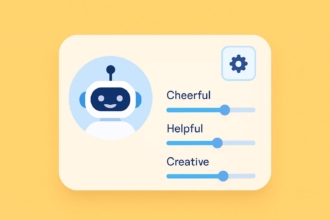
A chatbot should reflect your brand’s voice just as clearly as your website or customer support team. Defining a consistent personality and tone helps users understand what kind of experience to expect and makes interactions feel more cohesive. Whether your brand voice is professional, friendly, or conversational, your chatbot should follow the same guidelines across every response.
Consistency matters because mixed tones can confuse users. A chatbot that switches between casual and formal language or uses inconsistent phrasing can feel unreliable. Establishing tone guidelines, such as preferred wording, sentence length, and level of formality, helps maintain a uniform experience regardless of the conversation topic.
A well-defined personality also improves clarity. For example, deciding whether your chatbot should use emojis, humor, or short confirmations prevents awkward or off-brand responses. This practice isn’t about personalization or adapting to individual users, but about ensuring the chatbot speaks with one recognizable voice that aligns with your brand identity.
When done correctly, a consistent chatbot personality reinforces trust and strengthens brand recognition.
Real-world example
A fintech company designs its chatbot to use a calm, professional tone with clear explanations and no slang. Every response follows the same style, even when the conversation shifts from account questions to payment issues. As a result, users feel confident they’re interacting with a reliable, brand-aligned assistant instead of a disconnected automated tool.
9. Optimize chatbot onboarding and first messages
The first interaction sets the tone for the entire chatbot experience. A strong onboarding message helps users understand what the chatbot is for, how it can help, and what to do next. Without clear guidance, users may hesitate, ask vague questions, or leave the conversation altogether.
Effective onboarding introduces the chatbot’s main capabilities right away. Instead of a generic greeting, the chatbot should offer clear options or example prompts, such as checking order status, booking an appointment, or getting support. This reduces friction and helps users engage with confidence from the start.
First messages should also guide users without overwhelming them. Providing too many options can be just as confusing as providing none. A short introduction followed by a few clear choices gives users direction while keeping the experience simple and approachable.
When onboarding is done well, users are more likely to interact successfully and return for future conversations.
Real-world example
A website chatbot opens with, “Hi! I can help you track orders, return items, or contact support,” followed by three clickable options. New visitors immediately understand how to use the chatbot without typing a full question, resulting in higher engagement and fewer abandoned chats.
10. Design for mobile-first interactions
Most chatbot interactions happen on mobile devices, so designing with a mobile-first mindset is essential. Long messages, complex menus, or dense text blocks can be difficult to read and navigate on smaller screens. Keeping responses short and focused improves usability and reduces friction.
Mobile-first chatbot design also means accounting for touch-based interactions. Buttons, quick replies, and tap-friendly options make it easier for users to respond without typing. This is especially important for users on the go, who may be multitasking or using one hand.
Screen size and attention span should also shape how information is presented. Instead of sending multiple instructions in a single message, break content into smaller steps. This approach helps users stay engaged and prevents them from missing key details.
Designing for mobile first ensures your chatbot feels natural and easy to use, no matter where or how users interact with it.
Real-world example
A delivery service redesigns its chatbot responses to fit mobile screens, using short messages and large buttons for order tracking and delivery updates. Customers can check their order status with a single tap, leading to faster interactions and fewer support requests.
11. Use buttons and quick replies to guide users
Not every user wants to type a full question. Buttons and quick replies help guide conversations by giving users clear, easy options to choose from. This reduces guesswork, speeds up interactions, and lowers the chance of misunderstandings.
Structured reply options are especially useful for common actions, such as selecting an issue type, confirming details, or choosing next steps. Instead of asking open-ended questions, chatbots can present predefined options that keep conversations on track and prevent users from reaching dead ends.
Buttons also improve accuracy. When users select from predefined choices, the chatbot can respond more reliably without needing to interpret vague or incomplete text input. This approach isn’t about personalization or onboarding, it’s about improving control and efficiency throughout the conversation.
When used thoughtfully, buttons and quick replies create smoother interactions while still allowing users to ask custom questions when needed.
Real-world example
A support chatbot asks, “How can I help you today?” and presents buttons for “Track my order,” “Return an item,” and “Billing question.” Users select an option with one tap, and the chatbot immediately routes them to the correct flow, reducing errors and speeding up resolution.
12. Handle errors and unknown inputs gracefully
No chatbot understands everything perfectly. Users may use slang, make typos, or ask questions outside the chatbot’s scope. How your chatbot responds in these moments has a big impact on user satisfaction.
Instead of generic or repetitive error messages, the chatbot should acknowledge confusion politely and guide users toward the next step. Helpful fallback responses reassure users that the interaction hasn’t failed and encourage them to continue rather than abandon the conversation.
Graceful error handling also means offering alternatives. This could include rephrasing suggestions, presenting quick reply options, or offering a handoff to human support. The goal is to keep conversations moving forward, even when the chatbot doesn’t immediately understand the request.
Well-designed error handling turns potential frustration into a manageable, respectful experience.
Real-world example
A user types an unclear question into a chatbot. Instead of responding with “I don’t understand,” the chatbot says, “I’m not sure I got that. Are you looking for help with billing, orders, or account settings?” The user selects an option and continues without needing to restart the conversation.
13. Ensure accessibility and inclusivity
A well-designed chatbot should be usable by as many people as possible, including users with disabilities or different accessibility needs. Accessibility-focused design helps ensure that everyone can interact with your chatbot without barriers.
This includes using clear, simple language, avoiding overly complex sentence structures, and ensuring compatibility with screen readers. Chatbots should also avoid relying solely on color or visual cues to communicate important information, as these may not be accessible to all users.
Inclusivity also means considering different communication styles and abilities. Some users may prefer short, direct responses, while others may need additional guidance. Designing your chatbot with accessibility in mind improves usability for all users, not just those with specific needs.
An accessible chatbot creates a more inclusive experience and helps extend your reach to a broader audience.
Real-world example
A government services chatbot is designed to work smoothly with screen readers and uses plain language to explain complex processes. Users with visual impairments can navigate the conversation easily, while all users benefit from clearer, more straightforward responses.
14. Protect user data and comply with privacy regulations
Chatbots often collect sensitive information, such as contact details, account data, or payment-related questions. Protecting this data is critical to maintaining user trust and meeting legal requirements. Your chatbot should follow applicable privacy regulations and clearly handle user information in a secure way.
Compliance isn’t just a legal requirement, it’s a trust signal. A chatbot that respects privacy and security standards reassures users that their information is handled responsibly, reducing hesitation and increasing engagement.
Strong data protection practices support both compliance and long-term customer confidence.
Real-world example
A healthcare chatbot informs users before collecting personal information and explains how the data will be used and protected. By following strict privacy guidelines and limiting data access, the organization builds trust while safely assisting users with appointment scheduling and general inquiries.
15. Continuously test and improve chatbot conversations
A successful chatbot is never truly finished. User behavior, expectations, and business needs change over time, so chatbot conversations should be tested and refined on an ongoing basis. Regular testing helps identify weak points, confusing flows, or missed opportunities for improvement.
Testing can include reviewing conversation transcripts, running A/B tests on messages, or experimenting with different question phrasing and response structures. Small changes, such as reordering options or simplifying language, can have a measurable impact on engagement and completion rates.
Continuous improvement also allows teams to adapt quickly. If a new product, policy, or user behavior trend emerges, testing helps ensure the chatbot stays relevant and effective. Rather than relying on assumptions, ongoing testing turns real user interactions into actionable insights.
An iterative approach keeps your chatbot aligned with user needs and business goals over time.
Real-world example
A marketing team tests two versions of a chatbot welcome message to see which leads to more completed lead forms. After reviewing the results, they adopt the higher-performing version and continue testing other parts of the conversation, gradually improving engagement and conversion rates.
Future trends in chatbot technology
Advanced language models and natural conversations
Language models evolve at breakneck speed, enabling bots to engage in more humanlike conversations. Future chatbots could handle nuanced discussions, follow intricate storylines, and even detect user emotions through sentiment analysis. These capabilities may soon become standard for businesses wanting to improve customer experience with chatbot technologies.
Also, emotion detection could allow chatbots to adapt their tones dynamically, responding more empathetically to distressed users or celebrating with those who express excitement. While these features could allow for deeper interaction, they also require serious ethical considerations regarding data usage, consent, and emotional manipulation.
Contextual AI and multimodal interfaces
The next wave of chatbots might extend beyond text-based interactions. Multimodal AI merges voice, text, image recognition, and even AR/VR features to deliver a more holistic user experience. Imagine a customer pointing their phone camera at a product label and having the chatbot instantly pull up installation instructions or warranty details. This richer, context-aware environment allows chatbots to serve as digital assistants, not just text-only Q and A tools.
Despite these technological leaps, the foundational chatbot best practices remain the same: transparency, consistent updates, clear objectives, and well-defined escalation paths for human agents. As your organization embraces these future trends, ensuring robust data governance and focusing on genuine user needs will remain the bedrock of a successful chatbot.
The future of chatbots is near
Chatbots have quickly transitioned from novelty to necessity in modern customer service. By following these seven core best practices in chatbot building — from setting clear objectives to regularly maintaining and updating your bot — you set the stage for meaningful, efficient, and trustworthy interactions. Tools like Jotform AI Agents make it possible to build powerful, no-code chatbots that respond to user needs in real time.
Ultimately, your chatbot’s success hinges on thoughtful design, user-centric adjustments, and transparency. In an era where customers need instant and accessible assistance, a well-designed chatbot can greatly improve the customer experience with chatbot technology — while also growing your business. So define your goals, implement these best practices, and watch your chatbot become an essential part of your digital strategy.
This guide is for CX and support leaders, product managers, conversation designers/UX writers, and marketers at startups and mid-market teams who need a chatbot that actually deflects tickets, captures leads, and boosts CSAT—without burning engineering time.
Photo by The Jopwell Collection on Unsplash

























































Send Comment: