
Generative AI has rapidly emerged as one of the most transformative technologies of our era, fundamentally reshaping industries with its extraordinary capacity to create content, automate tasks, and drive innovation. Whether it’s crafting compelling narratives, creating stunning visuals, or streamlining customer interactions, generative AI has become an indispensable tool across multiple sectors.
The technology’s explosive growth is reflected in market projections: The global generative AI market is projected to reach USD 91.57 billion in 2026, with an anticipated compound annual growth rate of 34.30 percent through 2031, resulting in a market volume of USD 400 billion by 2031. However, as with all revolutionary technologies, generative AI presents significant challenges (including ethical dilemmas, concerns over originality, intellectual property debates, and societal implications) that require careful consideration.
In this comprehensive exploration, we look at the exciting opportunities and critical challenges presented by generative AI, providing you with a balanced understanding of this transformative technology.
Build faster with Jotform AIDescribe what you need, and let Jotform AI build it for you instantly.
Get Started Now
The advantages of generative AI
Generative AI offers numerous advantages that significantly affect industries, streamline workflows, and enhance user experiences. Understanding these benefits can help organizations effectively use AI.
1. Unprecedented content-generation capabilities
Generative AI excels in producing vast amounts of diverse content with remarkable speed and efficiency, fundamentally transforming industries such as marketing, journalism, entertainment, and digital design.
Modern tools such as OpenAI’s ChatGPT, Midjourney, DALL·E, and Adobe Firefly enable businesses to generate text, graphics, videos, and even complex multimedia presentations in minutes rather than hours or days. This dramatic decrease in production time has boosted content marketing strategies, allowing companies to maintain consistent branding across multiple channels while drastically reducing campaign time to market.
Professional-quality output for everyone
The democratization of content creation is one of the most significant advantages of generative AI. Before there was wide access to generative AI, creating professional-quality graphics, videos, or written content required specialized skills and expensive software. Now, platforms such as DALL·E can generate compelling visuals with minimal input, empowering individuals without design training to create professional-quality images for presentations, marketing materials, or social media content.
This accessibility has proven particularly valuable for small businesses and startups that may lack the resources to hire specialized creative professionals. A marketing manager can now generate product descriptions, social media posts, and accompanying visuals in a fraction of the time previously required.
2. Enhanced productivity and intelligent automation
Another of generative AI’s greatest strengths lies in its ability to automate routine and repetitive tasks while handling complex cognitive work, thereby freeing human talent for more strategic and creative roles. In 2025, 71 percent of organizations regularly used generative AI in at least one business function, up from 65 percent in early 2024.
Businesses across industries are using generative AI to streamline operations in customer service, content management, data analysis, and administration. The technology’s ability to understand natural language and generate contextually appropriate responses has made it particularly valuable in customer-facing applications.
Real-world applications and impact
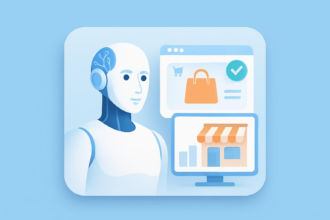
Modern AI systems such as Jotform AI Agents demonstrate the practical applications of generative AI in business environments.
The following table, which shows how generative AI can transform business operations, can help you better understand AI agents and their capabilities.
| Capability | Business impact | Industry applications |
|---|---|---|
| Real-time assistance | Respond immediately to customer inquiries, reducing wait times by up to 80 percent | Customer service, technical support, healthcare |
| Scalable operations | Handle growing demand without proportional staff increases | E-commerce, SaaS platforms, educational institutions |
| Data processing | Automate collection, validation, and structuring of information | Market research, lead generation, compliance |
| Personalized interactions | Deliver tailored experiences based on user behavior and preferences | Retail, entertainment, financial services |
These capabilities have resulted in significant operational improvements, with many businesses experiencing reductions in routine task completion times and substantial improvements in customer satisfaction scores.
3. Revolutionary personalization and user experience
Generative AI has changed personalization by enabling systems to create customized experiences for individual users rather than having to select from preexisting options.
Major platforms such as Netflix, Spotify, and Amazon have used generative AI to enhance their recommendation engines, but the technology’s applications extend much further. Educational platforms now generate personalized learning materials, fitness apps create customized workout plans, and news aggregators produce tailored summaries based on individual reading preferences and comprehension levels.
4. Significant cost savings and operational efficiency
The economic benefits of implementing generative AI extend across multiple cost categories, including direct labor savings, improved resource utilization, and reduced error rates.
Industry-specific benefits
- Healthcare: AI-powered diagnostic assistance and automated documentation have reduced administrative costs by an average of 25 percent.
- Logistics: Embedding AI in operations has led to reductions of 20 to 30 percent in inventory costs and 5 to 20 percent in logistics costs.
- Legal services: Document review and contract analysis automation have reduced billable hours for routine tasks by 35 percent.
5. Enhanced creativity and accelerated innovation
Rather than replacing human creativity, generative AI amplifies it, providing inspiration, generating variations, and enabling rapid experimentation with different concepts and approaches. Professional designers, writers, and content creators increasingly use generative AI as a brainstorming partner, producing initial concepts that can be refined and developed through human insight and expertise.
The integration of generative AI into creative processes has enabled
- Iterative design: Rapid generation of multiple design variations, adding comprehensive exploration
- Cross-domain inspiration: Novel approaches that stem from AI combining elements from different domains
- Accessibility in creative fields: Democratized creative expression for nonprofessionals
- Rapid prototyping: Quick generation of content prototypes for faster testing and refinement
Generative AI concerns and challenges
Generative AI comes with its advantages, but it’s not all smooth sailing. There are plenty of issues to watch out for, from ethical and ownership concerns to real-world limitations on what the tech can actually do. Knowing the risks up front makes it easier to use AI responsibly and get the most out of it without encountering trouble.
1. Ethical concerns and algorithmic bias
One of the most significant challenges facing generative AI is the presence of biases in training datasets, which can result in harmful, discriminatory, or misleading output. Bloomberg research found that generative AI systems often produce images that reinforce stereotypes with systematic patterns of racial and gender bias that stretch stereotypes to extremes worse than those found in the real world.
Research published in academic journals highlights that generative AI models may reproduce and amplify societal stereotypes, creating a “snowball effect of compounding bias” that can have wide-reaching implications for society.
Key bias manifestations
- Representation gaps: Underrepresentation of certain demographic groups in AI-generated content
- Stereotypical portrayals: Reinforcement of harmful stereotypes about certain groups
- Discriminatory outcomes: Biased content that may influence hiring, lending, or other critical decisions
- Cultural insensitivity: Lack of understanding of cultural nuances and contexts
2. Authenticity and loss of the human element
Despite impressive technical capabilities, generative AI often produces content that lacks the emotional depth, cultural understanding, and authentic human perspective that characterizes meaningful creative work. While AI can generate content that is technically proficient and aesthetically pleasing, it struggles to capture the nuanced human experiences, emotions, and insights that give creative work its deeper meaning.
This limitation becomes particularly apparent in fields requiring emotional intelligence, cultural sensitivity, or personal experience. AI-generated content can feel formulaic or impersonal, lacking the authentic voice that comes from lived experience and genuine human emotion.
Impact on creative industries:
- Journalism: AI may lack investigative insight, source verification, and contextual understanding.
- Literature: AI-generated stories may follow predictable patterns and lack a unique voice.
- Art and design: Questions have been raised about the emotional and cultural significance of AI-created works.
- Music: AI-generated music may lack emotional authenticity and cultural context.
3. Intellectual property and copyright complexities
The rapid advancement of generative AI has created a complex legal landscape regarding intellectual property rights and copyright ownership. Current legal frameworks were not designed to address AI-generated content, resulting in uncertainty regarding ownership, attribution, and liability.
Key legal questions
- Ownership rights: Who owns the copyright for AI-generated content? The AI developer, the user, or no one?
- Training data usage: Is it legal to train AI models on copyrighted material without explicit permission?
- Derivative works: When does AI-generated content constitute a work derivative of its training data?
- Commercial use: What are the implications of using AI-generated content for commercial purposes?
In several high-profile legal cases, artists, writers, and content creators have filed lawsuits against AI companies that claim unauthorized use of their copyrighted works in training datasets. These cases are establishing important precedents for the evolution of intellectual property law.
4. Data quality and training dependencies
The quality and effectiveness of generative AI systems depend heavily on the quality, diversity, and volume of their training data. Low-quality, biased, or insufficient training data can significantly affect AI performance, resulting in inaccurate, misleading, or problematic output.
Training data challenges
- Data quality: Inconsistent or inaccurate training data leads to unreliable output.
- Bias in datasets: Historical biases in training data are reflected in AI output.
- Data privacy: Use of personal data in training raises privacy and consent concerns.
- Data security: Large datasets present attractive targets for cyberattacks.
- Representational gaps: Diverse perspectives and experiences aren’t adequately represented.
5. Misinformation and synthetic media risks
Generative AI technology has enabled the creation of increasingly sophisticated synthetic media, including deepfake videos, fake but convincing images, and synthetic audio that can be difficult to distinguish from authentic content. This capability poses significant risks for information authenticity and public trust.
Key risks
- Spread of misinformation: Can be used to create false evidence of events that never occurred
- Manipulation of public opinion: Can generate fake content that influences political or social discourse
- Harassment and defamation: Can be used to create synthetic content that damages individuals’ reputations
- Fraud and scams: Can be used to create synthetic media to impersonate individuals for financial gain
Detection challenges
- Technical sophistication: AI-generated content is becoming increasingly difficult to detect.
- Scalability: Manual verification methods cannot keep pace with the volume of generated content.
- False positives: Detection systems sometimes flag authentic content as AI generated.
- Accessibility: Generative AI tools are becoming more accessible, increasing potential misuse.
6. Economic and social disruption
The widespread adoption of generative AI has caused many to be concerned about job displacement across various industries. While the technology creates new opportunities, it also automates tasks previously performed by humans, potentially leading to significant economic disruption.
Affected industries
- Content creation: Writers, graphic designers, and content creators face increased competition.
- Customer service: AI chatbots and virtual assistants are replacing human representatives.
- Administrative services: Automation of routine office work may reduce demand for administrative professionals.
- Creative industries: Traditional roles in art, music, and design may be transformed or eliminated.
Best practices for responsible AI implementation
Successfully implementing generative AI requires more than understanding its benefits and challenges. It demands a strategic approach that prioritizes the responsible deployment of this technology. Organizations must establish comprehensive frameworks that address ethical concerns, ensure quality control, and protect user privacy while maximizing the benefits of the technology.
1. Ethical guidelines and governance
Organizations implementing generative AI should establish clear ethical guidelines that address
- Bias monitoring: Regular assessment of AI output for discriminatory patterns
- Transparency: Clear disclosure when AI-generated content is used
- Accountability: Defined responsibility for AI-generated content and decisions
- Human oversight: Mandatory human review for critical applications
2. Quality assurance and quality control
Implementing robust quality assurance processes ensures that AI-generated content meets organizational standards:
- Content validation: Review and fact-check AI output regularly.
- Brand consistency: Ensure that AI-generated content aligns with brand voice and values.
- Legal compliance: Verify that content meets legal and regulatory requirements.
- Performance monitoring: Assess AI system performance and accuracy continuously.
3. Privacy and data protection
Protecting user privacy and data rights requires
- Data minimization: Collection of only necessary data for training and operation
- Consent management: Clear consent processes for data use in AI systems
- Security measures: Robust protection of training data and AI systems
- Regulatory compliance: Adherence to relevant privacy laws and regulations
Future outlook
As generative AI matures, several key trends and developments are shaping its trajectory. Understanding these emerging patterns can help organizations prepare and be strategic about AI adoption and investment.
Technology evolution
- Improved accuracy: New training methods are reducing hallucinations and improving factual accuracy.
- Better bias mitigation: Advanced techniques for identifying and reducing bias are being developed.
- Enhanced efficiency: More efficient models require less computational power while maintaining performance.
- Specialized applications: Industry-specific AI models are being developed for unique sector requirements.
Regulatory landscape
- AI safety standards: Establishing requirements for AI system safety and reliability
- Copyright reform: Updating intellectual property laws to address AI-generated content
- Privacy protection: Strengthening data protection requirements for AI systems
- Ethical guidelines: Developing industry-specific ethical standards for AI use
Final thoughts: Navigating the future of generative AI
Generative AI is transforming the way we write, design, build, and interact online. It can boost efficiency, cut costs, personalize experiences, and unlock a range of creative collaborations between humans and machines. Used wisely, it gives businesses a real edge.
But the risks are real, too, including bias, misinformation, copyright questions, and blurred lines between what’s real and what’s not. These aren’t just technical hiccups. They can affect trust, reputations, and long-term success.
Getting AI right means more than just plugging in the latest tool. You need clear guardrails: human oversight, transparent practices, ongoing training, and a solid ethical foundation. Teams must remain flexible and continue learning as technology evolves.
Generative AI isn’t going away. If anything, it’ll keep getting more embedded in our everyday tools and workflows. The challenge now is to use it in ways that are smart, responsible, and built to last. That starts with asking tough questions, staying curious, and remembering that the goal isn’t just innovation. It’s impact. Ready to put AI to work for your business? Explore Jotform AI Agents and start building smarter workflows today.
This article is for anyone evaluating generative AI for creative work, operations, or customer experience, and who needs a practical view of benefits, risks, and responsible implementation, including governance, quality control, privacy, and what to watch as the technology evolves.































































































Send Comment: