


This content is intended for general informational purposes only.
When it comes to legal contracts, the verbiage you use is critical — a few wrong (or missing) words can make enforcing the contract very difficult. But before you dig too deep into the language, you first need to be sure you’re using the most appropriate legal document.
When it comes to protecting confidentiality, two common documents are the nondisclosure agreement (NDA) and the confidentiality agreement. What are the differences between them, and which one should you use? We explore this below.
Send my document for signature
File type is not allowed.
Maximum file size limit exceeded. (5MB)
Something went wrong.
Breakdown: Confidentiality agreement vs NDA
“Both NDAs and confidentiality agreements are meant to keep someone from improperly disclosing confidential information,” says Stephen Kontos, intellectual property attorney and owner of PatentXP, an intellectual property law firm.
An NDA is a contract specifically dealing with how parties will handle the others’ confidential information. A confidentiality clause is a section in a larger agreement essentially covering the same things as an NDA, only usually with less detail than in an NDA. When parties are entering into an agreement such as where one provides goods or services to the other in exchange for payment, it’s common for the parties to include confidentiality language. However, it’s also common before the parties enter into the goods or services agreement to have discussions about whether it makes sense to do business together at all.
In such cases, parties will often be exchanging confidential info as part of those discussions, so they’ll want to make sure they’re both clear on what can and can’t be done with that information. To that end, they may enter into a mutual confidentiality agreement (an NDA). Then, when and if they decide to enter into the agreement for goods or services, they’ll also include a clause in that contract further covering confidentiality obligations.
Of course, if the parties choose not to enter into the goods and services agreement, they’re still protected under the terms of the NDA they signed.
Whether the parties use an NDA or they just rely on a confidentiality clause in another agreement, their obligations of confidentiality usually continue after the underlying contract term has ended. That makes sense, because if that weren’t the case, as soon as the underlying contract term ended, the party could disclose the other party’s confidential information to anyone they wanted.
Kontos says that what you call the document is less important than its terms, especially given the overlap in the content of confidentiality agreements and NDAs. For instance, both documents might include sections requiring that confidential information be marked as such, defining who can receive confidential information, instructing the parties on how to destroy confidential documents and other materials, defining the time frame for keeping information confidential, and so on.
“That being said, there are subtle differences between the two types of documents,” Kontos explains. For example, a confidentiality agreement might define ownership of any intellectual property resulting from the collaboration. “If you’re using an NDA, however, the question of intellectual property ownership has most likely already been settled.”
Pro Tip
Easily create both confidentiality agreements and NDAs with Jotform’s AI Document Generator!
When to use NDAs and confidentiality agreements
As for the name of the confidentiality agreement, Kontos says that NDAs are often used by inventors who are trying to maintain confidentiality before formally protecting their rights with a patent application. A public disclosure of a patentable concept can waive patent rights in the United States and elsewhere.
“An NDA is a common tool used to prevent such an occurrence until the inventor is able to file a patent application,” Kontos explains.
Also, a business might require new employees to sign NDAs as a condition of employment to protect confidential business information and trade secrets. Here are some examples:
- A restaurant may require employees to sign an NDA before it discloses award-winning recipes to cooks.
- A tech startup may require employees to sign an NDA to protect proprietary software code and algorithms.
- A manufacturer may require employees to sign an NDA to safeguard unique fabrication processes that result in industry-leading cost efficiencies.
- A marketing firm may require employees to sign an NDA to prevent their client contact list and service fees from leaking to competitors.
“Confidentiality agreements are common at the start of a joint venture or other business arrangement where both parties are likely to exchange confidential information,” Kontos says.
For example, you typically see confidentiality agreements used between an original equipment manufacturer (OEM) and a supplier. The confidentiality agreement permits the OEM to provide confidential specifications to the supplier and the supplier to disclose details about its proprietary manufacturing process to the OEM. Both parties are disclosing information that, if leaked, could be detrimental to their businesses.
Whether you’re a small business owner or run a department in a larger company, both confidentiality agreements and NDAs are essential to keeping your organization’s sensitive or proprietary information safe.
Want the full rundown on NDAs? Check out this complete guide on the topic.
Sign your NDAs and confidentiality agreements quickly and easily
Whether you’re drafting an NDA, confidentiality agreement, or some other legal document, the signature is a critical element. Even the most carefully crafted verbiage may have limited enforceability if the other party doesn’t sign on the dotted line.
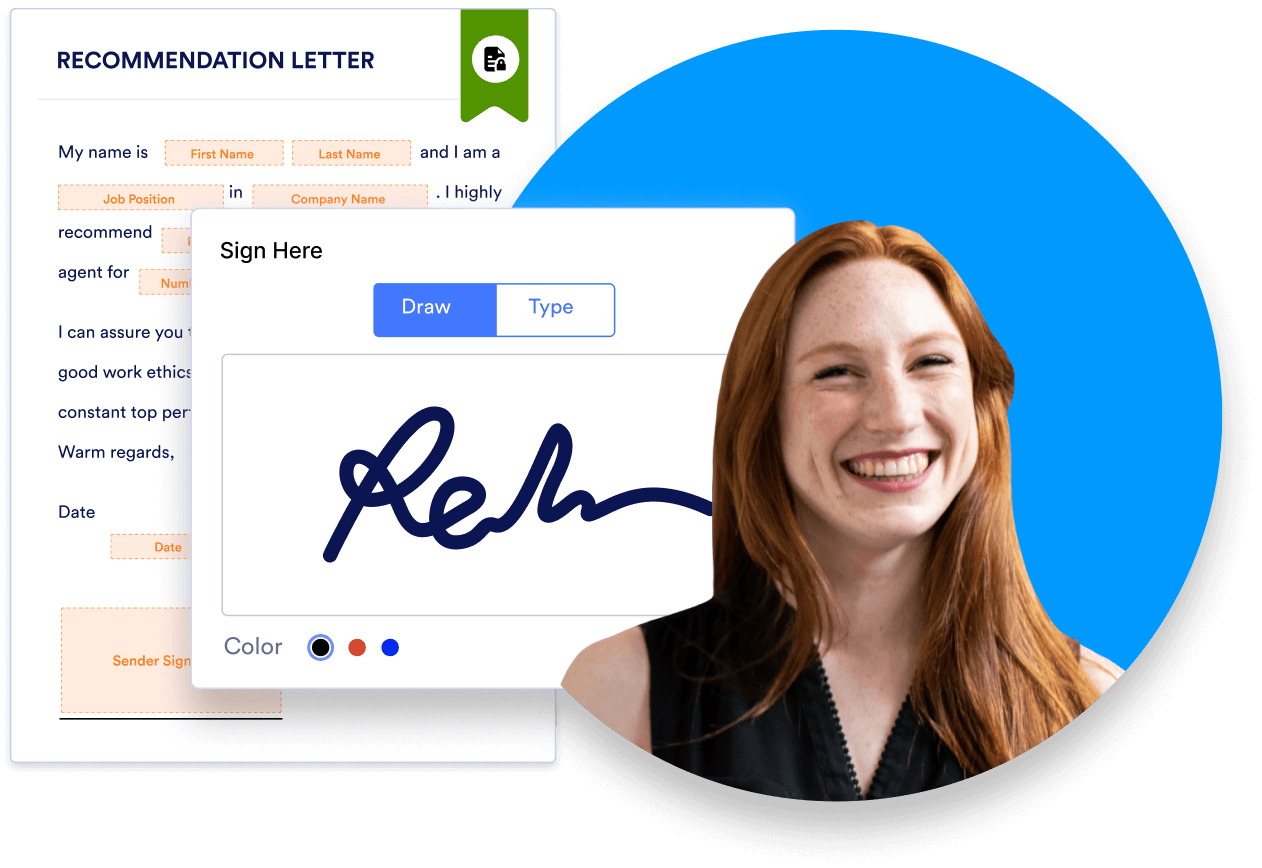
That’s where Jotform Sign comes into play. It’s an easy-to-use e-signature solution made for businesses of all shapes and sizes. It allows you to gather signatures remotely, avoiding the scheduling conflicts or faxes associated with traditional paperwork. Simply send your document to signers via email or share a link, and collect the necessary signatures fast. Get notified about completed signatures automatically.
You can start a new document from scratch or from one of our 600+ templates, or you can upload a PDF you’ve already created and turn it into an e-sign document that you can send to another party.
Try one of these confidentiality agreement templates:
- Confidentiality agreement. This foundational template includes boilerplate language intended to protect and restrict the disclosure of confidential information, along with fields to enter the date, contract name, party names and addresses, and e-signatures.
- Employee confidentiality agreement. Hiring employees helps you boost productivity and grow, but it also may pose risks to your intellectual property. All it takes to leak trade secrets is one disgruntled or naïve employee. But you may be able to mitigate this risk with this template, which is designed as an agreement that stipulates what employees are and are not allowed to do with company information. In addition to name and signature fields, the template includes fields for gender pronouns.
- Personal assistant confidentiality agreement. Similar to the preceding template, this niche template is tailored to hiring a personal assistant — a go-to document for the likes of busy entrepreneurs.
- Client confidentiality agreement. Whether you’re a client of a service business — such as an accounting firm or marketing agency — or the business itself, you may be granted access to the other party’s sensitive information in the course of the working relationship. The confidentiality agreement is designed to protect that information by restricting its disclosure. The agreement can be reciprocal: Both the client and the service provider can protect their respective confidential information and trade secrets by stipulating what may be disclosed to each other, to third parties, and under what circumstances. This template includes not only the standard name and signature fields, but also checkbox lists to indicate specific information both parties are agreeing not to disclose. Its customization capabilities allow you to tailor the language of the agreement in precise accordance with your needs.
You can customize each of these templates with Jotform’s simple, drag-and-drop interface. Add more contract or signature fields, alter or add verbiage, tailor the look with your own branding, and more. Build a document once and send it as many times as needed. Get started with a free confidentiality agreement template today.
This article is for business owners, founders, HR teams, and department leaders who regularly share sensitive information with employees, contractors, vendors, or potential partners and want to use the right agreement from the start.
AS ALWAYS, CONSULT AN ATTORNEY BEFORE RELYING ON ANY INFORMATION ON THIS PAGE. THE CONTENT ABOVE IS FOR INFORMATIONAL PURPOSES ONLY. JOTFORM IS NOT PROVIDING LEGAL, FINANCIAL OR OTHER ADVICE.








Send Comment: