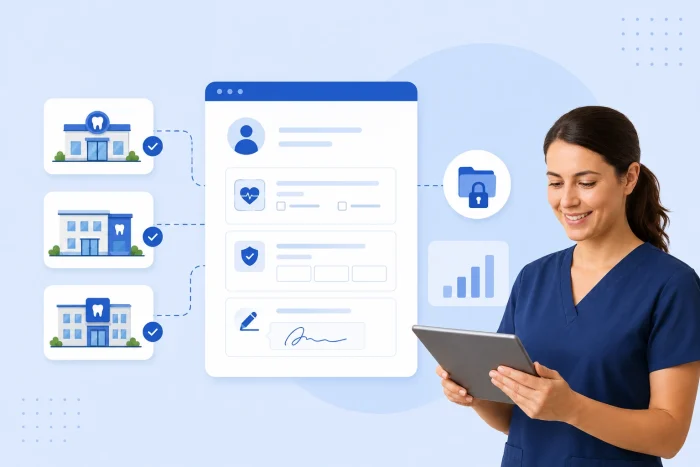
When a dental service organization (DSO) acquires a new practice, it rarely inherits a clean slate. Often, it inherits a stack of clipboards, a legacy PDF workflow, a front desk that’s been doing things the same way for 15 years, and patient data scattered across forms, emails, and filing cabinets. Multiply that by every location in your network and you have one of the most persistent operational headaches in group dentistry: no two practices collecting patient information the same way.
Inconsistent intake isn’t just a nuisance. It’s a structural liability. When patient data is captured differently at each location, reporting becomes a manual exercise, staff training never fully sticks, and the risk exposure that comes with HIPAA-governed information grows with every new acquisition. The bigger the network, the more expensive the problem.
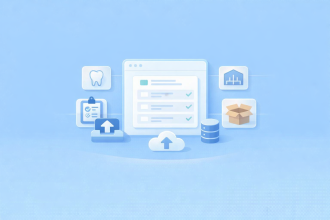
The solution isn’t replacing every practice management system in your portfolio. It’s creating consistent data collection processes — one set of forms, deployed everywhere, with submissions routed and stored centrally.
Why intake is where inconsistency starts
Patient intake is the first operational touchpoint in every practice. It’s also the most variable. Some locations use paper. Some use PDFs emailed to patients. Some have a front desk team that manually enters information into the patient management system after the appointment. Each method produces different data quality, different administrative burden, and a different patient experience.
For a DSO trying to run a network like a business, that variation is costly. You can’t pull clean reports across locations. You can’t audit compliance confidently. You can’t onboard new staff with a standard training process, because there is no standard process.
Fixing intake doesn’t require a massive IT project. It requires a form platform that gives your operations team the ability to build a master workflow once and roll it out across every location — without depending on IT resources at each office.
What standardized intake actually looks like
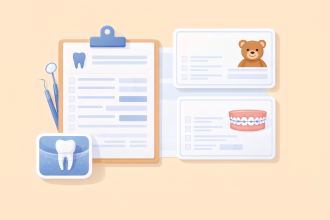
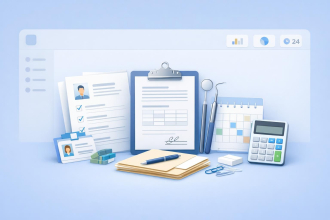
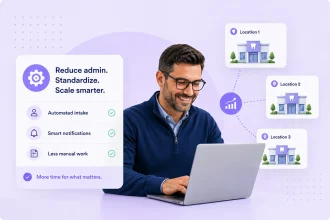
A standardized DSO intake workflow typically covers three areas: patient health history, insurance information, and consent documentation. Built once on a centralized platform, these forms can be shared across your entire network via a single link or embedded on each location’s website. Conditional logic handles location-specific variations — different consent language for different states, for example — without requiring a separate form for every office.
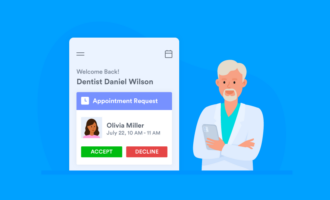
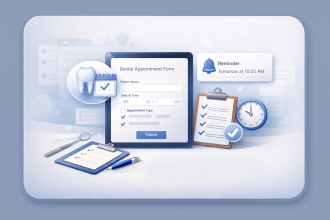
When a patient submits their intake information before arriving, that submission routes automatically to the right location’s inbox. Staff can review it before the appointment, without printing, scanning, or re-entering data. Across a network of 20, 50, or 200 locations, that time savings compounds quickly.

HIPAA compliance is handled at the platform level. Rather than relying on each location to manage data security individually, a centralized form platform provides a signed Business Associate Agreement, encrypted data handling, and a consistent audit trail for every submission in your network.
What this means for your acquisition model
For DSOs growing through acquisition, standardizing intake is the first step to building consistent operations. Every week that a newly acquired practice runs on its old workflow is a week of inconsistent data, inconsistent patient experience, and incremental compliance exposure.
With a centralized form platform, new locations can be onboarded to your standard intake workflow in hours, not weeks. No IT deployment at the office level. No retraining from scratch. Your intake process is live the day the acquisition closes.
Get started
Jotform gives DSO operations teams the tools to build standardized, HIPAA-enabled intake workflows and deploy them across every location from a single account.
If you’re ready to bring consistency to your patient data collection, create a free account and explore Jotform’s dental form templates.













Send Comment: