
Artificial intelligence (AI) has moved from a futuristic concept to a practical necessity in the retail world. According to recent research, the global AI in retail market size reached $11.83 billion in 2024 and is projected to surge to $62.64 billion by 2034.
Today, AI in retail is transforming how brands operate both online and in store, encompassing everything from demand prediction to personalized shopping recommendations. With intelligent systems like machine learning in retail, computer vision, and natural language processing, AI can handle tasks that were once manual, error-prone, and time-consuming.
From managing vast product catalogs to creating seamless store experiences, AI enables retailers of all sizes to meet customer needs, automate tasks, and adapt to changes — ultimately reshaping how we all shop. Let’s take a closer look at how it’s being utilized.
Key applications of AI in retail
Recent AI in retail statistics show that AI adoption in the sector is growing rapidly. According to a report by Stanford University, 78 percent of organizations reported using AI in 2024 — a 23 percent increase compared to the year before.
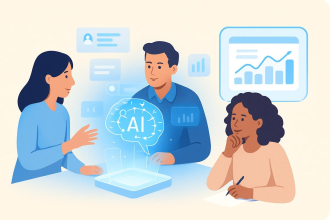
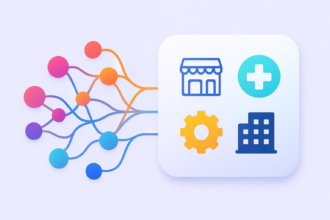
AI is becoming embedded in nearly all aspects of modern retail, working behind the scenes and in customer-facing channels to create value for businesses and consumers alike. Whether through advanced algorithms, innovative customer experiences, or streamlined back-end processes, AI is helping retailers reimagine the future of shopping.
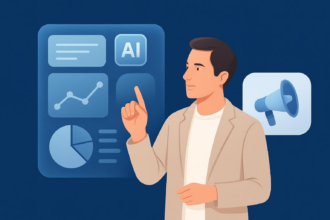
Among the most impactful use cases are AI for retail analytics, which allow businesses to gain insights from vast customer and sales datasets, and retail automation tools, which reduce repetitive workload and allow staff to focus on higher-value tasks.
But AI in retail isn’t limited to e-commerce. Brick-and-mortar retail stores are finding new ways to integrate digital intelligence with traditional shopping experiences.
Here are some of the top applications of AI in retail.
AI-driven customer personalization
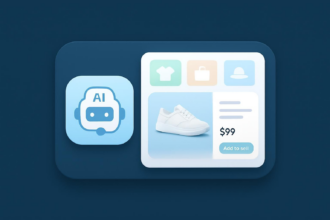
Personalization is at the heart of AI in customer experience. Using data-driven approaches, AI can create individualized shopping journeys and match customers to the products that are most relevant to them. From tailored email marketing to in-app recommendations, shoppers can be guided through the conversion funnel by intelligent suggestions that learn their unique preferences and buying patterns.
These personalized experiences improve conversion rates and increase brand loyalty by making shoppers feel more understood.
Retailers like Amazon, Sephora, and Netflix are behind some well-known examples of AI in retail, but today even mid-sized retailers can access similar recommendation engines through AI-driven e-commerce platforms.
Inventory management and demand forecasting
Shelf shortages and overstocking have been costly — and chronic — challenges in the industry. To solve this, AI leverages machine learning in retail to accurately forecast demand trends and optimize inventory management and planning.
Algorithms can account for sales history, seasonal shifts, promotional events, and even weather patterns to recommend precise stock levels. This reduces losses from unsold goods, prevents stockouts, and allows businesses to operate leaner supply chains.
More accurate demand forecasting is especially critical in an era where consumer behavior is less predictable and external factors like economic changes, tariffs, and pandemics can heavily impact shopping patterns.
Retail automation and chatbots
Customer support has traditionally been one of the most resource-intensive areas of e-commerce, but automation is changing that.
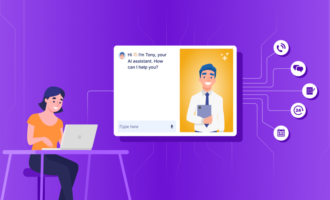
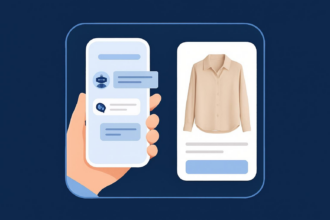
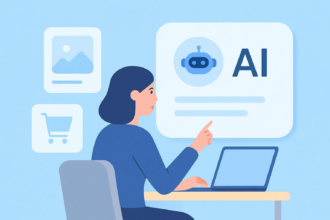
Retailers are deploying AI-powered solutions such as chatbots and virtual assistants to answer real-time customer questions. These innovations are part of broader retail automation efforts, where AI takes on repetitive processes like order tracking, returns, and even payments. Beyond boosting efficiency, this also ensures customers enjoy seamless, 24-7 support without the need for large customer service teams.
AI chatbots and agents are playing an especially important role in the customer experience:
- Adobe reports that e-commerce site traffic from chat interactions spiked a whopping 1,950 percent year-over-year during Cyber Monday 2024.
- According to data from Rep AI, engaging with an AI-powered chatbot increases a shopper’s likelihood to complete a purchase more than fourfold.
AI in visual search and augmented reality (AR)
Combining visual recognition with virtual experiences is quickly becoming one of the most exciting customer-facing applications of AI in retail.
Imagine taking a photo of a handbag and instantly finding retailers who sell similar products. AI in visual search makes that possible, enabling intuitive, image-based browsing that bridges the gap between initial inspiration and final purchase.
Meanwhile, AI-powered augmented reality allows shoppers to virtually “try on” products such as clothing or glasses, or see how furniture would look in their home. These innovations not only make shopping more engaging but also reduce returns.
Consumer behavior: How shoppers are using AI
The way shoppers use AI in retail is evolving fast, and so are their expectations.
- Over half of Gen Z and 39 percent of the general population already use AI for product discovery, price comparisons, and navigating complex purchase journeys.
- Adobe found that traffic from generative AI sources results in 10 percent higher engagement, 32 percent longer site visits, and 27 percent lower bounce rates when compared to non-AI sources like traditional search engine results pages.
- One survey found that nearly three in five consumers have begun replacing traditional search engines with generative AI.
Retailers are responding to this behavioral shift by integrating conversational AI, voice assistants, and smart shopping agents to guide users. These tools also create more transparent, focused buying experiences.
However, consumers are still cautious, placing high priority on privacy and transparency. Companies are increasingly expected to audit algorithms, ensure unbiased recommendations, and educate users so they can preserve that hard-earned trust.
Benefits of using AI in retail
AI is proving to be one of the most transformative investments a company can make.
The benefits are clear: Between 2023 and 2024, retail businesses using machine learning and other AI-powered tools reported a 14.2 percent profit increase. That’s more than double the 6.9 percent growth of businesses using more traditional methods.
Some of the standout benefits of AI in retail include
- Enhanced personalization: AI-driven personalization ensures every customer’s journey feels unique and relevant.
- Cost savings through automation: Process automation reduces labor costs and errors.
- Optimized inventory: Accurate demand forecasting minimizes overstock and stockouts.
- Improved customer experience: Instant support from chatbots, personalized recommendations, visual search, virtual product try-ons, and AR make shopping more interactive and convenient.
- Smarter decision-making: AI for retail analytics delivers actionable insights to drive marketing strategies.
- Higher revenue growth: Personalized experiences and predictive models ultimately increase sales. A recent report from NVIDIA provides proof: Among brands with annual revenues exceeding $500 million, 64 percent are already using AI and 22 percent more are assessing or piloting it.
Challenges in implementing AI in retail
Despite all its advantages, adopting AI in retail is not without challenges. Some of the main barriers of AI adoption in retail include
- Implementation costs: Building AI solutions often requires specialized knowledge and significant upfront costs.
- Trust and transparency: AI-generated product photos or reviews could mislead consumers. There are also data privacy concerns as customers expect transparency when it comes to how companies use their data — mishandling it can erode trust.
- Integration issues: Existing systems may not be compatible with modern AI-powered platforms.
- Adoption resistance: Staff and customers sometimes push back against automation, preferring human involvement.
Overcoming these barriers requires a careful balance of investing in user-friendly AI tools, ensuring clear communication around data usage, and training teams to embrace new technologies.
The future of AI in retail
The future of AI in retail is bright, with 2025 already shaping into a landmark year. Increasingly sophisticated generative AI enables retailers to create tailored content and more dynamic user experiences.
As AI in retail expands, expect to see wider adoption of intelligent store assistants, cashierless stores with computer vision checkout, and deeper integration of digital and physical shopping experiences.
At the heart of these trends are agentic AI assistants. These autonomous shopping agents guide customers across channels, helping them with research, product discovery, and tailored recommendations.
It’s worth keeping tabs on these developments, too. Retailers who strategically adopt AI create more efficient, resilient, and profitable operations that future-proof their businesses. NVIDIA reports that 86 percent of companies are either testing or already using AI for their e-commerce platforms, with 64 percent of those retailers planning to increase their investments in AI over the next 18 months.
Apply artificial intelligence to your retail operations with Jotform AI Agents
The rise in AI-powered retail solutions highlights the pressing need for speed and agility in a fast-moving market. As retailers embrace intelligent tools, Jotform empowers businesses with AI solutions tailored for the new era.
Jotform AI Agents make it easy to transform traditional retail order forms and interactions into dynamic, conversational experiences — all without any coding required. These versatile agents are trained with your business’s unique data, enabling them to handle product recommendations, answer customer queries, and provide order status updates.
Specialized Jotform Retail AI Agents are designed specifically for modern retail needs. They don’t just collect customer data; they actively engage shoppers in conversation to provide smoother, smarter, and faster shopping journeys.
Get started by simply uploading your product catalogs, FAQs, or service documentation. Within a few minutes, you’ll have an intelligent assistant that immediately enhances customer engagement and data collection efficiency across all your customer touchpoints.
Some examples you can use right away include
- Sales Associate AI Agent: Acts as a digital sales assistant, helping customers browse products and answer questions
- Product Purchase Order AI Agent: Handles and automates purchase requests with ease
- Custom Simple Order AI Agent: Creates straightforward order forms tailored to your product catalog.
Whether you’re looking to streamline order intake, strengthen customer engagement, or collect insightful data, Jotform’s AI-powered assistants help make retail smarter and more human-centered.
Plus, with the Jotform AI Store Builder, you can quickly create mobile storefronts that integrate AI-driven features for improved order management and customer engagement. By adopting these tools, you can confidently step into the future of AI in retail — give them a try for free today.
AI in retail FAQs
Thanks to affordable platforms and cloud-based solutions, AI technologies are increasingly accessible to small and mid-sized retailers. From Shopify’s AI-driven inventory management to low-code conversational agents like Jotform AI Agents, businesses of all sizes can benefit.
Smaller retailers often leverage AI for inventory tracking and tailored marketing.
To gauge the impact of AI initiatives, retailers should monitor a mix of quantitative and qualitative metrics. Some key metrics to consider include
- Customer retention: Analyze repeat purchase rates and other loyalty trends.
- Customer satisfaction: Track shopper feedback, Net Promoter Scores, and reviews.
- Revenue growth: Compare average order value and total sales before and after implementing AI solutions.
- Conversion rate: Measure how AI-powered features influence the percentage of visits that result in purchases or other desirable actions.
- Operational efficiency: Look for reductions in time spent on manual tasks, improved inventory turnover, or fewer errors in order processing.
Regularly tracking these metrics prepares your teams to refine their AI in retail strategies, justify their investments, and deliver more value.
Yes — privacy concerns exist regarding how customer data is collected, stored, and used for AI applications. To maintain customer trust during this transitory period, retailers must be transparent about their data practices, comply with regulations, and prioritize the secure handling of sensitive information.
When it comes to the future of AI in retail, artificial intelligence is transforming roles by automating repetitive tasks and augmenting staff, but it’s unlikely to fully replace the human workforce. Instead, AI is expected to empower retail employees by freeing up more time for customer engagement and creative problem-solving.
This guide is for retail and e-commerce leaders—VPs of Digital/CX, merchandising and marketing teams, store operations and omnichannel managers, data/IT leads, and founders of growing DTC or SMB brands—who want practical ways to apply AI now.





















































































Send Comment: