
Affiliate marketing remains one of the most effective ways to grow e-commerce revenue without increasing upfront costs. In fact, brands using affiliate marketing report an average ROI of $15 for every $1 spent — equivalent to a 1,400 percent return. That makes it one of the highest-performing marketing channels available today.
For Shopify store owners, the opportunity is also accessible. Instead of building complex systems from scratch, you can rely on Shopify affiliate apps to handle everything, from onboarding partners through to referral tracking and payouts. As Shopify itself highlights, affiliates promote your products while you track results and manage commissions in one place.
In practical terms, this means you can turn creators, influencers, bloggers, and even your own customers into a distributed sales team. Rather than relying solely on paid ads or organic traffic, affiliate marketing allows you to scale through trusted recommendations, which often convert at a higher rate.
However, choosing the best Shopify affiliate program is critical. The right tool can turn your store into a scalable revenue engine, while the wrong one can limit growth, create friction for affiliates, and add unnecessary operational complexity.
In this guide, we’ll break down the best Shopify affiliate programs in 2026, compare their features, and explore a powerful alternative that goes beyond simple tracking.
5 best Shopify affiliate programs in 2026
Choosing the perfect Shopify affiliate app depends on your goals. Some tools focus on simplicity, while others offer advanced automation, influencer management, or referral tracking.
Here’s a quick comparison to get you started:
| Program | Commission | User experience | Pricing (monthly) |
|---|---|---|---|
 Jotform Affiliate Partner Program |
30 percent recurring |
Flexible, conversion-focused |
Free to join |
 UpPromote |
Flexible percentage or fixed |
Intuitive, beginner-friendly |
Starts at $29.99 plus 2% of successful referral sales |
 EmbedUp |
Customizable rates |
Simple, lightweight |
Starts at $14.99 |
 BixGrow |
Tiered commissions |
Clean, scalable |
Starts at $14.99 |
 Refersion |
Custom commission rules |
Professional, advanced |
Starts at $39 |
 GoAffPro |
Flexible commission setup |
Easy, startup-friendly |
Starts at $49 |
Let’s take a closer look at each option.
1. UpPromote
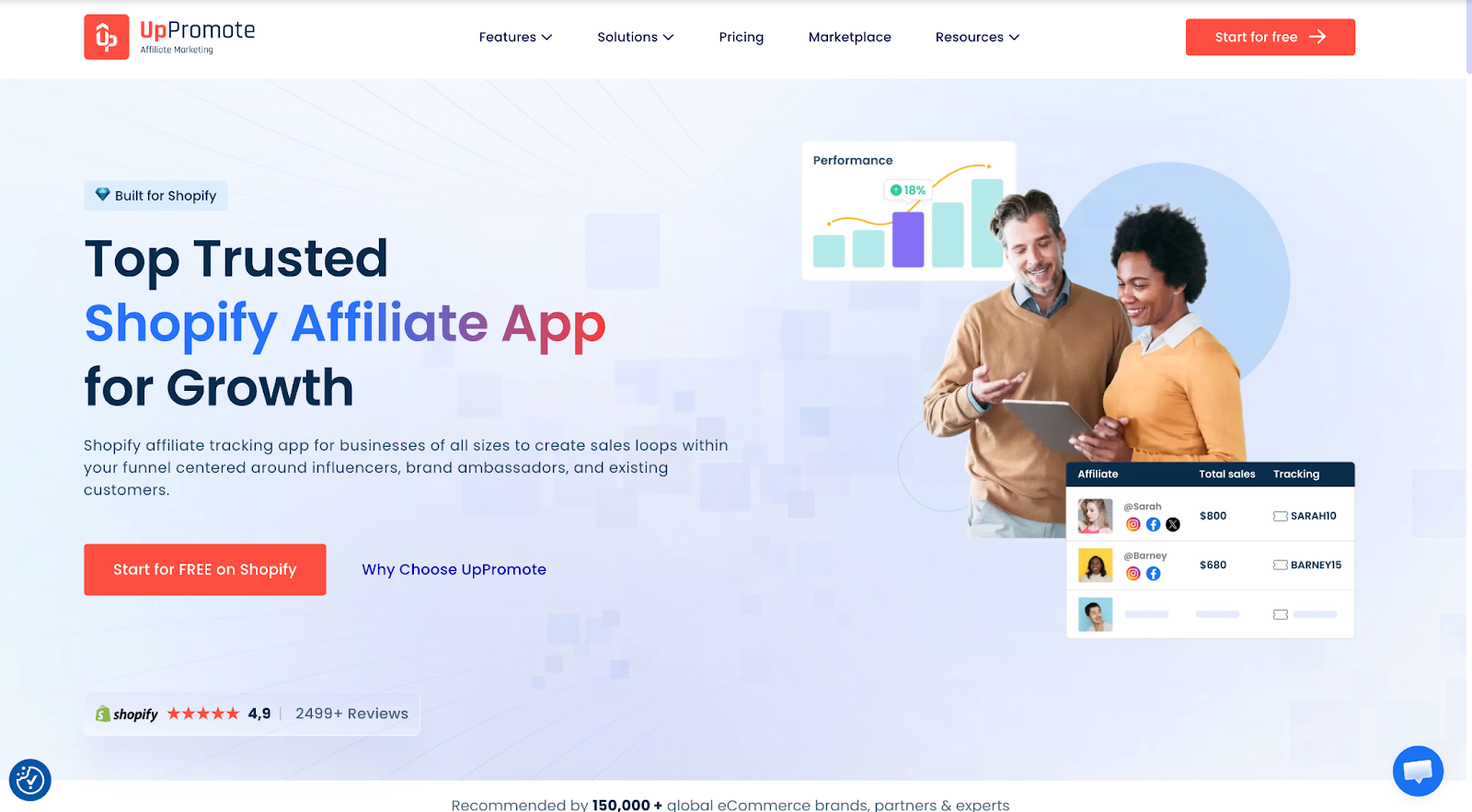
UpPromote is one of the most popular Shopify affiliate apps, especially for small to mid-sized stores. It focuses on simplicity while still offering enough features to manage growing affiliate networks.
At its core, UpPromote lets you create affiliate links, track referrals, and automate payouts without needing technical expertise.
- Pros
- Easy onboarding for affiliates with custom signup forms
- Automated tracking and commission payouts
- Built-in marketplace to recruit new affiliates
- Commission: Fully customizable, can include percentage of sale, flat rate per item, or flat rate per order
- Plans/pricing: Free plan available with limited features, paid plans start at $29.99 per month plus two percent of successful referral sales, and scale based on affiliate count and advanced features
- How to get started: Install the app, set your commission rules, and invite affiliates via a signup page or marketplace listing; you can start tracking performance immediately after setup
2. EmbedUp
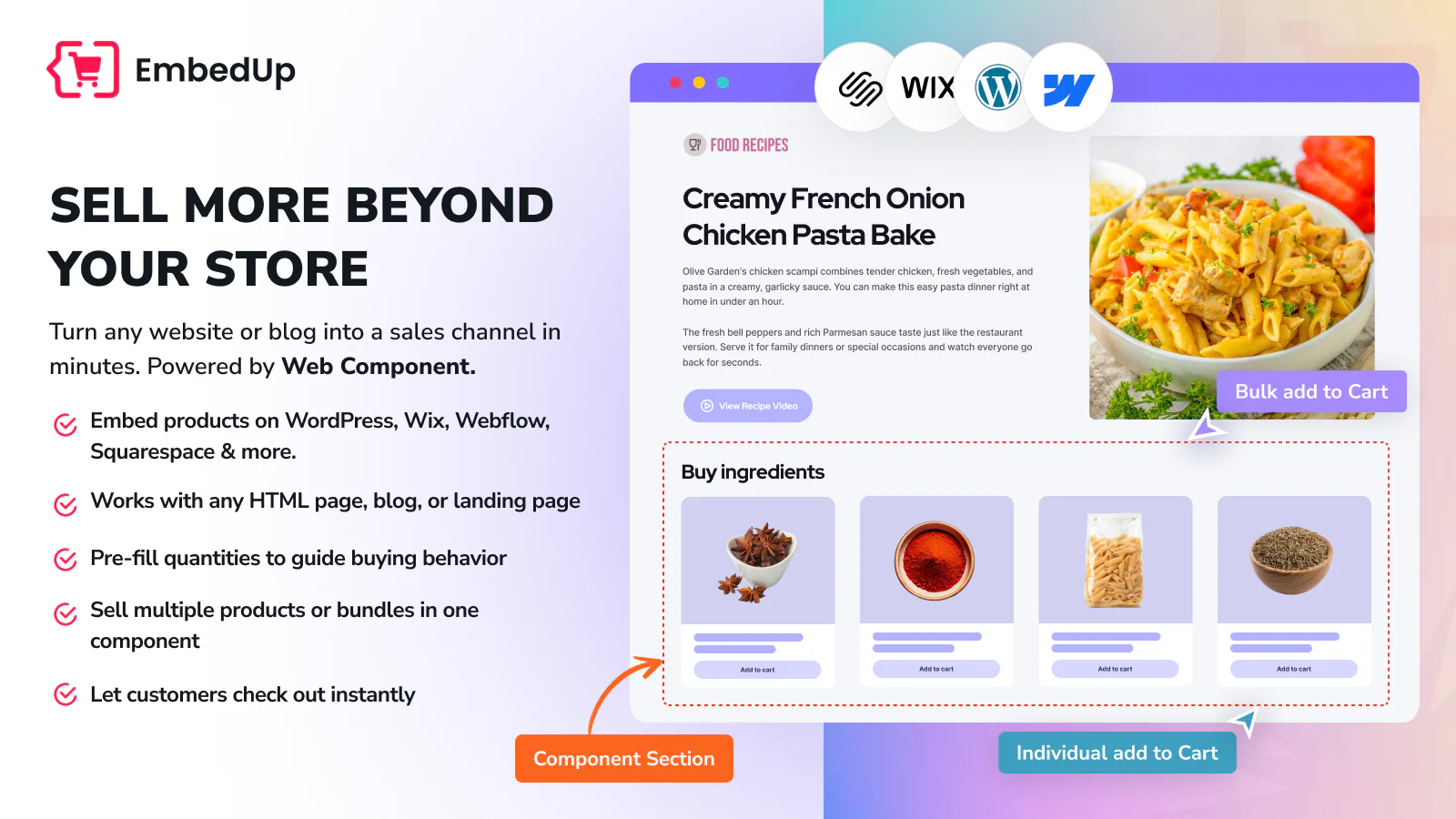
EmbedUp takes a slightly different approach by combining affiliate marketing with embeddable buy buttons. This makes it especially useful for content-driven affiliate strategies.
Instead of just sharing links, affiliates can embed purchase buttons directly into blogs, landing pages, or social content.
- Pros
- Embeddable buy buttons for higher conversion rates
- Lightweight setup with minimal configuration
- Works well for content creators and bloggers
- Commission: Custom commission rates, typically set as a percentage of each sale
- Plans/pricing: Free plan available with limited features, paid plans start at $14.99 per month
- How to get started: Install the app, generate embeddable buttons, and assign them to affiliates; these buttons can then be placed across different platforms
3. BixGrow
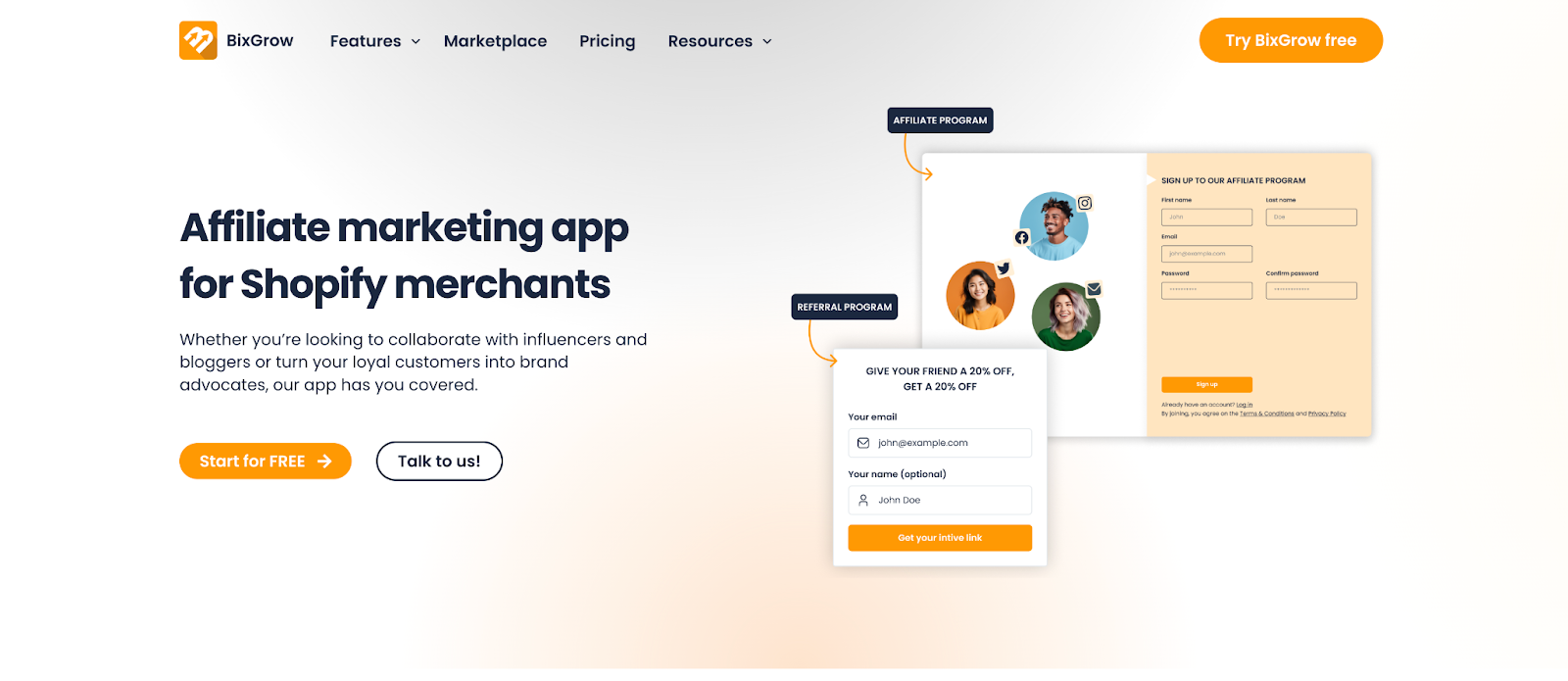
BixGrow is designed for scalability. If you’re planning to grow a large affiliate or referral program, it offers the flexibility to handle complex commission structures.
It supports both affiliate and referral marketing, which makes it a strong option for stores that want to combine influencer campaigns with customer referrals.
- Pros
- Supports tiered and multi-level commissions
- Built-in referral program features
- Advanced reporting and analytics
- Commission: Flexible structures including flat rates, percentages, and tiered rewards
- Plans/pricing: Free plan available for basic usage, paid plans start at $14.99 per month with expanded features
- How to get started: Set up your commission structure, create referral links, and invite affiliates or customers to join your program
4. Refersion
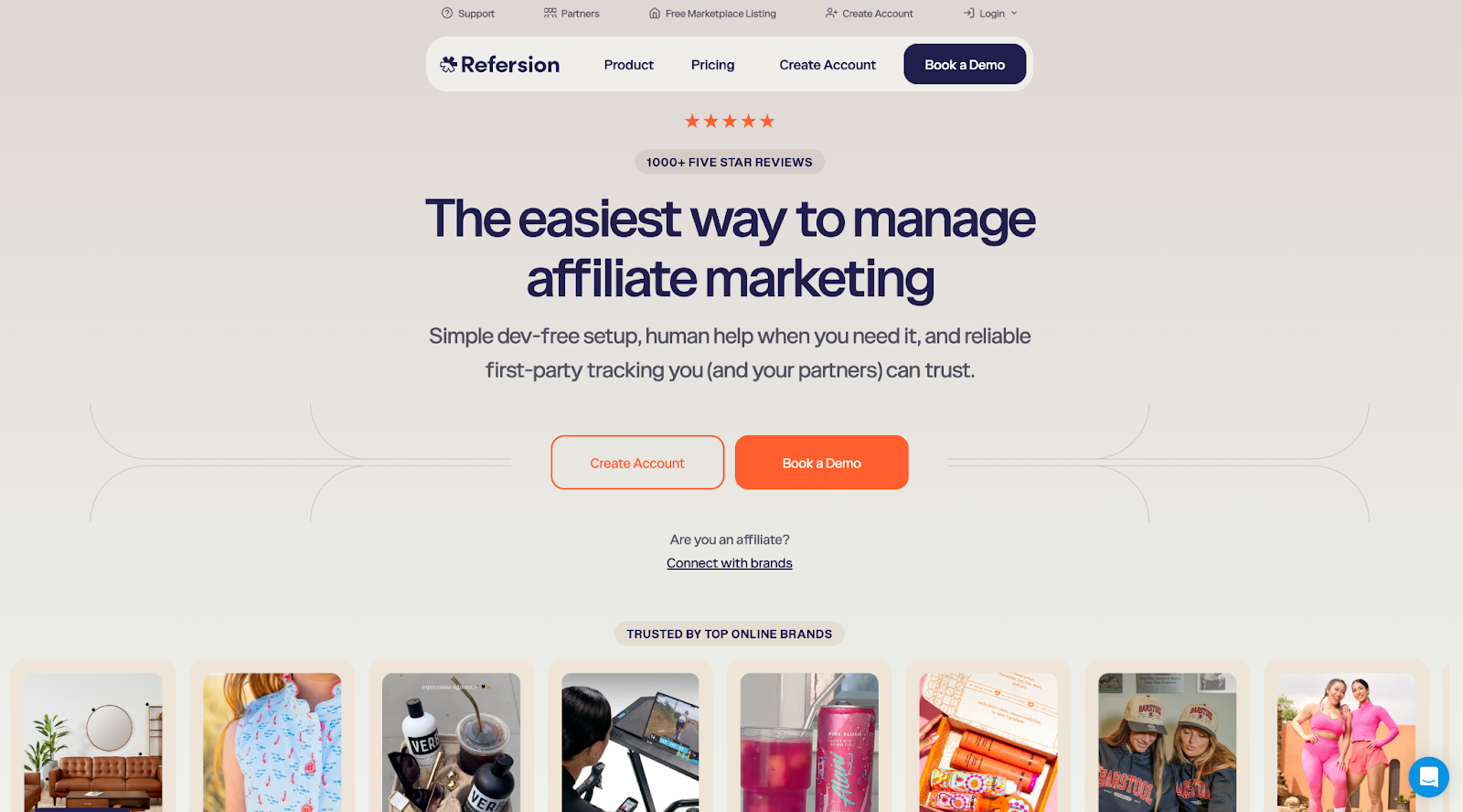
Refersion is one of the more advanced affiliate platforms available for Shopify. It’s often used by larger brands that need detailed tracking, reporting, and influencer management.
It integrates deeply with e-commerce workflows, making it suitable for businesses with higher transaction volumes.
- Pros
- Advanced tracking and reporting capabilities
- Integration with influencer networks
- Scalable infrastructure for large programs
- Commission: Customizable based on campaign goals and affiliate tiers
- Plans/pricing: Free plan available for basic usage; paid plans start at $39 per month, making it more suitable for established businesses
- How to get started: Install Refersion, connect your Shopify store, and configure commission rules and affiliate onboarding processes
5. GoAffPro
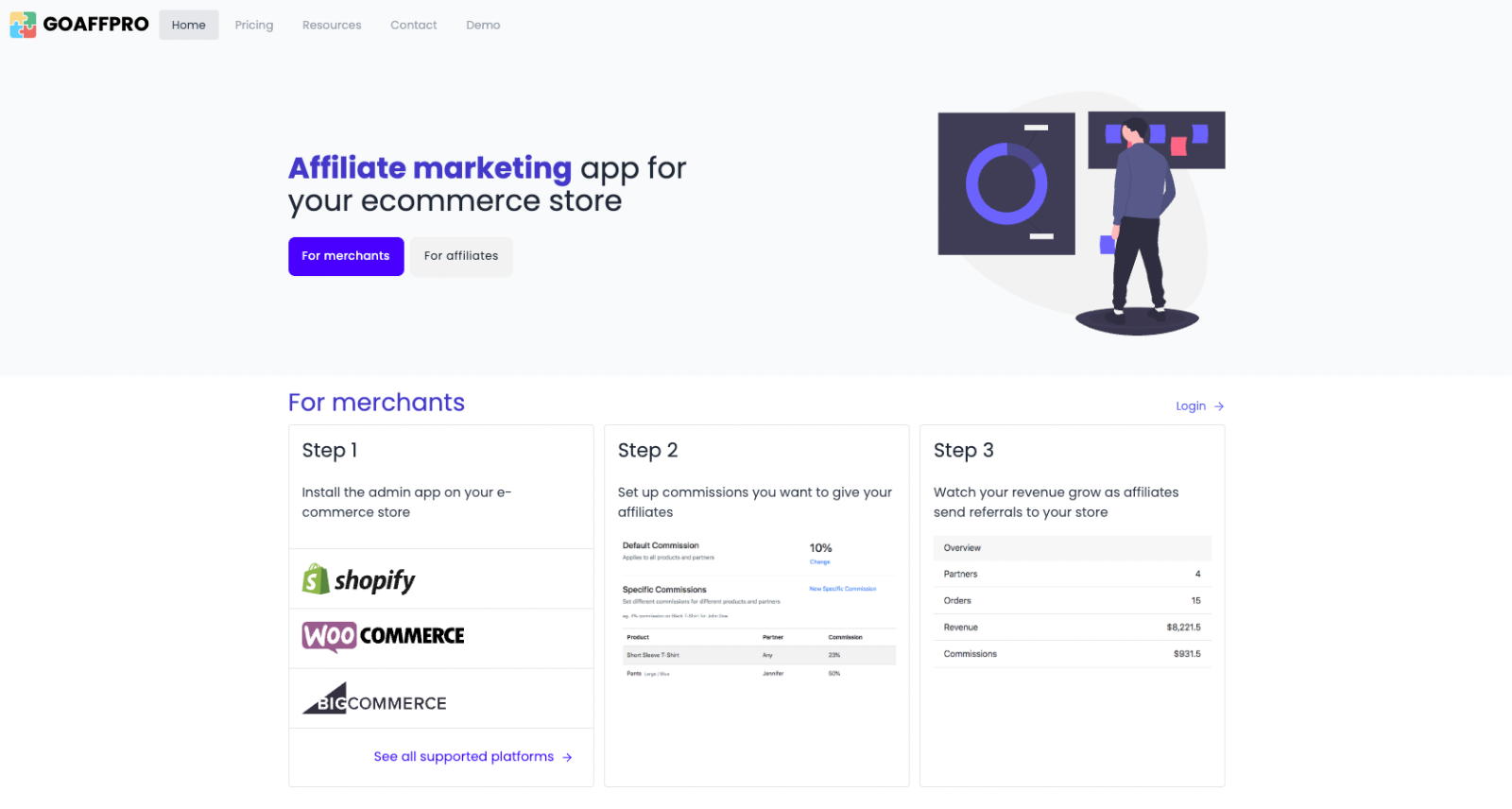
With a generous free plan, GoAffPro is a budget-friendly option that still offers a wide range of features. It’s especially appealing for startups and smaller stores looking to test affiliate marketing without a large upfront investment.
GoAffPro also includes many advanced features like branded dashboards and automated payouts when you upgrade your plan.
- Pros
- Affordable entry point for new stores
- Custom affiliate dashboards
- Automated commission tracking
- Commission: Flexible, with options for percentage-based or fixed payouts
- Plans/pricing: Free plan available, paid plans start at $49 per month
- How to get started: Install the app, customize your affiliate portal, and start inviting partners
How to maximize your affiliate income
Running an affiliate program is one thing, but optimizing it for real revenue growth is another.
Most Shopify affiliate apps focus on tracking. They act as calculators that record clicks, conversions, and commissions. While that’s essential, it’s not enough if your goal is to maximize ROI.
The real opportunity lies in building a conversion-focused strategy. Before you even think about which app to use, it helps to understand how affiliate traffic fits into a broader sales pipeline, because the most successful affiliate programs don’t just drive clicks — they guide prospects through a structured buying journey.
Instead of just tracking referrals, think about how you guide users through that journey. Are you personalizing offers based on user behavior? Are you creating multi-channel funnels that go beyond a single click?
This shift from passive tracking to active conversion is backed by data. According to Involve.me, interactive guided selling and AI-powered experiences can drive up to a 25 percent revenue lift, while AI-enhanced pathways are seeing a 55 percent increase in conversion efficiency compared to the previous year. In other words, the future of affiliate marketing is about more than links — it’s about creating experiences that convert.
That’s where looking beyond traditional Shopify affiliate apps can give you a competitive advantage.
Jotform Affiliate Partner Program as a strategic alternative
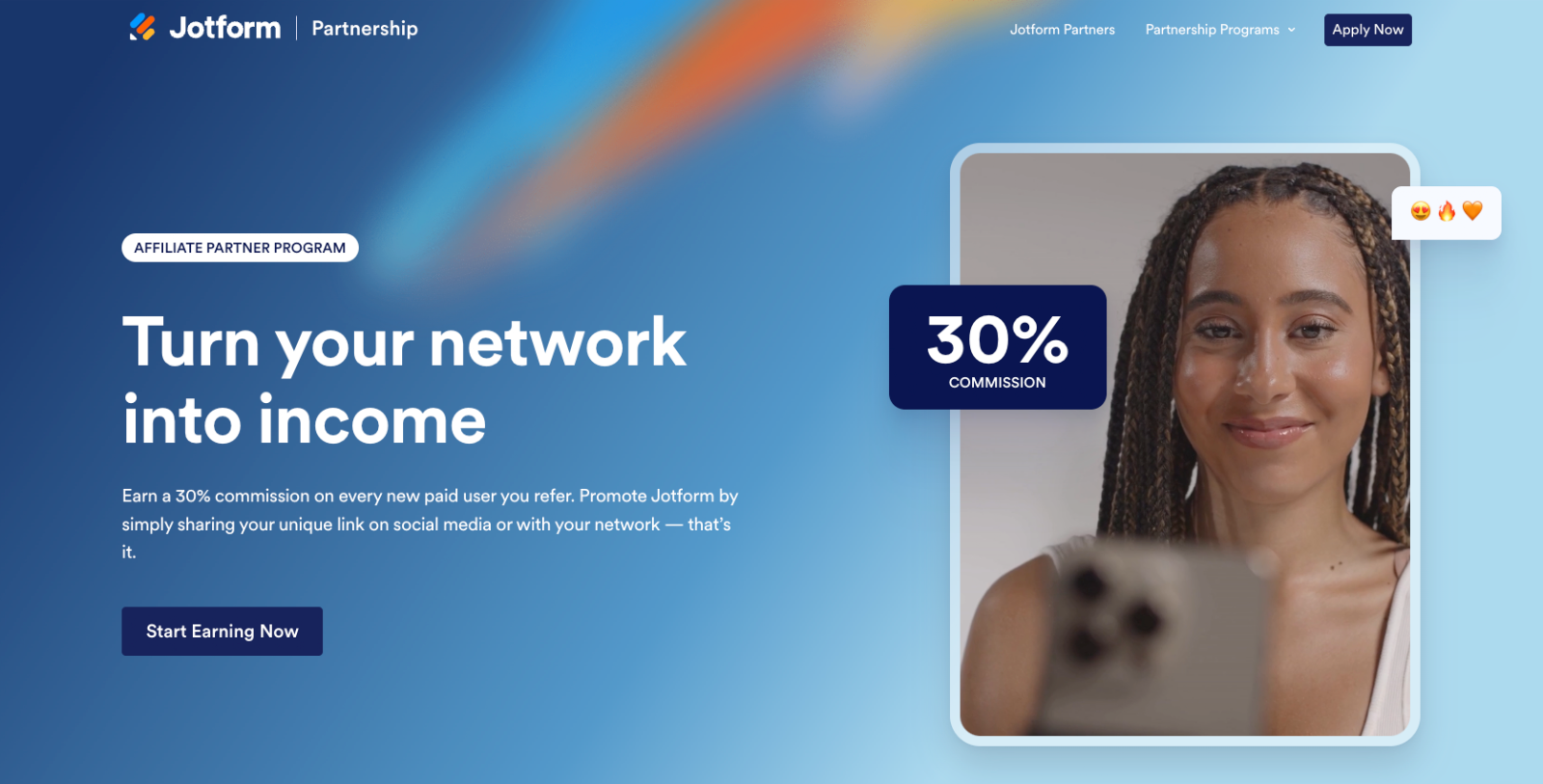
While most programs in this list are built around managing affiliate links within Shopify, the Jotform Affiliate Partner Program offers a broader, more flexible opportunity. Instead of promoting a single-purpose affiliate app, you’re introducing a platform that supports the entire customer journey — from lead capture and guided selling to payments and workflow automation. This means affiliates aren’t just tracking referrals — they’re helping businesses improve how they convert, engage, and retain customers.
Here’s what makes Jotform stand out as an affiliate-friendly platform:
- Mobile-first design: Build seamless mobile experiences that convert.
- AI and automation: Create AI-guided selling journeys that boost engagement.
- No-code store creation: Launch e-commerce workflows with simple prompts.
- Flexible payments: Support 40-plus gateways, including Apple Pay, Google Pay, and Venmo.
- Zero transaction fees: Keep more of your earnings compared to traditional platforms.
If you’re running a Shopify store, you can even connect your workflows using the Jotform Shopify integration or explore new strategies to sell on Shopify more effectively.
How does the Jotform affiliate program work?
Once you join, you’ll receive a unique referral link. When someone signs up and upgrades to a paid plan through your link, you earn a commission. Because Jotform serves a wide range of users — including businesses, freelancers, educators, and nonprofits — your audience isn’t limited to a single niche, which makes conversions more likely compared to niche-specific Shopify apps.
One of the reasons Jotform converts so well is that it solves a genuinely wide range of business problems. Whether your audience needs to collect leads, process payments, automate workflows, or manage customer data, there’s a strong use case for them. Understanding what lead tracking actually involves can help you speak to that value more effectively when promoting Jotform to your audience.
- Pros
- 30 percent recurring commission for every paid user you refer, meaning you keep earning as long as your referrals stay subscribed
- Broad use cases across industries make it easier to convert leads
- Fast approval process and a dedicated support team to help you grow
- Generous attribution window — if a user subscribes within about 60 days of clicking your link, the conversion is credited to you
- Commission: 30 percent recurring commission on every new paid user you refer for one year
- Pricing: Free to join, with no upfront costs or hidden fees
- How to get started: Getting started takes just three easy steps:
- Fill out the affiliate application — it only takes a few minutes.
- Get approved, usually within one business day.
- Share your referral link on your blog, social media, newsletter, or anywhere your audience is.
Because Jotform can be used across so many industries and use cases, it gives affiliates a much higher chance of converting referrals compared to single-purpose Shopify apps. Instead of promoting a tool that only tracks performance, you’re introducing a solution that actively helps users grow — which ultimately leads to more consistent, long-term affiliate income.
Before committing to any affiliate program or tool, it’s always worth asking a few key questions. Our guide on finding the right technology partner can help you evaluate your options with a clear framework. Ready to start earning? Apply to the Jotform Affiliate Partner Program today.
FAQ about Shopify Affiliate Programs
This is a common mix-up! Spotify and Shopify are two different platforms. Spotify is a music streaming service and doesn’t offer a traditional affiliate program in the same way. A Shopify affiliate program, on the other hand, allows partners to promote products on a Shopify store and earn commissions from the sales they generate through their referral links.
Yes. Shopify doesn’t include native affiliate tracking tools, so you’ll need a dedicated app to manage links, commissions, and payouts. The good news is that most of the apps in this list — including UpPromote, BixGrow, and GoAffPro — offer free plans so you can get started without any upfront investment.
This article is for e-commerce business owners, Shopify store managers, and marketers looking to grow revenue through affiliate marketing programs and referral strategies




































Send Comment: