
The global market for electronic prescribing, or e-prescribing, is expected to reach over $4 billion by 2026. While this rise is partially because of an increase in chronic illness around the world, the growing adoption of electronic health record (EHR) systems also plays a part, as does the need to avoid prescribing errors that can occur when a paper prescription is misread or not added to a patient’s chart.
E-prescribing involves using healthcare technology to send prescriptions to be filled, whether that’s at a physical pharmacy (such as a CVS or Walgreens) or to a mail-order pharmacy. E-prescribing enables healthcare providers to send prescriptions instantaneously and securely.
E-prescribing has grown popular in part because physicians and office staff have become much more comfortable using technology in the last couple of decades. Nearly nine in 10 physician offices now use an EHR. Providers also use personal digital assistants and other technology as part of their practices.
However, Medicare also now requires healthcare providers to use e-prescribing to get reimbursed under certain plans, and providers and pharmacies must follow certain standards when they prescribe medications electronically.
Medicare standards for e-prescribing
The US Centers for Medicare & Medicaid Services (CMS) has published standards for electronic prescribing since 2005. The first set of standards applied to the Medicare Modernization Act of 2003, which created a voluntary prescription drug benefit under Medicare Part D.
Over the years, CMS has updated e-prescribing rules. These updates have largely dealt with payment schedules, the methods for providers to prescribe medications electronically, and the removal of the computer generated fax exemption (as of January 1, 2012).
The most recent update to these standards was published on May 16, 2019. That update went into effect January 1, 2021, and requires that Part D plans adopt one or more Real Time Benefit Tools to integrate with prescribers’ e-prescribing or EHR systems.
Electronic prescribing improves patient safety
Medication errors, at best, can lead to an adverse reaction and, in the worst-case scenario, result in a patient’s death. Adverse drug events are a leading cause of death in the United States, and some studies estimate that the number of medication error deaths reaches over 7,000 annually.
The use of e-prescribing can significantly reduce these medication errors. Instead of having to read potentially illegible handwriting, a pharmacist receives a legible prescription that can then be checked against the patient’s profile to make sure there aren’t any potentially harmful drug interactions or allergies to the drug being prescribed.
Patient care and satisfaction can improve
Additionally, e-prescribing can also help improve patient care, which can lead to increased patient satisfaction. Physicians don’t need to spend as much time writing out prescriptions, so they can spend more time with patients. Patients are also more likely to pick up their e-prescribed medications, as opposed to written prescriptions (likely because by the time a person reaches the pharmacy, the e-prescribed medicine is ready).
So patients are happy. They get their prescriptions faster. They don’t have to wait for it to be filled at the pharmacy, return to the pharmacy a few hours later, or pick up a written prescription for a refill.
E-prescribing can also result in lower medication costs for patients. Some electronic prescribing software can show the lowest price for a particular medication while the physician is prescribing it. This feature not only helps the doctor prescribe medication that’s covered by the patient’s insurance, but also helps them find the best price.
Difficulties with electronic prescribing
Although there are a lot of benefits when physicians e-prescribe medications, they also face challenges related to the practice. The technology itself may be an issue, depending on how usable the software is, what the cost is for the system, and how well it integrates into the office’s existing software and workflows.
In addition, some medications can’t be prescribed using an electronic prescribing system. These medications mainly include controlled substances. For example, a doctor couldn’t e-prescribe Adderall to a patient with attention deficit hyperactivity disorder.
Computers aren’t perfect. Prescribing errors can still be made. For example, someone could enter the wrong medication into the software. The interface of some software programs can also make it difficult to see a complete view of the patient’s current medications or make it easy to confuse dosing guidelines with pharmacy inventory.
Streamlining the e-prescribing process
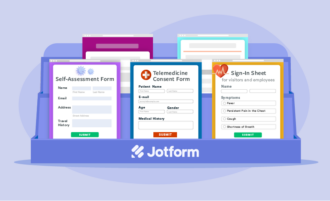
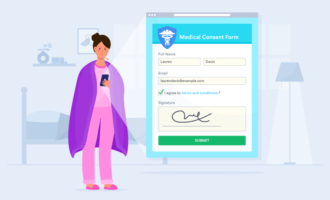
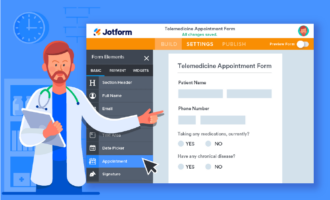
Healthcare providers can streamline the electronic prescribing process by using Jotform. You can easily build, for instance, payment forms or patient intake forms, and patients can enter the medications they’re taking from the comfort of their home (where they have easy access to their prescription bottles). This information can then be entered into the EHR.
Jotform also has HIPAA compliance features and will provide a business associate agreement. With your data securely stored, Jotform can integrate with other HIPAA-friendly solutions (such as Google Sheets) to collect and analyze patient data. You can choose from a variety of Jotform templates to start creating HIPAA-friendly forms to help with e-prescribing.
The bottom line: Electronic prescribing makes it easy to send over medication orders to pharmacies and can result in increased patient satisfaction and safety. However, it also requires following guidelines if you’re being reimbursed by Medicare, and it works best when you have a user-friendly solution that maximizes the benefits for patients and providers.














































Send Comment: