Top 10 affiliate programs
Affiliate marketing can feel intimidating when you’re starting from scratch, especially if you don’t have a blog or website yet. Many beginners assume they need a polished site, thousands of monthly visitors, or technical skills before they can earn commissions online.
The good news? That’s no longer true.
Today, many successful affiliates promote products through Instagram, TikTok, YouTube, email newsletters, online communities, LinkedIn, Facebook groups, and even direct referrals. In fact, Influencer Marketing Hub’s Affiliate Marketing Benchmark Report found that over 79 percent of marketers use social media to promote affiliate offers, making it the most common channel outside of traditional websites. Email also remains one of the highest-performing channels, with Litmus reporting that email marketing can generate up to $36 for every $1 spent.
A website can absolutely help in the long run. It gives you more control over your content, improves search visibility, and makes it easier to scale. But if your goal is simply to get started with affiliate marketing, you can begin without one.
This guide covers beginner-friendly affiliate marketing programs that are easy to join and realistic for people with small audiences or no website at all. Whether you’re a creator, student, freelancer, or side hustler, these programs can help you start earning while building your audience.
Can you do affiliate marketing without a website?
“No website” does not mean “no audience.” But you need a promotion channel — affiliate marketing still depends on trust, visibility, and a clear way to share your links.
Beginners can promote affiliate offers through social media, short-form videos, YouTube, email newsletters, online communities, or direct referrals. For example, someone teaching productivity tips on TikTok could recommend business tools, while a freelancer posting on LinkedIn might share software they already use with clients.
The key is choosing affiliate marketing programs that match your audience, not just programs with the highest commissions.
TL;DR: 10 best affiliate marketing programs for beginners
| Program | Commission | Cookie duration | Best for |
|---|---|---|---|
 Jotform Affiliate Program |
30 percent recurring for the customer’s first year |
60 days |
Business, creator, education, and workflow audiences |
 Amazon Associates |
0–10 percent by category, plus select bounties |
24 hours, extended to up to 89 days for items added to cart within the session |
General and product-review audiences |
 Fiverr Affiliates |
25 percent of a first-time buyer’s order plus 10 percent revenue share for 12 months; Fiverr Pro: 70 percent plus 10 percent; Logo Maker: $30 plus 10 percent |
30 days |
Freelancers, creators, business audiences |
 ClickBank |
Seller-dependent revenue share or cost per acquisition (CPA) |
60 days |
Digital products and creators |
 Awin |
Advertiser-dependent |
Advertiser-dependent |
Beginners, creators, and influencers testing multiple brands |
 CJ Affiliate |
Advertiser-dependent |
Advertiser-dependent |
Established creators and niche publishers |
 Etsy Affiliate Program |
Case-by-case; varies by site, purchase type, and content |
30 days on web, seven days in app |
DIY, craft, and lifestyle audiences with approved channels |
 Impact |
Brand-dependent; may include commission, CPA, flat fee, or performance-based payouts |
Brand-dependent |
Influencers, affiliates, and creators |
 SocialPilot |
20 percent recurring for up to one year, up to $306 per customer |
90 days |
Social media creators, marketers, and agency educators |
 Travelpayouts |
Varies by partner; up to 70 percent revenue share, with typical examples of 1.1–1.5 percent for flights and 4–5 percent for hotels |
Usually 30 days for most brands, exact window varies by program |
Travel content creators |
10 beginner affiliate programs that don’t require a website
1. Jotform Affiliate Program
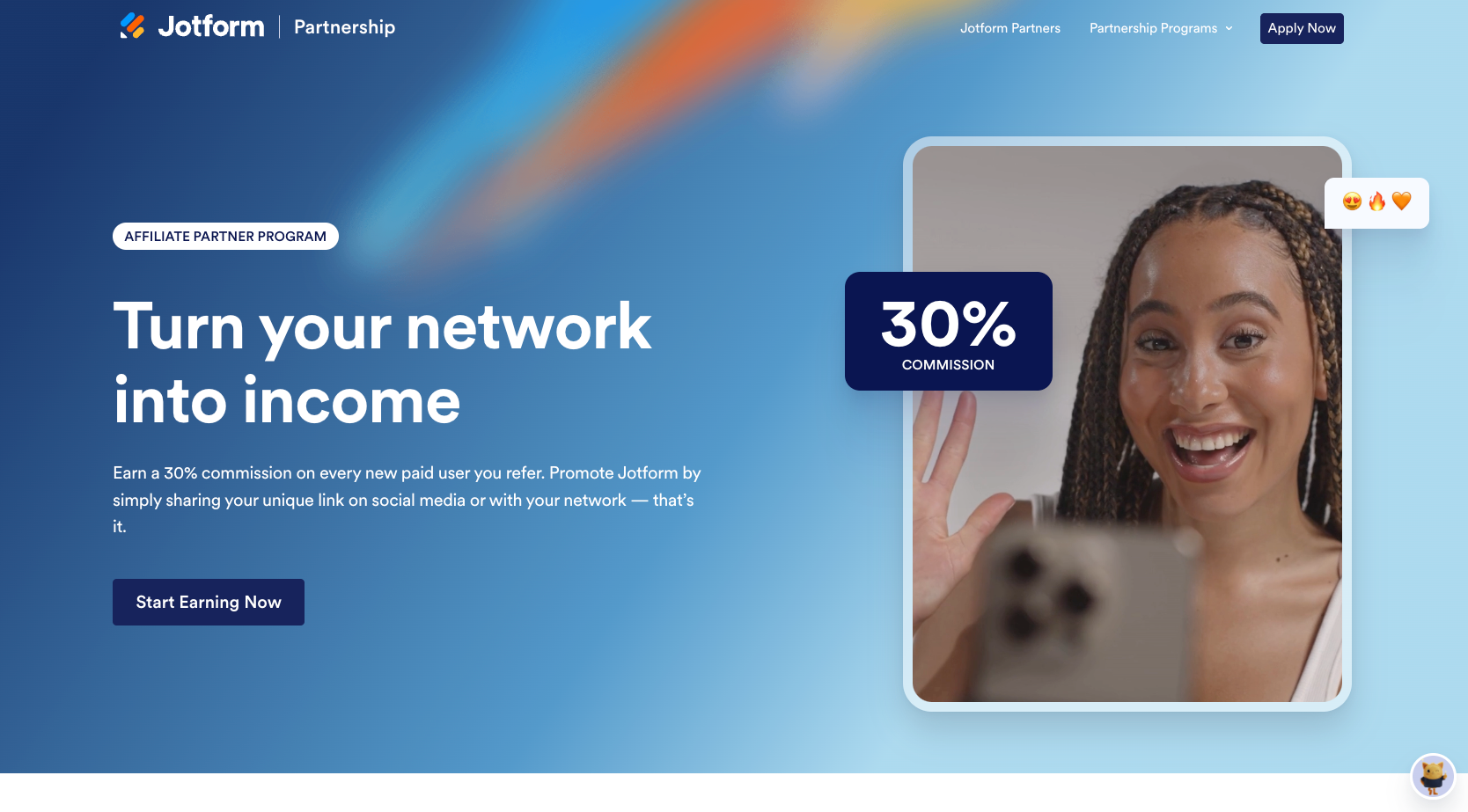
The Jotform Affiliate Program is one of the best options for beginners because it combines strong recurring commissions with a product that appeals to many different audiences.
Jotform helps businesses, creators, educators, nonprofits, freelancers, and teams build forms, collect payments, automate workflows, and manage data. That broad use case makes it easier to recommend naturally across many industries.
Unlike affiliate programs that only pay once, Jotform offers a 30 percent recurring commission. It pays out for every paid user you refer, throughout their first year as a customer.
Who can be an affiliate partner?
The program works well for beginners, influencers, agencies, bloggers, YouTubers, business tool educators, freelancers, and anyone with a professional network. Even small creators can succeed because Jotform supports so many use cases, from lead generation to e-commerce automation and online payments.
- Pros: 30 percent recurring commission for the customer’s first year; wide audience fit across businesses, creators, education, and e-commerce; simple three-step application process with fast approval times; enhanced partner dashboard; monthly webinars; ready-to-use AI social post generator
- Cons: Best fit for audiences interested in productivity, forms, automation, or business tools; recurring payout depends on the customer staying subscribed
- Commission: 30 percent recurring commission during the customer’s first year
- Cookie duration: Conversions are attributed if users subscribe within about 60 days of clicking your referral link
How could someone without a website promote it?
Beginners can promote Jotform through YouTube tutorials, TikTok productivity videos, LinkedIn posts, freelancing communities, email newsletters, client referrals, or creator resource lists. For example, a freelancer could recommend Jotform for lead capture and client onboarding, and keeping a sales pipeline organized. A creator teaching side hustles might approach it differently — they could show how to use forms for payments, customer intake, or automated workflows.
How to get started
- Visit the affiliate page and complete the application form.
- Wait for review, which is usually completed within one business day.
- Grab your unique tracking link from the dashboard.
- Share the link in tutorials, reviews, newsletters, templates, or resource pages.
- Track clicks, conversions, and payouts as referrals upgrade.
2. Amazon Associates
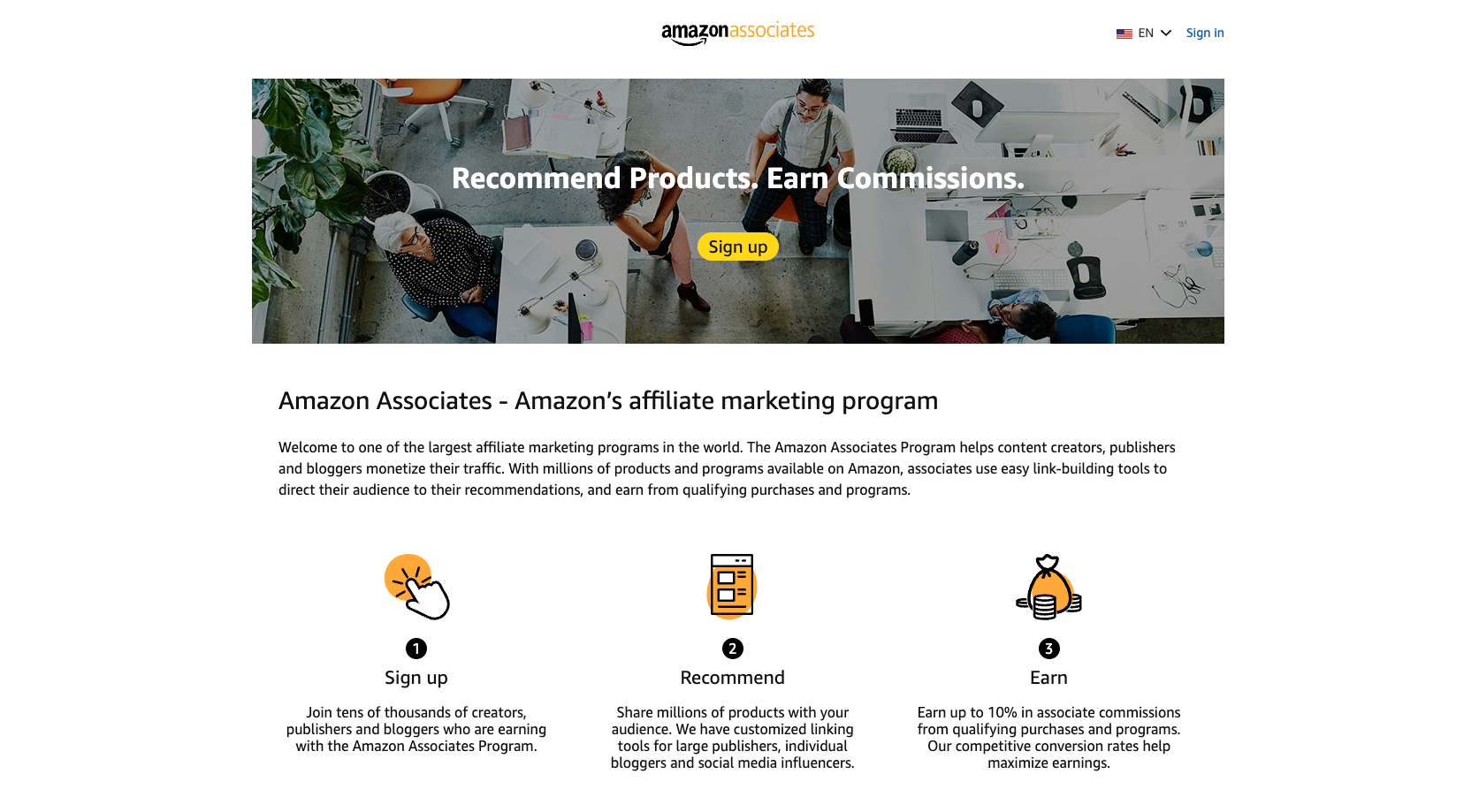
Amazon Associates remains one of the easiest affiliate marketing programs for beginners because nearly everyone already shops on Amazon. Partners here might recommend products across categories like tech, books, home, fitness, beauty, and office supplies.
Who can be an affiliate partner?
The Amazon Associates program can work for beginners, social media creators, review channels, lifestyle influencers, YouTubers, and deal-sharing communities. Amazon allows affiliates to monetize websites, social media content, apps, and other approved online properties.
- Pros: Beginner-friendly, massive product selection, easy to recommend familiar products
- Cons: Lower commission rates than many software or digital product programs, short standard 24-hour tracking session
- Commission: Fixed by product category; currently ranges from 0 to 10 percent for most standard categories, with some special bounty events
- Cookie duration: 24-hour session; if a customer adds a product to their cart during that session, qualifying purchases may still be credited if the order is completed before the cart window expires
How could someone without a website promote it?
Beginners can promote Amazon products through TikTok reviews, YouTube recommendation videos, Instagram Stories, social media storefront-style content, or curated product lists. That is, as long as they follow Amazon’s disclosure and program rules.
How to get started
Join Amazon Associates, add your approved content channel, create affiliate links, share products through relevant content, and earn commissions from qualifying purchases.
3. Fiverr Affiliates
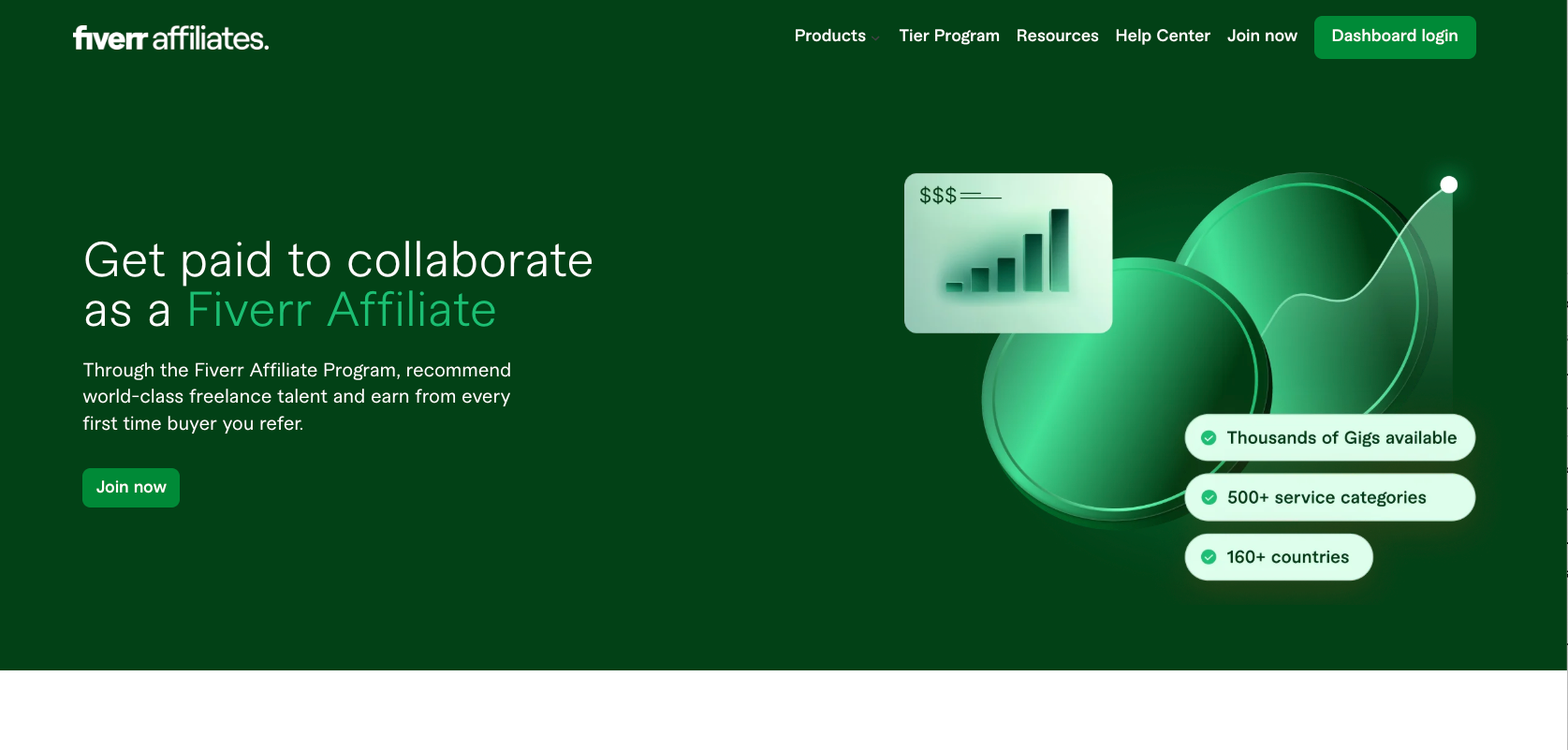
Fiverr’s affiliate program is a strong choice for those interested in freelancing, business tools, marketing, or entrepreneurship content. Since Fiverr already has strong brand recognition, it can be easier for beginners to promote than less familiar platforms.
Who can be an affiliate partner?
Fiverr says everyone is welcome to join as an affiliate. The program works especially well for business creators, career educators, freelancers, YouTubers, and side hustle influencers.
- Pros: Recognizable platform, broad service categories, social media promotion allowed
- Cons: Commissions apply to purchases from first-time buyers, not clicks or registrations; commission structure varies by Fiverr product
- Commission: Fiverr Marketplace pays 25 percent of the first-time buyer amount plus 10 percent revenue share on later orders for 12 months; Fiverr Pro pays 70 percent of the first-time buyer amount plus 10 percent revenue share; Logo Maker pays $30 per acquisition plus 10 percent revenue share
- Cookie duration: 30 days
How could someone without a website promote it?
Beginners can promote Fiverr through videos, emails, podcasts, social posts, YouTube, Facebook, Instagram, LinkedIn, Pinterest, and other online channels.
How to get started
Sign up for Fiverr Affiliates, choose relevant Fiverr services or categories, create affiliate links, share them through content, and track clicks and conversions in the dashboard.
4. ClickBank
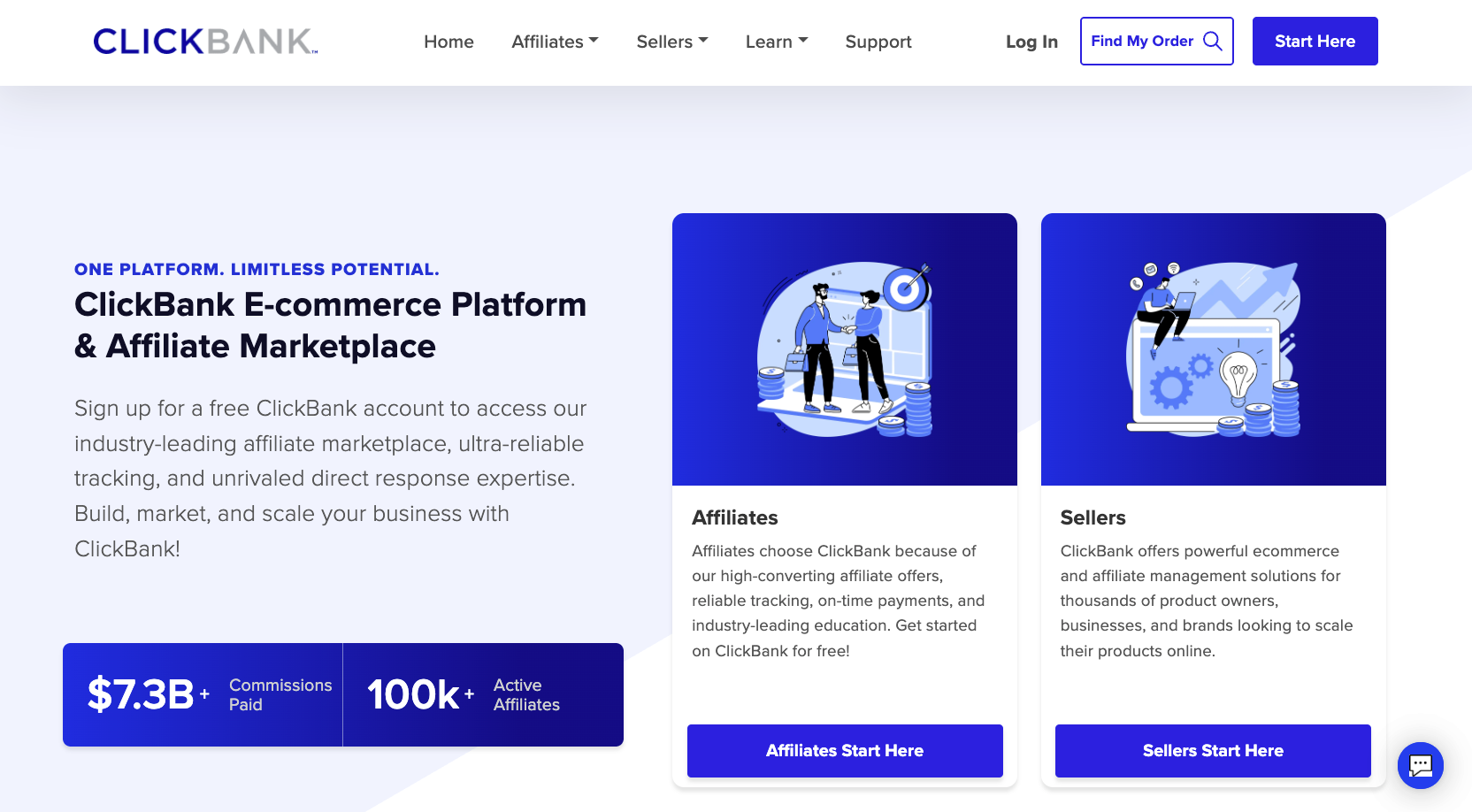
ClickBank focuses heavily on digital products like online courses, software, e-books, and memberships. It’s popular with beginners because many products offer revenue-share or CPA commissions.
Who can be an affiliate partner?
The program works well for content creators, email marketers, social media creators, and side hustle educators.
- Pros: High commission potential, large digital product marketplace, 60-day HopLink attribution window
- Cons: Product quality varies, so beginners need to evaluate offers carefully before promoting them
- Commission: Seller-dependent; ClickBank sellers can offer revenue-share commissions, CPA commissions, or custom commission arrangements
- Cookie duration: 60 days for HopLink referrals
How could someone without a website promote it?
Beginners can promote ClickBank products through YouTube reviews, TikTok tutorials, email newsletters, or social posts that explain how a product solves a specific problem.
How to get started
Create a ClickBank account, browse the marketplace, choose relevant products, generate HopLinks, and promote products through your chosen content channel.
5. Awin
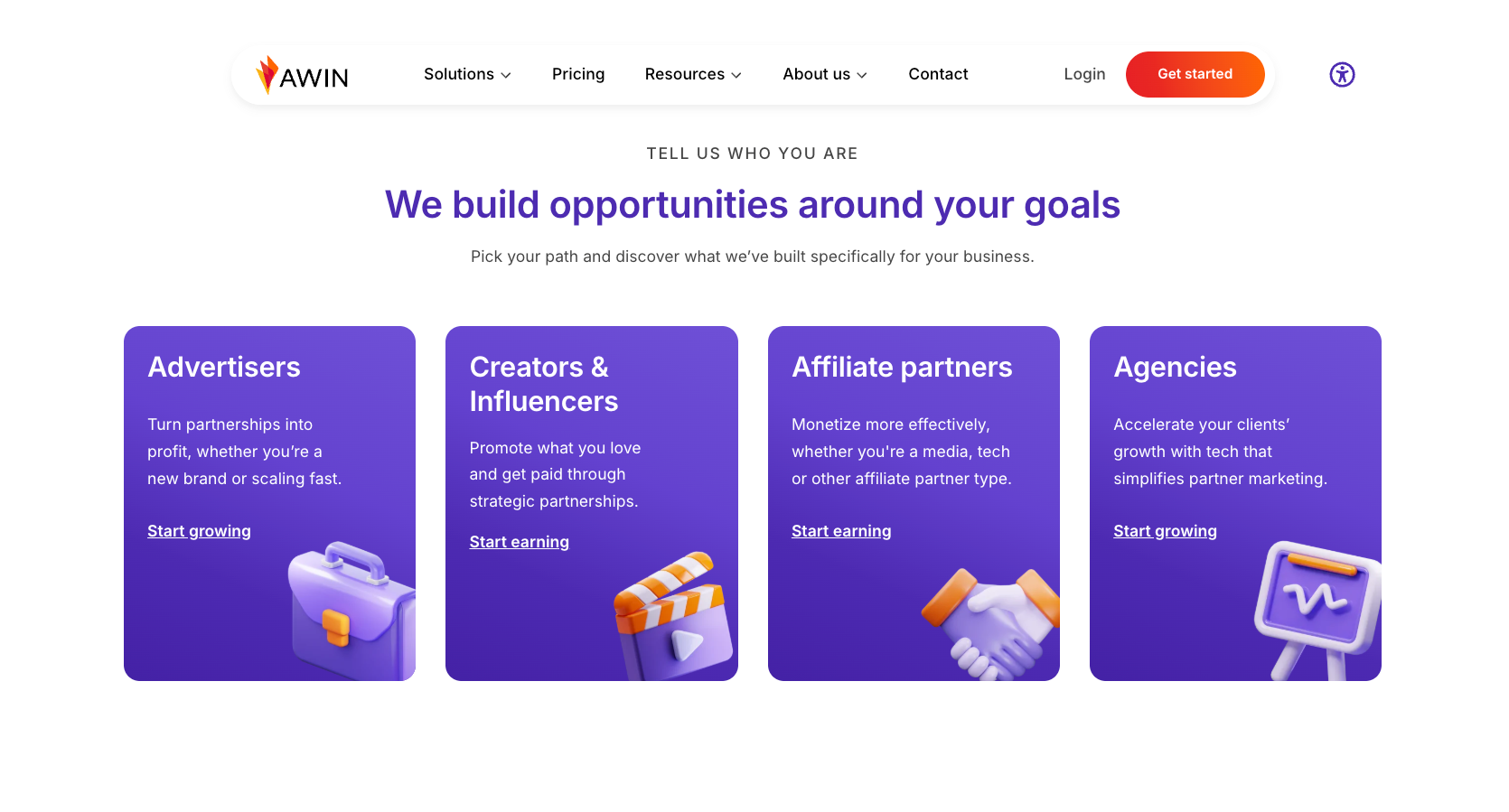
Awin, formerly ShareASale, is a strong option for beginners because it connects creators with thousands of brands across categories like fashion, travel, retail, finance, and e-commerce. It’s especially useful if you want to test different affiliate offers before committing to one niche.
Who can be an affiliate partner?
Awin works well for content creators, influencers, bloggers, newsletter creators, social media creators, and affiliate publishers.
- Pros: Access to more than 30,000 brands, creator-friendly tools like Link Builder and Product Search, supports social media promotion, useful for testing multiple niches
- Cons: Commission rates, approval requirements, and tracking windows vary by advertiser
- Commission: Advertiser-dependent
- Cookie duration: Advertiser-dependent
How could someone without a website promote it?
Awin says creators can share affiliate links across social posts, videos, and newsletters. Instagram, TikTok, Facebook, and YouTube can all be used for affiliate promotion.
How to get started
Join Awin as a publisher or content creator, create your profile, connect your content channels, browse advertisers, apply to relevant brand programs, create affiliate links, and track sales in your account.
6. CJ Affiliate
CJ Affiliate, formerly Commission Junction, is one of the larger affiliate networks and includes partnerships with many well-known brands. While some programs are selective, beginners with a clear niche or social audience may still find accessible opportunities.
Who can be an affiliate partner?
The program works well for social creators, influencers, business educators, publishers, and niche communities.
- Pros: Large brand network, reliable tracking tools, social handles can be added to publisher profiles
- Cons: Some advertisers prefer established creators or publishers, approval requirements vary by brand
- Commission: Advertiser-dependent
- Cookie duration: Advertiser-dependent
How could someone without a website promote it?
Creators can use CJ Affiliate links in YouTube descriptions, email newsletters, educational content, social posts, and other approved promotional channels.
How to get started
Create a CJ publisher account, complete your profile, browse advertiser programs, apply to relevant brands, generate affiliate links, and share them through approved channels.
7. Etsy Affiliate Program
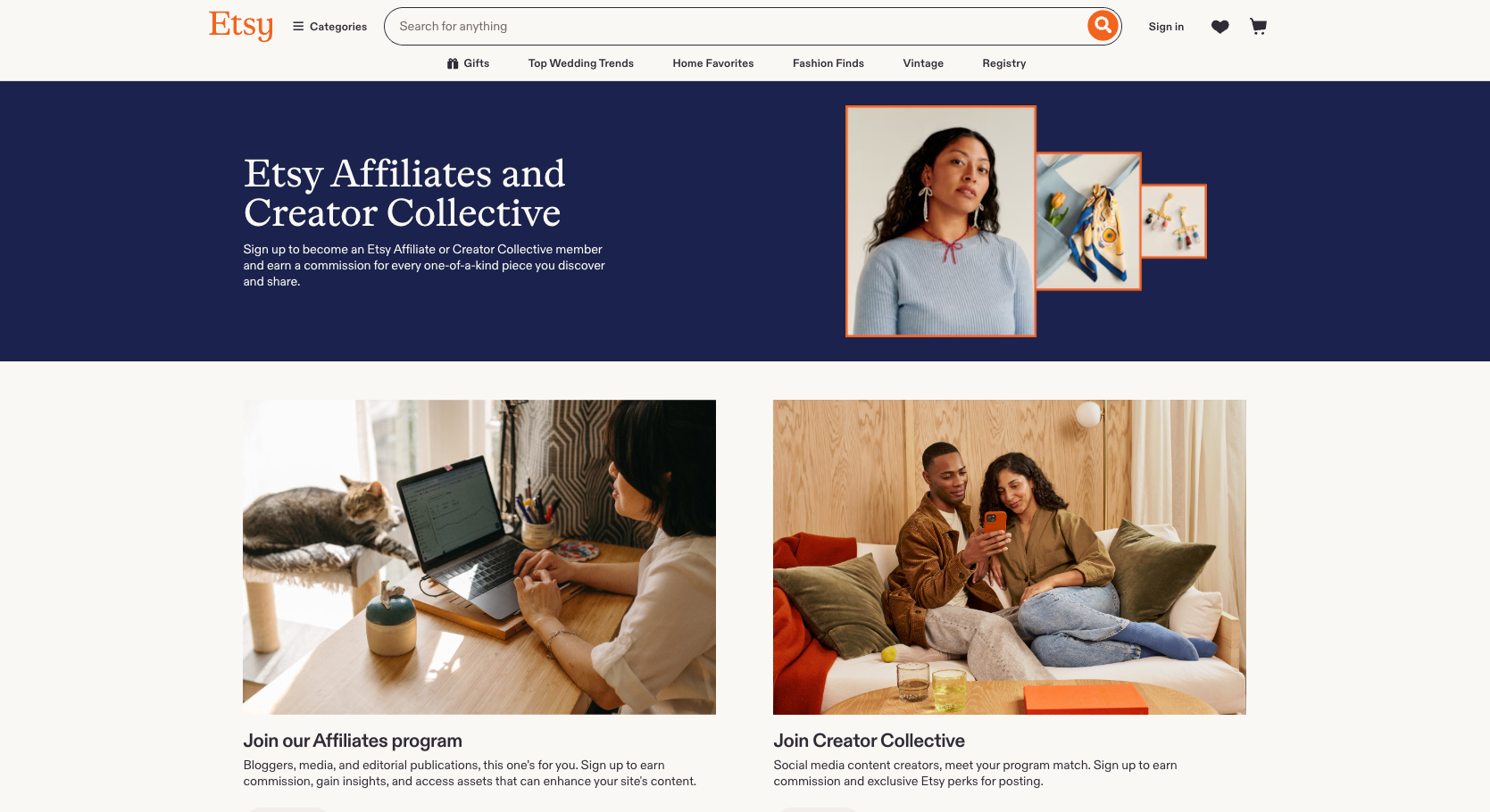
The Etsy affiliate program can work well for lifestyle creators, DIY creators, artists, and visual-content audiences. However, it’s not the cleanest fit for a strict “no website” list because Etsy’s affiliate policy still says applicants must have a website with a URL, even though approved social channels may also be used.
Etsy is also currently migrating its Affiliate Program and Creator Collective from Awin to Rakuten, so you should check Etsy’s affiliate page for the latest application path if you’re interested.
Who can be an affiliate partner?
This program works well for DIY creators, lifestyle publishers, craft creators, and visual content creators. If most of your traffic comes from social media, Etsy says you may need to apply through its Creator Collective program.
- Pros: Unique products, strong visual appeal, good fit for gift guides and lifestyle content
- Cons: Not ideal for beginners with no website at all, social media pages alone may not qualify for the main affiliate program, commission rates are on a case-by-case basis
- Commission: Rates are determined on a case-by-case basis and subject to Etsy’s current program terms
- Cookie duration: 30 days on the Etsy website and seven days in the Etsy app
How could someone without a website promote it?
If approved through Etsy’s affiliate or Creator Collective path, creators can use Etsy links in channels such as Instagram, TikTok, YouTube, Facebook, Pinterest, or email.
How to get started
Review Etsy’s current affiliate and Creator Collective pages, apply through the appropriate program, get approved, choose products or shops, create content, and share approved affiliate links.
8. Impact
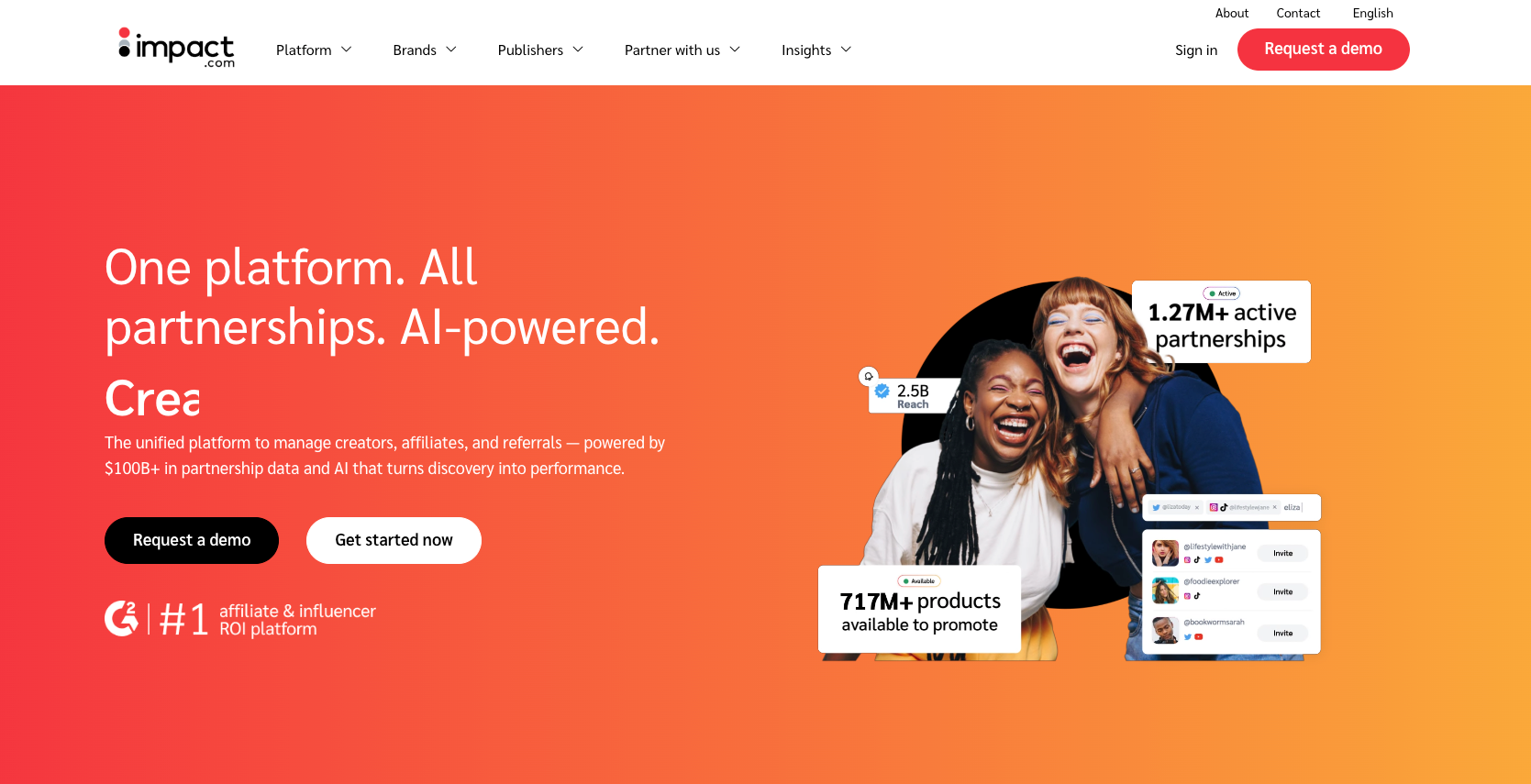
Impact is a partnership marketplace that connects creators, affiliates, publishers, and influencers with brands across different industries. It’s widely used by software companies, e-commerce brands, subscription services, and major retailers.
Who can be an affiliate partner?
The program works well for creators, influencers, affiliates, business educators, content publishers, and niche communities.
- Pros: Large brand marketplace, strong analytics tools, supports creator and affiliate partnerships, social account signup available
- Cons: Approval depends on the brand, commission rates and tracking windows vary by campaign or advertiser
- Commission: Brand-dependent
- Cookie duration: Brand-dependent
How could someone without a website promote it?
Creators can use Impact links through YouTube tutorials, LinkedIn posts, social content, newsletters, creator campaigns, promo codes, and approved affiliate links.
How to get started
Create an Impact partner account, add your promotional channels, apply to join the Brands Marketplace, choose relevant brands, generate affiliate links or promo codes, and track performance.
9. SocialPilot
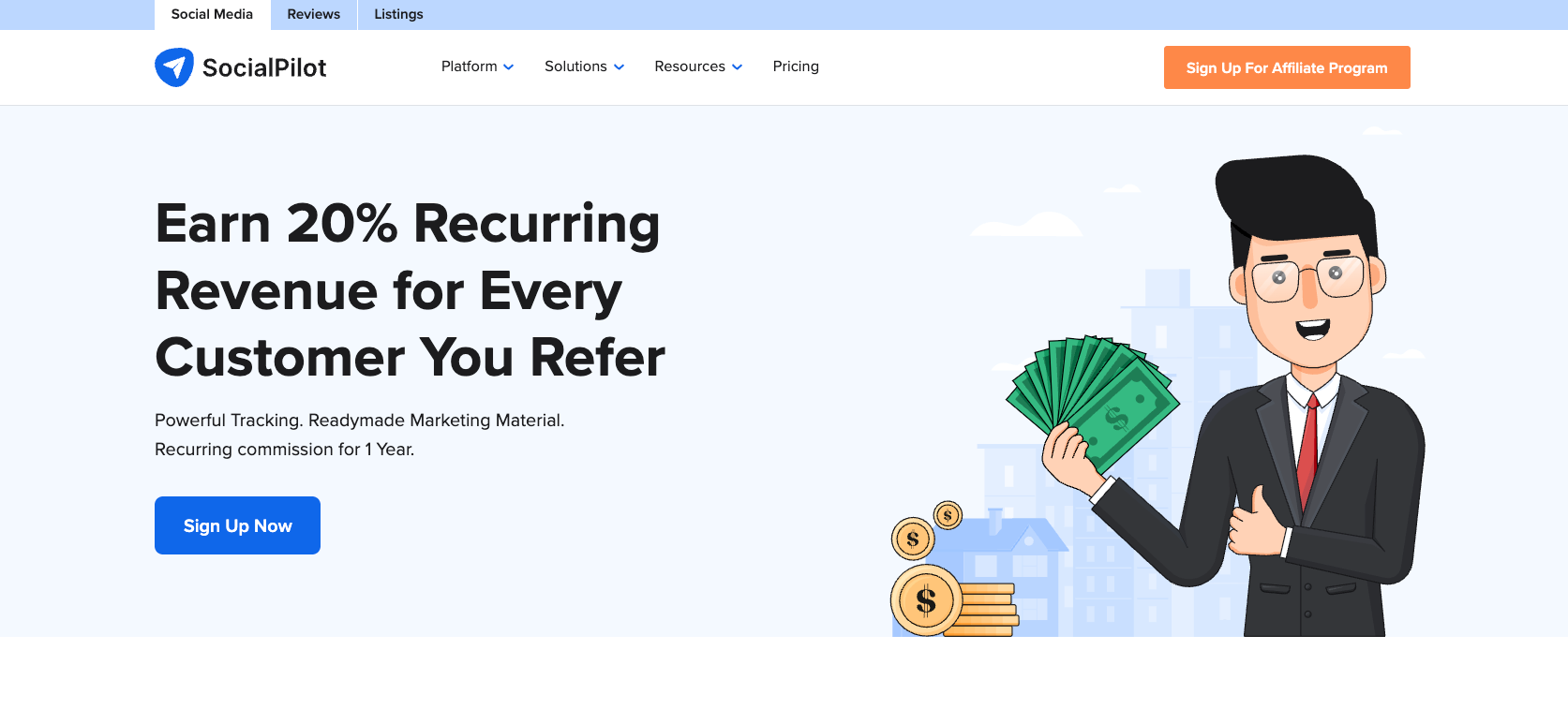
SocialPilot focuses on social media management and creator-focused tools, making it appealing for newer creators, agencies, and marketers trying to grow and monetize online audiences.
The platform helps users schedule posts, manage multiple social accounts, analyze performance, and streamline social media workflows for businesses and creators.
Who can be an affiliate partner?
SocialPilot’s program works well for TikTok creators, Instagram creators, YouTubers, agency educators, marketing creators, and social media consultants.
- Pros: Creator and marketer audience fit, 20 percent recurring commission for one year, 90-day cookie duration, free signup
- Cons: Best suited for audiences interested in social media marketing, agencies, or business tools; payout requires at least two valid customer referrals and $50 in approved commission
- Commission: 20 percent recurring commission for up to one year
- Cookie duration: 90 days
How could someone without a website promote it?
Creators can promote SocialPilot through social media tutorials, YouTube videos, marketing newsletters, agency content, and social media growth tips.
How to get started
Sign up for the SocialPilot affiliate program, access banners and links, share them through social media or other approved channels, and earn commission when referrals become paying customers.
10. Travelpayouts
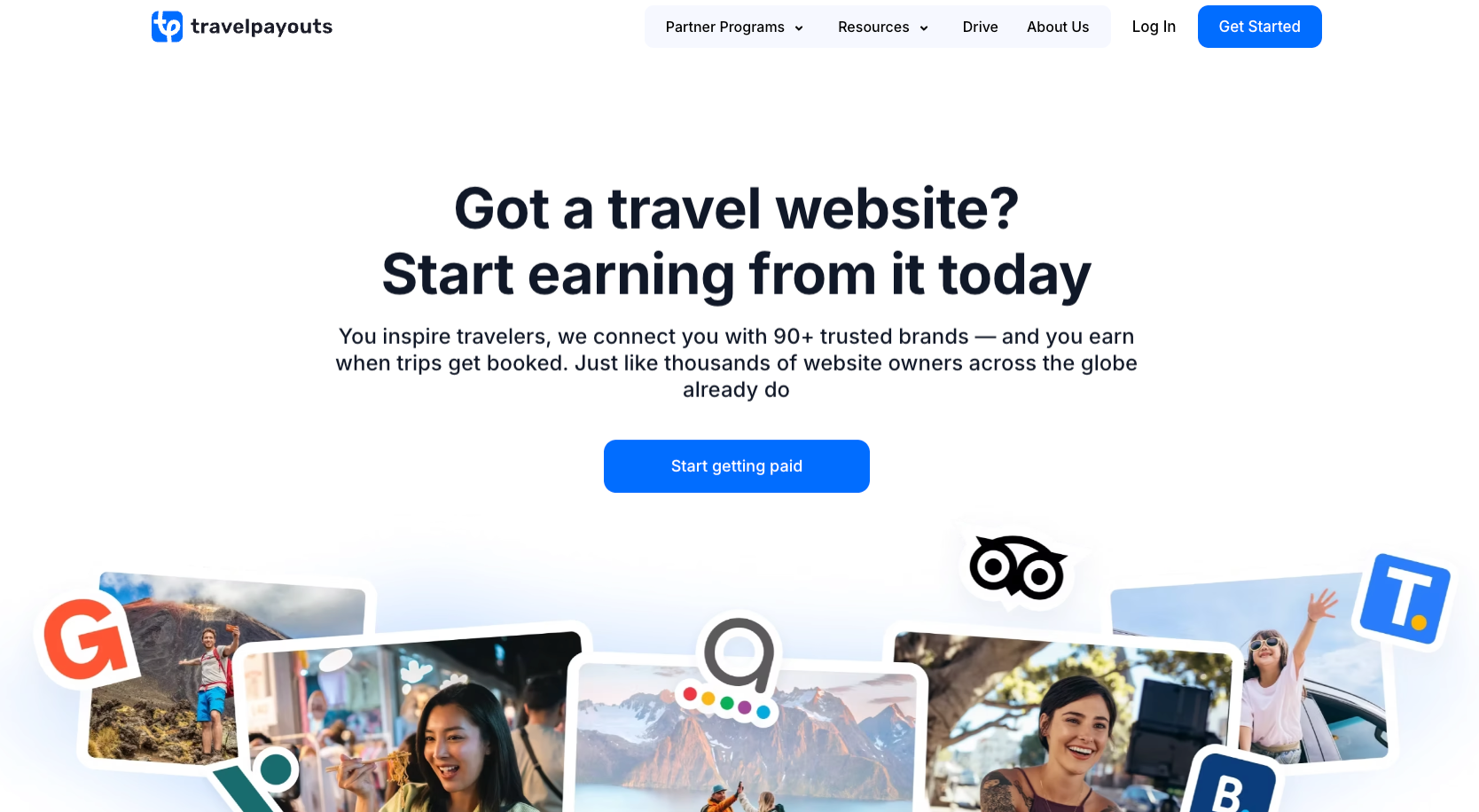
Travelpayouts is popular among travel creators because it combines multiple travel affiliate programs into one platform. It includes flights, hotels, tours, transfers, car rentals, insurance, and other travel services.
Who can be an affiliate partner?
Travelpayouts works well for travel creators, YouTubers, travel TikTok accounts, bloggers, travel agents, and digital nomad communities. Travelpayouts says you don’t need to own a website to get started.
- Pros: Multiple travel brands in one place, no website required, good fit for travel content, flexible promotion options
- Cons: Travel demand can be seasonal, performance depends heavily on audience intent and destination relevance
- Commission: Varies by travel partner; Travelpayouts says it shares up to 70 percent of revenue from referred bookings and typical examples include 1.1 to 1.5 percent of flight booking value and 4 to 5 percent for hotels
- Cookie duration: Usually 30 days for most travel brands, but exact cookie windows vary by program
How could someone without a website promote it?
Travel creators can use affiliate links in travel itineraries, budget travel videos, destination guides, Telegram channels, YouTube descriptions, newsletters, and social media content.
How to get started
Join Travelpayouts for free, add your project or content channel, choose travel programs, generate affiliate links or tools, share them through travel content, and track bookings in your dashboard.
4 affiliate marketing mistakes beginners should avoid
Starting affiliate marketing without a website is possible, but beginners still make a few common mistakes that slow down growth or hurt credibility.
1. Joining too many programs at once
It’s tempting to sign up for every affiliate program you find. But promoting too many products at once often creates scattered content and weak recommendations. Instead, start with one or two affiliate marketing programs that genuinely fit your audience or interests.
2. Promoting products you don’t understand
Trust matters even more when you don’t have a website acting as a central content hub. If you recommend products you’ve never used or don’t understand, your audience will notice. Strong affiliate marketing usually comes from authentic recommendations and practical examples.
3. Ignoring disclosure and platform rules
Affiliate disclosures are required on most social platforms, and advertising regulations in many countries enforce the same standard. Simple disclosures like “This post contains affiliate links” are usually enough, but beginners should always review platform-specific rules.
4. Choosing high commission over audience fit
A high commission doesn’t automatically mean a good affiliate opportunity. A smaller commission on a product your audience genuinely needs (and will pay for) will usually outperform random high-paying offers over time.
Pro Tip
As your audience grows, you might want to look into areas like e-commerce automation, e-commerce workflow, and e-commerce solutions.
Our tip? Start simple and build from there
You don’t need a website to start affiliate marketing in 2026. You just need consistency, trust, and a promotion channel you’ll actually use.
Start with one or two affiliate programs backed by a finders fee agreement that fit your audience, then improve your content based on what gets clicks and conversions. As your audience grows, you can build a website, improve your content systems, or add e-commerce tools and automation. Guides on how to add e-commerce to a website can help as your business expands, too.
If your audience includes business owners, creators, educators, or teams that need forms, payments, and workflows, the Jotform Affiliate Program is an easy place to start. You can also explore more options in our guide to the best affiliate programs.
FAQs about affiliate programs for beginners without a website
Amazon Associates is often considered beginner-friendly because the products are familiar and the signup process is straightforward. The Jotform Affiliate Partner Program is also easy to get started with, offering a simple application and fast review process. Both programs still require approval and compliance with their eligibility rules.
Most beginner-friendly affiliate programs don’t pay daily. ClickBank, for example, issues payments weekly or biweekly depending on your payment settings and whether you meet the payment threshold. Some CPA networks or private affiliate programs may offer daily payouts, but these are often reserved for approved or higher-volume affiliates.
One of the biggest challenges is building trust. Beginners sometimes promote too many unrelated products or recommend offers they don’t fully understand, which can hurt credibility and conversions. Clear affiliate disclosures are also important, especially on social media.
This article is for beginners who want to start affiliate marketing but do not have a blog or website yet. They are likely students, creators, freelancers, side hustlers, or early-stage marketers looking for simple programs they can promote through social media, YouTube, email, online communities, or direct networking.

















Send Comment: