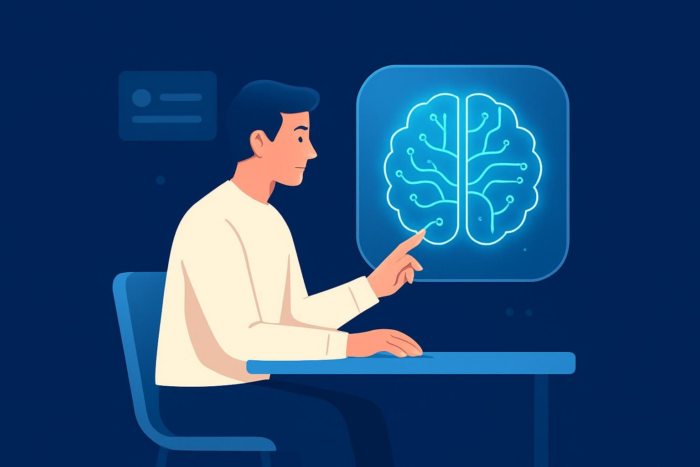
A large language model (LLM) is an advanced type of AI trained on massive amounts of text to understand, generate, and reason with human language. It powers applications like chatbots, translation tools, content generation, and search by predicting the most likely words and patterns based on what it has learned.
Let’s start with the basics: What is an LLM in AI? Large language models (LLMs) are the brains behind today’s smartest AI tools. These models are trained on massive amounts of text to understand, predict, and generate human-like language.
That means when you chat with an AI agent, translate a document, or ask a chatbot to write a poem for you, an LLM is the invisible force making it all happen. And they’re growing by the day. The global LLM market is expected to skyrocket from about $1.6 billion in 2023 to nearly $260 billion by 2030 — a 79.8 percent compound annual growth rate.
Clearly, LLMs aren’t just changing how machines talk. They’re changing how we work, learn, and create. Learn what LLMs in AI really mean, how these models work, and what makes them so useful.
What is a large language model?
A large language model is a type of AI trained to understand and generate human language. Its main job is to process, predict, and produce text that sounds natural, whether that’s writing an email, answering questions, or summarizing information.
Behind the scenes, LLMs rely on deep learning and neural networks — layers of algorithms inspired by how the human brain works. These networks help the model recognize patterns in language, learn context, and refine its responses over time.
The result is AI that can write, reason, and chat in a way that feels surprisingly human, powering some of the best AI models and machine learning tools we use today.
Here are a few of the most well-known LLMs:
- Generative Pre-trained Transformer (GPT): A model that powers chatbots like ChatGPT; great at writing, reasoning, and problem-solving
- Gemini: Google’s advanced AI model designed to combine text, image, and code understanding
- Claude: A model by Anthropic focused on safety, accuracy, and thoughtful responses
- Large Language Model Meta AI (Llama): Meta’s open-source model used by researchers and developers for experimentation
- Mistral: A fast, efficient, European-developed model known for strong performance despite its smaller size; popular for on-device and lightweight deployments
- DeepSeek: A highly optimized model from China that delivers impressive reasoning and coding capabilities while using fewer resources
- Amazon Nova: Amazon’s family of models built for enterprise reliability, strong multimodal support, and tight integration with AWS tools
How do LLMs work?
LLMs are a subset of generative AI, which creates all kinds of content, from images to songs. LLMs sit under the generative AI umbrella, focusing specifically on generating and understanding text. They learn to read, write, and predict text using a mix of deep learning, massive datasets, and advanced math.
Here’s how the magic happens:
- Training on large datasets: LLMs are trained on enormous amounts of text, from books and websites to code and conversations. This helps them learn grammar, facts, tone, and context, forming the backbone of AI natural language processing.
- Tokenization: Before training, the text is split into tokens, or smaller pieces like words or parts of words. The model then studies how these tokens relate to one another to understand meaning and flow.
- Contextual learning: Instead of reading one word at a time, LLMs read the entire text and learn from the surrounding words too. This helps them understand that “light” can mean brightness or something not heavy, depending on the sentence.
- Parameters: Parameters are the knobs that control how the model learns. Bigger models with billions or trillions of parameters, such as GPT-4, can spot more complex language patterns and respond more accurately.
- Prediction: Once trained, the model predicts the next likely word in a sequence one token at a time until it forms complete, natural-sounding text. That’s why LLMs are sometimes called predictive text engines.
What are the applications of LLMs?
LLMs are powering some of the most exciting innovations in AI today. They make it possible for machines to understand and respond to human language naturally, helping with all kinds of tasks across industries. Here are the top 10 applications of LLMs powered by AI.
1. Translation tools
LLMs are shaping new approaches to translation by going beyond simple word-for-word substitution. They pick up on tone, intent, and idioms so the result sounds natural. This matters when you’re translating emails, legal documents, or marketing copy for global audiences. For example, one new partnership between YES Network and CAMB.AI uses advanced voice and AI translation models to support over 150 languages while preserving emotional tone in sports broadcasting.
2. Chatbots and customer service
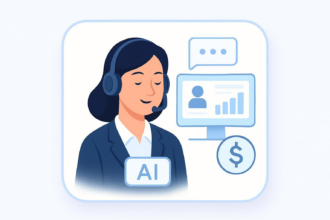
LLM-powered chatbots are making customer support more human and readily available. These AI chatbots for customer service understand natural language queries, reply instantly, and escalate to a human when things get tricky. They tackle routine tasks, so your (human) agents can focus on complex issues.
Verizon recently rolled out its AI-powered assistant, developed with Google Gemini, to handle customer tasks like upgrades, billing inquiries, and account changes. The company reports accuracy above 90 percent and uses the assistant to reduce reliance on human agents for routine issues.
3. Content creation
From blog posts and social media captions to product summaries and email drafts, LLMs offer writers and creators a powerful boost. They don’t replace creativity, but they knock out the heavy lifting, so you spend less time staring at a blank page and more time refining ideas. Marketers appreciate that LLMs match tone, structure, and goals with surprising speed. The marketing team at Aviatrix, a tech company valued at $2 billion, used LLMs to automate 80 percent of its content creation tasks, boosting blog output from one post per week to six and increasing social media engagement significantly.
4. Code generation
Developers now have LLM-powered coding assistants that help with writing, reviewing, and debugging code. They type something like, “Create a login page in React,” and the tool generates usable code, suggests fixes, or explains bugs. This allows devs to offload repetitive work and focus on architecture or user experience.
For instance, GitHub Copilot — developed by GitHub and OpenAI — integrates deeply into integrated development environments to autocomplete code, translate between languages, and assist with pull requests. You also have models like Code Llama from Meta Platforms, a free-to-use LLM that supports multiple programming languages and aims to lower the barrier to coding.
5. Healthcare applications
LLMs in healthcare shine by summarizing patient records, helping draft clinical notes, and translating medical jargon into plain language. That gives clinicians more time for patient care and means less time on paperwork.
Because LLMs understand context and nuance, they’re better at capturing important details from long medical history texts. For example, researchers at Cornell University found that LLMs can handle translation tasks in medical or legal domains with more nuance than older methods.
6. Legal and compliance work
Legal teams are using LLMs to review contracts, summarize case law, and flag risks within dense documents. They cut through piles of text, pulling out key points faster than humans alone might. According to 8am’s 2025 Legal Industry Report, the top three use cases for AI among law firms are drafting correspondence (54 percent), brainstorming (47 percent), and general research (46 percent).
In compliance, LLMs help keep policies current and explain them in plain language so employees (and clients) actually understand. It’s like having an assistant who’s read every regulation ever written — minus the coffee breaks.
7. Financial services
In finance, LLMs are proving valuable by analyzing market data, automating customer communications, and generating accurate reports. LLMs in finance help advisors translate complex financial terms into everyday language and guide clients through applications with fewer errors.
JPMorgan Chase rolled out an in-house large language model dubbed “LLM Suite” across its asset and wealth management division. The model gave about 50,000 employees access to generative AI tools for writing, idea generation, and summarizing documents.
8. Education and tutoring
LLMs make for flexible study partners. They can explain complex concepts simply, create tailored quizzes, or help students draft essays and structure responses. Teachers use AI to generate lesson plans and examples or differentiate instruction for different learning levels. Because these models respond conversationally, students get to ask questions freely, without the pressure of an in-class environment. At the University of California, San Diego, researchers developed an AI tutor built on a large language model, trained on course-specific materials so students don’t just get answers — they get guidance.
9. Research and data analysis
Researchers use generative AI and LLMs to speed up market research and early-stage projects. They scan large volumes of papers, extract key arguments, summarize findings, and rewrite complex language into clear, usable text. This leaves the human side free for deeper analysis, interpretation, and insight rather than slogging through every page manually.
For example, a recent feature on NotebookLM by Google shows how researchers can upload PDFs and spreadsheets, then ask natural language questions to get back structured insights and citations.
10. Business operations and workflow automation
LLMs are increasingly woven into everyday business processes: drafting emails, summarizing meetings, automating FAQs, and organizing documents across teams. An HR team can ask the tool to automatically summarize weekly team meeting transcripts to extract key decisions and assign action items to the right team members to automate the entire post-meeting process. For growing teams, AI in business means fewer missed details, faster processes, and more time for strategic thinking.
How do Jotform AI Agents improve customer interactions?
Jotform AI Agents show how the power of LLMs can transform real-world communication. These agents use AI to help customers in real time by answering questions, guiding users through forms, and providing instant support without missing a beat.
Here’s what makes them so effective:
- Automated customer support helps handle routine inquiries, allowing your team to focus on more complex issues.
- Customization and integration ensure the AI agent matches your brand’s voice and connects with your data to deliver personalized replies.
- Efficiency and scalability enable your business to manage high volumes of requests effortlessly, providing every customer with consistent, fast support.
- Always-on availability means customers get help anytime — no wait times, no office hours, no queue frustration.
- Data-driven insights reveal common questions, drop-off points, and customer needs, helping you improve workflows and reduce friction.
- Real-time form assistance guides users as they fill out forms, reducing errors, boosting completion rates, and lowering support tickets.
You can even explore our industry-specific AI Agent templates to see how this technology fits your workflow. For example, our Healthcare and Wellness AI Agents can help patients schedule appointments or get follow-up reminders.
Our Customer Service and Support AI Agents can handle FAQs, form submissions, and real-time troubleshooting. And in finance, AI Agents can guide clients through applications, account updates, or compliance checks.
What are the advantages of LLMs in AI?
LLMs bring a lot to the table when it comes to building smarter, faster, and more conversational AI systems. Here’s what makes them so powerful:
- High efficiency: They process and generate natural language at lightning speed, making communication seamless in chatbots and virtual assistants.
- Personalization: GPT models and similar tools can tailor responses to users, helping you create more personal, human-like experiences.
- Scalability: LLMs handle massive datasets and varied tasks, from customer support to content creation, without breaking a sweat.
- Versatility: They can adapt to different domains like healthcare, law, or education with minimal retraining.
- Continuous learning: With updates and fine-tuning, LLMs keep improving over time, becoming more accurate and context aware.
- Industry impact: By combining conversational AI with automation, LLMs are transforming how we interact with customers and make decisions.
What are the challenges and limitations of LLMs?
As impressive as large language models are, they’re not perfect. Here are some of the key challenges and limitations to keep in mind:
- Ethical concerns: LLMs can unintentionally reflect biases in their training data, raising questions about fairness, accuracy, and the misuse of AI-generated content.
- Computational demands: Training and running these models require enormous computing power and energy, making them less cost effective and less sustainable.
- Accuracy and reliability: Even advanced models can produce confident but incorrect answers, especially in complex or niche situations.
- Data privacy risks: LLMs trained on public datasets may unintentionally expose or reproduce sensitive information.
- Need for guardrails: Clear LLM guardrails, like human oversight, transparency, and content filtering, are essential to ensure responsible and safe AI use.
What is the future of LLMs in AI?
The road ahead for large language models is full of opportunities, as the goal is not just to get smarter, but to be more ethical, efficient, and deeply woven into daily life. Let’s take a look at the key trends shaping the journey ahead.
Smaller, more specialised models
We’re moving toward models that aren’t huge, power-hungry behemoths but leaner, faster versions that can run locally or on edge devices. These smaller models (sometimes called SLMs) offer real-time responses, stronger privacy, and cost savings. They are achieving performance comparable to large models while requiring far fewer resources.
Recently, Spanish AI firm Multiverse Computing raised $217 million to compress LLMs by up to 95 percent while cutting costs by 80 percent. This trend means on-device AI tools will become accessible to smaller teams without always relying on cloud giants.
Smarter bias mitigation and built-in ethics
As LLMs become more powerful and widespread, the pressure grows to make them fairer, safer, and more transparent. Future models will include ethical frameworks and guardrails built from the ground up — not added later as an afterthought.
Research into LLM-driven agent systems shows a strong focus on alignment, multi-agent collaboration, and accountability. The goal is fewer biased outputs, more trustworthy AI, and broader acceptance in sensitive fields like healthcare and law.
Autonomous agents and multimodal systems
The next wave of generative AI won’t just handle text. It will also ingest images, audio, video, and other types of data seamlessly, combining them in smart ways. That means you could point your phone at a chart and ask the model to analyze it, or speak a question and get a clear answer with visual context. We already have some of these features, but their future capabilities will continue to evolve. New models are increasingly built to reason across modalities, not just predict the next word. The recent launch of Gemini 3 confirms this direction: text plus vision plus reasoning in one.These agentic systems will help users complete complex tasks instead of simply responding passively.
Broader industry adoption
LLMs are set to become embedded in nearly every major industry — healthcare, finance, education, manufacturing, retail — you name it. Instead of just powering chatbots, they’ll help generate personalized medical summaries, offer proactive financial guidance, craft bespoke learning paths, and optimize production workflows.
Analysts predict this broad adoption will accelerate as models become cheaper, faster, and more reliable.The implication? Anyone who can ride this wave will be able to create tools that aren’t just smart but deeply context aware and genuinely helpful too.
If you wanted to create a chatbot with ChatGPT or a similar LLM, these trends mean you’ll soon be able to build one that’s faster, more personalized, ethically minded, and ready to work across devices rather than being limited to the web.
Start your AI journey with Jotform
What is an LLM in AI if not the engine driving smarter conversations, faster automation, and more personalized digital experiences? These models are reshaping everything from chatbots to full-scale business operations. But understanding the large language model definition is just the first step. The real value comes when you use AI to make your everyday work simpler.
With Jotform AI Agents, you can do exactly that. These smart, customizable AI assistants help you automate workflows, personalize customer interactions, and get more done without extra effort.
Explore Jotform AI Agents to find the right AI-powered assistant for your needs and start building your own intelligent, automated processes today.
This article is for business leaders, tech professionals, marketers, educators, and anyone curious about how large language models work and where they’re being used.
















































































Send Comment: